Icelandic Sheepdog
A vocal Nordic herding spitz with two coat lengths, whose care combines movement training, company, double-coat maintenance, and documented hip and eye screening.
How these guides are researched and reviewed
- Origin
- Iceland
- Adult standard size
- Ideal males 46 cm; females 42 cm
- Illustrated coat
- Long-haired fawn and white
General information for owners. These articles have not been reviewed by a veterinarian. Medical decisions need your dog's history and an examination.
A farm dog in a modern household
The Icelandic Sheepdog is a herding spitz whose companion life works best when its owner plans for activity, voice, and participation in ordinary household life. A cheerful-looking face and curled tail can attract people who have not considered how a dog notices movement or announces arrivals. Ask owners what happens during a normal morning, a workday absence, and a visitor's approach. Meet adults and watch how they settle as well as how they play. Those observations help you choose a dog whose needs fit the support you can provide.
The FCI describes Iceland's native breed as descended from dogs brought by early settlers and adapted to farm work. Its traditional role included gathering livestock across local terrain. That history supplies a reason to investigate behavior around moving people and animals, but it does not diagnose every bark or chase as herding. A puppy still needs to learn the environment it will actually inhabit. Ask a source how early experiences prepare dogs for companion homes, including travel, household sounds, and short comfortable periods without constant human interaction.
Adult size and the illustrated long coat
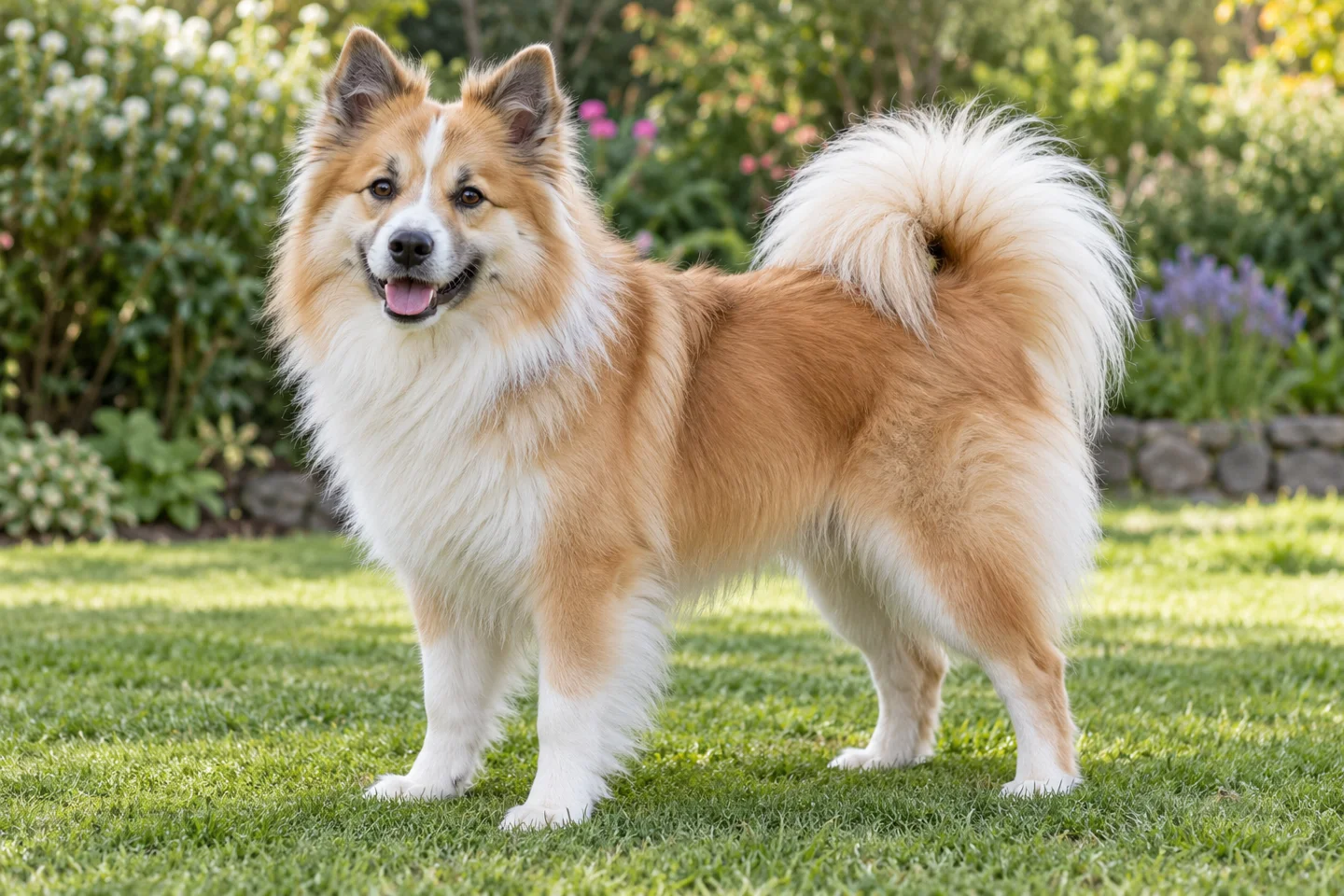
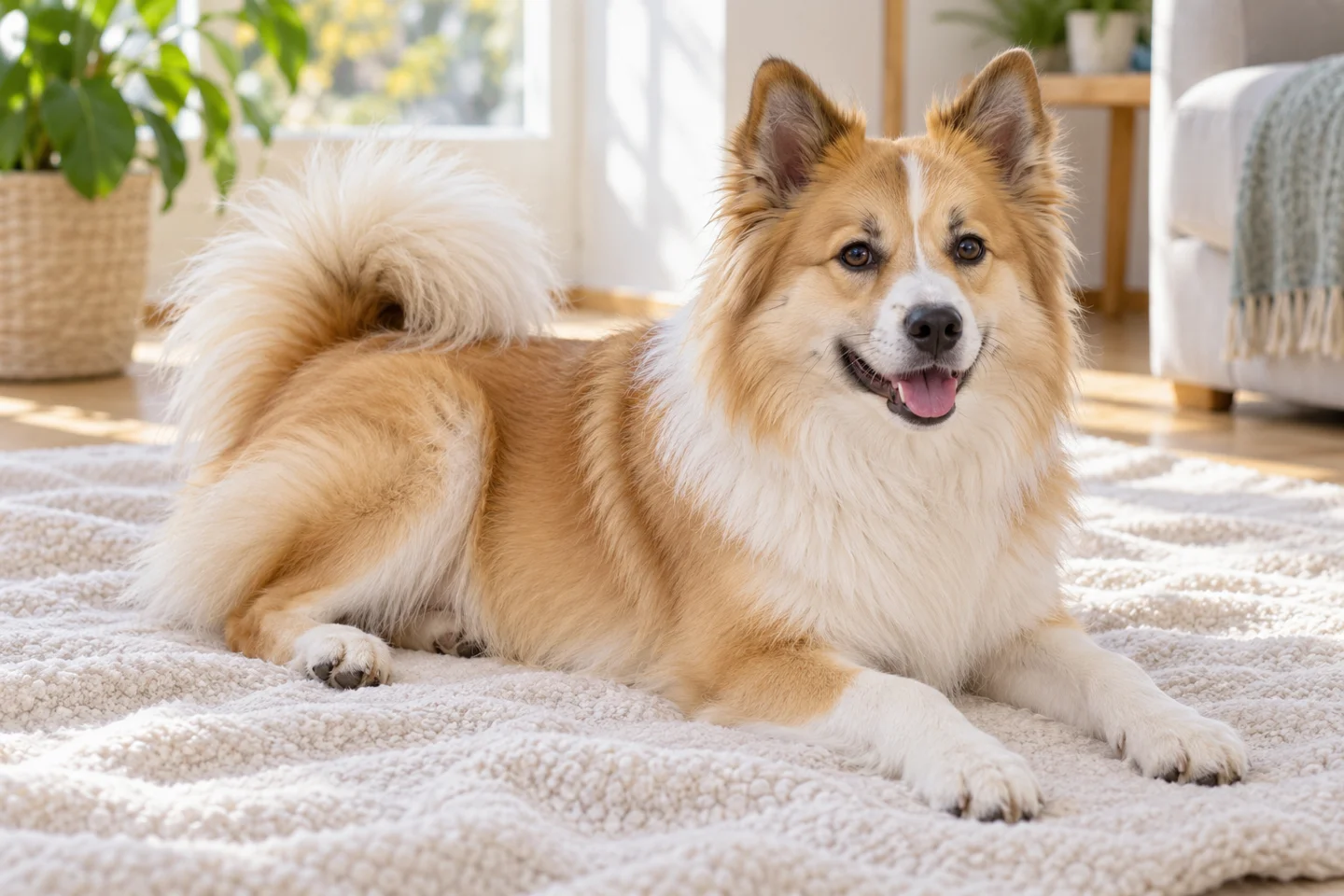
FCI ideal heights are 46 cm for males and 42 cm for females. The breed is sturdy and rectangular rather than a miniature version of a large guardian. Upright triangular ears, a curled tail touching the back, and a thick double coat form its familiar outline. The illustrations show a long-haired fawn-and-white example. The standard also describes a short-haired coat, and several colors occur with accompanying white markings. Coat length does not create a separate crossbreed or justify predicting temperament from appearance.
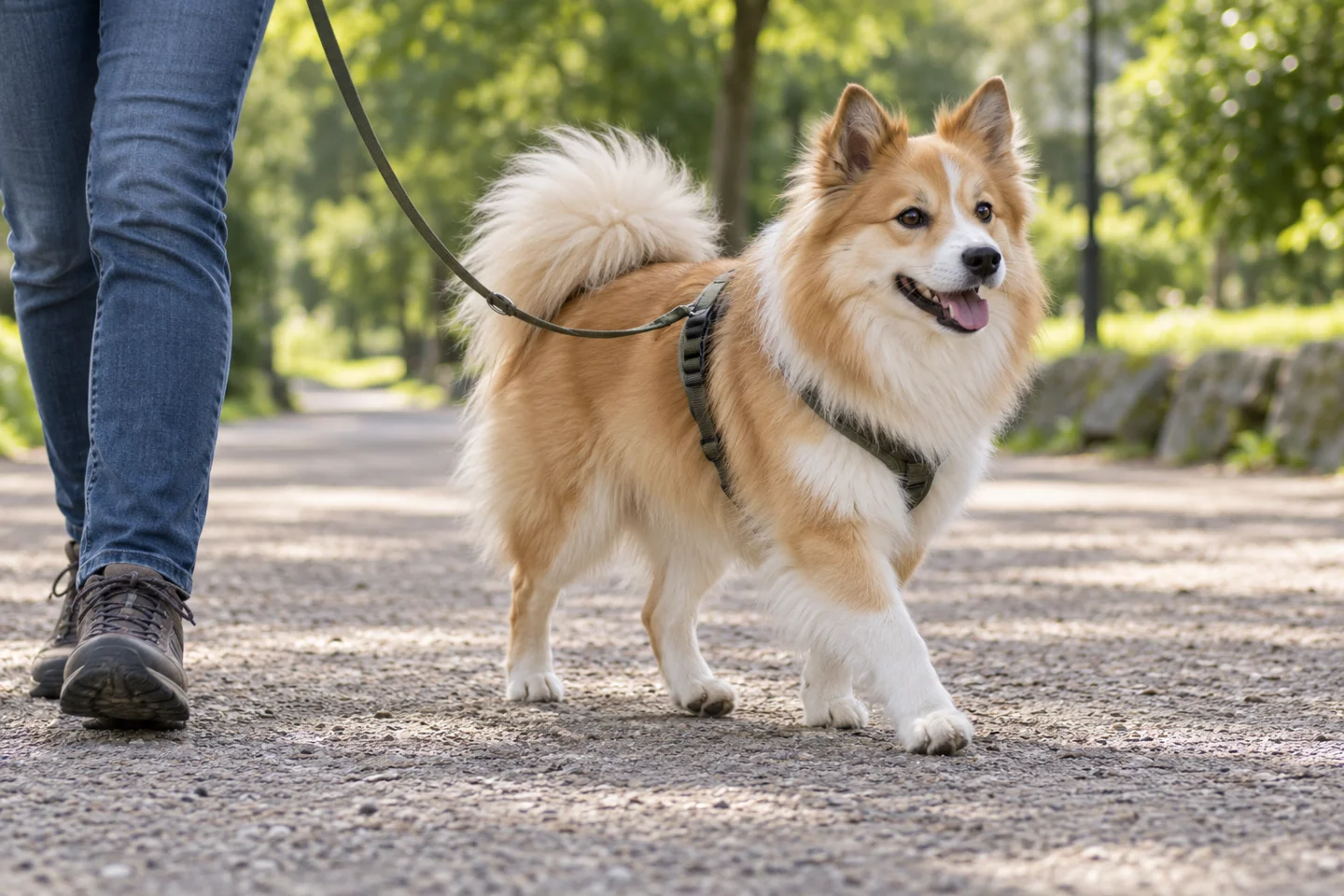
Check the dog beneath the hair when fitting equipment and judging condition. A full ruff can obscure the position of a collar, and a loose harness can shift when the dog turns quickly. Ask for a fitting demonstration and reassess as a puppy grows or coat changes. Measure its bed and travel space for comfortable rest and movement. The standard gives an ideal height, not a command to feed toward a particular silhouette. Your veterinarian can relate body condition, muscle, and growth to the actual individual rather than to an AI image.
Voice needs a practical response
Barking is explicitly part of the breed's working description, so discuss noise before choosing a household arrangement. Ask what a particular dog does at windows, gates, doorbells, and during absences. Those situations can involve different motivations and need different plans. A promise that training will make every Icelandic Sheepdog silent is unhelpful. It is equally unhelpful to let a label excuse a persistent problem without investigating triggers and care. Observe the adults and ask the breeder how quieter behavior is encouraged in daily life.
Reduce repeated opportunities to rehearse alarm where possible. A resting place away from a busy window and controlled access to the entrance may change the difficulty substantially. Reward settling during manageable practice instead of waiting until the dog is too aroused to respond. If distress appears when people leave, review company and independence training with appropriate help. A complaint tells you noise occurred; it does not identify its cause. Keep a dated record of circumstances and recovery so a professional can help build a plan grounded in this dog's actual experience.
Training movement around people
Teach a useful alternative before a child runs, a bicycle passes, or the household rushes toward the door. That might be moving with the handler, going to a resting mat, or pausing briefly behind a gate. Begin without the difficult movement present, then add a small version the dog can handle. Reward success and release it clearly. If the animal repeatedly circles, grabs, or barks at movement, prevent further rehearsal while a qualified instructor helps assess the pattern. Calling it herding does not make an unsafe interaction acceptable.
AVSAB recommends reward-based training. Work with an instructor who explains distance, timing, and management rather than creating a dramatic confrontation. Keep lessons short and ensure another carer understands the same cues. Household members should agree on what the dog is expected to do at busy moments. If one person encourages chasing and another punishes it, the arrangement is needlessly confusing. Record which exercises work in which settings so that an easy kitchen response is not mistaken for a reliable skill at a crowded park entrance.
Exercise with opportunities to think and rest
Offer movement, investigation, and learning across the day. A controlled sniffing walk, a short search, and an easy handling lesson can provide different kinds of activity without every session becoming fast play. Structured sport needs its own instruction and conditioning. Check with your veterinarian before a growing dog begins a demanding program or an adult increases work substantially. Observe how the animal feels after the outing, including movement and ability to relax. Persistent stiffness, altered gait, or a surprising loss of stamina needs attention.
Rest is part of the routine, not an admission that the dog lacks interest. Give it a quiet place and practice settling during ordinary household activity. Plan a shorter option for bad weather or an unexpectedly busy day. A northern coat does not guarantee protection against heat illness, so adjust effort and timing in warm conditions. Provide water and stop if the dog becomes distressed. Seek prompt veterinary guidance for concerning signs after heat or exertion. Good activity leaves the individual comfortable enough to recover and the household able to maintain the plan consistently.
Socialization without overwhelming the puppy
Discuss safe early exposure and appropriate classes with the veterinary team. Let the puppy observe unfamiliar people, sounds, and surfaces at an intensity it can manage. A visitor can sit and wait rather than reach into its resting area. A short outing can end after a comfortable observation instead of continuing until the animal is exhausted. Watch the response and recovery, and provide a way to retreat. Repeated fear deserves advice before someone decides that stronger exposure is the only way to make the dog accept life.
An adult may also need a gradual introduction to a new setting. Farm experience does not automatically supply confidence in a lift, on a polished floor, or beside dense road traffic. Ask the previous carer what is known and what remains untested. Start with predictable rooms and routes, then adjust the next experience to the dog's response. Explain the process to other household members so they do not add surprise visitors or forced greetings. Useful social learning produces practical comfort and choice, rather than merely a record that the dog has been present at many events.
Company and learning to be apart
Consider who will provide care during a normal working week. A dog involved in household activity still needs to learn short, comfortable periods away from direct interaction. Begin with an arrangement in which it can rest safely while a familiar person moves a small distance away. Keep the step easy enough to succeed and build gradually. Ask for professional help if the dog shows distress rather than repeatedly leaving for long periods and hoping it will eventually stop reacting.
Prepare backup care before an urgent need. A sitter should meet the animal, understand the entrance routine, and know which cues and equipment are familiar. Write down food, rest, and walking arrangements clearly. Do not assume that another dog's boarding experience predicts this individual's response to a busy group environment. Discuss the actual setting and ask what happens if the dog needs more space or a quieter plan. Company needs can be managed more effectively when the household has several realistic options instead of one arrangement that fails whenever a person becomes unavailable.
Aggression and the meaning of a warning
A friendly breed description cannot guarantee an individual dog's safety. Take stiffening, growling, snapping, or lunging as reasons to change the situation and investigate. Note what happened before the response, any food or object involved, and whether the dog could leave. Stop unsafe contact and prevent repetition while obtaining advice. Do not ask a child or visitor to repeat an approach to demonstrate that the animal is usually gentle. One incident can provide enough information to require a safer arrangement.
Arrange veterinary assessment for sudden changes or sensitivity during touch and movement. A qualified behavior professional can help connect the incident history with practical management and humane teaching. Avoid punishing warning signals or removing items by force. Practice exchanges with safe objects in suitable conditions and leave meals undisturbed. If a professional advises basket-muzzle training, introduce it positively and check fit. It is an additional precaution within a plan. The dog still needs comfortable handling, appropriate distance, and protection from repeated situations it cannot manage without escalating.
Other animals and individual preferences
Arrange introductions to another dog in open space with separate handlers. Start by walking apart and notice whether both can turn away and respond to their people. A Nordic herding identity does not predict a single play style or guarantee enjoyment of every canine group. At home, provide separate feeding and resting arrangements while you learn how the relationship develops. Keep a resident dog's access to its owner and quiet areas available. Seek help when tension repeats instead of repeatedly placing the animals in the same difficult situation.
Small animals require a separate decision. Ask about responses to cats, birds, poultry, and running wildlife in real settings. A controlled observation through a barrier is useful but cannot establish unrestricted safety. Maintain secure separation where needed and provide protected escape routes for a household cat. Do not let a chase become the test of compatibility. If the home cannot reliably maintain the necessary boundaries when people are busy or away, reconsider placement before the animals meet. Respecting the needs of an existing pet is part of choosing a suitable new companion.
Grooming both layers of the coat
Whether short-haired or long-haired, the dog has a dense coat that needs inspection beneath the visible surface. Part the hair and work gently through loose coat, checking behind ears, under equipment, and around the rear. A groomer can demonstrate tools and technique suited to the individual. Keep sessions comfortable and brief enough for cooperation. Do not pull through a tight knot until the animal struggles. Mats near the skin need skilled removal, and scissors should not be used where the skin's position is hidden.
After muddy or grassy outings, look for debris and irritated places rather than judging cleanliness from the outer coat alone. Arrange bathing and thorough drying around the actual coat and any clinical needs. Persistent smell, redness, hair loss, or tenderness deserves veterinary advice. An owner's wish to preserve a full outline should not obstruct skin access or necessary care. Teach acceptance of a towel, brush, and brief foot inspection separately. A written routine helps a sitter maintain the coat and recognize a new change instead of overlooking it beneath familiar hair.
Feet, dewclaws, and comfortable handling
The FCI standard discusses dewclaws and describes well-developed double rear dewclaws as desirable. Check the individual dog's feet and ask your veterinary team to demonstrate nail care for the claws it actually has. Do not assume that a claw which is less involved in ground contact will maintain itself during walks. Introduce touch gradually on a nonslip surface, rewarding brief cooperation. If the dog becomes suddenly sensitive or protects a foot, investigate discomfort rather than holding it more firmly to complete the routine.
Ear and mouth care also need a workable plan. Report repeated head shaking, discharge, unusual odor, altered chewing, or sensitivity. Avoid probing deeply into the ear canal or using leftover drops without veterinary advice. Ask which products and methods suit this dog and record instructions for other carers. Routine handling is useful preparation, but a painful problem may need a different clinical approach. Give the clinic advance notice of any behavior concern so examinations can be organized with the animal's comfort and everyone's safety in view.
Health screening and ongoing observation
The AKC's national-club recommendations for Icelandic Sheepdogs list hip evaluation and ophthalmologist evaluation. Request the actual reports, dates, and identifiers and ask how the breeder interprets the findings. A routine puppy visit is different from formal parental screening. If the source follows a different registry's program, have it explain the current requirements rather than assuming every country uses the same scheme. Read the results, since completion of a test is not by itself a statement that every finding was normal.
Ask about significant diagnoses in relatives and how later owner information is collected. Screening addresses particular risks and cannot promise lifelong health. A genetic panel also covers selected variants rather than every possible condition. With an adult rescue, preserve gaps in history and arrange care around present findings. Persistent changes in vision, movement, drinking, appetite, or activity need investigation. Avoid dismissing a new limp because the parents had favorable reports or interpreting an energetic appearance as evidence that every body system is functioning normally. Individual clinical assessment remains necessary when something changes.
Feeding, costs, and mixes
Choose complete food suitable for life stage and monitor condition beneath the coat. Ask your veterinary team to help review portions, including rewards used during training. Unexpected weight change or persistent digestive trouble warrants assessment. Use clear instructions so everyone feeding the dog follows the same plan. Budget with local quotes for food, preventive care, training, grooming help, equipment, and suitable care during absences. Read insurance conditions and decide how an urgent bill would be covered. Discuss continuing support and return arrangements with a source before placement.
An Icelandic Sheepdog cross is not simply another coat variety. Separate documented parentage from an appearance-based estimate and ask about observed behavior. Known parents warrant health questions relevant to both; crossing does not guarantee freedom from inherited problems or an average temperament. For a puppy, leave room for uncertainty in mature size and coat. For an adult, assess the actual care routine and responses that affect your home. A descriptive mixed-breed name supplies much less placement information than a detailed account from someone who has cared for the individual.
dogsDating meetings for a vocal herding spitz
Write a profile that explains this dog's present preferences. Mention whether a quieter route, more distance at greetings, or movement practice will make an outing easier. Share an approximate area, agree on a public meeting point, and keep your home address and exact coordinates private. Confirm that each adult manages their own dog and choose a route wide enough to turn away. Starting beside a crowded gate can make a manageable dog appear unable to cope simply because there is no room to choose another response.
Begin by walking in the same direction apart from one another. Leave toys and shared food games out of the first encounter. If either animal becomes rigid, repeatedly retreats, or cannot disengage, make more space or finish the walk. Record what helped and use it for any future plan. A good match can be a familiar companion for quiet parallel walks without direct greeting. The point is a comfortable activity for both animals, rather than a requirement that they play because their profiles suggested similar energy or because the humans hoped to see immediate friendship.
Sources and editorial notes
Sources checked October 21, 2026. Breed measurements describe reference ranges, not a diagnosis or an individual dog's ideal weight. Images are AI-generated breed illustrations and do not document a particular dog or health condition.
- AVSAB: Humane Dog Training Position Statement
- VCA Animal Hospitals: Food aggression in puppies
- Orthopedic Foundation for Animals: CHIC health screening programs
- VCA Animal Hospitals: Aggression toward unfamiliar dogs, diagnosis
- VCA Animal Hospitals: Grooming and coat care for your dog
- VCA Animal Hospitals: Ear infections in dogs (otitis externa)
- AAHA: Feeding plans for healthy, appropriate weight cats and dogs
- VCA Animal Hospitals: Heat stroke in dogs
- AVSAB: Puppy Socialization Position Statement
- VCA Animal Hospitals: Dog behavior problems, aggression toward children
- American Kennel Club: Herding group health testing requirements
- Fédération Cynologique Internationale: Icelandic Sheepdog official breed standard
Keep getting to know dogs.
Read another guide or return to your dogsDating community.
Explore breed guidesBack to dogsDating