Irish Red and White Setter
A distinct Irish field setter with red patches on a white coat, needing outdoor learning, steady household routines, feathering care, and specific health records.
How these guides are researched and reviewed
- Origin
- Ireland
- Adult standard size
- Desirable males 62–66 cm; females 57–61 cm
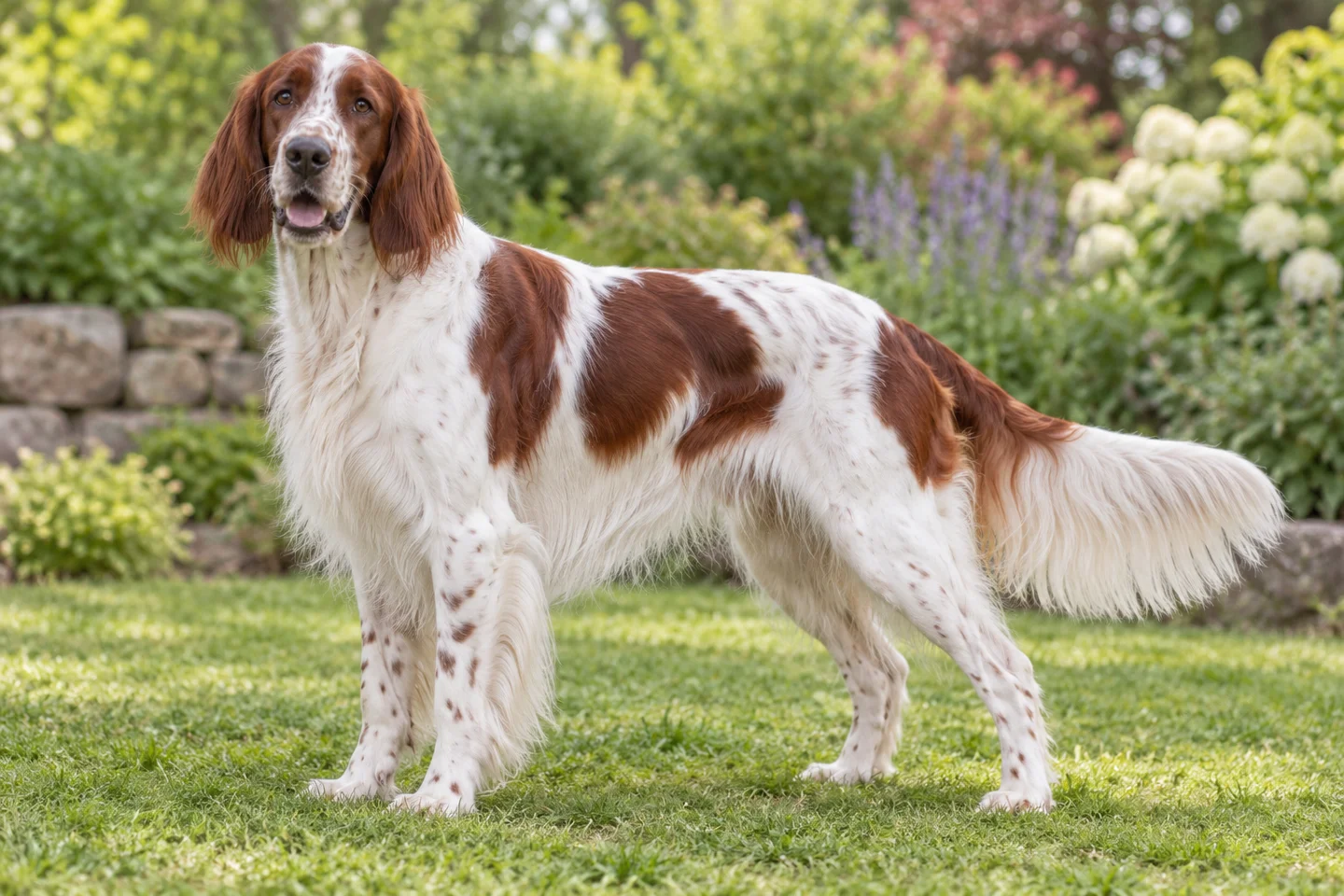
- Illustrated coat
- White with solid red patches and feathering
General information for owners. These articles have not been reviewed by a veterinarian. Medical decisions need your dog's history and an examination.
A separate setter breed with a field purpose
The Irish Red and White Setter is a distinct breed, rather than an unusual color of Irish Setter or an Irish Setter mixed with a spaniel. That distinction matters when checking pedigree, health recommendations, and the particular dogs behind a litter. The FCI describes a setter bred primarily for field work. A companion owner should therefore ask about interests outdoors, training around birds, and life between activities. Meeting adults is more useful than choosing from the pattern of red patches on a puppy.
The standard's history explains that the red-and-white population declined as the solid-red setter became more prominent, followed by efforts to restore it during the twentieth century. A concise history can explain why the breed is less familiar without turning rarity into a reason to buy. Ask what support a source provides, how dogs are raised, and whether the proposed household fits the family being bred. A rare dog still needs the ordinary practical arrangements of feeding, care during work, exercise, and someone prepared to notice health or behavior changes.
Adult height and a functional build
FCI desirable heights are 62–66 cm for males and 57–61 cm for females. The breed is athletic and substantial, with hanging ears and feathering on limbs, underside, and tail. The standard specifies a white base with solid red patches. Our illustrations show that general pattern and a full natural tail. Marking arrangements vary, and a picture cannot establish correct proportions, gait, ancestry, or medical condition. Assess the real dog moving comfortably rather than choosing the most dramatic color placement.
Plan for an adult whose reach and strength will soon exceed those of the puppy you first meet. Check vehicle space, a comfortable resting area, and equipment fitted around the individual chest and neck. A bag carried past the dog or a gate opened during a rushed departure should not create an improvised handling test. Teach a simple waiting routine and use secure physical arrangements where needed. Ask your veterinary team to assess body condition during growth instead of feeding toward an adult image or assuming a standard height gives a complete feeding target.
Training attention before birds become too interesting
Start lessons in quiet surroundings. Teach responding to a name, turning with the handler, and returning a short distance for a useful reward. Add outdoor distractions in steps rather than beginning beside moving birds. A suitable long lead can support practice in an appropriate setting, but it needs safe handling to avoid tangles or an abrupt stop. Ask an instructor to demonstrate. The dog should have opportunities to succeed before a cue is relied on for safety in a much harder location.
AVSAB recommends reward-based methods and advises against aversive training. If the setter cannot respond, review distance, duration, and distraction instead of repeating the cue more forcefully. Make it worthwhile to rejoin you and avoid making every successful return predict the immediate end of activity. Teach equipment handling and a calm exit as separate tasks. Keep a small written account of where skills work so another walker does not confuse a reliable garden response with a skill ready for unfenced ground containing strong competing interests.
Exercise and the following morning
Choose activity from the dog's age, health, conditioning, and response afterward. A mature field dog's schedule cannot be transferred automatically to a growing pet or an older companion. Ask your veterinarian before sustained running, a demanding sport, or a major increase in work. A day can combine controlled exploration, a short search, and practice with the handler rather than a single exhausting outing. Notice stiffness, reluctance to rise, a changed stride, or unusual fatigue later and report persistent changes.
Prepare a lower-demand plan for days when weather, work, or recovery changes the original outing. A safe shorter route and a quiet indoor task can be useful without becoming a punishment for resting. In warm conditions, consider footing, shade, water, and exertion before the dog struggles. Stop and obtain veterinary advice if concerning signs follow heat or activity. Feathering and a working history do not provide immunity to illness or injury. An owner's assessment should include comfort and recovery, not simply the animal's willingness to continue following a scent or person.
Socialization with manageable experiences
For a puppy, discuss early exposure and local health precautions with your veterinary team. Help it observe normal traffic, unfamiliar surfaces, and calm visitors at an intensity it can handle. Invite contact without forcing the puppy into someone's hands. Keep outings short enough to leave room for recovery and sleep. A quiet retreat from an overwhelming event is more useful than requiring the animal to stay until it stops showing visible concern. Seek help if fear repeatedly disrupts ordinary activities.
An adopted adult benefits from a similarly thoughtful introduction to new surroundings. Ask what it knows about travel, household noises, being alone, and encounters with children or other animals. Use that information to choose initial rooms and routes. A dog familiar with field activity may still need practice with a crowded pavement or smooth indoor floor. Tell visitors how to respect space and avoid making the first weekend a succession of greetings. Socialization is continuing practical learning, and the plan should follow what this dog has experienced rather than an assumption attached to age or pedigree.

Children and shared activities that stay comfortable
Children need an adult who is actively supervising contact and a clear rule that a dog may leave. Provide a sleeping and resting area they cannot enter. Keep them away from meals and valued chewing. Hugging, climbing, grabbing ears, or waking a dog should not be used to show affection. When the adult is occupied elsewhere, use a secure comfortable separation. A child cannot reliably carry the responsibility of interpreting subtle discomfort while also managing excitement about a new companion.
Ask for the actual history behind family-suitability descriptions. An animal known to a familiar older child may have little experience of toddlers, visitors, or groups running through a garden. A short successful meeting does not remove the need for supervision. Suitable participation might involve an adult-managed walk or preparing an easy search away from the dog. End before play turns into chasing or competition for food. Keep routes through the home uncluttered so an enthusiastic setter does not repeatedly collide with a small person while moving between rooms.
Canine company without a compulsory greeting
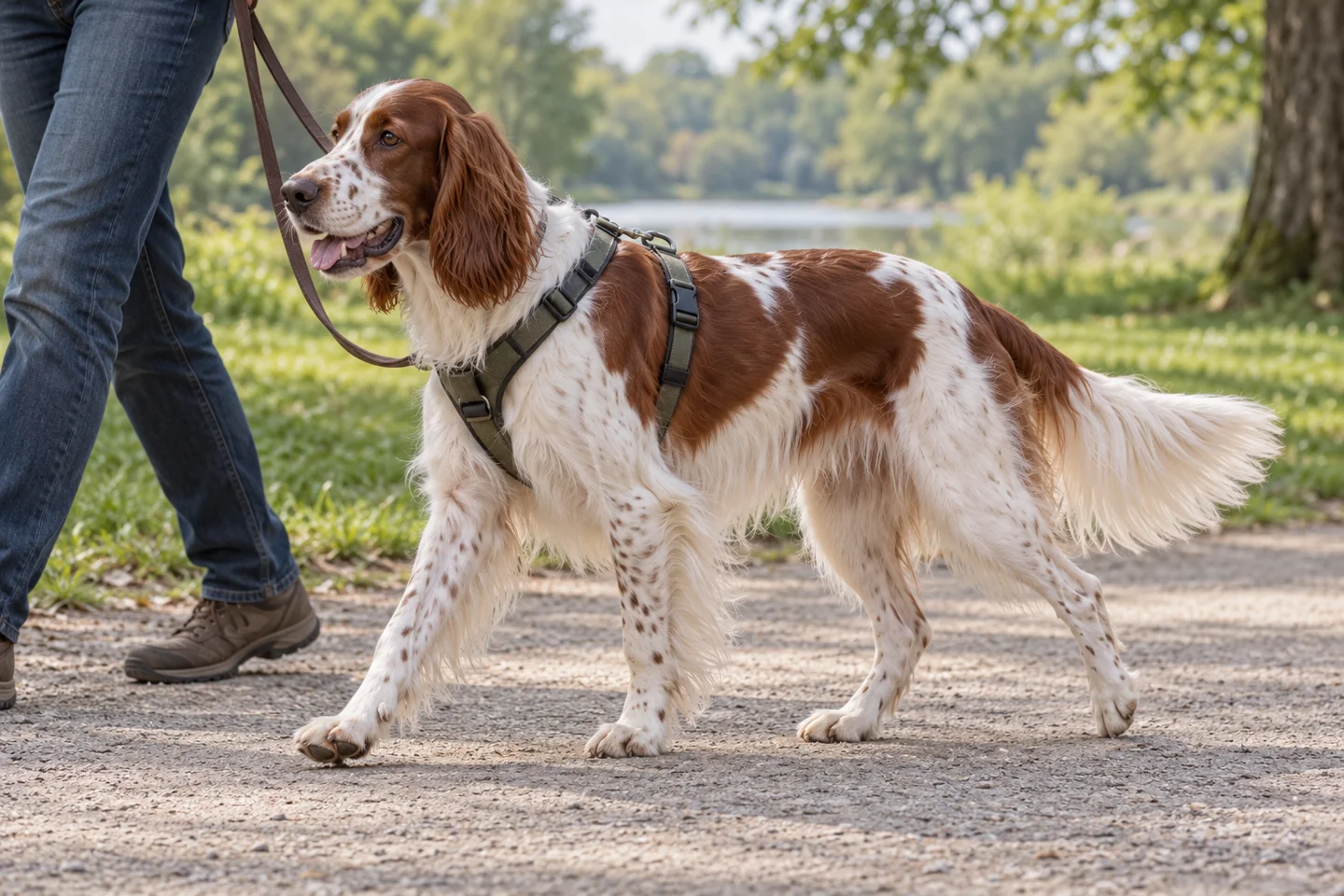
Give two dogs enough space to choose a comfortable pace. Start outside with separate handlers and parallel walking, rather than meeting at a narrow doorway or beside a bowl. Notice whether each animal can look away, pause, and remain responsive. Similar age or sporting background does not guarantee similar play preferences. A more persistent dog enjoying a chase is only half the assessment; the other animal also needs opportunities to stop and decide whether to return.
At home, separate food and resting resources while relationships develop. Preserve a resident dog's access to people and places it already uses. Avoid leaving valued toys scattered where the animals must negotiate them without support. If tension repeats, seek help and change management instead of arranging the same encounter again. A good first walk gives a sensible starting point for another careful meeting. It cannot predict every interaction involved in sharing a home, especially during fatigue, illness, food preparation, or the arrival of unfamiliar people.
Cats, birds, and wildlife need their own plan
The breed's field purpose makes it important to investigate responses to moving smaller animals. Ask what the dog has actually done around cats, birds, and other species, including outside the home. Familiarity with a stationary animal through a barrier does not establish safety during free movement. Provide secure separation and protected escape routes where needed. Do not allow a chase as an experiment. Some households may need permanent boundaries, and some combinations will not be suitable despite an owner's hope that affection for people will transfer automatically to every animal.
Apply control around livestock and wildlife as well. Choose routes and distances that allow the setter to respond to its handler. If attention becomes fixed, leave before the situation escalates. Explain the plan to sitters in concrete terms, including equipment, gates, and areas to avoid. A person experienced with a different breed may not anticipate this individual's choices. Assessing compatibility honestly protects existing pets and the setter from repeated conflict. The household should be able to maintain its precautions during an ordinary busy day, not only when everyone is watching the first introduction.
Grooming feathering after field-like outings
Work gently through feathering on the ears, legs, underside, and tail, checking down to the skin. Burrs and fine tangles may hide beneath hair that looks orderly on the surface. Ask a groomer to demonstrate appropriate tools and how to support the hair without pulling. Keep the dog on secure footing and introduce short sessions before difficult maintenance becomes necessary. Tight mats near skin need skilled attention; scissors can injure skin drawn into a knot when the animal moves.
After wet or grassy activity, inspect feet and areas under equipment. Do not dig into tissue for an object you cannot clearly see. Persistent lameness, swelling, irritation, or pain deserves veterinary advice. Arrange bathing and drying around the coat and individual needs, and keep a record of products if reactions occur. The red-and-white pattern may make some dirt visible but cannot tell you whether the skin beneath is comfortable. Teach toweling and brief foot checks separately so returning from an outing does not introduce several unfamiliar procedures at once.
Ear care and cooperative handling
Hanging feathered ears need comfortable observation. Look for discharge, a change in smell, redness, repeated scratching, or head shaking. Ask the clinic to assess recurring problems and demonstrate any cleaning it recommends. Avoid pushing cotton buds deeply into the canal or applying medication left from another episode. An ear problem can have several causes, and a previous prescription may not suit the current findings. Record recent activities and recurrence without deciding the diagnosis yourself.
Teach useful handling positions when the dog is well. A brief chin rest, a lip lift, or a short touch to a foot can be rewarded and ended before resistance develops. Ask a veterinary nurse or groomer to show techniques appropriate to this individual. If a familiar procedure suddenly becomes difficult, investigate discomfort rather than simply increasing restraint. Share handling information before a veterinary visit so the team can plan. Cooperative practice helps access to care, but necessary diagnosis and treatment may still require a clinical approach different from a routine home lesson.
Health screening and CLAD records
The AKC's national-club recommendations for Irish Red and White Setters list hip evaluation, ophthalmologist evaluation, and a DNA test for leukocyte adhesion deficiency type I, commonly identified as CLAD or LAD-A. Ask for the actual findings and confirm the identity of each dog tested. A report for one inherited variant cannot stand in for every clinical assessment. Different setter breeds have different recommendations, so do not substitute an Irish Setter's list simply because the names share a national origin.
Have results interpreted by the relevant veterinary or breed-health professionals. Ask about significant illness in relatives and how later diagnoses from placed dogs are collected. Screening reduces particular uncertainties but cannot guarantee lifelong health or imply every completed test was normal. For an adopted adult, keep missing information explicit and arrange current care. Report persistent changes in movement, vision, appetite, or stamina even when parental paperwork was favorable. A healthy-looking coat and enthusiastic field demonstration provide observations, while identified examination and test reports provide different evidence.
Feeding, costs, and mixes
Use a complete diet appropriate to life stage and review portions against the animal's condition and activity. Count rewards in the daily food record and give carers clear instructions. A source's adult-size reference should not become a reason to feed a growing dog toward maximum bulk. Unexpected weight changes or persistent digestive problems need assessment. Budget using local quotations for food, veterinary prevention, grooming, training, secure transport, and suitable care during absences. Read insurance conditions and agree how the household would handle an urgent bill.
A red-and-white setter mix is different from this recognized breed. Ask whether ancestry is documented or estimated from appearance. Known parents warrant relevant health questions for both, and crossing does not guarantee that inherited problems disappear. For an adult, actual size, handling, coat needs, and observed behavior may guide placement more usefully than a fashionable crossbreed label. For a puppy, leave room for uncertainty in mature traits. Review the source's support and return arrangements before handover so a difficult placement can be addressed promptly and honestly.
dogsDating walks for an Irish Red and White Setter
Describe the dog another handler will actually meet: its preferred pace, current response to unfamiliar animals, and any need for more distance near birds or busy entrances. Use an approximate area to choose a public meeting point and keep your home address and exact coordinates private. Confirm that each adult will handle their own dog. Select a route with room to turn aside and start without toys, shared food, or a requirement for nose-to-nose contact.
Walk in parallel and watch both dogs' ability to disengage. If one becomes rigid, persistently retreats, or cannot respond to its handler, increase space or finish. Record a useful observation afterward rather than declaring universal compatibility from one outing. Another meeting may use the same quiet route or an even smaller step. A comfortable companion for walks can be a successful match without physical play. The setter's field enthusiasm and the humans' expectations should not override the other dog's preference for a calmer, more distant activity.
Sources and editorial notes
Sources checked October 21, 2026. Breed measurements describe reference ranges, not a diagnosis or an individual dog's ideal weight. Images are AI-generated breed illustrations and do not document a particular dog or health condition.
- AVSAB: Humane Dog Training Position Statement
- VCA Animal Hospitals: Food aggression in puppies
- Orthopedic Foundation for Animals: CHIC health screening programs
- VCA Animal Hospitals: Aggression toward unfamiliar dogs, diagnosis
- VCA Animal Hospitals: Grooming and coat care for your dog
- VCA Animal Hospitals: Ear infections in dogs (otitis externa)
- AAHA: Feeding plans for healthy, appropriate weight cats and dogs
- VCA Animal Hospitals: Heat stroke in dogs
- AVSAB: Puppy Socialization Position Statement
- VCA Animal Hospitals: Dog behavior problems, aggression toward children
- American Kennel Club: Sporting group health testing requirements
- Fédération Cynologique Internationale: Irish Red and White Setter official breed standard
Keep getting to know dogs.
Read another guide or return to your dogsDating community.
Explore breed guidesBack to dogsDating