Italian Greyhound
A small, fine-coated sighthound whose care needs thoughtful handling, safe movement, weather-aware routines, dental attention, and precise interpretation of health tests.
How these guides are researched and reviewed
- Origin
- Italy
- Adult standard size
- 32–38 cm both sexes; maximum standard weight 5 kg
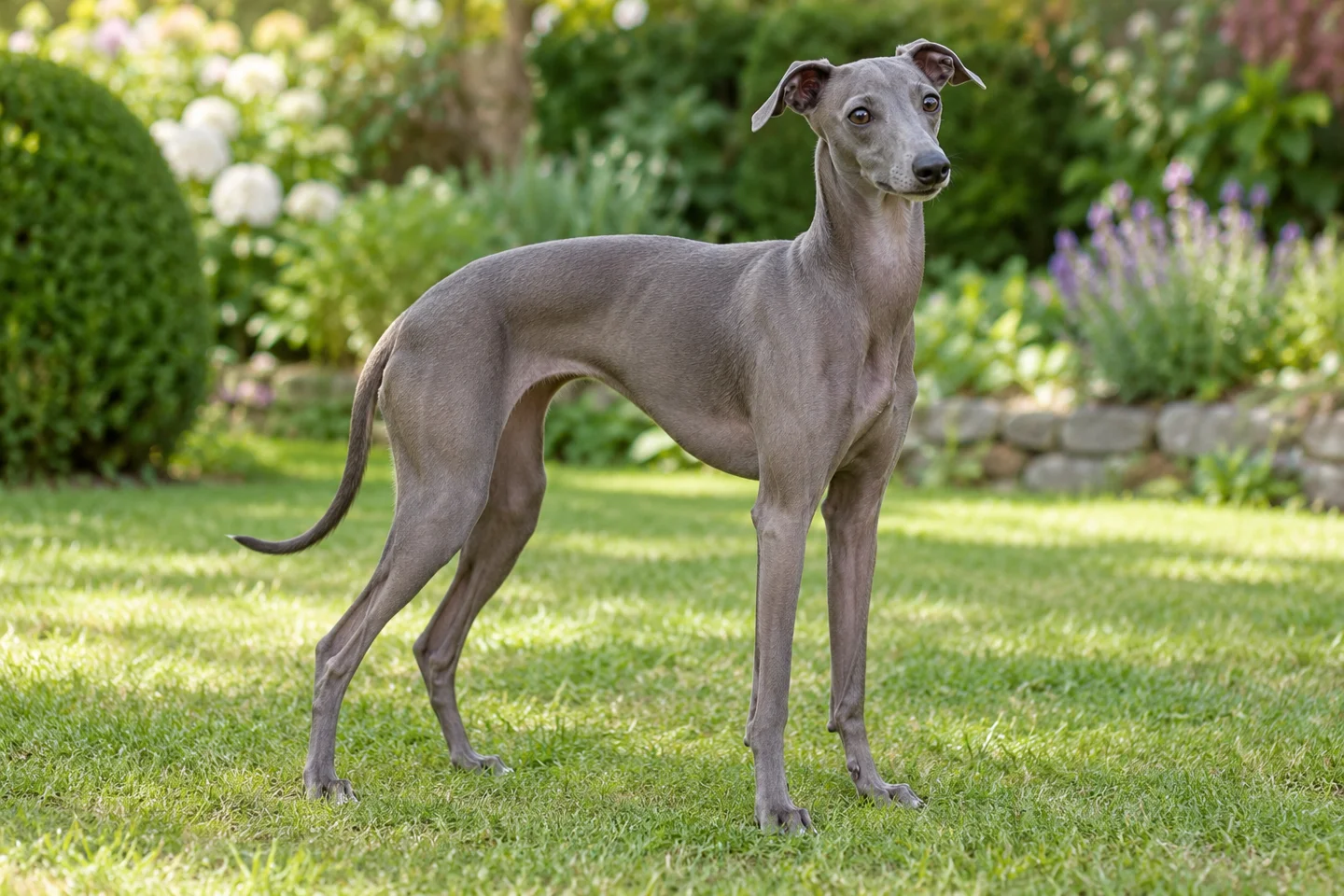
- Illustrated coat
- Solid slate-grey smooth coat
General information for owners. These articles have not been reviewed by a veterinarian. Medical decisions need your dog's history and an examination.
A small sighthound with real activity needs
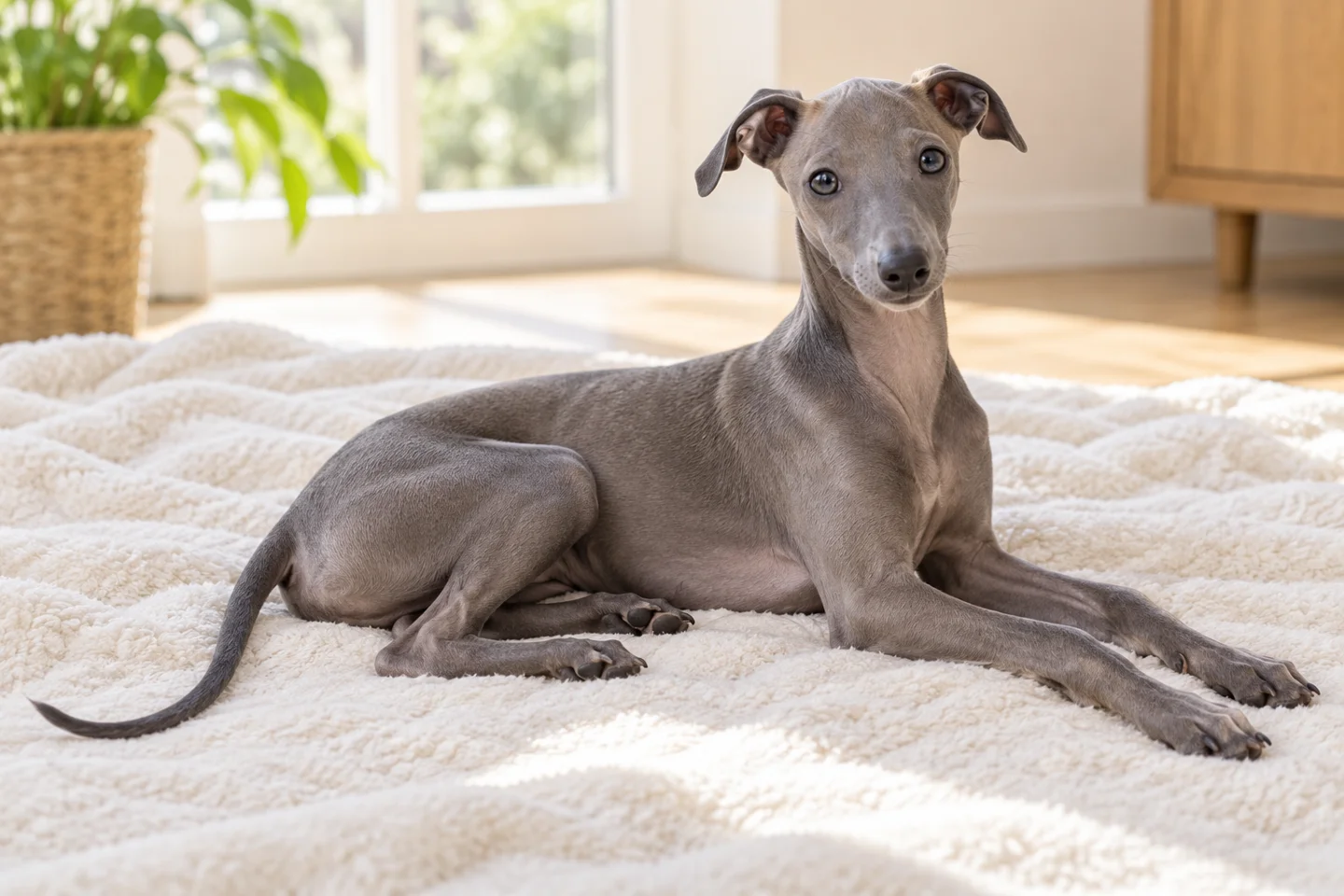
The Italian Greyhound is a small sighthound, not a decorative object that can have its movement and choices managed entirely by being carried. It needs safe opportunities to investigate, learn, and rest, with care suited to its build and experience. Before choosing one, look at the floors, furniture, garden access, and company available in your home. Ask owners what an ordinary wet morning and working day involve. A quiet portrait on a blanket leaves many of those practical questions unanswered.
The FCI identifies Italy as the breed's origin and describes a long history of small sighthounds represented in art. Historical depictions supply context without proving every detail of the modern population's ancestry. The useful placement conversation concerns the actual family, health records, and how puppies are raised. Meet adults where possible and discuss their handling, travel, toileting, and responses to unfamiliar animals. A source should be willing to explain routine difficulties as well as attractive traits. The animal's small size does not make those needs optional or guarantee that every home can meet them.
Measurements and the body beneath a fine coat
The FCI standard gives a height of 32–38 cm for both sexes and a maximum conformation weight of 5 kg. Those are references within that standard, not instructions to restrict a particular dog's food until it reaches a number. The outline is slender and roughly square, with a narrow head, small folded ears, fine legs, and a thin low-carried tail. The illustrations use solid slate-grey. Other recognized colors exist, and an AI image cannot establish pedigree, correct movement, or an individual's medical condition.
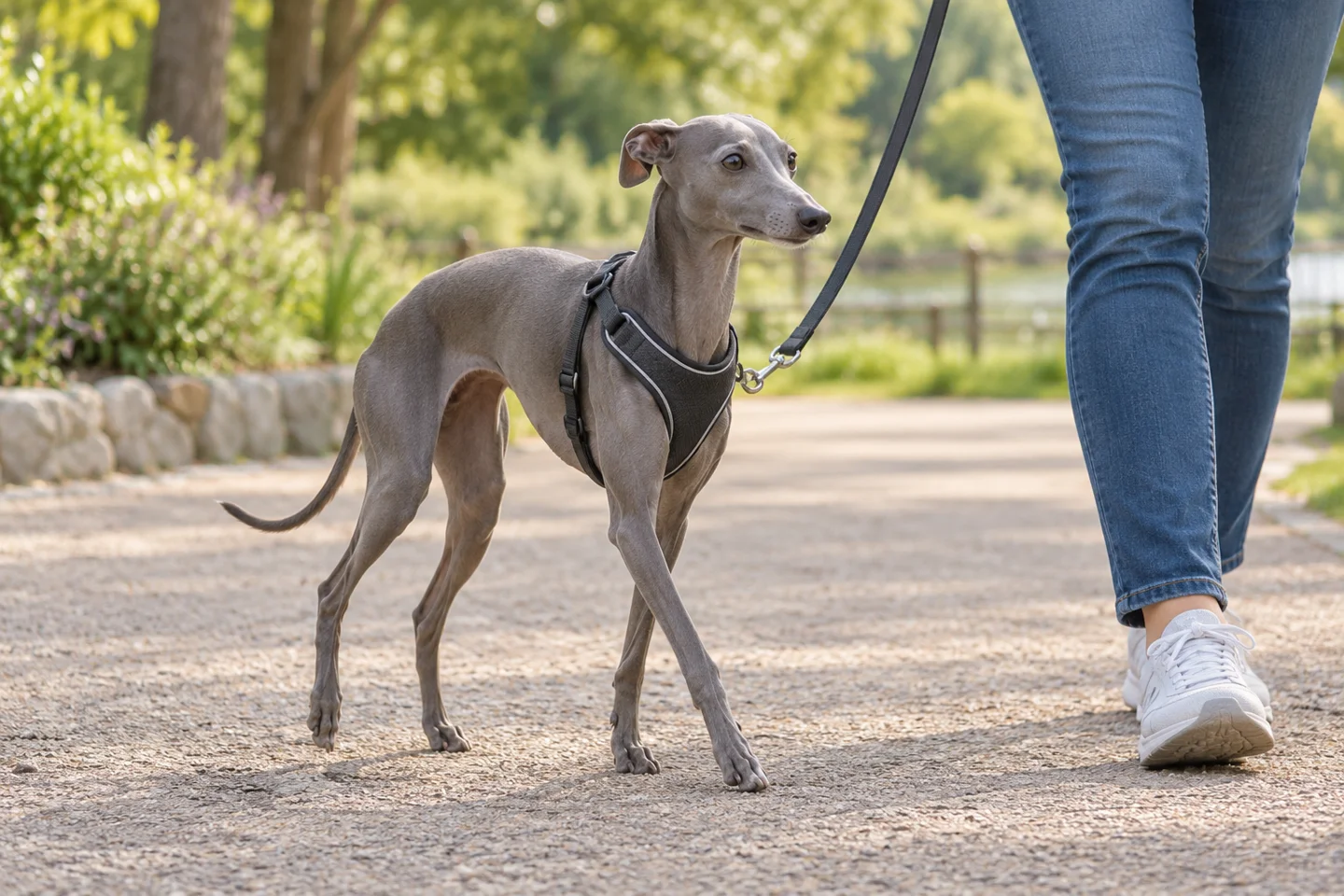
Ask your veterinary team to show how to judge condition and muscle on this dog. The visibility of a rib or a tucked abdomen should be interpreted in context rather than through a single photo comparison. Fit equipment carefully around the narrow head and chest, checking that it cannot be backed out of without being restrictive. Reassess during growth or if weight changes. The travel restraint and sleeping area should allow comfortable positions. A small body makes some logistics easier, but it does not remove the need to measure, fit, and check how the individual actually moves.
Safe movement around furniture and people
Before a puppy arrives, identify places where it could fall, collide, or be dropped. Tall furniture, a slippery approach, and excited games around adults' feet deserve practical changes. The breed health coordinator discusses leg-fracture care, making injury planning a sensible topic without implying that every Italian Greyhound is destined to break a leg. Ask the veterinary team how to arrange activity and household access for the youngster. Avoid carrying the dog casually while also opening doors, managing bags, or supervising a child.
Teach a predictable route to resting places and prevent unsafe access while learning develops. An injured dog needs clinical assessment and individual instructions, not a makeshift treatment copied from another owner's fracture story. If a serious injury is suspected, contact the clinic, limit further risky movement, and follow transport advice. Recovery requirements depend on the actual injury and treatment. A period of restricted activity can change care needs substantially, so consider who could provide supervision and follow-up if it happened. This is a practical support question rather than a reason to prevent normal appropriate movement throughout life.
Weather and toileting should be planned together
The Italian Greyhound Club of America notes that a fine coat and little body fat make prolonged exposure to extreme cold unsuitable. Assess the individual and conditions rather than assuming every outing can continue unchanged because the dog is small enough to carry home. Ask about appropriate clothing when needed and check that it fits without rubbing or restricting movement. Wet equipment or clothing should not be left against the skin. The plan should provide comfortable access to toileting, shelter, and rest.
Create a consistent toilet routine around the dog's actual schedule. Guide it to a suitable place, give it enough time, and reward success. Do not punish an accident or force a frightened animal into unpleasant conditions as a lesson. If difficulty persists, examine access, timing, surfaces, and health with appropriate help. A new pattern of urination or distress is a clinical question rather than simply a housetraining failure. Prepare the same clear arrangements for a sitter so a change in carer does not mean entirely new expectations about where and when the dog can go.
Training on the ground as well as in your arms
Teach short practical skills where the dog can participate without being repeatedly lifted into position. Orientation to the handler, approaching for equipment, moving a small distance, and pausing at an exit can all begin as easy rewarded steps. Keep unsafe entrances physically controlled while those responses develop. A return cue practiced indoors is not ready for a garden gate opening onto moving animals or traffic. Add difficulty gradually and use a secure setting for early outdoor work.
AVSAB recommends reward-based methods and advises against aversive training. Small size is not a reason to rely on grabbing, pushing, or physical correction. If the animal avoids a lesson, check footing, proximity, noise, and handling before increasing demands. A qualified instructor can help create manageable exercises and suitable spacing in a class. Explain established cues to other carers and record which settings are familiar. A dog should not have to discover a new person's expectations while frightened, physically uncomfortable, or already attempting to leave the situation.
Exercise for a young, adult, or older individual
Offer appropriate walking, investigation, and play according to the dog's current health and conditioning. Avoid making a fit adult's routine the target for a puppy or an older companion. Discuss sustained running, sport, or a substantial activity change with your veterinarian. A small enclosed area still needs inspection for gaps, footing, obstacles, and other users. Maintain control near roads, wildlife, and livestock. The animal's size does not prevent a quick movement from carrying it beyond the handler's ability to intervene.
Watch the aftermath of activity. A changed stride, repeated attention to one limb, reluctance to rise, or unusual fatigue needs assessment if persistent or concerning. Keep a manageable shorter route for difficult weather or interrupted days. Heat also requires decisions about water, surface, timing, and effort. Stop when the dog struggles and seek veterinary guidance for concerning signs. A successful routine leaves opportunities for comfortable recovery and rest rather than treating constant movement as the only way to meet a sighthound's needs or assuming a small companion requires no exercise planning.
Company, rest, and the household schedule
Ask a source how the adult dogs manage time without direct contact. Enjoying a lap or close company does not establish comfort during a workday absence. Teach short, manageable periods of independent rest gradually, beginning with an arrangement the animal can tolerate. Provide a quiet sleeping place where it is not repeatedly disturbed. If it shows distress, obtain help and review the care schedule. Leaving for longer periods until the dog stops reacting visibly is not a complete welfare or training plan.
Prepare backup care before travel or illness makes it urgent. A sitter should meet the animal, understand loading and handling, and know the toilet routine. Discuss whether a busy group setting or a calmer arrangement fits this individual. Give clear food and medication instructions and identify the receiving veterinary service. A household with only one workable carer needs to resolve that vulnerability before committing. The ordinary week should provide company and rest consistently, rather than relying on a dog's small size to make it portable into every environment regardless of comfort.
Socialization with protection from overwhelming contact
Work with the veterinary team to provide useful puppy experiences alongside local disease precautions. Observation from a comfortable place can teach about traffic, people, surfaces, and calm animals without requiring every greeting. Let the puppy approach and retreat. Avoid passing it between visitors or placing it among unfamiliar larger dogs because someone promises the encounter will build confidence. Keep experiences short enough for sleep and recovery. If fear repeatedly prevents participation, reduce the difficulty and obtain advice.
An adult entering a new home also needs a plan based on experience. Ask about travel, children, indoor floors, and unfamiliar animals rather than assuming maturity means every situation has been learned. Start with predictable rooms and routes, secure footing, and visitors who follow handling instructions. Add complexity according to the dog's response. A small animal remaining still in a person's arms may have little choice and should not automatically be described as comfortable. Useful social learning expands coping and choice, rather than supplying photographs that disguise an inability to leave.
Aggression and respecting a small dog's warnings
An Italian Greyhound can threaten or bite, and its size should not make a warning seem amusing or irrelevant. Stop if it stiffens, growls, snaps, or repeatedly attempts to escape handling. Note who approached, any food or object involved, and whether the animal could leave. Prevent repetition while obtaining advice. Do not invite another person to pick it up to prove that it usually accepts contact. A small dog deserves the same attention to context and comfort that would be given to a larger one.
New sensitivity during lifting, touch, or movement needs veterinary assessment. A qualified behavior professional can help create a humane plan where necessary. Teach voluntary exchanges for safe objects and leave food undisturbed. Avoid punishing warnings or physically removing a resting dog without considering an alternative cue and its comfort. If a professional recommends muzzle training, use an appropriate design and gradual introduction. Equipment remains one precaution; it cannot make rough handling or overwhelming proximity acceptable. Tell carers about actual incidents so the next necessary procedure can be planned safely.
Children, larger dogs, and smaller animals
Supervise children actively and teach them to interact without lifting, hugging, chasing, or climbing onto the dog. Provide a resting space they cannot enter and allow retreat to end contact. When adult attention is elsewhere, separate them comfortably. Ask a source about specific child experience, including ages and any warnings. Familiarity with one calm older child does not establish readiness for toddlers or busy visiting groups. The small body makes careful handling especially important, but it does not make the animal an appropriate responsibility for unsupervised play.
Introduce other dogs with attention to physical scale as well as behavior. A friendly large dog can still create a collision or overwhelming pursuit. Start with separate handlers and enough distance for both animals to disengage. At home, protect food and resting space while relationships develop. Cats, birds, and smaller animals need their own assessment; a sighthound identity does not answer the individual question. Keep necessary separation reliable and avoid using a chase as a test. Both animals' choices matter when deciding whether a meeting or play session is comfortable.
Grooming and dental care without a decorative routine
A fine smooth coat usually makes inspection straightforward, but care still includes skin, feet, ears, nails, and mouth. Use gentle tools and appropriate products, checking areas where clothing or harness straps rub. Persistent hair loss, redness, odor, or tenderness needs clinical advice rather than stronger washing. A visible coat change should not be diagnosed from color alone. Teach brief foot and face handling on secure footing so routine tasks do not begin with the animal being held through mounting resistance.
Discuss a dental plan with the veterinary team and ask for a demonstration of suitable home care. Report altered chewing, dropping food, reluctance to allow face contact, or a persistent change in breath. Visible deposits alone cannot establish the condition beneath the gumline, and cosmetic cleaning does not replace clinical assessment. Keep any previous dental findings with the medical history. A small mouth still needs an individual treatment decision, including preparation and aftercare where a procedure is necessary. A carer should know both the ordinary routine and which new observations need a call to the clinic.
Health screening and susceptibility tests
The AKC's core recommendations for Italian Greyhounds list patella, ophthalmologist, and thyroid evaluations. The Italian Greyhound Club of America gives additional guidance, including DNA tests for susceptibility to progressive retinal atrophy and primary closed-angle glaucoma, familial enamel hypoplasia, and genetic diversity. Preserve the word susceptibility where it applies. A result should be interpreted for the named test rather than described as excluding all eye disease or predicting exactly what will happen to an individual.
Request reports identifying the dogs and the dates and methods used. Ask the source to explain how the current program, clinical examinations, and family information informed its decisions. A repository, diversity assessment, and disease-related test are not interchangeable documents. If a finding is unclear, consult the appropriate clinician or health program. For an adopted adult, ask what monitoring or treatment is already underway and arrange continuity with your own clinic. Favorable family results remain useful information, while a new symptom still requires assessment. No screening program replaces the ongoing observation and care of the actual dog.
Feeding and the medical history you hand over
Review measured portions of a complete life-stage diet with your veterinarian. Body condition should be judged on this individual rather than by attempting to reach a conformation maximum or preserve an exaggerated thin outline. Include training food and extras in the record. Ask before adding supplements, particularly during growth. Persistent vomiting, altered thirst, unexplained weight change, or a new appetite problem needs assessment. Keep prescribed diet instructions clear for carers and avoid improvising repeated product changes without understanding why a problem continues.
Maintain an accessible history of injuries, dental procedures, medication, and any adverse reactions. Give the receiving clinic those records when moving or traveling. A serious injury, inability to bear weight, collapse, severe breathing difficulty, suspected poisoning, or repeated unsuccessful retching needs urgent veterinary contact. Follow transport instructions and avoid giving human medicines. A small animal can deteriorate while people debate possible causes online. Planning a clinical contact and practical way to transport it is more useful than assuming a carried dog is automatically comfortable enough to wait.
Mixes, sources, and realistic costs
An Italian Greyhound mix is not a size variety of the purebred. Ask what ancestry is documented and what was guessed from a slim body or folded ears. If parents are known, review relevant health information for both; crossing does not guarantee an average build or remove inherited concerns. For an adult, actual handling, size, coat, and behavior can guide placement. A puppy leaves more uncertainty about mature needs. Do not let a fashionable crossbreed label carry more weight than a detailed account of the animal's daily care.
Obtain local prices for food, prevention, training, suitable clothing when needed, equipment, and care during absences. Read insurance cover carefully, including injury-related limits and exclusions, and plan how an urgent bill would be financed. Ask a source what support remains after handover and how an unsuccessful placement would be managed. Meet the animal in a setting that allows useful observation rather than accepting a rushed transfer. A small dog can still need substantial time, clinical care, and careful supervision. The budget and backup plan should reflect those tasks rather than body size alone.
dogsDating meetings with physical scale in view
Use dogsDating to describe this Italian Greyhound's current comfort around unfamiliar animals. Mention whether a quieter route or similar-sized calm partner would help, while recognizing that size alone cannot establish compatibility. Choose a public location through an approximate area. Keep exact coordinates private and avoid sharing your home address to arrange an initial walk. Agree on separate adult handlers and a route where you can increase distance without crossing traffic or entering a crowded enclosure.
Begin by walking apart and let both dogs investigate their own surroundings. Do not assume an enthusiastic greeting from a larger dog is comfortable for a small one. If either animal becomes tense, cannot look away, or tries to leave, make more room or end the outing. Avoid toys, food competition, and free pursuit at the first meeting. Afterwards, note what actually felt manageable and decide whether another quiet walk is useful. A match can remain a walking arrangement with no physical play. Protecting space and allowing a calm finish can be the most successful outcome for both dogs.
Sources and editorial notes
Sources checked October 21, 2026. Breed measurements describe reference ranges, not a diagnosis or an individual dog's ideal weight. Images are AI-generated breed illustrations and do not document a particular dog or health condition.
- AVSAB: Humane Dog Training Position Statement
- VCA Animal Hospitals: Food aggression in puppies
- VCA Animal Hospitals: Common emergencies in dogs
- Orthopedic Foundation for Animals: CHIC health screening programs
- VCA Animal Hospitals: Aggression toward unfamiliar dogs, diagnosis
- VCA Animal Hospitals: Grooming and coat care for your dog
- AAHA: Feeding plans for healthy, appropriate weight cats and dogs
- VCA Animal Hospitals: Heat stroke in dogs
- AVSAB: Puppy Socialization Position Statement
- VCA Animal Hospitals: Dog behavior problems, aggression toward children
- American Kennel Club: Toy group health testing requirements
- Italian Greyhound Club of America: Health testing recommendations
- Italian Greyhound Breed Health Coordinator: Treating broken legs
- Fédération Cynologique Internationale: Italian Greyhound official breed standard
Keep getting to know dogs.
Read another guide or return to your dogsDating community.
Explore breed guidesBack to dogsDating