Japanese Spitz
A white-coated Japanese companion needing practical training, suitable exploration, undercoat care, and clear health information.
How these guides are researched and reviewed
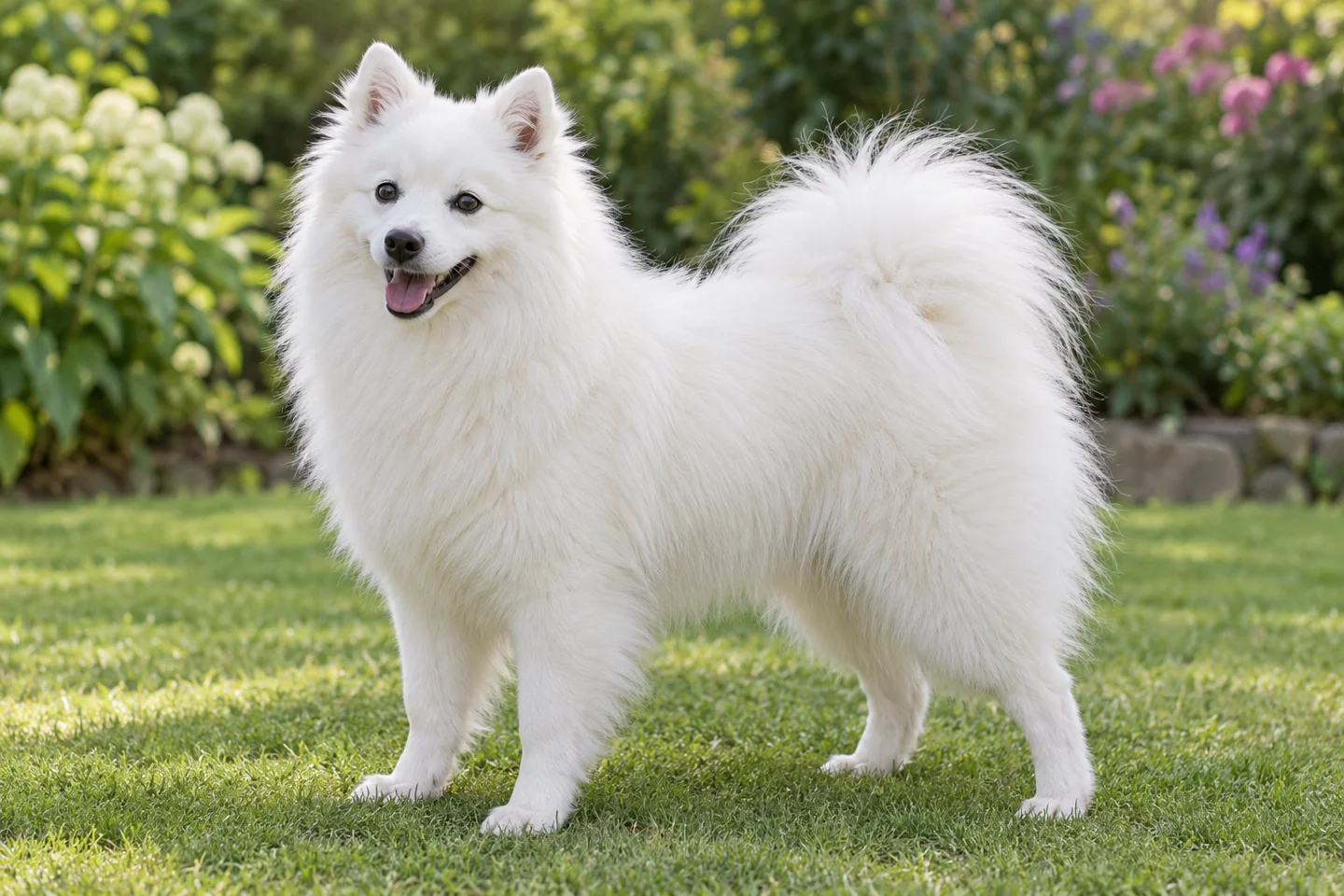
- Origin
- Japan
- FCI adult height
- Males 30–38 cm; females slightly smaller
- Coat
- Pure white stand-off double coat and feathered tail
General information for owners. These articles have not been reviewed by a veterinarian. Medical decisions need your dog's history and an examination.
A white companion with daily work to learn
A Japanese Spitz needs a household prepared for a lively companion under a substantial white coat. Plan walks, company, and teaching before deciding where a puppy bed will look attractive. Meet adults and ask how they behave when a visitor arrives or their owner leaves. The useful account includes both the enjoyable parts and the arrangements that take effort. You should know whether someone can provide care on a working day and what happens when the usual schedule changes.
The breed's pointed muzzle and erect ears differ from those of the short-faced Japanese Chin. Its size and outline also differ from a Samoyed or an American Eskimo Dog, even when a photograph makes white-coated dogs seem similar. Use reliable identity records when breed matters to your decision. For any individual, ask about current behavior and medical history. A resemblance can begin a conversation, but it cannot supply the evidence needed to predict care, temperament, or the dimensions of a growing puppy.
How the Japanese Spitz developed
The FCI traces development to white Spitz imported into Japan during the twentieth century, including dogs arriving through Siberia and northeastern China around 1920. It records a Japan Kennel Club standard established in 1948. Some ancestry details are expressed cautiously in that account and should remain so. The modern classification is a companion dog in the Asian Spitz section. Historical imports explain part of the background without making this breed a coat-color version of every European Spitz.
Ask breeders how they document their own families and what they seek when choosing a mating. Useful answers include ordinary handling, health information, and the ability to live with people, rather than only coat presentation. If you are considering an older dog, ask for its previous daily routine and the reasons for rehoming. An animal accustomed to a quiet rural setting may need careful preparation for an apartment corridor or public transport. The transition plan should follow actual experience, not assumptions about a companion classification.
Adult height and the structure under the ruff
The FCI height reference is 30–38 centimeters for males, with females slightly smaller; that standard provides no fixed kilogram range. It describes a pure white coat, dark eyes, black pigmentation, triangular upright ears, and a feathered tail over the back. The outer hair stands away from a soft dense undercoat. Coat volume can alter the apparent outline, so compare the animal beneath the hair rather than selecting for the largest ruff or the most compact photographic pose.
Check equipment by touch as well as sight. Part the coat where straps lie and ensure a harness is not loose beneath the apparent bulk. Recheck during growth and after a major shed. Choose a carrier, bed, and car restraint for actual measurements. A breeder or veterinarian can demonstrate a useful body-condition assessment so extra hair does not conceal weight gain. Adult size references help with planning, but they should not become feeding goals or a reason to dismiss a puppy's individual growth pattern.
Temperament requires observation in real settings
An alert expression cannot tell you whether a dog will cope calmly with a full hallway or a long afternoon alone. Ask to see how a Japanese Spitz recovers after excitement. Does it return to rest, follow every movement, or need someone to help it disengage? Those observations are more informative than a promise that the breed is easy. Decide where it will rest while you work, how visitors will enter, and what you will do if the dog finds the arrangement difficult.
Let a new arrival learn the home before inviting a succession of people. Keep meals and rest predictable and introduce rooms at a manageable pace. Notice what the dog chooses when it has space. If it repeatedly watches the window or patrols the front door, review those visual triggers and give it a quieter alternative. Reward time on a comfortable mat without turning every pause into an exciting event. Household manners develop through repeated ordinary experiences that the owner can support consistently.
Training useful choices before the busy outing
Start with a few skills you will use daily: coming when called at close range, moving onto a mat, and waiting while equipment is attached. Keep the reward easy to deliver through the ruff without grabbing the dog's head. Practice in a quiet room and change the surroundings gradually. A response learned beside the kitchen counter must be rehearsed elsewhere before you depend on it beside moving bicycles. Make success attainable and finish before a lesson turns into repeated failure.
AVSAB favors reward-based training and advises against painful or frightening corrections. When attention is lost, ask what changed. The dog may need greater distance, a shorter session, or a different reward. Work with an instructor who can explain the next step and the reason for it. Teach handling separately from obedience so a sit cue does not become a trap for an unpleasant procedure. For grooming, a brief comfortable position and a clear release can be more useful than demanding stillness through a long struggle.
Exercise for a companion that can still move
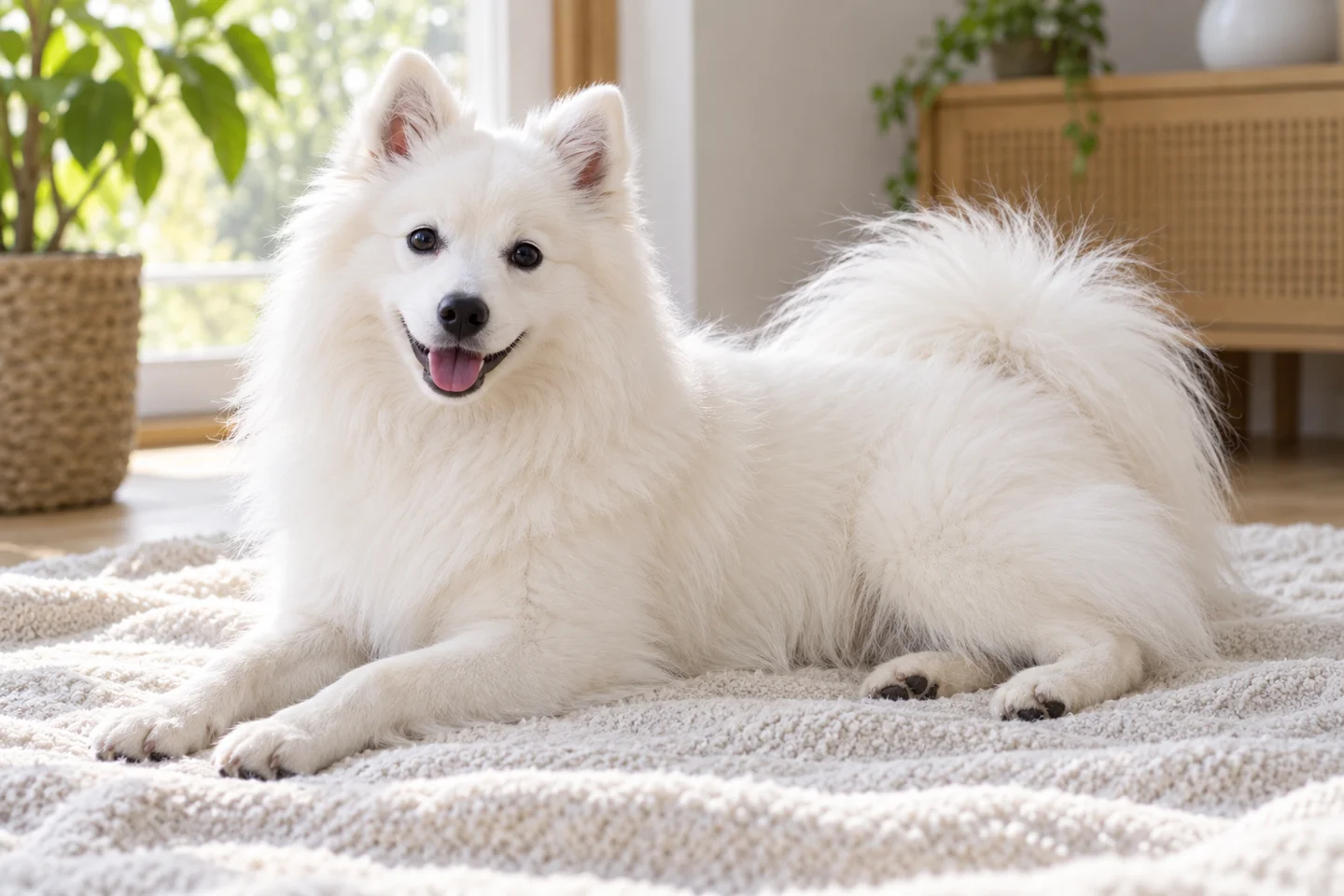
Arrange regular opportunities for walking, sniffing, and play suited to the individual's age and condition. A small companion should have meaningful activity rather than spending every outing inside a bag. Let the dog explore safe ground and practice simple skills without requiring constant fast movement. Ask your veterinary team about exercise during growth, after injury, or with an older animal. Watch recovery as well as enthusiasm, and report a persistent change in gait or stamina.
A thick coat does not make hot conditions harmless. Choose cooler times, offer water, and change the route if the dog struggles. Avoid relying on a haircut or cooling item as the only safeguard. Plan an indoor alternative for days when outdoor conditions are unsuitable, such as short searches with part of the measured meal. Leave enough quiet time between activities for genuine rest. If you find yourself escalating exercise simply to keep the dog quiet indoors, review its overall arousal and settling routine with qualified help.
Children and visitors need clear arrangements
A child's affection should not mean unlimited access to the dog. Explain how to invite contact and allow the Japanese Spitz to leave. An adult should supervise closely and intervene when the interaction becomes too animated. Use a protected rest area during meals, sleep, or times when children are running through the house. Do not ask a child to restrain the dog for brushing or to remove a valued object from its mouth.
Visitors need instructions before the door opens. If the dog is excited, arrange a barrier and let everyone settle before deciding whether contact will occur. A quiet visitor sitting sideways may be easier than several people reaching at once. The animal's white coat can invite touching by strangers in public, so be prepared to decline an approach when it is tired or uncomfortable. Explain the reason briefly and keep moving. The owner is responsible for preserving space even when someone else expects a greeting.
Aggression and the difference between noise and safety
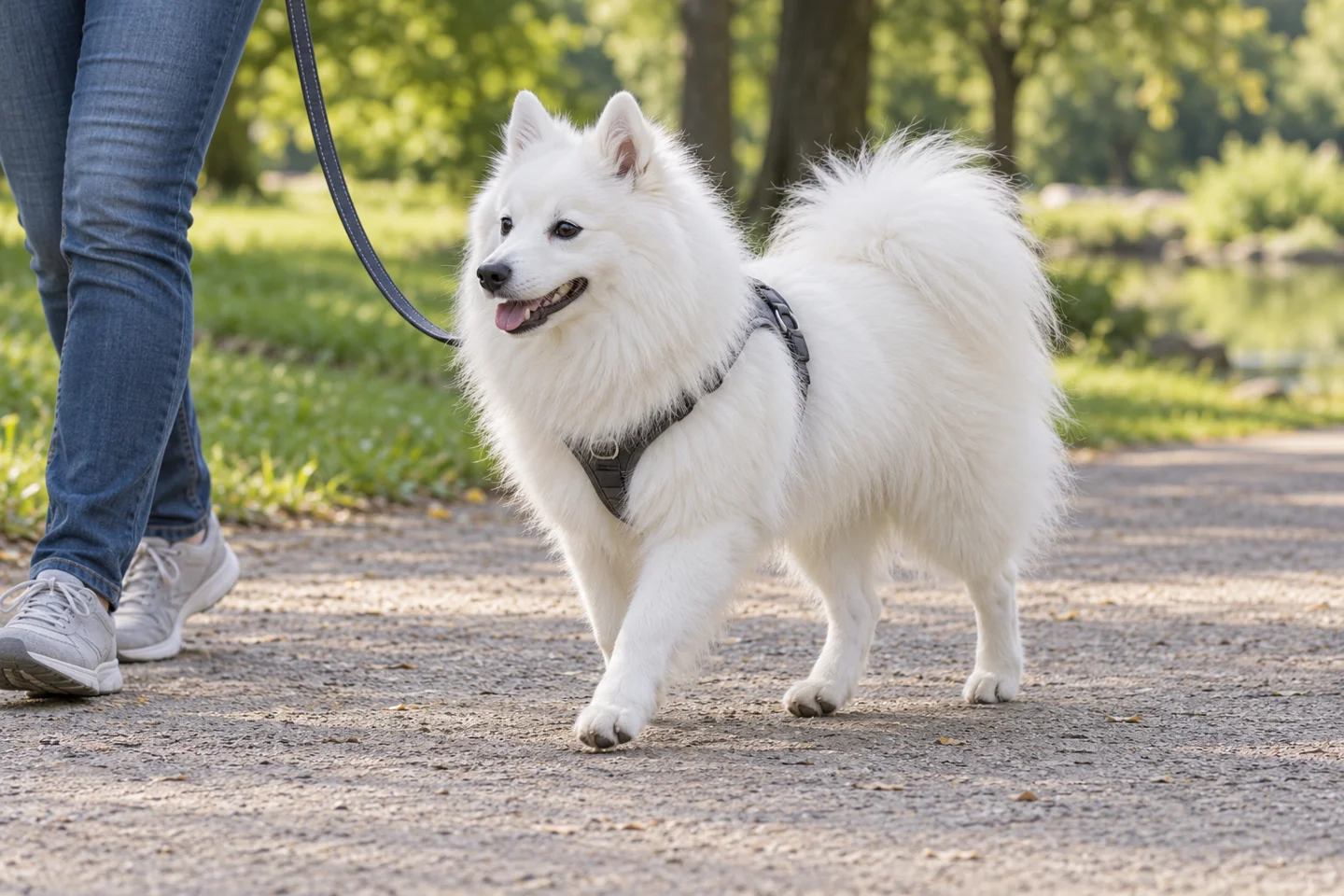
Barking, lunging, stiffening, and snapping need a description of their circumstances. A dog may seek distance, protect a resource, or become frustrated, and the visible action alone does not establish its motivation. VCA advises careful assessment of aggression toward unfamiliar dogs. Maintain distance while professional advice is arranged rather than releasing a lunging dog to test whether it really means it. The absence of a previous bite does not make that experiment appropriate.
At home, avoid creating confrontations over food or a resting place. Teach a voluntary exchange with low-value safe items and provide separate resources where animals compete. If handling suddenly produces warnings, contact your veterinarian about pain or illness. Record the event without turning it into a personality label. Share the practical restrictions with sitters and family so they can follow the same plan. Punishing a warning can increase conflict and remove a signal that the dog needed more space or a different approach.
Other dogs cats and managed introductions
Before adding a Japanese Spitz to an existing household, describe the resident animals honestly to the source. Ask about the dog's observed responses to similar animals and what remains unknown. Arrange introductions where handlers have room to move, and allow parallel activity without a compulsory close greeting. Keep feeding and resting arrangements separate at first. A larger dog that wants energetic play may be an uncomfortable partner even if it has no aggressive intent.
For cats, provide routes and elevated resting places the dog cannot block. Protect small pets behind secure barriers and never use forced proximity as a compatibility test. Look at whether either animal is repeatedly hiding, guarding access to a person, or struggling to rest. Introductions should be adjusted from these observations rather than following a fixed timetable. If the household cannot maintain necessary separation, address that before placement. A hopeful statement that animals will eventually sort things out does not provide a workable welfare or safety plan.
Grooming through a white double coat
Ask a groomer to show how to reach through the undercoat gently. Brushing the tips alone can leave tangles behind the ears, under the front legs, and beneath equipment. Use short sessions and a stable surface. Check the skin as you work and stop when an area is sore. VCA recommends regular coat inspection and cautions against cutting tight mats with scissors. Skilled help is safer when the boundary between skin and tangled hair is hard to see.
White hair may make dirt easy to notice, but a clean-looking surface is not the whole assessment. Examine damp areas, skin folds created by equipment, and hair around the feet. Discuss bathing products and drying with someone familiar with the coat. Avoid chasing whiteness with strong products when the dog has irritation or a persistent odor that needs veterinary attention. A practical care routine should be possible between appointments. Write down the tools and technique demonstrated so another carer can maintain it without improvising uncomfortable procedures.
Shedding weather and skin changes
Expect loose hair to require household maintenance, especially when undercoat is being shed. Plan time for gentle removal and adjust sessions to what the individual tolerates. Do not let an impressive full coat conceal a painful knot or irritated patch. Part the hair where the dog scratches or licks and seek veterinary advice if the skin looks abnormal. A photograph cannot establish whether a thin area is ordinary shedding, friction, parasites, or a medical problem.
Ask for individual advice before major clipping. Coat management and heat management are related practical decisions, but neither has a single solution that applies to every dog and climate. Keep the animal cool through sensible activity and environment choices. After rain, dry it comfortably and check areas that remain wet beneath straps. Record when a problem started and which products were used. Those details help a clinician investigate a change more effectively than repeated washing with increasingly strong shampoos chosen from online recommendations.
Health questions and kneecap assessment
The AKC breed information notes that cases of patellar luxation occur in Japanese Spitz and that a veterinarian can assess this. Ask a breeder which examinations are used, whether results identify the actual parents, and what conditions have appeared in relatives. Do not interpret a short screening list as evidence that every inherited disease is absent. If a source follows a particular national program, request its current requirements and the reports that apply to the planned litter.
For a dog that skips, limps, or avoids familiar movement, seek clinical assessment rather than deciding from a video that the kneecap must be the cause. A routine examination, structural assessment, and genetic test answer different questions. Preserve previous treatment records and explain what activities provoke the change. With an adopted adult, missing ancestry should remain recorded as missing. Current care can still be planned from examination and observed needs without inventing favorable parental results or borrowing a checklist from a different Spitz breed.
Feeding dental care and everyday prevention
Measure the daily food and include training treats in the total. Choose a complete diet for life stage and review body condition with your veterinarian rather than judging weight from the ruff. AAHA's guidance keeps extras to a small share of calories. Give sitters clear portion instructions, particularly when several people offer rewards. If appetite, thirst, elimination, or weight changes persistently, arrange an assessment instead of assuming an energetic appearance rules out illness.
Ask the clinic to demonstrate mouth and ear care. Introduce brief checks while the dog is comfortable and reward cooperation. Redness, odor, discharge, or painful chewing warrants advice. Use only products appropriate to the animal and current instructions, and avoid putting swabs deeply into an ear. Keep preventive appointments and parasite protection suited to your location and travel. Maintain an urgent-care contact and transport plan. Difficulty breathing, collapse, severe pain, or suspected poisoning should lead to prompt veterinary contact rather than prolonged internet troubleshooting.
Mixes and the cost of a long commitment
A white Spitz-like cross can resemble several breeds. Ask what parentage is documented and what the label actually means. Japanese Spitz mixes do not form a single predictable type, and a nickname cannot guarantee adult coat, size, or temperament. Evaluate known parents where possible and discuss their relevant health information. For an adult, focus on the dog you can observe: comfortable movement, handling needs, response to people, and the amount of coat maintenance required.
Obtain realistic local costs for food, veterinary care, grooming assistance, and care while you work or travel. Include time for teaching and coat inspection in the decision. A purchase price does not measure the support a source will provide, so ask about follow-up and return arrangements. Read contracts and insurance terms before making commitments. If regular company or coat care would be difficult now, address that directly. The appropriate home is one that can sustain the ordinary routine when the novelty of a white puppy has passed.
dogsDating plans with room for a quiet start
Use dogsDating to describe what your dog actually enjoys, including preferred pace and space around unfamiliar partners. Keep exact coordinates and your home address private, and agree on a public meeting location using only an approximate area in the profile. Choose a route with an easy way to turn away. Confirm that each adult will handle one dog and that neither expects immediate off-lead play. A first outing should be easy to shorten.
Begin far enough apart for both dogs to look around and move comfortably. Walk in the same direction and leave shared toys or food games for another context. Increase distance if either animal stiffens, repeatedly barks, or cannot disengage. A good meeting may end after a short parallel walk. Note whether a quieter entrance or a wider path helped, and use that information next time. The aim is compatible company that respects the dogs' responses, with greeting and physical play remaining optional rather than an obligation.
Sources and editorial notes
Sources checked October 21, 2026. Breed measurements describe reference ranges, not a diagnosis or an individual dog's ideal weight. Images are AI-generated breed illustrations and do not document a particular dog or health condition.
- AVSAB: Humane Dog Training Position Statement
- VCA Animal Hospitals: Food aggression in puppies
- VCA Animal Hospitals: Common emergencies in dogs
- Orthopedic Foundation for Animals: CHIC health screening programs
- VCA Animal Hospitals: Aggression toward unfamiliar dogs, diagnosis
- VCA Animal Hospitals: Grooming and coat care for your dog
- VCA Animal Hospitals: Ear infections in dogs (otitis externa)
- AAHA: Feeding plans for healthy, appropriate weight cats and dogs
- VCA Animal Hospitals: Heat stroke in dogs
- VCA Animal Hospitals: Dog behavior problems, aggression toward children
- FCI: Japanese Spitz official breed standard
- American Kennel Club: Japanese Spitz care and health
Keep getting to know dogs.
Read another guide or return to your dogsDating community.
Explore breed guidesBack to dogsDating