Japanese Terrier
A lightly built Japanese terrier with a very short coat, lively movement, and care needs that include weather comfort, teaching, and respectful handling.
How these guides are researched and reviewed
- Origin
- Japan
- Adult height
- FCI approximately 30–33 cm, both sexes
- Coat and tail
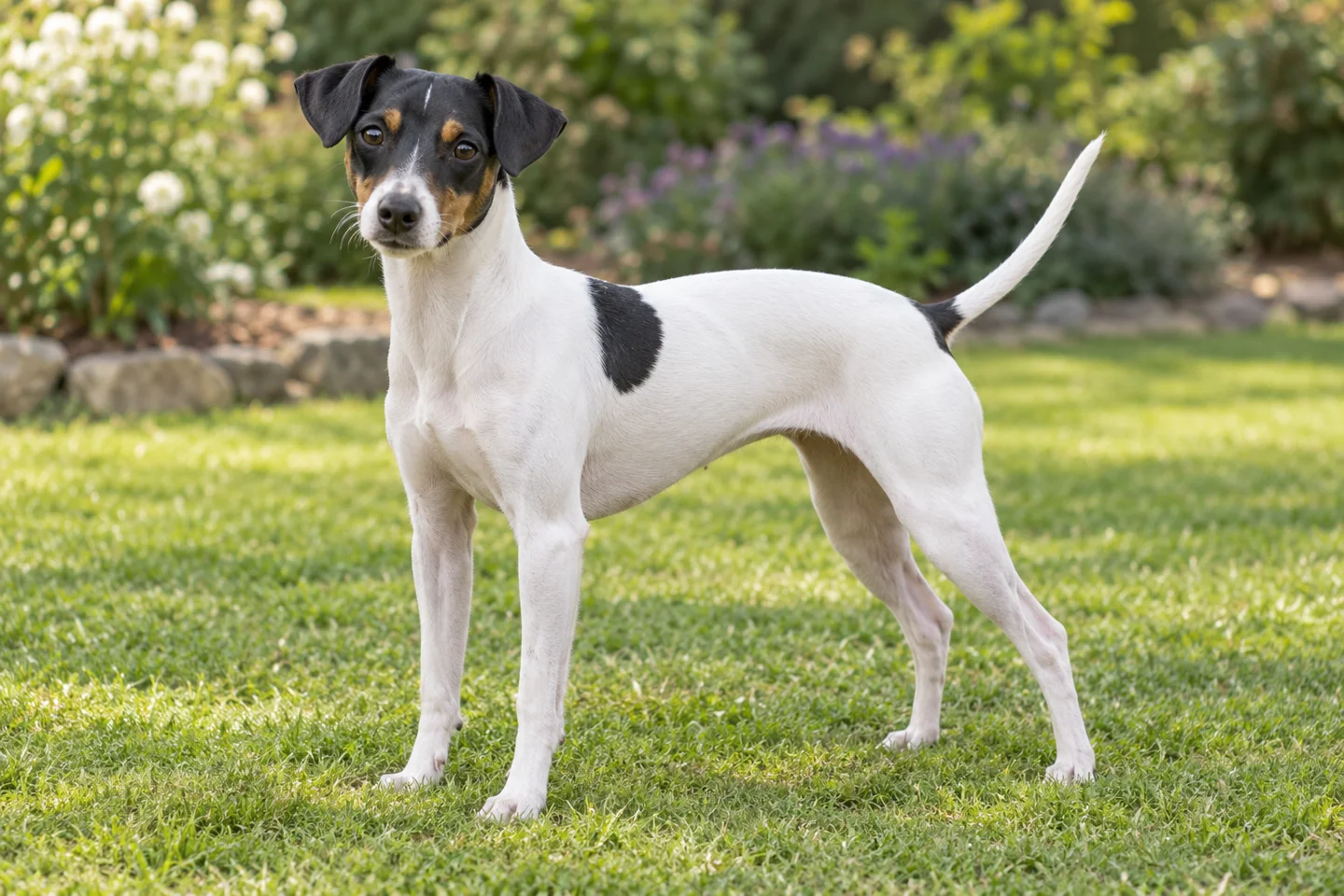
- Very short smooth coat; illustrations retain a full natural tail
General information for owners. These articles have not been reviewed by a veterinarian. Medical decisions need your dog's history and an examination.
A small terrier with a very short coat
The Japanese Terrier is a compact, lightly built dog whose smooth coat leaves its outline easy to see. Choosing one should begin with the life you can offer: everyday walks, company, learning, and protection from uncomfortable conditions. Ask to meet adult dogs and spend time watching how they respond to ordinary movement. An amusing photograph or a promise that a small dog needs little attention supplies too little information for a household decision.
This breed has a separate identity from the Japanese Chin and Japanese Spitz. The FCI places it among small terriers and describes a lively temperament. That classification offers background, but it cannot tell you whether a particular animal is comfortable alone, accustomed to children, or ready to share your home with another pet. Ask the source to describe those situations individually. Where experience is missing, plan to introduce it gradually rather than assuming a friendly first impression fills every gap.
Nagasaki origins and modern identity
The FCI account traces the Japanese Terrier to crosses involving smooth-haired Fox Terriers taken to Nagasaki from the Netherlands, along with small native dogs or pointers. It describes planned breeding beginning around 1920 and an established type around 1930. Early dogs were also kept as companions in Japanese port cities. The account helps explain the terrier outline and companion role without requiring owners to repeat unsupported legends about a precise founding pair or an unchanged ancient lineage.
For a modern dog, identity should come from reliable records and a knowledgeable source. Ask how the breeder documents ancestry and which organization maintains it. For rescue, distinguish a documented Japanese Terrier from a dog described as terrier-like because of appearance. Either can deserve a suitable home, but the information should be presented accurately. Discuss what the source actually knows about behavior and health. A clear admission of missing history is more useful than an impressive label used to imply certainty.
Adult measurements and natural features
The FCI adult height is approximately 30–33 centimeters for both sexes. Its coat is extremely short, and the usual description combines a black, tan, and white head with a largely white body carrying permitted markings. The ears fold naturally forward or outward, and a natural tail tapers with a slight curve. This guide's illustrations retain natural ears and a full tail. They depict a selected example rather than showing documentary evidence about an actual pedigree dog.
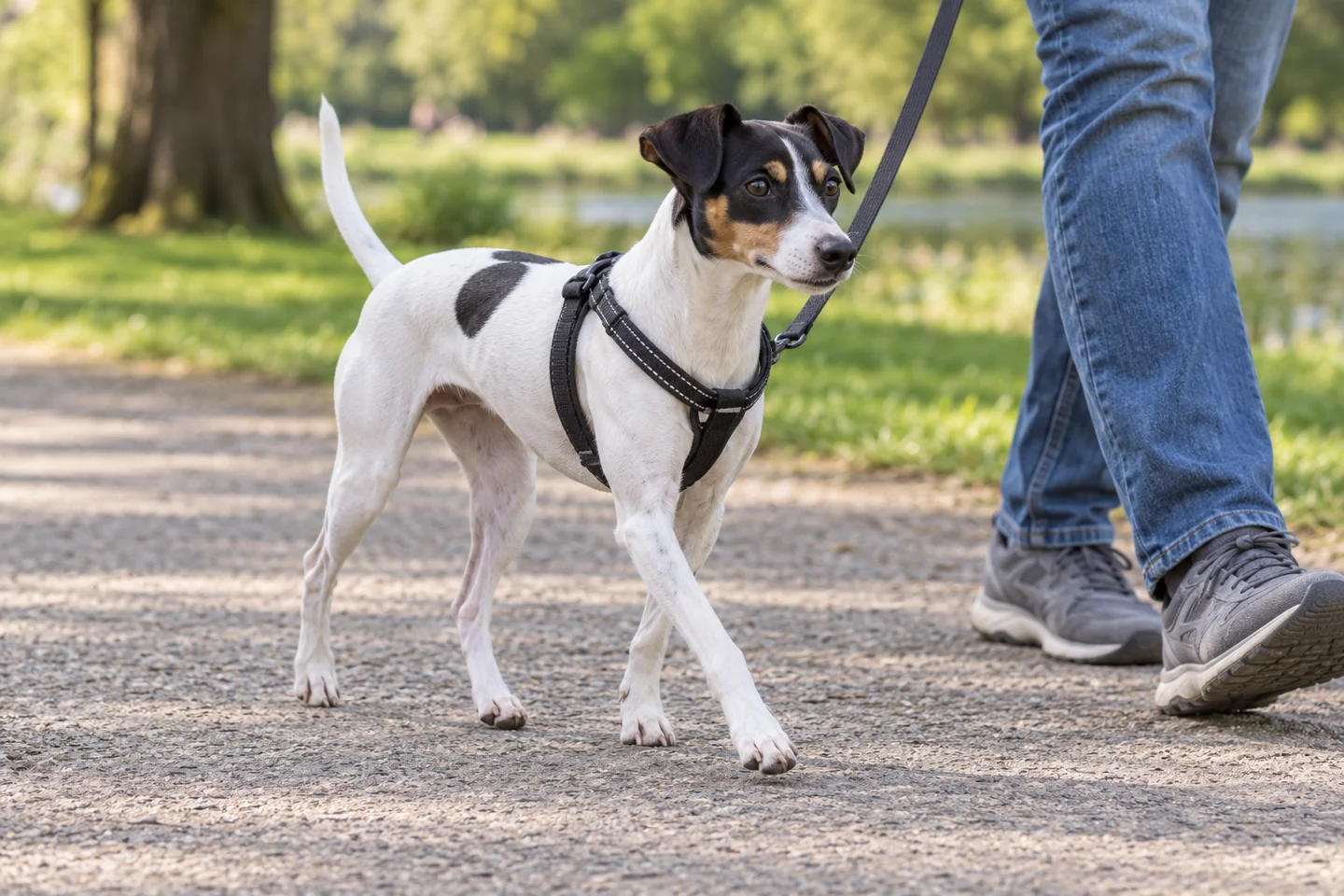
Use measurements for practical preparation. A lightly built small dog may need equipment designed to fit a narrow frame, so check that straps cannot slip while allowing comfortable movement. Review fit after growth or a change in body condition. Set up a secure travel space and an entrance arrangement that prevents escape during a delivery. Neither low weight nor short legs should be assumed from the name alone. The individual in front of you needs its own assessment and properly fitted equipment.
Planning warmth shade and comfortable rest
A very short coat gives you little margin for ignoring weather discomfort. Watch the individual on cold, wet, or windy days and provide a sheltered place to rest. Discuss whether suitable clothing would help, then check that it does not rub or restrict movement. Introduce it gradually and inspect the skin after wear. Do not leave a dog outside because an online description presents the breed as hardy or adaptable. Comfortable housing is a continuing responsibility.
In warm weather, choose shade and manageable activity and keep water available. A short coat does not prevent overheating. Change the outing if the dog appears to struggle, and contact a veterinarian urgently when there is serious distress or collapse. Make these limits part of any sitter's instructions. The home should also offer a bed away from drafts and a surface on which the animal can rest securely. Practical comfort matters more than matching a room's appearance or treating clothing as an accessory chosen only for photographs.
Household temperament and useful questions
Ask how the terrier behaves when something unexpected happens. Does it approach, watch from a distance, bark, or seek its familiar person? Ask what helps it recover and return to rest. These details let you compare the animal's needs with your home. A household with frequent parties, visiting children, or a noisy shared corridor should discuss those conditions directly. Describing every small terrier as equally sociable prevents a useful conversation about the particular dog.
Prepare an uncomplicated first week. Give the animal a quiet place, keep the route outside predictable, and teach where food and rest happen. Let it investigate without introducing every room and visitor at once. Notice the activities that lead to comfortable settling and those that leave it overexcited. A short daily record can reveal patterns. If something becomes persistently difficult, ask for professional help while the problem is manageable rather than waiting for the whole household routine to revolve around avoiding it.
Training around movement and curiosity
A small dog can learn to move toward a handler, leave an interesting object, and wait while a lead is attached. Begin where distractions are limited and reward promptly. Keep your body position comfortable for the dog instead of continually reaching down over it. A low hand target may be useful if introduced carefully. Practice short responses around mild versions of ordinary distractions before trying a crowded pavement or a place where wildlife is moving nearby.
AVSAB recommends reward-based methods. Avoid using physical intimidation to compensate for a task that was introduced too quickly. If the dog ignores a familiar cue, review what made the situation harder and reduce the challenge. Use management to prevent unsafe rehearsals, such as a closed door while equipment is fitted. An instructor should explain how to build the skill and how you will recognize progress. A dog that has been moved by hand through every situation has had fewer chances to learn a voluntary response.

Exercise and a secure place to explore
Plan activity around the animal's age, fitness, and behavior afterward. Short exploratory walks, controlled play, and simple searches can provide different opportunities to move and learn. Avoid assigning a universal number of exercise minutes to every Japanese Terrier. Ask your veterinarian about suitable activity for a puppy or a dog returning from illness. Report repeated limping, unusual fatigue, or reluctance rather than assuming the animal is simply unwilling to cooperate.
Choose secure places for any freedom from the lead. A small gap beneath a fence may be enough to defeat an enclosure that looks adequate for larger dogs. Inspect it before releasing the animal and reassess after repairs or ground movement. Keep wildlife and traffic in mind when planning routes. Have a shorter option available on an uncomfortable day, and preserve quiet rest between outings. More excitement is not always the solution to a terrier that struggles to settle indoors; teaching rest and reducing triggers may also be needed.
Socialization for a small alert observer
Ask the veterinary team how to combine early experience with appropriate disease precautions. Let a puppy observe manageable versions of everyday events, such as a person carrying a bag or a bicycle passing at a distance. Give it room to move away and keep sessions brief. Exposure that repeatedly produces fear should be changed. It is possible to see more of a place than the animal can currently process, especially when people keep approaching a small dog.
An adult with limited experience needs the same attention to pace. Start with quiet surroundings and use what you learn to choose the next outing. Avoid carrying it into a crowd and assuming that being held makes the experience comfortable. Check whether it can relax or take an easy reward rather than simply remaining still. Seek advice when fear interrupts routine activities. Good preparation includes learning to travel, rest in another room, and accept useful handling, all introduced in manageable steps.
Children and the risk of casual handling
A Japanese Terrier should have a protected resting area and an adult supervising contact with children. Teach children to let it approach and to stop when it leaves. They should not carry it through the house, chase it beneath furniture, or hold it still for another child. Small size can make an animal easy to corner and easy to injure accidentally. An adult must change the arrangement before rough play or fear becomes a confrontation.
Choose activities that preserve space. A child can help prepare a simple search while an adult manages the dog, or sit quietly while it chooses whether to approach. Keep meals and chews separate from children's play. When the supervising person needs to answer the door or complete another task, use a comfortable barrier. Ask a rescue for specific observations around children of similar ages. A broad family-friendly label does not tell you what was assessed, how long the contact lasted, or what support made it successful.
Aggression should change the situation early
If the dog guards a lap, stiffens over food, or snaps during dressing, stop and consider the circumstances. Prevent another attempt while you arrange appropriate help. A new warning during handling needs veterinary assessment because discomfort can alter behavior. Do not repeat the action to show someone that the dog always does it. A video is not worth creating another risky encounter, and a small animal's warning deserves the same serious attention as a larger dog's.
VCA describes several motivations for aggression toward unfamiliar dogs. Lunging or barking does not prove that the animal wants friendly contact. Keep a safe distance and obtain a qualified assessment. Avoid taking valued items by force or punishing a growl to make the dog appear more agreeable. Teach useful alternatives under guidance and tell carers the exact restrictions they must follow. A clear record should include what happened before the event, what the animal could escape from, and how it recovered once pressure was removed.
Other animals and living behind secure barriers
Discuss resident cats, dogs, and small animals before placement. Terrier ancestry makes it sensible to ask about observed chasing rather than assume that a small companion has no interest in movement. Protect small pets in secure housing and do not offer them for a close inspection held in someone's hands. A cat needs a reliable route away and resting places the dog cannot block. Introductions should preserve those choices from the beginning.
With another dog, assess play style and physical difference as well as apparent friendliness. A boisterous larger partner can overwhelm the Japanese Terrier without intending harm. Begin with managed walking or quiet shared space and stop when either animal cannot disengage. Separate meals and valuable objects while you learn about their behavior. Some homes will need continuing management, and that should be part of the decision rather than a surprise after arrival. The owner's confidence cannot replace a safe physical arrangement.
Grooming when the skin is easy to see
The short coat reduces the amount of combing required, but inspection still matters. Use gentle tools and notice areas rubbed by a collar, harness, or coat. Look at feet after rough ground and seek advice for persistent licking, swelling, or discomfort. A sparse covering can make marks visible without revealing their cause. Avoid diagnosing allergy, infection, or normal pigmentation from a photograph or using stronger products each time a patch fails to improve.
Ask your veterinary team or groomer to demonstrate nail care and introduce the tools gradually. Practice a stable standing position before expecting the animal to accept a full session. Bathe when needed with suitable products and rinse according to instructions. Dry comfortably and provide warmth afterward when conditions require it. A low-maintenance coat should mean a manageable routine, not the absence of care. Record anything unusual during handling so the next clinician or carer receives useful information rather than a general comment that the skin is sensitive.
Health information without an invented breed panel
For a less numerous breed, ask the source which health assessments it uses and why. Request identifiable findings rather than a general statement that the parents were checked. Discuss significant conditions in relatives and whether later owners report diagnoses back to the breeder. Do not copy a mandatory checklist from another terrier or use a commercial DNA panel as proof that every inherited problem has been excluded. The evidence should match the family and the question being asked.
Arrange a current examination after placement and bring previous records. Tell the veterinarian about changes in gait, appetite, drinking, or tolerance of handling. With an adult whose ancestry is unknown, record that gap explicitly. Current treatment and prevention can still be planned without inventing parental clearances. Know the urgent-care route for serious injury, collapse, breathing difficulty, or suspected poisoning. An energetic appearance on one day is not a reason to delay assessment when the animal's normal behavior has changed.
Food mouth care and practical prevention
A complete food appropriate to life stage should form the main diet. Measure portions and include training rewards when reviewing intake. Ask the veterinary team to assess body condition rather than relying on a table copied from an unrelated toy breed. AAHA recommends limiting extras so they do not displace balanced nutrition. Keep a clear feeding record if several people help care for the dog, including what is given during lessons and walks.
Introduce mouth and ear checks calmly, with rewards for brief cooperation. Ask which dental routine and products are suitable. Report changes in chewing, persistent bad breath, ear odor, or repeated head shaking. Avoid using another animal's medication or deep cotton swabs in the canal. Prevention should also reflect actual travel and local parasite risks. Keep the plan easy for a sitter to understand: current food, prescribed care, important restrictions, and the number to call. A complicated list nobody follows is less useful than accurate instructions that fit the individual.
Mixes and choosing a realistic source
Japanese Terrier mixes can vary in adult size, coat density, ear carriage, and behavior. Ask what parentage has been established and what is simply an appearance-based guess. A predominantly white coat with a dark head is not enough to prove ancestry. No crossbreed nickname guarantees freedom from illness or a particular relationship with children. If parents are known, review relevant health information from both. For an adult, direct observation and foster reports may answer more practical questions.
Budget for the ordinary responsibilities of ownership, including veterinary prevention, equipment, training, and care during work or travel. Ask local providers for current costs rather than relying on a fixed estimate from another country. Review the source's support, return arrangements, and medical disclosure. Avoid a rushed decision made because a rare puppy is described as immediately available. Have transport, secure doors, and an appropriate daily routine ready first. The continuing ability to care for the animal matters more than the excitement of finding an unusual breed.
dogsDating meetings at the right scale
Describe your dog's response to other animals accurately on dogsDating. Mention the pace, space, and play styles it has handled well rather than promising that all meetings will be easy. Keep your exact coordinates and home address private. Agree on a public location from an approximate area and choose somewhere with a simple exit. Each adult should be able to manage their own dog without relying on the other person to prevent a close approach.
Start with parallel walking and enough distance for the terrier to observe comfortably. Keep the first outing free of shared toys and competition over food. Watch for stiff posture, repeated attempts to hide, or a partner whose movement is too rough. Increase space or finish when necessary. A successful match can be another calm walker whose owner respects those limits. After the outing, record useful details and plan from them. A short uneventful walk is a sound basis for familiarity, while compulsory play adds a demand the dogs may not want.
Sources and editorial notes
Sources checked October 21, 2026. Breed measurements describe reference ranges, not a diagnosis or an individual dog's ideal weight. Images are AI-generated breed illustrations and do not document a particular dog or health condition.
- AVSAB: Humane Dog Training Position Statement
- VCA Animal Hospitals: Food aggression in puppies
- VCA Animal Hospitals: Common emergencies in dogs
- Orthopedic Foundation for Animals: CHIC health screening programs
- VCA Animal Hospitals: Aggression toward unfamiliar dogs, diagnosis
- VCA Animal Hospitals: Grooming and coat care for your dog
- VCA Animal Hospitals: Ear infections in dogs (otitis externa)
- AAHA: Feeding plans for healthy, appropriate weight cats and dogs
- VCA Animal Hospitals: Heat stroke in dogs
- AVSAB: Puppy Socialization Position Statement
- VCA Animal Hospitals: Dog behavior problems, aggression toward children
- FCI: Japanese Terrier official breed standard
Keep getting to know dogs.
Read another guide or return to your dogsDating community.
Explore breed guidesBack to dogsDating