Jonangi
A practical guide to a little-documented Indian native dog, with clear limits on breed claims and detailed care, household safety, and introduction advice.
How these guides are researched and reviewed
- Origin reference
- India; reported in Andhra Pradesh
- Adult size
- Obtain individual measurements; no verified registry range used
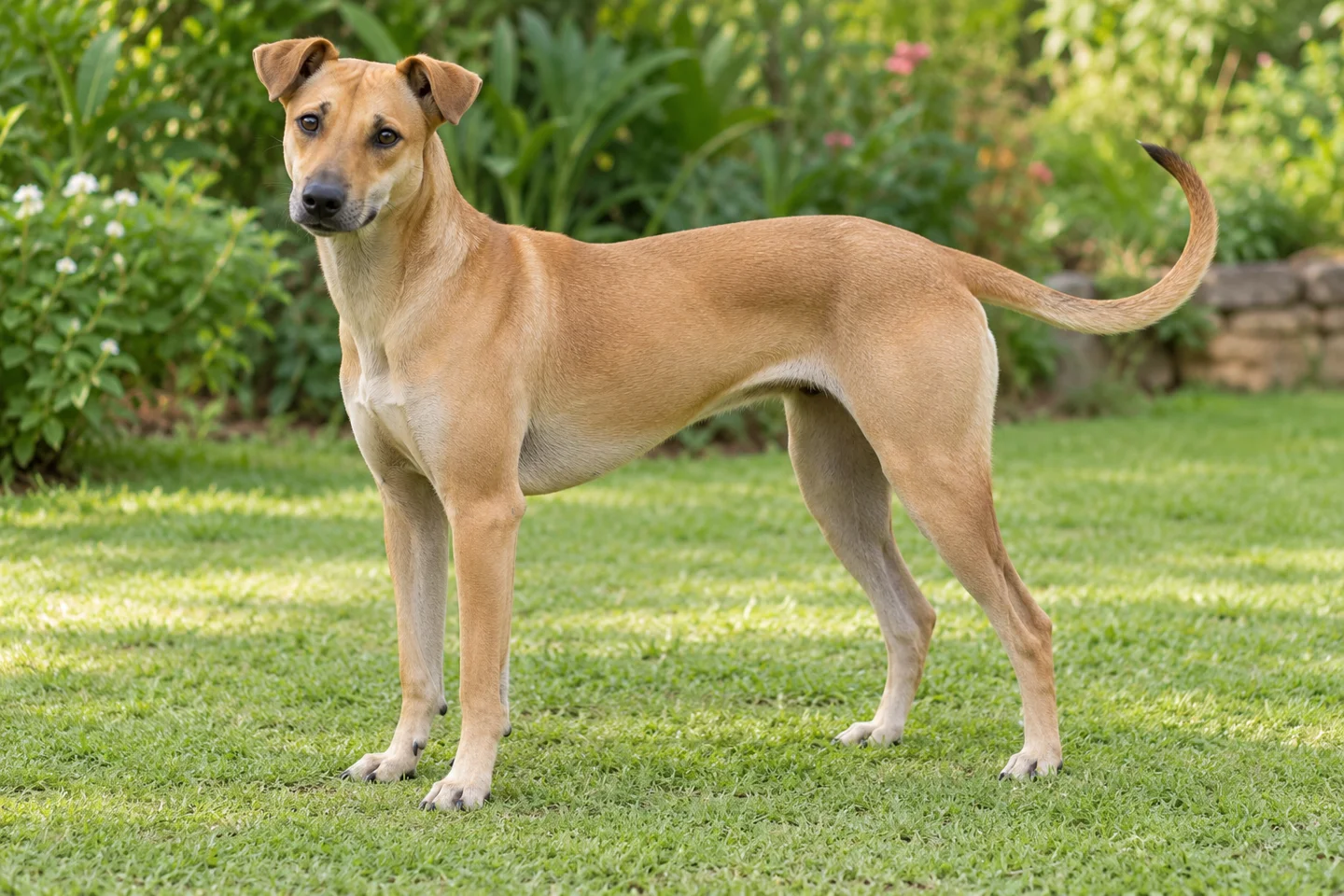
- Illustrated example
- Lean fawn Jonangi-type dog with very short fine coat
- Evidence limits
- Published population-specific health and standard data are limited
General information for owners. These articles have not been reviewed by a veterinarian. Medical decisions need your dog's history and an examination.
A Jonangi needs an individual assessment
Jonangi is a name used for an indigenous Indian dog population. A 2024 Indian Journal of Animal Sciences paper lists it among India's native dogs, although that study measures Janwal Pashmi dogs rather than Jonangi. National Purebred Dog Day's 2017 account describes the Jonangi in Andhra Pradesh and reports hunting, duck-herding, and watchdog uses. These references establish context. They do not supply a controlled temperament study, a medical survey, or an adult-size standard for every dog offered under the name.
Begin a placement decision with the particular animal and the people who know it. Ask where it was raised, which routines it has experienced, and what is documented about its parents. Meet it in a setting where it can move away without being pursued. Find out how it eats, rests, travels, and responds to ordinary handling. An unfamiliar breed name can make a dog seem mysterious, but the immediate care questions are concrete. Someone must be able to provide safe access, appropriate food, veterinary attention, and a reliable routine throughout its life.
History, work, and the boundaries of the record
The 2017 account connects Jonangi with local working life and describes a very short coat and variable ear carriage. Such descriptions are useful starting points for questions. Ask a local source what its own dogs have actually done and how it identifies the family. Avoid treating an undated story about ancient origins as a documented lineage. Current records, photographs with known context, and direct observations are more helpful for evaluating a proposed placement than repeating a precise age for the population without supporting evidence.
A previous working role also needs interpretation. A dog that was comfortable around one group of farm animals may still need a careful introduction to a household cat or pet poultry. Ask who supervised the work, how the animal was trained, and whether incidents occurred. For a companion home, explain your setting honestly. Describe traffic, neighbors, visitors, time alone, and the animals already present. A source can only assess a possible match properly when it understands those conditions. The conversation should identify the care required now, rather than depend on a romantic picture of rural life.
Appearance, measurements, and the three illustrations
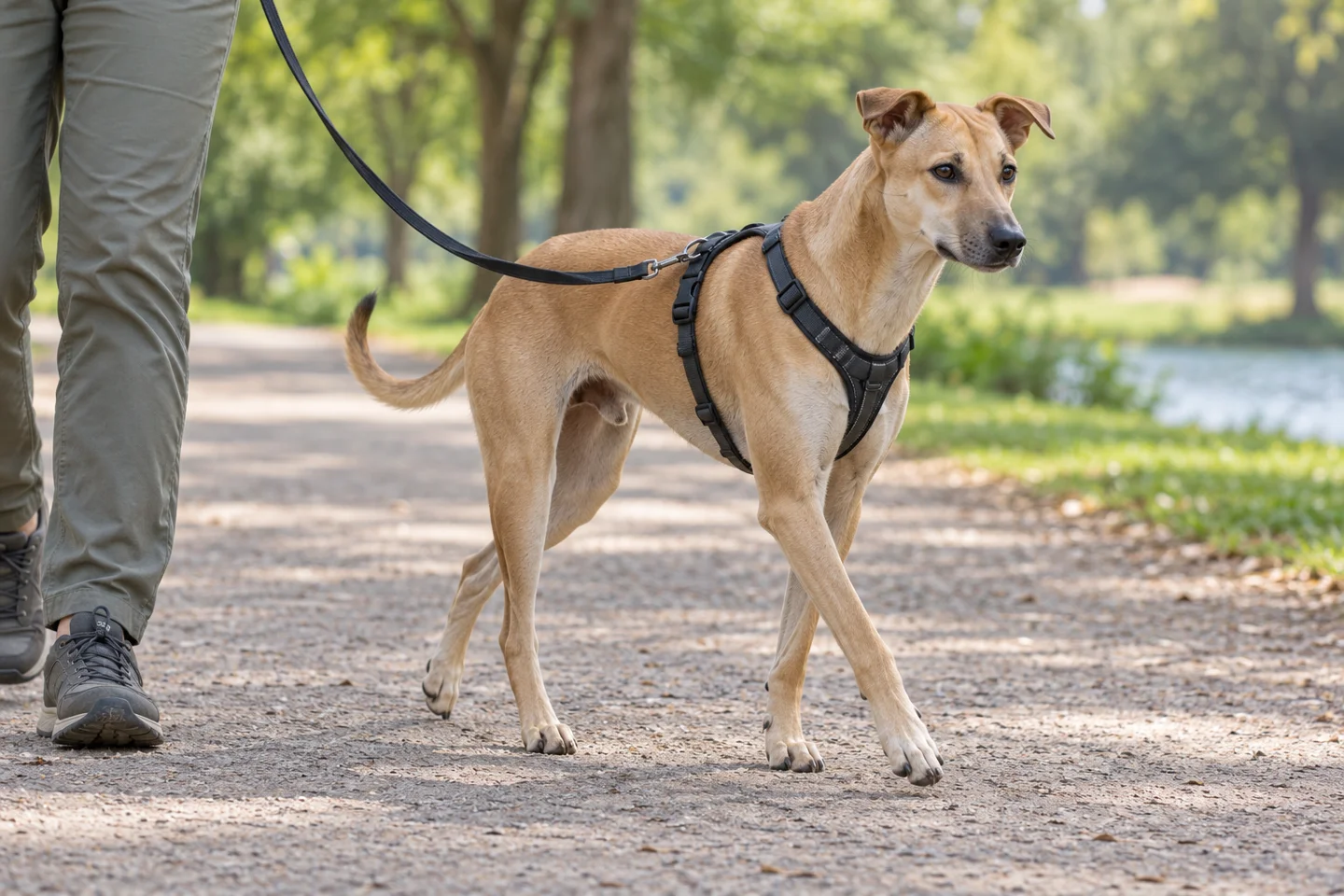
The illustrations show a lean fawn Jonangi-type example with a very short fine coat, natural ears, and a curved tail. They are interpretive images made for this guide. They cannot confirm a pedigree, define acceptable colors, or establish what every dog called Jonangi must look like. The available descriptions do not justify presenting a single registry measurement range here. Ask for the actual adult dog's height, weight, and body condition, or discuss the uncertainty of a puppy's eventual dimensions with its source.
Use measurements to plan practical access. Check the opening of the transport crate or vehicle restraint space, the fit of a harness, and where the dog will lie comfortably at home. Leave room for adjustment during growth. If you have only seen a photograph, remember that camera angle and the absence of scale can mislead you about size. Watch the real dog walk and turn when possible, and ask about any previous injuries or movement concerns. Your veterinarian can assess condition and development without trying to fit an uncertain population label to an invented show target.
Bringing a dog from one setting to another
A dog moving from a farm, village, kennel, or foster home may encounter an entirely different daily pattern. Plan a quiet arrival with secure doors and a resting area prepared in advance. Let it discover the basic household arrangement before inviting a series of visitors. Ask its previous carer about the food, sleep schedule, toilet habits, and equipment it already knows. Preserve useful familiar routines initially where practical, then change them gradually. A new setting can make even ordinary tasks more demanding while the animal learns what happens next.
Record useful observations during the first weeks. Note which route is quiet enough for a relaxed walk, where the dog hesitates, and what helps it recover after a surprise. Avoid using a single difficult day to decide that the breed is unsuitable or a single easy day to remove every precaution. If fear, inability to settle, or handling difficulties persist, obtain qualified help. Those notes can guide an assessment. A practical account such as refusing to enter the vehicle after a noisy journey is more informative than calling the animal stubborn or ungrateful.
Training for contact and everyday handling
Choose skills that give the dog a clear way to participate. Returning a short distance, following you away from a doorway, and standing while a harness is fastened are useful starting lessons. Begin where the animal is comfortable and distractions are small. Reward the response promptly and let it pause between attempts. Make each new setting easier than the most difficult situation you eventually hope to manage. A return cue should be learned and practiced before you depend on it near a road, moving wildlife, or unfamiliar livestock.
AVSAB recommends teaching through rewards and avoiding aversive methods. Ask an instructor to show you how a lesson becomes easier when the dog cannot respond. Repeating a cue loudly or increasing physical pressure does not explain the desired action. Keep track of successful conditions: the distance, the level of activity nearby, and the reward that helped. Build from that evidence. The aim is a routine another responsible adult can also understand and use. If a plan requires intimidating the dog into silence, seek a different approach with appropriately qualified support.
Socialization and the choice to observe
A puppy needs a veterinary-informed plan for safe exposure while its vaccination programme is in progress. Let it see and hear ordinary things from a distance it can manage. A quiet view of passing people can be a useful step before closer contact. Introduce surfaces, travel, equipment, and household sounds gradually rather than trying to complete a checklist in one outing. Watch the animal's response and provide breaks. If it repeatedly freezes, avoids, or cannot recover, reduce the intensity and ask for help instead of pressing on.
Adults also learn through their experiences, including newly adopted dogs with limited information about their early lives. Do not force a greeting because a person insists they know how to make dogs like them. Let the dog choose whether to approach within a managed setting. A suitable visitor can sit calmly and allow space while you observe. Tell household members how to respond to withdrawal and agree on an uncomplicated way to end a visit. The ability to watch without touching can make social experiences easier to arrange consistently and with less conflict.

Aggression and bite prevention in real situations
An indigenous or landrace label cannot establish that an individual will never bite. If a dog stiffens, guards an object, snaps during handling, or threatens an approaching animal, prevent another confrontation and record what occurred. Describe location, distance, available escape, and the people present. Include any bite or near miss when speaking to a professional. Avoid testing the dog by repeating the approach to its food or resting place. A complete account is more useful than either minimizing the incident or assigning a permanent personality label from one event.
A new response to touch or movement warrants veterinary attention, because discomfort can affect behavior. Tell the clinical team about the handling concern before arrival. A qualified behavior professional can help distinguish the immediate management needed from the skills that may be taught over time. Do not punish warnings or assume a quiet dog is necessarily comfortable. If muzzle use is recommended, introduce an appropriate design gradually with guidance about fit. It adds a precaution within a plan; it does not make forced contact or an unsuitable social meeting acceptable.
Children and family routines
Before a child meets the dog, explain the resting area and how the adult will supervise. Children should not follow a retreating dog, disturb meals, climb on it, or reach into its mouth. Keep contact short and calm enough that the supervising adult can notice early discomfort. A child's enthusiasm is understandable, but the animal still needs space and choice. If the adult must leave or focus on something else, separate them comfortably first. The arrangement should work during an ordinary busy afternoon, not only when every person is concentrating on a first introduction.
Ask a previous carer what contact with children has actually occurred. Which ages were involved, what did they do, and was an adult managing the interaction? A dog that rested beside a quiet teenager has not necessarily experienced a toddler running or grabbing. If your household changes, review the plan again. Gates, separate resting places, and consistent instructions help adults maintain supervision. Do not ask children to enforce rules by taking valued objects or holding the lead against a strong dog. Those responsibilities belong with adults who can manage the situation safely.
Poultry, cats, and other dogs
A historical duck-herding account should prompt questions about experience, not permission to leave a new dog with poultry. Use secure barriers and experienced guidance when evaluating contact with farm animals. Protect birds from chasing and avoid a trial in which harm is the only clear sign that the arrangement has failed. Household cats also need safe routes and places the dog cannot access. What an animal does beside a still bird or cat does not establish its response when that animal suddenly runs or flaps.
With resident dogs, plan for separate meals, sleeping places, and valued objects while introductions proceed. Start in a setting with space and competent adults responsible for their own animals. Watch for the ability to disengage and rest apart. Repeated avoidance by one dog deserves attention even if there is no obvious fight. Ask for professional advice when a history of serious threats makes a casual introduction inappropriate. Shared ancestry, similar appearance, or matching sex does not by itself resolve compatibility. Make the decision from the animals involved and the management the household can sustain.
Exercise, exploration, and safe water decisions
Build activity from the dog's present condition and observed recovery. Begin with manageable routes and add difficulty gradually as advised by your veterinarian. A short coat and lean outline do not tell you a universal exercise requirement or prove readiness for a long run. Allow exploratory sniffing, brief learning, and quiet recovery as part of the schedule. Keep secure control near roads and livestock. If movement becomes uneven or the dog repeatedly hesitates after activity, arrange assessment instead of assuming that more exercise will solve the problem.
Decide about water separately from the breed story. Assess current, depth, temperature, contamination concerns, and whether there is a safe exit. A dog with no observed swimming experience should not be thrown in to demonstrate an assumed natural skill. Choose another activity if conditions cannot be managed. Keep an emergency contact available on outings and tell the clinic about any water incident followed by breathing difficulty, collapse, or other serious change. Previous success in a familiar pond does not establish safety in a moving river, a boating area, or an unfamiliar shoreline.
Heat, cold, and a short coat
Provide dependable shade, drinking water, and a place to rest when the weather is hot. Native origin does not demonstrate immunity to heat illness. Change the timing and intensity of walks when conditions require it, and pay attention to the individual rather than a general claim of climate adaptation. If the dog appears distressed by heat, stop exertion, move to a cooler area, and contact a veterinarian promptly for instructions. Avoid leaving the animal in a vehicle while you complete another task or assuming a brief errand makes the arrangement safe.
For a very short-coated dog, judge comfort in cool or wet weather through observation and veterinary advice. A suitable coat may be useful for an individual, but equipment must fit and allow comfortable movement. Check underneath for rubbing or dampness rather than leaving clothing on without inspection. Provide dry bedding and a sheltered resting place. If you are relocating the dog between climates, ask the clinic how to adjust the routine. Changes in activity, environment, and health need to be considered together rather than treating one piece of clothing as a complete plan.
Grooming, skin, ears, and cooperative care
A short coat still needs inspection. Look for attached debris, irritated skin, wounds, or a patch the dog repeatedly licks. Use gentle tools appropriate to the individual and bathe with suitable products when needed. Ask for advice about frequency if the skin becomes dry or sore. Visible hair loss should be assessed rather than automatically accepted as a normal breed feature. The illustrations show fine hair on healthy skin; they are not examples for diagnosing a coat condition or deciding whether a particular dog's skin is normal.
Teach small handling steps during comfortable moments. A brief foot touch, looking at an ear, and lifting a lip can be practiced separately with rewards and a release. Ask the veterinary team to demonstrate what you should check. Ear odor, discharge, repeated head shaking, or pain requires professional advice, and objects should not be pushed into the canal. Arrange help for nails or coat problems you cannot manage safely. Care is easier to sustain when the dog has learned the process before a painful condition makes handling urgent.
Feeding a complete diet and recording change
Choose a complete food suited to life stage and discuss the starting amount with your veterinary team. A narrative about what working dogs once ate cannot establish a balanced diet for your animal. Measure the food and include training rewards in the total. AAHA's healthy feeding guidance limits treats and other extras to ten percent of calories, with complete balanced nutrition providing the main intake. Review body condition as routines change. A lean dog still needs enough nutrition, while an active appearance does not justify feeding without assessment.
Write down feeding instructions so every carer can follow the same plan. Note the food, measured amount, any prescribed restriction, and what counts as a reward. Feed away from children and separate animals where needed. Keep water accessible and observe actual intake rather than only whether a bowl has been placed outside. A sustained change in appetite, thirst, weight, stool, or willingness to chew is useful information for the clinic. Bring that history to an appointment instead of repeatedly changing products without knowing whether the earlier problem has improved.
Health evidence and a first veterinary plan
The references available for this guide do not establish reliable Jonangi disease frequencies, a breed-wide lifespan estimate, or a universal inherited-condition screening scheme. That limitation should remain explicit. Ask for the individual's treatment records and any relevant family diagnoses. If a source says the parents were tested, request the identified reports and the reason each assessment was selected. Do not treat local adaptation or an indigenous label as evidence that preventive care is unnecessary. Equally, a checklist borrowed from an unrelated breed cannot establish a Jonangi-specific requirement.
Arrange a current veterinary assessment and discuss prevention for the place where the dog will live and the activities it will undertake. Tell the clinic about origin, previous residence, travel, medication, and any periods without reliable records. Mark unknown information honestly. Imaging, examination, and genetic results answer defined questions; none excludes every possible future illness. Follow up on clinical changes even when the animal looks energetic. An observed limp or altered coordination needs assessment in its own right, rather than being interpreted through an unsupported statement about what diseases this population supposedly never develops.
Urgent care, carers, and the cost of ownership
Set aside practical arrangements for urgent illness. Identify the clinic you would contact, the transport available, and the person who can help if the dog cannot walk. Collapse, difficulty breathing, severe pain, suspected poisoning, or repeated unsuccessful attempts to vomit needs prompt professional contact. Describe what happened and follow the clinic's instructions. Do not choose human medication or a home remedy because someone describes the breed as hardy. Keep relevant records accessible so a clinician can see what has already been treated and which findings remain unexplained.
Price the routine before agreeing to a placement. Obtain current local estimates for food, prevention, training support, insurance, equipment, and care during absences. Ask potential carers whether they can manage the actual dog, including any restrictions around handling or animals. Check what help the source offers afterward and put important agreements in writing. Rarity should not pressure you into a rushed handover or unexplained payment. A workable decision leaves enough time to review the animal's needs and establish who will meet them when the initial excitement of bringing it home has passed.
Mixes, identity, and useful descriptions
A dog described as a Jonangi mix may have known parents, a local type description, or an appearance-based guess behind the label. Ask which applies. A commercial ancestry result also depends on the reference populations available to the provider, so discuss any uncertain interpretation before treating it as a pedigree. A mix name does not promise a particular adult size, coat, or temperament. For an adult, current measurements and observed routines can answer practical questions even when the family record is incomplete.
If parents are documented, discuss relevant clinical and screening information for both. Crossing dogs does not prove that all inherited problems have disappeared. Avoid a claim that a named mix is guaranteed safe with poultry, children, or other dogs. Keep your own description factual: what the animal has experienced, where it is comfortable, and which arrangements it currently needs. That information helps veterinarians, carers, and prospective walking partners. It also respects the difference between uncertainty about ancestry and the useful everyday knowledge you can gain by caring for a dog consistently.
dogsDating walks based on observed comfort
Use dogsDating to describe the individual you know. Explain whether your dog prefers a quiet route, needs space from birds, or is still learning about unfamiliar dogs. Keep exact home coordinates private and share only an approximate area while looking for a possible partner. Agree on a public location with room to change direction. Discuss known incidents and current professional advice before the outing. If a casual introduction conflicts with the dog's management plan, choose another activity rather than using a new match to test whether a problem has disappeared.
Arrange one capable adult for each dog and begin with parallel walking apart. Let both animals observe without requiring close contact. Avoid shared chews, toys, or food games during the first meeting. If either dog stiffens, repeatedly withdraws, or cannot disengage, increase the distance or finish. Discuss the specific conditions that worked afterward so another meeting can be planned sensibly. Friendship may look like familiar quiet company on a walk. The dogs do not need to touch or play for the outing to meet a useful social need.
Sources and editorial notes
Sources checked October 21, 2026. Breed measurements describe reference ranges, not a diagnosis or an individual dog's ideal weight. Images are AI-generated breed illustrations and do not document a particular dog or health condition.
- AVSAB: Humane Dog Training Position Statement
- VCA Animal Hospitals: Food aggression in puppies
- VCA Animal Hospitals: Aggression toward unfamiliar dogs, diagnosis
- VCA Animal Hospitals: Grooming and coat care for your dog
- VCA Animal Hospitals: Ear infections in dogs (otitis externa)
- AAHA: Feeding plans for healthy, appropriate weight cats and dogs
- VCA Animal Hospitals: Heat stroke in dogs
- VCA Animal Hospitals: Common emergencies in dogs
- Orthopedic Foundation for Animals: CHIC health screening programs
- AVSAB: Puppy Socialization Position Statement
- VCA Animal Hospitals: Dog behavior problems, aggression toward children
- Makne and colleagues, Indian Journal of Animal Sciences: Janwal Pashmi study, introductory reference to Jonangi
- National Purebred Dog Day: The Vanishing Indian Breeds, 2017 account
Keep getting to know dogs.
Read another guide or return to your dogsDating community.
Explore breed guidesBack to dogsDating