Karelian Bear Dog
A black-and-white Finnish hunting spitz needing secure exploration, realistic voice and animal-management plans, and precise health records.
How these guides are researched and reviewed
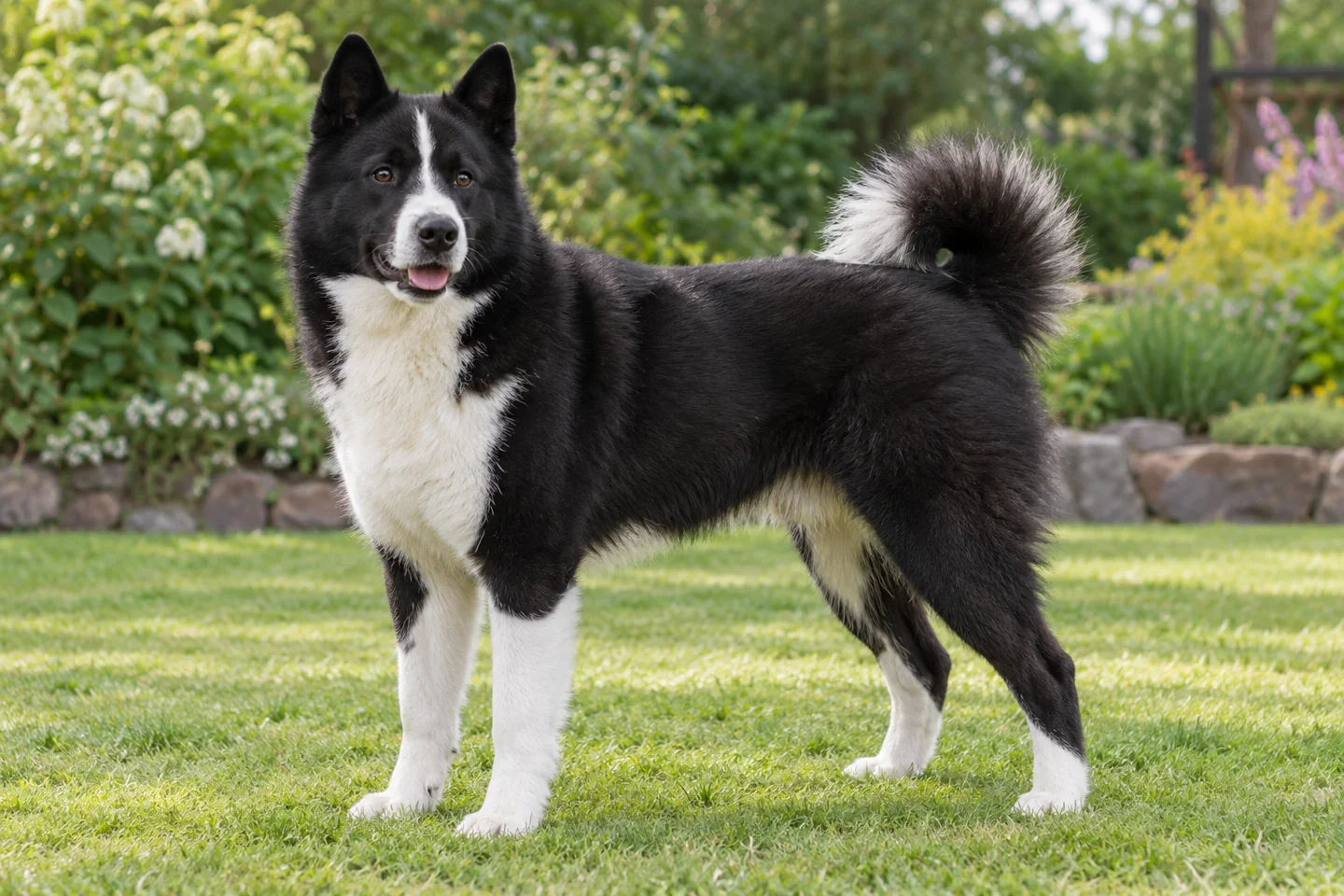
- Origin
- Finland; Karelian hunting background
- Adult height
- FCI males 54–60 cm; females 49–55 cm
- Ideal weight reference
- Males 25–28 kg; females 17–20 kg
- Tail example
- Illustrations show a full curled tail; natural bobtail is permitted
General information for owners. These articles have not been reviewed by a veterinarian. Medical decisions need your dog's history and an examination.
A hunting spitz whose name needs context
The Karelian Bear Dog is a medium-sized hunting spitz with a black-and-white coat, erect ears, and a working background that deserves careful thought before a companion placement. Ask what the individual does when it detects wildlife and how it behaves during ordinary household life. A dog selected for outdoor work may need deliberate preparation for different surroundings. Its striking appearance cannot tell you whether your routes, boundaries, visitors, and care arrangements will meet its needs.
Start by explaining the home you actually have. Consider who walks the dog, where secure exploration is available, and how neighbors would experience a carrying voice. Discuss existing pets and the hours the animal may spend without people. Meet adult dogs and ask about both quiet days and difficult situations. A useful source can explain what has been observed and what remains unknown. That information gives you a basis for planning rather than relying on a general statement that a working dog will adapt to anything.
Karelia and the development of the recognized breed
The FCI history links the breed's foundation with dogs from Karelia and describes deliberate breeding beginning in 1936. It records a first standard in 1945 and registrations from 1946. Its work involved locating and holding large game at bay, with barking used to mark the animal. The name refers to that hunting role. It should not be read as an invitation to create dangerous encounters or a promise about how every modern pet will behave around wildlife.
The Karelian Bear Dog is distinct from several Laika breeds and from larger Asian spitz dogs. Shared coat patterns or upright ears do not establish a common household temperament. Ask which registry and identity records apply to a dog offered under this name. If rescue ancestry is uncertain, retain that distinction and gather good observations of the individual. An honest behavioral history can help organize care even when pedigree is unavailable. Describing uncertainty accurately serves the dog better than making its appearance carry more evidence than it contains.
Height weight and the full-tail example
The FCI height ranges are 54–60 centimeters for males and 49–55 for females. Its ideal weight references are 25–28 kilograms for males and 17–20 for females. These numbers describe standard adults and should not become personal feeding targets. The coat is harsh and straight over a dense undercoat, usually black with clearly defined white markings. A natural bobtail is permitted alongside a long tail; the illustrations here select a full tail curled over the back.
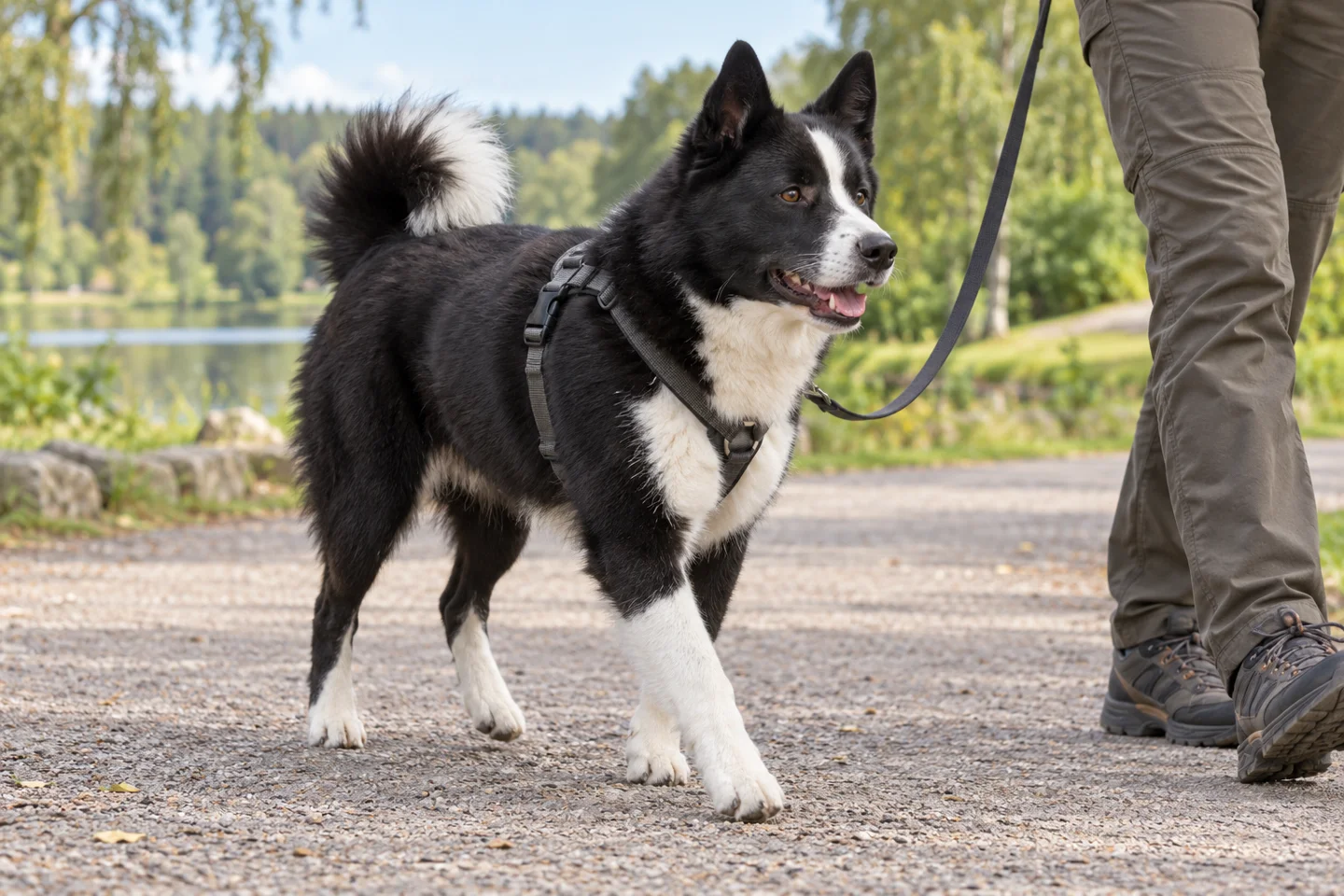
The body should remain sturdy and functional rather than excessively heavy. When meeting a real dog, watch it turn, walk, and recover after activity. Check harness fit against the actual chest and neck under the coat. Prepare transport that provides secure restraint and enough room to rest comfortably. An AI illustration shows a selected type and cannot establish movement quality, pedigree, or clinical health. Those questions need the individual, its records, and appropriate professional examination when a concern appears.
Managing wildlife interest before an outing
Ask the source to describe responses to moving game, fresh scent, and unexpected animals on a path. Choose secure equipment and avoid treating the first walk as a test of off-lead reliability. A return cue learned in an easy setting has to be practiced around greater distractions. Keep control while that learning develops. Inspect any enclosed area before release, since a fence that appears adequate from the entrance may have gaps or access points elsewhere.
Do not approach wildlife to see whether the dog shows its traditional ability. That creates risk for people, animals, and the dog. Work with an appropriate instructor for any legitimate planned activity and understand the responsibilities of the setting. Companion outings can provide useful exploration without recreating a hunt. Arrange a route with places to turn away and a transport plan that does not depend on an exhausted dog walking back unaided. Practical preparation matters even when the individual has previously worked confidently outdoors.
Voice and a home that allows recovery
The breed's work includes barking at game, so discuss voice honestly with the source before choosing a home with close neighbors. Ask when the individual vocalizes and what happens after the trigger has passed. A window overlooking constant traffic or a fence beside passing dogs can create repeated activation. Review those views and provide a quieter place to rest. The aim is to reduce the need for continual response rather than keep the animal rehearsing the same behavior.
Teach a move away from the boundary during calm periods and reward a comfortable alternative. Avoid shouting, which may add another source of arousal. If the dog struggles during absences, seek an assessment of the cause instead of assuming all barking has the same explanation. Record timing and circumstances for a professional to review. A working background gives context, but it does not remove the owner's responsibility for welfare and a sustainable routine. Quiet recovery should be part of daily life alongside suitable activity.
Training cooperation in small useful steps
Choose a skill you can observe clearly, such as returning a few steps, waiting during lead attachment, or moving onto a resting mat. Reward it in a quiet setting and make the next repetition easy enough to succeed. A short lesson can tell you whether the dog understands the cue. Keep distractions at a manageable level and increase them gradually. Do not interpret failure near wildlife as proof that the animal cannot learn; the task may be far beyond the stage practiced.
AVSAB recommends humane reward-based methods. An instructor should explain motivation, management, and how to tell when a challenge is too difficult. Avoid a system that escalates physical punishment when the dog is absorbed or worried. Practice handling and transport separately from outdoor skills, so necessary care remains accessible. Maintain the same simple cues across carers. A well-organized plan gives the animal useful choices and reduces the chance that a person will have to improvise force during an already difficult encounter.
Exercise that matches the individual
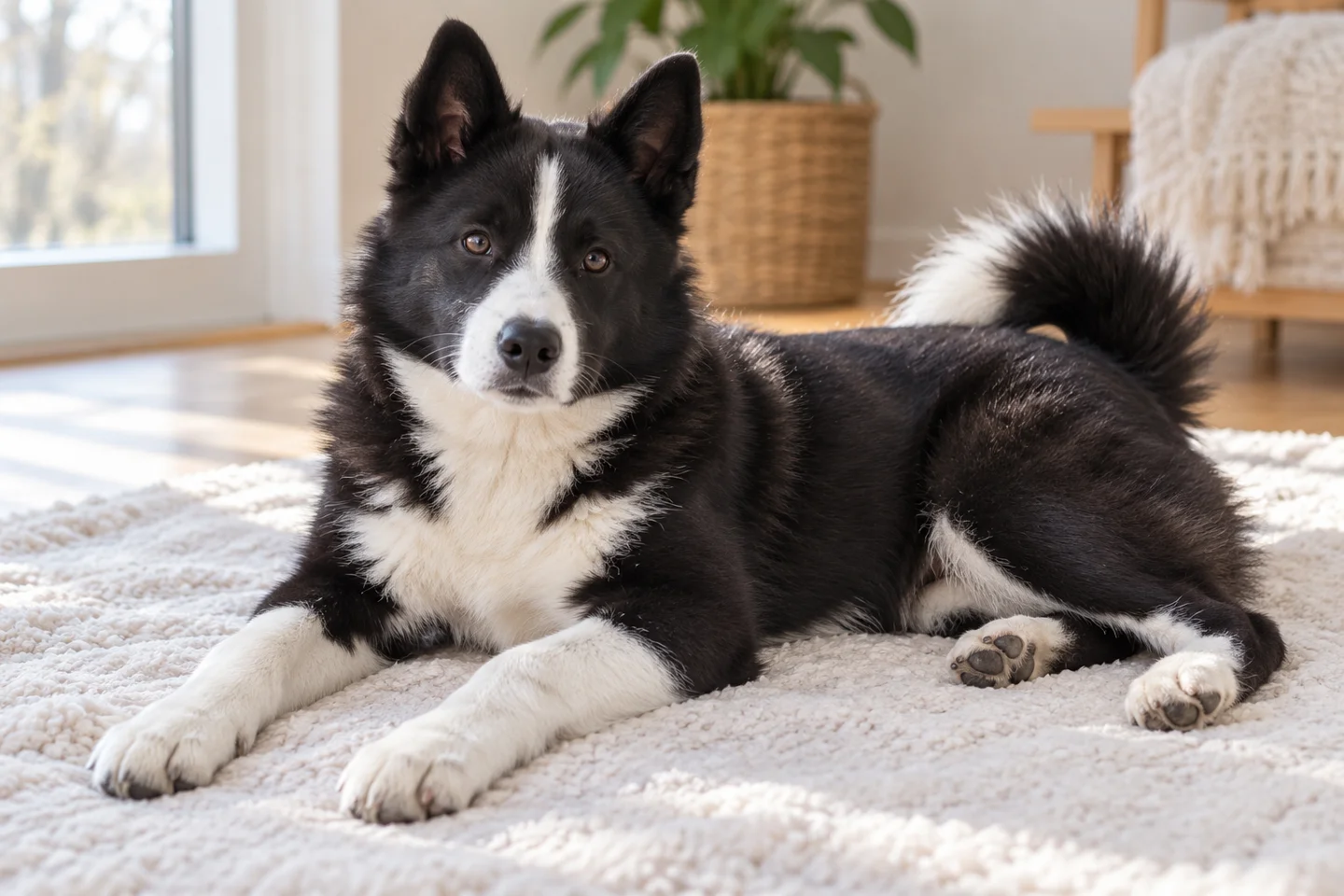
Plan suitable walking and exploratory activity with consideration for age, fitness, and health. A hunting dog needs opportunities to use its attention and body, but exercise should not be measured only by distance or exhaustion. Include calmer tasks and adequate rest. Ask the veterinarian about growth, injury recovery, or a proposed demanding sport. If the dog becomes reluctant, stiff, or unusually tired, investigate the change instead of attributing it automatically to a loss of working enthusiasm.
Check conditions on the day. Heat, poor footing, and a difficult return route can change an otherwise familiar plan. Carry water and shorten activity when necessary. A dense coat and northern background do not rule out overheating. Keep a quiet alternative available when the usual outing is unsuitable. Do not try to solve every settling problem by adding speed or intensity; repeated arousal may also require a change in triggers and routine. The owner needs to judge how the dog recovers, not merely whether it is willing to start.
Socialization and respectful introductions to people
Discuss safe exposure with your veterinarian for a puppy and begin with manageable experiences. Let it see people, surfaces, equipment, and ordinary sounds without being surrounded. Preserve a way to leave and end a session while it can still cope. A busy event is not automatically a better learning opportunity than a quiet observation at the edge. Watch the animal's response and seek guidance if fear or avoidance repeatedly interrupts everyday tasks.
For an adult, ask which experiences are established and introduce gaps gradually. A dog from a familiar working environment may need preparation for a shared stairway or a clinic waiting area. Let visitors remain quiet and avoid reaching over the head immediately. Comfortable contact can develop without a greeting from every stranger. The desired result is practical coping supported by good management. An owner should not use a standard's positive description of people-related temperament to override an individual that is clearly trying to gain space.
Children and a secure place to rest
Set household rules that children can understand and adults can enforce. The dog's bed, meals, and chews should be protected from interference. An adult should supervise shared time and stop contact when either participant becomes overexcited. Do not ask a child to manage the lead, remove a valued object, or restrain the dog for examination. Small changes in a busy room can create pressure quickly, so separation should be available before anyone needs it urgently.
Ask the source about actual experience with children, including ages and circumstances. A dog comfortable with an older child sitting quietly may have no useful history around a running toddler. Plan from that distinction. Suitable activities can be brief and structured, with an adult responsible for the animal while the child helps prepare something at a distance. Allow the dog to end an interaction by walking away. If close supervision is not possible, use a comfortable physical barrier rather than relying on instructions shouted from another room.
Aggression warnings and the need to assess causes
A Karelian Bear Dog's desired working temperament does not guarantee that an individual will never bite. Treat stiffening, growling, snapping, or repeated avoidance as reasons to change the situation. Write down the context without provoking another event. A new response to touch or movement requires veterinary attention, since pain can alter behavior. Tell professionals what happened and what management is currently in place so they can plan a safe assessment.
VCA explains that aggression toward unfamiliar dogs can have different motivations. Do not release a lunging animal to test whether it only wants to play. Increase distance and obtain qualified help. Avoid confronting the dog over resources or punishing warning signals to create apparent compliance. Teach alternatives under guidance while using barriers and separate resources as needed. Carers must receive the factual incident history. A phrase such as strong character cannot tell them which encounter to avoid or how to respond safely.
Dogs cats and other animals
Evaluate canine companions according to the individual dogs involved, including energy, preferred play, and response around resources. The FCI notes that territorial behavior toward other males may occur, but that statement should not become a prediction about every pair. Ask for concrete observations. Arrange initial contact where handlers can maintain distance and leave. A dog that shares space with a familiar partner may still find an unfamiliar animal at a narrow entrance difficult.
Manage cats and small pets carefully in view of the hunting background. Give cats protected routes and maintain secure separate housing for smaller animals. Stillness through a barrier is limited evidence about what happens during movement. Do not arrange a chase or hold a pet in place for inspection. If long-term separation would be required, decide whether your household can maintain it before placement. Good intentions do not replace a physical plan that remains reliable when people are distracted or visitors arrive.
Grooming after forest and field activity
Inspect the coat and feet after rough outings without turning the return home into an uncomfortable restraint session. Check for debris, sore pads, rubbing, or repeated licking of one area. Use appropriate gentle tools to remove loose undercoat and ask for a demonstration if the layers are difficult to maintain. Work through small sections during shedding. A short outer coat can still conceal packed hair or skin irritation, especially beneath equipment.
Seek veterinary advice for persistent redness, odor, hair loss, or sensitivity. Do not cut tight mats against unseen skin or dig into tissue for an embedded object. A groomer or clinician can help decide the appropriate next step. Introduce nail, ear, and mouth care gradually while the dog is comfortable. Reward a brief touch and release before building duration. A useful care routine should improve access to the animal throughout life, including at times when injury makes ordinary handling more difficult.
Health records from the Finnish program
The Finnish Kennel Club describes the breed's PEVISA program as requiring official hip and eye statements for breeding parents, with additional detailed conditions. It also discusses inherited eye disease, including a form of progressive retinal atrophy with a DNA test, and other breed-specific genetic concerns. Ask a source following that program for the current operative rules and the actual parental findings. Do not turn a brief summary into a universal checklist or assume a test for one condition excludes all eye disease.
Have unfamiliar reports interpreted by your veterinarian or the relevant program. Review family diagnoses and ask how later owner information is collected. A working result and a clinical result answer different questions. Screening cannot remove every future risk, while missing records should remain acknowledged rather than filled with assumptions. A newly adopted adult still benefits from an examination and a prevention plan based on its activities. Report a persistent change in movement, vision, or stamina even if earlier paperwork was reassuring.
Nutrition routine care and urgent signs
Choose complete food appropriate to age and workload with veterinary guidance. Measure what is offered and count treats or rewards as part of intake. Assess body condition beneath the coat and keep weights over time. More food is not automatically appropriate after every active outing, and an animal's shape should not be forced toward the largest number in a standard. If appetite, thirst, elimination, or weight changes persist, provide the clinic with a clear history.
Plan prevention for residence and travel, and retain records when changing clinics. Keep the urgent-care contact and a way to transport the dog accessible. Collapse, breathing difficulty, serious injury, suspected poisoning, or repeated unsuccessful retching warrants prompt veterinary contact. Do not delay because the dog is still interested in a scent or briefly looks energetic. Avoid human medicines and another animal's prescription. A sitter needs concise instructions about current treatment, restrictions, and where to seek help when the usual owner is unavailable.
Mixes ownership costs and source support
A black-and-white curled-tail dog may be described as a Karelian mix without documented ancestry. Ask what the label is based on and distinguish appearance from records. A crossbreed does not have a guaranteed level of hunting interest, social comfort, or inherited health risk. Consider known parents where available and use direct assessment of an adult's behavior and care needs. The name should communicate information honestly rather than create false certainty.
Obtain local costs for secure equipment, training support, veterinary prevention, food, and care during absences. Consider the time needed for suitable activity and quiet supervision as well as money. Discuss what the source will do if a placement becomes difficult, and review written terms before collection. Scarcity or an appealing working story should not rush the decision. A suitable home can maintain boundaries, provide appropriate outlets, and obtain help promptly when the animal's needs are different from those expected at the first meeting.
dogsDating walks chosen for compatibility
Use dogsDating to describe your dog's actual response to walking partners, with any recommended space or handling restrictions. Keep exact coordinates and your home address private. Use an approximate area to choose a public meeting place that allows easy separation. Confirm that each adult handles their own animal and that the plan can end without a close greeting. A social outing should fit the individual, especially if a professional has advised avoiding unfamiliar contact.
Begin far enough apart for both dogs to investigate the route and respond to their people. Parallel walking can provide useful company without face-to-face pressure. Avoid shared toys, food competition, and narrow entry points. Watch for fixation, stiffening, or repeated attempts to leave, then create distance or finish. Afterwards, note the conditions that helped rather than assuming the dogs now tolerate every setting together. A familiar calm partner can be valuable while physical play remains unnecessary. Respecting that limit makes another meeting easier to organize responsibly.
Sources and editorial notes
Sources checked October 21, 2026. Breed measurements describe reference ranges, not a diagnosis or an individual dog's ideal weight. Images are AI-generated breed illustrations and do not document a particular dog or health condition.
- AVSAB: Humane Dog Training Position Statement
- VCA Animal Hospitals: Food aggression in puppies
- VCA Animal Hospitals: Common emergencies in dogs
- Orthopedic Foundation for Animals: CHIC health screening programs
- VCA Animal Hospitals: Aggression toward unfamiliar dogs, diagnosis
- VCA Animal Hospitals: Grooming and coat care for your dog
- AAHA: Feeding plans for healthy, appropriate weight cats and dogs
- VCA Animal Hospitals: Heat stroke in dogs
- AVSAB: Puppy Socialization Position Statement
- VCA Animal Hospitals: Dog behavior problems, aggression toward children
- FCI: Karelian Bear Dog official breed standard
- Finnish Kennel Club: Karelian Bear Dog health and PEVISA information
Keep getting to know dogs.
Read another guide or return to your dogsDating community.
Explore breed guidesBack to dogsDating