Karst Shepherd Dog
An iron-grey Slovenian shepherd whose companion care requires managed arrivals, suitable exercise, coat access, and honest health documentation.
How these guides are researched and reviewed
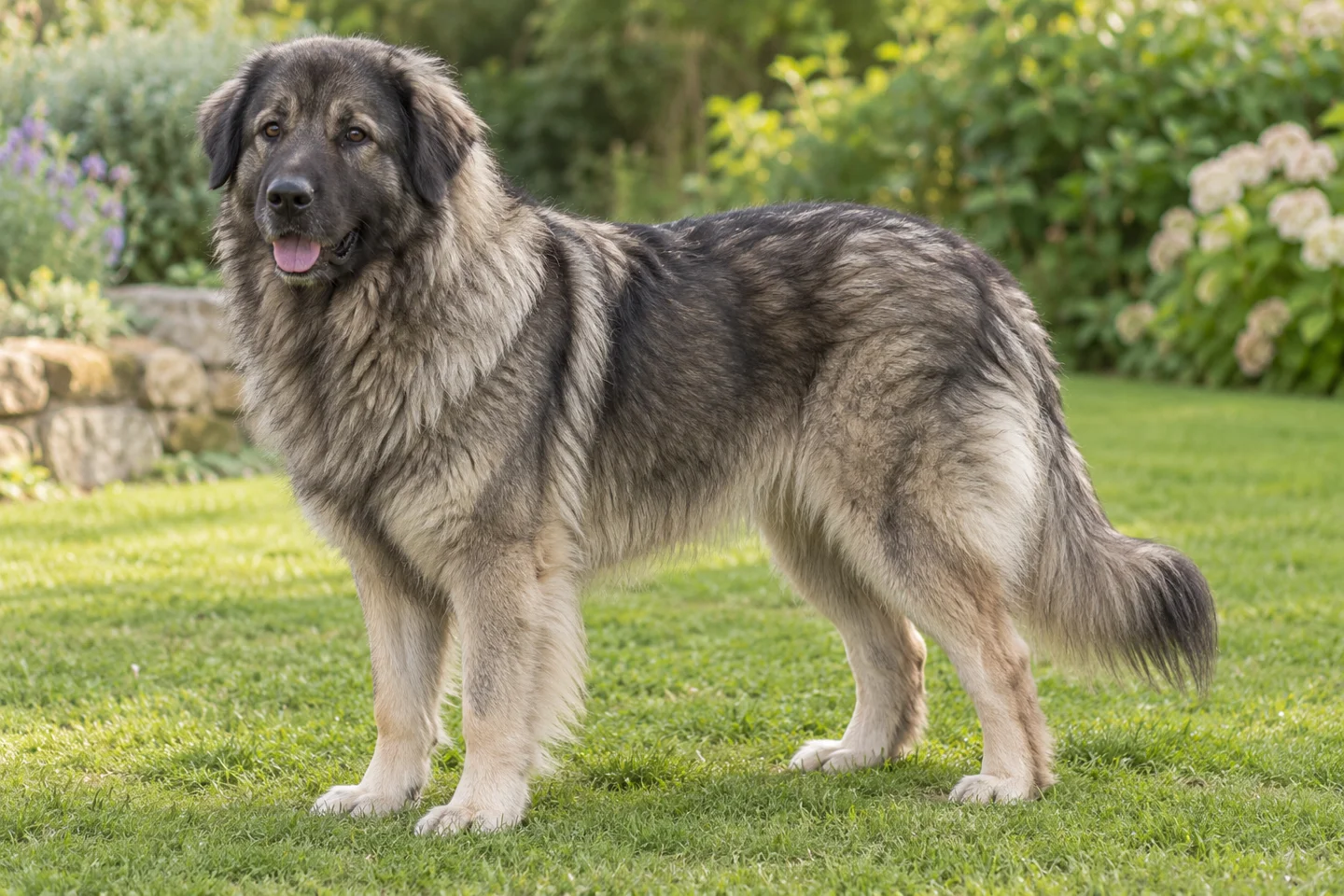
- Origin
- Slovenia; Karst Massif
- FCI height
- Males 57–63 cm; females 54–60 cm, with the standard’s upper tolerance
- FCI weight
- Males 30–42 kg; females 25–37 kg
- Coat
- Long abundant iron grey with darker mask
General information for owners. These articles have not been reviewed by a veterinarian. Medical decisions need your dog's history and an examination.
A Slovenian guardian in a modern home
The Karst Shepherd Dog is a substantial Slovenian shepherd and guardian with an iron-grey coat and a need for deliberate household planning. Decide how visitors, boundaries, routine care, and unfamiliar animals will be managed before selecting one. A dog can have a devoted relationship with its people and still need space during arrivals or changes to the home. Ask what the particular animal has experienced and how its previous carers handle those situations.
Explain your surroundings to the source in concrete terms. Include public paths near the fence, shared entrances, children visiting, and the hours people are absent. Those details make it possible to assess suitability. A garden or rural address does not by itself supply a reliable management plan. Meet adults where possible and ask to see ordinary behavior rather than only a posed presentation. The right decision depends on the life you can sustain with the individual, not simply an attraction to a less familiar national breed.
Karst history and the Illyrian name
The FCI identifies Slovenia as the origin and describes the breed's association with the Karst Massif. Its historical account records recognition under the Illyrian Shepherd name in 1939 and later separation from the dog now called Sarplaninac. Those names therefore need context in older documents. A shared former label does not make the modern breeds interchangeable. The standard also contains hypotheses about much earlier ancestry, which should be treated as historical proposals rather than precise documented certainty.
Ask a breeder to explain the records of the actual family being considered. Which organization maintains registration, how are dogs selected for temperament and health, and what experience do puppies receive? For an adult rescue, ask which parts of identity are known and which are inferred. Clinical and behavioral observations can be useful even when ancestry is incomplete. A clear source should be willing to preserve those limits. An impressive account of regional heritage cannot answer whether a dog is prepared for your particular daily routine.
Adult size and an iron-grey coat
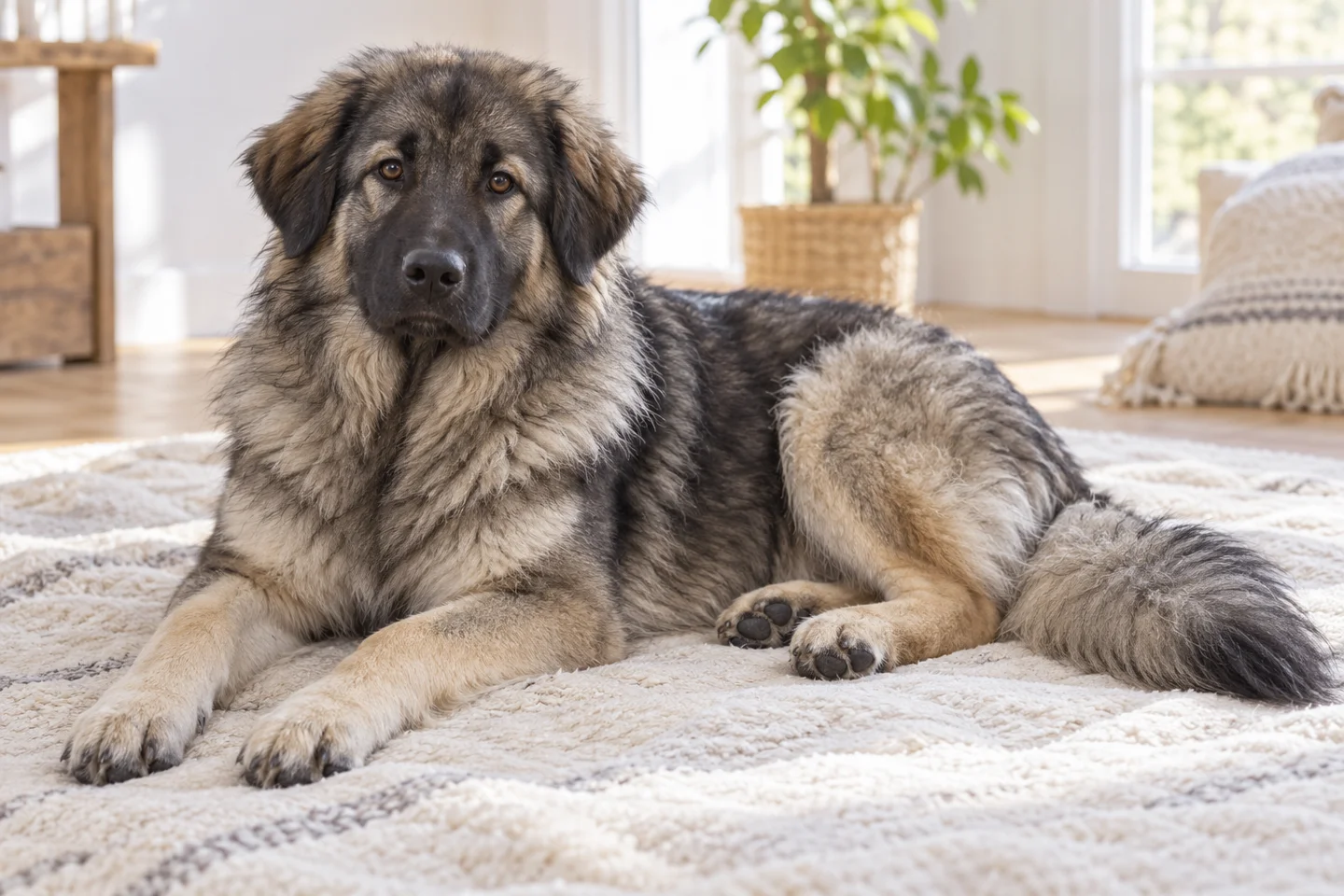
The FCI height ranges are 57–63 centimeters for males and 54–60 for females, with ideals of 60 and 57 respectively. It permits a stated upper tolerance that affects assessment. Weight references are 30–42 kilograms for males and 25–37 for females. The coat is long and abundant, iron grey with darker shading and a mask. Natural ears hang against the head, and the long tail is carried down with appropriate curve. The illustrations use that selected outline without cropping or docking.
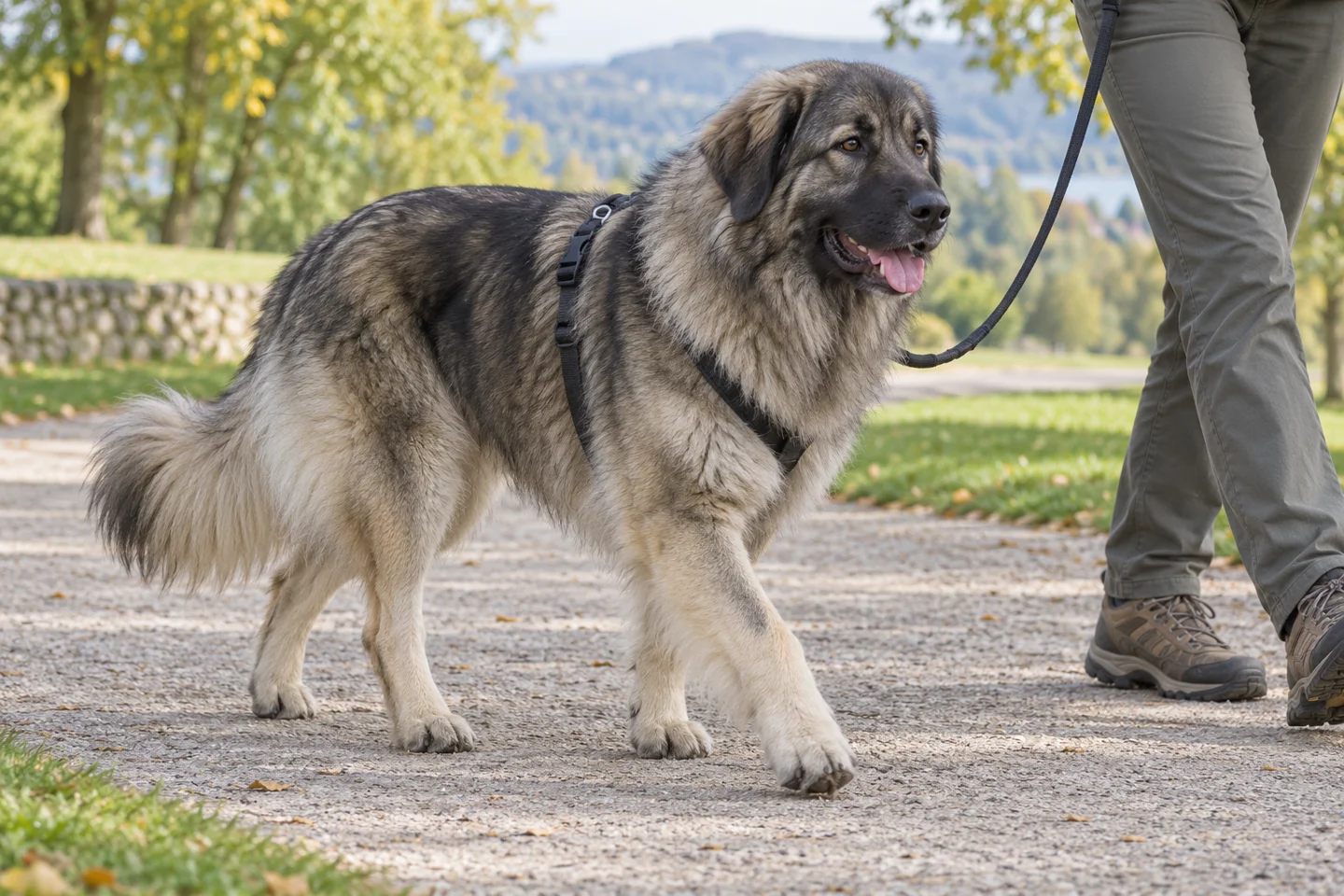
Plan space and transport using real measurements. Check that an adult can rest and turn comfortably and that someone can assist if mobility is reduced. Fit a harness against the body beneath the coat and inspect for rubbing. A heavy ruff can conceal both equipment fit and changing condition. Ask your veterinary team to demonstrate what to feel for. Standard numbers help frame a decision, but feeding an individual toward the upper weight is inappropriate without considering its build, muscle, and clinical needs.
Visitor routines should be designed in advance
A guardian-oriented dog should not be asked to improvise decisions about every person entering the property. Decide where it will wait while you receive a delivery or speak with a tradesperson. Use a reliable barrier and teach movement into the area during quiet periods. Let it rest there comfortably before the situation becomes urgent. A routine that depends on someone holding a collar while opening the door leaves little margin if another dog or person appears.
Give visitors instructions before they arrive and preserve the option of no direct contact. A calm animal behind a suitable barrier may be a better arrangement than a pressured greeting. Household members need the same sequence for gates and doors. Rehearse it when nothing exciting is happening and revise it if someone cannot follow it consistently. Familiarity with one visitor does not imply acceptance of every future person. Practical preparation should cover the busy or unexpected day, not only the easiest circumstances under which the dog normally behaves well.
Training that teaches cooperation rather than confrontation
Choose a few tasks needed every day: walking without dragging, waiting for equipment, moving through a doorway, and resting away from an entrance. Teach them in manageable stages with rewards. AVSAB supports reward-based methods and advises against aversive training. A large guardian's individuality is not a reason to replace teaching with physical intimidation. Ask an instructor to explain what the dog should do and how the environment will make that action possible.
If a cue fails near a fence or visitor, lower the difficulty instead of escalating the confrontation. Create more distance, reduce movement, and return to an easier step. Keep management in place so safety does not depend on an unfinished skill. Everyone helping should understand the same cues and reinforcement. Record particular successes, such as entering the rest area calmly when the doorbell is quiet. Gradually practice the conditions in which the response will be used, and obtain help if tension repeatedly prevents useful learning.
Exercise and time away from the boundary
A Karst Shepherd needs suitable movement and exploration beyond simply watching a fence. Arrange walks with enough space for the handler to change direction and avoid crowded bottlenecks. Match activity to age, soundness, weather, and recovery. Your veterinarian can advise about growth or an animal with mobility concerns. Do not infer readiness for a demanding walk from the breed's working history or the fact that it is eager to begin.
Keep the rest of the day calm enough for recovery. Constant visibility of passing people or dogs can maintain arousal, and additional exercise alone may not solve that problem. Review the position of beds, windows, and outdoor access. Provide water, shelter, and a quiet place, and change the plan when conditions are hot or footing is poor. A thick coat does not guarantee temperature comfort. Watch for altered gait or unusual fatigue afterward and report persistent changes. A flexible routine is more useful than a fixed target pursued regardless of the individual.
Children and a home where rest is protected
Put the dog's resting place outside children's play routes and explain that it is unavailable for games. An adult should supervise interaction actively and separate the dog when attention must shift elsewhere. Children should not open gates, take food or toys, or hold the animal for care. The dog's size makes accidental contact relevant even when it is friendly. Predictable rules protect the relationship more effectively than waiting for a warning before deciding space is needed.
Ask the source for observations around children of similar ages and activity. A quiet teenager and a running toddler present different situations. Do not stretch one favorable account into a safety guarantee. Shared activities can be simple and controlled, with an adult managing the animal while a child helps prepare an easy search at a distance. Let the dog leave and end before excitement builds. If a concerning response occurs, prevent repetition and obtain advice. A household that cannot maintain these boundaries should reconsider the proposed arrangement before placement.
Aggression should produce a practical response
Describe threatening behavior as a sequence: who approached, what the dog had, how close they came, and what escape was available. A snap during brushing needs a different immediate arrangement from charging a fence. Stop the triggering interaction and seek qualified advice. A sudden change during touch or movement also needs veterinary assessment. Avoid explaining every event as loyalty or protection, because those words do not establish what caused the response.
Do not provoke another incident to demonstrate the behavior or punish the warning until it disappears. Use distance, secure barriers, and separate resources while a professional helps plan next steps. VCA explains that unfamiliar-dog aggression can involve different motivations, so releasing a lunging dog to test its intentions is unsafe. Tell sitters and veterinary staff about incidents and current restrictions before they take responsibility. A useful plan must be achievable by the people involved and should be reviewed when the dog's health or surroundings change.
Dogs cats and the question of compatibility
Ask about the actual animal's previous dog relationships, including conflicts around resources or entrances. A dog that accepts a familiar housemate may respond differently to a stranger at its gate. Introduce potential partners where both handlers can move apart and avoid pressure for immediate greeting. Keep meals, valued items, and rest spaces separate while learning the relationship. Watch whether each can disengage and settle, rather than focusing only on moments of lively play.
Cats need protected routes, and smaller pets need secure housing away from unsupervised access. Never hold another animal still to see whether the shepherd will tolerate it. A calm view through a barrier gives limited information about free movement. Discuss whether permanent separation might be necessary and whether the household can maintain it. Some placements will not suit the animals already present. Recognizing that before arrival is a responsible decision, while hoping that they will resolve an unsafe situation themselves shifts a human responsibility onto them.
Grooming through the ruff and feathering
The long double coat needs care that reaches below the surface. Ask a groomer to demonstrate gentle section-by-section work, paying attention behind the ears, under equipment, and around feathering. Check the skin and avoid pulling through a tight knot. Mats close to skin require skilled help; scissors used where the boundary is hidden can cause injury. Arrange a nonslip surface and teach a comfortable position before expecting a lengthy session.
The Slovenian breed organization's care guidance emphasizes regular brushing and greater attention during shedding. Tail and leg furnishings can trap debris, so inspect after outings. Keep drying practical and notice areas that remain damp. Strong odor, recurring irritation, hair loss, or new sensitivity deserves veterinary advice rather than repeated stronger shampoos. A well-presented grey coat is not the entire goal. Owners need a routine that keeps skin accessible, equipment comfortable, and handling manageable when the dog is older, injured, or being cared for by another person.
Feet ears and preparing for necessary handling
Practice brief checks while the dog is relaxed. Touch a leg, reward, and release, then build gradually toward looking at a foot or lifting an ear. Ask your veterinary team to demonstrate what to inspect and when a finding should be assessed. Persistent licking, swelling, an altered gait, or a painful area should interrupt the routine. Do not keep pulling a foot into position simply to finish a checklist when discomfort has changed the situation.
Ear odor, redness, discharge, or repeated head shaking needs examination. Avoid deep swabs and leftover medication, since different causes require different treatment. Tell the clinic before arrival if handling is difficult so it can organize appropriate care. Nail and mouth care should also be introduced before they become urgent. Keep concise instructions for a trusted carer. A large dog benefits when necessary procedures have been planned with professionals and familiar equipment, rather than improvised restraint during a stressful event at home or in a waiting room.
Health information in a small population
The Slovenian breed organization encourages attention to screening and health monitoring in a limited population. Ask it and the breeder for the current operative recommendations, then request records with the dogs' identities and actual findings. Do not invent a universal panel from another shepherd breed. Discuss family diagnoses and whether health information continues to be collected after puppies leave. A conformation standard describes desired type and cannot establish disease frequency or prove that a family has no inherited concerns.
Have unfamiliar examinations, imaging, or DNA reports interpreted by a veterinarian. Each answers a particular question and none guarantees lifelong health. An adult with missing parental records still needs a current care plan; preserve the missing history honestly instead of assuming a normal result. Report persistent changes in drinking, appetite, stamina, or movement. A working reputation and an energetic demonstration cannot overrule a meaningful clinical change. Keep records together so decisions made years later have better evidence than a remembered assurance from the original handover.
Feeding prevention and an emergency route
Use complete food appropriate to age and condition and review portions with your veterinary team. Measure intake and include treats offered by different household members. Assess the body beneath the coat and avoid feeding toward the heaviest standard reference. Growth, activity, and medical needs can change the plan. Give sitters clear instructions about food and medication and report persistent appetite, weight, thirst, or elimination changes to the clinic rather than repeatedly adjusting products without investigation.
Plan prevention around local risks and travel. Know where urgent veterinary care is available and how a dog unable to stand would be transported. Discuss appropriate assistance in advance. Collapse, serious breathing difficulty, severe injury, suspected poisoning, or repeated unsuccessful attempts to vomit needs prompt contact. Follow the receiving clinic's instructions and provide relevant history. Do not wait for an online opinion to decide whether a deteriorating animal is truly unwell. The household should be able to obtain care even when the usual handler is absent.
Mixes costs and choosing a source carefully
A Karst Shepherd mix can have variable adult size, coat, and behavior, and an iron-grey appearance alone cannot prove parentage. Ask which identity claims are documented and which are guesses. A cross does not guarantee fewer health concerns or easier visitor behavior. Review relevant information about known parents and use present observations of an adult's needs. The dog's welfare depends on an appropriate arrangement, regardless of whether the ancestry is certain.
Obtain local costs for food, secure boundaries, suitable travel equipment, professional teaching, grooming help, and veterinary care. Include a realistic plan for holidays and illness. Ask what support a breeder or rescue offers after placement and read written terms. A rare-breed label should not hurry a purchase or excuse missing information. The home must be able to maintain the ordinary routine over time. If visitor access, handling, or long-term animal separation cannot be organized reliably, resolve the mismatch before committing rather than hoping it will disappear after arrival.
dogsDating introductions with boundaries intact
A dogsDating profile should describe observed behavior and any advised restrictions. Keep exact coordinates and your home address private. Use an approximate area to agree on a public location with room for distance and an easy way to leave. Confirm that each dog has a capable adult handler. If professional advice currently limits unfamiliar contact, follow that plan instead of arranging a meeting to test whether the dog has changed.
Where a walk is suitable, start in parallel at a comfortable distance and leave a greeting optional. Avoid shared toys, food competition, and narrow entry points. Watch for fixation, stiffening, repeated avoidance, or an inability to turn attention away. Add space or finish without treating that choice as a failed outing. A familiar calm walking companion may be the useful result. Record the conditions that helped and preserve them next time. The value of social company lies in improving the dogs' experience while maintaining the boundaries that keep it manageable.
Sources and editorial notes
Sources checked October 21, 2026. Breed measurements describe reference ranges, not a diagnosis or an individual dog's ideal weight. Images are AI-generated breed illustrations and do not document a particular dog or health condition.
- AVSAB: Humane Dog Training Position Statement
- VCA Animal Hospitals: Food aggression in puppies
- VCA Animal Hospitals: Common emergencies in dogs
- Orthopedic Foundation for Animals: CHIC health screening programs
- VCA Animal Hospitals: Aggression toward unfamiliar dogs, diagnosis
- VCA Animal Hospitals: Grooming and coat care for your dog
- VCA Animal Hospitals: Ear infections in dogs (otitis externa)
- AAHA: Feeding plans for healthy, appropriate weight cats and dogs
- VCA Animal Hospitals: Heat stroke in dogs
- AVSAB: Puppy Socialization Position Statement
- VCA Animal Hospitals: Dog behavior problems, aggression toward children
- FCI: Karst Shepherd Dog official breed standard
- DLVKOS Slovenian Karst Shepherd organization: Health and coat care
Keep getting to know dogs.
Read another guide or return to your dogsDating community.
Explore breed guidesBack to dogsDating