Keeshond
A grey-coated spitz whose ruff, voice, company needs, and health records call for a practical routine and careful interpretation of current PHPT testing.
How these guides are researched and reviewed
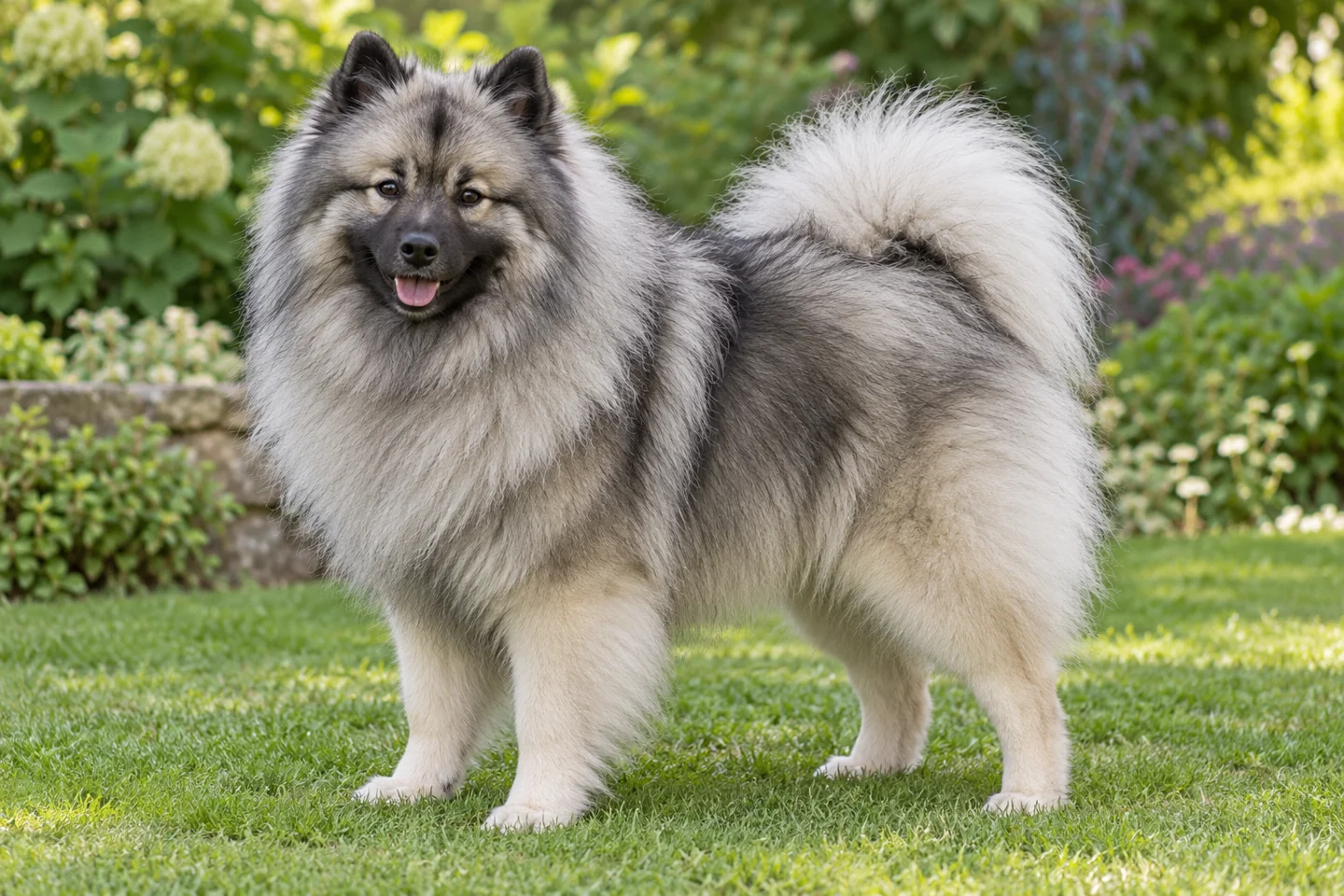
- FCI identity
- Wolfsspitz/Keeshond within the German Spitz standard
- Adult height reference
- 49 cm ± 6 cm
- Weight reference
- Proportional to size; no fixed FCI kilogram range
- Coat
- Grey shaded with black tips, ruff, spectacles, and curled plume
General information for owners. These articles have not been reviewed by a veterinarian. Medical decisions need your dog's history and an examination.
A companion beneath the spectacular coat
The Keeshond is a medium-sized spitz whose thick ruff, curled tail, and facial markings draw attention. Living with one also involves ordinary decisions about teaching, company, activity, and coat access. Ask to meet adults and observe how they settle after excitement. Find out what happens during absences and how arrivals are managed. A cheerful first meeting cannot establish that a dog will cope with every arrangement your household needs.
Before choosing a puppy, decide who will maintain the coat and where the dog will rest while people work. Include a practical walking routine and support during illness or travel. An attractive indoor companion still needs opportunities to investigate outdoors and learn useful responses. The full coat may make the animal appear content to remain still, but appearance cannot supply an exercise plan. Choose from evidence about the individual and the family rather than assuming a recognizable smile predicts an effortless relationship.
Keeshond and Wolfsspitz naming
In the FCI system, Wolfsspitz/Keeshond appears within the German Spitz standard, which identifies Germany as the origin. Other registries and national traditions use their own classifications and names. This guide addresses the grey Keeshond type rather than the smaller German Spitz varieties or the Pomeranian. A shared standard document does not make all those sizes and coat examples interchangeable. Read the relevant section when comparing an adult's measurements or an illustration.
Ask the source which registration and identity records apply to the dog. For an adult rescue, distinguish known ancestry from a visual description. A grey spitz-like cross may have different parentage while still benefiting from excellent observations of its care needs. The practical questions remain specific: comfortable handling, response to household noise, and recovery after a stimulating walk. Historical labels can help organize information, but they should not take the place of a current account of how the dog lives and what support it requires.
Size spectacles and the selected grey example
The FCI Wolfsspitz/Keeshond height reference is 49 centimeters with a six-centimeter tolerance in either direction. Weight should correspond to size, and the standard does not provide a fixed kilogram range. Its coat is grey-shaded with black hair tips and characteristic dark facial detail, including spectacle-like markings around the eyes. Ears are small and upright, and the bushy tail lies over the back. This guide illustrates that grey type with natural ears and a full tail.
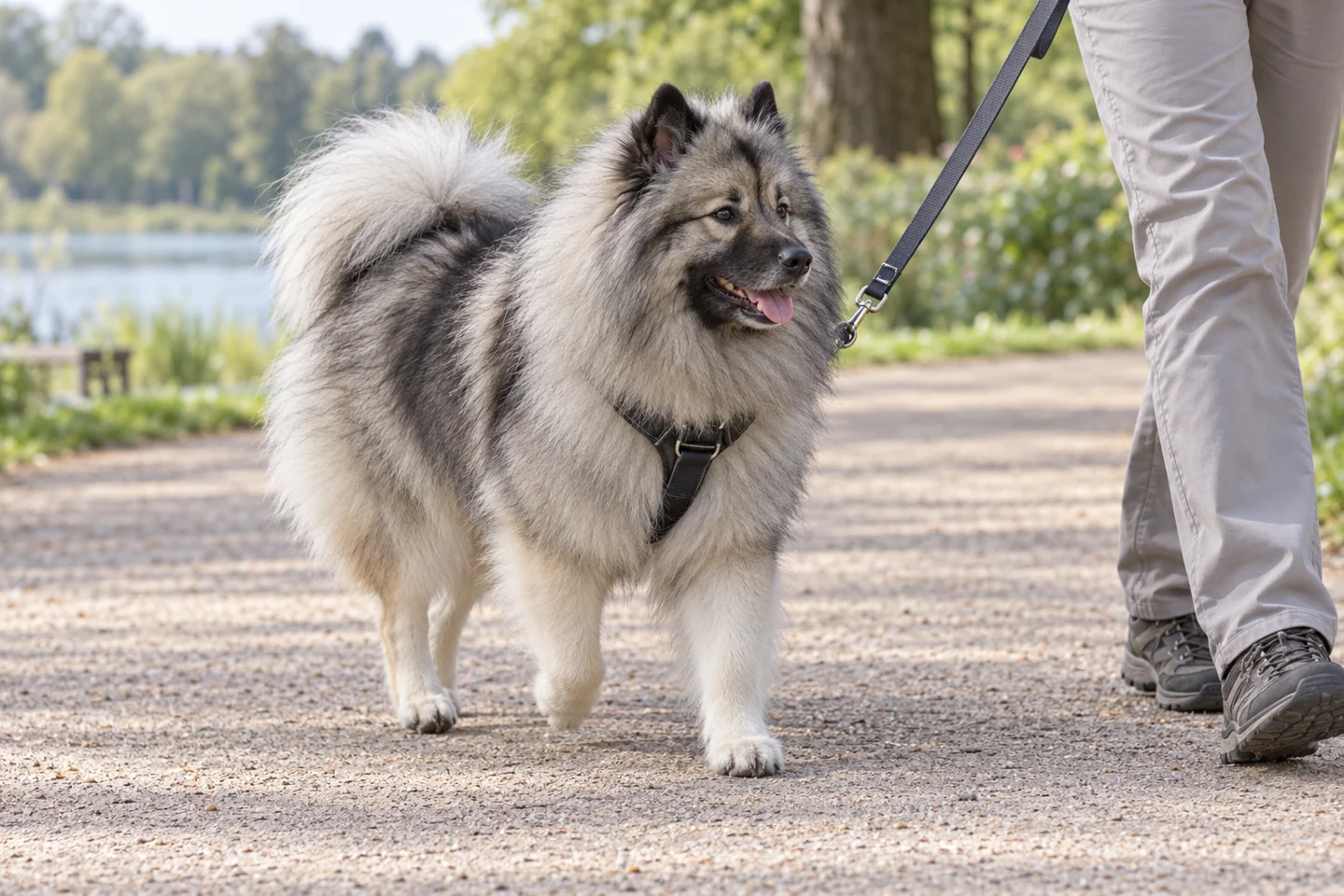
Assess the body beneath the ruff rather than selecting for the most dramatic coat. Ask someone qualified to demonstrate body-condition checks and fit equipment where it contacts the skin. A harness may look secure until the hair is parted, so inspect it carefully and recheck after shedding or weight change. Plan the car restraint and bed for actual measurements. An illustration cannot show clinical soundness or establish that a dog moves comfortably. Observe the real animal and investigate any reluctance, stiffness, or change in gait.
Company and the routine during absences
Ask how the Keeshond has learned to spend time without constant contact. A dog resting happily while someone works at a nearby desk has not necessarily practiced being alone. Begin from the previous carer's observations and organize support for the transition. Keep departure expectations realistic while you learn the individual's response. Persistent distress needs advice and a gradual plan, rather than simply a longer absence intended to make the animal get used to it.
Give the dog a resting area that is genuinely quiet and not constantly exposed to movement outside. Reward calm choices without turning every pause into an exciting game. Make meals, walks, and care predictable enough to reduce uncertainty, while gradually teaching useful flexibility. Discuss the arrangement with a qualified professional if the dog cannot settle. A second dog is not an automatic treatment for separation difficulty, and acquiring another animal adds responsibilities. The household should first understand what the existing dog needs and what it can currently manage.
Voice and visitors at the doorway
A watchful spitz may respond to arrivals or movement near its home, so discuss voice before placing one beside shared walls or a busy corridor. Ask the source for examples, including what happens after the visitor enters. Plan a comfortable place away from the door and teach movement there during calm periods. A visual barrier or a different bed position may reduce repeated activation when the outside view supplies endless reasons to respond.
Do not shout over barking or repeatedly create a doorbell event the dog cannot handle. Work at a manageable level and reward a useful alternative. Let visitors settle before deciding whether a greeting is appropriate. A person who sits quietly may be easier to meet than several people reaching toward the ruff at once. If the animal is worried or threatening, use secure separation and obtain advice. The goal is an arrival routine the household and visitors can follow, with the dog's comfort and control preserved.
Training practical choices with clear rewards
Select skills that improve daily life: waiting during harness fitting, returning a short distance, entering a carrier or vehicle space, and resting on a mat. Teach one manageable action at a time and reward it promptly. Practice where the dog can concentrate before adding movement, noise, or unfamiliar people. Keep the lesson short enough to notice understanding. Repeating a cue more loudly is rarely useful when the environment has become much harder than the version previously taught.
AVSAB recommends reward-based training and advises against aversive techniques. An instructor should explain what will motivate the dog and how to make an appropriate response achievable. If the animal is distracted, increase distance or simplify the task rather than making its coat or collar a handle for physical correction. Teach handling as its own cooperative skill, with a comfortable position and release. Progress is more useful when measured in concrete circumstances, such as a calm lead attachment, than in a broad promise of perfect obedience.
Exercise that fits age condition and weather
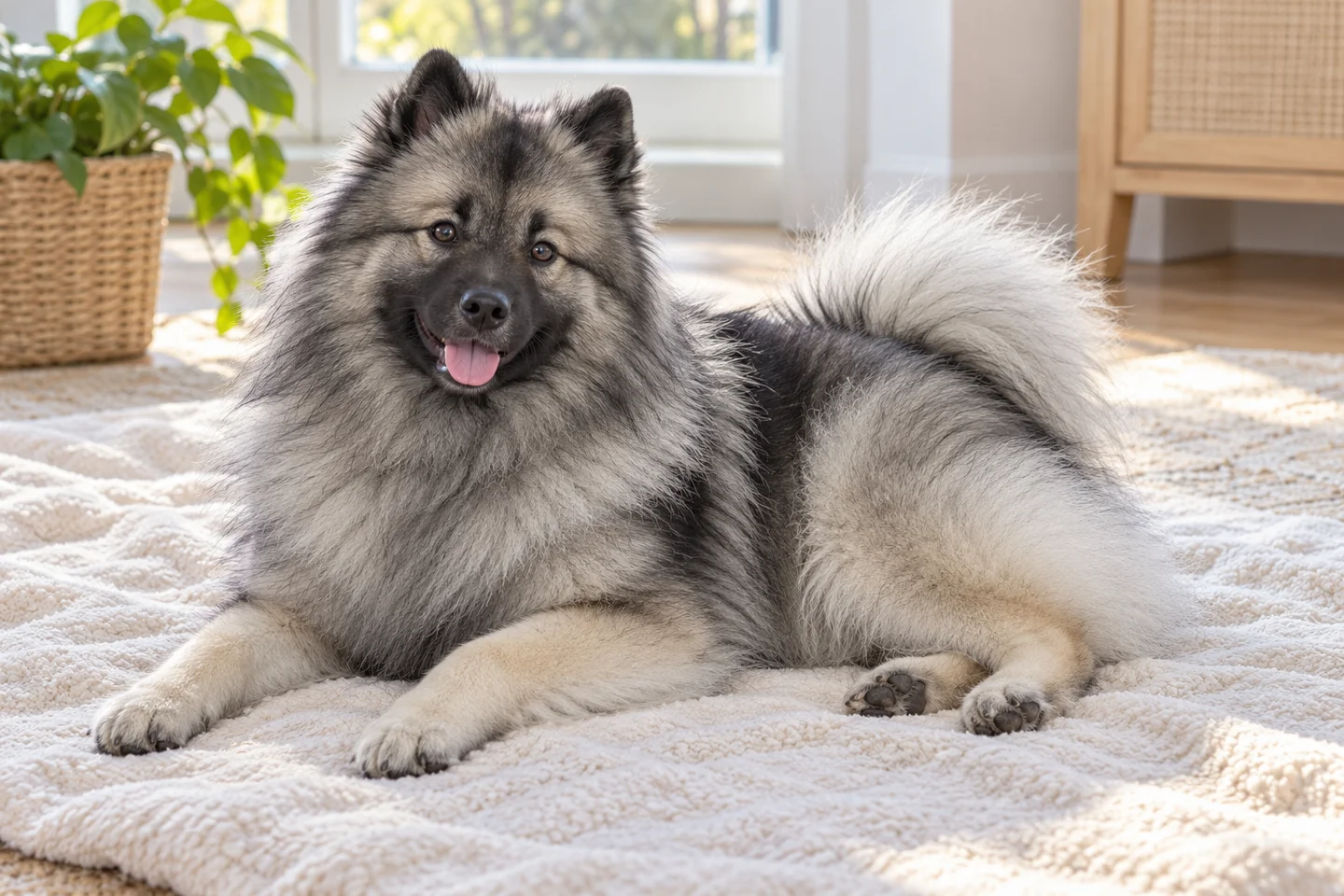
A Keeshond needs suitable walking and exploration despite its plush appearance. Offer opportunities to sniff, learn, and move at a comfortable pace. Match the routine to age, fitness, and clinical needs rather than copying a universal timetable. Ask the veterinarian about a growing puppy, an older animal, or a planned increase in sport. Watch recovery afterward. A persistent change in stamina, gait, or willingness to leave the bed deserves assessment.
In warm conditions, choose cooler times and shaded routes and keep water available. A thick coat cannot protect against every heat problem. Shorten or cancel an outing when the dog struggles and seek veterinary advice for serious distress. Keep a quieter indoor option for unsuitable weather, using a brief search or simple lesson without escalating activity endlessly. Rest belongs in the plan too. If constant stimulation is required to prevent barking or pacing, examine triggers and settling skills rather than assuming the only solution is more vigorous exercise.
Children and public attention around a fluffy dog
The Keeshond's appearance can encourage people to approach without asking. Protect the dog's space when it is tired, worried, or occupied. Children should meet it under active adult supervision and allow it to choose whether to approach. Avoid hugging, climbing over it, or pulling hair. Provide a protected rest area and keep meals and chews away from children's play. An adult must intervene before an animal is cornered or repeatedly followed.
Ask a source about experience with the specific ages and activity present in your home. A quiet older child and a running toddler are different situations. Teach visitors the same rules and separate comfortably when supervision is interrupted. Shared activities can be brief and structured, with the child helping prepare an easy game while an adult controls the dog. A friendly reputation does not guarantee safety, and a dog leaving should be understood as ending contact. The household's arrangement matters alongside the individual animal's previous learning.
Aggression and changes in familiar behavior
Treat growling, stiffening, snapping, or avoidance as information requiring a change in the situation. Record the context and prevent another confrontation while you seek advice. Was the dog being brushed, approached during sleep, or competing over food? A sudden response to handling should prompt veterinary attention. Pain or illness may alter behavior, and a familiar affectionate relationship cannot rule out a new medical problem. Tell professionals what changed instead of reducing the event to moodiness.
VCA explains that aggression toward unfamiliar dogs can have several motivations. Do not release a lunging animal to see whether it actually wants to greet. Use distance and secure management until the pattern is assessed. Avoid taking bowls or objects repeatedly to demonstrate authority. Teach appropriate exchanges and keep resources separate where needed. A qualified behavior professional can help develop a plan with the veterinarian. Carers need accurate incident details and practical restrictions, not reassurance based solely on the breed's general reputation.
Other pets and the details of sharing a home
Ask how the individual behaves with familiar and unfamiliar animals. A calm meeting at a distance supplies different information from living around food, beds, and doorways. Introduce another dog where handlers can move apart and end contact easily. Compare play intensity, physical size, and mobility. An enthusiastic younger partner may be too much for an older resident even if both seem sociable. Keep meals and valued items separate while the relationship becomes clearer.
Provide cats with escape routes and protected resting places, and keep smaller pets securely housed. Do not hold an animal still to test tolerance. Watch whether either pet is repeatedly hiding, guarding access to a person, or unable to rest. Adjust the arrangement from those observations rather than removing barriers according to a fixed schedule. Discuss uncertainty before placement so the household knows whether continuing separation may be needed. A good relationship is supported by management, while an unsuitable pair should not be left to resolve conflict without help.
Grooming all the way through the coat
The ruff and undercoat require deliberate access to the skin. Ask a knowledgeable groomer to demonstrate parting the hair and working gently through small areas. Check behind the ears, under the front legs, around trousers, and beneath straps. Brushing only the outer tips can leave tight tangles hidden underneath. VCA cautions against using scissors close to skin on mats. Professional help is appropriate when a knot has tightened or the dog is uncomfortable.
Teach a stable care position and keep sessions short enough for cooperation. Record which tools and method work so another carer can help consistently. During shedding, adjust maintenance to the amount of loose undercoat without forcing a prolonged session. Dry wet areas properly and inspect skin that remains damp. A large volume of hair should never become a reason to accept persistent odor, redness, or pain. Those changes need investigation, and the grooming plan may need to change while a medical problem is being addressed.
Skin nails and practical mouth care
Notice changes in the skin or coat rather than covering them with stronger products. Persistent scratching, hair loss, irritation, or new sensitivity deserves veterinary advice. Explain when it began and what equipment or bathing routine changed. Do not diagnose allergy from a photograph or assume every thin patch is ordinary shedding. Ask what information the clinic wants recorded and follow the individual plan instead of repeatedly trying unrelated products.
Introduce foot, nail, mouth, and ear checks gradually. Reward a brief comfortable touch and release before adding duration. Ask the veterinary team to demonstrate appropriate care and explain what findings matter. Ear odor, discharge, redness, or repeated head shaking needs an examination. Avoid deep cotton swabs and leftover drops. A dental plan should also be based on the individual rather than cosmetic appearance alone. Routine care is more manageable when access has been taught and any sudden pain changes the approach promptly.
Health screening and reading the actual findings
The AKC's current national-club recommendations for Keeshonden list patella, hip, elbow, and ophthalmologist evaluations. Request reports identifying the parents and showing dates and findings. The Keeshond Club of America's health information also discusses screening and additional concerns, but a buyer should distinguish required program assessments from optional tests or ongoing research. A statement that everything was checked is too broad to establish what evidence exists.
CHIC certification records completion and disclosure under its program. Read the individual results instead of assuming completion means all findings were normal. Ask about important diagnoses in relatives and how information from older offspring reaches the source. Screening does not guarantee lifelong health or remove the need to investigate present symptoms. For an adopted adult with incomplete history, preserve the gap and arrange a current examination. Reliable records and honest uncertainty provide a better basis for care than a confident promise based on a healthy-looking coat and active demeanor.
PHPT testing needs current interpretation
Primary hyperparathyroidism is an important topic to discuss with a Keeshond's veterinarian and source. Cornell's Animal Health Diagnostic Center resumed testing in January 2025 using the PHPTQ assay. Its current information says the test detects whether a specified insertion is present or absent. It also states that clinical validation was not performed because clinically recognized cases were unavailable, and advises caution in clinical interpretation. That limitation should remain attached to any discussion of the result.
Do not turn an old website's description of a genetic clearance into a diagnosis or a guarantee without reviewing the actual assay and date. Take the report to your veterinarian and ask how it relates to the animal's history and any clinical findings. A genetic result and a medical investigation serve different purposes. Keep copies rather than relying on a remembered positive or negative label. If the dog develops persistent changes in drinking, appetite, strength, or other normal behavior, arrange clinical assessment regardless of what a past screening discussion appeared to promise.
Mixes costs and making a realistic choice
A Keeshond mix may have different coat density, adult size, or temperament, and a grey ruff cannot establish ancestry by itself. Ask what is known about the parents and what was inferred from appearance. A crossbreed name does not promise easier grooming or freedom from inherited illness. Where ancestry is documented, review relevant information for both parents. For an adult, practical observations about handling, movement, rest, and responses to other animals can be especially useful.
Budget for regular care, including grooming help, veterinary prevention, training support, and arrangements during work or holidays. Ask local providers for current costs. Time for coat care and company also belongs in the calculation. Read contracts and insurance terms and discuss support after placement. If maintaining the coat or managing absences would be difficult now, address that before committing. A suitable decision recognizes what everyday ownership requires after the initial excitement, with enough flexibility to accommodate the needs of an individual dog as they change.
dogsDating meetings built around comfortable company
Describe the Keeshond's actual walking preferences on dogsDating, including pace, space, and experience with different partners. Keep exact coordinates and your address private. Use an approximate area to agree on a public route with an easy exit. Confirm that each adult handles their own dog and that the first plan does not depend on close greeting or off-lead play. Choose conditions in which either owner can shorten the outing without pressure.
Begin with parallel walking far enough apart for both animals to look away and explore. Avoid shared toys and close food games initially. Watch whether either dog becomes stiff, repeatedly vocal, or unable to disengage. Create more space or finish rather than insisting that friendliness must appear. A successful match may be quiet company on a familiar route. Record the useful conditions afterward and preserve them next time. The value is a better experience for the dogs, with physical play remaining optional and comfort guiding the pace.
Sources and editorial notes
Sources checked October 21, 2026. Breed measurements describe reference ranges, not a diagnosis or an individual dog's ideal weight. Images are AI-generated breed illustrations and do not document a particular dog or health condition.
- AVSAB: Humane Dog Training Position Statement
- VCA Animal Hospitals: Food aggression in puppies
- VCA Animal Hospitals: Common emergencies in dogs
- Orthopedic Foundation for Animals: CHIC health screening programs
- VCA Animal Hospitals: Aggression toward unfamiliar dogs, diagnosis
- VCA Animal Hospitals: Grooming and coat care for your dog
- VCA Animal Hospitals: Ear infections in dogs (otitis externa)
- AAHA: Feeding plans for healthy, appropriate weight cats and dogs
- VCA Animal Hospitals: Heat stroke in dogs
- VCA Animal Hospitals: Dog behavior problems, aggression toward children
- FCI: German Spitz standard, Wolfsspitz/Keeshond section
- AKC: Non-Sporting Group Health Testing Requirements
- Cornell University Animal Health Diagnostic Center: Keeshonden PHPTQ Genetic Test
- Keeshond Club of America: Keeshond health information and screening resources
Keep getting to know dogs.
Read another guide or return to your dogsDating community.
Explore breed guidesBack to dogsDating