Komondor
A large Hungarian guardian whose developing corded coat, boundaries, care access, and visitor routines require informed long-term planning.
How these guides are researched and reviewed
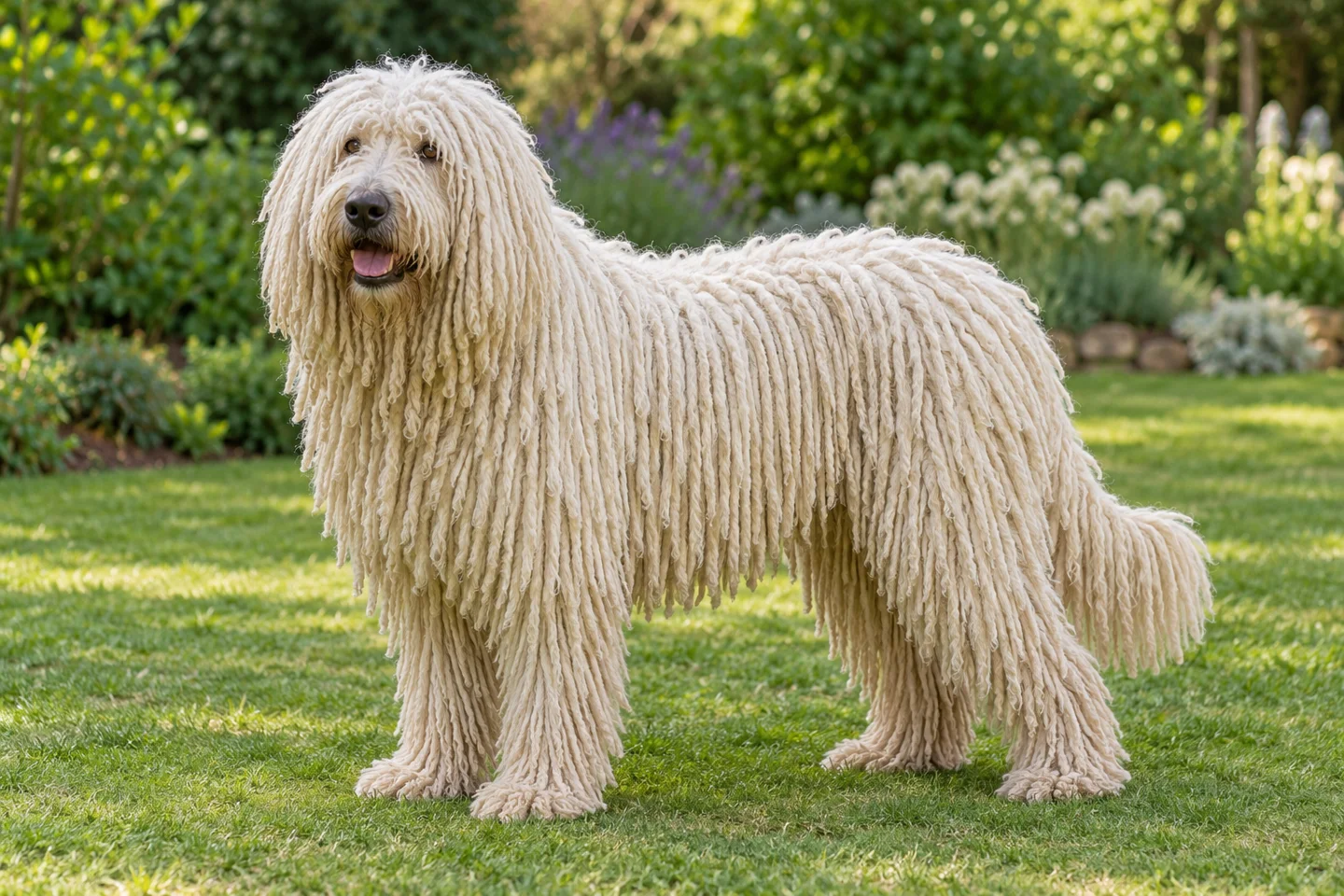
- Origin
- Hungary
- FCI minimum height
- Males 70 cm; females 65 cm
- FCI weight reference
- Males 50–60 kg; females 40–50 kg
- Coat development
- Soft puppy coat develops into ivory adult cords
General information for owners. These articles have not been reviewed by a veterinarian. Medical decisions need your dog's history and an examination.
The coat is only part of the commitment
A Komondor is a very large Hungarian livestock guardian whose adult cords are immediately recognizable. A suitable home must also manage visitors, boundaries, handling, and continuing coat access. Before choosing one, speak with experienced sources about the role you expect it to fill. Explain whether it will live with livestock or as a companion and describe the people and animals already present. A striking appearance cannot establish that those circumstances will suit the dog.
Consider ordinary logistics early. Someone must be able to receive a delivery while the animal is securely separated, maintain the coat, provide appropriate activity, and obtain medical care when it cannot walk unaided. Ask who will do those jobs during work, holidays, or illness. Meet adults and seek examples of both easy and difficult days. The decision should be based on a practical routine you can maintain rather than the appeal of owning a dog whose coat attracts attention wherever it goes.
Hungarian guardian history and modern placement
The FCI describes an old Hungarian breed of Asiatic background associated with livestock and property guarding. Its historical account proposes a connection with migrating Magyars, which should remain presented as historical interpretation rather than a documented founding event. The guardian role gives useful context for questions about territory and unfamiliar arrivals. It does not provide an automatic explanation for every behavior or a guarantee that a puppy can work unsupervised with vulnerable animals.
Ask a source how its dogs live now and what their upbringing prepares them to do. A working placement and a home with frequent visitors create different requirements. Request identity records and an honest account of experience. A corded white cross should not be described as a documented Komondor solely from appearance. For an adult with uncertain ancestry, current medical and behavioral observations can still guide a good home. The important distinction is between what the source knows and what it hopes a new owner will assume.
Adult size under an ivory coat
The FCI minimum heights are 70 centimeters for males and 65 for females, with weight references of 50–60 and 40–50 kilograms. The body is powerful and slightly longer than tall. Natural ears hang within the furnishings, and the full tail is carried low with a curved tip. The mature coat is ivory and corded. The images in this guide retain natural anatomy and show a selected example, while the young-dog illustration has a soft early coat.
A large corded outline can conceal structure and changing condition. Ask a veterinarian or knowledgeable source to demonstrate how to assess the body beneath the hair. Choose transport and rest space for the actual measurements, allowing room to turn and lie comfortably. Plan how to assist an injured dog without an improvised lift during a crisis. Standard numbers are context rather than feeding targets. More bulk does not automatically mean better type, and an illustration cannot establish comfortable movement or the health of an individual.
The puppy coat and the work of maturation
A Komondor puppy does not arrive wearing the long adult cords seen in photographs. The Komondor Club of America's study guide describes a soft puppy coat, a developing intermediate stage, and mature cords formed from the interaction of undercoat and outer hair. Coat length also relates to age. Owners need informed guidance during that transition instead of trying to force a puppy to resemble a much older animal or assuming every fuzzy stage means something is wrong.
Ask an experienced breeder or groomer to demonstrate the work on your dog. Schedule time to review progress as the coat changes and record what you should do between demonstrations. A routine learned for a different corded or flocked breed may not transfer unchanged. Keep the animal comfortable and preserve skin access. The goal is an appropriate manageable coat, with professional help when necessary, rather than an adult silhouette achieved at the expense of handling tolerance or the ability to inspect the dog properly.
Grooming cords while keeping the skin accessible
The breed club describes owners helping maintain separation as cords develop and checking for material caught in a working coat. Learn the method directly from someone experienced with Komondors rather than treating every mat as an ordinary brush-out task. Work in short comfortable sessions and inspect the bases where hair meets skin. If an area is sore, contaminated, or tightly joined in a way you cannot manage safely, ask for help.
Discuss bathing, rinsing, and drying before the first major session. Plan time, equipment, and a comfortable place for the dog. Do not promise a fixed drying time for every individual coat and environment. Persistent odor, irritated skin, discharge, or pain needs veterinary attention. A corded coat is not permission to neglect inspection, and preserving a particular length should never prevent necessary treatment. Explain your daily capacity to the groomer and veterinarian so a practical care plan can be chosen when health, age, or household circumstances change.
Boundaries and arrivals should not be improvised
Decide how visitors enter before the dog is placed in the home. Identify gates, deliveries, shared paths, and any place someone might unexpectedly cross its resting or working area. Use a secure physical arrangement and teach movement into a comfortable separate space during quiet periods. A warning sign or an owner's intention to catch the collar is not a reliable barrier. Everyone helping needs to know the sequence and follow it consistently.
A guardian may respond differently to a familiar person, a stranger, or someone entering when the usual owner is absent. Preserve the option of keeping the dog separate rather than making every visit a social test. Reassess after changes such as construction, a new neighbor, or a different carer. The plan should remain workable during a busy day when several events happen at once. Clear management gives the household room to decide deliberately and protects the animal from confrontations it has not been prepared to handle.

Training cooperation in a powerful animal
Teach useful actions while the setting is calm: waiting for equipment, walking without pulling, entering a vehicle area, and moving onto a resting place. Reward small steps and make the next repetition achievable. AVSAB recommends reward-based methods and advises against aversive training. A guardian's independence does not make physical intimidation necessary. Ask an instructor to explain the desired response, how it will be taught, and what management prevents risk while the skill is unfinished.
Practice away from highly activating boundaries before adding visitors or unfamiliar dogs. If the animal cannot concentrate, create distance and simplify the task. Repetition at an impossible level is not a useful test of character. Keep cues consistent across carers and record success in concrete conditions. Handling also requires preparation, especially beneath a heavy coat. A brief comfortable examination position and a clear release can help build access over time, while painful or urgent care should be organized with the veterinary team.
Exercise and calm time away from patrol
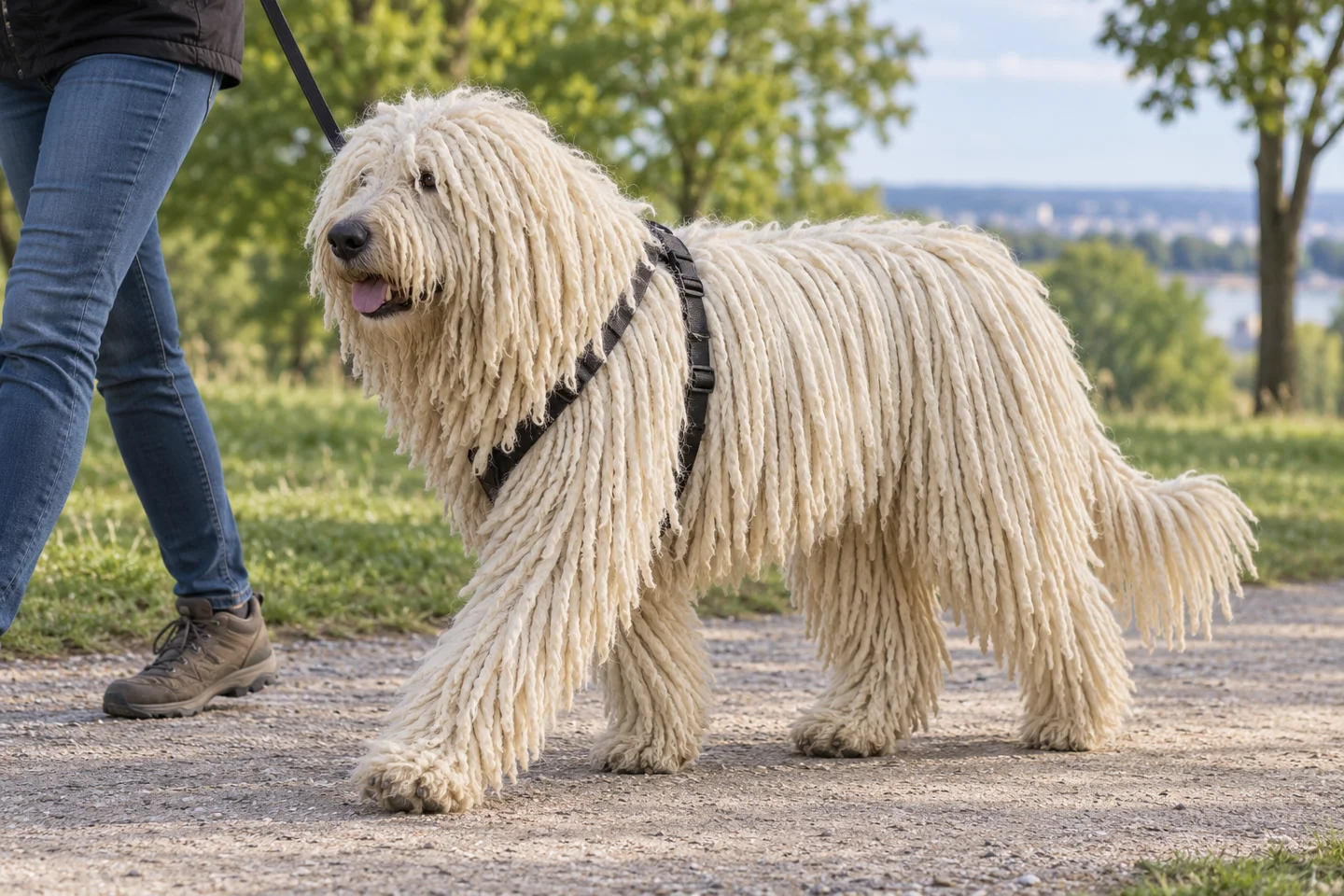
Offer activity appropriate to the individual's age, health, and role. A companion Komondor should have suitable exploration rather than only watching a boundary. Choose routes where the handler has room to turn away from pressure and can maintain control. Ask your veterinarian about growth, conditioning, or a proposed demanding sport. A powerful adult outline does not establish readiness for repetitive high-impact work, especially in a growing puppy or an animal returning from injury.
Rest and recovery belong in the plan. Constant visibility of passing people or dogs may keep the animal activated, and more exercise alone may not solve it. Review the location of beds and outdoor access and provide quiet alternatives. Adjust effort for weather and footing. The coat does not guarantee comfort in heat, and enthusiasm cannot rule out overexertion. Persistent stiffness, altered gait, or unusual fatigue should be reported. A flexible routine allows the owner to adapt to the actual dog rather than pursue a fixed target regardless of response.
Children and visitors need a protected arrangement
A Komondor's size and guardian role make adult responsibility clear. Children should not open gates, hold the dog during arrivals, disturb meals, or enter its resting area. An adult must supervise shared time and use comfortable separation when attention is interrupted. Explain rules before a visit, including allowing the animal to leave. Physical affection should never mean climbing on the dog or pulling the cords that make its appearance so interesting.
Ask the source about experience with children of similar ages and activity. A calm response to one teenager cannot establish safety around a running group of toddlers. Choose short structured activities with an adult managing the animal and stop before excitement rises. Visitors should understand that contact is optional and may be inappropriate that day. If the household cannot maintain the necessary arrangement consistently, address that before placement. A reputation for devotion is not a substitute for practical prevention or an assessment of the individual.
Aggression and the need for an honest account
If the dog threatens, snaps, or bites, describe the event precisely and prevent another exposure. Record who approached, what was happening, the distance, and what escape was available. A warning during cord care may involve discomfort, while a boundary incident has different immediate management needs. Contact a veterinarian about new or escalating behavior and involve qualified behavior help when safety is uncertain. Do not use protection as a complete explanation that ends investigation.
Avoid punishing warning signals or deliberately provoking the situation for a demonstration. Secure separation and suitable distance protect everyone while an assessment is arranged. VCA explains that aggression toward unfamiliar dogs has different possible motivations, so releasing a lunging animal is not a safe test. Tell sitters and professionals about incidents before they handle the dog. If muzzle conditioning is recommended, introduce appropriate equipment positively and follow advice. It remains an additional precaution within a broader plan and cannot make coercive handling or an unsuitable encounter acceptable.
Other animals and the limits of a guardian label
A livestock-guardian background cannot establish that every individual is safe with every farm or household animal. Ask about the exact species, age, and circumstances the dog has experienced. A puppy needs supervision and preparation for work, and an adult raised as a companion should not be assigned a task based only on breed. Seek experienced guidance and maintain separation when uncertainty remains. Never stage a risky encounter to see whether instincts will solve it.
For resident dogs, begin with controlled introductions that permit distance and avoid contested resources. Watch whether both can disengage and rest. Cats require protected routes, and smaller pets need secure housing. Do not hold an animal still for an inspection or allow a chase as a compatibility test. Some arrangements require lasting separation or may prove unsuitable. The household should discuss that possibility before arrival and choose a physical system people can maintain when distracted, rather than depending on an optimistic assumption that the animals will sort it out.
Health screening and the actual reports
The AKC's current national-club recommendations for Komondors list hip evaluation, ophthalmologist evaluation, and dentition examination. Ask for records with the dog's identity, dates, and findings. A general veterinary check or a commercial genetic panel supplies different information. If the source follows another program, request the current requirements and explanation rather than borrowing a list from a different Hungarian breed. The aim is to understand the evidence that actually exists.
Review important diagnoses in relatives and ask whether later owner reports are collected. Screening cannot guarantee lifelong health, and completion is not the same statement as a normal result. For an adult without family information, keep that uncertainty visible and plan current care with a veterinarian. A heavy coat may conceal changes in body condition or skin, so ordinary examinations remain valuable. Persistent changes in movement, appetite, thirst, vision, or tolerance of handling deserve assessment even when parental paperwork or previous working performance was reassuring.
Nutrition routine prevention and urgent transport
Choose complete food suited to life stage and clinical needs with veterinary guidance. Measure portions, count rewards, and assess the body beneath the coat. Do not add food or supplements simply to increase adult bulk. A large growing dog requires an individual plan, while reference weights are not instructions to feed toward the maximum. Give sitters precise food and medication information so daily care remains consistent when the usual person is away.
Plan prevention for residence, travel, and working exposure. Discuss how to transport the dog if it cannot stand and keep an urgent-care number accessible. Repeated unsuccessful retching, collapse, severe distress, abdominal enlargement, breathing difficulty, serious injury, or suspected poisoning requires prompt veterinary contact. Follow the clinic's instructions and describe relevant timing and exposures. Avoid human medicines and another animal's prescription. A dog that remains watchful can still be ill, so observe meaningful changes rather than using its continuing interest in the surroundings as proof that waiting is safe.
Mixes costs and a decision beyond appearance
A corded white dog or Komondor cross may have different ancestry, coat development, or behavior. Ask which identity claims are documented and which are visual guesses. A mix does not guarantee an easier coat or remove inherited risks. For known parents, seek relevant health and behavioral information from both. For an adult, present care needs and reliable observations may answer more practical questions than a confident ancestry label. Describe that evidence honestly.
Obtain local costs for food, veterinary care, fencing, suitable transport, training support, and knowledgeable grooming help. Include the time and equipment needed for coat maintenance and drying. Ask who can provide care during holidays or illness and whether they accept the actual handling requirements. Review support and return arrangements with the source. If visitor access or coat work cannot be organized reliably, reconsider the placement before committing. A suitable home can maintain the ordinary responsibilities long after the striking puppy or adult photograph has stopped being the main attraction.
dogsDating is a choice rather than a requirement
Use dogsDating only where unfamiliar contact fits the individual and any professional advice. A guardian does not need casual meetings to make its life worthwhile. If a walk is suitable, state observed preferences and restrictions clearly. Keep exact coordinates and the home address private and use an approximate area to choose a public place with generous space. Each adult must manage their own dog, and both should accept an easy early ending.
Start with parallel movement at a distance that permits attention to the surroundings and handlers. Avoid shared toys, food competition, and narrow entrances. Watch for stiff posture, fixation, repeated avoidance, or difficulty disengaging. Increase distance or finish rather than forcing a greeting. A familiar walking partner can be a useful result while physical play remains optional. Afterward, note which conditions helped and preserve them next time. Social company should improve the dogs' experience under manageable conditions, not create pressure to prove a breed description right or wrong.
Sources and editorial notes
Sources checked October 21, 2026. Breed measurements describe reference ranges, not a diagnosis or an individual dog's ideal weight. Images are AI-generated breed illustrations and do not document a particular dog or health condition.
- AVSAB: Humane Dog Training Position Statement
- VCA Animal Hospitals: Food aggression in puppies
- VCA Animal Hospitals: Common emergencies in dogs
- Orthopedic Foundation for Animals: CHIC health screening programs
- VCA Animal Hospitals: Aggression toward unfamiliar dogs, diagnosis
- VCA Animal Hospitals: Grooming and coat care for your dog
- AAHA: Feeding plans for healthy, appropriate weight cats and dogs
- VCA Animal Hospitals: Heat stroke in dogs
- AVSAB: Puppy Socialization Position Statement
- VCA Animal Hospitals: Dog behavior problems, aggression toward children
- FCI: Komondor official breed standard
- Komondor Club of America: About the Komondor and care
- Komondor Club of America: Breed Study Guide, coat development
- AKC: Working Group Health Testing Requirements
Keep getting to know dogs.
Read another guide or return to your dogsDating community.
Explore breed guidesBack to dogsDating