Kooikerhondje
The Nederlandse Kooikerhondje is a small Dutch sporting dog whose care includes feathering, thoughtful social learning, and precise inherited-condition records.
How these guides are researched and reviewed
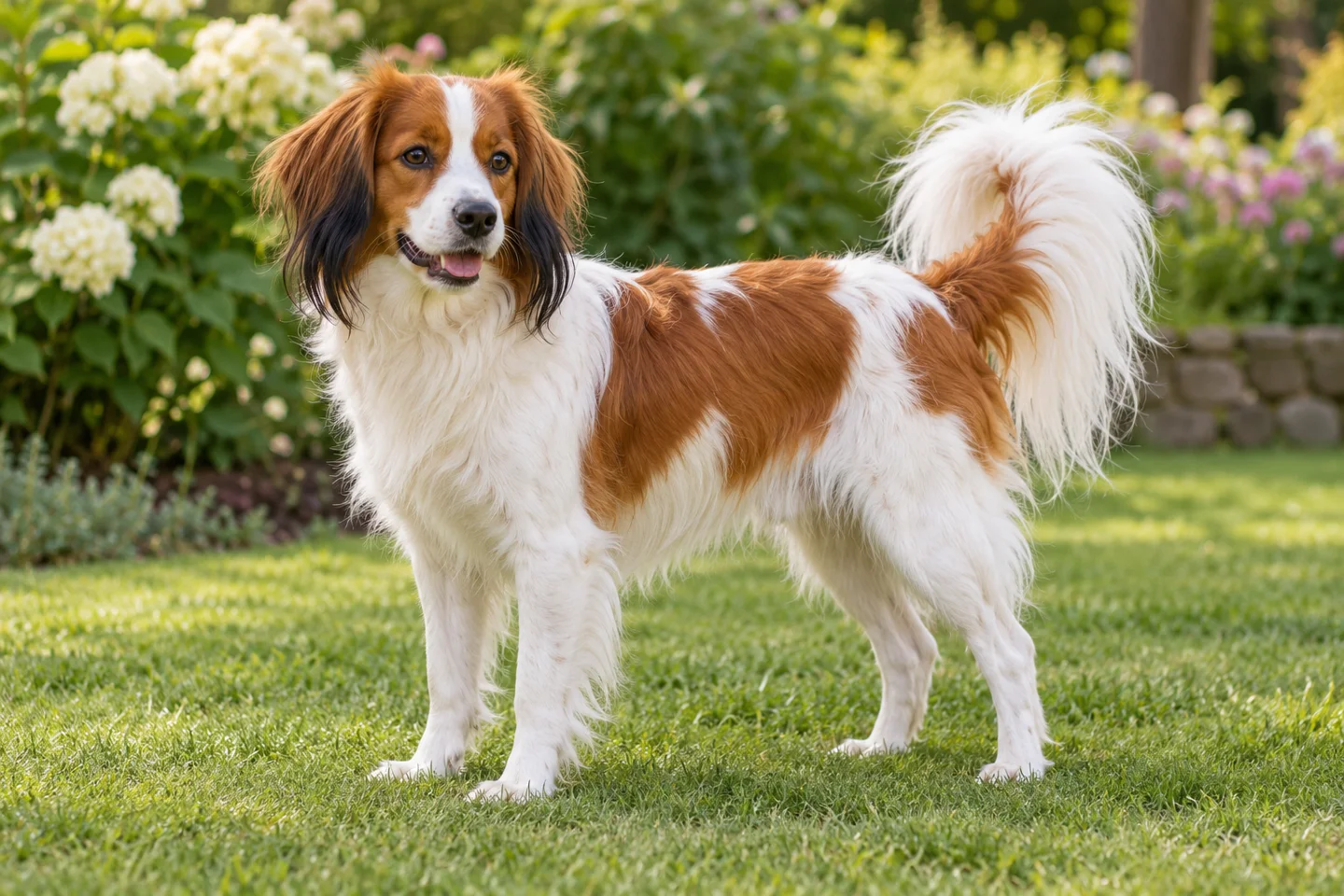
- Origin
- Netherlands
- Full breed name
- Nederlandse Kooikerhondje
- FCI ideal height
- Males 40 cm; females 38 cm, with +2/−3 cm tolerance
- Illustrated features
- Orange-red patches on white, black ear tips, full feathered tail
General information for owners. These articles have not been reviewed by a veterinarian. Medical decisions need your dog's history and an examination.
A small Dutch dog with a working background
The Kooikerhondje is a small Dutch sporting dog with orange-red patches, a feathered white tail, and a working history linked to duck decoys. Its companion life still needs suitable activity, teaching, coat care, and thoughtful introductions. Before choosing one, ask how the particular dog handles visitors, unfamiliar animals, and quiet hours at home. A lively outdoor demonstration supplies different information from the ability to settle while people are busy.
Describe your household in practical terms, including children, existing pets, shared corridors, and work schedules. Meet adults where possible and ask for examples from similar settings. A dog should not be selected solely because it appears small enough for an apartment or attractive enough to photograph on every outing. The decision concerns a continuing routine. A knowledgeable breeder or rescue can explain observed needs, what has been taught, and what support may be required when the animal encounters a new way of living.
Kooikerhondje and Nederlandse Kooikerhondje
Nederlandse Kooikerhondje is the full breed name used in the FCI standard. This catalog's shorter Kooikerhondje entry refers to that same recognized breed, rather than a separate variety. The FCI describes work associated with Dutch duck decoys, where the dog's appearance and movement formed part of a specialized setting. The history provides context for cooperation and attention outdoors. It does not mean an untrained pet is prepared for water work or wildlife encounters.
Ask which identity and registration records accompany the individual. A small orange-and-white dog can resemble a Kooiker without documented ancestry. In rescue, preserve that uncertainty while gathering reliable observations of its behavior and medical history. For a puppy, ask how the family lives and what preparation occurs before placement. An old working story cannot establish that the animal has learned public transport, quiet absences, or handling by unfamiliar professionals. Modern care must be planned from the dog and household involved.
Adult height and the earrings on the ears
The FCI ideal heights are 40 centimeters for males and 38 for females, with two centimeters above or three below permitted. The coat is medium length, straight or slightly wavy, with orange-red patches on white. Black-tipped ear hair is often called earrings. Natural ears hang, and the full feathered tail is an important part of the outline. This guide's illustrations select those features without presenting an AI image as pedigree or medical evidence.
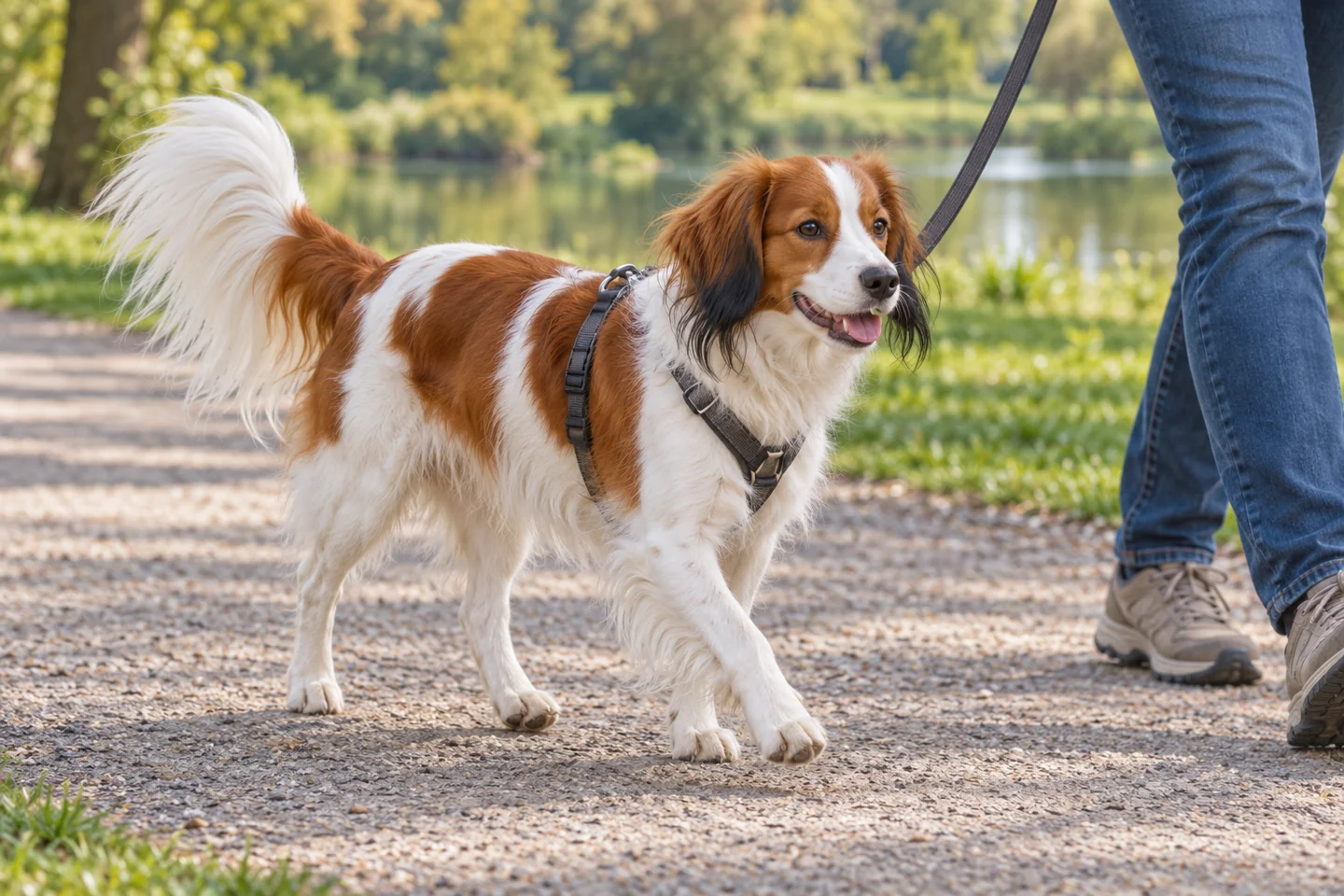
Check the actual animal beneath its furnishings. Watch it walk and turn, and ask about any stiffness or injury history. Fit a harness so it neither slips nor rubs the feathering and skin. Review fit during growth and after a major change in condition. Prepare a travel space and bed suited to adult dimensions. Standard heights provide context rather than a guarantee of a puppy's exact final measurements. The individual needs its own growth and body-condition assessment, without portions being increased to reproduce a particular adult silhouette.
Training cooperation in ordinary household moments
Teach the dog what to do when the lead appears, a door opens, or food is being prepared. Begin with a short manageable action and reward it clearly. A mat can provide a useful place to rest if its position is comfortable and away from constant traffic. Practice when the house is quiet before expecting the same response during a delivery or family gathering. Everyday repetitions can build understanding without making every lesson a prolonged formal session.
Keep cues and expectations consistent among carers. If the animal repeatedly fails, look at distraction, reward, and whether the task was actually taught in that setting. AVSAB recommends reward-based methods and advises against aversive techniques. Choose an instructor who can explain how to make success possible and how management prevents unsafe situations meanwhile. Physical correction should not replace an unclear lesson. A precise goal such as returning a few steps is easier to evaluate than a broad demand to be good in every circumstance.
Exercise beyond a single exciting game
Offer suitable walking, sniffing, and play matched to age and fitness. A sporting background does not establish a universal daily target or mean every dog needs constant rapid activity. Include learning and quiet recovery. Ask your veterinarian about growth, orthopedic concerns, illness recovery, or a proposed sport. Watch movement afterward as well as enthusiasm at the start. A persistent change in stamina or willingness to move should be assessed rather than explained away as a temporary lack of interest.
Choose routes with safe footing and enough space to turn away from pressure. Keep equipment secure where wildlife or traffic creates risk. In heat, adjust timing and effort and preserve water and rest. Have a quieter alternative for unsuitable conditions rather than escalating indoor excitement until the dog becomes exhausted. An animal that struggles to settle may need changes in triggers and teaching as well as exercise. The useful routine supports comfortable activity across an ordinary week, including days when the original plan is disrupted.
Water and birds require separate preparation
The duck-decoy history does not tell you whether an individual can swim safely in a particular place or remain controlled around birds. Check banks, access points, current, weather, and other users before allowing water activity. Begin any suitable preparation gradually with experienced guidance. Never throw the dog into water or use a first unfamiliar location as a test of inherited ability. A confident episode elsewhere supplies limited evidence about different conditions.
Keep control near wildlife and choose another activity when safety is uncertain. Ask a qualified instructor about equipment for a planned water sport or boating trip. After an incident, seek veterinary advice for breathing difficulty, collapse, or unusual illness and tell the clinic what happened. A photograph of a feathered dog beside a pond is not proof of readiness. Owners should be willing to stay on land or shorten the outing. Optional activities should improve the animal's life rather than become a requirement attached to its breed history.

Children and care around a furnished companion
Children should meet the dog with an adult actively supervising. Explain that the ears, tail, and feathering are not for pulling and that the animal may leave. Protect its bed and keep meals and chews separate from play. Do not ask a child to remove an object from its mouth, hold the collar, or restrain it for grooming. A dog that has to defend space repeatedly is being placed in a situation adults should change.
Ask the source about specific experience with similar ages and behavior. Calm contact with one older child cannot establish readiness for a running toddler. Shared activities can be controlled and brief, with an adult handling the dog while the child helps prepare a search or watches a short lesson. End before excitement rises. When supervision is interrupted, use a comfortable physical barrier. A suitable arrangement depends on the individual and the household's capacity to prevent pressure, without treating small size or an affectionate appearance as a safety guarantee.
Aggression and understanding a difficult event
Record the context when the dog stiffens, growls, snaps, or bites. Include who approached, what the animal had, the distance, and whether it could leave. Prevent another exposure while obtaining advice. A new warning during touching or movement should be discussed with a veterinarian because discomfort may contribute. Avoid reducing the event to a personality adjective or assuming affection at other times makes investigation unnecessary.
Do not punish a warning or deliberately repeat the approach to test whether the dog has improved. VCA explains that aggression toward unfamiliar dogs can arise for different reasons. Maintain distance and secure control rather than releasing a lunging dog as an experiment. Reduce resource competition and teach appropriate voluntary exchanges with qualified guidance. Carers need the actual history and restrictions before handling responsibility transfers. A practical plan should be clear enough to follow during ordinary busy moments and reviewed when the animal's health or setting changes.
Grooming feathering without pulling
Check the hair behind the ears, under the front legs, along the trousers, and beneath equipment for tangles or debris. Ask a groomer to demonstrate gentle tools and work in small sections. Reach the skin without dragging a comb through a tightened knot. VCA warns against scissors close to skin on mats. Skilled help is appropriate when you cannot see the boundary clearly or the animal becomes painful during ordinary maintenance.
Keep wet furnishings comfortable after walks or meals and inspect feet after rough ground. Bathing should use suitable products and an appropriate drying plan. Persistent odor, redness, hair loss, or repeated scratching deserves veterinary advice rather than stronger cosmetic products. Introduce a stable care position and reward brief cooperation before building duration. A practical routine should remain achievable between professional appointments. Preserving a particular appearance is less important than skin access, comfortable equipment, and the ability to provide necessary care throughout the dog's life.
Health screening and the exact inherited conditions
The AKC's current national-club list for Nederlandse Kooikerhondje includes eye, patella, and hip evaluations plus DNA tests for von Willebrand disease type III in the breed and hereditary necrotizing myelopathy, or ENM. Ask for actual reports with identities, dates, and findings. A test named for another breed or disease type is not interchangeable merely because the words resemble each other. Discuss unfamiliar results with a veterinarian or the relevant health program.
The national club also encourages discussion of additional family concerns, including polymyositis and kidney disease. A program's core list does not exhaust every clinical question. Ask about significant diagnoses in relatives and how owners report later changes. Screening cannot promise lifelong health, and completion is not the same as an entirely normal result. With an adopted adult, preserve missing family records honestly and plan current care from examination and useful observations. An energetic appearance does not exclude a condition requiring its own assessment.
Muscle weakness and the limits of a test label
NKCUSA discusses polymyositis among the breed's health concerns and directs owners toward appropriate information and research. Ask a source how relevant family information and any current testing are interpreted. A risk assessment, research result, and clinical diagnosis are different things. Do not assume a marketing statement about a panel has ruled out every cause of weakness or that a report can be understood without knowing which method and question it concerns.
If the dog develops persistent weakness, altered coordination, difficulty swallowing, or another meaningful change, contact the veterinarian rather than assigning a breed-related diagnosis yourself. Describe timing, progression, activity, and any available safe observation. Do not continue strenuous work to demonstrate that the animal is still capable. Urgent signs should not wait for an online discussion. Keep records so the clinician can distinguish previous findings from assumptions. Sharing a confirmed later diagnosis with the source may help family information improve, while speculation should remain clearly separate from documented evidence.
Feeding mouth care and routine prevention
Choose complete food appropriate to life stage and clinical needs and review portions with your veterinary team. Measure actual intake and count lesson rewards. AAHA's guidance limits extras so balanced food remains the main source of nutrition. Assess body condition rather than feeding toward an imagined sporting silhouette. Persistent changes in appetite, thirst, elimination, or weight need advice with a useful record, not repeated unplanned switches between products.
Introduce mouth, foot, and ear checks gradually when the dog is comfortable. Ask the clinic to demonstrate suitable care and seek assessment for pain, discharge, unusual ear odor, or repeated head shaking. Keep prevention appropriate to residence and travel. Have an urgent-care contact and transport arrangement ready for collapse, severe breathing difficulty, serious injury, poisoning, or repeated unsuccessful retching. Follow professional instructions and avoid human medication. Concise records help another carer maintain the routine when the usual person is absent or unable to provide the expected help.
Mixes costs and source support
A Kooiker mix may differ in adult size, coat, activity, and response to other animals. Ask what parentage is documented and what was inferred from orange-and-white markings. Black ear tips alone cannot establish ancestry. A crossbreed label does not guarantee easier care or freedom from disease. Review relevant information from known parents where possible. For an adult, detailed foster observations and current medical findings can answer practical questions even when its family cannot be traced.
Obtain current local costs for food, veterinary prevention, training, grooming assistance, suitable equipment, and care during work or holidays. Include the time required for a gradual social plan if needed. Ask what support follows placement and read written return arrangements. A limited number of available puppies should not create pressure to skip those questions. The appropriate home can sustain the ordinary routine and adapt when needs change. Choose the individual and the support you can provide rather than the visual appeal of feathering or the novelty of an unfamiliar name.
dogsDating walks that allow a quiet beginning
Describe the dog's actual preferences and any advised restrictions on dogsDating. Keep exact coordinates and your address private, and use an approximate area to agree on a public route. Choose somewhere with width, an easy exit, and no requirement for shared transport or a home visit. Each owner should manage their own animal and accept that the first meeting may remain at a distance. A close greeting is optional, even when both profiles sound sociable.
Begin with parallel walking and allow attention to the surroundings. Leave shared toys and food competition out of the initial plan. If either animal becomes stiff, repeatedly avoids the partner, or cannot disengage, create space or end the outing. Afterwards, record a useful condition such as a quieter entrance or more suitable pace. A familiar calm walking dog can be a successful match without physical play. The meeting should make the outing more comfortable under conditions the handlers can repeat, rather than pressure the animals to prove that they are friends.
Sources and editorial notes
Sources checked October 21, 2026. Breed measurements describe reference ranges, not a diagnosis or an individual dog's ideal weight. Images are AI-generated breed illustrations and do not document a particular dog or health condition.
- AVSAB: Humane Dog Training Position Statement
- VCA Animal Hospitals: Food aggression in puppies
- VCA Animal Hospitals: Common emergencies in dogs
- Orthopedic Foundation for Animals: CHIC health screening programs
- VCA Animal Hospitals: Aggression toward unfamiliar dogs, diagnosis
- VCA Animal Hospitals: Grooming and coat care for your dog
- VCA Animal Hospitals: Ear infections in dogs (otitis externa)
- AAHA: Feeding plans for healthy, appropriate weight cats and dogs
- VCA Animal Hospitals: Heat stroke in dogs
- AVSAB: Puppy Socialization Position Statement
- VCA Animal Hospitals: Dog behavior problems, aggression toward children
- FCI: Nederlandse Kooikerhondje official breed standard
- AKC: Sporting Group Health Testing Requirements
- NKCUSA: Health and genetics research information
Keep getting to know dogs.
Read another guide or return to your dogsDating community.
Explore breed guidesBack to dogsDating