Leonberger
A large German companion whose daily care needs adult-size planning, steady growth, double-coat grooming, and carefully interpreted neurological health records.
How these guides are researched and reviewed
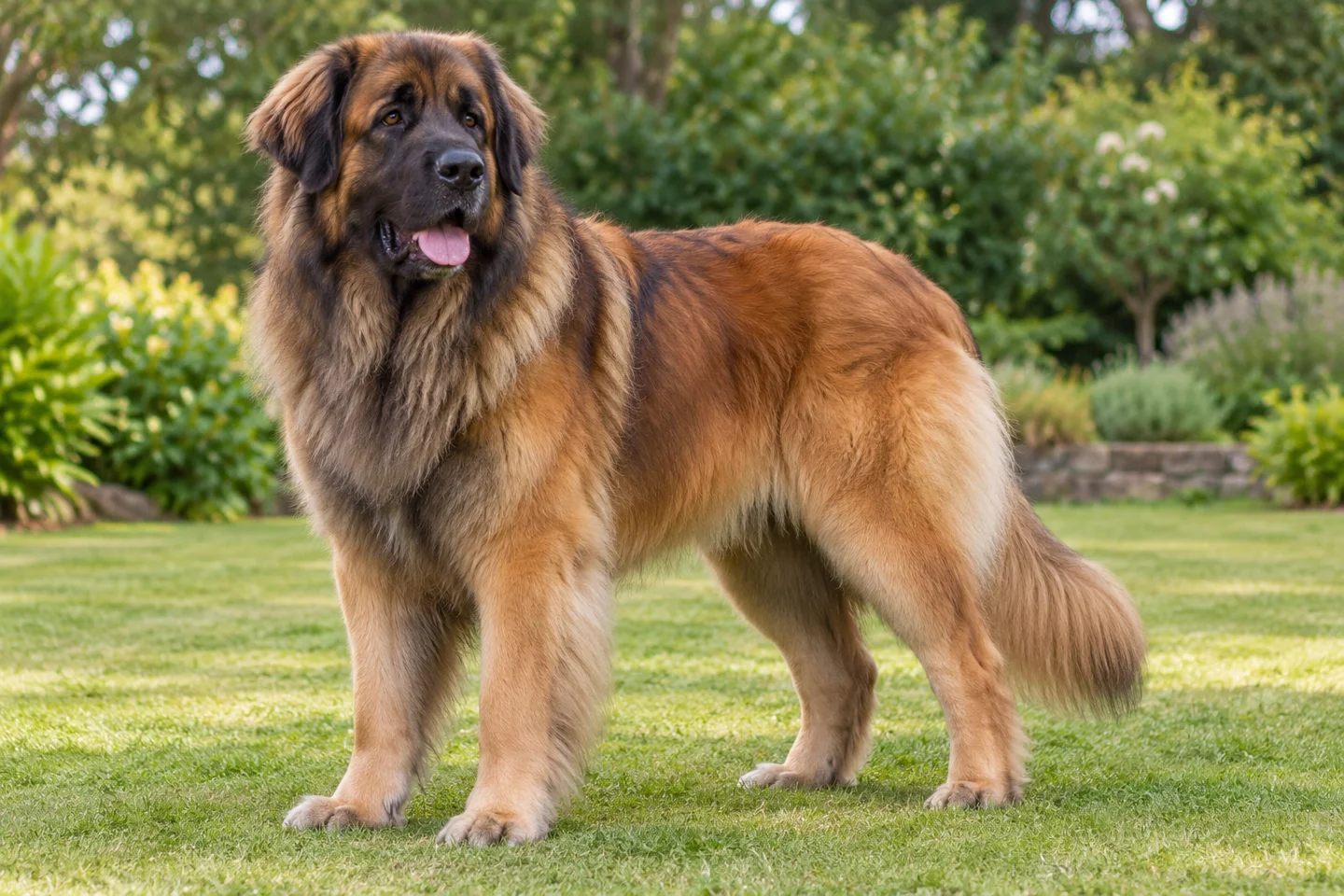
- Origin
- Germany
- Adult height
- Males 72–80 cm; females 65–75 cm
- Coat
- Long double coat with a black mask
- Illustrated variety
- Reddish brown with natural pendant ears and full tail
General information for owners. These articles have not been reviewed by a veterinarian. Medical decisions need your dog's history and an examination.
Living with a Leonberger
A Leonberger needs a home that can accommodate a large dog throughout an ordinary day. That includes the wet return from a walk, the narrow route past a dining table, and the evening when nobody has spare energy for grooming. Its long coat and black mask are easy to recognize. The more useful question is whether every adult responsible for the dog can manage its movement, care, and access comfortably. Meet mature dogs before deciding that a small puppy will fit into your arrangements.
Think about company as carefully as floor space. A garden cannot teach a young dog to relax when people leave or help it understand visitors. Plan for walks, quiet time near the household, and gradual practice being alone. Ask a breeder or rescue what an individual already finds difficult. A large affectionate dog may still pull toward a stranger, worry about a noise, or struggle with a grooming session. Those details tell you where teaching needs to begin.
Where the breed developed
The German breed club traces the Leonberger to Heinrich Essig in Leonberg during the nineteenth century. Its account describes Newfoundland, Saint Bernard, and Pyrenean Mountain Dog ancestry, with dogs bearing the Leonberger name appearing in 1846. Later farm use included watching and draught work. These are historical descriptions of a developing breed, rather than evidence that a present-day puppy can perform a task safely without instruction.
For a companion today, investigate the family you are actually considering. Ask how the parents handle a busy pavement, a visitor carrying equipment, and separation from familiar people. An exhibition result can help document conformation; it does not answer all those questions. If considering a dog trained for water or draught activities, ask to see the teaching and conditioning involved. Enthusiasm is only one part of suitability. The handler's preparation, the dog's health, and the environment also determine whether an activity makes sense.
Appearance and adult size
The FCI height ranges are 72–80 cm for males and 65–75 cm for females, measured at the withers. Its standard describes a strong, slightly rectangular dog with pendant ears, a furnished natural tail, and a long double coat. Yellow through reddish brown and sandy shades occur with a black mask. The coat can make an already substantial body look larger, so assess body condition with your hands and veterinary guidance.
Choose equipment around the individual rather than buying everything in the largest available size. A harness must allow comfortable shoulder movement and remain secure when the dog steps backward. Measure the vehicle entry, sleeping space, and route through the house. Check the load rating of a ramp before use, and teach the dog to cross it while it is well. Moving an injured adult becomes much harder if the first experience of a ramp happens during an emergency.
Training for everyday handling
Start teaching useful movements while the puppy is small enough that mistakes are easy to manage. Reward four feet on the floor, a pause at the gate, and moving onto a mat when asked. Practice with modest distractions before expecting the same response beside another excited dog. A visitor should not have to brace for a greeting while the owner repeats a cue from across the room.
Break difficult tasks into actions the dog can understand. For getting into a vehicle, first reward approaching the ramp, then touching it, then crossing a low stable setup. If the dog hesitates, examine footing and confidence before applying more pressure. Avoid hauling it by a collar or relying on physical confrontation. Keep a record of what succeeds, including where and with which handler. That makes it easier for a second carer to use the same cues and rewards instead of inventing a new approach each time.
Exercise and conditioning
Arrange activity around the dog's age, physical condition, and recovery. Walks with opportunities to investigate are useful, while repetitive hard running or sudden strenuous exercise needs more thought. Discuss an individual growth plan with the veterinarian instead of applying a universal exercise formula to every puppy. Record stiffness, changes in pace, and reluctance to climb into the car. These observations matter even when the dog remains keen to go outside.
In warm weather choose shade, cooler hours, and routes with easy ways to return. A large coat does not make overheating impossible. Keep drinking water available and stop if breathing or recovery becomes concerning. If taking up swimming, start with a controlled entry and a clear exit rather than dropping the dog into deep water. Work with suitable supervision and equipment. Water enthusiasm cannot establish fitness, safe swimming technique, or the ability to get out of a pool without help.
Children and a large moving body
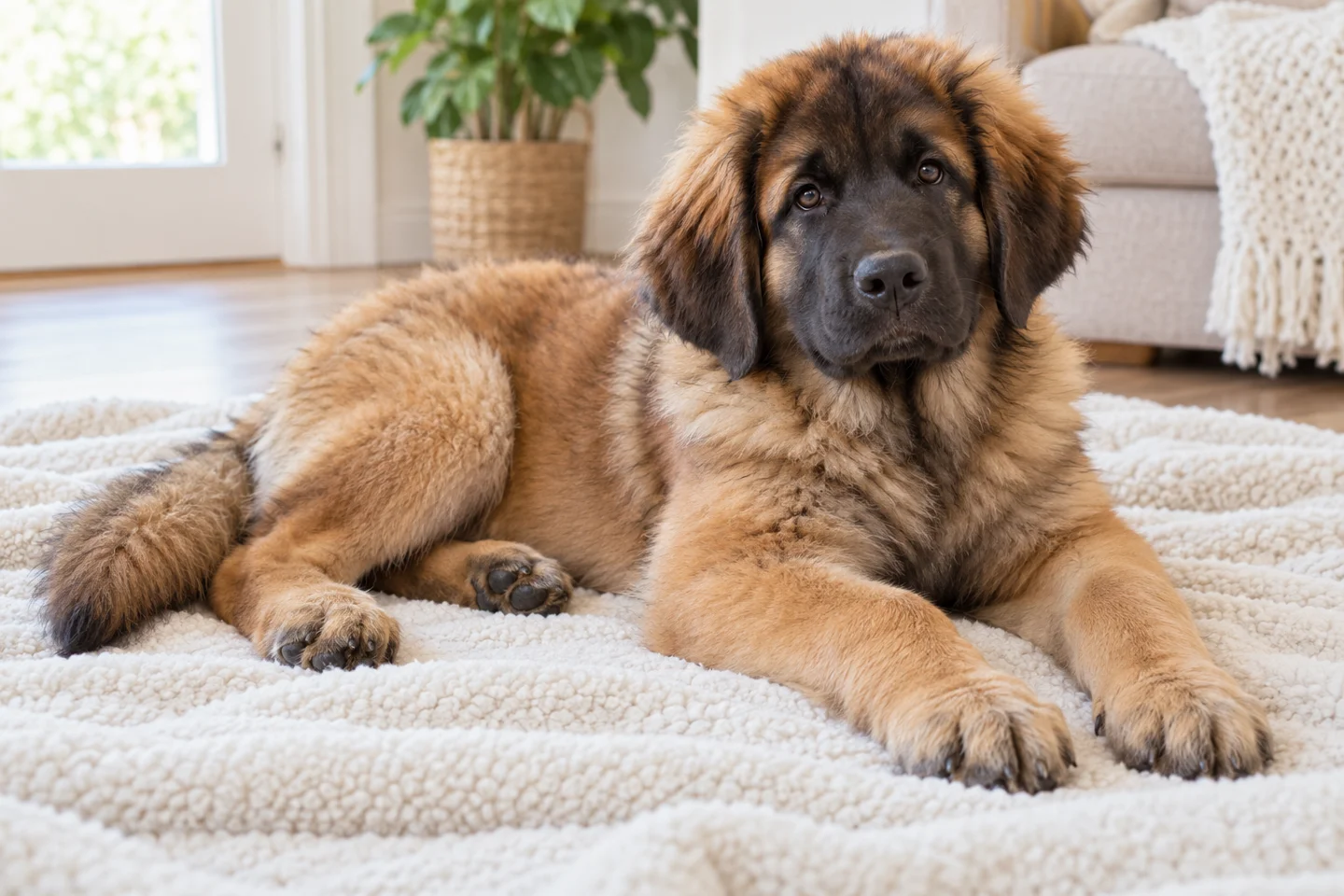
A friendly Leonberger can knock a child down by turning toward a sound. Keep food preparation, excited greetings, and running games under adult control. Provide routes through the house where a child does not have to squeeze past a resting dog. During children's visits, decide who watches the dog and who manages the children. If that attention is unavailable, use comfortable separation before play becomes noisy.
Teach children to invite contact from a seated position and let the dog choose whether to approach. They should leave it alone while it eats, sleeps, or has a chew. Leaning on its back and pulling through its mane are not acceptable ways to play. Adults should respond promptly to avoidance or tension instead of waiting for a growl. A child must never be asked to hold the lead beside traffic, take away a valued object, or prove that the dog is gentle.
Aggression and behavior changes
Assess aggression through the actual event. What happened immediately before the reaction, how close was the person or animal, and could the dog leave? A breed reputation cannot explain why one dog stiffens when approached on its bed or lunges at a fence. Stop arranging situations that repeat the problem. Provide physical separation and seek veterinary advice when behavior changes suddenly or appears connected to handling or movement.
For ongoing concerns, involve a qualified reward-based professional who can observe the dog and build a practical plan. Give an accurate history of snaps, bites, and near misses. Downplaying an incident prevents other carers from making informed decisions. A positively introduced basket muzzle may form part of management, with fit and breathing room assessed carefully. It does not make close contact appropriate. The aim is to reduce conflict and teach useful responses while people retain enough space to act safely.
Other dogs and small animals
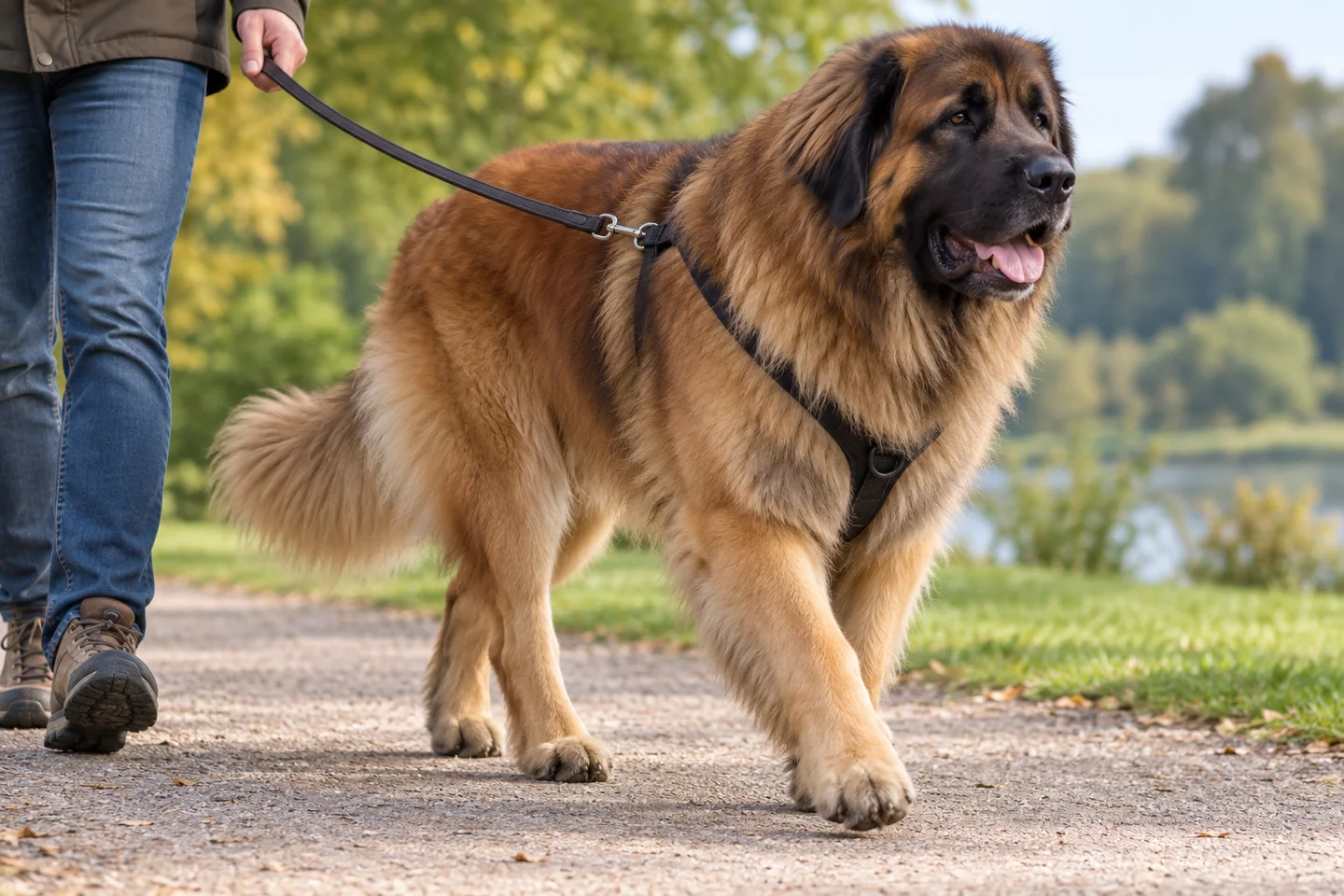
Use separate handlers and an open route when introducing another dog. Begin walking in the same direction without requiring a face-to-face greeting. Size differences deserve attention even when both dogs seem playful: a collision that is minor for a Leonberger can injure a small companion. Watch whether both return voluntarily after pauses, and interrupt pursuit when one repeatedly hides or attempts to leave.
At home, arrange separate feeding and resting spaces before the new dog arrives. Do not leave shared chews out to see how they negotiate. A cat needs protected routes and access to resources without crossing the dog's resting area. Use barriers while learning how each animal responds, and prevent rehearsed chasing. If an introduction requires constant physical restraint to avoid contact, reconsider the arrangement with professional support. Affection toward the owner is not evidence of compatibility with every animal in that home.
Grooming a large double coat
Work through the coat in manageable areas, checking down to the skin. The hair behind the ears, feathering, breeches, and equipment contact points can conceal tangles. Do a short comfortable session before the dog becomes tired of standing, and establish a resting position for longer work. A surface brushing that leaves compacted hair underneath creates more difficulty later. Ask a groomer to demonstrate technique on your own dog's coat.
After bathing or swimming, dry thoroughly and examine skin that remains damp beneath dense hair. A strong smell, soreness, or repeated licking needs investigation. Keep the grooming area nonslip and check that any table or raised surface is appropriate for the dog's weight. Include nail and tooth care in routine handling practice. If access to one foot suddenly becomes difficult, consider discomfort rather than assuming the dog is refusing to cooperate. Change the task and obtain advice before forcing completion.
Health records before a puppy
The current AKC Leonberger page lists hip, elbow, thyroid, and ophthalmic evaluation alongside LPN1, LPN2, LPPN3, and LEMP DNA tests. Request records tied to the identified parents and ask which requirements apply through their breed organization. Do not rely on the dated 2020 club statement alone when checking today's recommendations. A list of test names without the reports leaves the important questions about results and interpretation unanswered.
Keep clinical screening distinct from a genetic panel. Hip imaging examines a different concern from a laboratory test for a named neurological variant. Ask about significant disease in older relatives and how the breeder communicates new findings to owners. For a rescue with missing parent records, obtain what is available and plan individual assessment with the veterinarian. Absence of paperwork is uncertainty to manage, rather than a diagnosis. Maintain copies yourself so care remains continuous if a clinic, owner, or breeder becomes unavailable.
Neurological health and test limits
The University of Minnesota explains that LPN1, LPN2, and LPPN3 address distinct genetic forms within the laryngeal paralysis and polyneuropathy group. LEMP affects the central nervous system. Its laboratory also states that the available polyneuropathy tests do not explain every suspected case. A favorable panel cannot rule out every cause of noisy breathing, weakness, or an altered gait. New signs still need clinical attention.
Describe changes concretely: a different bark, slower recovery on a familiar walk, repeated stumbling, or a paw dragging on the ground. Take a video when safe and tell the clinic how quickly the problem developed. Breathing difficulty requires urgent contact rather than waiting to film a better example. Ask the veterinarian to interpret the actual genetic result alongside examination findings. Avoid assuming that every result containing one altered copy means the same thing; interpretation depends on the particular condition and laboratory guidance.
Bloat and emergency preparation
The AKC identifies bloat as an urgent Leonberger concern. Learn the location and telephone number of an emergency practice before you need them. Repeated unsuccessful retching, an enlarging abdomen, marked restlessness, or collapse should prompt immediate veterinary contact. Do not wait for every possible sign to appear or spend time trying household remedies. Tell the clinic that you are transporting a large dog so staff can advise about arrival.
Discuss individual risk and preventive options, including whether gastropexy is appropriate, with your veterinarian. A general article cannot decide surgery for a particular dog. At home, keep a transport plan that another adult understands, with suitable vehicle access and a way to move the dog without improvising painful handling. Retain an accessible medication list and the dog's recent weight. Preparation is valuable even when the eventual emergency has nothing to do with the stomach.
Feeding with growth in mind
Use a complete diet suitable for the dog's life stage and discuss large-breed growth nutrition with the veterinary team. Measure portions, review body condition, and adjust the plan as the puppy develops. Adding calcium or other supplements to an already balanced growth diet needs professional direction. The goal is comfortable development, not the fastest route to the largest body. Growth figures from unrelated dogs do not establish what yours should weigh next month.
As an adult, the Leonberger's coat can hide gradual weight gain. Include training food and substantial chews when reviewing intake. Feed where children and other animals cannot approach the bowl, and avoid repeatedly removing it to demonstrate control. For ongoing vomiting, diarrhoea, appetite loss, or unexplained weight change, contact the clinic. Keep the diet history specific, including treats and recent changes. A photograph of the food label can be more useful at an appointment than trying to remember its marketing description.
Mixes and realistic expectations
A Leonberger mix can vary in adult build, coat, activity, and behavior. A cross with a smaller breed does not provide a reliable halfway size, and a different coat does not remove every grooming requirement. If both parents are known, ask about their individual health and screening appropriate to each ancestry. A fashionable name cannot establish predictable temperament or immunity to inherited conditions.
For a dog of uncertain parentage, plan around observed needs. Measure equipment on the dog, assess how it moves, and learn how it handles visitors and animals. If it is still growing, discuss a practical range of possible adult sizes with the veterinarian. Make sure housing and transport can accommodate that uncertainty. The same principle applies to a rescue identified by appearance alone: a resemblance may guide questions, but examination, history, and daily observations should drive care decisions.
Costs and support over a lifetime
Budget for services that can actually accommodate a giant dog. Ask local practices about routine care and emergency arrangements, and check transport, grooming, boarding, and insurance terms before committing. Medication and equipment costs may differ substantially from those for a small companion, but a fixed global price would be misleading. Include the cost of reliable help when the usual carer is ill or away.
Visit a potential boarding service and discuss the individual's needs honestly. Can staff provide a quiet space, manage vehicle transfers, and complete necessary care? Arrange short familiar visits before a long stay when possible. Write down the dog's cues, feeding routine, handling preferences, and veterinary contacts. A trusted friend may enjoy the dog while being unable to walk it safely. Confirm practical ability through an ordinary supervised handover, rather than treating affection as evidence that the whole arrangement will work.
dogsDating with room to walk
For a first dogsDating meeting, describe your Leonberger's walking pace, greeting habits, and comfort around smaller dogs. Keep exact home coordinates and your address private, sharing an approximate area until a public meeting is agreed. Choose a broad path with several ways to turn away. Avoid a crowded cafe entrance where dogs and people are obliged to squeeze past one another before the conversation begins.
Walk in parallel with separate handlers and start with enough distance for both dogs to investigate their surroundings. Stop for a brief conversation only when neither dog is pulling toward the other. Leave shared toys for another occasion and maintain separate water arrangements if either guards resources. A successful first meeting can be uneventful and short. Compare observations afterward, including how each dog settled at home, before extending the next outing. Compatible company grows from those details rather than from matching two breed labels.
Sources and editorial notes
Sources checked October 22, 2026. Breed measurements describe reference ranges, not a diagnosis or an individual dog's ideal weight. Images are AI-generated breed illustrations and do not document a particular dog or health condition.
- AVSAB: Humane Dog Training Position Statement
- VCA Animal Hospitals: Food aggression in puppies
- VCA Animal Hospitals: Aggression toward unfamiliar dogs, diagnosis
- VCA Animal Hospitals: Grooming and coat care for your dog
- AAHA: Feeding plans for healthy, appropriate weight cats and dogs
- VCA Animal Hospitals: Heat stroke in dogs
- VCA Animal Hospitals: Common emergencies in dogs
- Orthopedic Foundation for Animals: CHIC health screening programs
- AVSAB: Puppy Socialization Position Statement
- VCA Animal Hospitals: Dog behavior problems, aggression toward children
- FCI standard 145: Leonberger origin, proportions, coat and adult height
- German Leonberger Club: official breed history and standard
- American Kennel Club: Leonberger care and current parent-club screening recommendations
- University of Minnesota Canine Genetics Lab: Leonberger neurological health panel and interpretation
Keep getting to know dogs.
Read another guide or return to your dogsDating community.
Explore breed guidesBack to dogsDating