Lhasa Apso
A sturdy Tibetan companion with an independent response to strangers and a long coat that needs patient, practical care.
How these guides are researched and reviewed
- Origin
- Tibet
- FCI ideal height
- Males 25 cm; females slightly smaller
- Coat
- Long straight heavy outer coat with moderate undercoat
- Care priority
- Cooperative grooming and attention to eye comfort
General information for owners. These articles have not been reviewed by a veterinarian. Medical decisions need your dog's history and an examination.
A small companion that should be allowed an opinion
The Lhasa Apso is a sturdy small dog whose long hair can hide the animal making decisions underneath it. Someone choosing the breed should enjoy a companion with its own responses to people and situations, while remaining willing to teach practical household skills. Begin by meeting adults and asking owners what an ordinary day involves. Look at how the dog responds when a visitor ignores it, when brushing begins, and when an activity ends. Those moments say more about a possible placement than a portrait showing a carefully arranged coat.
A good home does not need to force sociability at every opportunity. It needs to keep interactions safe, provide suitable company and activity, and notice whether the dog is comfortable. Ask a breeder or rescue about handling, separation, visitors, and the source's reasons for suggesting this individual. A puppy will still develop, and an adult may need time to adjust to a move. Neither should be expected to perform a friendly introduction on demand simply because its size makes people want to pick it up. Preparing visitors to respect the dog is part of preparing the home.
Tibetan background and the modern breed name
The FCI standard places the Lhasa Apso's origin in Tibet and describes the influence of high altitude and a severe climate on its coat. It records arrivals in Britain during the early 1920s and a British breed club established in 1933. Early confusion with other shaggy Tibetan dogs is a reason to keep modern identities clear. A Lhasa Apso is not a small Tibetan Terrier or a Shih Tzu carrying a different haircut. A source should identify the breed and pedigree accurately instead of relying on the resemblance of a long-haired puppy.
The American club describes a watchdog background, which makes response to unfamiliar sounds a useful subject for prospective owners. Ask how this dog reacts to a doorbell, footsteps outside, or guests arriving at different times. History can explain what owners investigate; it cannot prove every bark is justified or that teaching is unnecessary. An apartment household should discuss noise honestly before placement and arrange a routine that reduces repeated disturbance. A dog can retain an alert character while learning predictable responses to ordinary events, with management that supports quiet rather than waiting for neighbors to complain about a problem already being rehearsed.
Size and coat should preserve sight and movement
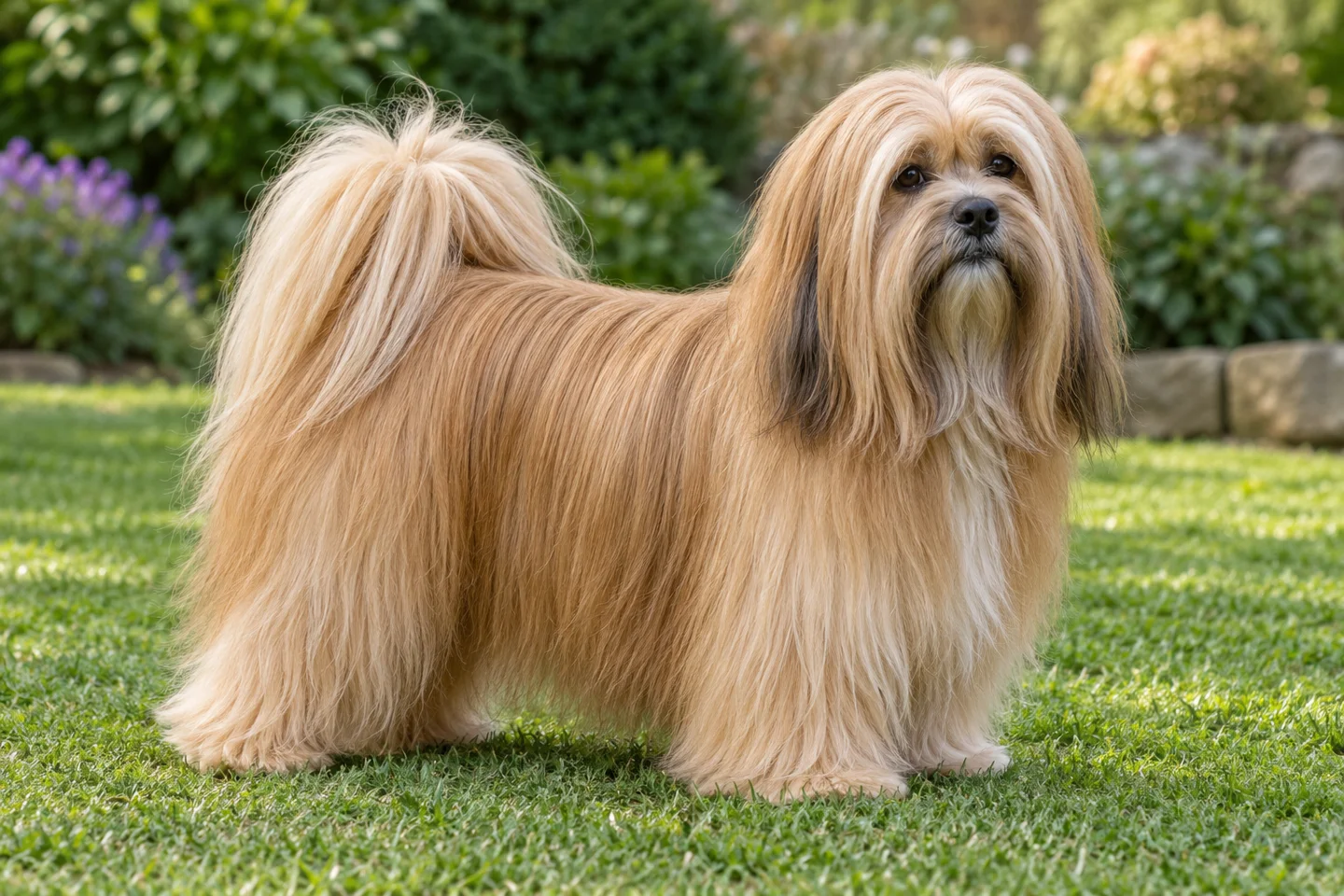
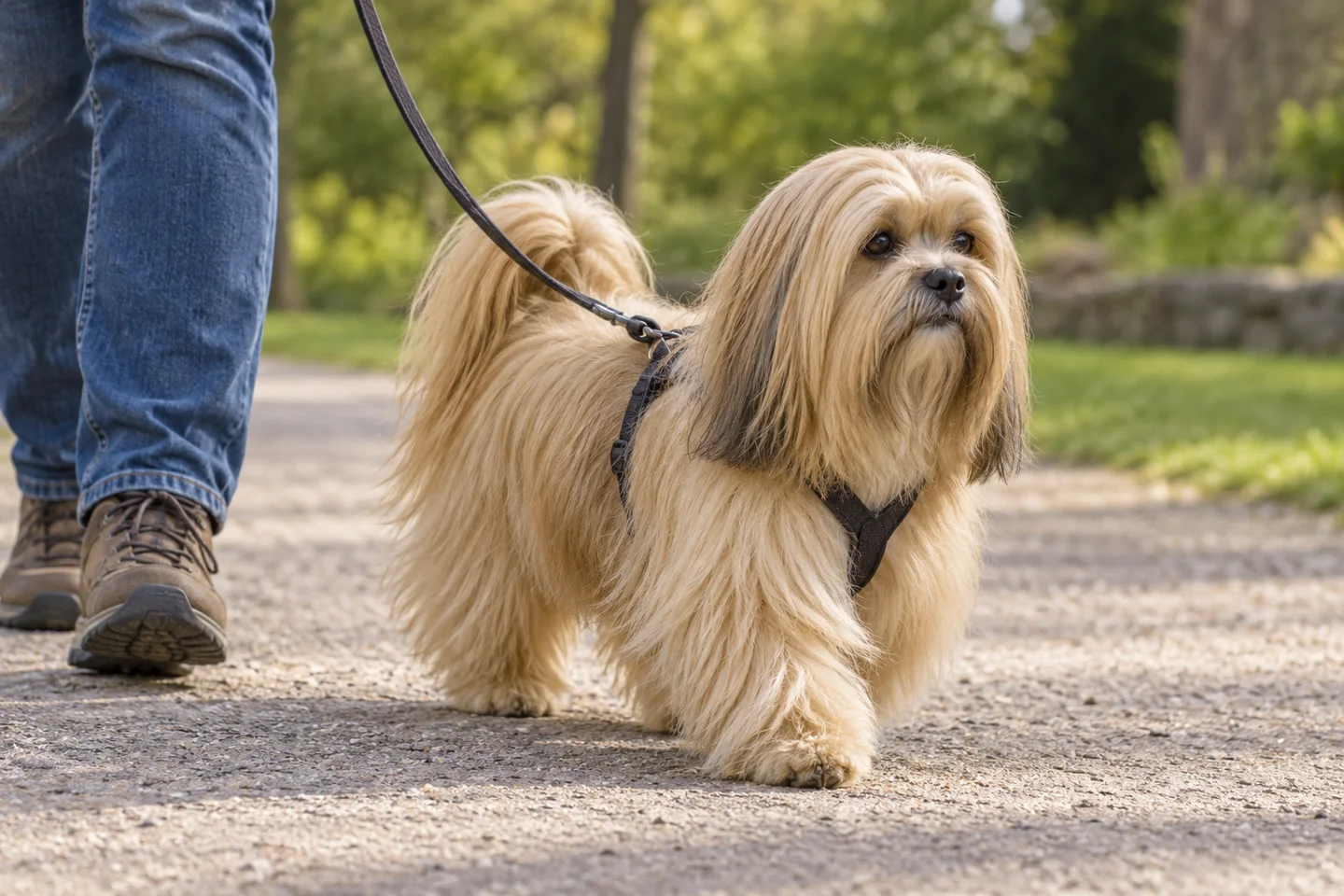
The FCI ideal male height is 25 cm, with females slightly smaller; it does not give a matching exact female range in that statement. The body is longer than tall and sturdy beneath the coat. The head has a distinct muzzle, dark eyes, hanging ears, whiskers, and beard. The full feathered tail is carried over the back. Long straight heavy outer hair and a moderate undercoat contribute to the appearance. The illustrations use golden-honey coloring and natural ears and tail, showing the eyes clearly rather than burying them in decorative hair.
A standard description should not be used to justify impaired sight or an uncomfortable coat. Hair must not impede ordinary action, and a practical pet trim may make daily care easier. Ask the groomer to explain what you will need to maintain between appointments. The dog should be able to eat, toilet, investigate, and rest without its presentation making those tasks difficult. Use hands-on condition checks alongside appearance because hair can hide a changing waist or sore patch. Let the veterinary team judge appropriate weight for the individual frame rather than trying to reach a guessed breed figure found in an advertisement.
Grooming belongs in the ownership decision
Plan coat care before choosing a Lhasa. A long coat can demand substantial routine work, and clipping it shorter changes the appearance without removing every care task. Ask an experienced groomer to show how to check near the skin and identify tangles before they become tight. Focus on areas affected by movement, bedding, and equipment, as well as the obvious facial furnishings. Avoid pulling painfully through a knot to preserve a desired look. If care has fallen behind, discuss a comfortable recovery plan rather than making the dog endure an ambitious grooming session without breaks.
Teach handling in small pieces. Reward a relaxed pause on a stable surface, then a brief brush contact, and stop while the dog remains able to participate. Share its handling history with the groomer, including any snapping or areas that seem sore. Ear odor, discharge, skin inflammation, or persistent scratching needs veterinary advice. Do not treat painful ears as a grooming challenge or use another dog's medication. Keep the face clean and eyes unobstructed using methods the professional has demonstrated. Regular care should make it easier to notice discomfort, and a sudden change in tolerance deserves investigation rather than an accusation that the dog is being difficult.
Training for household cooperation without arguments
Start with useful skills such as coming away from the door, going to a resting place, and allowing a safe exchange of an object. Use rewards and an easy setup so the dog can understand what works. A Lhasa that ignores a cue in a busy room may need a quieter lesson and clearer reinforcement rather than louder repetition. Practice briefly with household members using the same signals. Make it possible to prevent access to a problem while the alternative skill is still being learned. The daily environment should support the lesson instead of constantly defeating it.
Consider why a task matters from the dog's point of view. A brush may predict uncomfortable pulling, or being called may always mean the end of something enjoyable. Change those patterns through manageable practice. Reward returning and sometimes release the dog to an appropriate activity again. Teach a pause before lifting when lifting is necessary, and support the body carefully. Avoid turning cooperation into a demand that the animal tolerate every intrusion without warning. A reward-based professional can help when the household has become stuck in repeated arguments over care, objects, or visitors. The goal is a routine both dog and owner can carry out predictably.
Exercise and the freedom to investigate at a suitable pace
A small companion still needs opportunities to walk, investigate, and learn. Build an exercise routine around the individual's age, condition, and responses instead of assuming a house or garden provides everything. Give the dog time to use its nose without forcing every outing to match a person's fastest pace. Short learning games can offer variety, followed by comfortable rest. An older dog or one recovering from illness may need a different plan from a healthy young adult. Discuss substantial changes in activity with the veterinary team and observe how the dog recovers afterward.
Think about the environment at the dog's level. Busy feet, hot surfaces, and narrow passages can make a short outing more demanding than it appears to the owner. Select a route where you can pause or turn back and provide water and shade when conditions require them. Do not explain repeated stopping or altered gait solely as stubbornness. Record what happens and seek advice if a change persists. A coat associated with a severe historical climate is not protection against every modern weather condition or a hot vehicle. Comfortable movement and recovery are more useful goals than meeting a fixed distance that ignores the actual dog.

Aggression and the safety of a small dog
A Lhasa can bite, and small size should not make warning behavior a joke. Record the actual event, including who approached, whether the dog was resting or holding something, what handling occurred, and whether contact caused injury. Prevent a repeat while arranging appropriate help. Pain, eye discomfort, or another health problem may affect tolerance, so sudden changes warrant veterinary attention. Do not recreate an incident for a visitor or punish the dog for trying to create distance. The useful task is understanding and preventing the conflict.
Protect food and valued objects from interference and teach planned exchanges with appropriate rewards. Keep unfamiliar dog meetings spacious rather than holding the Lhasa in place for a nose-to-nose test. If threatening behavior persists, a qualified professional can help design management that fits the home. Tell sitters and groomers the relevant facts before they accept care. If a muzzle forms part of professional advice, learn gradual conditioning and correct fit, while retaining barriers and distance. Equipment should support a wider plan. It cannot make repeated cornering or rough handling acceptable, and it does not remove the owner's responsibility to avoid a known trigger when a safer arrangement is available.
Children, lifting, and relationships with household animals
Children need adult help to interact safely with the dog. Teach them to invite contact, leave a sleeping or eating animal alone, and call an adult if an object needs retrieving. Do not let children lift the Lhasa merely because it is small enough. An adult should handle necessary lifting and demonstrate appropriate body support. Provide a protected bed and use comfortable separation when supervision cannot remain attentive. Ask the source what ages of children the dog has encountered, how they behaved, and what management was used, rather than accepting a general assurance that the breed is good with families.
Other pets need their own introduction plan. A familiar canine companion does not establish compatibility with every visitor, and a meeting outdoors does not answer how food or resting places will be shared inside. Keep separate necessities available and increase access only as the animals remain comfortable. Ask what is known about cats or smaller animals; uncertain history should stay uncertain. Physical separation protects vulnerable pets while the owner obtains suitable guidance. A dog should not have to defend a bed from repeated approaches because the household expects the animals to sort things out. Workable boundaries allow everyone to rest without continual negotiation.
Health guidance varies between programmes
The American Lhasa Apso Club says it does not currently impose health testing requirements on member breeders. That statement should not become a claim that no useful screening exists. For example, the Dutch Lhasa Apso breed club requires annual specialist eye testing within its breeding programme. Ask which policy the source follows, what examinations the parents actually received, and what the results mean. A dated eye report and a general statement that a dog looks healthy answer different questions. Obtain copies that identify the examined animal and make the current status understandable.
The American club's health information identifies renal dysplasia as a concern and notes that excessive drinking and urination can be signs requiring attention. A puppy appearing well at collection does not settle its future kidney health. Ask about family diagnoses and how later findings are recorded. If the individual changes its drinking, toileting, appetite, or condition, seek veterinary assessment with a clear timeline rather than assigning a cause from the breed alone. Do not promise that a general DNA panel excludes all kidney disease. The veterinarian needs the patient's records and findings, while the breeder needs accurate later information through an appropriate confidential route to maintain a useful family history.
Eye comfort and medical handling deserve prompt attention
Changes in the eyes should not be hidden beneath an explanation about long facial hair. If the dog appears painful, holds an eye closed, or shows a new change in the eye's appearance, contact the veterinary team for instructions. Keep hair away using an agreed safe method and avoid reaching for leftover drops. A product used for an earlier diagnosis may be unsuitable for a new problem. Tell the clinic about any prior eye condition, treatment, and response, and ask how urgently the dog should be examined based on its current signs.
Practice clinical handling when the dog is comfortable so urgent care does not begin with every step unfamiliar. A stable nonslip surface, a known reward, and a short cooperative pause can help prepare routine examination. If the animal is already painful, do not insist on prolonged practice before seeking care. Explain its limits to the team so they can choose an appropriate approach. Keep medical records available for an alternate carer, including how to reach the usual clinic. A detailed handover is especially useful when several people provide care, since a change may otherwise be noticed by one person and never communicated to the person making the appointment.
Nutrition and the cost of maintaining comfortable care
Use complete food suited to life stage and discuss portions with the veterinary team. Include rewards in the daily intake and check condition beneath the coat. A dog that eats small amounts still needs a clear feeding record, especially if several people offer food. Separate meals where another animal creates pressure. Persistent changes in appetite or digestion deserve a clinical conversation before repeated product switches obscure the timeline. Any diet for a diagnosed medical problem should follow the individual's veterinary instructions, rather than a broad claim that all Lhasas benefit from a particular supplement or restricted ingredient.
Obtain local prices for grooming, preventive care, and help during absences before making the commitment. Include transport, suitable equipment, and an emergency funding or insurance plan. A cheaper haircut that leaves the dog distressed may not be the service the household actually needs, so discuss handling as well as price. Ask a sitter whether they can follow the dog's visitor rules and medical routine. Clarify the source's support and return arrangements in writing. The ownership budget should function when a coat needs extra work or an older dog needs more clinical attention, rather than only during the easiest first months.
Mixes and promises about allergy or temperament
Names such as Lhasa mix describe an ancestry claim, not a complete care plan. Ask what is documented about parents and keep uncertain rescue labels tentative. A haircut can make different small breeds look alike, and appearance alone cannot establish the combination. Where parents are known, consider relevant records and observed behavior from both. A cross does not carry a general guarantee of easier grooming, better health, or a predictable halfway temperament. Assess the actual dog and allow a puppy's coat and adult responses to develop beyond the features visible at collection.
Do not use low shedding as a promise that nobody will react to the dog. A person with allergies needs an assessment of contact with actual animals, rather than certainty supplied by a breed label. Similarly, a source describing a Lhasa cross as automatically more sociable should be asked for observations from real situations. Useful information includes whether the dog permits routine handling, rests during visitors, and can cope with the proposed daily schedule. Choose support and training from that evidence. A small dog deserves a placement built around its needs rather than a collection of appealing claims about both named parents.
dogsDating walks can begin without a greeting
Describe the individual on dogsDating, including comfortable pace, preferred distance, and whether direct canine greetings are currently suitable. Share an approximate area while keeping exact coordinates and the home address private. Agree on a public meeting point with open space, rather than a narrow café entrance where dogs and feet gather together. Each adult should retain responsibility for their own dog. A clear invitation might propose a quiet parallel walk and explicitly allow an early finish, so neither person feels obliged to continue after the animals indicate they need space.
Begin apart and let the dogs investigate without being held close for a photograph. Leave shared food, toys, and grooming demonstrations out of the first outing. If either animal stiffens, repeatedly tries to move away, or cannot disengage, increase distance or leave. Compare the conditions afterward: the route, surface, pace, and separation may matter more than whether the dogs touched noses. A familiar walking partner can be a worthwhile outcome even when close play is unsuitable. The meeting should respect the dogs' actual comfort, with owners prepared to change the plan instead of treating a social profile as a guarantee.
Sources and editorial notes
Sources checked October 22, 2026. Breed measurements describe reference ranges, not a diagnosis or an individual dog's ideal weight. Images are AI-generated breed illustrations and do not document a particular dog or health condition.
- AVSAB: Humane Dog Training Position Statement
- VCA Animal Hospitals: Food aggression in puppies
- VCA Animal Hospitals: Common emergencies in dogs
- Orthopedic Foundation for Animals: CHIC health screening programs
- VCA Animal Hospitals: Aggression toward unfamiliar dogs, diagnosis
- VCA Animal Hospitals: Grooming and coat care for your dog
- VCA Animal Hospitals: Ear infections in dogs (otitis externa)
- AAHA: Feeding plans for healthy, appropriate weight cats and dogs
- VCA Animal Hospitals: Heat stroke in dogs
- AVSAB: Puppy Socialization Position Statement
- VCA Animal Hospitals: Dog behavior problems, aggression toward children
- Official breed standard: Lhasa Apso
- American Lhasa Apso Club: About Lhasas and health guidance
- Lhasa Apso Club Nederland: Health and annual specialist eye examinations
- American Lhasa Apso Club: Frequently asked questions including renal dysplasia
Keep getting to know dogs.
Read another guide or return to your dogsDating community.
Explore breed guidesBack to dogsDating