Lucerne Hound
The blue-speckled variety of Swiss Hound, with long ears, an independent searching role, and a voice that needs an appropriate home.
How these guides are researched and reviewed
- Origin
- Switzerland
- Adult height
- Males 49–59 cm; females 47–57 cm
- Identity
- Lucerne variety of Swiss Hound, FCI standard 59
- Coat
- Short smooth blue speckling with black and tan markings
General information for owners. These articles have not been reviewed by a veterinarian. Medical decisions need your dog's history and an examination.
A specific Swiss hound rather than a generic blue dog
The Lucerne Hound is one of the four varieties covered by the Swiss Hound standard. Its blue-speckled coat distinguishes the variety, but the dog should also be understood through its scenthound role and the life a source expects it to lead. Before choosing one, speak with a club or experienced breeder about placement. Ask how the adults live when they are not working and what conditions help them settle. A striking coat and long ears are only part of a decision that must include containment, voice, activity, and a realistic account of the household's time.
Do not confuse the Lucerne Hound with the smaller Lucerne variety of the Small Swiss Hound. Similar names and coloring can lead to the wrong size information or inappropriate assumptions about the records being discussed. Ask for the exact breed, variety, and registry when reviewing a placement. For a rehomed adult with incomplete papers, preserve uncertainty rather than turning resemblance into a documented pedigree. The individual still needs a practical assessment of health, handling, and daily behavior. Accurate identity helps the conversation, but good care cannot wait for every historical question to be resolved.
Adult height, long ears, and a lean head
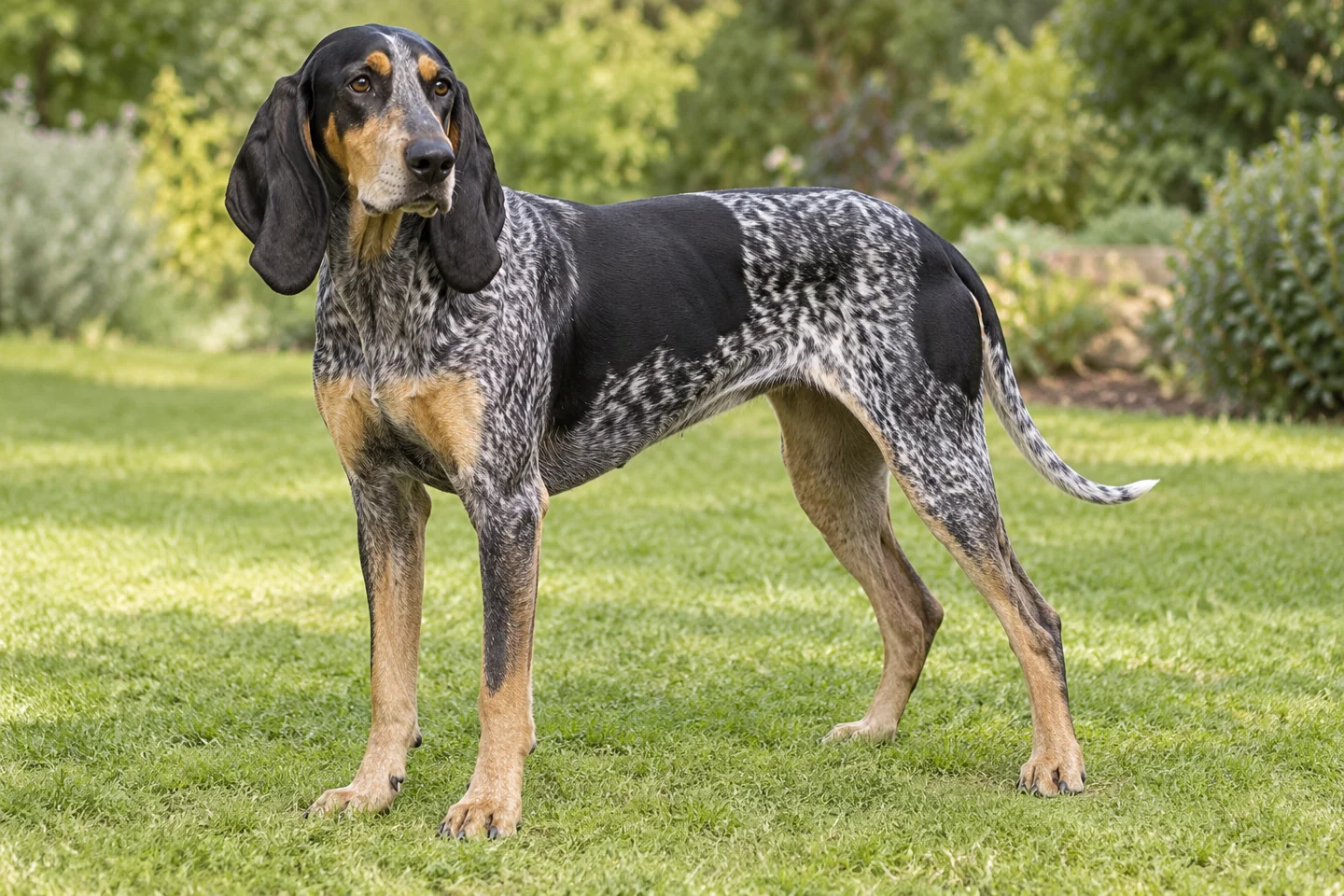
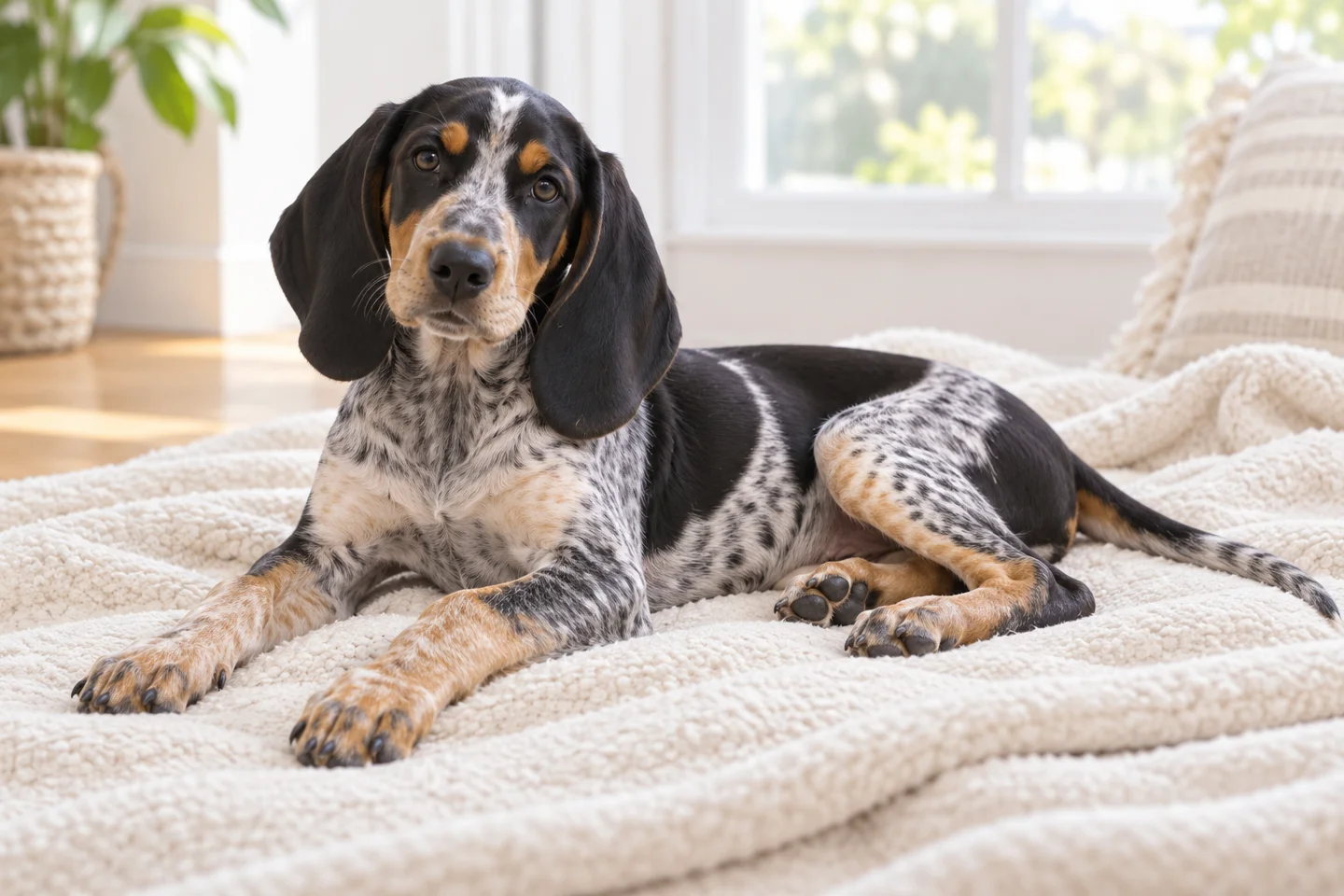
The Swiss Hound standard gives males a height of 49–59 cm and females 47–57 cm. The body is somewhat longer than tall, with an athletic outline, lean head, and long muzzle. The Lucerne coat is smooth and short, with blue speckling created by black-and-white hair, black patches or saddle, and tan markings. Very long hanging ears contribute strongly to its appearance. The illustrations show those features with a full natural slender tail. They depict a breed example rather than a claim that every coat pattern is identical.
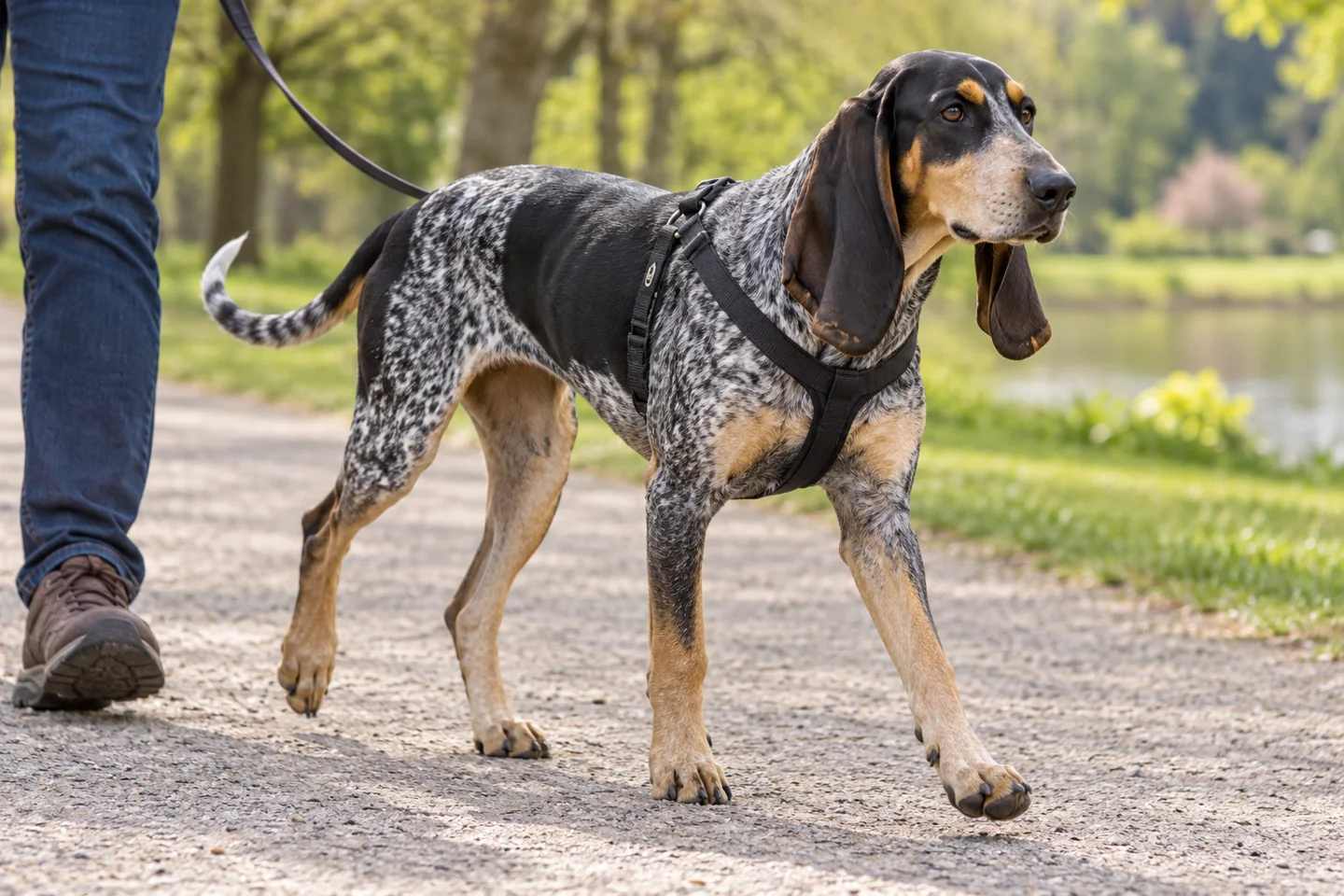
Look at movement and comfort without letting the ears or coloring distract from the whole dog. A standard does not supply an exact healthy weight for every frame, so ask the veterinary team to assess condition. Fit equipment to the current animal and check that a harness allows the forelegs and shoulders to move freely. A puppy needs regular refitting, and an adult may need changes as its condition develops. Arrange transport for the full body length and a resting place where the dog can stretch out. Practical comfort matters throughout the day, not only while the animal stands for a formal assessment.
Scent, containment, and training a useful return
Begin recall where the dog can respond, using rewards and secure equipment. A hound absorbed in an interesting trail may need more distance from the distraction and easier practice rather than louder repetition. Teach orientation to the handler and coming away from a discovery before attempting demanding off-lead situations. A fenced area should be inspected and supervised, with gates that remain secure when people enter. Do not rely on a tracking device to replace prevention. It may help locate an animal, but it cannot keep the dog away from a road or protect another animal from pursuit.
Practice leaving the vehicle and entering the home through deliberate small steps. Waiting while a door opens is easier to teach in a quiet session than after the dog is already excited by an outing. Reward the pause, keep the boundary protected, and add difficulty gradually. Teach safe exchanges for suitable objects so a find does not always create a chase. A reward-based professional can help tailor instruction to the individual. Working independently is not the same as being unable to learn; the owner needs to make cooperation clear and worthwhile while managing the situations where the skill remains unfinished.
Voice and quiet time need a compatible setting
A scenthound's voice is part of its working description, but daily barking still needs a specific account. Ask what starts this dog's vocalizing and how it behaves afterward. Sound associated with a scent trail, repeated boundary watching, excitement, and distress during absence require different plans. Describe your neighbors and living arrangements to the source before deciding the placement is suitable. A promise that one command will solve every noise problem is not a substitute for understanding the routine. The household must be able to prevent long rehearsals of a trigger while teaching more manageable responses.
Provide a resting place away from constant disturbance and make the end of activity predictable. A dog that has just had an exciting outing may need a quiet transition rather than another game. Introduce comfortable time apart gradually and check actual settling, not only whether barking stops. If the animal is distressed, arrange support and professional guidance rather than waiting for it to endure a schedule beyond its present ability. Appropriate company, activity, and rest belong together. An environment that continually demands silence from a dog whose needs it cannot meet is a placement problem to address before arrival, not a failure to be solved solely through correction afterward.
Exercise that fits condition and terrain
Build physical activity from the dog's age, health, and recent routine. A working hound's reputation cannot establish readiness for a long unfamiliar route after weeks of reduced movement. Ask the veterinary team about preparation for demanding activity and return after injury. Include time for investigation and quiet learning instead of treating distance as the only useful measure. Watch movement during the outing and recovery later. A repeat change in gait or willingness to continue deserves attention rather than an assumption that the hound simply needs encouragement.
Choose routes with practical exit options. Heat, difficult surfaces, and crowded passages can change the demands quickly, so carry water and be ready to shorten the plan. Keep clinic details and transport arrangements accessible to whoever is handling the dog. A hound unable to walk home needs a real solution, especially in a remote area where assistance may take time. Describe the location and circumstances accurately when seeking veterinary advice. Comfortable recovery, ordinary appetite, and normal participation at home provide useful observations after activity. They do not replace examination when something has changed, but they help the clinician understand the timeline.
Aggression and candid information about an individual hound
A hound reputation for sociability does not establish that an individual is safe in every setting. If a warning or bite occurs, document what preceded it, how close people or animals were, whether food or rest was involved, and any contact or injury. Prevent repetition while arranging professional advice. Sudden changes, especially during touch or movement, merit veterinary attention. Do not recreate the event for a demonstration or punish the warning as the whole solution. The underlying circumstances still need to be understood and managed.
Keep valued resources protected and teach exchanges with safe objects in planned practice. Avoid forcing unfamiliar dogs into close greetings to test whether a problem disappears. A qualified behavior professional can help decide which interactions are appropriate and what restrictions the home can maintain. Carers need the current plan before taking responsibility, including a factual history of bites and near misses. If muzzle conditioning is advised, learn correct fit and comfortable introduction while retaining distance and supervision. A device should support prevention; it cannot make crowding, competition over food, or rough handling suitable simply because the animal has a barrier over its mouth.
Children and other animals require more than a friendly introduction
Protect the dog's food and resting space when children are present. Teach children to invite contact and stop when the hound moves away. An adult should manage the lead, care tasks, and recovery of an object, rather than expecting a child to make the dog cooperate. Active supervision requires attention, so separate comfortably when a visit becomes too busy. Ask the source what ages and settings have actually been observed. A pleasant response to a calm older child does not answer how the animal will cope with a noisy gathering of younger visitors.
Ask about cats and smaller animals separately from canine companions. Scenthound work makes pursuit a relevant concern without proving the response of every individual. Keep vulnerable pets physically protected where safety is uncertain, and do not release one as a test. With another dog, begin with room for handlers to withdraw and organize separate food, chews, and sleeping spaces indoors. A successful walk does not automatically authorize unrestricted sharing of a home. Make sure the household layout supports the required management before placement. If it cannot, another arrangement may better serve all the animals than relying on them to resolve repeated conflict themselves.
Grooming and practical care for very long ears
The short smooth coat makes extensive styling unnecessary, but inspection remains part of care. Check skin, feet, nails, and areas beneath equipment after outings. Gentle brushing can remove loose hair and provide a chance to notice a change. Introduce touch gradually so a routine check does not arrive as an unexpected struggle. Keep the dog's actual coat and skin response in mind when selecting products. A recommendation suited to another hound does not establish that it fits this individual, particularly if there has been a previous reaction.
Long ears should be checked without aggressive interference. Odor, redness, discharge, pain, or repeated head shaking needs veterinary advice, not an assumption that every long-eared dog has the same normal problem. Ask the clinic to demonstrate appropriate cleaning if cleaning is recommended. Do not insert tools into the canal or reuse old medication. Include dental care and comfortable nail maintenance in the routine, obtaining help when needed. A sudden refusal of a familiar task should prompt consideration of discomfort. Record findings and treatment instructions so a sitter or new owner can continue care accurately instead of beginning again from an incomplete verbal account.
Health records and the limits of breeding approval
The Swiss Hound Club's published 2021 regulations describe breeding approval, individual assessment reports, and identification on health certificates. They also provide for later removal from breeding when clinically relevant inherited problems are established. Ask for the named parents' approval and individual medical information, then ask the club whether newer provisions affect the litter. Approval should not be expanded into a promise that every disease has been excluded. A practical question is what evidence is available for this family and how later diagnoses reach the people advising breeding decisions.
The document is not a basis for inventing a universal Lucerne DNA or radiography panel. If a source supplies additional screening, ask what was examined and request the findings. For an adult with missing history, collect the records that exist and arrange present care. Include previous injuries, medication, and restrictions in the handover rather than relying on working achievements as a health assessment. A new symptom belongs to the individual patient and needs clinical investigation on its own terms. Family paperwork can inform the conversation, but it cannot determine why today's dog is lame, eating differently, or uncomfortable during handling without examination.
Nutrition, ownership costs, and continuity of care
Use complete nutrition suited to life stage and current body condition. Measure portions and include rewards, then review the plan when work or ordinary activity changes. Avoid feeding to an imagined universal hound weight. Ask the veterinary team to assess the frame and explain any recommended adjustment. Separate meals if another animal creates competition or makes intake difficult to observe. Persistent changes in drinking, appetite, digestion, or condition deserve a clinical conversation. Keep dates and product details rather than switching repeatedly without a record and then trying to reconstruct the sequence at an appointment.
Price the support you actually need: veterinary care, secure equipment, transport, training help, and care during absences. Ask a sitter about containment and voice management before assuming an available place is suitable. Clarify written support and return arrangements with the source. Emergency funding or appropriate insurance needs to be in place before urgent treatment becomes necessary. The initial fee does not describe the whole commitment. A sustainable placement must function through quieter seasons, changes in employment, and later medical care, with more than one person understanding the practical routine if the usual owner cannot provide it.
Mixes, varieties, and formally managed crosses
The Lucerne variety belongs within the Swiss Hound breed; it is not itself an informal mixed-breed label. The club's published regulations also discuss formally authorized crosses to broaden the breeding base, including the possibility of Lucerne Hound with Petit Bleu de Gascogne. That procedure requires specific approval and should not be confused with an undocumented cross advertised under a convenient name. Ask the club and source to explain the status and papers of any such dog. Neither a blue-speckled coat nor a verbal claim of a conservation purpose establishes what happened.
For a rescue mix, ask what ancestry is known and preserve uncertainty where it cannot be confirmed. Evaluate relevant records from both parents when available, but do not promise that crossing removes inherited disease or produces a predictable average temperament. The actual animal's behavior, condition, coat care, and history should guide the home plan. A puppy may develop needs not obvious at collection, while an adult may need support adapting to a different setting. Honest identity and a useful handover help people care for the dog without requiring an attractive label to answer questions that only observation or medical assessment can settle.
dogsDating routes with enough room to follow a plan
Describe this hound's pace, comfortable greeting distance, and interest in scent on dogsDating. Share an approximate area while keeping exact coordinates and the home address private. Agree on a public meeting point with clear sightlines and room to remain apart. Discuss any restrictions before arrival, including whether direct greetings or off-lead activity are unsuitable. Each owner should manage their own dog and know an easy exit. A breed description cannot guarantee that the two individuals will enjoy the same pace or contact, so prepare for adjustment rather than a compulsory introduction.
Begin with parallel walking and allow investigation without shared toys or food placed between unfamiliar dogs. If either animal becomes stiff, repeatedly withdraws, or cannot disengage comfortably, increase distance or finish. Afterward, compare the conditions rather than judging the outing only by whether the dogs played. A quieter route or greater separation may make the next meeting easier. Regular manageable company can be a useful result without close contact. The owner should respond to what the dog communicates that day, keeping the meeting a suitable experience for both animals instead of treating the social profile as a promise to continue.
Sources and editorial notes
Sources checked October 22, 2026. Breed measurements describe reference ranges, not a diagnosis or an individual dog's ideal weight. Images are AI-generated breed illustrations and do not document a particular dog or health condition.
- AVSAB: Humane Dog Training Position Statement
- VCA Animal Hospitals: Food aggression in puppies
- VCA Animal Hospitals: Common emergencies in dogs
- Orthopedic Foundation for Animals: CHIC health screening programs
- VCA Animal Hospitals: Aggression toward unfamiliar dogs, diagnosis
- VCA Animal Hospitals: Grooming and coat care for your dog
- VCA Animal Hospitals: Ear infections in dogs (otitis externa)
- AAHA: Feeding plans for healthy, appropriate weight cats and dogs
- VCA Animal Hospitals: Heat stroke in dogs
- AVSAB: Puppy Socialization Position Statement
- VCA Animal Hospitals: Dog behavior problems, aggression toward children
- Official breed standard: Lucerne Hound
- Swiss Hound Club: Breeding records and current documents
- Swiss Hound Club: Published breeding regulations ZR-SLC-2021
Keep getting to know dogs.
Read another guide or return to your dogsDating community.
Explore breed guidesBack to dogsDating