Majorca Shepherd Dog
The Ca de Bestiar is a large black Balearic herding and guardian dog whose attachment, reserve, and strength need a carefully prepared home.
How these guides are researched and reviewed
- Origin
- Spain, Balearic Islands
- Adult height
- Males 66–73 cm; females 62–68 cm
- Standard weight
- Around 40 kg
- Varieties
- Short-haired and long-haired
General information for owners. These articles have not been reviewed by a veterinarian. Medical decisions need your dog's history and an examination.
The Ca de Bestiar decision requires a real household plan
The Majorca Shepherd Dog, or Ca de Bestiar, is a large Balearic herding and guardian breed. A suitable placement depends on much more than liking a black athletic dog. Discuss your visitors, working hours, handling experience, and access to capable support with a knowledgeable source before choosing an individual. Ask why that dog fits your situation and what circumstances remain difficult. A strong attachment to one person does not remove the need for other people to provide safe care when the usual owner is unavailable.
Meet adults in ordinary routines if possible and request an accurate account of their behavior away from a formal display. How does the dog respond when a visitor sits down, a gate opens, or the owner stops an activity? What happens during a veterinary examination or a car journey? These questions help translate a working description into daily responsibilities. Avoid treating ownership as a way to prove confidence with a less familiar breed. The goal is a stable arrangement that protects the dog's welfare and the people and animals sharing its environment, with practical resources already identified when help is needed.
A Balearic shepherd distinct from the Ca de Bou
Ca de Bestiar and Ca de Bou are different Balearic breeds. The former is the Majorca Shepherd Dog; the latter is the Majorca Mastiff. Similar regional names should not lead to swapped photographs, a borrowed mastiff head, or identical care assumptions. The FCI places the Ca de Bestiar among sheepdogs and recognizes both short-haired and long-haired varieties. Its official standard describes herding, guarding, and defensive work. Keep those identities clear when discussing ancestry, registry papers, and the recommendations a source says it follows.
The FCI records definitive recognition in 1982, but a modern recognition date should not be turned into a precise date of origin for the working population. Likewise, avoid inventing a recipe of ancestral breeds without records. The useful ownership conversation concerns today's family and the purpose of the proposed placement. RSCE identifies a Spanish Ca de Bestiar breed club, providing a route to breed-specific advice. Ask that source about current expectations and the records relevant to a particular litter. Geographic rarity does not make a rushed decision sensible, and a historical working role does not establish that any household with outdoor space is automatically suitable.
Adult dimensions and a black shepherd outline
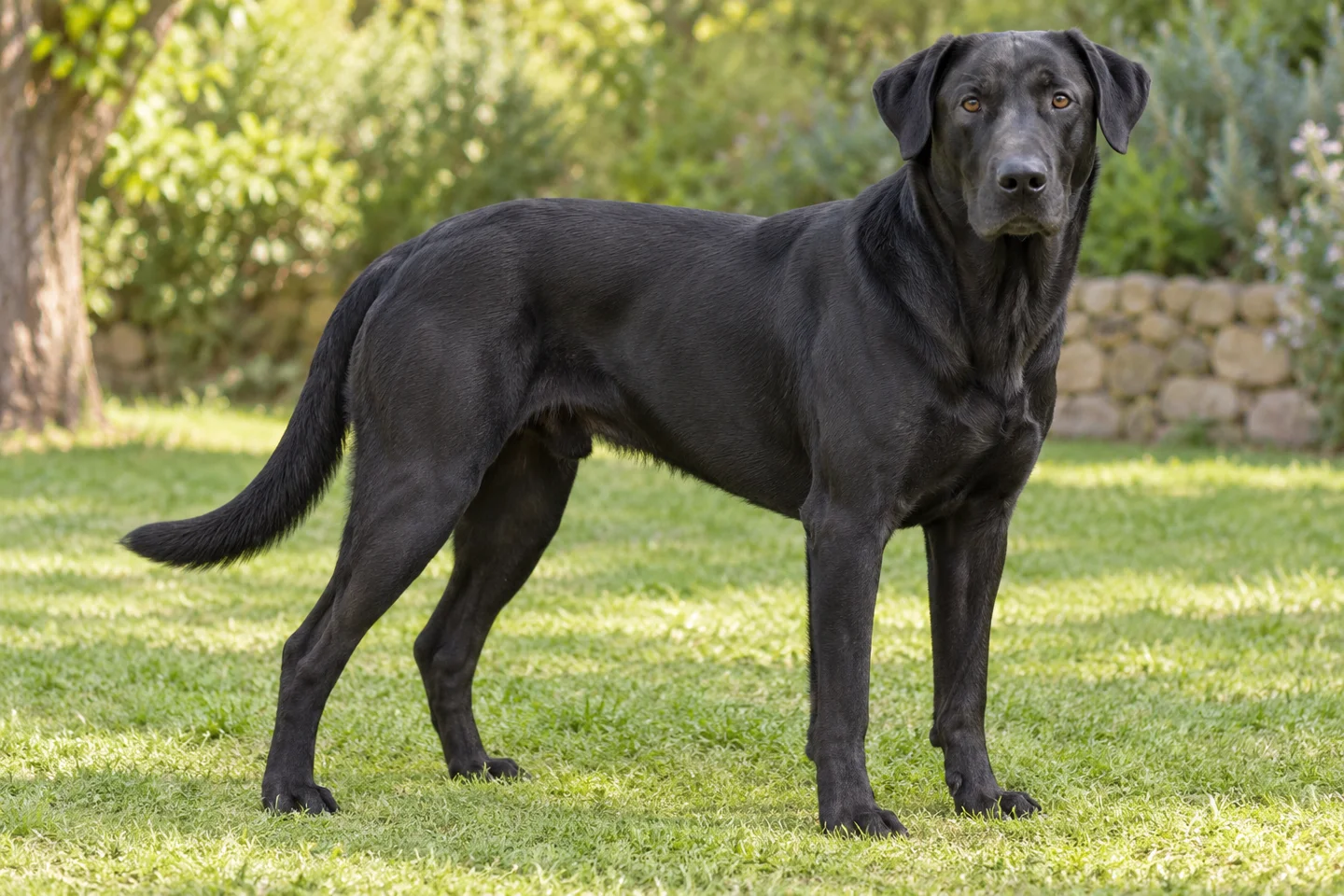
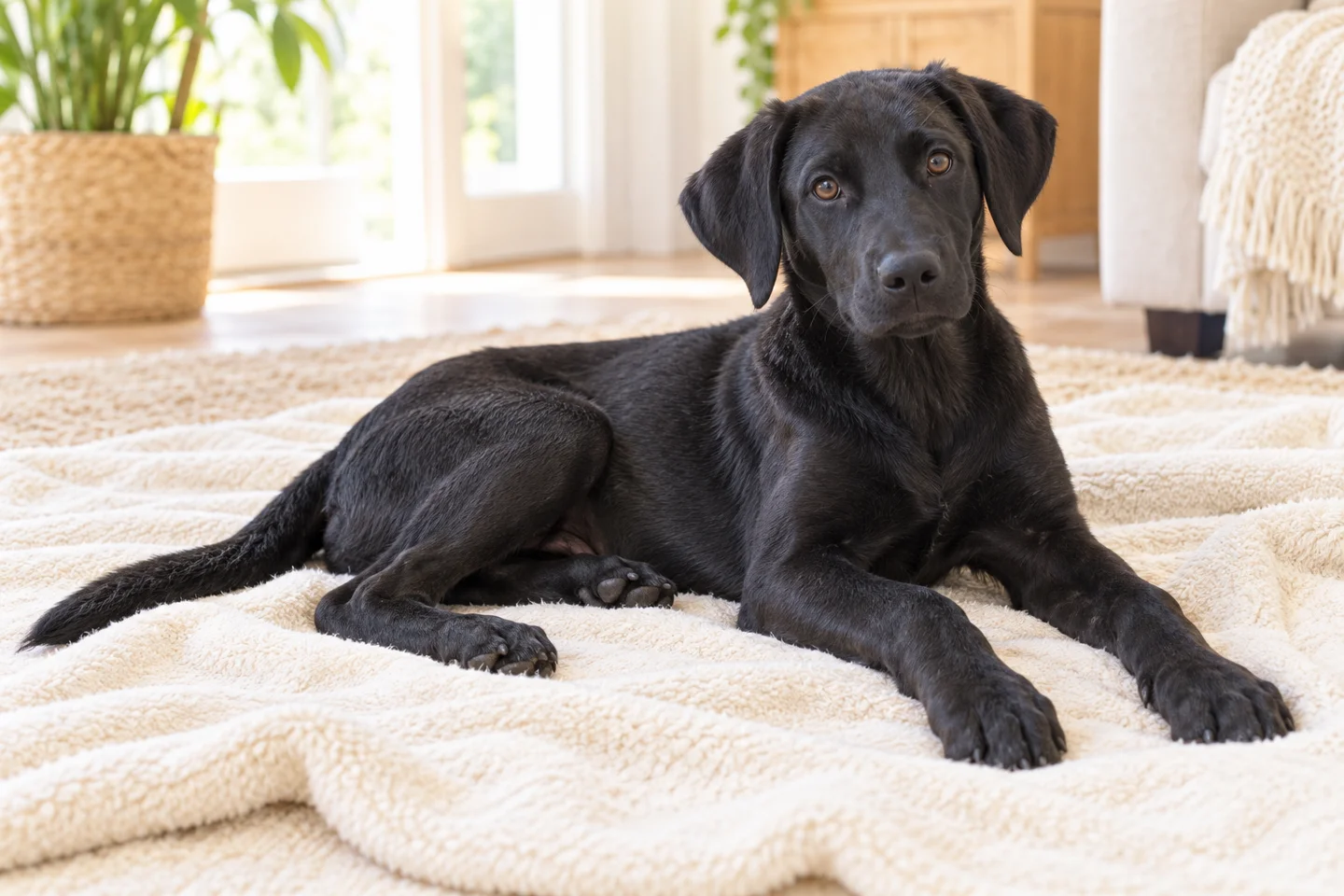
The Spanish-language FCI standard gives males a shoulder height of 66–73 cm and females 62–68 cm, with weight around 40 kg. It describes a strong agile dog with a substantial head and a clearly formed muzzle. Natural triangular ears fold, and the full tail reaches at least to the hock rather than ending in a bobtail. Black is the breed color. The illustrations use the short-haired variety with a wholly black coat, retaining a full tail and naturally folded ears. They should not be mistaken for documentary photographs of named dogs.
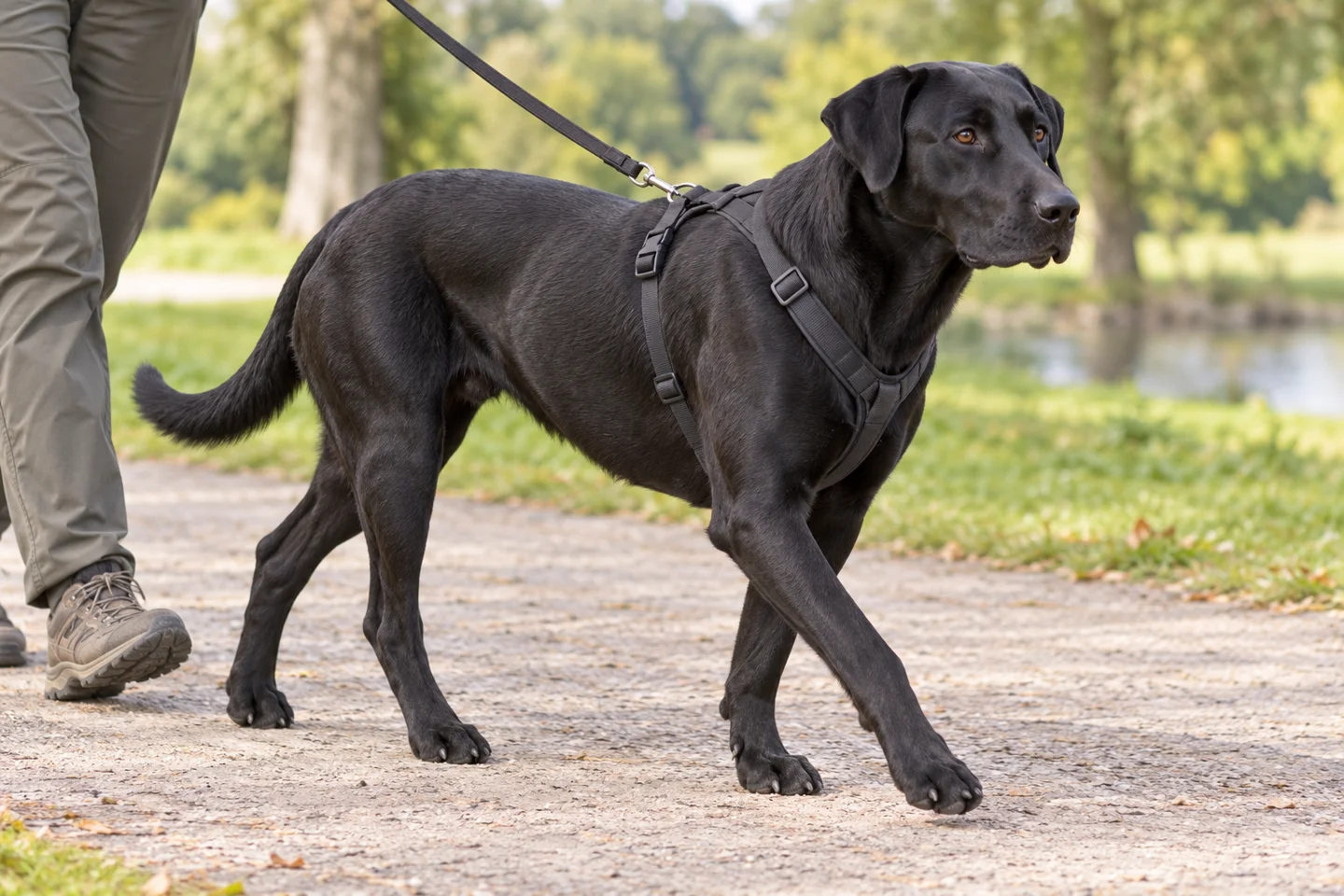
A robust outline should still allow efficient comfortable movement. Do not pursue unnecessary bulk because the dog has a guardian role, and do not treat the standard weight as a feeding target for every frame. The veterinary team should assess condition and any changes in gait or recovery. Equipment and transport need to fit a large adult, not only the puppy you collect. Check that a harness remains secure when the dog turns or backs away. Arrange enough space to lie down comfortably and a practical way to enter a vehicle, especially if age or injury later limits the animal's ability to jump.
Temperament descriptions should lead to questions about strangers
The standard describes attachment to the owner and marked reserve toward unfamiliar people. That makes a visitor plan an essential discussion rather than an optional finishing touch. Ask what a particular adult actually does when someone arrives and what management has been used. Do not encourage suspicion to make the dog appear more authentic. A guardian background cannot teach a puppy which service worker or relative is welcome, and an owner's reassurance cannot replace a reliable physical arrangement when a visitor needs to enter.
Set up comfortable separation before you need it. A dog can remain behind a secure barrier with its necessities while a person receives a delivery or repairs an appliance. Teach that routine in quiet practice and reward settling rather than introducing it only during a difficult event. Give visitors instructions in advance, including whether approaching or touching is unsuitable. A person who wants to demonstrate an ability with dogs should still follow the owner's plan. The household must be able to enforce boundaries consistently, since a strong reserved dog should not have to negotiate every unfamiliar arrival through repeated unwanted contact.
Training makes the daily routine understandable
Teach a practical recall, moving away from a doorway, resting in a designated place, and exchanging a suitable object. Begin with easy exercises and rewards the individual values. Add distraction gradually while keeping the environment secure. A skill learned in a quiet room does not automatically transfer to a busy boundary or unfamiliar street. If the dog cannot respond, reduce the challenge rather than escalating correction. The owner should be able to explain what the dog has learned, what still needs practice, and how access is managed while that learning remains incomplete.
Choose a reward-based instructor who can adapt to the actual dog's confidence and behavior. Ask how the person handles fear, guarding, or a history of bites before attending a group activity. An impressive demonstration with another dog does not establish a suitable method for yours. Keep household cues consistent and avoid alternating between rewarding a behavior and confronting it without a clear change of rules. Useful learning also includes transport, a quiet pause for care, and resting when people are occupied. Those skills support ordinary ownership even when the household enjoys more advanced work, and they remain valuable when injury or age later changes the activity plan.
Aggression needs a factual account and prevention
If the dog threatens or bites, record the actual sequence instead of explaining the event solely through its breed. Note who approached, what handling or resource was involved, the available space, contact, and any injury. Prevent a repeat while seeking professional advice. Sudden changes in tolerance, particularly around movement or touch, deserve veterinary assessment. Do not recreate the incident for someone who wants to see it happen. A demonstration can cause harm and gives the dog another experience of a situation the people should be learning to avoid or manage.
Protect food and rest from interference and practise exchanges only in safe planned settings. Maintain sufficient distance around unfamiliar dogs and people rather than forcing contact as a test. A qualified behavior professional can help identify restrictions the household can sustain. Share the history and plan with anyone providing care before they agree to take responsibility. If muzzle conditioning is recommended, learn comfortable gradual teaching and correct fit, retaining barriers and supervision. The equipment can reduce one aspect of risk but cannot make repeated crowding appropriate. Safety depends on a realistic environment and consistent handling as well as whatever the dog is learning over time.
Children, resident dogs, and smaller animals
Children need adults who can protect both their space and the dog's. A child should not manage the lead, recover an object, move a resting dog, or decide whether a guest can approach. Explain that the animal moving away ends contact, and keep food and sleep undisturbed. Use a comfortable protected area when supervision cannot remain attentive. Ask the source about actual child experience, including ages, circumstances, and any restrictions. A friendly meeting with a single calm visitor is not evidence that the dog can manage a crowded gathering without help.
Assess other animal relationships individually. A Ca de Bestiar may have experience with particular livestock or a familiar dog, but that does not establish compatibility with every smaller pet or canine visitor. Obtain observations rather than assumptions from a working title. Keep uncertain relationships physically protected and do not release a vulnerable animal to test the dog's response. For a possible canine companion, seek professional guidance when indicated and begin with enough space for handlers to withdraw. Indoors, individual resources and secure separation must be practical. If the layout cannot support necessary management, another placement may better serve everyone's welfare than expecting the animals to solve repeated conflict themselves.
Socialization can respect reserve while teaching coping
A puppy needs suitable early experiences, planned with veterinary advice during vaccination. That can include observing unfamiliar people at a distance, walking on ordinary surfaces, and learning about transport in small manageable steps. It need not involve touching by every person who wants contact. Leave room to retreat and notice how the dog recovers after a surprise. An adult moving into a new environment needs the same respect for its current experience. Rural familiarity should not be assumed to include crowded urban settings, lifts, or constant close pedestrian traffic.
Clinical handling deserves separate training. Reward a relaxed pause, a brief leg touch, or standing near an item of equipment before expecting a complete procedure. Introduce tasks in small pieces and tell the clinic which parts remain difficult. Persistent freezing, avoidance, or threats call for a revised plan and qualified help, not simply stronger restraint at every visit. The dog's physical size makes cooperation useful, but the underlying purpose is predictable care. A prepared handler gives the professional an accurate history and avoids turning an ordinary examination into an improvised contest when the animal is already uncomfortable or worried.
Exercise and work should fit condition and surroundings
Choose activity from the individual's age, condition, and previous routine. A large athletic shepherd does not arrive ready for every sport or distance. Build gradually and ask the veterinary team about demanding work, growing puppies, and return after illness or injury. Combine movement with suitable learning and investigation, followed by rest. Monitor the dog's recovery later in the day as well as its enthusiasm at departure. A repeated change in gait or stamina deserves assessment rather than a judgment that the animal needs more pressure to perform.
A Balearic origin does not protect every dog from heat. Plan shade, water, cooler conditions, and a route you can shorten if needed. Do not let a hot vehicle journey add to an already demanding day. Keep a transport plan for an animal that may be unable to walk or jump, and make sure an alternate carer can use it. Describe concerning signs accurately when calling the clinic and follow professional advice. The useful measure of activity is comfortable function and recovery for this dog, rather than completing an arbitrary workload because another owner says the breed can manage it.
Grooming the selected variety and inspecting the whole dog
The short-haired and long-haired varieties need care suited to the coat actually present. The illustrations show short close hair, but a long-haired dog should not receive an identical maintenance plan merely because the breed name matches. Ask an experienced professional to demonstrate suitable tools and inspection. Check areas under equipment, feet after outings, and the skin wherever the dog seems sensitive. Keep nails and dental care part of the routine. A coat that requires little styling can still conceal an injury or skin problem if the owner never handles the dog gently to inspect it.
Teach manageable care when the dog is comfortable. A short foot check or brief brush contact can be followed by a reward and a break. Sudden resistance to a familiar task deserves consideration of discomfort. Ear odor, redness, discharge, or persistent head shaking needs veterinary advice. Do not insert instruments into the canal or reuse medication for a new problem. Record products and treatment responses when the skin reacts. Give a sitter or new owner the actual instructions rather than saying only that the dog has always been robust. Continuity of care depends on specific information that another person can follow.
Health evidence starts with the named parents and current patient
RSCE's PedigreeRSCE Plus list includes hip and elbow dysplasia testing for the Perro de Pastor Mallorquín, or Ca de Bestiar. Ask whether a source is describing that particular credential or another programme, then request the underlying results. A standard pedigree should not be assumed to include every additional assessment associated with a separate credential. Check the parents' identities and ask the breeder to explain findings and pairing choices in understandable terms. A working record and an examination answer different questions, even when both are useful parts of a family account.
For a less familiar breed, avoid turning a sparse medical history into numerical claims about disease frequency. Ask how the source collects diagnoses from adult offspring and what remains unknown. If you receive an adult dog, assemble its own history of injuries, medication, previous workload, and follow-up care before assuming breeding paperwork covers current needs. A clinician should investigate new symptoms from that individual record and examination. Use a language the receiving veterinary team can interpret and keep original reports where possible. This makes the handover useful even when the dog has moved countries or the new owner cannot reconstruct the old routine from informal conversation.
Nutrition, budget, and help when the usual handler is absent
Feed complete nutrition appropriate to life stage and discuss portions with the veterinary team. A working description does not establish the current calorie requirement, and standard weight is not a target for every frame. Measure food, include rewards, and review condition as activity changes. Separate meals when another animal creates pressure or makes intake difficult to observe. Persistent changes in appetite, drinking, digestion, or weight need clinical advice rather than successive unrecorded diet switches. Any supplement should have a clear purpose and professional guidance, especially for a growing dog or one receiving medical treatment.
Price local veterinary care, transport, training support, secure equipment, and suitable sitting or boarding. The person providing cover must be able to follow the dog's actual handling and visitor rules. Confirm availability before assuming every service that accepts large dogs will be appropriate. Clarify support and return provisions with the source in writing, and arrange emergency funding or suitable insurance. A household plan also needs to survive the usual handler being ill. Identify a capable backup person early and teach the routine before an emergency. Depending on one person's uninterrupted availability makes ownership fragile even when ordinary days currently run smoothly.
Mixes and black-coated lookalikes
A large black dog is not automatically a Ca de Bestiar, and a rescue label may be an informed guess rather than documented ancestry. Ask what is known and keep uncertainty visible. If a cross has known parents, review relevant information about both rather than assuming a mix inherits only the convenient traits. Mixed ancestry does not guarantee freedom from inherited illness or a predictable compromise in temperament. The actual dog's health, handling, response to strangers, and experience with other animals should guide its placement and care.
Be cautious about claims that a cross needs less training because another parent breed is described as friendly. An animal's comfort around visitors has to be observed in real circumstances and may change after a move. A puppy's adult body and behavior also remain in development. Ask the source what support is available if needs differ from expectations and obtain a useful written handover. That is more valuable than a confident label that cannot answer how the individual copes with a doorway, a veterinary examination, or an absence. Good care relies on evidence about the dog in front of you, with room to adapt as more information becomes available.
dogsDating plans should begin with suitability
Describe the individual honestly on dogsDating, including any restriction on unfamiliar dogs or people. A dog with established conflict may need professional advice before a social outing is appropriate. Share an approximate area while keeping exact coordinates and the home address private. For a suitable meeting, choose a public open route and agree on enough separation before arrival. Each adult must manage their own dog and be able to leave. A social profile should never invite another owner to test a guardian breed's reaction through an unexpectedly close approach.
Start in parallel and let the dogs investigate without shared toys, food between them, or pressure for a greeting. Watch for repeated withdrawal, stiffness, or excitement that prevents comfortable disengagement. Increase distance or end the walk when necessary. Compare the route, pace, and separation afterward instead of judging success only by play or nose contact. Quiet company may be the useful result, and some pairings will remain unsuitable. Follow the needs of both animals and any professional plan already in place. The meeting is successful when the owners can make safe responsive decisions throughout, including deciding not to continue.
Sources and editorial notes
Sources checked October 22, 2026. Breed measurements describe reference ranges, not a diagnosis or an individual dog's ideal weight. Images are AI-generated breed illustrations and do not document a particular dog or health condition.
- AVSAB: Humane Dog Training Position Statement
- VCA Animal Hospitals: Food aggression in puppies
- VCA Animal Hospitals: Common emergencies in dogs
- Orthopedic Foundation for Animals: CHIC health screening programs
- VCA Animal Hospitals: Aggression toward unfamiliar dogs, diagnosis
- VCA Animal Hospitals: Grooming and coat care for your dog
- VCA Animal Hospitals: Ear infections in dogs (otitis externa)
- AAHA: Feeding plans for healthy, appropriate weight cats and dogs
- VCA Animal Hospitals: Heat stroke in dogs
- AVSAB: Puppy Socialization Position Statement
- VCA Animal Hospitals: Dog behavior problems, aggression toward children
- Official breed standard: Majorca Shepherd Dog
- Real Sociedad Canina de España: Recognized Ca de Bestiar breed club
- Real Sociedad Canina de España: PedigreeRSCE Plus breed-specific health tests
Keep getting to know dogs.
Read another guide or return to your dogsDating community.
Explore breed guidesBack to dogsDating