Miniature Bull Terrier
A compact muscular terrier with an egg-shaped head, an active individual character, and a health programme that includes distinct eye, airway, hearing, heart, and kidney questions.
How these guides are researched and reviewed
- Origin
- Great Britain
- FCI height limit
- Should not exceed 35.5 cm
- Weight guidance
- No fixed FCI weight limit; proportion and balance matter
- Coat
- Short flat hair; white or recognized colored patterns
General information for owners. These articles have not been reviewed by a veterinarian. Medical decisions need your dog's history and an examination.
A small muscular dog still needs a realistic match
The Miniature Bull Terrier is a compact powerful terrier, not a guarantee of a quiet lifestyle because it stands below the size of the Bull Terrier. Choose the individual from observations and records rather than the appeal of its distinctive head. Meet adults and ask owners what an ordinary evening involves after a walk or game. How does the dog settle, respond when an activity stops, and cope with visitors or handling? Those details give a more useful picture of ownership than a short display of playful behavior during a first meeting.
Describe your actual household to the source, including work hours, other animals, children, and the people available to provide care. Ask why this puppy or adult is proposed and what circumstances remain difficult. A good placement needs practical support and boundaries that people can maintain. A puppy's mature behavior is still developing, while an adult may need time to adjust to a new setting. Avoid treating ownership as a way to prove you can manage a determined-looking breed. The useful goal is a sustainable routine that protects the animal's welfare and gives it clear opportunities to learn, investigate, and rest comfortably.
A smaller Bull Terrier history without a separate recipe
The FCI history describes smaller Bull Terriers in the nineteenth century, their declining position before the First World War, and a revival associated with the formation of the Miniature Bull Terrier Club in 1938. It links the recognizable head type to the wider Bull Terrier story rather than a recent designer cross. Keep that identity separate from advertising labels for especially tiny puppies. The Miniature Bull Terrier has its own recognized place and height limit; a size marketing term should not replace a clear account of breed, ancestry, and current condition.
Historical references to courage or determination do not establish how an individual pet will respond in every situation. Ask the source about cooperation during care, response to frustration, and relationships with other animals. Those observations help the owner plan learning and management without assuming every challenge is a display of authenticity. Do not encourage confrontational behavior or rough play to match a breed image. Modern ownership needs safe routines, comfortable handling, and people who can decide when a proposed interaction is unsuitable. A sound placement depends on those present-day responsibilities rather than an embellished account of historical work.
Height, the egg-shaped head, and natural anatomy
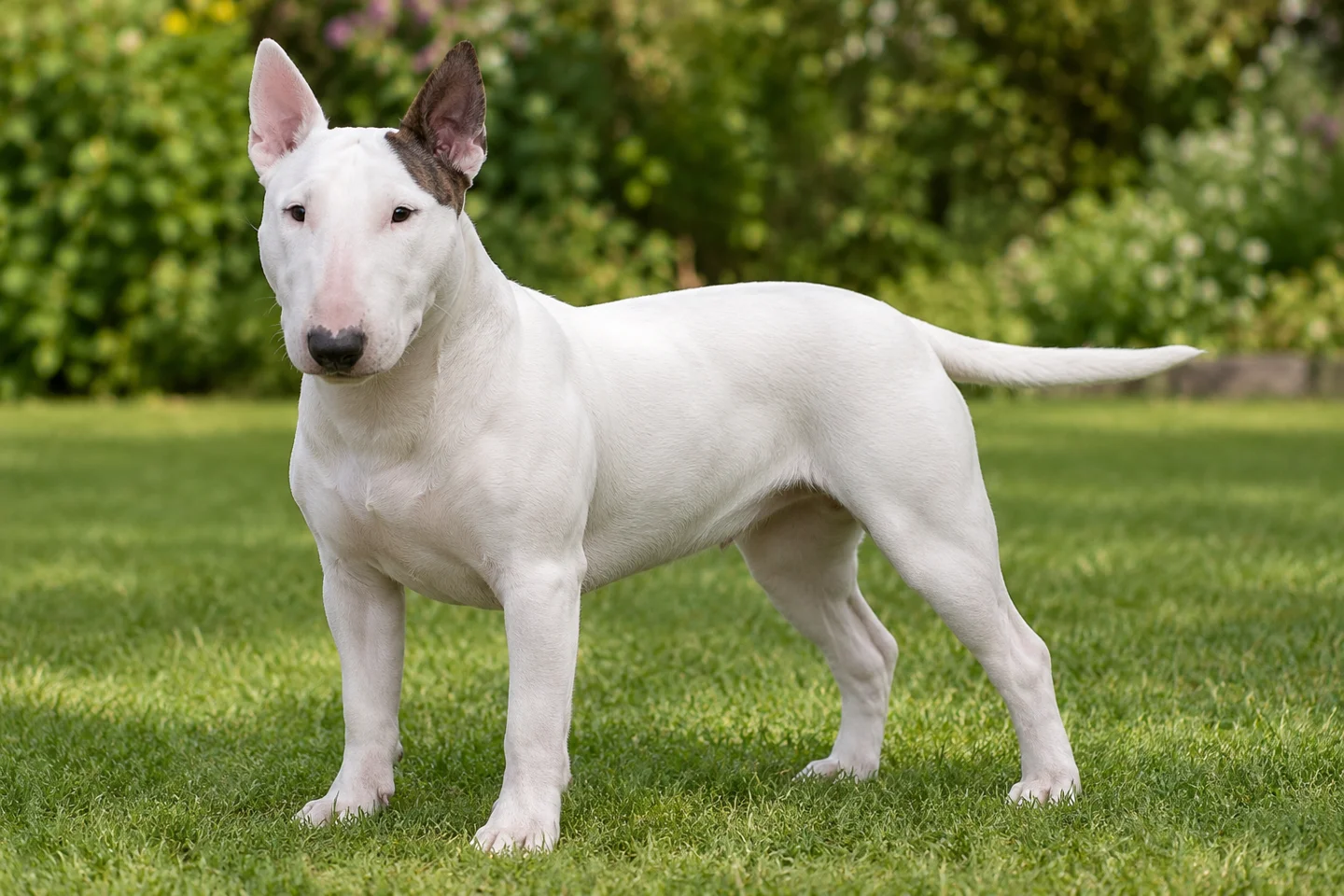
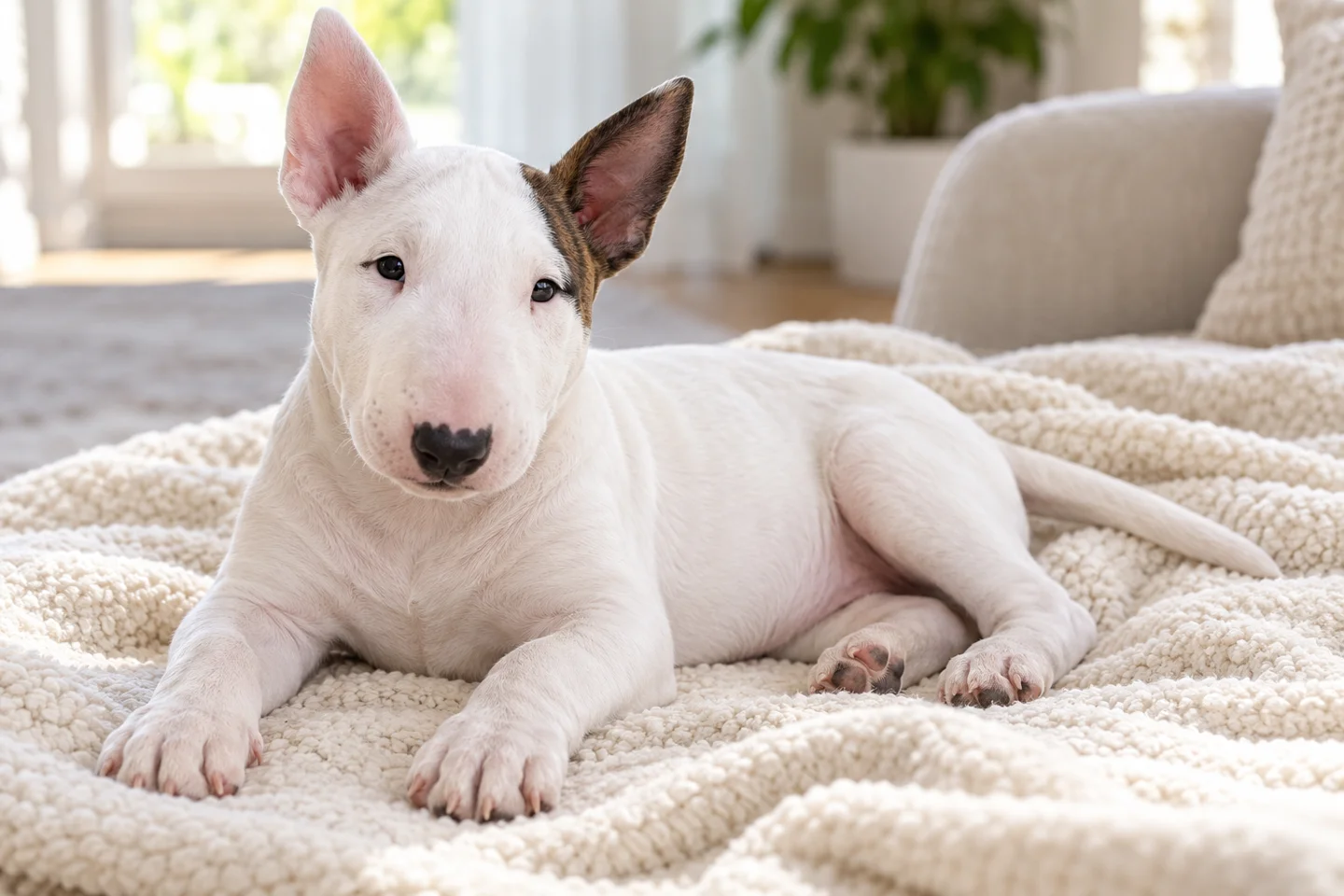
The FCI standard says height should not exceed 35.5 cm and gives no fixed weight limit, emphasizing balance and substance appropriate to size. The distinctive head is egg-shaped from the front, with a smooth downward profile, small dark triangular eyes, and close-set naturally erect ears. A full naturally short tapering tail is carried low rather than docked. The short flat coat can be white or recognized colors. The illustrations show a white dog with a brindle ear patch, preserving ordinary limb proportions and natural anatomy.
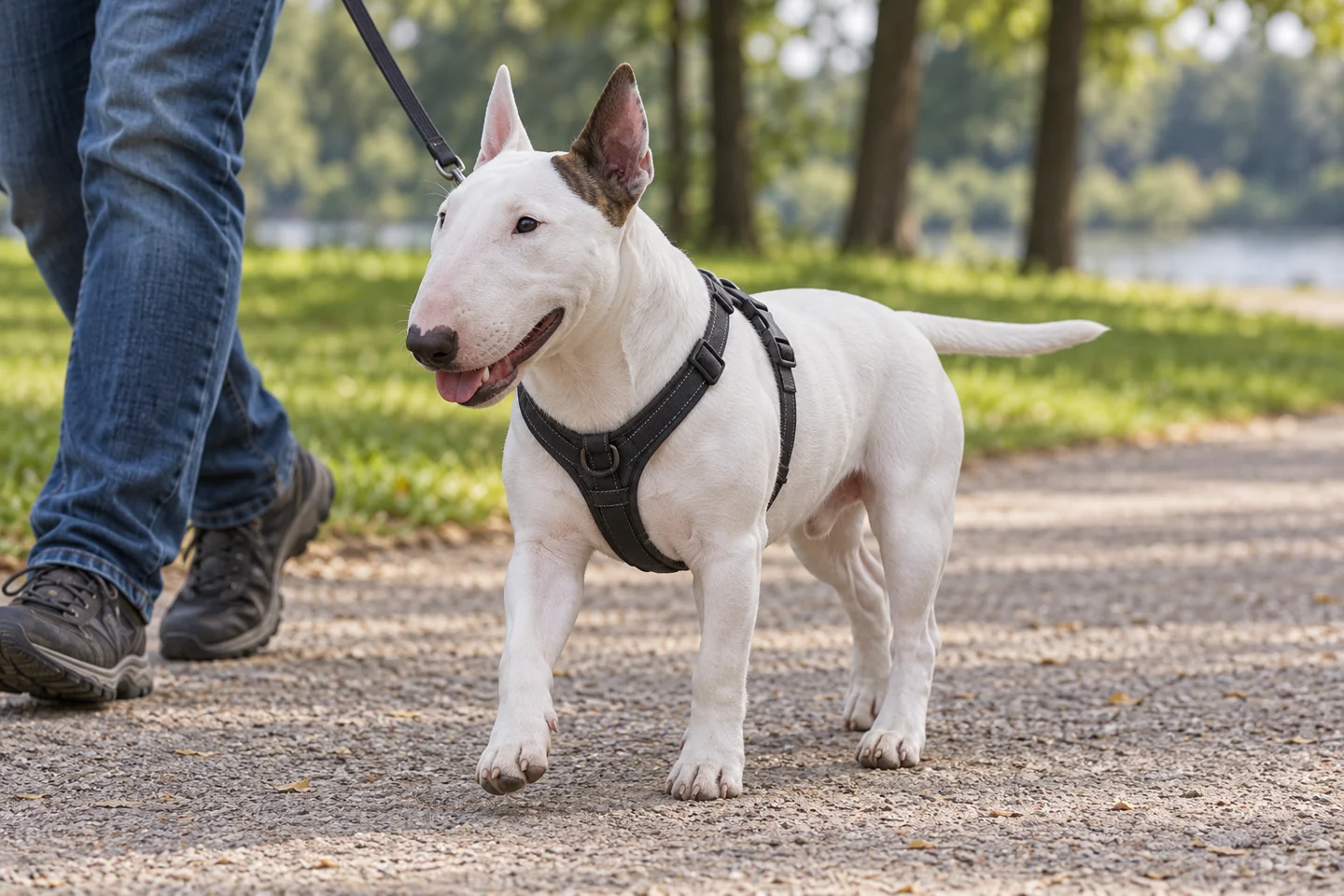
The head's appearance should not distract from comfort, a functional mouth, clear eyes, and comfortable breathing. A veterinarian should assess the individual rather than an owner feeding toward an arbitrary weight. Check the body beneath its compact muscular outline and observe normal movement and recovery. Equipment should be secure and allow the shoulders and forelegs to move freely. Puppies need refitting as they grow. An advertised exceptional size should prompt questions about the animal's health and source records, not automatic preference. The owner's priority is a comfortable dog able to live normally, rather than a more extreme version of a recognizable feature.
Training that makes alternatives clear before excitement builds
Teach a reward marker, coming to the handler, and moving to a resting place in quiet circumstances. Use short clear sessions and finish while the dog remains able to participate. A task learned in the kitchen needs gradual preparation before it can work near a busy doorway or another moving dog. Manage access while skills remain unfinished. If the dog cannot respond, adjust distance and difficulty rather than repeatedly escalating the cue. The owner should know which behavior is wanted and what will make offering it worthwhile.
Practice safe exchanges with suitable toys and objects so the household does not rely on grabbing or chasing. Keep dangerous items inaccessible and obtain guidance if guarding is established. Teach a predictable ending to play and provide an appropriate quiet transition. A reward-based professional can help when excitement or frustration repeatedly makes daily routines difficult. Ask how the instructor works with fear or a bite history before attending a group class. The aim is useful cooperation, with family members following consistent rules. A dog described as strong-willed still deserves instruction it can understand rather than a series of contests in which the owner tries to win through force.
Exercise should suit the dog’s condition and recovery
Plan appropriate walks, supervised investigation, and learning around age, health, and recent activity. A compact muscular dog is not automatically ready for demanding sport or repeated strenuous play. Build gradually and ask the veterinary team about readiness, particularly during growth or return after injury. A secure area can offer variety when its boundaries are checked and the dog remains supervised. Include rest and observe how the animal behaves after an outing. Continually adding excitement may be less useful than teaching how to settle when the day's activity has finished.
Weather, surfaces, and transport are part of the real workload. Provide water, adjust demands in warmth, and choose routes with an easy way to shorten the plan. Do not normalize an unusual breathing sound, altered gait, or persistent loss of stamina as a feature of the breed. Ask the veterinarian to assess the individual and describe the circumstances accurately. Enthusiasm when a toy appears cannot answer every question about recovery or discomfort. The useful measure is a routine that leaves the dog moving comfortably and participating normally at home, with room to adapt when age or medical needs change what it can do.
Socialization can begin with a calm observation
Discuss safe early experiences with the veterinary team while vaccinations progress. Let a puppy observe people, traffic, surfaces, and ordinary handling in small amounts where it has a way to leave. A crowded greeting is not the only useful lesson. Watch recovery after a surprise and end before the situation becomes overwhelming. An adult newly adopted into a home also needs unfamiliar settings introduced from its actual experience. Ask previous carers what has been observed directly, what remains difficult, and what has never been attempted.
Prepare clinical and routine care through small cooperative steps. Reward a relaxed pause, a brief touch near a paw, or standing beside a brush before expecting a complete procedure. Keep notes so the groomer or clinic can begin from what the dog understands. Repeated avoidance, freezing, or threats need reassessment and qualified help rather than stronger restraint as the only plan. A dog that becomes still may not be comfortable, so look at the whole response. Predictable handling matters even with a short coat because later medical care may involve examination of a sensitive mouth, eye, or other area.
Aggression and guarding require their own investigation
An individual Miniature Bull Terrier can threaten or bite, and breed labels cannot establish the cause of an event. Record who approached, the resource or handling involved, available space, contact, and any injury. Prevent repetition while seeking veterinary and behavior guidance. Sudden changes around touch or movement deserve medical attention. Do not repeat an incident for a demonstration or punish a warning as the complete solution. The circumstances that produced discomfort still need to be understood and changed, even if the dog is affectionate at other times.
Keep meals, valued chews, and rest free from interference. Have children obtain adult help when the dog has an object rather than attempting recovery themselves. Maintain control and distance around unfamiliar dogs instead of forcing contact to test sociability. A qualified professional can help decide which interactions are appropriate and what restrictions the home can maintain. Carers need an honest incident history before taking responsibility. If muzzle conditioning is advised, learn correct fit and comfortable gradual introduction while retaining supervision and barriers. Protective equipment supports a wider plan; it does not make repeated crowding, rough handling, or resource competition a suitable experiment.
Children and animals need supervision matched to the individual
Teach children to invite contact, accept the dog leaving, and protect its sleep and meals. A capable adult should manage the lead, handling, and recovery of objects. Do not encourage wrestling or chasing because the animal appears robust and playful. Active supervision means noticing when the interaction needs to change before the dog is cornered or pressured. Provide comfortable separation during gatherings when attention must be divided. Ask the source about actual experience with children, including ages and settings. One friendly encounter cannot establish safety in every later situation.
Assess relationships with resident dogs, cats, and small pets separately. A familiar companion does not establish compatibility with every visitor, and an outdoor greeting does not settle indoor food or rest. Begin canine introductions with room for both handlers to withdraw and arrange individual resources at home. Keep vulnerable animals physically protected where safety is uncertain; do not release one as a test. A manageable placement needs a layout and routine that can maintain the required barriers during ordinary distractions. If the household cannot provide that, a different arrangement may better protect the welfare of all the animals than relying on them to resolve repeated conflict.
Grooming and careful observation of mouth and skin
The short coat requires suitable gentle brushing and regular inspection rather than elaborate styling. Check areas beneath equipment, feet after outings, and any place the dog finds sensitive. Introduce nail and dental care with guidance from the veterinary team. The British club notes instanding canines among issues worth discussing, making an actual mouth examination more useful than judging the head only from a profile photograph. Ask the clinician to explain any finding and follow-up. Do not attempt to alter teeth or dismiss pain because an unusual head shape is expected.
Redness, persistent scratching, ear odor, discharge, or a sudden change in handling tolerance deserves assessment. Keep details of products used and when signs began, rather than switching repeatedly without a record. Avoid instruments in the ear canal and do not reuse medication from another animal or a previous episode. A carer should know what routine the dog accepts and which changes require a call. A clean short coat does not rule out an uncomfortable mouth, sore foot, or developing skin problem. The value of regular care includes the information it gives the owner about this individual over time.
Health screening includes several different kinds of evidence
Current AKC parent-club recommendations include cardiac examination, BAER hearing testing, urine protein-to-creatinine ratio for kidney assessment, and DNA tests for primary lens luxation, lethal acrodermatitis, and Miniature Bull Terrier laryngeal paralysis. The British club also discusses patellas and other relevant conditions. Ask which programme the source follows and request the named parents' actual reports. A hearing result, a urine assessment, and a DNA finding do not answer the same question. A large panel or attractive certificate should not conceal a missing clinical test.
The club's ethics guidance asks for testing and honest placement information. Read findings rather than assuming completion means every result was normal. Ask how a relevant carrier or risk result was interpreted for the proposed combination and how later owner diagnoses are collected. A DNA result concerns particular variants and cannot exclude every future symptom. For an adult with incomplete history, obtain the reports that exist and arrange current care. New urinary, cardiac, hearing, or other changes need assessment from the individual's record and examination, rather than reassurance based only on a relative's screening or an old advertisement.
Eyes, airway signs, and the limits of a clear DNA result
The health programme names primary lens luxation and laryngeal paralysis because these are distinct concerns requiring appropriate evidence. Ask the veterinarian to explain the result and implications for the actual dog. A painful or newly changed eye needs prompt clinical advice despite any parental paperwork. Similarly, concerning breathing difficulty should not be treated as an ordinary sound that comes with a recognizable breed. Describe what changed and follow the clinic's instructions, including urgent assessment where advised. Do not wait to assign a breed-specific diagnosis yourself before seeking help.
Keep identified results with the medical file and tell alternate carers about any known condition and current restrictions. A test relevant to one inherited risk does not establish the cause of every new eye or airway problem. The clinician needs the patient's signs, history, and examination. Avoid starting leftover treatment or changing prescribed medication from an online discussion. If the dog has had a procedure, include the original report and follow-up instructions in the handover. Clear records make later decisions more informed, especially when care moves between clinics or countries and an unfamiliar professional cannot reconstruct the case from the breed name alone.
Food, rest, and costs beyond the initial fee
Use complete food appropriate to life stage and current condition, with portions reviewed by the veterinary team. Count training rewards and adjust deliberately when activity changes. The absence of a fixed standard weight is not permission to ignore body condition or pursue more bulk. Separate meals if another animal creates competition and keep a record of persistent appetite or digestive changes. Supplements should have a clear purpose and professional guidance rather than a promise to create muscle or improve the coat. Clinical investigation should not be delayed by a succession of undocumented food switches.
Price local veterinary care, suitable equipment, transport, training support, and care during absences. Confirm that a sitter can follow the actual dog's animal boundaries and medical instructions rather than assuming availability means suitability. Clarify written source support and return arrangements before collection. Arrange emergency funding or appropriate insurance and understand the terms. A workable plan includes periods when the dog needs quieter activity or the usual owner is ill. More than one capable person should know the routine. The initial purchase or adoption fee does not describe the commitment that continues through training, medical follow-up, and later-life changes.
Mixes, size claims, and choosing from evidence
A Miniature Bull Terrier mix needs its own ancestry account where documentation exists. An egg-shaped head or white coat alone cannot establish the cross. Preserve uncertainty for a rescue label based on resemblance. If parents are known, consider relevant medical and behavioral information about both, without assuming mixing guarantees easier handling or freedom from inherited illness. A puppy's adult size, coat, and responses remain in development. A confident promise that it will be the perfect compromise between two descriptions is less useful than an honest account of what has actually been observed.
The same care applies to especially small size claims. Ask what the source means, how the individual has been examined, and whether there are concerns behind the label. Choosing an adult may provide a clearer picture of established routines, but a move can still alter what the dog finds difficult. Set up an initial period with predictable care and protected rest rather than a succession of tests in busy public places. Seek help when needs emerge instead of treating every difference from an advertisement as a failure. The placement should be able to adapt to the real animal, with support arrangements understood before arrival.
dogsDating introductions should retain room for a different outcome
On dogsDating, describe the individual's pace, greeting restrictions, and suitability for the proposed activity. A dog with established conflict may need professional advice before a social walk is appropriate. Share an approximate area while keeping exact coordinates and the home address private. Choose a public open starting point and agree on enough separation beforehand. Each adult should manage their own dog and have an easy route to leave. Avoid beginning with a narrow gate or doorway that forces contact before either handler has assessed the animals' responses.
Start with parallel movement and allow quiet investigation without shared toys or food between unfamiliar dogs. Repeated stiffness, withdrawal, or excitement that prevents comfortable disengagement calls for more space or an early finish. Compare the conditions afterward instead of judging success only by play or a close greeting. A suitable walking companion can be valuable without physical contact, and some pairings will remain inappropriate. Follow observations of these individuals and any professional plan already in place. A social invitation should preserve the owners' ability to make responsive safe decisions throughout the outing, including the decision to end it.
Sources and editorial notes
Sources checked October 22, 2026. Breed measurements describe reference ranges, not a diagnosis or an individual dog's ideal weight. Images are AI-generated breed illustrations and do not document a particular dog or health condition.
- AVSAB: Humane Dog Training Position Statement
- VCA Animal Hospitals: Food aggression in puppies
- VCA Animal Hospitals: Common emergencies in dogs
- Orthopedic Foundation for Animals: CHIC health screening programs
- VCA Animal Hospitals: Aggression toward unfamiliar dogs, diagnosis
- VCA Animal Hospitals: Grooming and coat care for your dog
- VCA Animal Hospitals: Ear infections in dogs (otitis externa)
- AAHA: Feeding plans for healthy, appropriate weight cats and dogs
- VCA Animal Hospitals: Heat stroke in dogs
- AVSAB: Puppy Socialization Position Statement
- VCA Animal Hospitals: Dog behavior problems, aggression toward children
- Official breed standard: Miniature Bull Terrier
- Miniature Bull Terrier Club: Breed health and screening priorities
- Miniature Bull Terrier Club: Screening and placement code of ethics
- American Kennel Club: Miniature Bull Terrier parent-club health tests
Keep getting to know dogs.
Read another guide or return to your dogsDating community.
Explore breed guidesBack to dogsDating