Mountain Cur
The Mountain Cur is an American working tree dog with an athletic build and a practical hunting history. A companion home needs secure boundaries, worthwhile activity, and an honest assessment of the individual around wildlife and other pets.
How these guides are researched and reviewed
- Origin
- United States
- Adult standard size
- UKC males 18–26 inches; females 16–24 inches
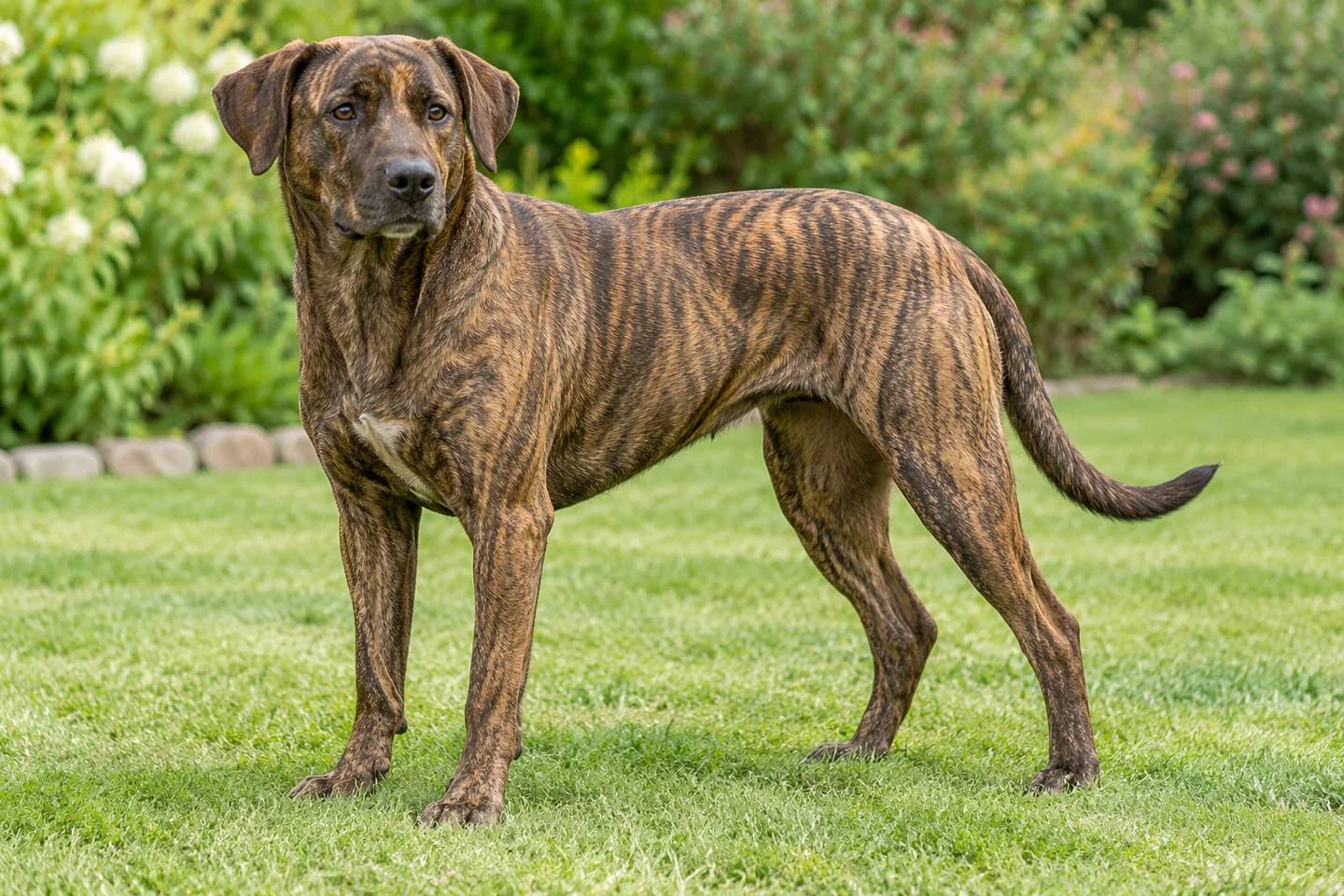
- Illustrated coat
- Brindle short coat
General information for owners. These articles have not been reviewed by a veterinarian. Medical decisions need your dog's history and an examination.
Understanding the Mountain Cur name
The Mountain Cur is an American working breed, and the word cur in its name does not mean that a registered individual is simply an unidentified cross. At the same time, shelters and private advertisements sometimes use cur as a broad description. Ask what the source actually knows. Registration, documented parentage, a visual guess, and observations of behavior are different kinds of information. Keep those distinctions clear when deciding whether a dog fits your household.
This guide uses the United Kennel Club standard as its conformation reference. A Mountain Cur's work centers on finding and treeing game, so a prospective owner should investigate hunting interest and experience directly. Ask about recall, containment, and the dog's response to cats and wildlife. An animal that has lived with a working handler may need time to understand a companion routine. Its suitability depends on the actual dog and the daily life you can provide, including the quieter periods between outings.
Working history and useful questions
UKC's account identifies the Original Mountain Cur Breeders of America and the Kemmer Stock organization in the breed's recorded development. These working lines provide context for identity, without implying that every dog from a named strain has an identical temperament. Ask a breeder what the parents do, how they are housed, and which traits they select. A claim about a famous line is less useful than specific information about the dogs involved in this litter.
For a companion placement, ask whether previous puppies from the source have succeeded in similar homes. A household with chickens, visiting grandchildren, and a suburban garden presents different demands from regular hunting work. Discuss those details plainly. If the source dismisses every concern with a general claim that the dogs can do anything, seek more evidence. An adult placement may offer clearer information about existing habits. A puppy offers an opportunity to teach early skills while leaving more uncertainty about the eventual level of hunting interest, confidence, and social preference.
Build, size, and the illustrated dog
The UKC adult height range is 18–26 inches for males and 16–24 inches for females, with weight proportional to height. The breed has a powerful, agile frame suited to work. Those broad ranges make meeting adults particularly helpful when estimating the space and equipment a puppy may need. Food portions should follow body condition and veterinary guidance rather than an attempt to reach a presumed ideal weight copied from an advertisement.
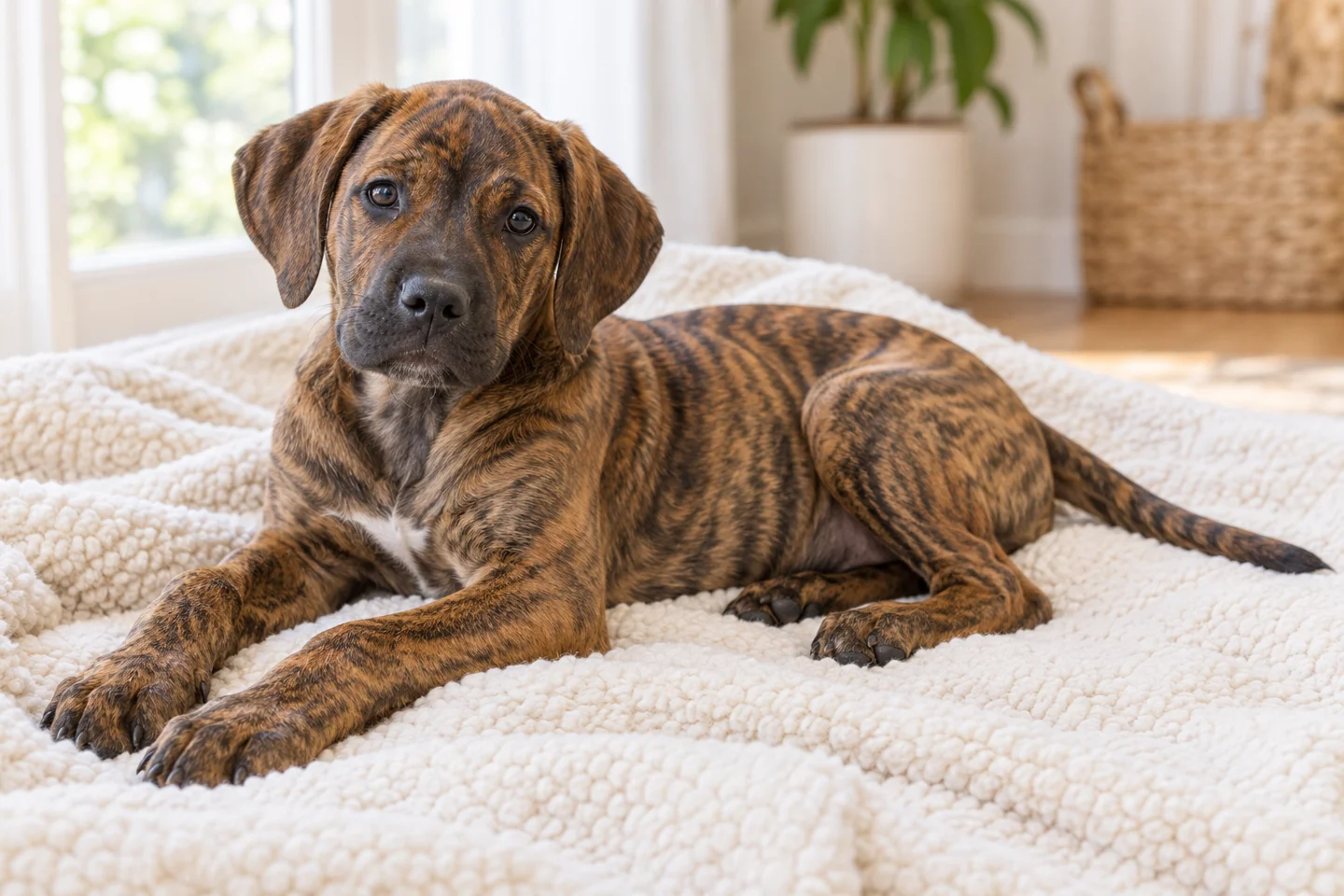
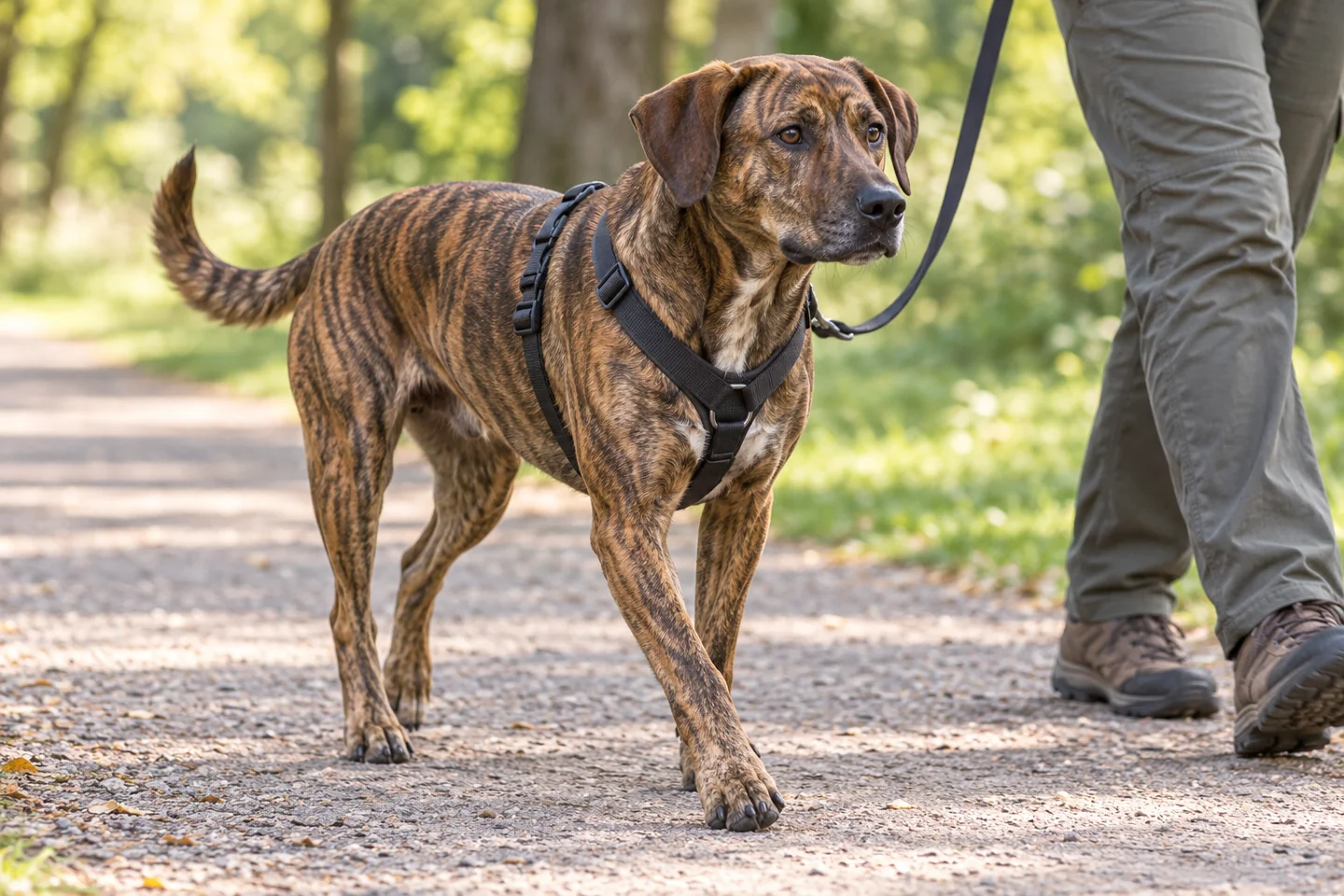
The short coat occurs in several colors; this guide selects brindle for its AI-generated illustrations. Natural drop ears and a full tail are shown. Natural short tails also occur, so tail length alone cannot confirm or exclude identity. Pictures do not establish clinical health or pedigree. When meeting a real dog, watch how it moves, ask about previous injuries, and check the identification attached to its records. A scar cannot by itself prove working skill, and an attractive muscular outline does not reveal whether the animal recovers comfortably after its usual activity.
Drive, attention, and life between tasks
A dog that readily engages with a search or moving animal may need help learning what happens when there is no task. Establish a comfortable resting area and predictable breaks. Reward calm behavior without turning every quiet moment into another exercise. A companion routine should contain shared activity and genuine rest. Continually inventing harder games to keep the dog occupied can produce a household in which everyone waits for the next burst of excitement.
Observe how the dog responds when an activity ends. Can it drink, lie down, and sleep, or does it remain at the door unable to disengage? The answer can guide changes in routine and professional advice. Also prepare for being apart. A strong relationship with one person does not establish that the dog will cope with an abrupt full day alone. Introduce manageable absences and suitable carers gradually. If the dog shows persistent distress, involve the veterinarian and a qualified behavior professional rather than assuming physical exercise alone will address the cause.
Exercise and conditioning for the actual dog
Choose activity according to the dog's current condition, age, and previous workload. A young dog learning to walk on lead needs a different plan from a fit adult returning to a familiar trail. Build distance gradually and note recovery afterward. Regular moderate activity is a more reliable basis for demanding outings than a week of little movement followed by a sudden long weekend expedition. Ask the veterinary team about limits after injury or during growth.
Plan terrain as well as distance. Loose rock, steep descents, slippery surfaces, and heat can change the difficulty of a route. Carry water, choose appropriate timing, and know how you would leave if the dog could not continue. Check paws after unfamiliar ground. An animal concentrating on scent may keep moving despite discomfort, so watch its stride and willingness to use each limb. If normal activity becomes unusually difficult, seek assessment. Describing the dog as tough or bred for rough country should never become a reason to overlook pain or delay a needed examination.
Training recall and the end of pursuit
Practice coming back before the strongest distraction appears. Begin in a secure place, use a clear cue, and make returning worthwhile. Sometimes reward the return and allow safe exploration to resume, so the cue does not always predict going home. Introduce distraction at a level where the dog can succeed. A handler standing beside a road and repeatedly calling at a dog already pursuing wildlife is facing a safety problem, not a useful training setup.
Use secure equipment and boundaries while teaching. A long line needs sufficient space and careful handling to avoid entanglement. Train a turn-away cue, calm loading into a vehicle, and waiting before a door opens. Those skills can prevent the start of an unsafe chase. Select reward-based help when you need a more detailed plan. Ask a trainer how they will manage the environment and measure progress. Suppressing behavior through fear or pain can create additional problems and cannot establish that the dog will make a safe choice when equipment is removed.
Containing a capable explorer
Inspect fences, latches, and places where stored objects create a route over a barrier. A garden that held a previous dog may have weak points for this individual. Check gates after visitors or deliveries and provide an additional barrier around a busy entrance when practical. Identification and current contact details help if something goes wrong, but they do not make repeated escape acceptable. Work on the cause while preventing another rehearsal.
Do not rely on remoteness as containment. A quiet track may still lead to livestock, a road, or land where dogs are unwelcome. Explain the dog's hunting interest to everyone who handles it, including an occasional walker. Choose care arrangements that provide secure housing and appropriate exercise rather than assuming any boarding setup will work. If the dog digs, offer a safe supervised outlet while blocking dangerous areas. Avoid access beneath structures or into unknown holes where the handler cannot retrieve it safely. The purpose of management is to preserve useful exploration without allowing avoidable injury or conflict.
Aggression, guarding, and physical intervention
A working dog can be affectionate at home and still need careful handling around valued objects, unfamiliar dogs, or painful areas. Evaluate the individual's behavior instead of treating courage or hunting ability as evidence about human safety. Stop an interaction when the dog stiffens, withdraws, or warns someone off. Create space and determine what changed. A warning around touch should prompt consideration of discomfort, especially if the response is new.
Practice object exchanges and prevent access to items that repeatedly create conflict. Avoid reaching into a dog fight or trying to overpower a dog as a routine training method. If there is a bite history, disclose it accurately to carers and seek professional assessment. Record the sequence, the people involved, and whether the dog could leave. Management may require barriers, different walking routes, or a carefully taught muzzle for particular situations. These decisions belong to an individual plan. Neither a breed's working reputation nor a friendly first greeting can certify all future interactions.
Children and household activity
Children can participate in a Mountain Cur's care through suitable supervised tasks, but an adult remains responsible for safety. A large, active dog may knock a child over during play or become excited by running and shouting. Choose games with clear starts and stops, such as an easy search or a practiced cue. Protect the dog's sleep and food, and prevent children from entering its bed or reaching for something in its mouth.
Ask about the particular dog's previous exposure to children and what those encounters involved. Living near a child is different from sharing a room during energetic play. For a dog with unknown history, begin with separation and short manageable contact. If either the child or dog is frightened, reduce pressure rather than arranging forced closeness. A physical barrier is useful when visitors arrive or supervision is divided. Watch for repeated avoidance and end the interaction before escalation. Seek help when warnings recur, because the same difficult scenario repeated daily is unlikely to improve merely through familiarity.
Cats, small pets, and other dogs
The Mountain Cur's treeing background makes a realistic discussion of pursuit essential. A dog that has worked game may not be suitable for unrestricted access to small household animals. Even a dog raised with one cat can respond differently to an unfamiliar animal running outdoors. Use dependable separation while assessing behavior, and do not hold the smaller animal in place to make an introduction happen. Its welfare matters too.
Dog companions should be selected through observation. Begin with room to move away and handlers who can interrupt. If the dogs eventually share a home, provide separate meals, resting areas, and periods of individual attention. A relaxed outdoor meeting does not establish comfort with another animal approaching a chew or a person. Stop repeated pursuit or blocking rather than waiting for a fight to provide certainty. Where serious conflict has occurred, obtain professional advice before attempting another shared-space trial. Matching sex, size, or working background cannot guarantee that two particular dogs will enjoy living together.
Grooming and practical care after work
Brush the short coat with suitable gentle tools and examine the skin after outdoor activity. Pay attention to paws, the underside of the body, and areas beneath collars or harnesses. A short coat can still conceal a small wound, lodged material, or irritation. Teach the dog to stand comfortably for checks and reward cooperation. If an injury is painful or difficult to assess, ask the clinic rather than repeatedly probing it at home.
Look at the ears without pushing objects into the canal. Persistent discharge, odor, or head shaking calls for veterinary advice about the cause and appropriate treatment. Include nail and dental care in the routine. An active outdoor dog may still need nail trimming, and worn nail tips do not establish that every nail is comfortable. Toothbrushing is a separate learned skill. For a new adult, ask which handling tasks are familiar and build gradually. The ability to restrain a strong dog should never be mistaken for evidence that the procedure is comfortable or the best way to teach future cooperation.
Health evidence without a fictional disease list
Working performance and a registry document cannot provide a complete medical picture. The UKC standard emphasizes function and avoidance of harmful exaggeration, but it does not supply population-wide disease rates or a universal clinical testing program. Ask a breeder what health evaluations the parents received and request the records. If a special program is advertised, identify the organization, current protocol, and actual results before drawing conclusions from its name.
For an adult, ask about injuries, lameness after work, medications, procedures, and veterinary follow-up. The history of recovery after demanding activity can be useful alongside a current examination. Discuss planned exercise with your own vet and establish a baseline that makes later changes easier to recognize. A dog can be enthusiastic about work while having a condition that needs treatment. If symptoms arise, investigate them on their merits rather than assuming the breed is naturally disease-free. A broad DNA panel may provide particular genetic information; it does not replace examination, reveal every inherited risk, or explain every cause of pain and reduced performance.
Feeding, mixes, and planning for costs
Match a complete diet to life stage and adjust intake with body condition and workload. A transition from regular hunting to quieter home life can change energy needs. Keep a simple record of food, treats, and changes in weight. The veterinary team can help if the dog is underconditioned, gaining excess fat, or receiving treatment that affects its diet. Avoid selecting supplements solely because they are marketed for working dogs.
A Mountain Cur mix may be a documented cross or an informed guess based on appearance. Ask which is meant and evaluate the animal in front of you. Neither a crossbreed label nor a pedigree can guarantee predictable health or behavior. Obtain local estimates for routine veterinary care, training, secure equipment, boarding, and emergencies. Consider transport and physical help if a strong dog is temporarily unable to walk. Insurance terms vary, particularly around ongoing conditions and previous symptoms. Read them before assuming every later cost will be covered. A workable ownership plan includes both financial provision and people who can handle this individual reliably.
Useful dogsDating profiles and first walks
Describe your Mountain Cur's preferences rather than relying on its breed name on dogsDating. State if it becomes absorbed in wildlife scent, needs space around toys, or prefers a steady walk to wrestling. Choose a public meeting route where the dogs can move without being crowded. Begin apart and let each handler observe whether their dog remains responsive. A narrow entrance or busy off-lead area may be an unnecessary complication for the first encounter.
Keep exact user coordinates private. Use approximate discovery to find a possible walking partner, then agree on a public landmark without exposing a home address or the location of a private kennel. Check photos for identifying information. If either dog persistently stares, pursues, or tries to escape, finish the meeting instead of escalating the exercise. Record what happened and adjust future plans. A short walk with comfortable distance is a useful result. There is no requirement to progress to loose play because the people matched online or because both dogs have a working background.
Sources and editorial notes
Sources checked October 22, 2026. Breed measurements describe reference ranges, not a diagnosis or an individual dog's ideal weight. Images are AI-generated breed illustrations and do not document a particular dog or health condition.
- AVSAB: Humane Dog Training Position Statement
- VCA Animal Hospitals: Food aggression in puppies
- Orthopedic Foundation for Animals: CHIC health screening programs
- VCA Animal Hospitals: Aggression toward unfamiliar dogs, diagnosis
- VCA Animal Hospitals: Grooming and coat care for your dog
- VCA Animal Hospitals: Ear infections in dogs (otitis externa)
- AAHA: Feeding plans for healthy, appropriate weight cats and dogs
- VCA Animal Hospitals: Heat stroke in dogs
- AVSAB: Puppy Socialization Position Statement
- VCA Animal Hospitals: Dog behavior problems, aggression toward children
- United Kennel Club: Mountain Cur breed standard
Keep getting to know dogs.
Read another guide or return to your dogsDating community.
Explore breed guidesBack to dogsDating