Newfoundland
The Newfoundland is a giant Canadian working dog with a dense coat and a history of water and draft work. Its size, wet coat care, health screening, and safe handling need practical preparation even when the individual has a gentle manner.
How these guides are researched and reviewed
- Origin
- Canada
- Adult standard size
- Average males 71 cm/68 kg; females 66 cm/54 kg
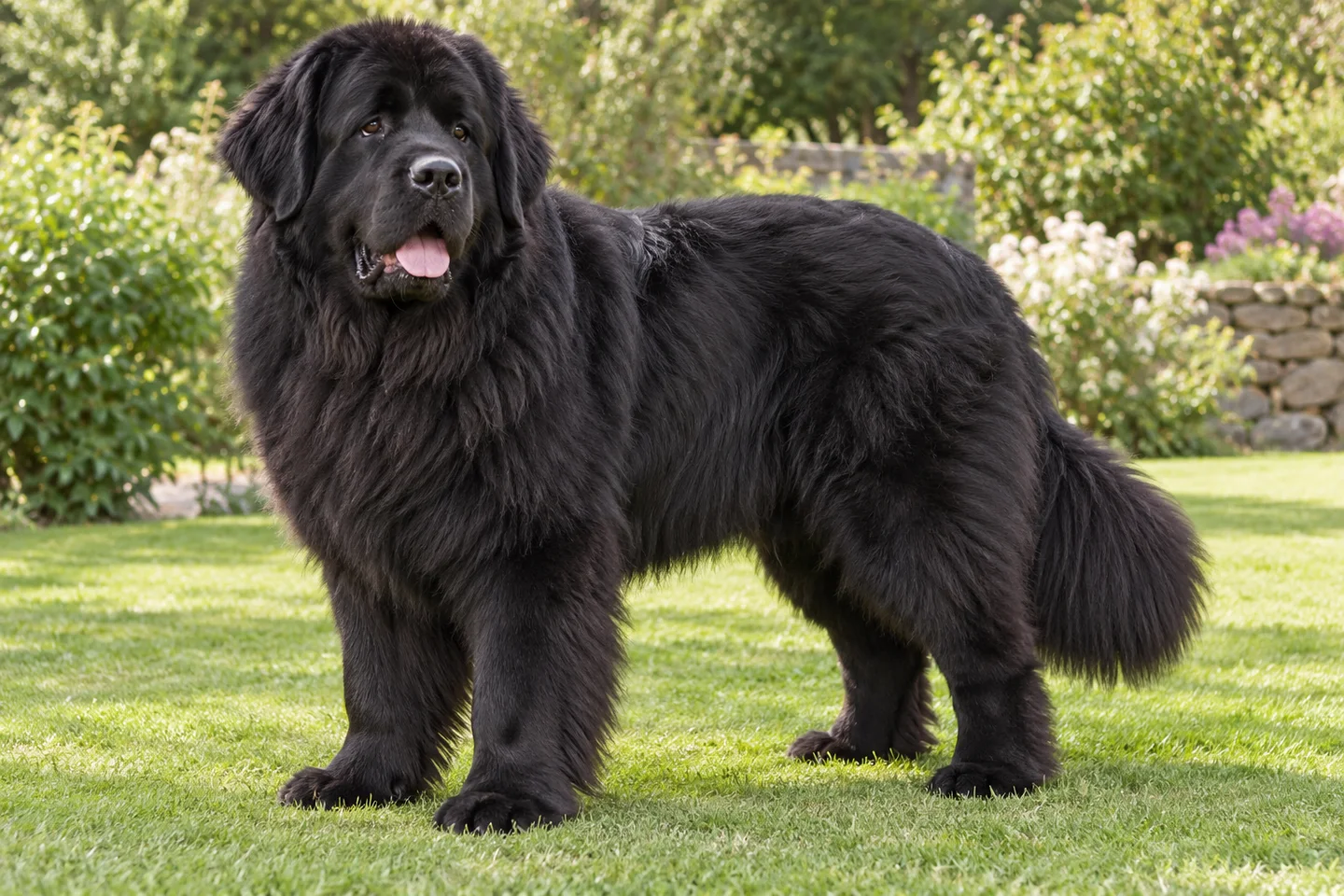
- Illustrated coat
- Black dense double coat
General information for owners. These articles have not been reviewed by a veterinarian. Medical decisions need your dog's history and an examination.
A Newfoundland in an ordinary home
The Newfoundland is a distinct Canadian breed with a powerful body and a substantial double coat. Its history includes water and load-pulling work, but a companion does not arrive trained for rescue or draft tasks. A home must provide teaching, suitable exercise, and safe arrangements for an animal that will occupy considerable space. Ask to meet adults before deciding how the breed fits your rooms, vehicle, and daily routine.
The practical details are easy to underestimate in a photograph. A wet dog needs somewhere to dry; a recovering giant may need assistance reaching the garden; a puppy accustomed to jumping up will become difficult to manage. Consider those ordinary situations before selecting coat color or accessories. Talk to people who maintain the breed at home, including how much coat care they perform themselves and which services they use. A gentle expression can be part of the attraction while remaining separate from the work required to keep the individual comfortable and safe.
Working history without rescue assumptions
The FCI describes the breed's development on Newfoundland and its use in demanding water and land work. This provides context for its physical build and working identity. It does not mean every dog is a confident swimmer or that an untrained pet can safely assist a person in difficulty. Water work involves instruction, equipment, conditions, and a handler who can make informed decisions.
If you are interested in a suitable organized activity, ask a breed club about experienced instruction and discuss your dog's fitness with the veterinarian. Begin with foundation cooperation on land. A dog that can wait, return, release an object, and settle while others work has useful skills before any specialist task begins. Avoid presenting work as a test of courage. Refusal may reflect confusion, unfamiliar conditions, or physical discomfort. For a companion home, ordinary walks and learning can be worthwhile without recreating a historical occupation. What matters is providing activity the individual can enjoy and recover from comfortably.
Adult size and a functional outline
The FCI gives average adult dimensions of about 71 cm and 68 kg for males, and 66 cm and 54 kg for females. These are averages, not instructions to maximize weight. The standard prioritizes overall soundness and proportion. A veterinarian should help assess growth, body condition, and muscle. An adult's substantial coat can conceal changes, so learn to evaluate the body by touch as well as using a scale.
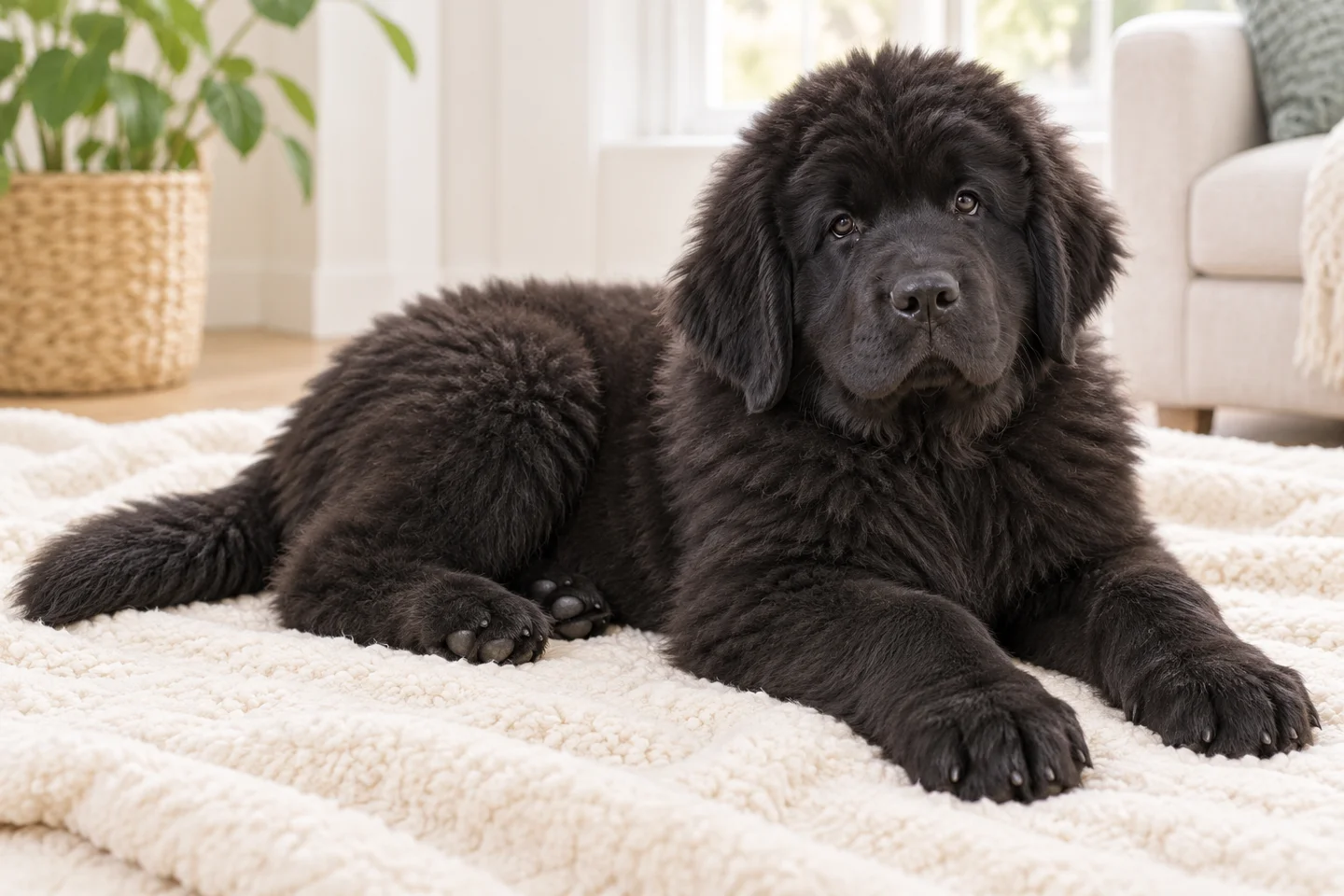
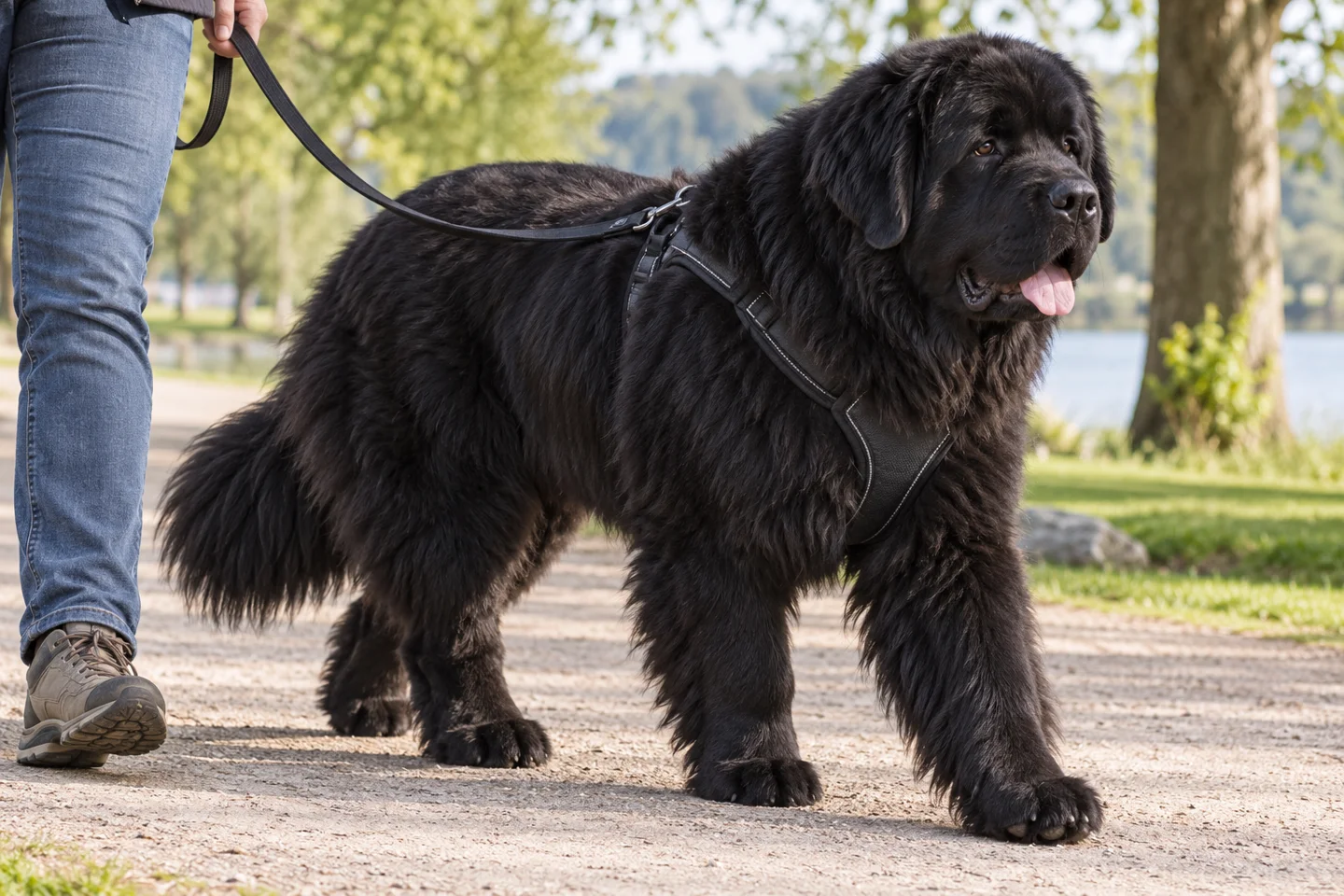
The breed has a broad head, relatively small drop ears, a strong frame, and a full tail. The coat is dense and water resistant. This guide's AI-generated illustrations select black; other colors are recognized under relevant standards. The images cannot establish the pedigree, health, or working ability of a real dog. Watch an actual dog rise, walk, and turn, and ask about prior treatment. A massive outline should not excuse visibly difficult movement or chronic discomfort. When choosing a puppy, discuss balanced development rather than selecting the largest animal chiefly for its early size.
Temperament and learning quiet routines
A Newfoundland may enjoy close family contact and be willing to participate in ordinary activities. Individual dogs still differ in confidence, excitement, and tolerance for handling. Teach the puppy where to rest while people cook, work, or receive visitors. Reward calm behavior before the dog learns that pushing into a person reliably produces attention. A giant dog needs a resting place that does not block the only route through a room.
Prepare for time apart and for care by another person. A dog that has always accompanied one owner may need gradual practice before a sudden absence. Ask a suitable carer to learn the dog's equipment and household routine while you are present. Persistent distress when alone should be assessed with veterinary and behavioral help. Adding another animal or providing a longer walk cannot be assumed to solve the cause. With a new adult, allow adjustment and observe sleep, appetite, and recovery over time before making firm claims about its settled personality from the first affectionate encounter.
Training for life at full size
Teach walking without dragging, waiting at an entrance, and entering a vehicle while the dog is still physically manageable. Reward the behavior in easy circumstances and gradually introduce distractions. A puppy greeting people with its feet on their chest is practicing an adult problem. Arrange greetings that reward paws remaining on the ground and prevent visitors from encouraging the opposite behavior. Consistency helps the dog understand the task.
Cooperative handling has equal value. Practice comfortable paw contact, standing on a nonslip surface, and brief examination around the mouth and ears. Introduce a ramp or other access aid before it becomes medically necessary. Use equipment appropriate to the individual and ask for professional fitting advice when uncertain. Choose a reward-based instructor who can explain how teaching and management work together. Physical strength is an unreliable long-term plan for a giant dog. Reliable routines reduce the number of situations in which someone must improvise when the animal is excited, frightened, or unable to move comfortably.
Check that a travel restraint or enclosure allows appropriate positioning and is used according to its instructions. Practice fastening it while the vehicle is parked. Open the exit only when the handler is ready, because an eager giant stepping down unexpectedly can pull someone off balance beside a road.
Exercise, growth, and recovery
A large frame needs regular suitable movement, not a life of inactivity. Adjust walks and play to age, fitness, and medical advice. Build duration progressively and avoid sudden strenuous demands on an unconditioned dog. During growth, ask the veterinarian about the intended activities rather than copying a fixed mileage target from another owner. Comfortable movement and recovery are more informative than enthusiasm alone.
Choose surfaces carefully and provide secure footing at home. Slippery floors and awkward steps can become difficult during illness or recovery even if the healthy dog usually manages them. In warm conditions, change timing and route, provide water, and ensure access to a cool resting place. A heavy coat does not make heat irrelevant. If the dog develops an altered gait, unusual fatigue, or reluctance to rise, seek assessment. Do not explain a functional change away as laziness. Keep a practical transport plan in case an animal of this size needs help reaching veterinary care.
Water safety and wet-dog care
Introduce water only under conditions you can manage safely. Let the dog approach suitable shallow access gradually, and avoid forcing it in to prove an instinct. Check currents, water quality, exit points, weather, and local restrictions. A dog that swims comfortably in one place may face a very different task in moving water or beside a steep bank. Appropriate flotation equipment and informed supervision can be valuable; they do not remove the need for judgment.
Never depend on the dog as the safety plan for a child or swimmer. People need their own suitable supervision and equipment. After swimming, inspect and dry the coat, especially where dense hair retains moisture. Check the ears and skin, and contact the veterinarian about persistent irritation. Stop the activity if the dog appears tired or uncomfortable even when it wants to continue retrieving. A successful outing includes a safe return and comfortable recovery. Photographing an impressive swim should remain secondary to the animal's actual condition and the handler's ability to intervene.
Aggression and taking warnings seriously
A reputation for gentleness does not guarantee that every Newfoundland tolerates every approach. Pain, fear, restraint, or access to a valued item can affect behavior. Watch for withdrawal, stillness, or warnings when someone reaches toward the dog. Stop and investigate rather than demanding that it accept more contact because of its breed. A large dog can injure a person even during a brief incident, so early attention matters.
Teach exchanges with safe objects and use barriers when the environment is too busy to manage. Avoid physical confrontations or repeated removal of food as a supposed test of trust. A bite history or repeated snapping warrants professional assessment and honest disclosure to carers. Describe what happened, including whether the dog could leave and which body part or object was involved. New handling reactions require a medical check. An individual plan may involve different routines and carefully taught equipment. The goal is an arrangement that reliably prevents another incident while addressing the cause, rather than a reassuring label attached to the dog.
Children and the scale of contact
Children can enjoy a Newfoundland while still needing adults to control the circumstances. A dog turning quickly, leaning, or moving its tail can knock a small child over. Teach contact at floor level with the dog free to leave, and avoid placing a child in a narrow space beside it. Riding, climbing on, or hanging around the neck is inappropriate even if the dog remains still.
Protect meals and sleep with a separate area when needed. Children should call an adult about a stolen object and never try to move a reluctant dog physically. Ask about the individual dog's previous experience with different ages. Comfort with familiar children does not establish comfort during a crowded party. Supervision means watching both the dog and child closely enough to intervene, not simply being elsewhere in the house. Use a barrier when attention is divided. A breed's affectionate reputation cannot create a nanny role, and children should never depend on the dog to supervise them near water or elsewhere.
Other pets and introductions with room
A Newfoundland's size affects every introduction. A smaller dog may be overwhelmed by friendly pursuit, and rough play can cause injury without hostile intent. Begin with handlers able to move apart and watch for the smaller animal's attempts to pause. Interrupt persistent following of a dog seeking shelter. Enjoying a parallel walk is a valid form of companionship even if loose wrestling is unsuitable.
At home, feed apart and provide separate beds during adjustment. An outdoor greeting does not establish how animals will respond to a chew or a favored place beside a person. Cats require protected routes and gradual exposure with separation available. Do not assume the dog is safe with every animal because it moves slowly or has a soft expression. Reward disengagement and prevent repeated chasing. If serious tension or conflict occurs, obtain advice before another shared-space trial. The household's physical layout should support the plan, including barriers strong and secure enough for the particular animals involved.
Grooming through a dense double coat
Separate the coat into sections and work gently enough to reach areas close to the skin. Pay attention behind the ears, beneath equipment, around the hindquarters, and in feathered areas where moisture and debris collect. A quick sweep over the outer hair can leave compacted material beneath it. Ask an experienced groomer to demonstrate tools and technique on the actual dog, especially as the puppy coat changes.
Drying deserves time and preparation. Introduce equipment sounds gradually and use a stable comfortable setup. Persistent dampness, odor, redness, or pain should prompt advice rather than increasingly vigorous home treatment. Severe mats may need professional removal. Include nails, teeth, and ear observation in the care plan. Do not insert instruments into the ear canal or force a painful mouth examination. Plan backup grooming help before your own schedule becomes difficult. A full coat can remain comfortable only when maintenance reaches the areas that are hidden in an attractive standing photograph.
Health testing and cardiac follow-up
The Newfoundland Club of America identifies hips, elbows, cardiologist heart assessment, and cystinuria testing among its breeding-stock recommendations. Obtain reports linked to the correct parents and discuss what they show. A routine wellness visit and a specialist assessment are different forms of evidence. Ask about the puppy's own examination and the follow-up advised as it develops, rather than relying solely on the parents' paperwork.
Subaortic stenosis is an important cardiac question in the breed. Cornell explains that the degree of narrowing affects clinical significance and care. If a murmur is found, follow the veterinarian's advice about specialist investigation and activity rather than assuming it is either harmless or a severe diagnosis. Keep the actual report and any recheck plan. Screening and family information help decisions but cannot guarantee every later outcome. If collapse, breathing difficulty, or another concerning change occurs, seek veterinary attention promptly and tell the clinic about previous cardiac findings. Do not let an old favorable summary prevent investigation of a new problem.
Cystinuria, feeding, and clinical prevention
Cystinuria affects the handling of cystine and can lead to urinary stones. The Newfoundland has a breed-relevant DNA screening recommendation, while the care of a dog with urinary signs requires clinical assessment. Straining with little or no urine needs urgent veterinary attention. Do not assume a dog is merely reluctant to toilet or wait for an advertised supplement to work. Provide the clinic with the dog's history and any genetic report.
If stones or cystinuria are diagnosed, follow an individual treatment and monitoring plan. Cornell describes several diagnostic and management considerations; the appropriate diet and follow-up depend on the case. Avoid prescribing a generic urinary diet independently. For routine feeding, use a complete life-stage-appropriate food and review body condition during growth and adulthood. Include rewards and chews in the total intake. Tell the veterinarian about supplements and persistent changes in appetite or drinking. A plan based on the whole diet and actual diagnosis is more useful than feeding advice inferred solely from the dog's size or pedigree.
Mixes, ownership costs, and dogsDating
A Newfoundland mix can have a different coat, frame, or temperament from the pictured dog. A crossbreed label cannot guarantee predictable size or health. Evaluate the individual and ask what is documented. Budget locally for food, grooming, preventive medication, transport, care during absences, and emergency treatment for a giant animal. Read insurance terms carefully, and arrange practical help if the dog becomes unable to walk. The resources needed extend well beyond the initial fee.
On dogsDating, describe the dog's actual pace and meeting preferences. Choose a wide public route, begin with space, and prevent a large friendly approach from overwhelming a smaller partner. Keep exact user coordinates and the household address private; approximate discovery and an agreed public landmark are sufficient to begin. Avoid images showing address labels or records. Finish if either animal remains uncomfortable despite an easier arrangement. A brief shared walk can provide useful information without progressing to loose play. Human agreement should support the observed dogs rather than setting an expectation that they must interact closely.
Sources and editorial notes
Sources checked October 22, 2026. Breed measurements describe reference ranges, not a diagnosis or an individual dog's ideal weight. Images are AI-generated breed illustrations and do not document a particular dog or health condition.
- AVSAB: Humane Dog Training Position Statement
- VCA Animal Hospitals: Food aggression in puppies
- Orthopedic Foundation for Animals: CHIC health screening programs
- VCA Animal Hospitals: Aggression toward unfamiliar dogs, diagnosis
- VCA Animal Hospitals: Grooming and coat care for your dog
- VCA Animal Hospitals: Ear infections in dogs (otitis externa)
- AAHA: Feeding plans for healthy, appropriate weight cats and dogs
- VCA Animal Hospitals: Heat stroke in dogs
- AVSAB: Puppy Socialization Position Statement
- VCA Animal Hospitals: Dog behavior problems, aggression toward children
- Newfoundland Club of America: health testing position statements
- Cornell University College of Veterinary Medicine: aortic and subaortic stenosis
- Cornell University College of Veterinary Medicine: cystinuria
- Fédération Cynologique Internationale: Newfoundland official breed standard
Keep getting to know dogs.
Read another guide or return to your dogsDating community.
Explore breed guidesBack to dogsDating