Norwegian Lundehund
A small Norwegian coastal breed whose care combines respectful handling of distinctive feet, secure exploration, and an informed digestive-health plan.
How these guides are researched and reviewed
- Origin
- Norway
- Adult height
- Males 35–38 cm; females 32–35 cm
- Adult weight reference
- Males about 7 kg; females about 6 kg
- Coat
- Dense red-to-fawn and white with variable dark tipping
General information for owners. These articles have not been reviewed by a veterinarian. Medical decisions need your dog's history and an examination.
A small dog with specific needs
A Norwegian Lundehund suits an owner willing to learn about the individual behind an unusual breed description. It is a small Norwegian Spitz with a working history on rocky coastal ground. Its distinctive feet and flexibility draw attention, but the everyday commitment includes ordinary training, companionship, and informed digestive-health care. Choose it because those responsibilities fit your life, rather than because you want to demonstrate an anatomical curiosity to visitors.
Spend time with adults and ask detailed questions about a proposed puppy or rescue. How does it respond to unfamiliar people, travel, household noise, and time away from its usual companion? What has its digestive history been, and which records will accompany it? A dog can be lively on a short visit while still needing careful support elsewhere. Make room for a gradual settling period, including a quiet sleeping area and a familiar feeding routine, before inviting everyone to meet it.
From puffin work to companion life
The Lundehund's background is puffin hunting on the Norwegian coast, where dogs entered narrow nesting places. Modern companion life should provide safe investigation without recreating dangerous cliff work. A description of historic purpose cannot establish that a pet can judge a steep drop, return from a wildlife pursuit, or tolerate rough handling. Keep wildlife protected and choose activities around the dog in front of you.
Consider what the household can offer on an uneventful weekday. A short exploratory walk, a food search suited to the diet, and quiet company may be more workable than occasional adventurous trips followed by long periods of inactivity. If you want a dog for a particular sport, discuss that goal with experienced owners and the veterinarian before purchase. Ask about training methods, facilities, and health limitations. A general impression of agility is a starting point for questions, not a performance guarantee.
Size and anatomy without party tricks
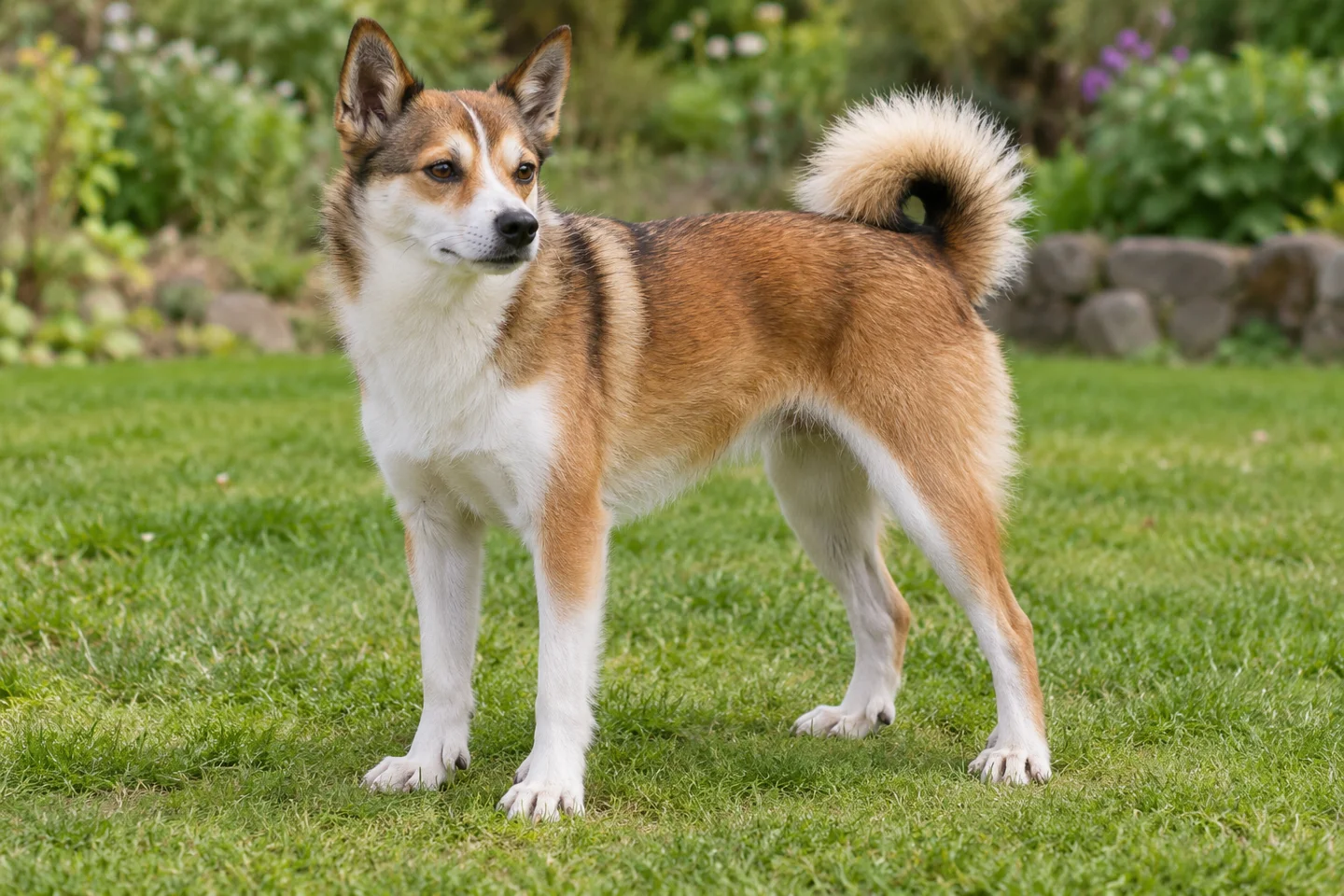
The FCI adult references are 35–38 cm and about 7 kg for males, and 32–35 cm and about 6 kg for females. It describes a light rectangular dog with erect mobile ears and at least six toes on each foot. Red or fawn coloring occurs with white and varying black-tipped hairs. Its unusual flexibility is a breed characteristic, not permission to bend the neck or limbs for a photograph.
Ask the veterinarian to show you the dog's feet and how to check every nail. Some toes may be easy to overlook during a quick trim. Watch natural movement on nonslip ground and report discomfort or an abrupt change. Do not dismiss a limp because an unusual stance appears in breed descriptions. A dog with distinctive anatomy still needs an individual examination when something changes. Well-fitting equipment and careful handling remain necessary even when the animal is light enough to carry.
Training that keeps the dog involved
Start with a small set of useful skills: coming toward the handler, waiting while a door opens, moving onto a resting mat, and accepting the harness. Reinforce each in an easy setting before adding an exciting location. If the dog turns away or becomes distracted, lower the difficulty rather than repeating a cue more loudly. Clear information and achievable rewards let both of you notice progress.
Choose rewards that fit medical advice if the dog has a prescribed diet. Part of the daily food allowance may work, or the reward may be access to a safe sniffing area. Avoid letting several family members offer different rich treats during the same lesson. Keep sessions brief and finish while the dog remains interested. When a skill fails, record what changed in the setting. A dog that responds in the kitchen may need several easier rehearsals before doing the same thing beside a barking dog or a moving bicycle.
Settling alone and household routines
Give a newly arrived Lundehund predictable opportunities to toilet after waking, eating, and active play. Reward the desired result outside and clean indoor accidents without confrontation. Keep a simple record of timing if progress is inconsistent. An abrupt change in a previously established routine deserves veterinary discussion, especially alongside digestive signs. Separating a training difficulty from a medical change requires observation rather than assumptions about a supposedly stubborn breed.
Practice brief periods apart while another adult can monitor whether the dog remains comfortable. Start with an easy arrangement, such as resting behind a nearby barrier with an appropriate activity. Build duration only when the dog can settle. Pacing, prolonged vocalization, escape attempts, or inability to recover call for a revised plan. Arrange company for absences beyond the dog's current capacity while seeking help. A second dog should not be acquired as an automatic solution; it introduces another animal's needs without necessarily resolving distress linked to human separation.
Exercise that provides safe investigation
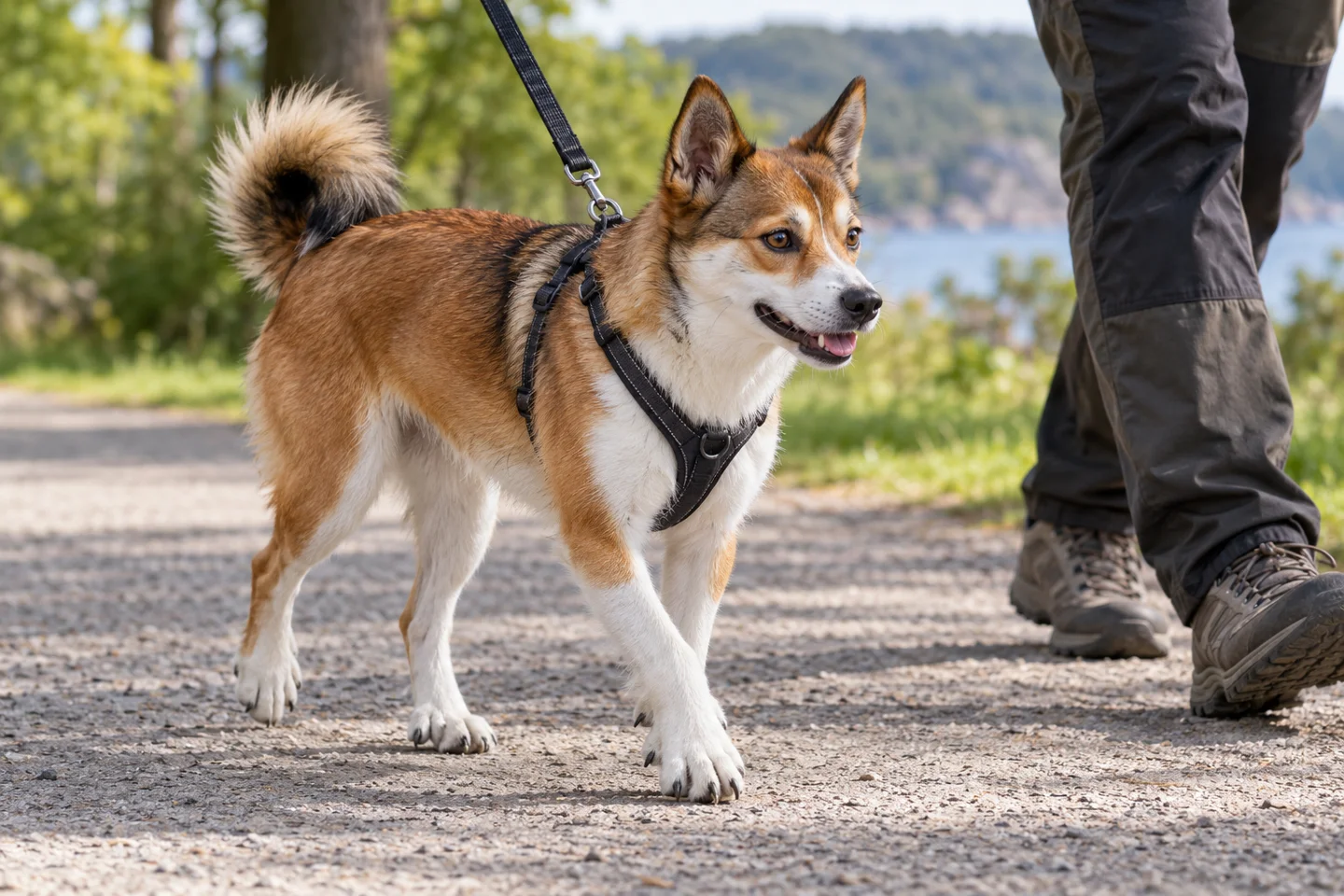
Use walks to offer controlled exploration rather than simply accumulating distance. Choose secure paths and allow time to investigate scent where wildlife and local rules permit. A long line can provide room on suitable ground, but it needs careful handling away from roads and tangling hazards. Practice recall in enclosed areas before relying on it near distractions. Historic coastal work does not provide automatic road sense.
Build activity gradually and adjust it when health or weather changes. A dog recovering from digestive illness may need a different routine from a healthy adult, even if both appear enthusiastic at the door. Ask the veterinary team what recovery should look like and which changes warrant a call. In warm weather provide water and a cooler route, and watch recovery after activity. Indoor searches, simple training, and rest can help on days when a long outing would make the dog less comfortable.
Children and respectful contact
The Lundehund's size makes it easy for a child to reach and lift, which increases the need for adult guidance. Teach children to call the dog toward them and accept when it stays away. Carrying it around, testing its flexibility, or pulling a foot forward to count toes are inappropriate games. The dog needs a protected place where children do not follow it.
Set expectations before visiting children arrive. Keep snacks and toys that might create conflict separate from the dog's resources, and arrange an adult to supervise contact closely. If adults need to cook, answer the door, or manage an argument, use comfortable physical separation. A quiet dog may be tolerating an encounter rather than enjoying it. End contact when it freezes, turns away repeatedly, or seeks escape. Children should never be responsible for taking a guarded item or correcting a dog that has shown defensive behavior.
Aggression and the information behind a reaction
A Lundehund can react defensively, guard something it values, or be uncomfortable around another animal. Assess the circumstances instead of treating small size as evidence that the problem is minor. Note the distance, handling, resource, and available escape route when a reaction occurs. Then prevent a repeat while you seek advice. Visitors should not deliberately approach again to show that the dog has nothing to fear.
Ask for veterinary assessment when sensitivity appears suddenly, particularly if touch, appetite, movement, or sleep has also changed. Medical discomfort and behavioral learning can both matter. For persistent reactions, a qualified reward-based professional can help establish a management plan and workable training steps. Give that person an accurate history, including bites and near misses. Physical barriers, sensible distance, and clear instructions for carers protect everyone while the plan develops. Do not punish warning signals and assume the underlying concern has disappeared because the dog became quiet.
Grooming and every toenail
The Lundehund has a dense coat with a softer undercoat. Brush regularly enough to remove loose hair and check the skin, adjusting the routine when shedding increases. Look under the harness, around the ears, and between the toes after outdoor activity. Dry damp areas and remove trapped plant material without pulling against sore skin. A persistent smell or irritated patch needs attention rather than repeated cosmetic washing.
Make foot care methodical. Check each toe and nail in a consistent order, stopping before the dog becomes distressed. Ask a groomer or veterinary nurse for help if you cannot identify what needs trimming. Include gentle mouth and ear handling in practice, with rewards suited to the dog's diet. Anatomical interest must never become an excuse for prolonged restraint. If handling changes unexpectedly from easy to difficult, consider discomfort and seek examination before trying to hold the dog more firmly.
Health: digestive disease deserves a plan
Digestive health is a central ownership discussion for the Lundehund. Veterinary references describe breed-associated chronic enteropathy, and intestinal lymphangiectasia is an important concern. Abnormal intestinal lymphatic vessels can contribute to protein loss. Persistent loose stools, vomiting, altered appetite, or weight loss deserve investigation. Symptoms alone do not identify the cause, and a dog need not show every textbook sign before an appointment is warranted.
Ask the clinic how to prepare for the consultation. A dated symptom record, weight changes, diet labels, and an accurate list of supplements and medicines help avoid confusion. Take previous laboratory and clinical reports rather than a secondhand diagnosis. Protein-losing enteropathy describes a clinical problem with several possible causes; it is not a single treatment instruction. Do not select medication or a restrictive diet from another owner's experience. The examination and investigation determine which explanations need attention and what monitoring will be useful for your dog.
Daily care during digestive treatment
If the veterinarian prescribes a feeding plan, ask for instructions that everyone caring for the dog can follow. Clarify the food, amount, feeding schedule, permissible rewards, and what to do after an accidental extra meal. Put that information beside the dog's supplies. Several apparently small additions from different people can make it impossible to understand whether the agreed plan is helping.
Agree on a follow-up schedule and concrete reasons to contact the clinic sooner. Track changes consistently rather than changing several products whenever a stool looks different. A dog that becomes weak, cannot keep water down, or deteriorates rapidly needs prompt veterinary contact. Keep ordinary enrichment available in forms compatible with the plan, such as a short exploration or a calm training exercise using permitted food. Illness management should support comfortable daily life while the veterinary team evaluates the response, rather than become an unstructured sequence of internet remedies.
Research and what it cannot yet promise
The Agria and Swedish Kennel Club research fund describes an investigation into whether capsule endoscopy can detect intestinal changes compatible with lymphangiectasia in clinically healthy Lundehunds. That is a research question. It should not be advertised as proof that a routine negative examination guarantees lifelong digestive health, or that a particular puppy is protected. Ask which test was actually performed and what the clinician says the result means.
When a breeder mentions participation in research, welcome the openness while requesting the practical documents separately. Research enrolment, a clinical report, and a registration certificate answer different questions. Keep a copy of relevant findings and ask whether future information will be shared with owners. For your own dog, avoid unnecessary invasive investigation solely to obtain a reassuring label. Discuss benefits, limits, and alternatives with the veterinary team. Published work can improve the questions an owner asks without replacing decisions based on an individual patient's condition.
Mixes and the managed outcross project
The Norwegian Kennel Club's programme effective January 2026 supports a managed Lundehund project to increase genetic variation. It uses approved combinations involving Norwegian Buhund, Icelandic Sheepdog, and Norrbottenspets. Project breeding has specific health and approval requirements, and the programme identifies reducing intestinal lymphangiectasia as a goal. This is an organized conservation and health effort; it does not establish that any casually advertised cross has equivalent oversight or guaranteed health.
If offered a project descendant, ask for its exact generation, registration, approvals, and accompanying health records. Have the responsible organization explain its status. For other mixes, assess both known ancestries and the individual dog's needs without predicting a precise midpoint temperament. A companion with uncertain parentage still deserves full clinical care and practical training. The relevant distinction for an owner is what is documented and observed, including how future health information will be communicated, rather than whether a label sounds especially rare.
Costs, records, and help when you are away
Before committing, ask local veterinary practices about routine care, access to referral support, and emergency provision. Discuss insurance exclusions and any known history before assuming a digestive condition will be covered. Set aside resources for follow-up and appropriate food if needed. Quoting one universal ownership price would conceal substantial differences between regions and individual medical needs. Include travel and time away from work in your own estimate.
Introduce another reliable adult to the care routine while the dog is comfortable. Demonstrate equipment, feeding instructions, and safe handling instead of handing over a bag with a verbal summary at departure. Provide clinic contacts and authorization arrangements for urgent care. If the dog is under treatment, confirm that a boarding service can follow the plan exactly and communicate changes promptly. A short trial stay can reveal practical difficulties before a longer absence. Keep copies of records somewhere the temporary carer can reach without accessing your private accounts.
dogsDating for a calm first walk
Explain your Lundehund's comfort around other dogs before arranging a dogsDating meeting. Mention dietary restrictions so the other owner knows not to offer treats. Share an approximate area while keeping exact home coordinates and your address private. Choose a quiet public route with room to walk apart and an easy way to leave. A noisy enclosed dog park is a poor place to discover that either dog prefers distance.
Begin moving in the same direction with separate handlers. Allow brief pauses for sniffing without pulling the dogs together for a photograph. If either needs more space, make that adjustment immediately. A short calm outing gives both owners information for a later decision. Discuss what worked afterward, including the length, pace, and distance between dogs. The next meeting can repeat the same simple arrangement. Familiarity does not require escalation into wrestling, shared food, or a visit inside either dog's home.
Sources and editorial notes
Sources checked October 22, 2026. Breed measurements describe reference ranges, not a diagnosis or an individual dog's ideal weight. Images are AI-generated breed illustrations and do not document a particular dog or health condition.
- AVSAB: Humane Dog Training Position Statement
- VCA Animal Hospitals: Food aggression in puppies
- VCA Animal Hospitals: Aggression toward unfamiliar dogs, diagnosis
- VCA Animal Hospitals: Grooming and coat care for your dog
- AAHA: Feeding plans for healthy, appropriate weight cats and dogs
- VCA Animal Hospitals: Heat stroke in dogs
- AVSAB: Puppy Socialization Position Statement
- VCA Animal Hospitals: Dog behavior problems, aggression toward children
- FCI standard 265: Norwegian Lundehund anatomy, adult measurements and coat
- Norwegian Kennel Club: Norwegian Lundehund breeding programme effective January 2026
- Agria and Swedish Kennel Club research fund: intestinal lymphangiectasia investigation in Lundehunds
- MSD Veterinary Manual: chronic enteropathies, protein loss and diagnostic distinctions
- Merck Veterinary Manual: malabsorption syndromes, clinical findings and investigation
- American Kennel Club: Norwegian Lundehund background and original work
Keep getting to know dogs.
Read another guide or return to your dogsDating community.
Explore breed guidesBack to dogsDating