Nova Scotia Duck Tolling Retriever
The Toller is a medium-sized Canadian retriever developed for an unusual waterfowl-hunting task. Its red coat should not distract from the need for purposeful activity, controlled retrieving, safe water access, and carefully interpreted health records.
How these guides are researched and reviewed
- Origin
- Canada
- Adult standard size
- Males 48–51 cm/20–23 kg; females 45–48 cm/17–20 kg
- Illustrated coat
- Orange-red with white markings
General information for owners. These articles have not been reviewed by a veterinarian. Medical decisions need your dog's history and an examination.
A Toller is a distinct retriever
The Nova Scotia Duck Tolling Retriever is often called the Toller. It is a separate Canadian breed, rather than a miniature Golden Retriever. Its medium frame and red coat can make it appealing to people seeking an active dog of manageable dimensions, but physical size says little about the amount of teaching and planning an individual needs. Ask about the actual parents, the source's priorities, and previous dogs living in homes similar to yours.
The word retriever should also lead to questions instead of assumptions. Does this dog enjoy carrying objects, become intensely excited when a toy appears, or struggle to pause a game? What happens after the outing, during grooming, or when a familiar person leaves? Meet adults outside a single training demonstration. A dog able to perform an impressive task still needs a suitable ordinary routine. An informed placement considers rest, medical care, other pets, and the owner's quieter days alongside opportunities for activity and learning.
What tolling means
The breed's name refers to luring waterfowl. The FCI account describes a dog playing and moving along the shore under the hunter's direction, attracting the birds' attention before later retrieving. This is a specific working history. It does not mean a companion should be encouraged to chase wildlife in public spaces or that every puppy comes with a trained retrieve and reliable control around water.
A modern owner can provide safe tasks without recreating hunting. Teach picking up an appropriate object, returning toward the handler, and releasing it voluntarily. Work on waiting and the end of the exercise as carefully as the exciting part. If you want organized retrieving or another sport, seek instruction suited to the individual and discuss physical demands with the veterinarian. Avoid making every walk a repeated throwing session. A varied routine can use the dog's attention while preserving ordinary exploration and recovery, and it makes care more manageable when weather or health temporarily changes the available activities.
Adult dimensions and the red coat
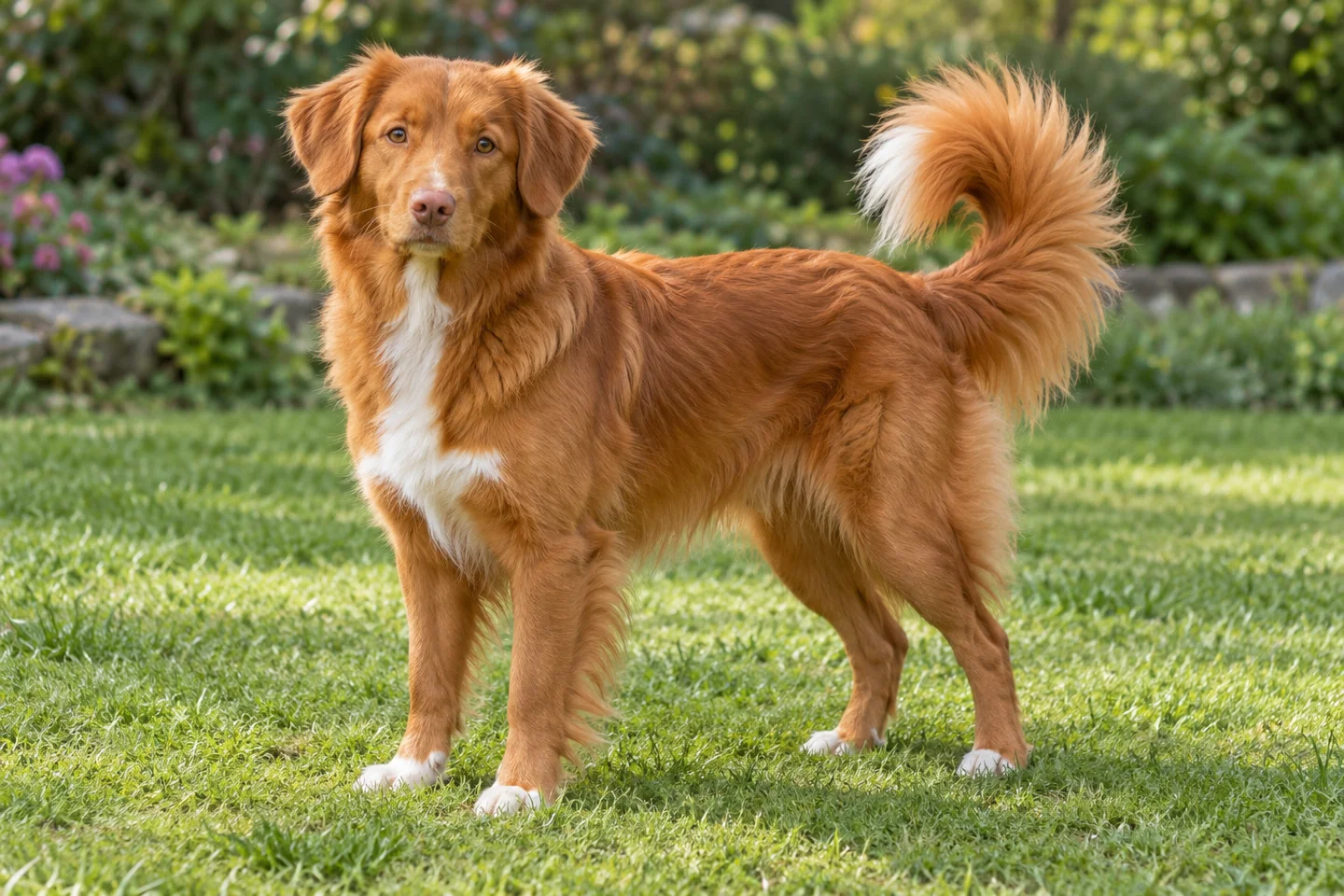
The FCI ideal heights for dogs over eighteen months are 48–51 cm for males and 45–48 cm for females, with a stated allowance around those ideals. Its proportional weight guidelines are 20–23 kg for adult males and 17–20 kg for females. These are conformation references, not targets for forcing a growing puppy to gain or lose weight. Ask the veterinarian to assess frame, muscle, and condition.
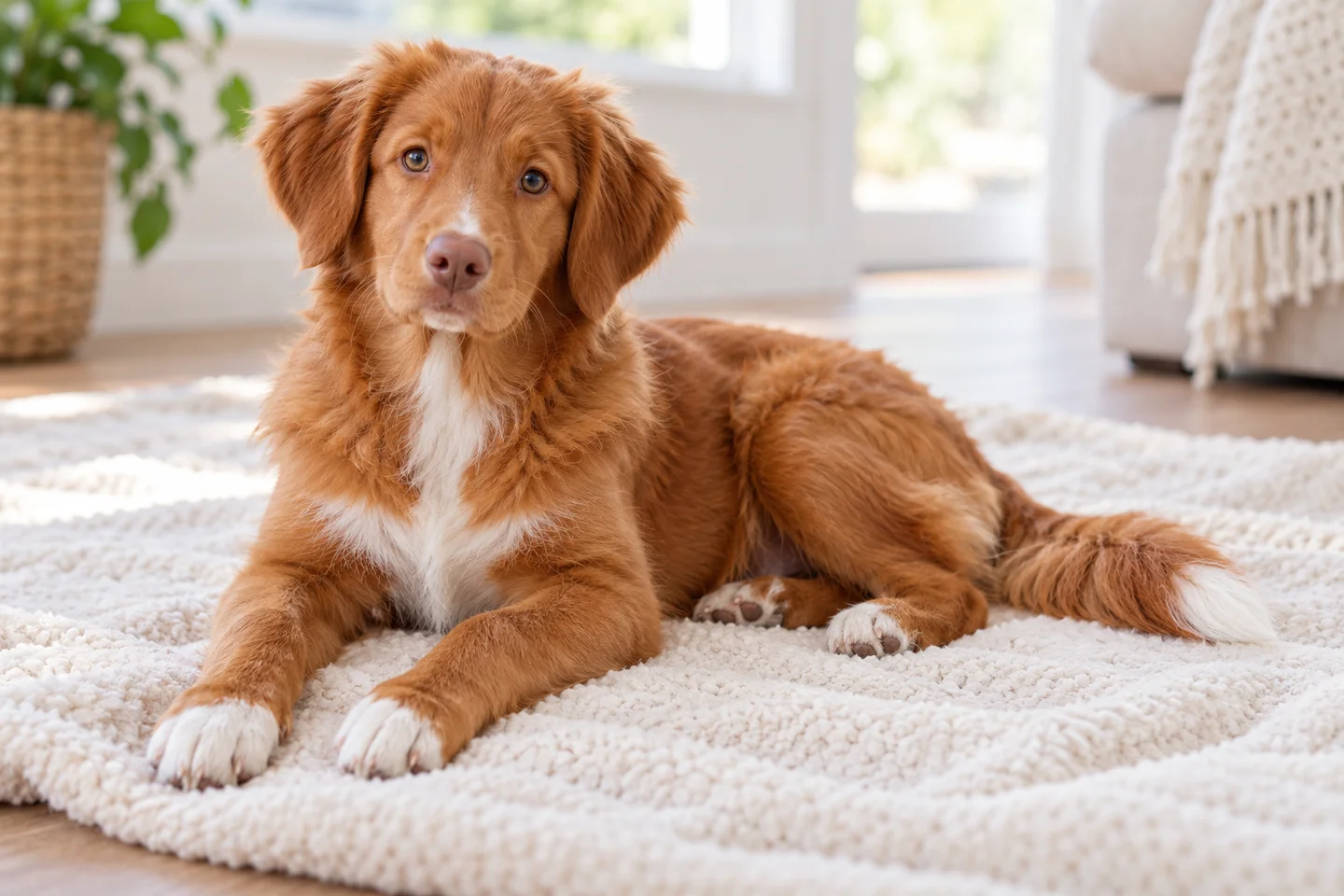
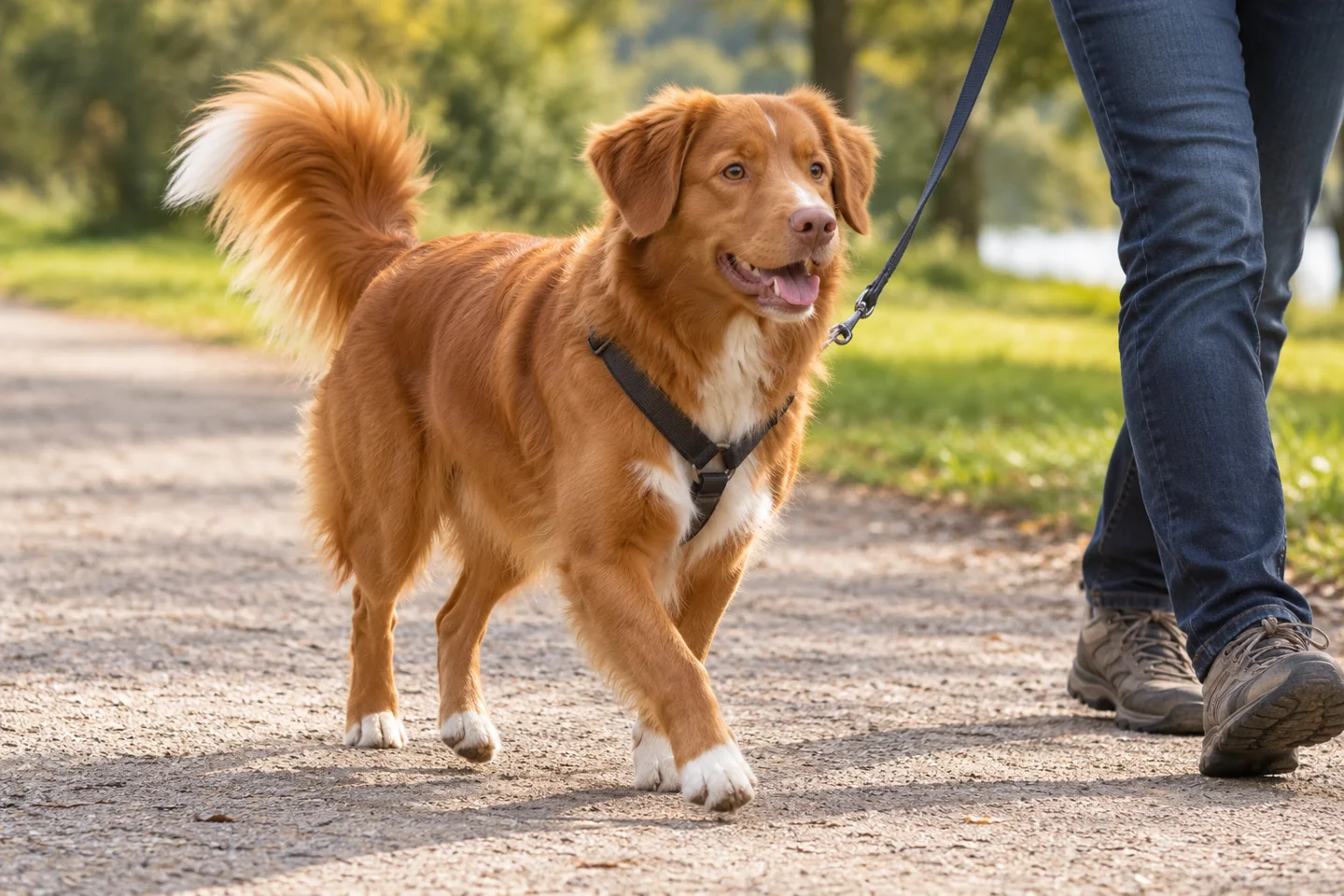
The coat is medium length, with a dense undercoat and feathering. Red and orange shades occur, often with white markings. This guide's AI-generated illustrations select orange-red with white on the chest, toes, and tail tip, natural folded ears, and a full feathered tail. They cannot establish pedigree or clinical health in a real animal. Observe actual movement and ask about care records. A particularly appealing color pattern or expression should not outweigh evidence about comfort, handling, and whether the dog can cope with the home you intend to provide.
Training retrieving games that have an ending
A retrieve is a sequence of skills. Start with an appropriate object and reward interest, carrying, returning, and release in manageable parts. Avoid repeatedly grabbing from the mouth or turning every item into a chase. A reliable exchange makes ordinary life easier when the dog finds something you did not intend it to carry. Secure medication, packaging, and small dangerous objects to reduce the need for urgent intervention.
Teach waiting before a throw and a clear finish afterward. Repeated high-speed pursuit can become difficult to interrupt, even when the dog remains eager. Vary the task with searching, calm walking, and rest. Ask a reward-based instructor for help if the sight of a toy consistently produces frantic behavior. The solution should consider arousal, task difficulty, and physical condition, rather than simply adding more throws to tire the dog. If you use a medical diet, discuss suitable rewards with the vet so teaching remains compatible with care. Family members should use the same release and finish routines to avoid contradictory information.
Inspect retrieving objects for damage and choose a size and material appropriate to the dog. Put broken toys away immediately and supervise unfamiliar equipment. A toy that worked well for another retriever is still a separate safety decision for this individual.
Temperament beyond the activity video
An individual Toller may be playful and ready to work while taking time to assess unfamiliar people or settings. Let the dog choose whether to approach a visitor, and reward comfortable disengagement. Being a retriever does not create an obligation to greet everyone. Ask a prospective source how its adults behave in ordinary public places, not only in familiar training work. A short successful meeting tells you something useful without establishing a complete personality profile.
At home, teach relaxed pauses and protect sleep. A comfortable resting place away from the busiest entrance can make it easier to stop monitoring activity. Prepare manageable absences and care by another person. Persistent distress when alone deserves veterinary and behavioral assessment; another dog or a longer exercise session cannot be assumed to address the cause. For an adult changing homes, allow adjustment and watch recovery across several contexts. A dog can need both meaningful engagement and a less demanding environment, so avoid treating every unsettled response as proof that more stimulation is required.
House training also needs a predictable plan. Take a puppy to the chosen place after waking and other relevant routine changes, supervise indoors, and reward successful toileting. Avoid punishment for accidents, which gives little useful information about where to go. An adult changing homes may need a refresher even when previously reliable. A sudden change in an established dog deserves a medical conversation as well as attention to schedule. Record frequency and any apparent discomfort so the clinic can distinguish a household problem from a possible health concern.
Exercise and physical preparation
Build activity from the dog's current fitness, age, and health. A young dog learning coordination needs a different plan from a conditioned adult. Discuss repetitive jumping, sustained running, and other demanding tasks with the veterinary team when appropriate. A varied walk with opportunities to smell can complement structured work. The aim is comfortable function and recovery, rather than a daily contest to see how much exercise the dog can absorb.
Check ground conditions before running or retrieving. Slippery landings, hidden holes, and abrupt turns can change the demands of a familiar game. In warm weather, choose cooler times and carry water. Notice changes in stride, willingness, and recovery afterward. A dog keen to continue can still be sore or fatigued. Seek assessment if familiar activity becomes unusually difficult. During restricted exercise, obtain advice about suitable quiet tasks, and explain the limits to every carer. Indoor games should not quietly reintroduce the same physical demands the medical plan is intended to avoid.
Water safety belongs to the handler
A working water background does not guarantee that every dog is ready for every body of water. Introduce safe access gradually and consider current, temperature, water quality, exit points, and local rules. Do not throw an object beyond a safe distance merely to encourage confidence. Appropriate flotation equipment can support a plan, but it does not replace informed supervision or a practical way to retrieve a dog in difficulty.
Never depend on the animal to supervise a child or provide a swimmer's rescue plan. People need their own suitable precautions. Stop when the dog is tired or conditions change, even if it remains eager to retrieve. After swimming, inspect and dry the coat, ears, and skin appropriately. Contact the veterinarian about persistent irritation. Plan the journey home so the dog can rest securely without remaining overheated or trapped in damp equipment. A good outing includes a safe return and comfortable recovery. An impressive photograph of a long swim gives little information about those less visible parts of care.
Decide who watches the dog while equipment is packed and people change clothing. The end of a swim can be a vulnerable moment if the lead is removed before the travel enclosure is ready. Keep drinking water available and avoid treating access to a lake or sea as a substitute. Before visiting a new location, ask about hazards and restrictions, and be willing to choose an ordinary walk instead when you cannot establish a safe exit or suitable water conditions.
Aggression and pressure around valued items
A friendly reputation does not rule out discomfort around handling, food, toys, or other dogs. Watch the individual's posture and attempts to withdraw. If it becomes still, warns, or snaps when someone reaches toward an item, stop and change the setup. Practice exchanges in easy situations and use separation during meals or valuable chews when needed. Repeatedly taking objects to prove control can create unnecessary conflict.
New handling reactions require consideration of pain and an individual veterinary examination. If a bite has occurred, disclose the history to carers accurately and seek qualified help. Explain the circumstances and whether the dog could leave. Avoid physical confrontation or forcing a visitor closer as a test. Reliable barriers and a changed routine can protect people while assessment and teaching proceed. No breed profile can certify an individual's safety, and sporting ability does not explain every reaction. The useful question is what happens in this context and what practical arrangement prevents it from becoming another incident.
Children and games without chasing people
Adults should guide children toward activities with clear rules, such as a familiar cue or a simple search. Avoid games where the dog pursues the child or repeatedly leaps toward hands. A child should invite contact, allow the dog to leave, and call an adult about a stolen object. Meals and sleep need protection. The dog's willingness to play does not establish tolerance for hugging, carrying, or climbing.
Ask about the actual ages and situations the individual has experienced. A quiet encounter with an older child provides different information from life with a toddler or a noisy visiting group. Use barriers whenever direct supervision is impractical. Watch for repeated avoidance, not only overt warnings, and finish before either participant becomes overwhelmed. A comfortable relationship can develop through suitable experiences over time. If fear or warnings recur, change the daily setup and seek advice. The dog should not be used as a forced confidence exercise, and children should never depend on it for supervision beside water or elsewhere.
Grooming, ears, and cooperative care
Check the coat beneath the surface, especially feathered areas, behind the ears, and places where equipment rubs. Work gently through tangles with appropriate tools and ask an experienced groomer for a demonstration if needed. Dry the dog after wet activity and inspect skin and paws. A water-repellent coat still needs care, and persistent dampness or irritation should not be dismissed as an inevitable part of an active life.
Introduce a comfortable stand, brief paw contact, and handling near the face in small rewarded steps. Nail care and dental brushing are separate learned tasks. Observe the ears externally and seek veterinary advice about odor, discharge, or repeated head shaking. Do not insert implements into the canal or select treatment from another dog's experience. If a previously manageable procedure becomes difficult, consider discomfort. Tell the clinic or groomer about concerns before the appointment begins. Necessary care may need a professional plan while cooperative training develops, rather than repeated restraint after the dog is already distressed.
Health screening and interpreting JADD results
Current AKC recommendations list hip, cardiac, and specialist eye evaluations, alongside specific genetic tests including PRA-prcd, cleft palate and syndactyly, and juvenile Addison's disease. Ask for the named reports and confirm the current program. Buff color testing also appears in the list, but a color result answers a different question from clinical health. A broad label such as fully DNA cleared is insufficient without the conditions and results behind it.
UC Davis describes the JADD-associated variant in Tollers as having incomplete penetrance: the relevant genotype does not produce disease in every dog that carries two copies. This test concerns a particular juvenile form and cannot serve as clearance from every cause of adrenal illness. Discuss interpretation with the veterinarian and retain the laboratory report. If the dog becomes unwell, clinical assessment takes priority over a reassuring summary of past tests. Ask a breeder how later diagnoses in relatives are communicated, and keep that information available to the treating clinic rather than treating the purchase paperwork as the final health record.
Nutrition, clinical changes, and finding a source
Use a complete diet appropriate to life stage and review condition as activity changes. Training rewards count toward intake, and several people can unintentionally provide far more than the recorded meal. Tell the veterinarian about supplements, chews, and any medical diet. Persistent changes in appetite, thirst, weight, or usual recovery deserve attention. Avoid repeatedly adding richer food or a new supplement without understanding the reason for the change.
A source should discuss health records, social preferences, and support after placement in concrete terms. Ask who responds to a concern, how information about relatives is updated, and what happens if the placement cannot continue. For an adult rescue, detailed foster observations can be useful even when pedigree information is missing. For a puppy, meet appropriate adults and ask about previous companion placements. Rarity or a waiting list is a poor reason to accept vague documentation. The practical match involves the dog's needs, the home's routine, and the help available when ordinary plans change, not only enthusiasm at the first meeting.
Mixes, ownership costs, and dogsDating
A Toller mix may have different size, coat, and behavior from a pictured parent. A crossbreed name cannot guarantee a predictable outcome or improved health. Evaluate the individual and ask what is documented. Budget locally for preventive visits, training, grooming help, boarding, transport, and emergencies, including possible specialist follow-up. Read insurance exclusions and continuing-condition terms. Arrange practical backup for periods of illness or restricted activity as well as holidays.
On dogsDating, explain the dog's preferred pace and whether toys complicate meetings. Choose a wide public route and begin with space, allowing both handlers to manage distance. Keep exact user coordinates and the home address private; approximate discovery and a public landmark are enough to plan. Review images for identifying information. If either dog remains uncomfortable despite an easier arrangement, finish calmly. A short shared walk can provide useful information without loose retrieving or play. The dogs' observed behavior should determine the next step, even when the people hoped to find energetic training partners.
Sources and editorial notes
Sources checked October 22, 2026. Breed measurements describe reference ranges, not a diagnosis or an individual dog's ideal weight. Images are AI-generated breed illustrations and do not document a particular dog or health condition.
- AVSAB: Humane Dog Training Position Statement
- VCA Animal Hospitals: Food aggression in puppies
- Orthopedic Foundation for Animals: CHIC health screening programs
- VCA Animal Hospitals: Aggression toward unfamiliar dogs, diagnosis
- VCA Animal Hospitals: Grooming and coat care for your dog
- VCA Animal Hospitals: Ear infections in dogs (otitis externa)
- AAHA: Feeding plans for healthy, appropriate weight cats and dogs
- VCA Animal Hospitals: Heat stroke in dogs
- AVSAB: Puppy Socialization Position Statement
- VCA Animal Hospitals: Dog behavior problems, aggression toward children
- American Kennel Club: Sporting group health testing requirements
- UC Davis Veterinary Genetics Laboratory: juvenile Addison’s disease in Tollers
- Nova Scotia Duck Tolling Retriever Club of Canada: health resources
- Fédération Cynologique Internationale: Nova Scotia Duck Tolling Retriever official breed standard
Keep getting to know dogs.
Read another guide or return to your dogsDating community.
Explore breed guidesBack to dogsDating