Old Danish Pointer
The Old Danish Pointer is a substantial Danish gundog with a white-and-brown short coat. A companion placement should account for field interest, physical conditioning, cooperative handling, and verified hip and breed-specific PRA records.
How these guides are researched and reviewed
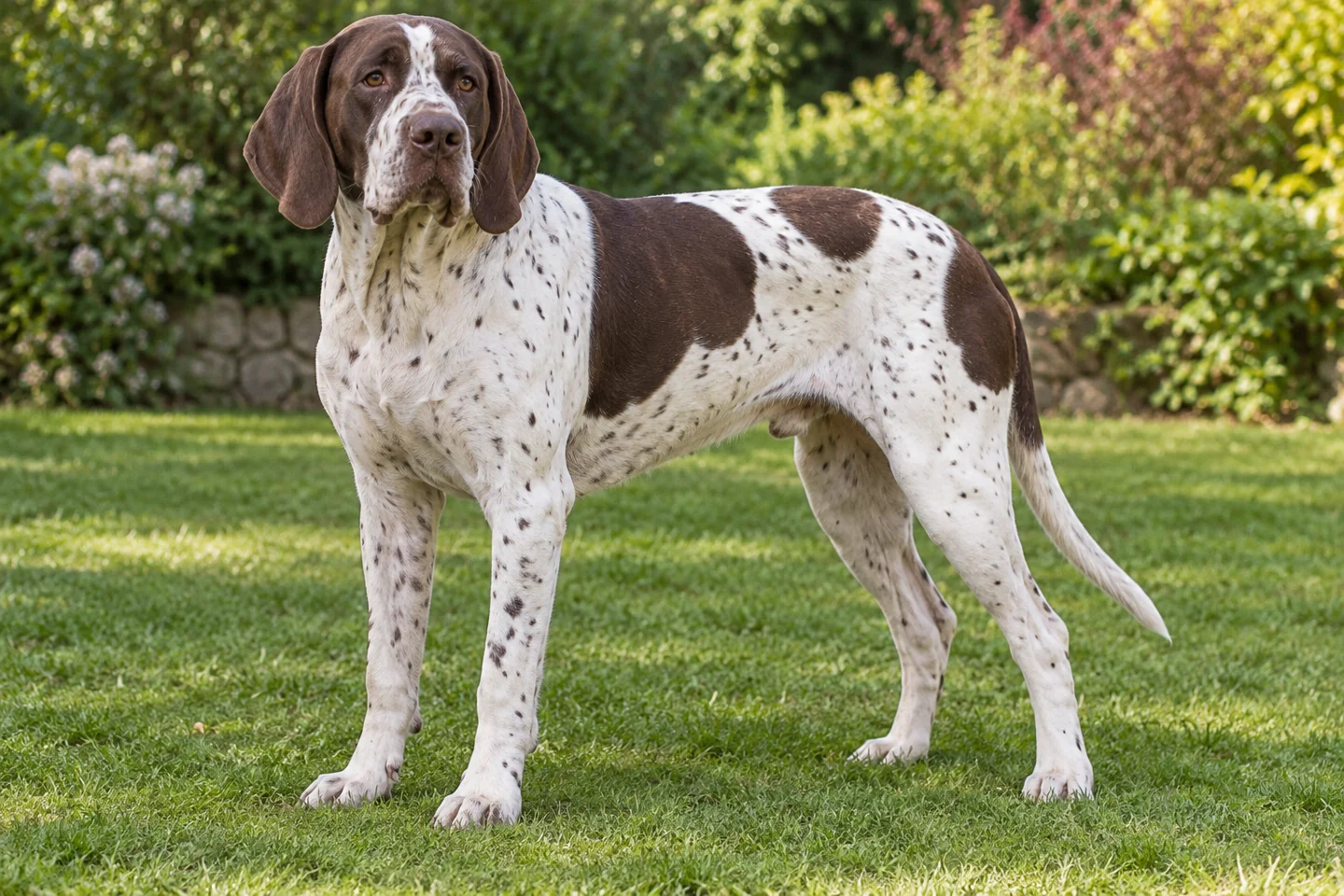
- Origin
- Denmark
- Adult standard size
- Males 54–60 cm/30–35 kg; females 50–56 cm/26–31 kg
- Illustrated coat
- White with brown patches and flecks
General information for owners. These articles have not been reviewed by a veterinarian. Medical decisions need your dog's history and an examination.
Names and the dog this guide covers
The Old Danish Pointer is also called the Old Danish Pointing Dog and Gammel Dansk Hønsehund. These names refer to the same Danish breed. It is distinct from the German Shorthaired Pointer and from the Old Danish farm-dog labels sometimes used loosely in conversation. Ask which registered identity a source means and check the documents attached to a puppy's parents. A white-and-brown short coat alone cannot establish ancestry.
The breed's substantial build and gundog role matter when choosing a companion. Consider the walking routine, secure outdoor access, and handling help your household can provide. A quiet-looking dog in a photograph may become absorbed in birds or scent during a walk. Ask about the individual's previous life and observe it outside a posed meeting. For an adult rescue, confirmed behavior can be valuable even when pedigree is uncertain. Keep those two questions separate rather than allowing a confident visual label to replace information about the dog you would actually bring home.
A pointing dog's history and a modern task
The FCI account traces the breed's development in Denmark to the early eighteenth century and describes a pointing dog that maintains contact with its hunter. That historical role provides context for a purposeful search and interest in birds. It does not establish trained control in a modern puppy or make unrestricted access to wildlife appropriate. A companion still needs clear teaching and practical boundaries.
Ask a breeder what the parents do and how previous dogs have managed in non-hunting homes. Field performance is useful evidence for some purposes, but it cannot answer every question about indoor life, time alone, or interactions with children. If you want to pursue a suitable organized activity, find informed instruction and discuss physical demands with the veterinarian. Ordinary learning and safe search games can also provide engagement. The essential issue is whether the daily routine meets the individual dog's needs, including the periods between tasks when the owner is working, unwell, or simply expecting a quiet evening.
Adult measurements and a brown-and-white coat
The FCI ranges are 54–60 cm and 30–35 kg for mature males, and 50–56 cm and 26–31 kg for females. These are adult conformation references. They are not instructions to maximize a puppy's weight or assume that every adult inside the range has appropriate condition. Ask the veterinarian to assess muscle, frame, and body fat. A substantial chest and neck should not conceal gradual excess weight.
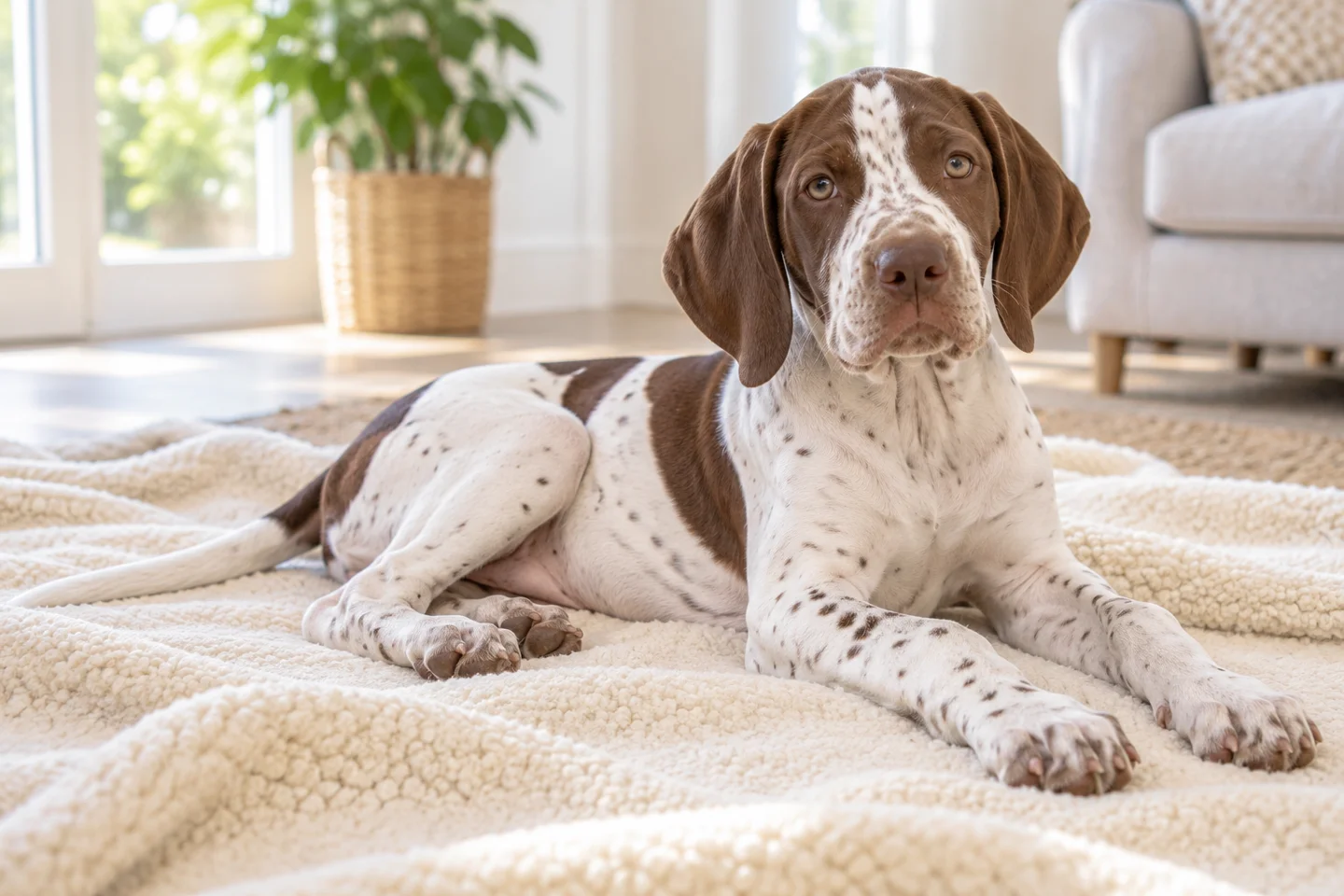
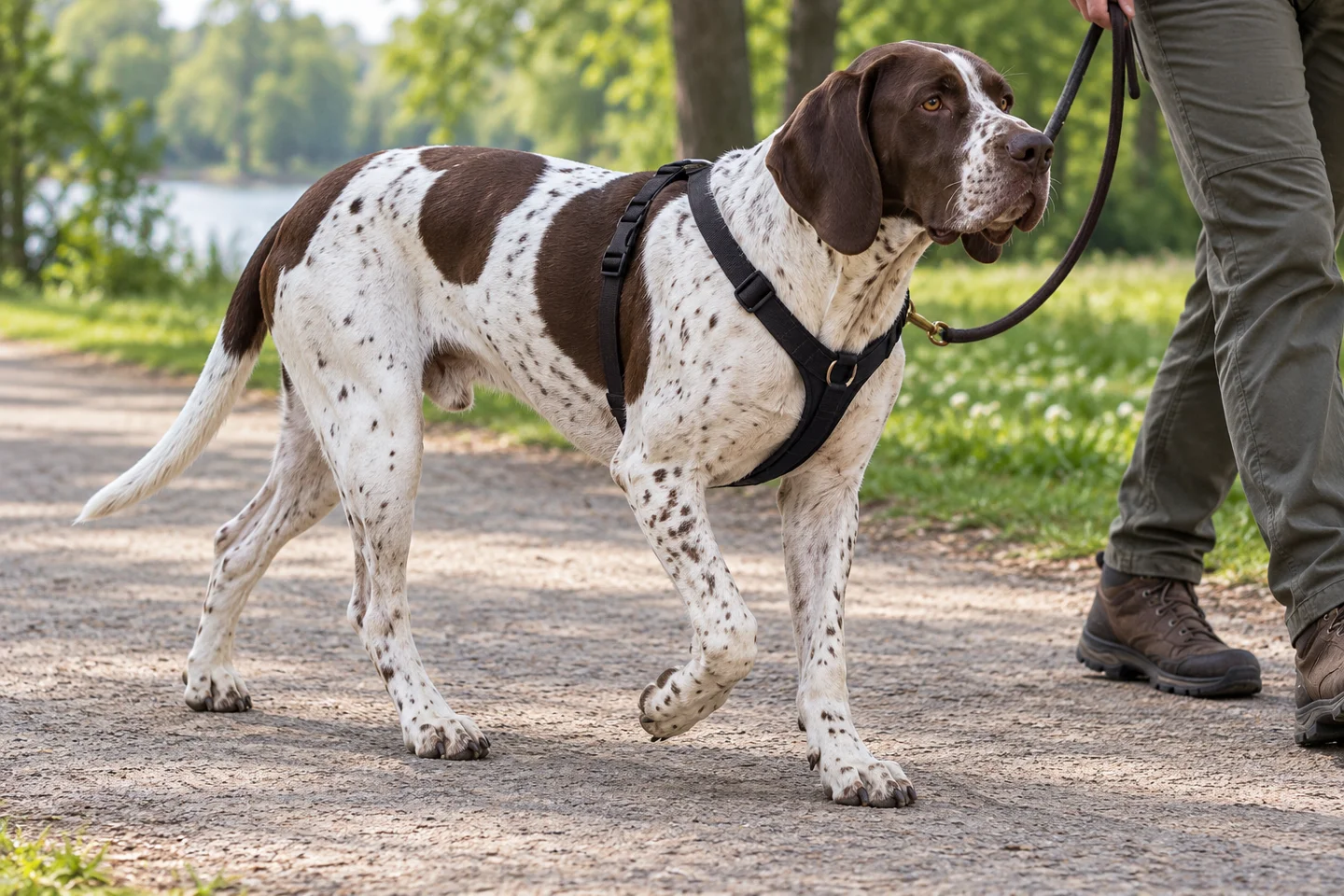
The breed has a rectangular body, a broad head, pendant ears, and a full tail carried naturally down. Its short white coat has brown markings and may show flecking. The illustrations here follow that pattern and are labeled AI-generated illustrations. They cannot document pedigree, sound movement, or health. Watch a real candidate rise, walk, and turn, and ask about prior treatment. A calm expression with deep lips may be characteristic, but it offers little information about comfort during handling or the ability to recover after the exercise you intend to provide.
Choosing for the household rather than the stereotype
A prospective owner should ask how this individual responds when activity changes. Does it settle after a walk, wait comfortably behind a barrier, and tolerate a visitor moving through the room? A breed description can guide questions without predicting all answers. Meet adults and request examples rather than relying on a claim that a gundog is automatically patient or easy to live with. A familiar setting and experienced handler may make a demonstration look simpler than a new owner's daily life.
At home, establish a comfortable resting place and protect sleep. Reward quiet behavior while people perform ordinary tasks. Prepare for manageable time apart and care by another person. A dog that enjoys company may need gradual learning before a long absence. Persistent distress warrants veterinary and qualified behavioral help. Additional exercise or another dog cannot be assumed to solve the cause. For an adult moving from a different environment, allow adjustment and record patterns across days, including appetite and recovery, before attaching a fixed label to its settled temperament.
Training for a reliable field-edge walk
Begin with turning toward the handler, returning in a secure area, and waiting at openings. Use rewards that matter to the individual and introduce distraction in stages. A cue learned in the kitchen may need considerable practice before it works near birds or fresh scent. Prevent unsafe access while the response develops. The roadside or a field containing livestock is an unsuitable place to discover that the dog does not yet understand the harder version.
A long line can offer investigation in appropriate conditions, but it requires careful handling around people and obstacles. Practice calmly fastening equipment and entering a travel space before a busy departure. Teach releasing an object through exchanges rather than repeatedly grabbing from the mouth. A reward-based instructor can help divide difficult tasks into achievable steps. Ask how they handle uncertainty, frustration, or fear. Teaching should consider the environment and physical comfort, not assume that every missed cue is a deliberate challenge. Consistency among household members makes ordinary skills easier for the dog to use.
Let an occasional walker rehearse the same routine before taking the dog alone. Show the equipment fit, secure exits, and the turn-away cue in a quiet place while you can observe and help.
Exercise and conditioning a substantial dog
Provide regular movement, safe exploration, and suitable mental work. Build demanding activity gradually from current fitness. A dog returning after inactivity needs progression even if it previously worked longer days. Ask the veterinarian about the intended routine during growth, after treatment, or when the dog begins to slow down. The aim is comfortable function and recovery rather than a fixed mileage copied from another owner.
Choose terrain carefully and inspect paws after rough or unfamiliar ground. In warm weather, adjust timing, carry water, and make sure the route can be shortened. A dog concentrating on scent may keep going despite fatigue, so notice stride and recovery as well as willingness. Seek examination when normal activity becomes difficult or movement changes. During restricted exercise, clarify which quiet tasks are allowed. Indoor play should not reintroduce physical demands the treatment plan is intended to prevent. Give occasional carers the actual restrictions and practical examples, so a well-meant outing does not undo recovery work.
Aggression and avoiding physical contests
A stable-looking adult can still be uncomfortable around food, restraint, pain, or another dog's close approach. Watch the individual response. If it withdraws, becomes still, growls, or snaps, stop and review the circumstances. Give space rather than insisting on a demonstration of tolerance. New handling reactions require consideration of discomfort and an individual veterinary assessment, especially if a familiar task suddenly becomes difficult.
Manage valued objects and teach exchanges before an incident occurs. Do not repeatedly remove meals to test trust or chase the dog for something it carries. Prevent access to hazardous items, and contact the clinic if ingestion may have occurred. A bite history should be disclosed accurately to carers, with the sequence and context. Qualified behavioral support can help create a sustainable plan. Avoid confrontations intended to establish authority. Physical size makes improvised force unreliable, while clear teaching and dependable barriers can prevent another incident as the household investigates what the dog needs to learn or avoid.
Children and contact with an exit
Adults should arrange interaction that remains comfortable for the dog and child. A simple search or familiar cue can offer shared activity without encouraging wrestling or pursuit. Invite the dog over and allow it to leave. Protect meals and sleeping areas, and prevent children from climbing on the dog or hanging around its neck. A quiet posture is not permission for unlimited contact.
Ask what ages and situations a prospective dog has actually experienced. A calm encounter with an older child gives limited evidence about a toddler or a noisy group. Visiting children need instructions before access, and separation is useful whenever close supervision is impractical. Children should call an adult about a stolen object and never reach into animal conflict. Watch for avoidance before a warning becomes necessary. If either participant is frightened or repeated warnings occur, end the encounter and seek advice. A comfortable relationship develops through manageable experiences; it should not rely on forcing familiarity because the breed is described as a family companion.
Birds, cats, and other dogs
A pointing background makes bird interest a relevant practical question, not a reason to permit disturbance of wildlife. Keep control around poultry and respect the animal owner's arrangements. Familiarity with a household cat cannot establish the same response to a running animal outdoors. Use secure separation while assessing behavior, reward disengagement, and protect the cat's routes. Smaller pets should not be left where the dog can repeatedly rush their housing.
Introduce dogs through space and movement, with handlers able to interrupt. Look for pauses and voluntary returns rather than assuming repeated pursuit is mutual enjoyment. At home, provide separate food stations and resting places while relationships develop. A relaxed walk differs from sharing a chew, a narrow passage, or human attention. Change the setup when tension appears. Serious conflict warrants advice before another unrestricted trial. Matching gundog identity or similar size cannot establish compatibility. The useful evidence is how the particular animals respond in the situations they would actually share every day.
Grooming a short coat and checking ears
Use suitable gentle tools to remove loose hair and inspect the skin. A short coat still sheds and can conceal small injuries or irritation. Check equipment-contact areas, paws, and the underside after outdoor activity. Teach the dog to stand comfortably on a nonslip surface so inspection does not become a struggle. Report a painful area instead of repeatedly probing it at home to obtain a better look.
Observe the pendant ears externally and seek veterinary advice about persistent odor, discharge, scratching, or head shaking. Do not insert implements into the canal or select medication because another owner recommends it. Nail care and toothbrushing also need gradual introduction. An active dog may still need nail trimming, and a clean-looking coat says little about oral comfort. If a previously easy procedure becomes difficult, consider pain and technique. Let the clinic know about handling concerns before treatment begins. Necessary care may require a professional plan while cooperative skills develop, rather than reliance on repeated restraint after the dog becomes distressed.
Health records specific to the Danish breed
The Danish Kennel Club's breed-specific rules identify official hip status and rcd4/PRA genetic status before breeding, with defined provisions for documented ancestry-based results. Ask for the actual reports and confirm the current relevant program. The rcd4 designation matters: a result for another form of retinal disease is a different piece of evidence. A pedigree or a working result does not replace the clinical and genetic information required by a particular scheme.
Discuss the results in relation to the individual and its family. A favorable record cannot predict every later condition, and a genetic result for one variant cannot certify complete eye health. If your dog develops visual hesitation or an uncomfortable eye, arrange assessment regardless of the parents' paperwork. Likewise, investigate changed movement rather than relying on an old hip summary. Ask how a source communicates later diagnoses in relatives. For an adult with missing records, your veterinarian can establish a useful baseline and decide what additional information would change care. Acknowledge the gap instead of replacing it with a claim that a rare breed has no inherited problems.
Food and an accurate clinical handover
Use a complete diet appropriate to life stage and adjust the amount by condition and activity. Measure training rewards and coordinate feeding among family members. A dog changing from regular work to a quieter routine may need review of intake. Persistent changes in appetite, thirst, or weight deserve attention. Tell the veterinarian about supplements, chews, and medical foods so advice considers the full diet rather than only the main meal.
Keep treatment and location history together when an adult changes owners or countries. Obtain the names and dates of medication, parasite prevention, procedures, and relevant test reports. A broad phrase such as fully treated provides little detail for a new clinic. Ask your own veterinarian what follow-up fits the actual history and intended activity. Do not assume that importation proves illness or that a vaccination record answers every medical question. Accurate original information makes it easier to investigate a later concern without guessing what was done or repeating tests simply because a verbal summary is unclear.
Mixes, costs, and finding practical support
An Old Danish Pointer mix may have different build, coat, and behavioral needs from the registered parent pictured in a listing. A crossbreed name cannot guarantee a predictable outcome or freedom from inherited disease. Ask what is documented and evaluate the animal's actual preferences. Detailed observations from a foster home may be useful for an adult whose ancestry remains uncertain. The most relevant question is whether that individual can manage the proposed routine.
Obtain local costs for preventive care, training, secure equipment, travel, boarding, and emergencies. Read insurance terms about previous symptoms and ongoing conditions. Consider physical help if the dog needs assistance after treatment and backup for ordinary absences. A source should discuss support, clinical records, and what happens if the placement cannot continue. Rarity is a poor reason to rush or accept vague answers. A sustainable arrangement includes time and reliable people as well as the initial fee, and it makes room for the possibility that the dog's needs will change with age or illness.
Planning a dogsDating meeting
Use dogsDating to describe this dog's actual pace and preferences. Explain whether birds are distracting, whether it enjoys parallel walks, or whether toys create too much competition. Select a public route with room to turn aside and begin with distance. Avoid a first meeting through a narrow gate or inside either household. Both handlers should be able to interrupt persistent pursuit and maintain a comfortable arrangement.
Keep exact user coordinates private. An approximate discovery area and an agreed public landmark can support planning without exposing a home address or private exercise site. Check photos for identifying documents or address details. If either dog remains tense, repeatedly avoids the encounter, or cannot recover after more space is offered, finish calmly. Record useful observations so later introductions begin under easier conditions. A short shared walk can be a worthwhile result without loose play. The digital match permits planning; the dogs' observed responses should determine whether and how the encounter continues.
Sources and editorial notes
Sources checked October 22, 2026. Breed measurements describe reference ranges, not a diagnosis or an individual dog's ideal weight. Images are AI-generated breed illustrations and do not document a particular dog or health condition.
- AVSAB: Humane Dog Training Position Statement
- VCA Animal Hospitals: Food aggression in puppies
- Orthopedic Foundation for Animals: CHIC health screening programs
- VCA Animal Hospitals: Aggression toward unfamiliar dogs, diagnosis
- VCA Animal Hospitals: Grooming and coat care for your dog
- VCA Animal Hospitals: Ear infections in dogs (otitis externa)
- AAHA: Feeding plans for healthy, appropriate weight cats and dogs
- VCA Animal Hospitals: Heat stroke in dogs
- AVSAB: Puppy Socialization Position Statement
- VCA Animal Hospitals: Dog behavior problems, aggression toward children
- Danish Kennel Club Hundeweb: Old Danish Pointer breeding and health rules
- Fédération Cynologique Internationale: Old Danish Pointer official breed standard
Keep getting to know dogs.
Read another guide or return to your dogsDating community.
Explore breed guidesBack to dogsDating