Polish Greyhound
A strong Polish sighthound whose care needs secure movement, thoughtful animal introductions, functional conditioning, and individual clinical planning.
How these guides are researched and reviewed
- Origin
- Poland
- FCI ideal adult height
- Males 70–80 cm; females 68–75 cm
- Coat
- Short springy coat with modest tail brush
- Illustrated appearance
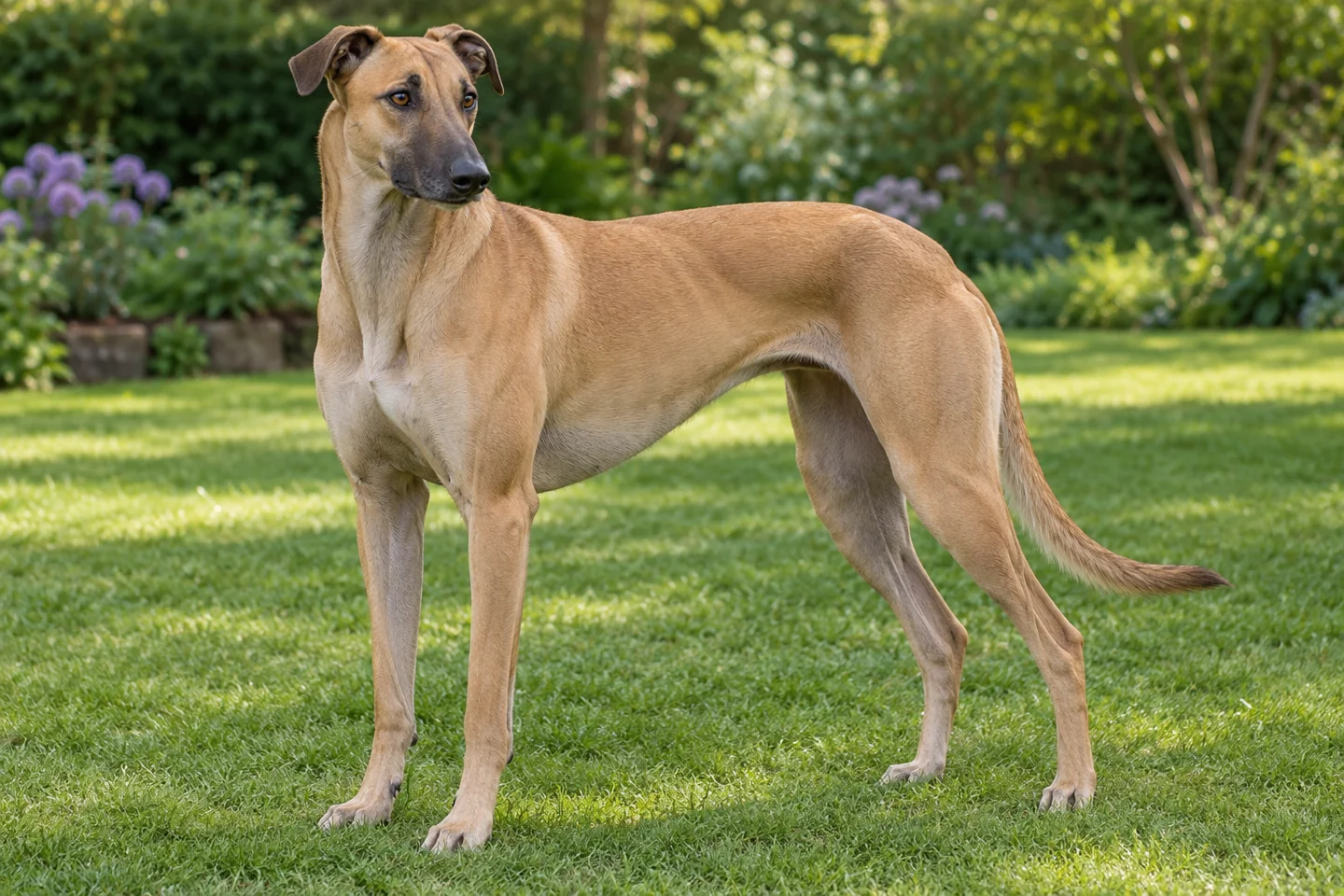
- Fawn with dark muzzle and natural folded ears
General information for owners. These articles have not been reviewed by a veterinarian. Medical decisions need your dog's history and an examination.
A Polish sighthound with its own identity
The Polish Greyhound, or Chart Polski, is a substantial sighthound whose needs begin with secure handling and room for controlled movement. It is a separate breed from the Greyhound, despite the shared English word in the name. A lean outline and short coat do not establish a quiet temperament, easy recall, or compatibility with small animals. Meet the individual and plan for the circumstances in which you will actually live together.
Consider a normal week before deciding. Who will walk the dog when the usual handler is unavailable? Where can it exercise without access to traffic or wildlife? Can the household provide quiet rest and controlled introductions when visitors arrive? These practical questions matter more than a striking photograph in motion. Ask the placing source about situations the dog already handles well and those that remain unfamiliar. A young dog needs teaching, while an experienced adult may arrive with habits that require careful understanding.
History that informs questions
The Dutch kennel organization describes the Chart Polski as a Polish sighthound known from historical depictions and accounts extending back to the thirteenth century. It discusses likely Asian sighthound ancestry rather than presenting the breed as a simple modern Greyhound–Borzoi cross. Historical evidence does not let an owner predict exactly how one present-day dog will respond to every situation.
Use the hunting background to ask informed questions about movement and animals. What happens when the dog notices a running cat, a cyclist, or another dog playing at speed? Has it learned to disengage while securely handled, and at what distance? Ask for honest examples rather than a promise that good breeding overrides the environment. If you intend to participate in organized activities, find out what instruction and conditioning are available. An athletic outline is a reason to plan thoughtfully, not permission to start demanding exercise immediately after arrival.
Adult height and a strong outline
The FCI ideal height ranges are 70–80 cm for males and 68–75 cm for females. It describes a muscular dog with stronger bone than many other short-haired sighthounds, a long head, a deep chest, and a tucked abdomen. The coat is relatively short with modest longer hair beneath the tail and around the hindquarters. The illustrations select fawn with a darker muzzle; the standard permits other colors.
An owner needs to distinguish athletic condition from being too thin or carrying excess weight. Ask the veterinary team to demonstrate assessment on your dog, including muscle and ribs, rather than copy an online image. Measure beds and vehicle spaces with the long body and limbs in mind. Provide stable footing at turns and on the route outside. A narrow passage that is easy for a puppy may become awkward when a large adult turns beside another person or animal.
Training before distractions become intense
Teach the movements that make handling predictable: approaching the handler, following a turn, pausing at an entrance, and settling on a mat. Work where the dog can respond, then add modest distractions. Rewarding a turn away from a distant moving object is more practical than waiting until pursuit is already the dog's only focus. Keep a physical safety arrangement in place while teaching develops.
Use clear cues and rewards the individual values, with sessions short enough to preserve attention. Avoid treating a failure in a new setting as proof that the dog is challenging authority. Check whether you moved too close, asked for too much duration, or overlooked discomfort. Demonstrate the same routine to other carers. A reliable household plan includes what to do when the dog cannot respond, such as calmly increasing distance, instead of escalating pressure until the handler and dog are both distressed.
Exercise and safe opportunities to run
Combine suitable walks with controlled opportunities for more active movement. Before using an enclosed field, inspect the boundary, gate latches, ground, and hazards. Do not assume a space described as dog-friendly is suitable for fast running. Confirm that other dogs cannot enter unexpectedly and that there is room to slow down without meeting a hard obstacle. Learn the individual's recall and handling in that secure setting.
Introduce intensity gradually and consider the dog's age and medical condition. A powerful young dog still needs sensible growth and recovery. Repeated hard turns or sudden sprinting after inactivity deserve discussion with an informed professional. Notice how the dog rises and walks later that day and the next morning. In warm conditions, reduce demands and choose cooler times. A willingness to chase is not a measurement of safe body temperature, and a short coat does not remove the need for shade, water, and an easy return.
Boundaries and equipment that work in practice
Inspect the entire route between the bed and the public path. A secure garden can still fail at the front door, garage, or vehicle transfer. Agree which barriers remain closed and what happens when a delivery arrives. Teach the dog to move to a safe area while an external door is open. Practice without an exciting distraction first so the rule does not depend on somebody shouting at the last moment.
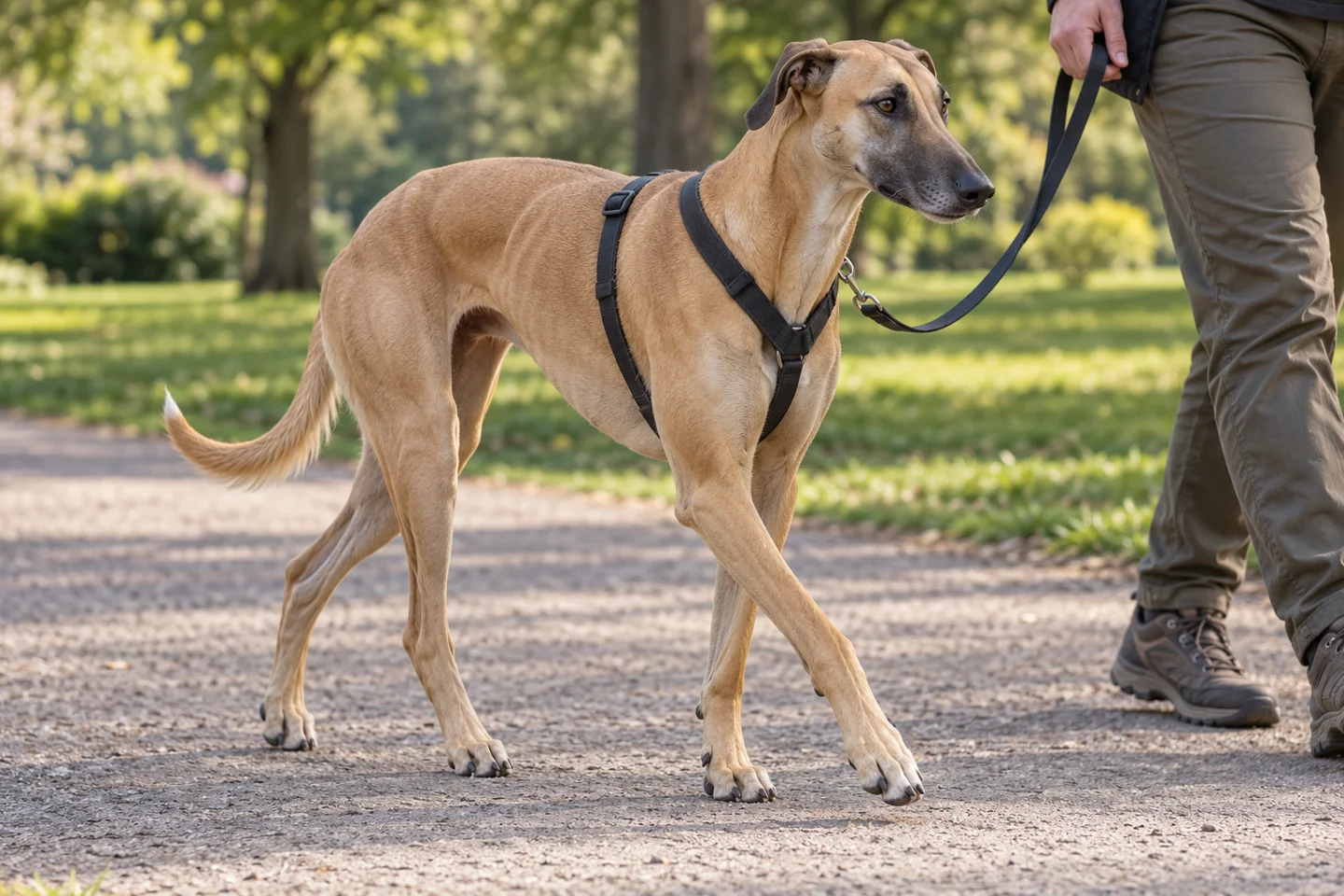
Fit a harness or other walking equipment to the individual and ask for professional guidance if escape is a concern. Check security when the dog backs up and when coat or body condition changes. Handle a long line with attention to people, trees, and other animals; an unexpected acceleration can injure someone holding a loop. Make sure a temporary carer can manage the system before handing over responsibility. Equipment should support teaching and prevent access to hazards while reliability develops.
Children around a large athletic dog
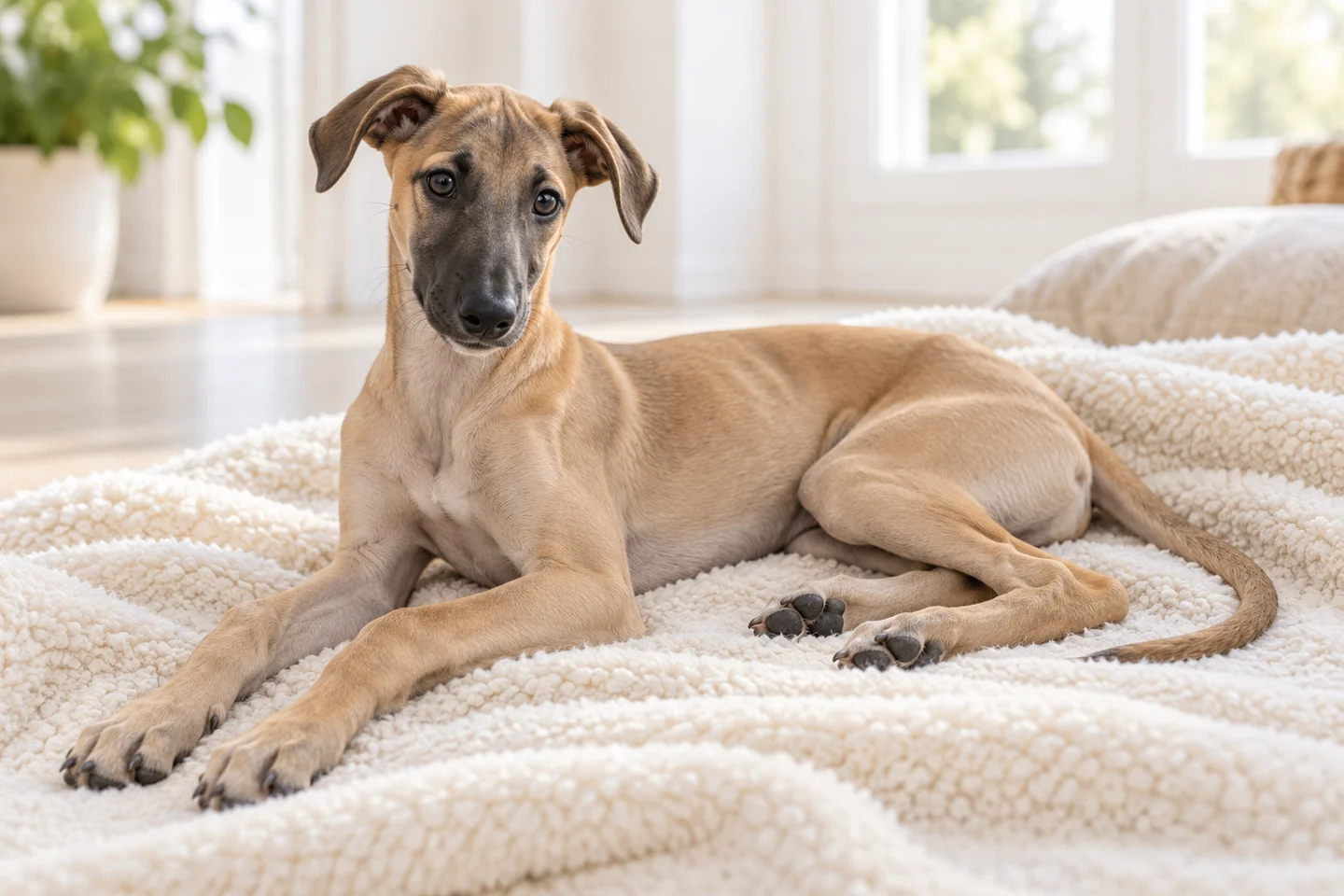
Manage space before relying on verbal rules. A large turning body or excited greeting can knock over a child even when the dog is sociable. Keep running games separate from the dog's resting and feeding areas. During visits, agree which adult supervises and when the dog will rest behind a barrier. An adult absorbed in another task cannot also monitor every change in a child's interaction.
Teach children to invite the dog to approach, stop when it moves away, and leave food or chews alone. They should not ride on its back, hug its neck, or lean over it while it sleeps. The lead belongs with an adult capable of managing an unexpected movement toward a distraction. If the dog shows avoidance or tension, stop contact promptly instead of requesting another attempt for a photograph. Protection should work in both directions: children need bite prevention, and the dog needs freedom from repeated intrusive handling.
Aggression and observations that help
A behavior concern needs a detailed history. Identify the approach, distance, resource, and available escape route when the dog reacted. A confrontation near a bed differs from a response to an unfamiliar dog running close. Do not use the breed's confidence or hunting history as a complete explanation for either. Change the immediate setup so the dog does not have to repeat the reaction while help is arranged.
Sudden irritability or resistance to touch warrants veterinary consideration, especially alongside changes in movement, appetite, or rest. A qualified reward-based professional can help address persistent problems and teach practical alternatives. Share an accurate account of bites, snaps, and near misses with anyone assessing or caring for the dog. A properly introduced basket muzzle may be useful within a plan, but secure distance and escape options remain essential. Avoid recreating a risky encounter simply because additional equipment is present. Warning signs deserve a response before contact escalates.
Other dogs, cats, and fast play
Introduce another dog in an open place with separate handlers and room to walk in the same direction. Keep the first session simple. High-speed play can change the situation quickly, particularly when there is a large difference in body size or preferred play style. Look for reciprocal choices and easy pauses. Stop if one dog is repeatedly pursued or cannot get space, rather than wait for it to object more forcefully.
A calm response to a stationary cat does not settle the question of chasing. Maintain barriers and protected routes while assessing a household introduction, and give the cat access to resources without crossing the dog's space. Small animals need secure separation. Hunting interest and aggression toward dogs are not interchangeable labels, but both can affect practical management. If living arrangements would depend on perfect recall around a vulnerable animal, reconsider them with professional advice. Owners need a reliable physical arrangement for moments when training alone is insufficient.
Grooming for a short functional coat
Use regular brushing to remove loose hair and examine the skin, rather than assume a short coat requires no attention. Check the underside, feet, and points beneath equipment after outdoor activity. Look for trapped plant material, rubs, and localized licking. A coat may be short overall while areas beneath the tail or around the hindquarters need a different touch. Handle gently and pause if something seems sore.
Keep nails appropriate for comfortable movement and introduce tooth brushing gradually. A stable nonslip surface helps the dog stand without bracing. If a task requires constant restraint, ask someone experienced to show you a cooperative approach and check for discomfort. Bath when needed with suitable products, drying thoroughly before the dog becomes chilled. Do not apply a generic grooming schedule rigidly when weather, skin health, or activity changes. The aim is clean comfortable skin and useful daily inspection, not producing a particular shine for photographs.
Health evidence and current registry rules
For a proposed Polish Greyhound litter, ask which current health requirements govern registration where it is bred. The Dutch kennel organization states that its breed norms were published in July 2026 and checked from October 2026. That illustrates why a dated assurance or an unrelated country's checklist may be insufficient. Ask the responsible organization for the applicable requirements and obtain the parents' actual results, rather than assume one universal international panel.
A standard of appearance cannot provide disease prevalence or establish which genetic findings predict clinical illness. Discuss significant family diagnoses with the veterinarian and ask the source how new owner information reaches other affected families. For a rescue, begin with available clinical records and an examination. Do not manufacture an inherited-disease list to compensate for sparse breed-specific data. The useful questions are what is known about this dog's family, what has actually been assessed, and what findings would change care now. Keep uncertainty clear while arranging appropriate follow-up.
Clinical planning without borrowing another breed’s results
Tell a new veterinary practice the dog's documented identity and medical history before a procedure. AAHA's anesthesia guidance discusses specific findings in Greyhounds among its patient-planning considerations. That should not be read as proof that every named sighthound has identical laboratory values or responses to every drug. The Polish Greyhound needs an individual preanesthetic assessment, including past reactions and medicines, rather than a protocol chosen solely because the English name contains Greyhound.
Ask what preparation, monitoring, and recovery the procedure requires. Follow the clinic's instructions about food and medication instead of improvising from another owner's schedule. Arrange a quiet recovery space with safe footing and prevent other animals or children from approaching a sedated dog. Have a contact number for concerns after discharge and know which changes require urgent help. Record any unusual recovery or reaction so the next clinician receives precise information. Good continuity is more useful than a vague warning that all anesthetics are dangerous for the breed.
Feeding, muscle, and a changing routine
Choose a complete diet suited to life stage, condition, and activity. A growing dog needs a plan appropriate to development, while an adult whose exercise has changed may need portion review. Measure food and include rewards and chews. Ask the veterinary team to assess both body condition and muscle so a lean appearance is interpreted correctly. Avoid feeding toward an unsupported fixed weight taken from a general breed list.
Provide a quiet eating area and prevent competition from other animals. Keep a record if appetite or stools change, including new foods, scraps, and medicines. Persistent or marked changes deserve clinical advice. A homemade diet should be formulated by someone qualified for the task; a combination of meat and supplements is not automatically complete. If an illness requires a special diet, make sure other carers understand what is permitted. Several people offering small extras can make an agreed feeding plan difficult to evaluate and maintain.
Mixes and what can be predicted
A Polish Greyhound mix may differ substantially in build, coat, sociability, and response to movement. It should not be advertised as a predictable compromise between two breed descriptions. Ask about identified parents and assessments relevant to each ancestry. If parentage is uncertain, keep that uncertainty explicit and prioritize observed behavior, veterinary findings, and the care the household can provide.
A dog resembling a Chart Polski may need secure running opportunities and careful animal introductions, but resemblance alone cannot establish either its lineage or its limits. Learn what it does in manageable settings and arrange support for unfamiliar tasks. If it is still growing, plan housing, equipment, and transport for uncertainty in adult size. A useful placement conversation includes practical alternatives if compatibility does not develop as hoped. Avoid committing to a household arrangement that only works if every optimistic prediction about ancestry and temperament comes true.
Costs and a carer who can manage the dog
Check local costs for routine and emergency veterinary care, suitable food, secure exercise access, and reliable boarding. Confirm that a provider can accommodate the individual's height, strength, and behavior. Read insurance terms carefully and budget for known exclusions. A universal price estimate would conceal differences in location and medical need. Include transport arrangements and help for days when you cannot manage the usual outing.
Choose a backup carer through a practical handover. Demonstrate equipment, entrances, preferred walking routes, and the response to a distraction. Explain what requires separation and give an accurate history of any incidents. Provide veterinary contacts and written instructions without requiring access to private online accounts. A person can enjoy the dog and still be unable to handle a sudden acceleration. A supervised walk reveals that limitation before it becomes an emergency. Reliable cover allows both ordinary care and unexpected changes to be handled with less confusion.
dogsDating with ample space
Before meeting through dogsDating, describe your Polish Greyhound's pace, preferred distance, and response to unfamiliar dogs. Keep exact home coordinates and your address private. Use an approximate area to agree on a quiet public route, and check whether the other dog is comfortable around a much larger or faster companion. Avoid choosing an enclosed running area as the first test of compatibility.
Start with separate handlers and parallel movement. Give each dog room to sniff without turning the greeting into a tight circle of leads. Leave chasing games and shared resources out of the introduction. If either dog becomes tense or preoccupied, increase space or finish the walk. The owners can get to know one another during an easy short outing while the dogs simply share a route. Review the experience afterward and plan another meeting around what actually worked, rather than assume every successful hello should progress immediately to play.
Sources and editorial notes
Sources checked October 22, 2026. Breed measurements describe reference ranges, not a diagnosis or an individual dog's ideal weight. Images are AI-generated breed illustrations and do not document a particular dog or health condition.
- AVSAB: Humane Dog Training Position Statement
- VCA Animal Hospitals: Food aggression in puppies
- VCA Animal Hospitals: Aggression toward unfamiliar dogs, diagnosis
- VCA Animal Hospitals: Grooming and coat care for your dog
- AAHA: Feeding plans for healthy, appropriate weight cats and dogs
- VCA Animal Hospitals: Heat stroke in dogs
- Orthopedic Foundation for Animals: CHIC health screening programs
- AVSAB: Puppy Socialization Position Statement
- VCA Animal Hospitals: Dog behavior problems, aggression toward children
- FCI standard 333: Chart Polski history, structure, coat and adult height
- Raad van Beheer: Chart Polski identity and Dutch breeding norms introduced in 2026
- AAHA anesthesia guidelines: preanesthetic planning and limits of breed-related assumptions
- American Veterinary Medical Association: preparation, monitoring and recovery for pet anesthesia
Keep getting to know dogs.
Read another guide or return to your dogsDating community.
Explore breed guidesBack to dogsDating