Portuguese Podengo
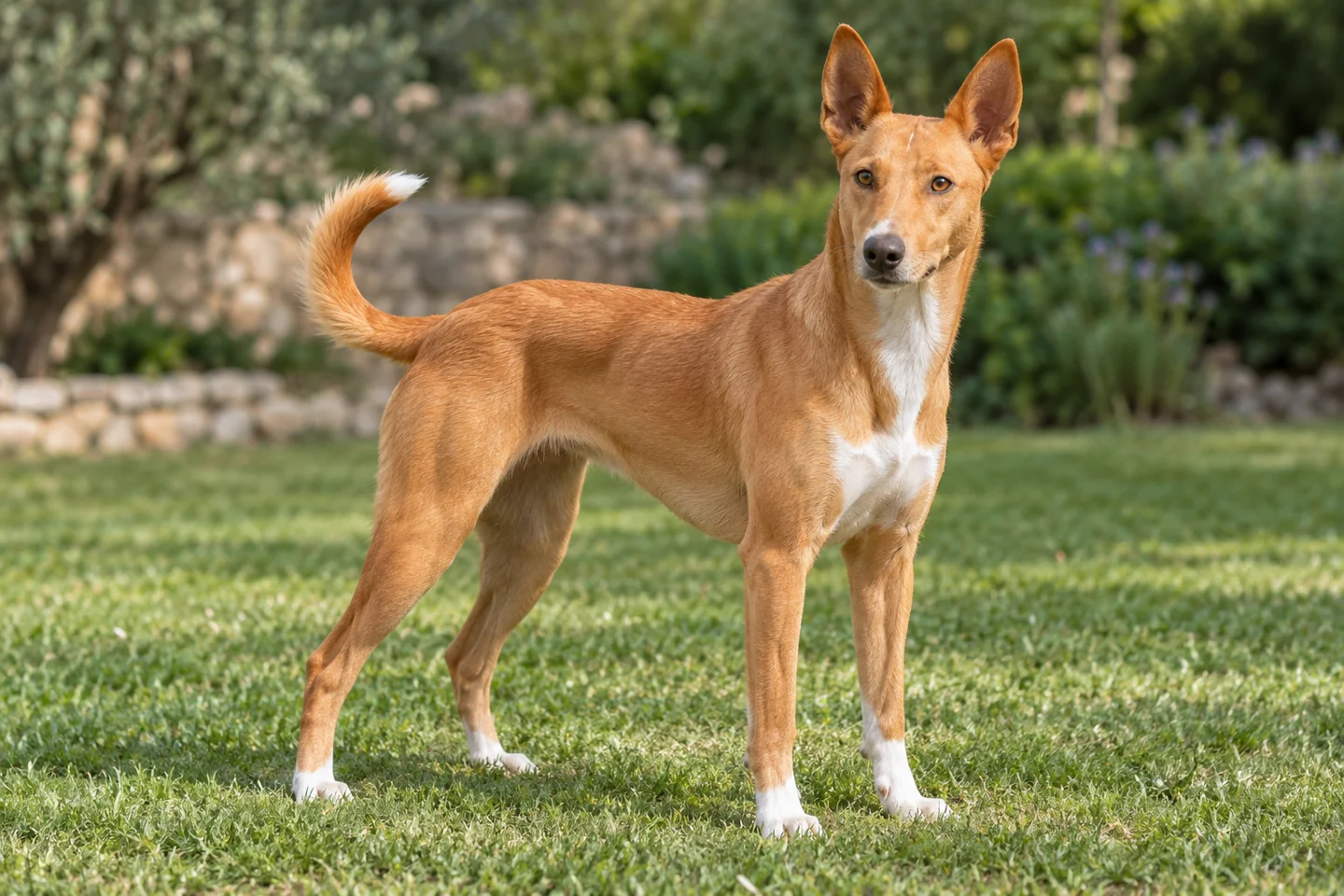
An alert Portuguese hunting dog represented here by the medium smooth variety, with careful distinction between registry sizes and a practical plan for chase interest, confidence, and daily exercise.
How these guides are researched and reviewed
- Origin
- Portugal
- FCI medium size
- 40–54 cm; 16–20 kg
- FCI large size
- 55–70 cm; 20–30 kg
- Illustrated variety
- Medium smooth, yellow-fawn with a small white chest mark
General information for owners. These articles have not been reviewed by a veterinarian. Medical decisions need your dog's history and an examination.
Which Portuguese Podengo is being discussed?
Portuguese Podengo can mean different size groupings depending on the registry. The FCI standard brings three sizes under one breed: small, medium, and large, each available in smooth or wire coat. The American Kennel Club's Portuguese Podengo entry concerns medium and large dogs, while the Portuguese Podengo Pequeno has its own entry. This guide illustrates a medium smooth Podengo. When speaking with a breeder, rescue, insurer, or trainer, specify size and registry rather than assuming the name identifies the same animal everywhere. A size misunderstanding affects equipment, housing, exercise expectations, and introductions.
The medium variety has a rabbit-hunting background, while the large variety was used for larger quarry. Those roles help explain alertness and chase interest without predicting the behavior of every dog. Ask the source about the actual adults in the family, their response to moving animals, and the management used during ordinary outings. An individual may be affectionate at home and still find wildlife intensely interesting. A suitable placement makes room for both characteristics. It should include a secure environment, useful learning, and people willing to manage opportunities instead of expecting affection to override a strong outdoor distraction.
Portuguese history without pretending ancestry is exact
The FCI's historical account describes probable origins among ancient dogs brought to the Iberian Peninsula, followed by later influences and adaptation to Portuguese conditions. The word probable matters. It is not possible to reconstruct a modern puppy's behavior from a simple ancient-trader narrative. The practical historical information is that these dogs developed around functional hunting work and appear in several sizes and coat forms. A registered pedigree documents known ancestry within that system, rather than proving every historical story told in a sale advertisement.
Ask how the source selects for a workable modern temperament as well as traditional ability. What are the dogs like around unfamiliar people? How are puppies introduced to handling, household sounds, and quiet separation? Does the source maintain communication about relatives' health and behavior? Those questions connect a preservation goal to real welfare. For an imported animal, obtain readable identification and veterinary documents and arrange support in the destination country. For a rescue with uncertain ancestry, retain a cautious description. A similar outline, upright ears, and yellow coat alone cannot turn an unknown dog into a confirmed Portuguese Podengo.
Medium and large sizes, ears, and natural outline
The FCI medium range is 40–54 cm and 16–20 kg, while the large range is 55–70 cm and 20–30 kg. Medium and large dogs have nearly square proportions, a lean wedge-shaped head, mobile erect triangular ears, and a full tail carried in a sickle rather than a tight curl. The standard recognizes smooth and wire coats without undercoat. Yellow and fawn shades, with or without white, are characteristic permitted colors. The chosen illustrations show the medium smooth form, so they should not be used as a visual size reference for a large adult.
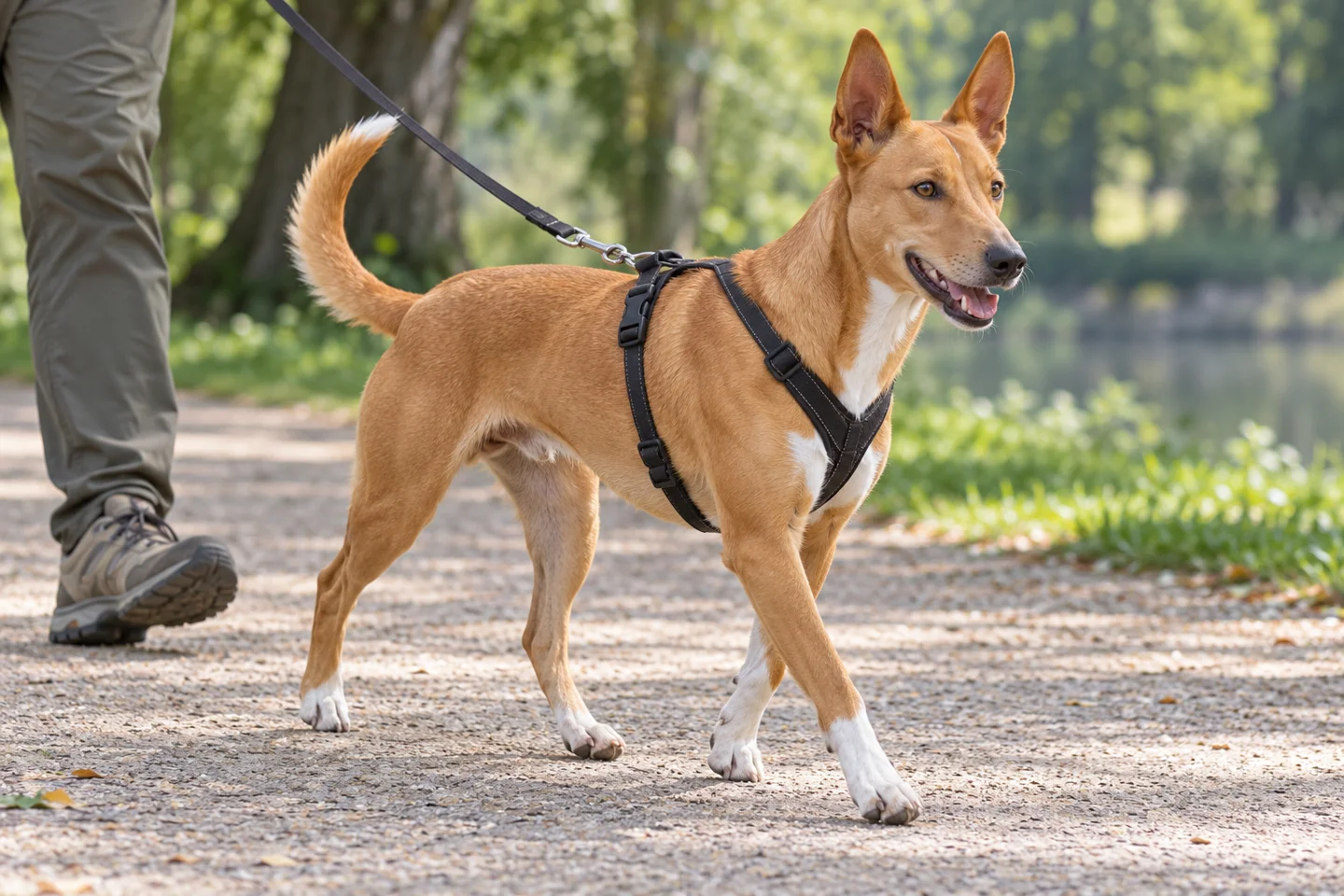
A measured standard range is not a feeding target for an individual whose frame or medical needs differ. Look for comfortable movement and appropriate body condition, and ask a veterinarian about growth or weight concerns. Equipment must fit the actual dog, including its chest, neck, and ability to back out when startled. Test a harness carefully in a safe place before relying on it beside a road. A puppy's ears, coat, and proportions change with development. Select for a sound, supported placement rather than pressuring a growing animal to resemble a finished show photograph through unnecessary supplements or demanding exercise.
Confidence, alertness, and daily household life
An alert dog notices changes quickly. Make it easy to observe without repeatedly escalating at windows, fences, or the front door. Place resting space away from constant traffic, interrupt rehearsed barking by changing access, and reinforce the ability to disengage. Visitors should follow a calm arrival routine rather than lean over the dog and insist on immediate friendship. If the animal prefers distance, respect it while providing positive controlled experiences. Suspicion described in a breed profile should never become an excuse for leaving fear unaddressed or deliberately encouraging defensive behavior.
Build an ordinary week before planning ambitious activities. Include sleep, toilet access, meals, companionship, exercise, and care when the main owner is absent. Practice very short separations at a level the dog can manage and increase only when observations support it. An adult moving from a kennel or different home may need help learning a new indoor routine. Ask about previous habits without assuming they will transfer immediately. Quiet days are part of ownership too. A home needs ways to meet the dog's needs when weather, work, or a human illness prevents the usual outing, rather than depending entirely on exhausting runs.
Training recall and choice around moving distractions
Begin recall where attention is available, reinforce generously, and often release the dog back to a permitted activity. Progress toward more distracting settings with secure management. A long line on a well-fitted harness can help, provided its handling does not create an entanglement hazard. Never test reliability by releasing a dog near a road, livestock, or a fleeing animal. The goal is a practiced response supported by thoughtful setup. Calling repeatedly after the dog is already committed to pursuit creates a difficult lesson for everyone and may put wildlife or the dog at risk.
Teach waiting at thresholds, a turn away from an approaching distraction, and comfortable lead movement. Practice exchanges for found objects so giving something up predicts a useful outcome. Reward brief check-ins during sniffing rather than demanding constant eye contact for a whole walk. Puzzle and scent tasks can provide engagement without uncontrolled chase. Keep sessions short enough that the animal can remain thoughtful and recover. If food or toys provoke guarding, change the arrangement and seek qualified guidance. Training should supply understandable choices, with difficulty adjusted to the learner, rather than proving that a person can physically dominate a lively hunting dog. Rehearse the turn on an empty path first: say the cue once, move away smoothly, and reward the dog beside you. A practiced escape route helps when an unexpected loose dog or wildlife encounter would otherwise leave the handler improvising under pressure.
Exercise, fencing, and legal outlets for pursuit
Plan varied movement, investigation, and rest according to the dog's age and condition. A fit adult may enjoy active walking and appropriately introduced sports, but no fixed daily mileage suits every medium and large Podengo. Build workloads gradually and monitor recovery after travel, illness, or reduced activity. A young dog needs coordination and confidence more than a forced endurance schedule. Notice discomfort later in the day and changes in enthusiasm that persist. Veterinary assessment is appropriate when movement or exercise tolerance changes, even if the dog still becomes excited when a lead appears.
Secure space is valuable only when its boundary actually contains this animal. Examine gaps, gate latches, objects that provide a launch point, and places where digging could allow escape. Supervise outdoor time and avoid tethering a dog where it can become trapped or exposed to unwanted contact. Organized coursing or other chase-based activities require appropriate age, health, equipment, and event safeguards; do not improvise them near livestock or public paths. Carry water, account for heat, and provide rest. A hunting background is a reason to manage opportunity carefully, rather than evidence that the dog will always choose a safe route when excited.

Aggression and safe responses to uncertainty
Assess aggression through the individual dog's behavior and circumstances. Fear of handling, pain, competition over resources, or a trapped greeting can produce responses a friendly label would not predict. When the dog freezes, stiffens, withdraws, or growls, reduce pressure and allow space. Avoid punishing a warning or forcing the animal to stay beside the trigger. A new reaction to touch or movement deserves veterinary assessment. Write down the preceding events and conditions so a professional can identify patterns, including whether an apparent social problem began after discomfort or a frightening experience.
Use management while seeking help: separate during meals if needed, protect resting places, and arrange visitors behind a secure barrier before introducing contact. Every adult should know how doors and leads are handled. Where a bite has occurred or appears possible, consult the veterinarian and an appropriately qualified behavior professional. A positively trained basket muzzle can support a safety plan when recommended, but it does not authorize intrusive contact or eliminate the need for distance. Progress means comfortable, manageable behavior and better choices, not silence achieved by suppressing warnings while the animal remains frightened.
Children, unfamiliar dogs, and small household pets
Children need guidance about giving an alert dog space. Do not allow pursuit, cornering, hugging, or attempts to hold the ears upright for a photograph. Adults should supervise and separate proactively during meals, sleep, and noisy running games. A dog that leaves an interaction should be allowed to leave. Teach a brief invitation to contact followed by a pause, and ensure the child can accept a refusal. Safety depends on the arrangement and adult attention, rather than a promise that a particular breed loves children. Stronger large Podengos also require appropriate adult handling near traffic.
Introduce dogs in open space with separate capable handlers and room to move away. Familiarity with one dog does not establish compatibility with every play style or size. Cats and other small animals require secure management because a running animal can engage hunting behavior. A quiet first encounter through a barrier is only one observation. Some homes will need permanent separation, and outdoor wildlife interest may remain even when a household cat is accepted. Never arrange an uncontrolled chase to find out what the dog will do. Ask for accurate prior history and plan safeguards before the new animal enters the home.
Grooming smooth and wire coats
The illustrated medium smooth Podengo needs a different grooming approach from a long wire-coated dog. Use gentle regular brushing to remove loose hair and inspect the skin, with bathing when needed. The AKC's care guidance advises brushing wire coats to remove dead hair and says neither coat should be stripped. Ask a breed-experienced groomer to demonstrate suitable tools rather than applying a technique because another rough-coated breed uses it. A tidy appearance should not require painful pulling or a treatment the dog's coat does not need.
Inspect feet and nails after rough ground, check beneath equipment for rubbing, and look over the outer ears. Erect ears still need attention when pain, odor, discharge, or repeated scratching appears. Follow veterinary advice rather than cleaning deep into the canal or using leftover medicines. Teach calm handling in small steps, including brief mouth and paw checks. Dental care belongs in the routine as much as coat care. Because neither coat has an undercoat under the FCI description, assess comfort during cold wet conditions and provide appropriate protection and drying instead of assuming rustic appearance makes every temperature suitable.
Health evidence and meaningful questions for the source
The AKC's Portuguese Podengo page discusses food and contact allergies, hypothyroidism, and deafness in its health guidance, while emphasizing information gathering in the breed. That list is a starting point for questions, not a current prevalence estimate or proof that every individual needs the same panel. Ask which concerns occur in this family, what was diagnosed, and how the conclusion was reached. Request named reports and explanations for the planned pairing. Avoid treating a general statement that the breed is healthy as a substitute for records, especially when the source also advertises extensive testing.
Match each claim to the relevant evidence. A physical examination, a specialist hearing assessment, a thyroid investigation, and a genetic identity test answer different questions. A large commercial DNA panel cannot establish absence of every possible condition. Tell your veterinarian about recurring skin trouble, unusual responses to sound, changes in energy, weight changes, or family history so assessment can be directed to this dog. Keep results with the identification and date. For rescue animals with limited records, establish a clinical baseline and update it as information becomes available rather than interpreting missing history as proof of either illness or good health.
Travel history and outdoor prevention
Portuguese origin does not by itself establish a dog's exposure to vector-borne disease or internal parasites. Actual places lived, routes travelled, housing, and preventive treatment matter. ESCCAP recommends veterinary planning ahead of travel, with prevention tailored to the patient and destination. For an imported Podengo, give the receiving clinic original treatment and testing records and a timeline of countries or regions. Ask whether follow-up testing is appropriate because timing can affect interpretation. A passport, a single negative result, and an apparently energetic animal are not interchangeable with a complete ongoing medical plan.
Make prevention workable during ordinary walks. Carry drinking water, discourage scavenging through supervision and trained exchanges, inspect after brushy routes, and use clinician-recommended parasite control correctly. Discuss any new symptoms with the veterinarian and include travel information even when it seems remote from the current complaint. Avoid choosing medication from another owner's account or assuming all dogs from the same country need identical treatment. A prepared carer should know the dog's current products, next due dates, and whom to contact. Accurate records are especially useful if the animal attends events or is cared for in several places.
Nutrition, mixes, costs, and choosing the right scale
Feed complete nutrition suited to life stage, workload, and medical needs, and use regular body-condition review to adjust portions. Count rewards and enrichment food within daily intake. Medium and large dogs require different practical supplies, so buy equipment to fit the individual rather than a generic breed name. For a mix, consider both known parents and the actual animal's frame and behavior. Uncertain ancestry should remain labeled uncertain. A Podengo-like appearance cannot guarantee a particular coat, adult size, health outcome, or level of chase interest, and crossing does not automatically remove inherited risk.
Budget for secure boundaries, routine clinical care, emergency funding or suitable insurance, training, transport, and reliable cover during absences. Ask a sitter to demonstrate the door and lead routine before handing over responsibility. A physically active home still needs quiet recovery arrangements and the ability to handle later medical limits. Clarify source support and return terms in writing. Choose the medium or large dog because its needs fit those resources throughout ordinary life. A size category should guide planning, while evidence about the individual decides whether the placement and daily routine are workable.
dogsDating outings for an alert hunting dog
Use dogsDating to describe the dog's size, pace, chase interest, and comfort with greetings. Share an approximate location while keeping exact coordinates and the home address private. Pick a public open route away from livestock and uncontrolled rabbit activity when possible. Start with parallel walking at a comfortable distance and one capable adult per dog. Avoid a first meeting in a small enclosure where movement becomes pursuit. Leave valued toys and food bowls out of the interaction. Both owners should know how they will increase space or depart before the animals meet.
Look for the ability to glance away, sniff, and continue moving without repeated fixation. If either animal stiffens, withdraws, or chases the other despite attempts to disengage, change distance or finish. Repeated calm walks can be useful companionship without close play. Discuss the route, duration, and separation afterward and adjust the next plan to those observations. Keep public images free of identifiable addresses and another person's private details. The point is a manageable social experience for these animals, and a sensible owner should feel comfortable ending it while the dogs can still leave calmly.
Sources and editorial notes
Sources checked October 22, 2026. Breed measurements describe reference ranges, not a diagnosis or an individual dog's ideal weight. Images are AI-generated breed illustrations and do not document a particular dog or health condition.
- AVSAB: Humane Dog Training Position Statement
- VCA Animal Hospitals: Food aggression in puppies
- VCA Animal Hospitals: Common emergencies in dogs
- Orthopedic Foundation for Animals: CHIC health screening programs
- VCA Animal Hospitals: Aggression toward unfamiliar dogs, diagnosis
- VCA Animal Hospitals: Grooming and coat care for your dog
- VCA Animal Hospitals: Ear infections in dogs (otitis externa)
- AAHA: Feeding plans for healthy, appropriate weight cats and dogs
- VCA Animal Hospitals: Heat stroke in dogs
- AVSAB: Puppy Socialization Position Statement
- VCA Animal Hospitals: Dog behavior problems, aggression toward children
- Official breed standard: Portuguese Podengo
- American Kennel Club: Portuguese Podengo sizes, care, and health discussion
- ESCCAP: Veterinary planning for travelling pets and geographic exposure
Keep getting to know dogs.
Read another guide or return to your dogsDating community.
Explore breed guidesBack to dogsDating