Pyrenean Mastiff
The Pyrenean Mastiff is a giant Spanish guardian with a white coat, marked head, and substantial physical needs. Ownership should begin with secure space, visitor procedures, cooperative handling, and a realistic plan for veterinary transport.
How these guides are researched and reviewed
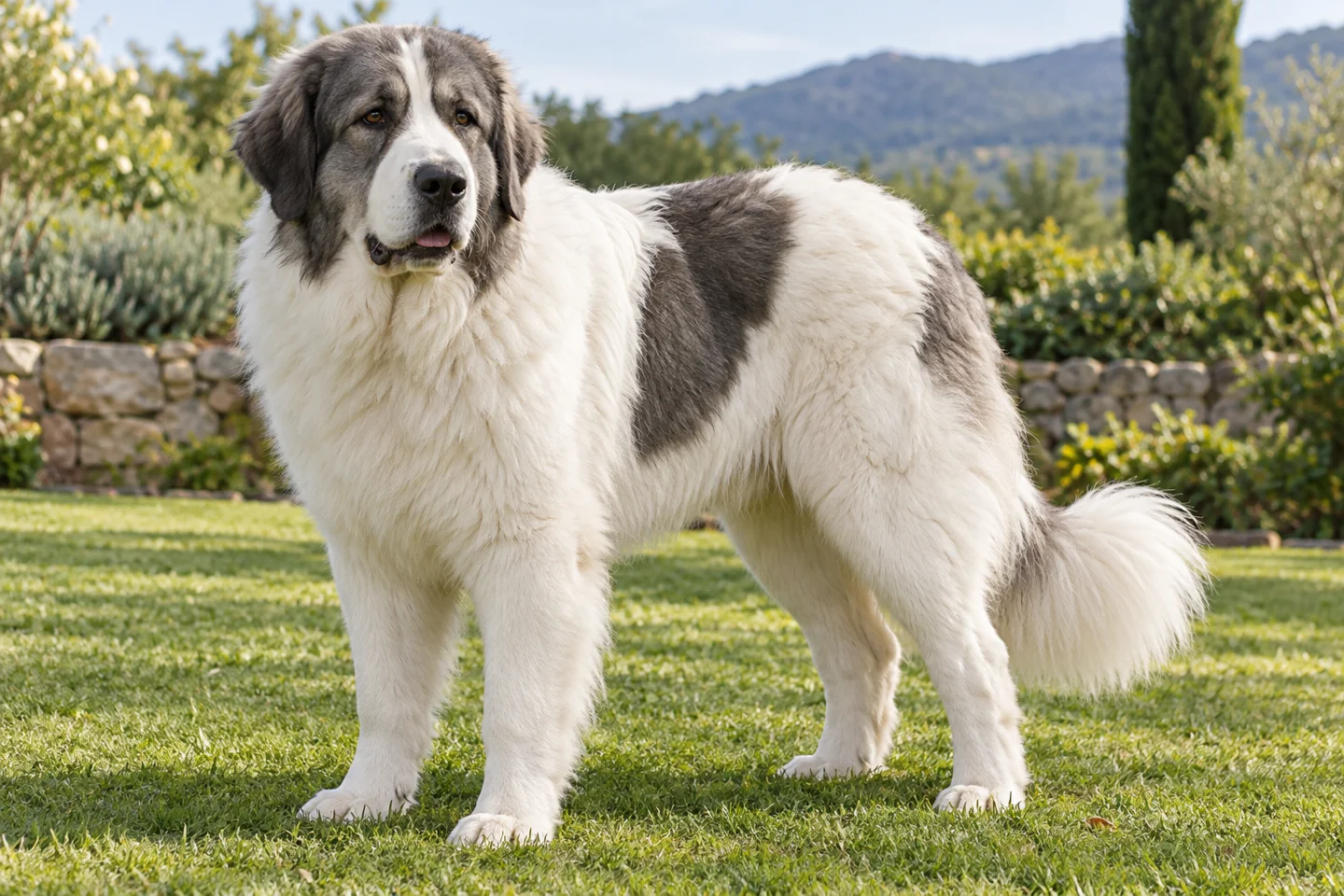
- Origin
- Spain
- Adult standard size
- Minimum males 77 cm; females 72 cm; no upper height limit
- Illustrated coat
- White with grey mask and patches
General information for owners. These articles have not been reviewed by a veterinarian. Medical decisions need your dog's history and an examination.
A Spanish guardian, distinct from neighboring breeds
The Pyrenean Mastiff is Mastín del Pirineo, a Spanish breed associated with livestock protection. It differs from the Pyrenean Mountain Dog, commonly called Great Pyrenees, and from the small Pyrenean Shepherd. Similar geographical names should not lead a buyer to exchange their standards or medical recommendations. Ask for the actual registered identity of a puppy's parents and the organization holding their records.
A giant guardian needs a home designed around its adult body and behavior. Think about doors, secure boundaries, visitors, transport, and access to a cool resting place. A fluffy puppy may be easy to move physically while learning, but that method will not last. Meet adults and observe how their handlers manage ordinary arrivals and departures. Discuss the individual candidate's history, including difficult situations. A source who explains practical constraints gives you more useful information than one who relies on a calm expression or an impressive size to describe a universally easy companion.
History and the difference between guarding and herding
The breed's historical role involved protecting livestock from predators. Protection and moving animals under a handler's direction are different tasks, so a guardian label should not be mistaken for trained herding ability. Nor does ancestry alone establish that a puppy can be left safely with any species of stock. Appropriate selection, introduction, supervision, and experienced advice matter to both the dog and the animals it may eventually live among.
For a companion household, ask how the source's adults respond to unfamiliar people crossing a boundary. Discuss what happens after the owner admits a visitor and whether the dog can rest separately. A working background helps identify questions; it cannot answer them all for a specific animal. If you intend livestock work, consult informed people before placement and describe the species, fencing, neighboring activity, and available supervision. An unsuitable assignment can create harm despite good intentions. A pet home also needs worthwhile activity and human contact, rather than assuming that a garden supplies every need because guarding has a historical outdoor setting.
Adult size and a physically workable home
The FCI minimum heights are 77 cm for males and 72 cm for females, with no upper limit specified. The standard also describes larger desirable heights, but that should never become a reason to push growth or favor bulk over comfortable function. Ask your veterinarian to assess the individual frame and body condition. A puppy needs appropriate development, not a feeding contest intended to produce the largest adult.
Walk through your home imagining a dog of that scale turning, lying down, and passing another person. Provide nonslip footing where needed and a bed that leaves enough space for the animal to stretch. Consider how stairs, garden access, and the vehicle would work during illness. Practice a suitable ramp or other aid while the dog is well if it belongs in your plan. The ability to call for practical help matters as much as equipment. A treatment decision can be complicated by transport that nobody has tested before the dog becomes unable to walk comfortably.
Coat markings and the three illustrations
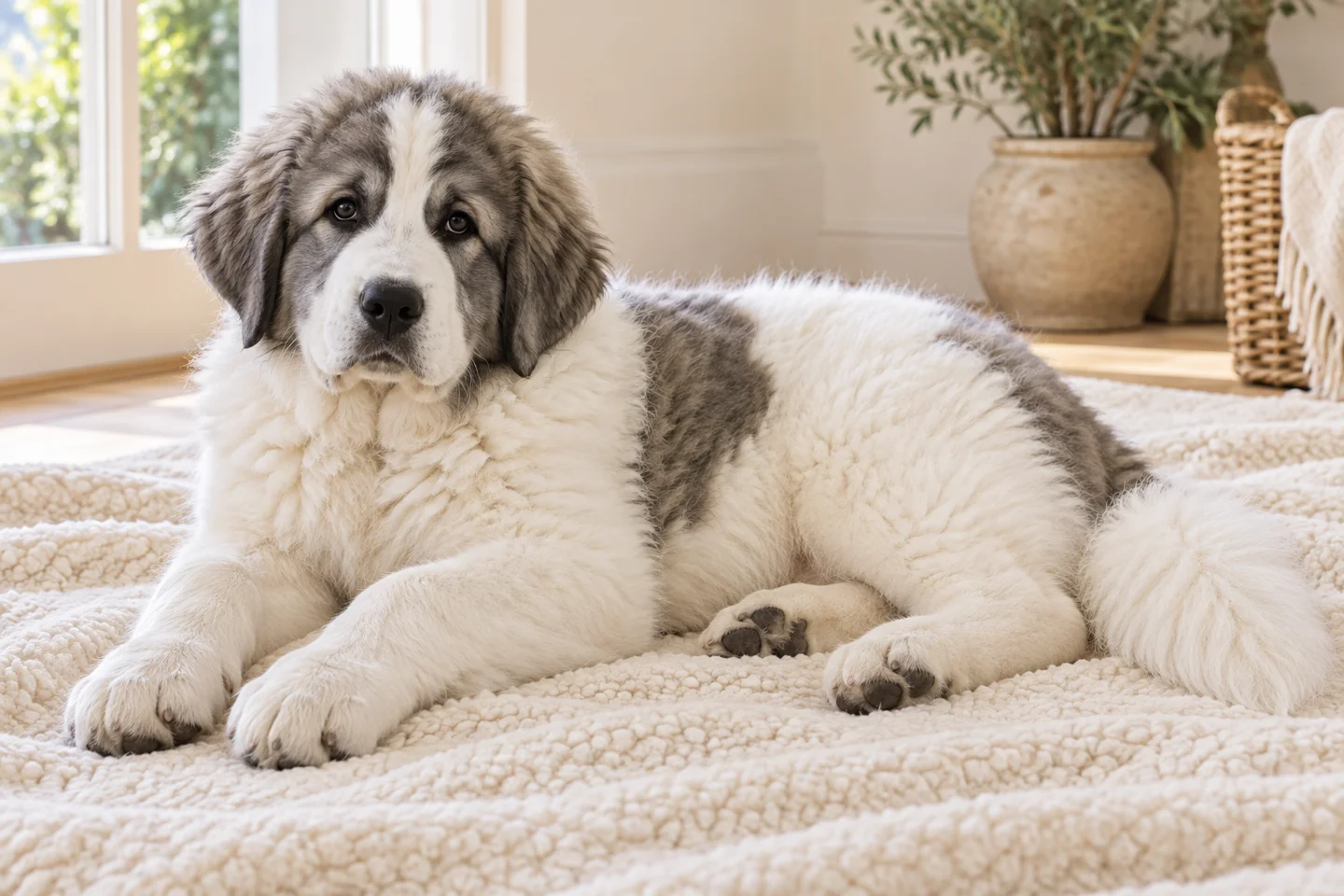
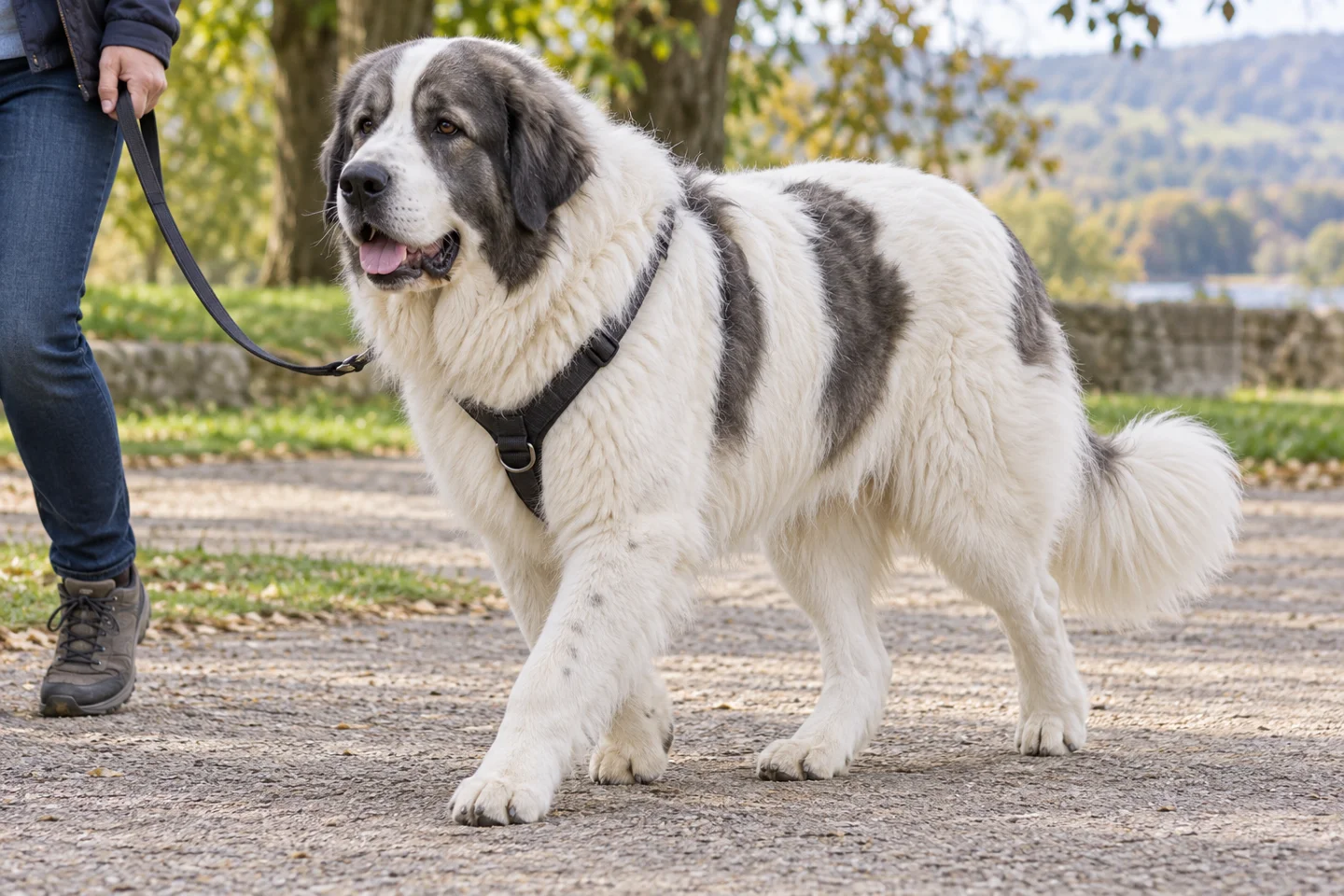
The breed has a white base coat with a defined mask and often corresponding body patches. This guide's AI-generated illustrations select grey markings, naturally hanging triangular ears, and a full plumed tail. They should show a functional guardian with clear eyes and a strong frame, not exaggerated facial folds or a lumbering mass. An illustration is unsuitable evidence about the health or ancestry of a real animal.
When considering a dog, look beyond a clean coat. Watch it rise, walk, turn, and recover after ordinary movement. Ask about previous injuries, procedures, and current restrictions. Assess condition beneath the hair with veterinary guidance. Color patterns should not outweigh evidence about comfort and suitability. A mask or patch cannot tell you whether a dog tolerates handling or copes with the routine at your address. If the puppy's eventual appearance is important to you, discuss normal development honestly, while allowing the actual animal's welfare and practical needs to remain the basis for the placement decision.
Visitors, gates, and a routine everyone can use
Create a visitor procedure before the dog decides how to manage every arrival. Secure it comfortably away from the entrance, allow the person in, and introduce contact only if the individual can remain manageable. A barrier needs to be strong enough for this particular dog and located where it does not leave the animal pressed against the activity. Teach relaxation there during quiet times so separation does not appear only when something worrying happens.
Explain the procedure to household members, contractors, and occasional carers. A plan that depends on one experienced owner being present is fragile. Rehearse gate latches and lead equipment with the person who will provide care. Do not invite a visitor closer to prove that the dog is friendly or protective. Give it time and space and base the next step on observed behavior. If ordinary access remains difficult, seek qualified help before repeated rehearsals make it a daily conflict. Secure management is a practical part of living with a guardian, rather than an admission that the owner has failed to form a bond.
Aggression and the consequences of a mistake
Evaluate the individual's response to people, animals, restraint, and valued objects. A guardian identity does not justify threatening ordinary visitors or ignoring warnings. If the dog stiffens, blocks access, fixes attention, or repeatedly warns, create space and stop the encounter. Its physical size makes a brief mistake consequential, even when a familiar owner believes the intention is protective rather than harmful.
A bite history requires accurate disclosure and an individual plan with veterinary and qualified behavioral support. Describe what happened, any injury, and whether the dog could leave. Pain deserves attention when reactions change, particularly during handling. Avoid physical contests intended to establish authority. Teach cooperation and use dependable separation while the cause is investigated. A carefully introduced basket muzzle may support particular care arrangements when advised, but it does not make distress irrelevant or justify unlimited exposure. The useful goal is a routine people can carry out reliably, with the dog's behavior understood in context rather than reduced to a reassuring or alarming breed stereotype.
Children and the reality of a giant body
Even a friendly Pyrenean Mastiff can knock over a child by leaning, turning, or moving through a narrow space. Arrange contact where an adult can supervise and the dog can leave. Simple searches or familiar cues can offer shared enjoyment without wrestling. Children should not ride the dog, climb on it, or hang around its neck. A large animal resting quietly is not consenting to unlimited touch.
Think particularly about visiting children and running games. The dog should be separated comfortably during activity that cannot be supervised closely or that it cannot manage calmly. Ask about the actual ages and circumstances it has experienced. A positive meeting with one older child offers limited information about life with toddlers or a crowded party. Protect meals and sleep, and teach children to call an adult about stolen objects. If warnings or fear recur, stop and seek help. An affectionate reputation should not create a childcare role, and the dog should never be expected to interpret every fast, noisy interaction among people correctly.
Other dogs, cats, and livestock introductions
Choose animal companions through careful observation. A smaller dog can be injured during rough play without hostile intent. Look for voluntary returns, pauses, and the ability to disengage; stop persistent pursuit of an animal seeking shelter. At home, provide separate meals and resting places while relationships develop. A calm outdoor greeting cannot establish comfort around a favored chew or access to a person.
Cats need protected routes and areas beyond the dog's reach, with gradual exposure and dependable separation. Do not hold a cat still for inspection. Livestock work requires a separate informed plan. Ask the source what the dog has actually learned and how supervision will continue after placement. A puppy may need protection from stock as well as instruction about appropriate behavior. If serious animal conflict has occurred, seek advice before another unrestricted trial. Compatibility is an individual question, and neither guardian ancestry nor a calm appearance provides a guarantee that the proposed combination of animals can live safely together.
Training that replaces reliance on strength
Teach walking with the handler, waiting at openings, entering a secured travel space, and moving to a resting place. Begin in easy surroundings with rewards the dog values. Practice before the puppy reaches adult strength and before a busy outing makes the task difficult. Household members should agree on cues and what releases the dog from waiting. A visitor rewarding jumping while the owner asks for stillness creates avoidable confusion.
Develop cooperative handling alongside household skills. Reward a comfortable stand, brief paw contact, and gentle examination near the head. Use a nonslip surface and build duration gradually. Choose a reward-based professional who can explain how management and teaching support each other. Ask how they respond to fear, refusal, and mistakes. Frightening methods can create new concerns about people or places and complicate later care. The ability to hold a growing dog still is an unsuitable long-term plan. Reliable routines reduce the need for hurried physical intervention when the adult is excited, frightened, or temporarily uncomfortable after medical treatment.
Exercise and quiet periods between activity
Provide regular comfortable movement rather than assuming a giant guardian should remain inactive. Adjust the amount to maturity, health, and current fitness. Build longer routes progressively and ask the veterinarian about strenuous repetitive activity during growth or recovery. A yard can provide convenience while offering little variety if it becomes only a place to monitor a fence. Include safe shared exploration and allow genuine rest afterward.
Weather and footing change the plan. Choose cooler hours in warm conditions, carry water, and ensure access to a cool resting place. Inspect feet after rough ground and watch changes in stride or recovery. A dog willing to follow its person may still be fatigued or sore. Seek assessment when ordinary activity becomes difficult. During restricted exercise, obtain specific advice about suitable quiet tasks and tell every carer the limits. An indoor game that involves hard turns and jumping may place the same demands on the body as the activity the treatment plan is intended to avoid.
Grooming, mouth care, and a clean resting place
Work through the coat gently enough to inspect the skin, especially behind the ears, around the hindquarters, and where equipment rubs. Dry the dog after wet activity and check paws for debris. Ask an experienced groomer to demonstrate suitable tools on the actual coat. A tidy outer layer does not prove that the areas beneath it are clear, and painful mats may require professional removal instead of prolonged pulling.
Include nails, teeth, and external ear checks in the care plan. Introduce these as short rewarded tasks rather than waiting until a long procedure becomes unavoidable. Persistent odor, discharge, or head shaking needs veterinary advice; do not push implements into the ear canal. Clean, dry bedding and accessible water belong in the routine too. If a previously easy task suddenly becomes difficult, investigate discomfort as well as technique. Explain handling concerns to professionals before an appointment. Necessary medical care may require a clinical plan while cooperative training develops, reducing the likelihood that future sessions become progressively harder.
Health screening and the actual current program
A giant puppy's enthusiastic movement does not replace documented joint screening of its parents. Current AKC recommendations for the Pyrenean Mastiff list hips, elbows, cardiac examination, and degenerative myelopathy DNA testing. The Pyrenean Mastiff Association of America's detailed health page discusses these priorities and separates optional work. Ask the breeder to identify the current program followed by the litter, particularly if an older short statement lists fewer assessments.
PMAA distinguishes preliminary joint information from the later formal evaluations it accepts. Ask whether each supplied result is preliminary or final and check the dog's age on the document. A file containing several early films is not necessarily equivalent to the completed adult assessment being advertised. The breeder should explain the findings and the reasoning for the proposed pairing, including any relevant history in close relatives.
Cardiac screening also needs a named examination and a report, rather than a claim that the dog can walk comfortably. Keep it separate from the genetic DM result, which cannot diagnose all causes of weakness. As the pet grows, maintain a record of movement and recovery and bring new changes to the veterinarian. Do not attribute every limp to growth or every slow rise to size. Screening informs a breeding decision, while the current patient's symptoms still require their own assessment.
Food, urgent care planning, and ownership costs
Use a complete diet appropriate for growth and adult size, guided by the veterinary team. Avoid pushing rapid gain or adding minerals without understanding how they alter the food. Monitor body condition beneath the coat and include rewards in intake. Persistent appetite, thirst, or weight changes deserve attention. Keep medication and supplements recorded so clinical advice reflects everything the dog receives.
Discuss emergency recognition and transport before a crisis, including the route to a clinic able to receive a giant patient. Unproductive retching with distress or abdominal enlargement needs urgent veterinary contact rather than home remedies. Ask the vet about individual gastric-dilatation risks and preventive options where appropriate. Obtain local estimates for routine treatment, dental care, boarding, transport, and emergencies, and read insurance terms for prior symptoms and continuing conditions. Budget also for suitable equipment and people able to help physically. A sustainable plan includes practical support when the dog cannot move normally, rather than only enough money for food and the initial purchase fee.
Rehearse the transport arrangement while the dog is comfortable, including loading equipment and contacting the person who would assist you during an emergency.
Mixes and meeting through dogsDating
A Pyrenean Mastiff mix may inherit different coat, dimensions, and behavior from either parent shown in a listing. A crossbreed name cannot guarantee predictable size or improved health. Evaluate the individual and ask what is documented. A responsible source should discuss support and what happens if the placement cannot continue. Rarity or an impressive puppy is a poor reason to rush a decision about a giant guardian's future home.
On dogsDating, describe this dog's actual meeting preferences and any need for distance. Choose a wide public route, begin apart, and postpone closer contact if either animal is tense. Keep exact user coordinates and the household address private; approximate discovery and an agreed public landmark are enough to plan. Check images for identifying details. If persistent blocking, fixation, or avoidance occurs, finish calmly and review the arrangement. A digital match creates no obligation for loose play or access to the home. The observed dogs and the handlers' ability to maintain safe space should determine whether the encounter continues.
Sources and editorial notes
Sources checked October 22, 2026. Breed measurements describe reference ranges, not a diagnosis or an individual dog's ideal weight. Images are AI-generated breed illustrations and do not document a particular dog or health condition.
- AVSAB: Humane Dog Training Position Statement
- VCA Animal Hospitals: Food aggression in puppies
- VCA Animal Hospitals: Common emergencies in dogs
- Orthopedic Foundation for Animals: CHIC health screening programs
- VCA Animal Hospitals: Aggression toward unfamiliar dogs, diagnosis
- VCA Animal Hospitals: Grooming and coat care for your dog
- VCA Animal Hospitals: Ear infections in dogs (otitis externa)
- AAHA: Feeding plans for healthy, appropriate weight cats and dogs
- VCA Animal Hospitals: Heat stroke in dogs
- AVSAB: Puppy Socialization Position Statement
- VCA Animal Hospitals: Dog behavior problems, aggression toward children
- American Kennel Club: Fss group health testing requirements
- Pyrenean Mastiff Association of America: current health conditions and screening guidance
- Pyrenean Mastiff Association of America: livestock guardian considerations
- Fédération Cynologique Internationale: Pyrenean Mastiff official breed standard
Keep getting to know dogs.
Read another guide or return to your dogsDating community.
Explore breed guidesBack to dogsDating