Spanish Water Dog
A Spanish working dog with woolly curls and both herding and water interests, needing purposeful learning, careful introductions, and coat care that preserves its natural curl structure.
How these guides are researched and reviewed
- Origin
- Spain
- FCI male size
- 44–50 cm; 18–22 kg
- FCI female size
- 40–46 cm; 14–18 kg
- Illustrated coat
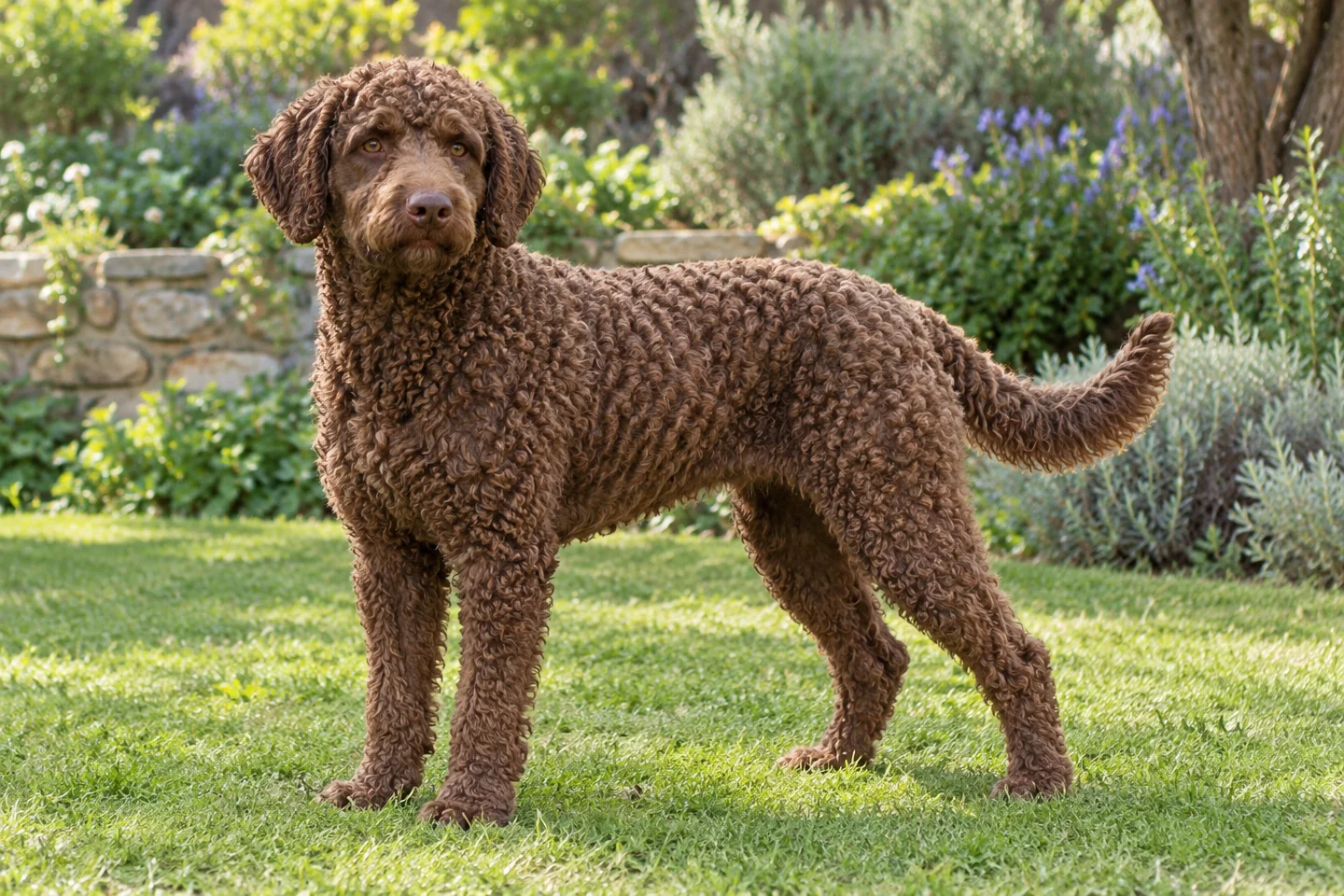
- Solid chestnut-brown curls, evenly short, with full natural tail
General information for owners. These articles have not been reviewed by a veterinarian. Medical decisions need your dog's history and an examination.
A water-dog name also belongs to a herding worker
The Spanish Water Dog is a medium working dog whose background includes herding, hunting, and helping around water. Its woolly curls are distinctive, while its daily needs extend well beyond an appealing appearance. Before choosing one, discuss how searching, movement, learning, company, and rest will fit into an ordinary household. A garden and occasional swim do not supply a complete routine. A prospective owner should ask what the actual family is like around unfamiliar people, running animals, handling, and the end of a game, rather than assume the water-dog name promises an easy social companion.
Meet adults and ask what practical support makes their calm behavior possible. How are visitors introduced, what happens during a necessary absence, and how is coat maintenance managed? A puppy is still developing, while an adult changing homes may need help learning new cues and routines. Prepare secure rest, transport, suitable equipment, clinical care, and a reliable source of advice before arrival. A good placement discussion includes difficult days and unsuitable homes. The individual should fit resources that remain available through work commitments, illness, and later medical restrictions, rather than a plan built entirely around exciting weekend activities.
Spanish identity and a distinction from other curly breeds
Perro de Agua Español is the Spanish name. It is a separate breed from the Portuguese Water Dog, Poodle, and other curly-coated workers. Similar hair does not make their standards, grooming methods, or testing recommendations interchangeable. The Spanish Water Dog is represented as a herding breed in the AKC system and within water dogs in the FCI grouping. Those classifications organize records and events; they do not determine an individual animal's temperament. Ask which registry and programme applies to the source and use the correct name when collecting reports.
The working background supports a discussion of sensitivity to movement, cooperation, and safe outlets. It should not justify untrained access to livestock or a test against live quarry. Current adults' experience matters more to a placement than a general historical description. For a rescue whose ancestry is uncertain, retain that uncertainty while describing observed behavior and condition clearly. Curly brown hair cannot confirm a pedigree. An owner can provide a useful care plan without inventing a precise lineage, and a recognized pedigree still needs supporting medical and behavior information when the animal is being matched to a new home.
Size, chestnut curls, and a full natural tail
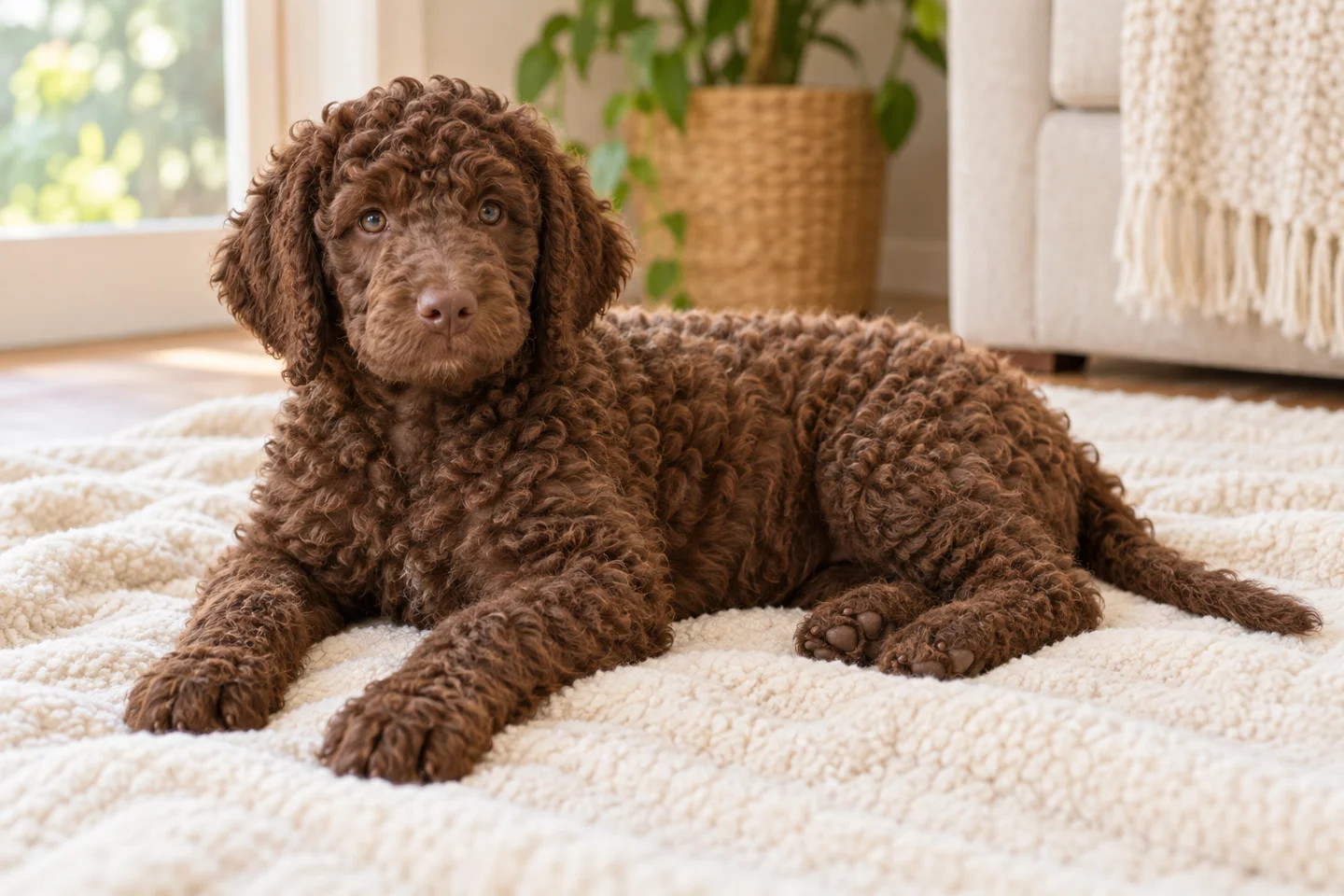
The FCI height and weight ranges are 44–50 cm and 18–22 kg for males, and 40–46 cm and 14–18 kg for females, with its stated height allowance under specified conditions. The outline is robust and somewhat longer than tall. Natural triangular ears hang, and the coat is curly and woolly from puppyhood. Solid white, black, and chestnut shades and permitted white combinations are included. The illustrations select solid chestnut brown with matching pigmentation, an evenly short curly coat, and a full natural tail. Each is labeled an AI illustration rather than a documentary photograph.
The FCI text discusses docking and congenital short tails, while the American club's current AKC standard explicitly accepts all tail lengths and describes a full tail reaching roughly toward the hock. The selected example uses that natural full-tail option with a scimitar-like curve. Do not alter an animal to copy a picture. Watch comfortable movement, body condition, and recovery when meeting a real dog. A standard size is a reference rather than a reason to force growth. Fit equipment beneath the curls and recheck for rubbing or escape risk as the puppy's body changes.
Watchfulness, movement interests, and recovery
A working dog noticing movement may need an alternative response when a child runs, a bicycle passes, or another dog accelerates. Prevent repeated pursuit and reinforce turning toward the handler at a distance where learning remains possible. A secure barrier during busy games can remove a problem the animal has not yet learned to manage. Do not laugh at heel chasing or assume it will disappear once the puppy grows. The behavior has consequences for both dog and people, and useful teaching starts before it becomes the household's repeated daily conflict.
Let unfamiliar people remain at a manageable distance instead of requiring immediate touch. A reserved individual can observe and recover without being crowded to prove friendliness. Provide quiet resting space and predictable endings to activity. Begin short comfortable absences gradually and observe whether the dog is genuinely relaxed. Another pet cannot be promised to solve distress. A newly arrived adult may benefit from a modest first schedule with familiar cues and adequate sleep. Building confidence and practical independence takes information about the individual, not repeated testing of the most optimistic phrase in a breed description.
Training useful responses and cooperative releases
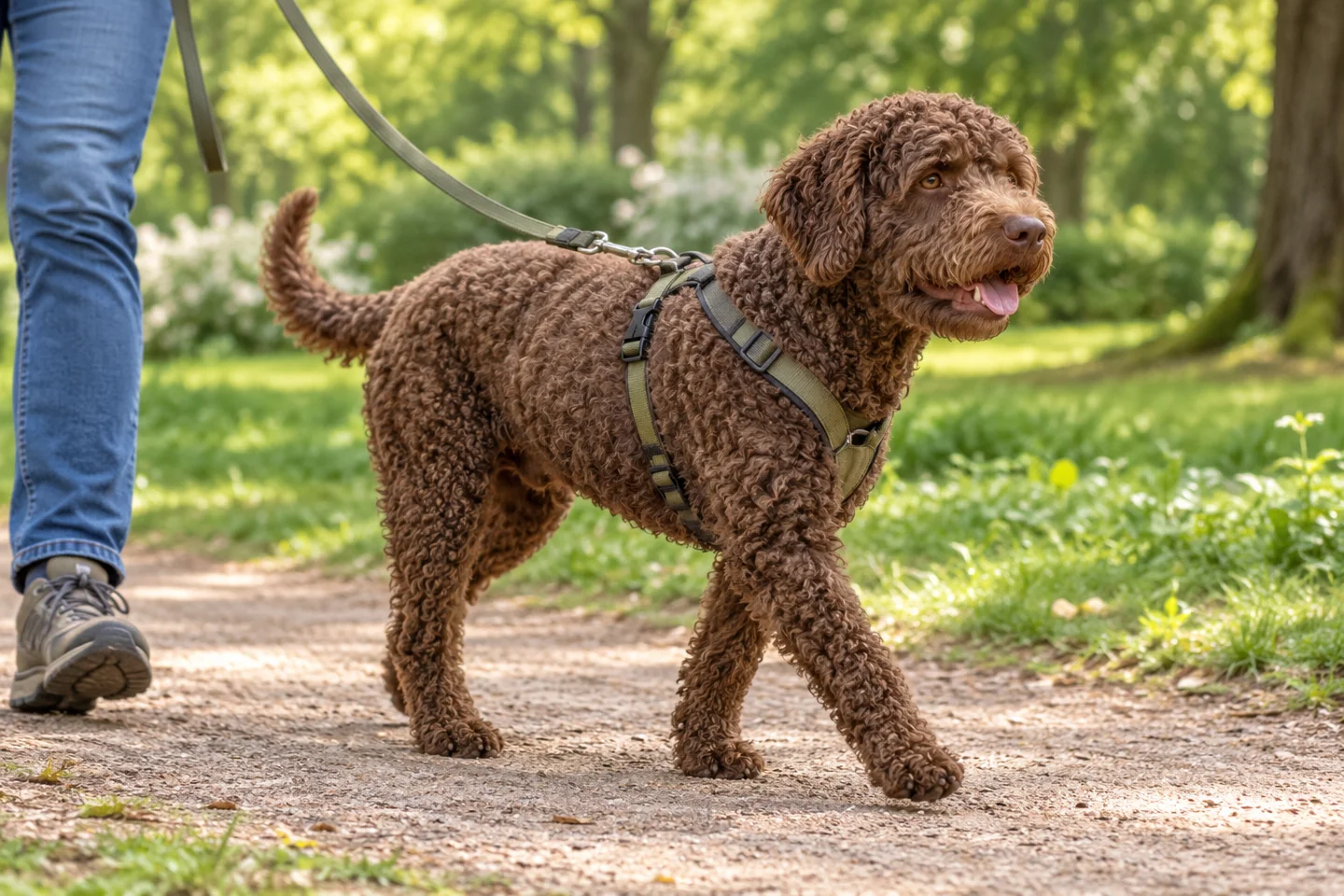
Teach recall, waiting at exits, moving with the handler, and a practiced turn in quiet secure places. Reward achievable responses and add distraction gradually. Use appropriate equipment to prevent unsafe mistakes while skills develop. A safely handled long line on a suitable harness can support work where space permits, but should not trap other animals or people. Never release near roads, livestock, or wildlife as an experiment. The AKC care discussion specifically notes that pursuit can remain difficult for some individuals despite diligent work, so management needs to remain an ordinary resource.
Retrieving and object games should include delivery and release, rather than only pursuit. Begin close by with a safe item, reward returning, and exchange calmly. Keep hazardous material inaccessible and avoid turning recovery of stolen objects into a chase. Guarding requires a revised arrangement and qualified help. Teach calm positions for clipping, skin checks, feet, ears, and mouth care while the dog is comfortable. Short lessons with pauses are more useful than first introducing sustained handling during a painful problem. Training should supply clear choices and practical cooperation, with difficulty adjusted to the learner rather than a contest over control.
Exercise with purpose and a separate water-safety decision
Combine varied movement, scent investigation, learning, and rest according to age, health, fitness, and weather. A young animal needs safe coordination and exploration without an adult endurance target. Introduce longer or more demanding routes gradually and assess recovery later that day and the next morning. Persistent stiffness, a changed stride, or unusual fatigue deserves veterinary discussion. Excitement when a game begins does not establish unlimited stamina. A useful routine includes a way to encourage quiet behavior without repeated high-speed throwing as the only available route to an uneventful evening.
Before swimming, check permission, water quality, temperature, current, boat traffic, banks, and an easy exit. Introduce access gradually with suitable supervision and flotation support where indicated. Do not force a hesitant animal into water or assume the breed name prevents exhaustion. Carry clean drinking water and finish repeated retrieves before recovery becomes difficult. Afterward inspect feet and skin and dry the coat appropriately. On land, secure boundaries and vehicle transfers remain important. A planned route should be shortened when conditions or comfort change, instead of become a task the dog must complete regardless of emerging difficulty.
Aggression, restraint, and preventing a bite
An affectionate working companion can still react to fear, pain, unwanted handling, or possession. Watch withdrawal, stiffness, freezing, a fixed stare, or growling and reduce pressure. Do not punish the warning while continuing to reach toward the face, food, or sensitive body area. A sudden change in tolerance deserves veterinary assessment, particularly when care or movement now causes a response. Describe what happened before and after the event so a professional can investigate context. Calling the animal dominant or jealous supplies less useful information than the actual distance, approach, object, or handling step involved.
Protect meals and rest, manage visitor arrivals, and remove unsafe object opportunities while obtaining help. Make the same routine clear to all adults and carers, with an honest account of bites or close calls. Persistent risk requires veterinary and suitably qualified behavior support. A positively introduced basket muzzle may assist an individual plan, but it does not permit forced contact or rough clipping. Progress should mean comfortable manageable behavior and successful choices at sensible distances. An animal that stops warning under restraint may remain frightened or painful, so silence alone cannot establish that the problem has been resolved.
Children, other dogs, and animals that run
Adults need to supervise contact with children and stop pulling curls, hugging, climbing, chasing, and interruption of meals or sleep. Use a protected resting area and separate before noisy running games become intense. Teach brief invitations to contact followed by a pause, allowing the dog to leave. A child cannot be responsible for preventing movement-triggered pursuit or judging every warning. Good intentions and a friendly family history do not replace an arrangement that remains safe when attention is divided or visiting children behave differently from those the dog already knows.
Introduce another dog with separate handlers and space to walk independently. Watch the ability to disengage before expecting play, and leave retrieving toys out of early meetings. Running cats, poultry, and small pets need their own assessment and secure safeguards. A herding or retrieving history does not guarantee a gentle response to every animal. Some combinations require lasting separation, and familiar indoor tolerance cannot predict every outdoor encounter. Never allow a chase to find out what the dog will do. Planning around truthful prior observations is more useful than obtaining certainty through an avoidable injury or frightening incident.
Grooming curls: do not substitute a brushed fluffy finish
Spanish Water Dog coat care differs from the routine used for many other curly dogs. The AKC and UK breed society advise against brushing or combing the coat, and describe an even clip rather than a sculpted outline. Cords require knowledgeable hand separation and maintenance. Ask a professional experienced specifically with this breed to demonstrate a practical routine, instead of assuming that a Poodle service suits it. The evenly short curls selected for these illustrations are a manageable example, not a promise that clipping removes the need to inspect skin and maintain comfort.
Work with the groomer on a schedule that fits the individual's growth and the owner's capacity. Tight painful matting, restricted movement, or skin irritation needs appropriate assistance. Do not preserve length or a rustic appearance at the expense of welfare. Explain medical and handling concerns before an appointment and introduce the dog gradually to a stable surface, clipper sounds, and brief comfortable touch. Keep face hygiene and sight practical. A coat can retain its characteristic structure while the animal's comfort remains the priority. Ongoing inspection matters even when the external curls look evenly arranged and an appointment is already booked.
Drying, ears, and care after wet outings
Discuss bathing and drying with a breed-experienced professional. Make sure the plan leaves skin and coat comfortable rather than a damp dense layer against irritated areas. Check beneath equipment, around feet, and where debris collects after water or vegetation exposure. Persistent itching, odor, hair loss, or a new lesion should be assessed, not assigned automatically to a food allergy or normal cording. Keep towels, bedding, and equipment clean and dry. A practical post-outing routine can be short and useful when the animal has learned to stand calmly for it.
Inspect the visible outer ears for redness, discharge, sensitivity, or repeated shaking and seek advice rather than probe the canal. Old drops may be unsuitable for an unexplained episode. Include nail and dental care in calm regular handling, using methods recommended for the patient. If a normally easy step becomes difficult, investigate discomfort before demanding more tolerance. Tell the clinic what changed and whether an outing or product preceded it. Cooperative care helps reveal the problem accurately and makes it less likely that every necessary examination becomes a struggle that obscures the animal's actual response to pain.
Health screening: distinguish examinations and named variants
The current AKC national-club recommendations identify hip and ophthalmologist evaluations. The British breed society also discusses prcd-PRA, congenital hypothyroidism with goitre, neuroaxonal dystrophy, early-onset PRA, and appropriate eye investigations. These sources have different roles and should not be compressed into a universal worldwide panel. Ask which current programme the source follows and obtain identified parental reports. A result for one PRA variant does not automatically answer another form of retinal disease. A clinical eye examination and gonioscopy also have different purposes from a DNA swab.
Have results explained before relying on phrases such as clear or fully tested. Ask which finding was made, when, how it informed the pairing, and what family history is known. A genetic identity profile supports identity or parentage rather than establish absence of disease. A CHIC number should lead to published records, not replace reading them. For an adult without parental information, collect its own clinical history and arrange an individual plan. Known concerns justify informed questions, but the existence of a test does not supply a current breed-wide frequency or guarantee that every future problem has been excluded.
Eye changes and new neurological signs need direct assessment
The British society's discussion distinguishes routine eye examination, named retinal variants, and gonioscopy's assessment of the drainage angle. That is useful when comparing paperwork because one screenshot labeled eyes clear may hide very different information. For the dog at home, a painful, red, closed, or suddenly altered eye requires prompt veterinary advice. An earlier normal examination cannot identify today's cause. Do not use leftover medication or wait for the next routine screening appointment while the animal appears painful. Keep the actual report available so the clinician knows what was previously assessed.
New imbalance, weakness, abnormal movements, or a sudden change in ordinary function also deserves clinical attention. A breed article cannot establish a neurological diagnosis from a symptom list. Tell the veterinarian when signs began, how they progress, and what family or test information is available. Urgent deterioration needs immediate contact rather than a message to a breed group. If a condition is diagnosed, follow the patient's actual instructions and make them available to alternate carers. Accurate records distinguish an established finding from an inherited explanation that someone has guessed because a familiar disease name appeared in a search result.
Nutrition, mixes, and keeping the routine affordable
Choose complete nutrition appropriate to life stage, medical needs, and workload. Measure portions and account for training and enrichment food. Review body condition beneath the curls with the clinic as activity changes. Do not diagnose a suspected allergy by coat appearance alone or repeatedly restrict foods without a proper plan. A Spanish Water Dog mix can vary in size, hair, movement interests, and handling needs. Ask what is known about both parents and preserve uncertainty. Crossing does not guarantee a low-maintenance coat or freedom from inherited disorders, and curls cannot confirm ancestry by themselves.
Budget for specialized grooming, routine and urgent veterinary care, suitable insurance or emergency funds, training help, secure equipment, transport, and knowledgeable sitting. A carer should understand the curl routine, door security, and individual response to movement. Clarify source support and return terms in writing. An owner keen on water activities still needs a plan for ordinary workdays, illness, and later mobility restrictions. Obtain actual local estimates rather than trust a universal lifetime price. The home is a good fit when it can sustain the practical routine, not merely provide an attractive setting for a curly dog during occasional exciting outings.
Sources and editorial notes
Sources checked October 22, 2026. Breed measurements describe reference ranges, not a diagnosis or an individual dog's ideal weight. Images are AI-generated breed illustrations and do not document a particular dog or health condition.
- AVSAB: Humane Dog Training Position Statement
- VCA Animal Hospitals: Food aggression in puppies
- VCA Animal Hospitals: Common emergencies in dogs
- Orthopedic Foundation for Animals: CHIC health screening programs
- VCA Animal Hospitals: Aggression toward unfamiliar dogs, diagnosis
- VCA Animal Hospitals: Grooming and coat care for your dog
- VCA Animal Hospitals: Ear infections in dogs (otitis externa)
- AAHA: Feeding plans for healthy, appropriate weight cats and dogs
- VCA Animal Hospitals: Heat stroke in dogs
- AVSAB: Puppy Socialization Position Statement
- VCA Animal Hospitals: Dog behavior problems, aggression toward children
- Official breed standard: Spanish Water Dog
- Spanish Water Dog Club of America: AKC standard effective February 2023, including full tails
- American Kennel Club: Spanish Water Dog health recommendations and specialized coat care
- Spanish Water Dog Society of Great Britain: inherited conditions, eye examinations, and curl care
Keep getting to know dogs.
Read another guide or return to your dogsDating community.
Explore breed guidesBack to dogsDating