Sussex Spaniel
A low substantial British flushing spaniel with golden-liver hair, needing patient growth, comfortable activity, coat and ear care, and a clear reading of the breed club’s actual health guidance.
How these guides are researched and reviewed
- Origin
- Great Britain
- FCI ideal height
- 38–41 cm
- FCI weight reference
- Approximately 23 kg
- Color
- Rich golden liver, with golden hair tips
General information for owners. These articles have not been reviewed by a veterinarian. Medical decisions need your dog's history and an examination.
A low spaniel still needs active investigation
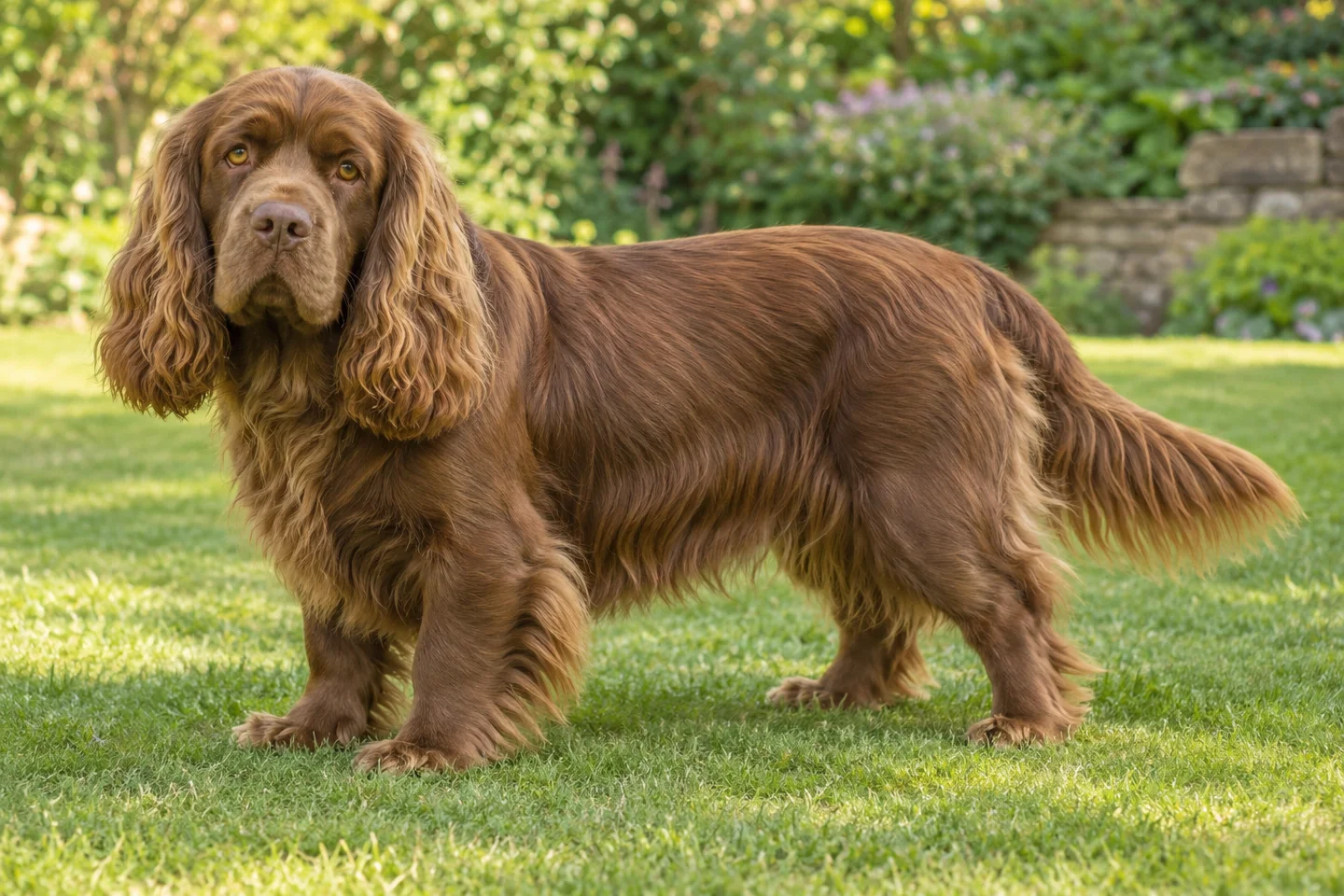
The Sussex Spaniel is a low, substantial British flushing spaniel with a golden-liver coat and a broad expressive head. Its shape and unhurried-looking stance can encourage people to expect a sedentary companion, while the working identity still involves active investigation with a person. A prospective home should plan comfortable movement, learning, company, care, and rest. Short legs do not remove the need for meaningful outings, and a sturdy body does not justify pushing a young animal into demanding work. The useful starting point is the particular dog's age, condition, experience, and ability to recover.
Meet adults and ask what ordinary life requires. How does the dog respond to visitors, birds, grooming, and necessary time apart? How does it settle after activity? An honest source can explain difficult situations and the teaching behind the relaxed moments. A puppy is still developing, while an adult changing homes may need familiar cues and a modest initial schedule. Prepare secure rest, transport, clinical care, and appropriate support before arrival. Choose an animal whose needs fit everyday resources through employment, illness, and later mobility changes, rather than an appealing photograph that seems to promise an easy slow-paced pet.
Sussex identity and the purpose behind its appearance
The FCI identifies Great Britain as origin and classifies the Sussex as a flushing dog. It has a separate identity from the Clumber, Field, and Cocker Spaniels, even when those breeds share some work or medical discussions. The rich golden-liver color and low substantial outline help distinguish a visual example. They cannot prove the ancestry of an unknown rescue. Keep registered names and identification linked to records and retain uncertainty when background is incomplete. A careful placement assessment does not require inventing a precise pedigree to justify giving the animal appropriate activity and clinical care.
Ask how present selection balances temperament, health, structure, and work. A historic working role should guide a discussion of interest and ability without turn into a promise that every modern dog can safely perform the same tasks. Related adults' actual routines provide more useful evidence than a broad description of an old English breed. A source should be willing to explain what its family finds easy and what needs support. Imported documents need readable explanations without changing original findings. The new household's task is to make ordinary daily life comfortable and manageable for this individual, with room to adapt the plan as the dog develops.
Height, weight, golden liver, and a low natural tail
The English FCI standard dated October 2026 gives an ideal height of 38–41 cm and a weight reference of approximately 23 kg. The strong body sits on short well-boned legs, with a broad head, hazel eyes, liver-colored nose, and natural lobular hanging ears. The coat is rich golden liver with gold at the hair tips. The illustrations use that color and a full natural tail set low and carried at or below back level. Each picture is labeled an AI illustration rather than a photograph establishing a specific animal's registration or health.
The standard describes a characteristic rolling movement, but a breed gait description should not be used to dismiss pain or a new change in stride. Watch ordinary walking, turning, and rising and ask about injury or reduced tolerance. Body condition needs individual assessment rather than feeding every dog toward an approximate standard weight. Young animals should grow on suitable nutrition without unnecessary supplements or adult workouts intended to produce a finished outline quickly. Fit equipment to the actual frame and provide comfortable surfaces. A correctly colored coat cannot establish sound joints or explain why an individual has become reluctant to move.
Temperament and a practical household rhythm
A companionable description still leaves important individual questions. Observe how the dog recovers after a surprise, manages an ending to a game, and responds when people are busy. Reward quiet transitions and provide rest away from the busiest doorway. A household that repeatedly offers another exciting activity can make settling hard to practice even for an animal expected to be calm. Ask the source which routines support its adults. The ability to sit comfortably beside a familiar person is useful evidence, while visitors, separation, and unfamiliar care require their own assessment.
Let introductions proceed at a manageable pace. A person should not loom over the dog, hold its head, or insist on touching the ears because it appears gentle. Brief optional contact and space to leave are useful safeguards. Start short comfortable absences gradually and observe genuine relaxation before extending them. Another pet cannot be promised as a treatment for distress. An adult arriving from a different home may need simpler initial expectations, familiar cues, and adequate sleep. The aim is a predictable workable week rather than a sequence of social tests designed to prove every favorable phrase in a breed profile.
Training recall and cooperative everyday movement
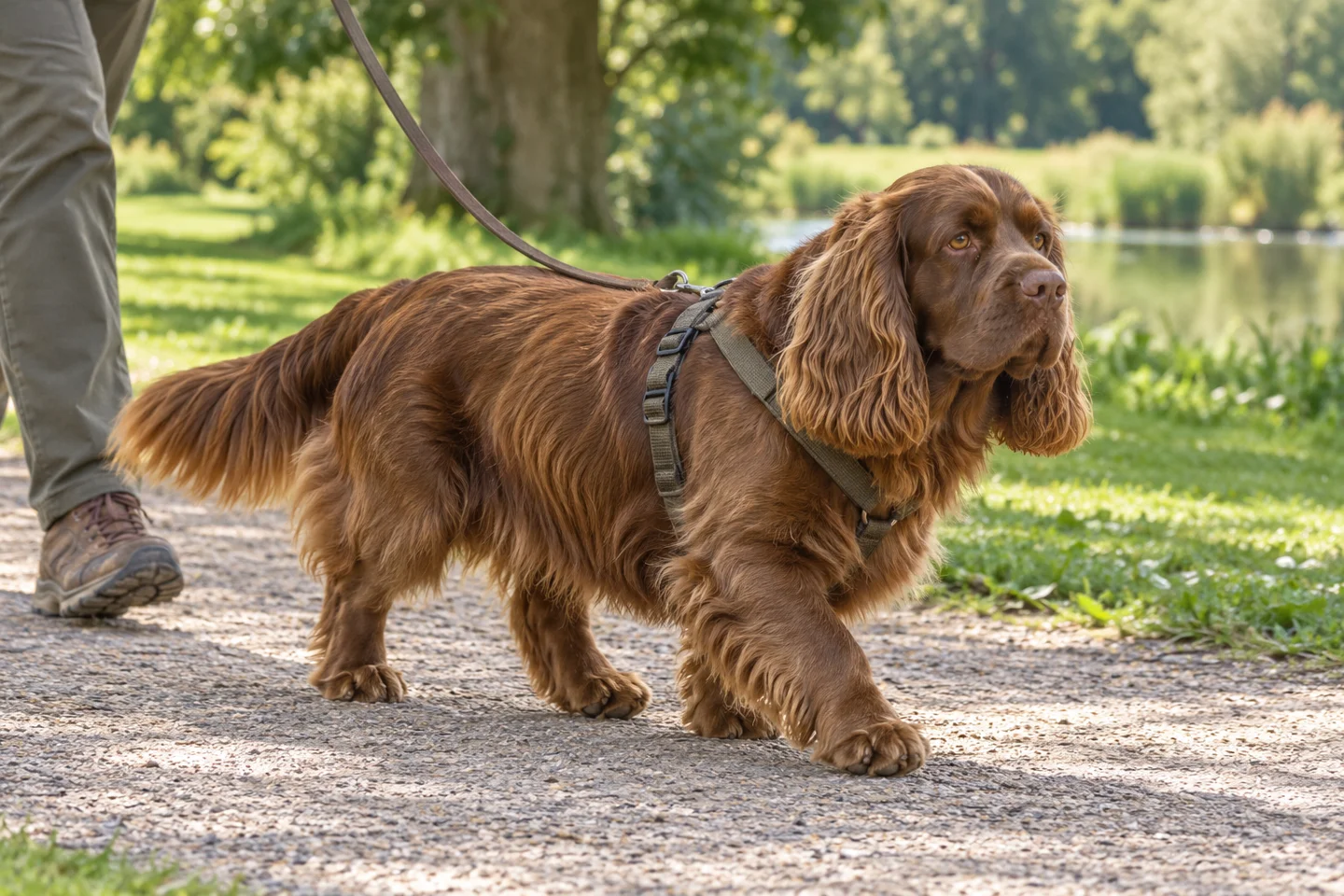
Build recall in secure easy settings, reward a prompt return, and often permit another safe investigation afterward. Add distraction gradually and use suitable equipment while reliability develops. A safely handled long line on a well-fitted harness may help where there is room to prevent entanglement. Do not release near traffic, livestock, or vulnerable wildlife to discover whether the dog will choose its handler. A low spaniel can still follow an interesting scent away from safety. Waiting at exits and a practiced turn with the person are useful before an unexpected event makes the surroundings more difficult.
Teach exchanges for suitable objects and prevent access to hazardous material rather than chase the animal around the house. If possession causes stiffness or guarding, revise the setup and obtain qualified guidance. Care lessons should include comfortable standing or lying on a stable surface, feet, ears, mouth checks, and brief comb contact. Reward seconds of participation and allow pauses. A painful first tangle or injury is a poor time to introduce sustained unfamiliar handling. Useful training should improve comfort and daily safety, rather than concentrate only on a trick that looks polished while ordinary grooming and examinations remain stressful.
Exercise during growth and at a comfortable adult pace
The AKC notes the breed's slow development and cautions about strenuous activity in young dogs. Use that as a reason to discuss the individual growth and exercise plan with the veterinarian and source rather than prescribe adult workloads early. Provide suitable exploration, coordination, short lessons, and rest. Mature dogs also need gradual increases after illness or inactivity. Watch comfort later that day and the next morning. Persistent stiffness, reduced stride, or unusual fatigue deserves assessment. An animal eager to join an outing may still need the handler to choose a shorter or easier route.
Choose terrain that permits comfortable movement and an easy return. Avoid making repeated leaps from furniture or a vehicle part of a routine when safer access is appropriate. Carry drinking water, provide shade, and adjust timing and duration in heat. A familiar path can become unsuitable after weather or health changes. Quiet days need a practical plan using appropriate engagement instead of frantic throwing indoors. Secure boundaries and vehicle transfers matter too. The goal is comfortable sustainable activity, not a fixed distance completed despite signs that the animal is struggling or a belief that short legs automatically mean no exercise is needed.

Aggression and listening to a dog expected to be gentle
A gentle breed description does not guarantee freedom from aggression. Pain, fear, restraint, possession, or repeated unwanted touch can affect an individual. Withdrawal, freezing, stiffness, a fixed stare, or growling calls for less pressure and more room. Do not punish a warning while continuing to handle the same sensitive area. Sudden changes around an ear, foot, mouth, or movement deserve veterinary attention. Give a professional a concrete account of preceding events and recovery rather than assume a motive. An animal's broad expressive face cannot by itself show that it welcomes close contact.
Make a concrete management arrangement for any recurring conflict. A dog guarding a resting place may need a protected area away from passing feet; difficulty during ear care needs veterinary attention and a gentler handling plan. Record who approached, what the dog was doing, and how the encounter ended. Share that history with everyone responsible for care, including bites that did not produce a dramatic injury. Obtain veterinary and qualified behavior help when risk persists. If a professional advises muzzle use, build a comfortable association before it is needed and preserve all the other safeguards. Forcing the animal through the original situation while suppressing its warning gives little evidence that the cause of its discomfort has improved.
Children, other dogs, and smaller household animals
Adults should supervise contact with children and stop hugging, ear pulling, climbing, chasing, and interruption of food or sleep. Provide a calm area children cannot enter and separate before running games become intense. A low body can be easy for a child to crowd, while the dog still needs an exit. Teach brief invitations to contact followed by a pause and respect withdrawal. A child's good intentions cannot replace a safe physical arrangement when excitement or visiting children makes rules harder to follow. An adult should manage walks near traffic and difficult care tasks.
Introduce dogs with separate handlers and space for parallel movement. Observe whether both can disengage before expecting play or access to valued items. Similar size or a shared spaniel label cannot guarantee comfort. Cats, birds, rabbits, and other small pets need their own assessment and secure barriers because movement can engage pursuit. Acceptance of one familiar animal does not predict every outdoor response. Some combinations require lasting separation. Never release the dog toward a vulnerable animal as a test of affection or training. Accurate prior observations help, while prevention protects animals when background or likely behavior in a new situation remains uncertain.
Grooming flat hair and keeping foot contact comfortable
Brush and comb gently through the coat, checking skin beneath the surface and paying attention behind ears, under straps, in the armpits, and around the rear. A tidy outer finish can hide a tight tangle below. Remove attached material after outings before it becomes incorporated into a knot. Ask a breed-experienced groomer to demonstrate practical tools and a schedule suited to the individual. A painful mat needs appropriate assistance, with comfort taking priority over retaining length. The coat should not restrict sight or movement, and presentation should remain subordinate to the animal's welfare.
The AKC notes that hair beneath the feet may need attention to prevent slipping. Ask a professional to show safe maintenance rather than cut close to hidden skin without guidance. Keep nails comfortable and provide non-slip surfaces where needed. Dry thoroughly after bathing or wet routes and keep bedding and equipment clean. Tell the groomer about medical restrictions and changes in handling tolerance. A dog suddenly avoiding a familiar combing step may be painful. Investigate before demanding compliance, because repeated forced care can make the next necessary examination harder while leaving the original physical problem untreated.
Ears, mouth, and a useful post-walk check
Inspect the visible outer ear for redness, discharge, smell, or sensitivity. Persistent shaking or pain deserves advice rather than deep probing or repeated use of old drops. Long hanging ears need comfortable handling, not an assumption that every episode has the same cause. Include pads, nails, and mouth care in regular brief inspections. A dog interested in an outing can still have an uncomfortable toe or ear, so willingness should not substitute for checking. A small post-walk routine is easier to sustain when tools, towels, lighting, and appropriate rewards are ready.
Dental care should be planned with the veterinary team and introduced gradually. Watch changed chewing, appetite, odor, or tolerance of mouth touch. Keep original treatment instructions accessible to another adult so a diagnosis does not depend entirely on one person's memory. New skin irritation or hair loss deserves assessment rather than a stronger cosmetic product. Report the timing, products, and areas affected. Care should help people notice changes accurately while the animal remains comfortable. A clean outer appearance is useful, but cannot establish that the mouth, ears, or skin beneath feathering are free of pain.
Health guidance: read the club document beyond a summary list
The current AKC breed page displays no recommended tests in its short national-club list while separately discussing health concerns and PDP1 testing. The Sussex Spaniel Club of America's own published health document specifically discusses PDP1 and cardiac assessment. Read that primary guidance rather than interpret the short list as advice to ask no medical questions. Request actual parental reports and a clear explanation of the source's programme. A clinical examination, a specific disease-variant assay, a genetic identity profile, and a pedigree answer different questions and should be identified separately.
The club's document includes historical population figures, which should not become current counts or a precise prediction of an individual puppy's future health. Ask about diagnosed family conditions, surgery, mobility, and later owner reports, keeping missing information honest. A testing label cannot guarantee lifelong freedom from illness. For an adult without parental records, collect its own clinical history and arrange a patient-specific plan. A veterinarian can help judge additional assessment without borrowing a different spaniel's universal panel. The useful outcome is a transparent record tied to the actual animal and decisions the new household can understand.
PDP1 is a specific inherited energy-metabolism concern
Pyruvate dehydrogenase deficiency associated with the spaniel PDP1 variant affects energy metabolism. Embark describes recessive inheritance and marked exercise intolerance, with signs often appearing in young animals. The American club discusses the specific test and avoiding an affected pairing. Ask for the named result and professional interpretation rather than assume any genetic swab excludes this condition. A carrier result and clinical illness are different concepts. A precise report helps a breeding discussion, while a broad promise that the family is healthy does not establish what was tested or how the result was used.
Unusual weakness, pronounced fatigue, collapse, or poor recovery needs clinical assessment regardless of testing history. Do not push more exercise to build stamina while the cause remains unexplained. Provide timing, preceding activity, family information, and actual reports to the veterinarian, with urgent contact for severe or rapidly worsening signs. A diet or treatment plan must be patient-specific; do not copy another dog's nutritional prescription from a breed discussion. Keep instructions available to carers. The breed-relevant concern identifies an important question, but cannot diagnose every low-energy episode or make a reassuring parental result explain a new symptom automatically.
Cardiac assessment and useful information from a 2026 survey
The American club's health document recommends listening to a puppy's heart and further investigation when a problem is detected. Ask what examination occurred, which finding was made, and whether specialist follow-up was completed. A normal early assessment should not be presented as exclusion of every later cardiac condition. Keep the original report instead of a translated phrase such as heart checked. New breathing difficulty, collapse, or reduced exercise tolerance warrants clinical advice, with urgent help for severe signs. Do not wait for a breed coordinator to reply while the patient is deteriorating.
The British Sussex Spaniel Association is collecting information through a 2026 health survey. Owner reporting can improve evidence when confirmed diagnoses, timing, and causes of death are recorded accurately. Participation is not a diagnostic service, and a collection project does not establish a current disease frequency before results are evaluated. Share useful information through an appropriate confidential route while protecting other owners' privacy. For the dog at home, the treating clinic remains responsible for assessment and instructions. Accurate follow-up serves both present care and future understanding better than repeating an unsupported lifespan or a claim that rarity itself explains health.
Nutrition, mixes, and costs beyond a moderate height
Use complete nutrition suited to life stage, health, and workload. Measure portions and count training rewards. Review body condition with the veterinary team rather than assume a substantial breed should carry extra fat. Puppies need balanced growth without unneeded supplements intended to create an adult outline early. A Sussex mix can vary in size, hair, interest in game, and activity. Ask what is known about both parents and preserve uncertainty. Golden-liver hair cannot confirm ancestry, and crossing does not guarantee an easier coat, a quiet temperament, or freedom from inherited conditions.
Budget for grooming, routine and urgent clinical care, suitable insurance or emergency funds, training support, secure transport, equipment, and knowledgeable sitting. A carer should understand handling, ear care, and the individual's activity limits. Clarify source support and return terms in writing and obtain actual local estimates instead of a universal lifetime-price claim. A suitable home remains practical through employment, illness, bad weather, and later mobility changes. The commitment includes ordinary care and quiet recovery as much as enjoyable walks, with resources that remain available after the initial appeal of a rare golden-coated puppy becomes everyday responsibility.
dogsDating walks at an individual spaniel’s pace
For a Sussex Spaniel, a dogsDating walk should allow the owner to choose a pace and surface appropriate to this particular dog. Explain any mobility limits before agreeing to an energetic companion's usual route. Select a public starting point with level footing and a short return option, keeping exact coordinates of the residence and the home address off the public profile. Begin walking on separate lines rather than having the dogs wait in close contact while people chat. An owner should be able to pause without the second dog immediately climbing over the spaniel. Leave toys packed away and assess ordinary movement together before considering play. The meeting succeeds when the animals remain comfortable, even if that requires a slower or shorter outing.
Watch whether both animals can investigate, glance away, and move comfortably. Increase distance or finish if freezing, withdrawal, pursuit, or arousal prevents disengagement. Quiet repeated walks can provide companionship without close wrestling. Review spacing, pace, route, and duration afterward and use the observations for another invitation. Keep public photographs free of exact address details and another person's private information. A useful meeting leaves handlers able to manage their animals and dogs able to depart calmly, including the option to shorten the outing or choose a different pairing when comfort calls for a change.
Sources and editorial notes
Sources checked October 22, 2026. Breed measurements describe reference ranges, not a diagnosis or an individual dog's ideal weight. Images are AI-generated breed illustrations and do not document a particular dog or health condition.
- AVSAB: Humane Dog Training Position Statement
- VCA Animal Hospitals: Food aggression in puppies
- VCA Animal Hospitals: Common emergencies in dogs
- Orthopedic Foundation for Animals: CHIC health screening programs
- VCA Animal Hospitals: Aggression toward unfamiliar dogs, diagnosis
- VCA Animal Hospitals: Grooming and coat care for your dog
- VCA Animal Hospitals: Ear infections in dogs (otitis externa)
- AAHA: Feeding plans for healthy, appropriate weight cats and dogs
- VCA Animal Hospitals: Heat stroke in dogs
- AVSAB: Puppy Socialization Position Statement
- VCA Animal Hospitals: Dog behavior problems, aggression toward children
- Official breed standard: Sussex Spaniel
- Sussex Spaniel Club of America: published health guidance for PDP1 and cardiac assessment
- American Kennel Club: Sussex Spaniel growth, everyday care, and health information
- Embark Veterinary: PDP1 spaniel-variant pyruvate dehydrogenase deficiency
- Sussex Spaniel Association: 2026 health survey and owner advice resources
Keep getting to know dogs.
Read another guide or return to your dogsDating community.
Explore breed guidesBack to dogsDating