Swedish Lapphund
The Svensk lapphund is a black-coated Swedish spitz with a herding background, needing purposeful activity, practical management of voice and movement, and breed-specific health records.
How these guides are researched and reviewed
- Origin
- Sweden
- SKK ideal male height
- 48 cm, with ±3 cm allowance
- SKK ideal female height
- 43 cm, with ±3 cm allowance
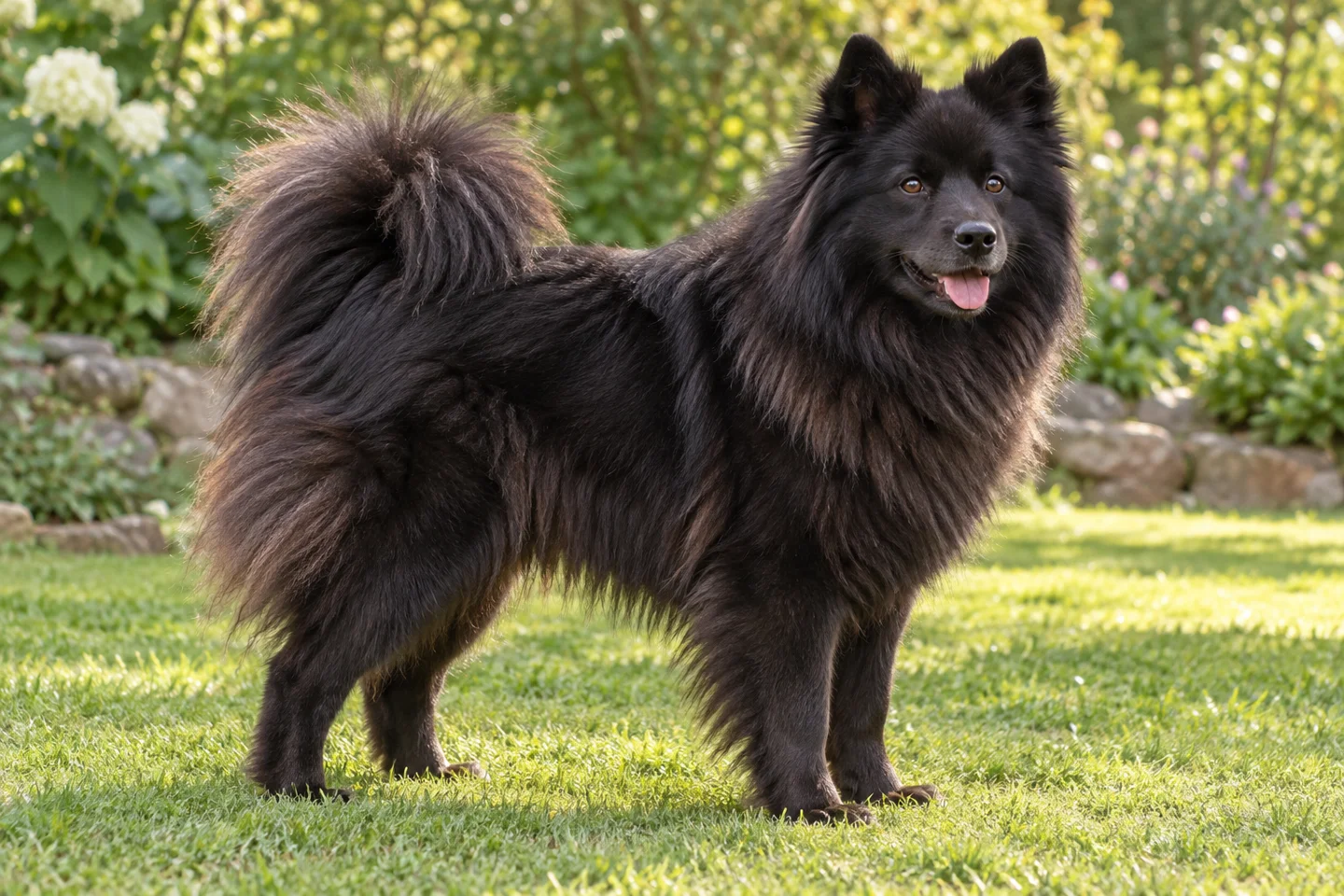
- Illustrated coat
- Black stand-off double coat and full plumed tail
General information for owners. These articles have not been reviewed by a veterinarian. Medical decisions need your dog's history and an examination.
A black Nordic spitz with its own working identity
The Swedish Lapphund, or Svensk lapphund, is a Swedish herding spitz with a black coat and attentive expression. Its compact sturdy appearance can suit many settings when owners provide appropriate activity and company, but a placement still needs an individual assessment. Ask what the available dog does around running animals, visitors, unfamiliar sounds, grooming, and necessary time apart. A recognizable curled tail and fluffy puppy coat cannot establish how easily it will settle. The useful question is how movement, learning, investigation, rest, and clinical care will fit an ordinary week.
Meet adults and discuss the routines behind their calm moments. A source should explain inconvenient behavior as clearly as enjoyable activities. A puppy is still developing, while an adult changing homes may need familiar cues and time to learn new expectations. Prepare secure rest, transport, suitable equipment, veterinary contact, and reliable help before arrival. The plan should remain workable during employment, illness, and later mobility restrictions. A home is a suitable fit when it can meet ordinary needs consistently, rather than depend on the initial enthusiasm of acquiring an uncommon Nordic dog or a schedule of exceptional weekend outings.
Sámi working history and a distinction from Finnish Lapphunds
The Swedish Kennel Club's educational material describes a history with Sámi people involving farm, hunting, and later reindeer-herding work. That context helps explain a dog attentive to movement and willing to communicate. It should be presented with respect for the people and actual records, without turning an old working tradition into a precise unchanged temperament for every current puppy. The Swedish Lapphund is distinct from the Finnish Lapphund and Lapponian Herder. Their related names and northern histories do not make appearance, health findings, or breeding policies interchangeable.
Accurate naming matters when seeking advice. A black fluffy rescue cannot be assigned confirmed Swedish ancestry from a photograph, and a pedigree still needs supporting behavior and medical information. Ask which organization follows the actual family and how later owner findings are collected. Keep original identification with readable reports if importing. Historical prestige or national-breed status should not replace questions about today's parents and placement support. The new household's task is practical: provide safe activity, clear learning, comfortable handling, and a routine that can adapt as the individual develops, rather than expect ancestry alone to supply every useful skill.
Size, black hair, and natural tail carriage
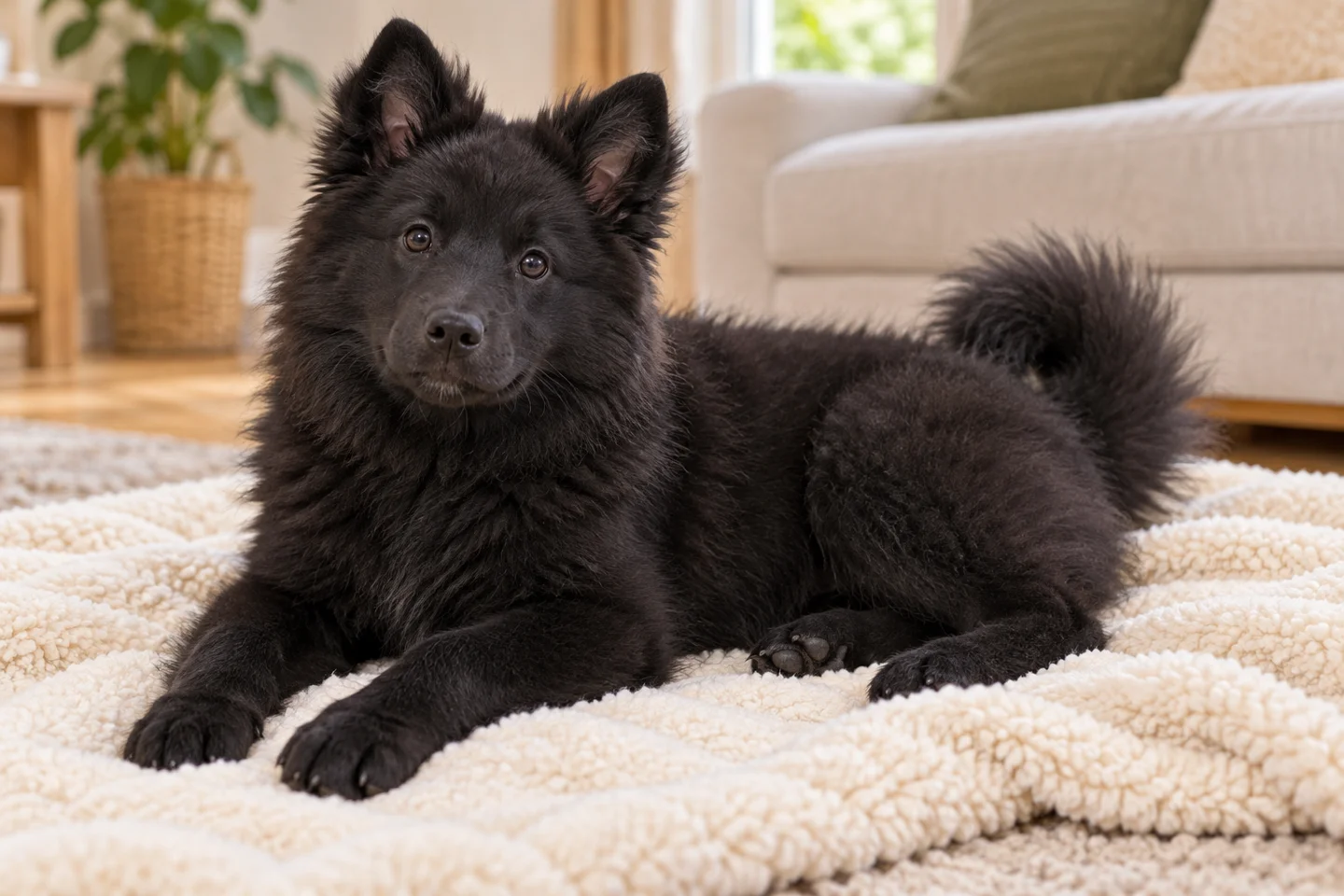
Sweden's kennel club gives ideal male height as 48 cm and female height as 43 cm, each with a 3 cm allowance. The outline is rectangular rather than square, with a distinct short muzzle, a pronounced stop, dark eyes, and natural small erect ears. A dense undercoat supports stand-off outer hair. Black can show characteristic brownish bronzing, particularly in older coat. The illustrations choose black examples with natural ears and a full plumed tail. Each is labeled an AI illustration, not a photograph proving the identity or health of an available dog.
The tail may curl over the back during activity and need not stay raised when the dog is resting. That differs from several hounds and guardians in this catalog, whose full tails should remain lower. Assess real movement and condition directly rather than use a picture as a clinical judgment. Watch walking, rising, turning, and recovery and ask about injuries or changed tolerance. Fit equipment beneath the coat and inspect contact areas for rubbing. Puppies need suitable growth and activity instead of supplements or hard work intended to create a finished adult outline early. A standard measurement helps describe type while individual examination guides care.
Voice, watchfulness, and useful alternatives indoors
A barking herding background makes voice a topic worth discussing before choosing a noise-sensitive home. Ask what starts this individual's vocalizing and how it recovers. Movement, a visitor, repeated window watching, and distress during absence need different responses. Reduce rehearsals where possible and teach an achievable alternative such as turning with the handler or returning to a mat. Do not encourage dramatic alarm for entertainment or assume shouting provides a clear lesson. The useful goal is a dog able to observe and disengage, with the context understood rather than every sound dismissed as an inevitable breed trait.
Make rest part of ordinary life. A quiet area away from the busiest doorway or view gives the dog a chance to settle without monitoring every event. End games predictably and reward calm transitions. A new adult may need simpler initial expectations and familiar cues, while a puppy needs appropriate experiences balanced with sleep. Introduce short comfortable absences gradually and arrange support when work exceeds current coping ability. Another pet cannot be promised as treatment for distress. Observe genuine relaxation and recovery rather than judge success solely by silence or a general description of family attachment.
Training around movement without rehearsing pursuit
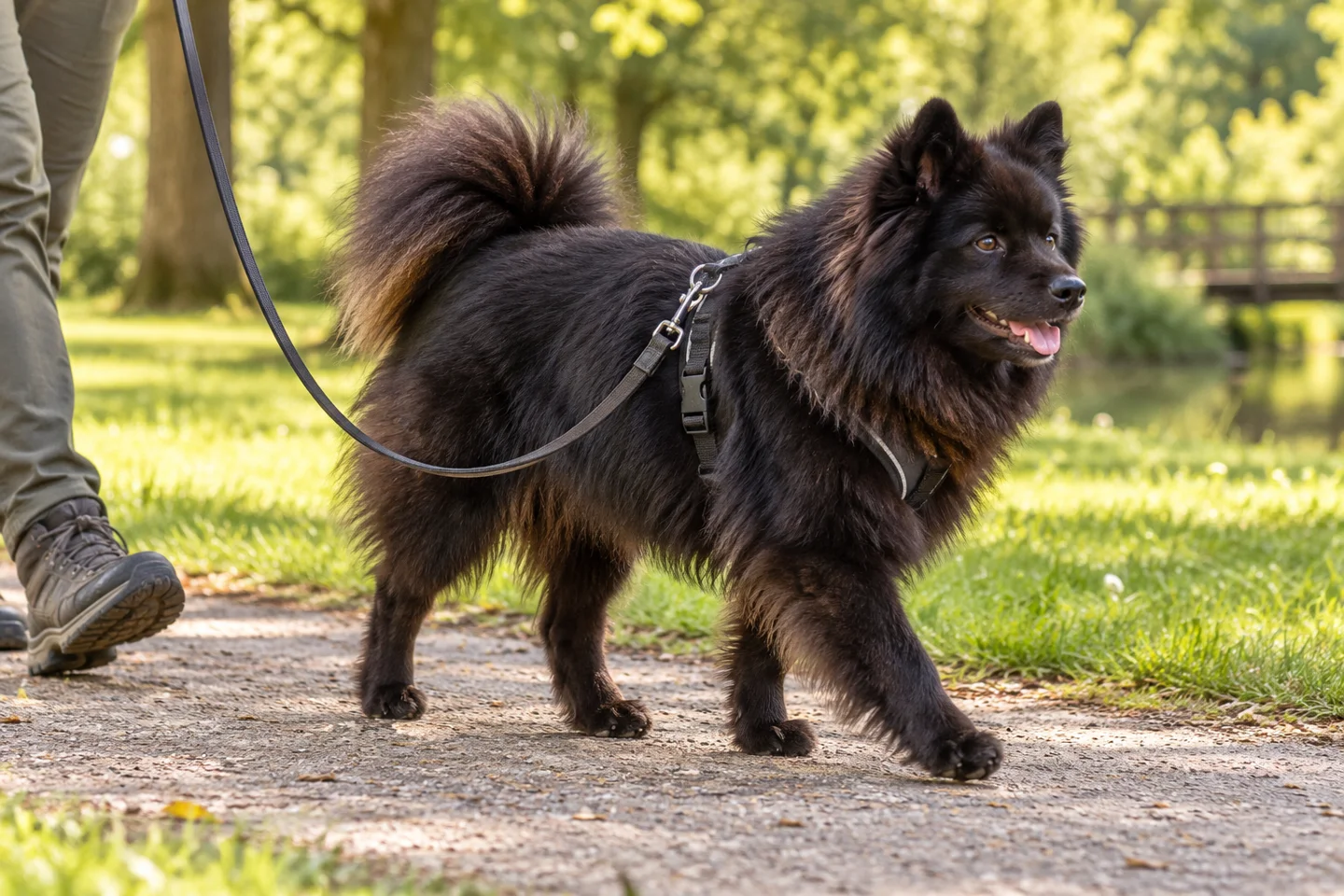
Teach recall, waiting at exits, a practical turn, and moving with the handler in secure easy settings. Reward achievable steps before adding distracting movement. A dog that circles running people or pursues a bicycle needs management and a clear alternative, not encouragement to demonstrate herding. Use barriers during busy games when necessary and practise at a distance where the animal can think. A correctly fitted harness and safely handled long line can support learning where there is room to avoid entanglement. Do not test reliability by releasing near roads, stock, or vulnerable wildlife.
Use short scent and learning tasks that reward attention without constant high-speed arousal. Teach release through an exchange and keep hazardous objects inaccessible. Chasing stolen items can make the wrong part of the interaction rewarding, while forced removal can create pressure. Guarding deserves a revised setup and qualified guidance. Include comfortable handling of feet, ears, mouth, and coat, rewarding seconds of participation with pauses. A thick coat requires reliable inspection, so care skills have immediate practical value. The first painful mat or injury should not also be the animal's first experience of sustained touch or unfamiliar restraint.
Exercise and weather decisions for a coated spitz
Combine regular movement, investigation, learning, and recovery according to age, health, and fitness. A versatile background can support many activities, but it cannot set one daily distance suitable for every individual. Build new workloads gradually after travel, illness, or reduced activity. Young animals need coordination and safe exploration without an adult endurance target. Watch movement later in the day and the following morning. Persistent stiffness, unusual fatigue, or reduced tolerance deserves veterinary assessment. Enthusiasm when a lead appears cannot establish that continuing a demanding route is comfortable or beneficial.
The weather-protective coat does not remove the need for shade, drinking water, and appropriate timing in heat. Adjust duration and demands to conditions and provide a comfortable resting place. Cold wet activity also needs sensible supervision, drying, and recovery rather than an assumption that northern ancestry makes every exposure harmless. Check boundaries and vehicle transfers to prevent escape. Quieter days should remain manageable through suitable engagement without turning the house into an endless throwing lane. A plan that includes rest and the option to finish early is more useful than a fixed route completed after the animal or weather has changed.
Aggression and interpreting the whole animal
A lively affectionate reputation does not guarantee freedom from aggression. Fear, pain, restraint, possession, or repeated unwanted contact can influence an individual. Look beyond an appealing face and curled tail to withdrawal, freezing, stiffness, a fixed stare, or growling. Reduce pressure and provide space rather than punish a warning while continuing the approach. A sudden change around an ear, foot, mouth, or movement deserves veterinary attention. Record the actual circumstances and recovery so a professional can investigate context, rather than rely on a motive guessed from a breed description or one difficult event.
Ask a behavior professional to help define the situations that precede threatening behavior and the practical changes that will prevent repetition. The plan might involve changing the visitor-entry routine, relocating a resting place, or giving the animal more clearance during handling. Veterinary assessment matters when tolerance changes or discomfort may be involved. Tell every carer what has happened, including near misses, rather than describing the dog simply as protective. Where a basket muzzle is recommended, teach comfortable voluntary use in advance and keep its role within the wider management plan. It cannot make an unwanted close approach appropriate. Evaluate progress through easier recovery and safer choices, with no need to manufacture a confrontation to see whether the warning has disappeared.
Children, other dogs, and smaller animals
Children's running games deserve particular attention when an individual Lapphund tries to intercept moving people. Stop the game and separate the dog before circling, barking, or body contact escalates. Adults should arrange play areas and resting space so neither the child nor the animal must solve the situation. Quiet contact can begin only with the handler's agreement and the dog's willing approach; it should finish when the dog turns or walks away. Pulling the coat, leaning onto the animal, and disturbing its food are inappropriate even if previous encounters were uneventful. A visiting child's age and behavior may differ from those of familiar family members, so adapt supervision to the actual people present.
A second dog is easier to assess through ordinary movement than an immediate release into excited play. Let the handlers walk nearby with enough clearance to change direction independently. Notice whether this Lapphund can follow its own handler rather than repeatedly interrupt the companion's path. If blocking persists, widen the arrangement instead of expecting the other animal to correct it. Cats and smaller pets need secure spaces inaccessible to the dog while the household evaluates actual responses. A calm encounter with the resident cat cannot establish how the animal will respond to a rabbit running outdoors. Keep these situations separate in the adoption discussion and preserve physical protection wherever dependable coexistence has not been demonstrated.
Grooming through the stand-off double coat
Part the hair and inspect small sections beneath the visible surface. Pay attention behind ears, under equipment, in the armpits, and around the rear and tail. Loose undercoat can make maintenance more demanding during shedding. Ask a knowledgeable groomer to demonstrate gentle tools and a practical schedule for this coat. A surface brushing may leave a tight tangle below. Painful matting needs appropriate help, with comfort taking priority over retaining length or a preferred silhouette. Excessive hair is not automatically more functional, and the educational standard commentary cautions against an exaggerated outline.
Dry thoroughly after bathing or wet outings and keep equipment and bedding clean. Avoid treating routine shaving as a shortcut for shedding or heat management; medical or severe matting needs should be discussed individually with professionals. Introduce care on a stable non-slip surface with brief contact, rewards, and pauses. Tell the groomer about restrictions and changes in tolerance. A dog suddenly avoiding a familiar area may be uncomfortable. Investigation is more useful than demanding stillness while pulling harder. Maintenance should make the animal's skin and condition easier to assess, rather than mainly produce an impressive fluffy appearance.
Feet, ears, and the mouth beneath the coat routine
Check feet and pads after rough routes and inspect nail length regularly. Attached material and equipment friction can be missed when attention focuses entirely on the coat's outer surface. Look at the visible outer ears even though they stand upright. Redness, discharge, odor, sensitivity, or repeated head shaking warrants advice rather than deep probing or leftover medication. Teach comfortable ear and paw inspection when the animal is well so a painful first problem is not also its first experience of sustained handling. An enthusiastic dog can still have an uncomfortable foot or ear.
Establish dental care with the veterinary team and introduce mouth checks gradually. Watch changes in chewing, appetite, odor, or tolerance of touch and report persistent problems. Keep supplies clean and make the routine understandable to another carer. If a diagnosis changes activity or handling, record the instructions where others can find them. Accurate care depends on noticing a change in the individual, not assuming a clean coat means the whole animal is healthy. Short consistent checks can be easier to sustain and more informative than waiting until a long grooming appointment is needed to discover a problem.
Health: hips, prcd-PRA, and named national guidance
The Swedish breed club SRSL identifies known hip status and prcd-PRA status as breeding concerns in its current information. The Norwegian Lapphund Club's 2024 guidance also addresses hip findings, eye examination, and prcd-PRA combinations, with its stated conditions. Ask which current programme applies to the proposed parents and obtain actual identified reports. National guidance should not be represented as an identical worldwide legal requirement. Clinical imaging, a specialist eye examination, a disease-variant assay, and a genetic identity profile answer different questions and should be distinguished clearly.
Ask how each result informed the pairing and what information is available from relatives. The Swedish club presents statistics from a defined set of examined dogs, which should not become a precise current risk for every puppy. Screening groups can differ from the whole population. A CHIC or other programme label should lead to underlying findings rather than replace interpretation. For an adult without parental information, gather its own treatment and examination history first. A veterinarian can help judge additional assessment without borrowing the Finnish Lapphund's testing list because the names seem related or inventing certainty where records remain incomplete.
Retinal testing does not replace attention to new eye signs
SRSL explains prcd-PRA as a recessive retinal condition and distinguishes carrier combinations in breeding. Ask for the exact result and accepted documentation for any claimed hereditary-clear status. A result for a named variant cannot exclude every cause of visual impairment. The Norwegian guidance also discusses clinical eye examinations, which answer questions a swab alone does not. Do not interpret a short phrase such as eyes clear without knowing whether it describes an examination, a specific genetic result, or an informal observation. Clear wording is especially useful when records cross national systems.
For the animal at home, a painful, red, closed, cloudy, or suddenly altered eye needs prompt veterinary advice. A normal previous report cannot identify today's cause. Avoid leftover drops and do not wait for the next routine screening appointment while discomfort continues. Note changes in navigating dim places or familiar obstacles without repeatedly setting tests that could frighten or injure the dog. If a visual problem is confirmed, ask how to adapt routes, steps, and approaches by people. The aim is patient-specific care and comfort, with the original reports available to help the clinician distinguish history from assumptions.
Seizure reporting and an individual clinical response
The Swedish club requests information about diagnosed idiopathic epilepsy and discusses cautious breeding decisions around affected animals and relatives. That reporting route supports family knowledge, while it cannot diagnose a current episode. Ask whether a relative's signs were investigated and which conclusion is documented. Do not turn a general DNA-panel claim into proof that all seizure disorders have been excluded. Keep confirmed information separate from owner suspicions and avoid presenting a precise risk without an appropriate study. An uncommon breed still needs honest follow-up rather than certainty created from the small number of stories an owner has encountered.
During an unexplained episode, protect the dog from immediate hazards and contact the veterinarian for instructions. Record timing, responsiveness, movement, and recovery when safe. Do not put hands in the mouth or give human medication. A safe video can help, but filming should not delay care. Prolonged or repeated episodes, injury, or poor recovery require urgent help. Follow the patient's actual diagnosis and treatment schedule and make it accessible to alternate carers. A previous reassuring test or a familiar breed condition cannot replace the examination needed to understand what happened to this individual today.
Nutrition, mixes, and sustainable costs
Choose complete nutrition appropriate to life stage, medical needs, and workload. Measure portions and include training and enrichment food. Review condition beneath the double coat with the veterinary team as activity changes. A puppy needs balanced growth without extra supplements intended to create an impressive adult frame. A Swedish Lapphund mix can vary in size, coat, voice, and response to movement. Ask about both known parents and preserve uncertain ancestry. Black fluffy hair cannot confirm the label, and crossing does not guarantee easier maintenance, moderate activity, or freedom from inherited disease.
Budget for grooming, routine and urgent care, suitable insurance or emergency funds, training support, secure equipment, transport, and knowledgeable sitting. A carer should understand doors, coat maintenance, voice triggers, and the individual's comfort around animals. Clarify ongoing source support and return terms in writing and obtain local estimates instead of a universal lifetime-price claim. A home should remain practical through workdays, illness, weather changes, and later mobility restrictions. The commitment includes quiet daily care as well as enjoyable activities, with resources that remain available after the initial appeal of a rare black-coated spitz has become ordinary responsibility.
dogsDating outings without unwanted herding
A Swedish Lapphund that becomes excited by movement needs a dogsDating plan that does not start with another dog sprinting past it. Describe the individual's voice and any circling or blocking behavior before accepting an invitation. Suggest a public walk where both handlers can travel steadily with a generous lateral gap. Keep exact coordinates, the residential address, and recognizable home-entry details private; name only a general district on the public profile. Agree that running games will wait until the pair's responses are understood. If the dog starts monitoring every change of direction, simplify the route and increase clearance. Another animal should not be expected to tolerate repeated interception simply because the behavior resembles a traditional working task.
Pay attention to transitions during the walk: stopping, starting again, passing an entrance, and changing direction can reveal difficulties that steady forward movement hides. If either dog repeatedly intercepts the other, create clearance and simplify the activity. The owners can end on a short manageable section instead of waiting for excitement to increase. Discuss which parts of the route allowed easy investigation and which required more effort, then use those observations to choose any later outing. Public photographs should omit identifying residential views and information about the other person that they have not agreed to share. A pairing can remain occasional walking company without developing into close physical play.
Sources and editorial notes
Sources checked October 22, 2026. Breed measurements describe reference ranges, not a diagnosis or an individual dog's ideal weight. Images are AI-generated breed illustrations and do not document a particular dog or health condition.
- AVSAB: Humane Dog Training Position Statement
- VCA Animal Hospitals: Food aggression in puppies
- VCA Animal Hospitals: Common emergencies in dogs
- Orthopedic Foundation for Animals: CHIC health screening programs
- VCA Animal Hospitals: Aggression toward unfamiliar dogs, diagnosis
- VCA Animal Hospitals: Grooming and coat care for your dog
- VCA Animal Hospitals: Ear infections in dogs (otitis externa)
- AAHA: Feeding plans for healthy, appropriate weight cats and dogs
- VCA Animal Hospitals: Heat stroke in dogs
- AVSAB: Puppy Socialization Position Statement
- VCA Animal Hospitals: Dog behavior problems, aggression toward children
- Official breed standard: Swedish Lapphund
- Swedish Kennel Club: illustrated Swedish Lapphund standard commentary hosted by FCI
- Swedish breed club SRSL: hip assessment, prcd-PRA status, and seizure reporting, updated with 2026 information
- Norwegian Lapphund Club: Swedish Lapphund breeding guidelines adopted February 2024
- Swedish Kennel Club: Swedish Lapphund activity, identity, and household guidance
- Cornell University: recognizing and managing canine seizures
Keep getting to know dogs.
Read another guide or return to your dogsDating community.
Explore breed guidesBack to dogsDating