Swedish Vallhund
A low, sturdy Swedish cattle dog with an alert voice, a sable coat, and a working mind that benefits from clear daily tasks.
How these guides are researched and reviewed
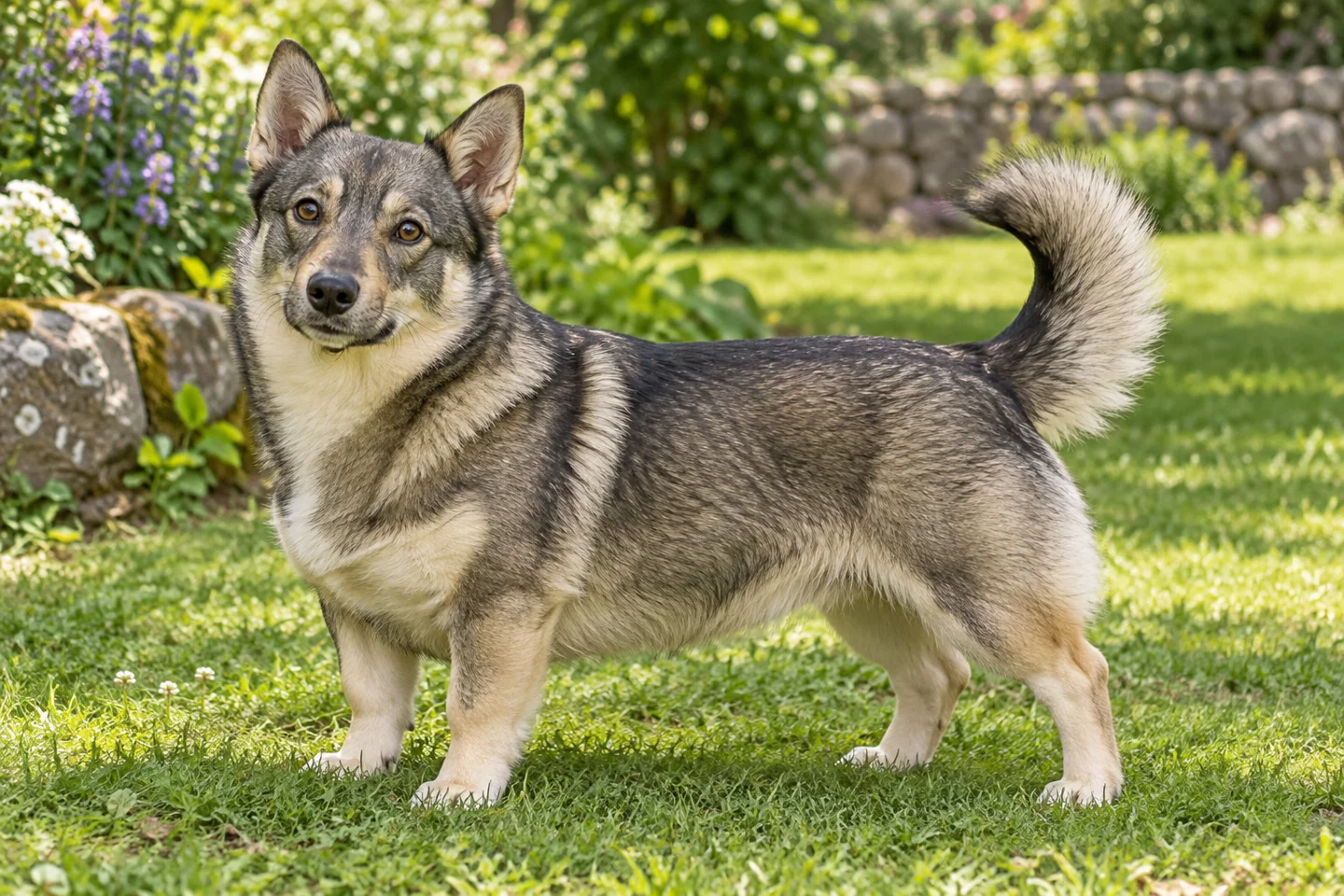
- Origin
- Sweden
- Adult standard size
- Ideal males 33 cm; females 31 cm, tolerance +2/−1 cm
- Illustrated coat
- Grey sable with pale harness markings
General information for owners. These articles have not been reviewed by a veterinarian. Medical decisions need your dog's history and an examination.
The Swedish cattle dog behind the silhouette
The Swedish Vallhund is a small, low-legged herding dog from Sweden. Its pointed ears, sable coloring, and long body can draw comparisons with a Corgi, but it has its own breed identity and standard. A buyer should check the actual registration rather than assume a familiar outline proves ancestry. For a rescue whose parentage is uncertain, describing the observed body, coat, and behavior is more useful than insisting on a pedigree that cannot be documented.
The FCI standard identifies its work as a herding heeler. That background matters when the dog notices running feet, changes in a group, or movement beyond a boundary. It does not mean every Vallhund will behave identically, and it does not excuse chasing children. It gives an owner a reason to teach alternatives early. A household that appreciates quick responses and enjoys structured interaction may find those tasks more manageable than one expecting a decorative short-legged companion.
The standard's history explicitly acknowledges uncertainty about the relationship with Corgi-type dogs. Stories about which dogs Vikings carried in which direction should therefore remain stories rather than settled genealogical facts. The documented modern recovery of the Swedish breed in the twentieth century is a firmer point. An owner can value that history while choosing the individual dog on evidence about health, care, and daily behavior.
Size, proportions, and a normal range of tails
The FCI gives ideal shoulder heights of 33 centimeters for males and 31 centimeters for females, allowing 2 centimeters above or 1 centimeter below those figures. The intended body proportion is approximately two units of height to three of length. Low stature should still allow useful clearance beneath the chest and free movement. An exaggeratedly heavy body is not a goal to pursue through feeding, and an adult height figure is not a monthly puppy target.
Naturally short tails occur in different lengths, and full tails also belong within the breed. Tail length alone cannot tell an observer that a dog has been docked. Our illustrations deliberately show a natural complete tail so its presence is clear. Owners choosing a puppy should ask about its individual history instead of treating every short-tailed dog as an identical case. The standard permits variation in carriage as well as natural length.
The coat is close, moderately long, and harsh over a dense soft undercoat. Grey sable is the selected illustrated color, with darker guard hairs along the upper body and paler cheek and shoulder markings. The natural ears stand erect and the eyes are dark. AI-generated illustrations can explain those features but cannot establish pedigree or health. Examine the actual dog and its documents when making decisions.
A voice and a viewpoint in the household
An alert Vallhund may notice events the family has stopped noticing: a neighbor using a side path, a child leaving a group, or a vehicle at the gate. Before deciding that barking needs a single command, identify what starts it and what the dog gains afterward. If the passerby always disappears, the dog may have many opportunities to rehearse the same response. Changing access to the viewpoint can be as useful as practicing a cue.
Arrange a comfortable resting place away from the busiest route through the room. Reward using it during quiet moments before expecting the dog to remain there when dinner arrives. A quick learner can also learn to restart play whenever a person shifts in a chair. Clear beginnings and endings help the dog understand that rest is available between activities. Constant entertainment can make ordinary quiet periods harder to recognize.
Observe brief absences rather than assuming that a sturdy working breed will tolerate any schedule. A dog resting comfortably has a different experience from one pacing, repeatedly calling, or trying to reach an exit. If the latter pattern appears, adjust arrangements and seek advice. A second dog should be chosen as a separate responsibility, not prescribed as an automatic cure for distress. The household still needs a workable plan for care during work and travel.
Training where speed meets clarity
Begin with actions that help a low, fast dog move safely among people. Teach turning toward the handler, waiting while a door opens, and going to a mat when the kitchen becomes busy. Reward the first easy versions promptly. A puppy that repeatedly darts through a door is learning from that experience too, so use a barrier while the desired routine develops. Prevention gives teaching a fair chance to succeed.
Practice returning in a secure area and occasionally release the dog to explore again. Arrival should have value beyond ending everything interesting. Add distractions in manageable steps and use appropriate physical control near traffic and livestock. The fact that a dog responds quickly indoors does not establish the same response beside moving animals. An owner should not create a dangerous test simply to discover the limits of training.
Handling lessons can be short and specific. Touch a foot briefly, reward, and stop before the dog needs to pull away. Later introduce a tool or a longer check as a separate change. Reward-based methods allow clear information without a physical contest. Ask a trainer how they will adjust if the dog becomes worried or overexcited. A plan that only increases pressure when the dog struggles may obscure pain, fear, or lack of understanding.
Exercise that includes thoughtful movement
The Vallhund's legs are short, but its working background still calls for meaningful activity. Walks with time to investigate, manageable searches, and suitable training can provide variety. The exact workload depends on the individual. A puppy learning about a new route, a conditioned adult, and an older dog with mobility changes need different plans. Build effort gradually and notice the response later in the day as well as during the outing.
Avoid making repeated high-impact jumping or frantic ball chasing the main way to tire the dog. Teach a calm finish and include activities that allow investigation without continual acceleration. An appropriate sport instructor can help select tasks and explain preparation. The dog's enthusiasm is useful information about motivation; it cannot establish that joints, fitness, and recovery are ready for every demand an owner proposes.
In warm weather, choose cooler periods and comfortable surfaces, and provide access to water. A dense coat does not protect against all heat-related problems. Check breathing and recovery rather than relying on a willingness to continue. After rough ground, inspect the feet and underside for debris or rubbing. If the dog begins hesitating, changing gait, or taking longer to settle physically, seek advice before repeating the same workload.
Movement around children and the meaning of aggression
Herding ancestry gives a reason to anticipate interest in moving feet, but it does not make nipping a harmless joke. Adults should interrupt the setup early and provide an alternative task. A child running faster while the puppy follows can intensify the game. Separate the participants calmly, reduce excitement, and practice a familiar easy cue in a quieter setting. If the pattern persists or contact occurs, obtain qualified help.
Children should leave food, chews, and sleep alone. A low dog is easy to reach, which can make unwanted handling frequent. No pulling ears, holding the muzzle, or following the dog into its bed should be part of play. Arrange contact when an adult can watch closely, and give the dog a retreat that children cannot enter. Familiarity with one child does not establish comfort with a visiting group.
Aggression also requires attention outside child interactions. Stiffening over an object, snapping during grooming, or lunging at a person can involve fear, pain, or resource conflict. Stop recreating the situation while veterinary and behavioral advice is arranged. Describe any bite accurately to future carers, including injury and circumstances. The dog's size and a cheerful breed reputation cannot replace a practical safety plan based on what actually happened.
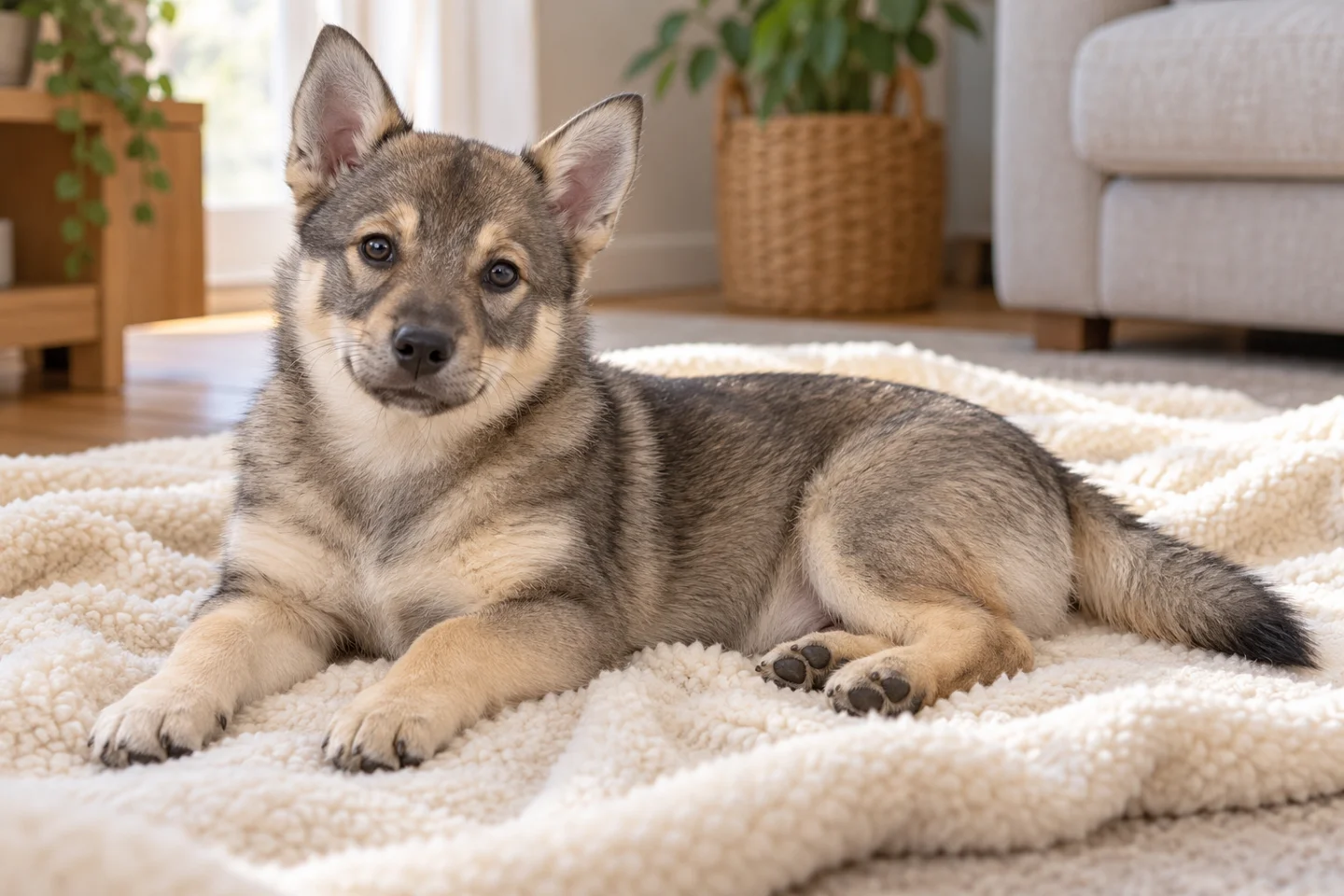
Socialization that prepares the actual adult routine
Choose early experiences according to the life the dog will lead. If shared lifts, city traffic, or car travel will be routine, introduce manageable versions with recovery time. Coordinate infection precautions with the veterinarian. A short calm look at a novel event can be a complete session. There is little value in extending exposure until the puppy can no longer investigate or recover.
People should be able to pass without touching the dog. Teach attention to the handler while allowing suitable distance, and reward calm observation. Visitors can wait for a voluntary approach rather than leaning over the puppy. Close greetings are one possible interaction, not the definition of social competence. Learning that unfamiliar people can exist without requiring action is useful for a watchful dog.
Revisit the plan when the household changes. Adolescence, a move, or a new care provider can expose gaps that were not apparent earlier. Record the circumstances of new reactions: distance, movement, noise, and what happened afterward. Those details allow a trainer or veterinarian to assess the pattern. A broad label such as stubborn says less than a description of exactly when the dog stopped being comfortable.
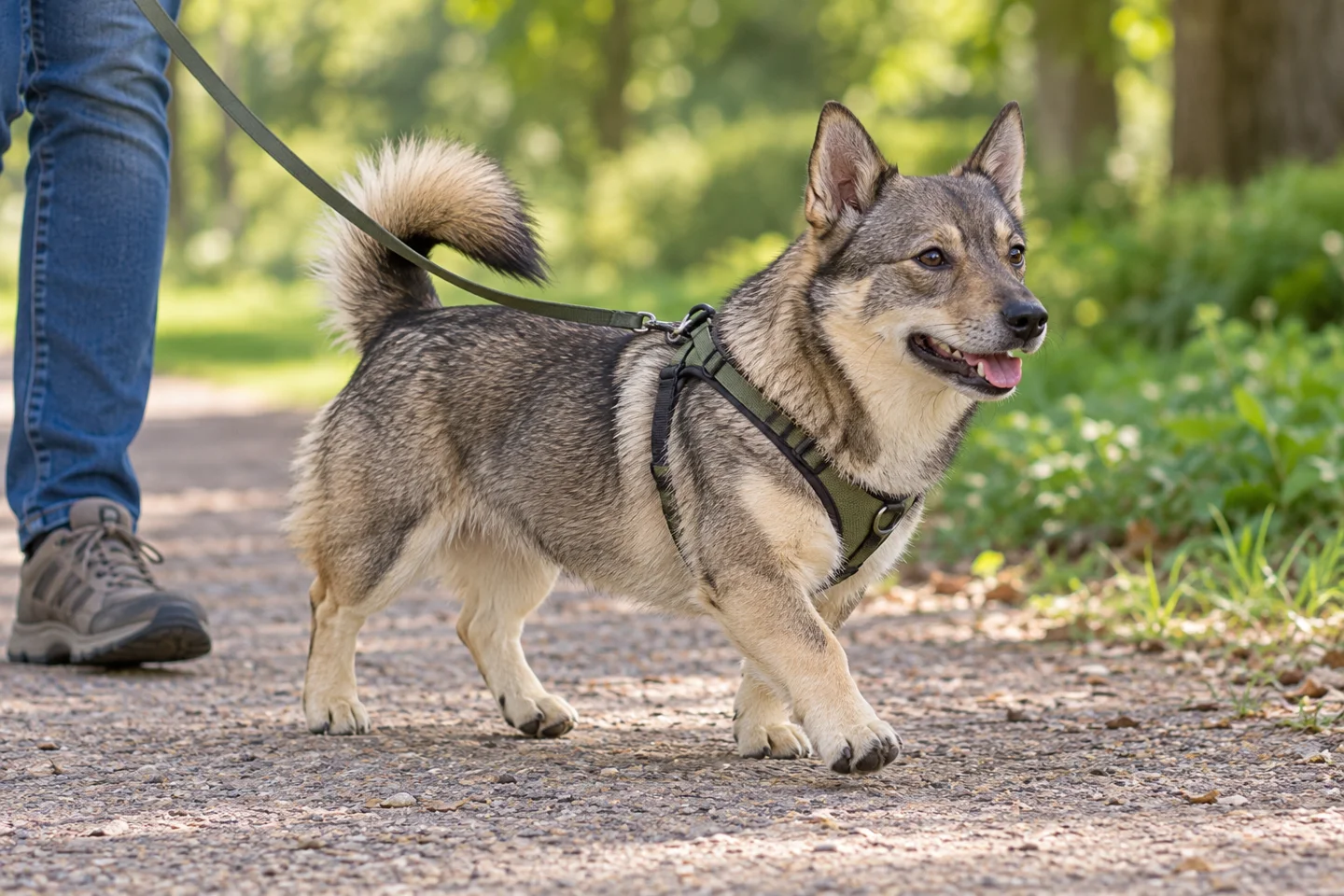
Grooming a dense sable coat
Brush through to the undercoat with suitable tools, especially when shedding increases. The goal is to remove loose hair and inspect skin without scraping or pulling. Check behind the ears and under equipment, where pressure or trapped material may be easy to miss. A groomer can show a manageable technique if the owner is unsure. The amount of loose hair varies; a fixed schedule should remain responsive to the actual coat.
After washing, rinse carefully and make sure deeper areas dry. Do not assume the skin is dry because the outer guard hairs feel comfortable. Keep the dog's bedding clean and dry as well. Persistent odor, itching, or inflamed skin needs veterinary assessment rather than increasingly frequent baths or a series of strong products. A useful grooming record includes when a change began and what was applied.
Nails and teeth need their own attention. Introduce short nail checks and toothbrushing with a canine product, building tolerance gradually. Look at the ears without pushing implements into the canal. Repeated shaking, pain, discharge, or a marked odor deserves advice from the clinic. If the dog suddenly resists one procedure, investigate discomfort. Increasing restraint can conceal the reason while making later care harder.
Health: Vallhund retinopathy needs a named test
The current AKC herding-group recommendations list hip evaluation, an ophthalmologist examination, and Swedish Vallhund retinopathy DNA testing. Ask for the actual parental findings. An eye examination and a DNA result answer different questions, so a breeder should supply the relevant evidence for each rather than merge them into one general statement. Check the dog's identity and the name of the test on the document.
Canine Genetic Testing describes a MERTK-associated retinal degeneration specific to the Vallhund. Onset and progression vary, with night vision affected before later daytime impairment in the description. Its assay is variant-specific. Discuss a result with the veterinarian or an appropriate genetics service instead of treating every DNA entry as a universal eye clearance. A dog showing visual difficulty needs clinical assessment regardless of what its parents' paperwork says.
At home, observations may include reluctance in dim conditions, difficulty with an unfamiliar step, or changes in how the dog negotiates obstacles. These signs do not establish a diagnosis on their own. Note lighting and circumstances and bring the information to the clinician. Avoid rearranging hazards repeatedly to test whether the dog can see them. Preserve safe access and follow the professional plan while the cause is investigated.
For mobility, a screening report cannot explain every future limp. Ask about confirmed diagnoses in relatives and maintain the pet's clinical records. If pain, reduced stamina, or altered movement appears, seek an individual assessment. A naturally long back is a feature to manage thoughtfully, not a reason to assign an unverified inherited disorder. Breeding evidence and the current patient's needs remain related but distinct parts of health care.
Food, mixes, and the recurring cost of ownership
Measure a complete life-stage diet and account for food rewards. A keen worker can still gain excess weight, particularly when an injury or schedule change reduces activity. Ask the clinic to demonstrate condition assessment beneath the double coat. The waist and ribs provide information that an owner's impression of liveliness cannot. Sudden changes in appetite, thirst, or weight deserve investigation rather than an automatic switch to a richer product.
A Vallhund mix may have different proportions, coat, tail, and behavioral needs. A short-legged sable appearance does not prove the other parent or guarantee a manageable adult. Ask whether the ancestry is documented and what is known about both parents. If it is uncertain, plan from the animal in front of you and retain room to adapt. Crossbreeding cannot promise freedom from disease or remove the need for ordinary clinical care.
Obtain local prices for training, preventive care, dentistry, boarding, and transport. Check insurance terms while there is time to make an informed choice. A backup carer should understand the dog's barking triggers, gate routine, and animal precautions. Ask the source what support is available after placement and how a serious difficulty would be handled. The purchase fee is a single event; reliable care depends on repeated time and practical arrangements.
A dogsDating meeting for an observant heeler
Use dogsDating to describe this Vallhund's response to movement and its preferred walking pace. Explain whether it becomes vocal during greetings or follows dogs that accelerate. Ask the prospective partner's owner how their dog responds to that pattern. Matching energy levels is only part of compatibility. A dog that likes to run may still dislike another dog trying to control the route or restart contact after a pause.
Choose an open public path and begin with both dogs moving independently at a comfortable separation. Leave toys out initially so the handlers can read the interaction without competition. Watch whether each animal can return attention to its own surroundings and let the other leave. Repeated pursuit, stiffness, or attempts to escape mean the plan needs an easier distance or a calm ending.
Keep exact user coordinates private. Approximate discovery can identify a convenient area, and a named public meeting point can finish the arrangement without revealing a residence. Afterward, compare the moments when the dogs were relaxed and the distance that helped. A short shared walk can establish useful information even when no closer greeting occurs. The next decision should follow those observations rather than the owners' hopes for an instant play partnership.
Sources and editorial notes
Sources checked October 22, 2026. Breed measurements describe reference ranges, not a diagnosis or an individual dog's ideal weight. Images are AI-generated breed illustrations and do not document a particular dog or health condition.
- AVSAB: Humane Dog Training Position Statement
- VCA Animal Hospitals: Food aggression in puppies
- Orthopedic Foundation for Animals: CHIC health screening programs
- VCA Animal Hospitals: Aggression toward unfamiliar dogs, diagnosis
- VCA Animal Hospitals: Grooming and coat care for your dog
- VCA Animal Hospitals: Ear infections in dogs (otitis externa)
- AAHA: Feeding plans for healthy, appropriate weight cats and dogs
- VCA Animal Hospitals: Heat stroke in dogs
- AVSAB: Puppy Socialization Position Statement
- VCA Animal Hospitals: Dog behavior problems, aggression toward children
- American Kennel Club: herding health testing requirements
- Canine Genetic Testing: Swedish Vallhund retinopathy, MERTK
- Swedish Vallhund: official breed standard
Keep getting to know dogs.
Read another guide or return to your dogsDating community.
Explore breed guidesBack to dogsDating