Taiwan Dog
A lean, short-coated Taiwanese hunting and watch dog whose alertness, movement, and individual experience call for careful household planning.
How these guides are researched and reviewed
- Origin
- Taiwan
- Adult standard size
- Males 48–53 cm/14–18 kg; females 43–48 cm/12–16 kg
- Illustrated coat
- Solid black short coat
General information for owners. These articles have not been reviewed by a veterinarian. Medical decisions need your dog's history and an examination.
A Taiwanese breed, not every dog from Taiwan
The Taiwan Dog is an FCI-recognized breed originating in Taiwan. Its lean body, triangular head, upright ears, and sickle-shaped tail create a recognizable outline, but a dog arriving from Taiwan is not automatically a pedigree example. Rescue origin describes where an animal has lived or traveled. Breed identity requires a different kind of evidence. Owners can describe uncertain ancestry honestly while still giving the individual excellent care.
The standard identifies hunting, watch, and companion roles. Those functions help an owner anticipate interest in movement and activity around the home. They do not provide a fixed script for every dog. A puppy raised in a household, an adult accustomed to outdoor living, and a dog with an incomplete history may need different introductions to domestic life. Ask about the actual experiences available rather than substituting a broad claim about primitive dogs.
The FCI's historical account discusses native Taiwanese dogs and a twentieth-century study of local populations. It does not support inventing an exact age for every lineage or treating all present dogs as identical remnants of the distant past. For a practical placement, documented parents, observed behavior, and clinical notes matter. A source that acknowledges uncertainty gives the new owner room to plan rather than expecting a story of ancient resilience to answer modern care questions.
A sinewy body with verified adult dimensions
The FCI standard gives males a shoulder height of 48 to 53 centimeters and a weight of 14 to 18 kilograms. Females measure 43 to 48 centimeters and weigh 12 to 16 kilograms. These are adult standard figures. A puppy should grow on an appropriate complete diet, with progress assessed by the veterinarian. Feeding toward the top of a range simply because it looks impressive can obscure the individual's actual condition.
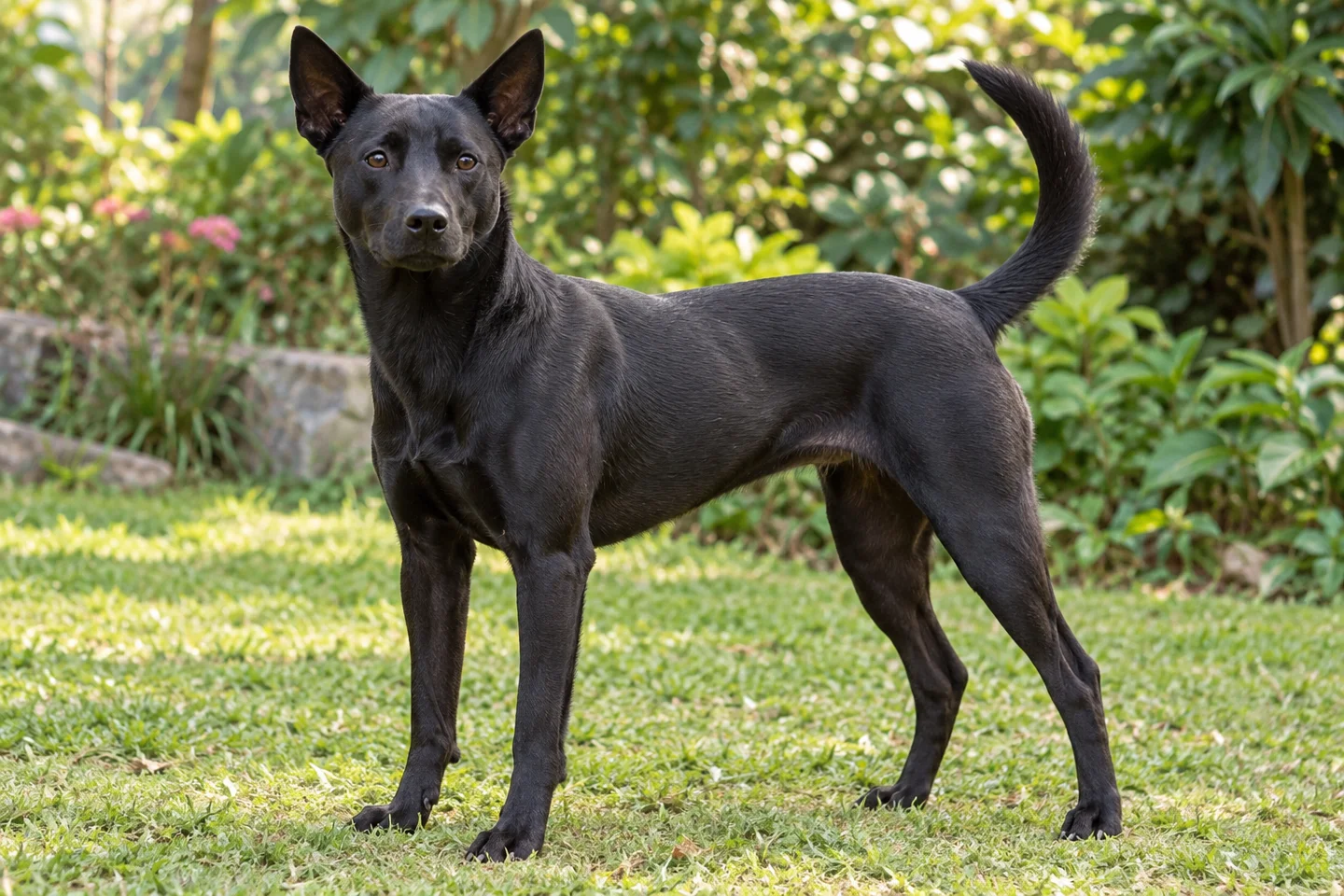
The intended body is nearly square, muscular, and dry in outline, with tight lips and no heavy dewlap. The ears are thin and pricked, and the eyes are almond shaped and dark. The coat is short and hard. Several colors are described, including black, brindle, fawn, white, and permitted white combinations. Our illustrations select solid black so the same appearance remains consistent across adult, puppy, and walking scenes.
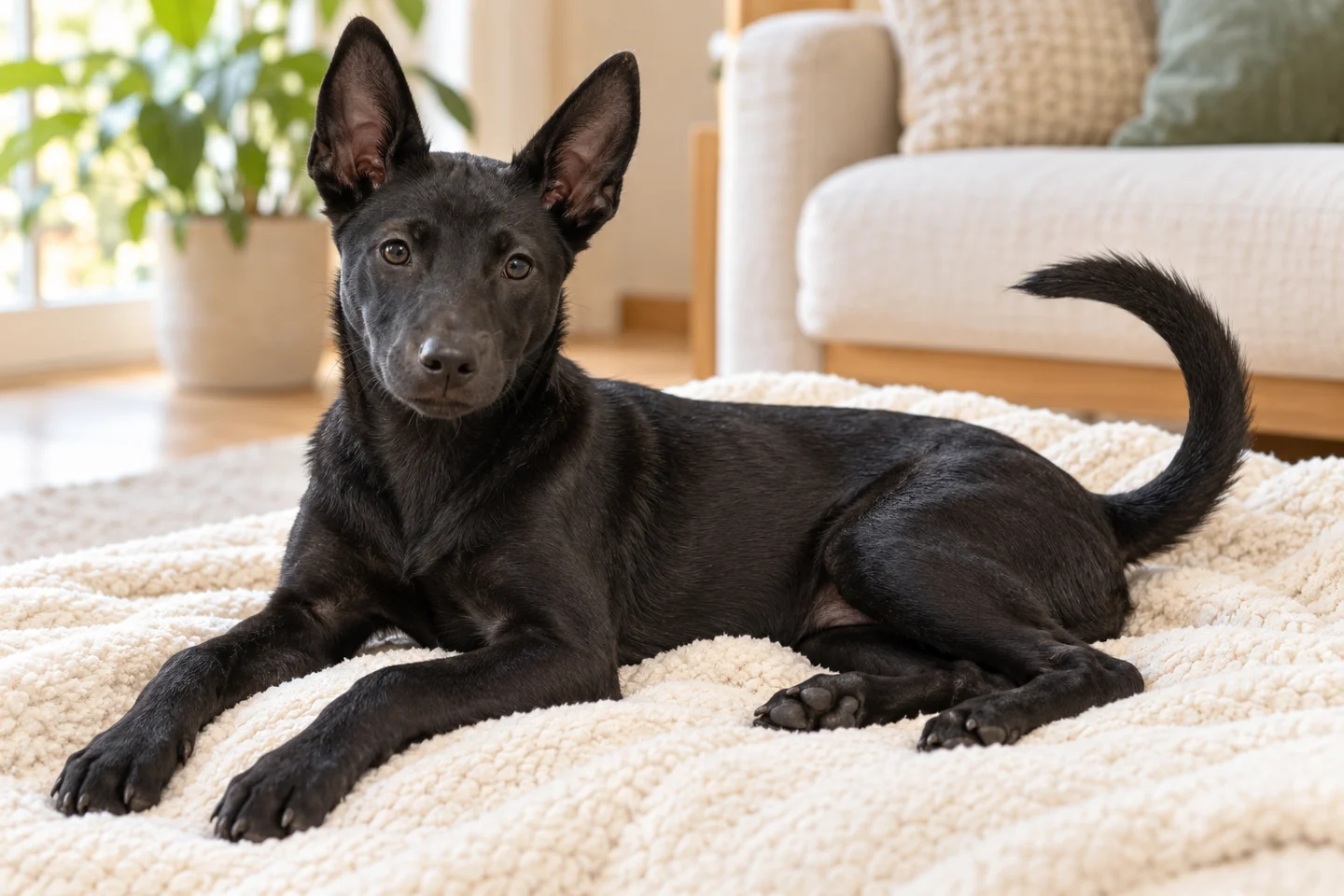
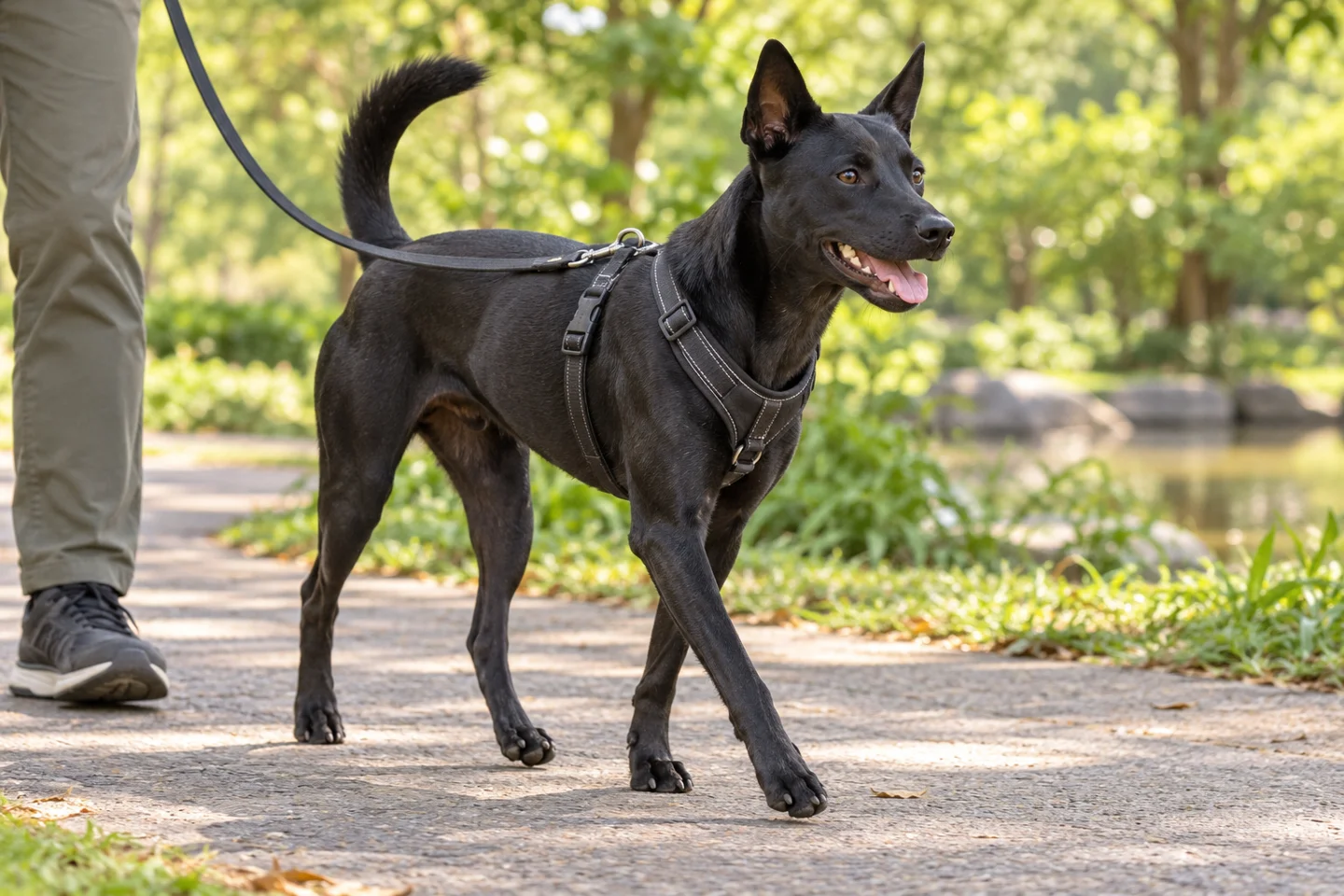
The complete tail forms a sickle rather than a heavily plumed spitz coil. A Taiwan Dog should not be drawn as a thick-coated northern sled dog. The puppy naturally has developing proportions and a softer young appearance. All three images are labeled AI-generated illustrations; they cannot establish the ancestry or health of a real dog. Measure equipment and examine records for the individual animal rather than using artwork as evidence.
Reading the first weeks in a new home
Give a newly arrived Taiwan Dog a manageable area, predictable access to water and toileting, and a place where it can rest without being followed. An owner may want immediate affection, but the dog first needs information about its surroundings. Avoid inviting many visitors to assess personality on the first day. Quiet observations across different times provide a better basis for planning than one dramatic greeting after travel.
Keep doors and handovers deliberate. A lean, agile dog can exploit an opening while people are carrying bags or discussing paperwork. Fit suitable equipment before opening the vehicle, use dependable barriers at home, and agree who holds responsibility during transfers. The first trip should not depend on an untested recall. Identification and current microchip contacts provide another layer of practical preparation, even when containment is carefully arranged.
Record changes without rushing to assign a permanent trait. Eating only at night, keeping distance from a visitor, or remaining unusually quiet may reflect adjustment. Equally, waiting does not replace help when distress persists. Bring concerns to the veterinarian or a qualified behavior professional, especially if the dog cannot sleep, eat normally, or recover from ordinary events. The plan should respond to the individual pattern and its consequences.
Training that makes human direction useful
Teach simple movements first: turning toward the handler, following a few steps, stepping onto a mat, and waiting at an opening. Reward successful responses while the surroundings are quiet. The owner can then add one distraction rather than changing everything at once. A dog that ignores a cue outdoors may need a more manageable situation, not repeated louder versions of a word it barely understands.
Build recall in secure areas and use appropriate line management elsewhere. Reward arriving and sometimes release the dog to investigate again. That makes returning part of the outing instead of a reliable signal that every interesting activity has ended. Wildlife and roads still determine the safety limits. A hunting background is a reason to plan around pursuit rather than an opportunity to prove control through a risky off-lead test.
Introduce necessary equipment and handling in separate small stages. Let the dog approach the harness, accept brief contact, and practice a comfortable stand. A reward-based trainer should explain what is being reinforced and how the task changes if fear appears. Physical confrontation may make the person's approach more worrying without clarifying the desired behavior. Unexpected resistance to a previously comfortable task also warrants consideration of pain.
Exercise with containment and recovery
Offer regular opportunities to move, sniff, and investigate, while building effort according to condition and health. A sinewy appearance does not establish fitness for a sudden long run. Increase demands gradually and notice the response after rest. A dog that still wants to follow movement can nevertheless have sore feet or reduced stamina. New gait changes, reluctance, or unusual fatigue deserve advice before the next demanding outing.
Choose secure places and inspect the access route as well as the exercise area. Gates, fence gaps, nearby animals, and other users can change the risk. A large open field is not a secure enclosure. Practice entering and leaving calmly with equipment attached. Appropriate organized activities may suit the dog, but an instructor should assess the individual and explain how conditioning and safe progression are handled.
Heat and surfaces need direct assessment. A short coat does not prevent overheating or protect pads from hot paving. Use cooler hours when appropriate, provide water, and be prepared to shorten the route. At home, simple searches can offer an alternative task when conditions prevent a normal outing. They add variety without replacing basic physical needs, comfortable rest, or contact with the people responsible for care.
Aggression and a plan based on the actual incident
An alert hunting and watch dog cannot be declared safe solely because it is attached to its owner. Take threatening behavior seriously and prevent repeated close encounters while advice is arranged. Notice whether the response occurs near a gate, during restraint, over food, or when someone approaches a bed. The setting matters. A new reaction during touch may also require a veterinary examination for pain or illness.
Do not stage another confrontation to find out how serious the dog is. Use a secure separate area before visitors enter and keep valuable resources away from passing people or animals. Teach exchanges with safe objects during calm practice, obtaining qualified help if guarding already creates risk. The household needs a procedure it can repeat reliably rather than an improvised attempt to hold the collar whenever someone arrives.
Describe a bite history accurately to future carers and professionals. Include contact, injury, and circumstances, with the present management. A calm walk cannot erase a different response inside the home. Where a basket muzzle belongs in an individual plan, introduce it gradually and positively. It provides an additional tool while distance and careful handling remain essential. It cannot make a frightening interaction comfortable merely by preventing a bite.
Children and the dog's available retreat
Children should learn that a dog can choose to move away. No chasing into a bed, grabbing the tail, hugging the head, or interrupting meals should be part of contact. Arrange shared activity while an adult can watch both participants and end it before the dog becomes overwhelmed. A child can help prepare a search or reward a familiar cue without needing to restrain or carry the animal.
Fast games need particular attention when the dog begins following movement intensely. A child running faster can increase excitement or pursuit. Adults should change the setup and select a quieter activity rather than wait for contact. Visiting children add different voices, movement, and familiarity, so the management may need to change even if the dog is comfortable with the usual household.
When the responsible adult is occupied, separate comfortably. The dog should have water, a resting place, and protection from interruption. Supervision is a task, not merely being somewhere in the same room. If avoidance, stiffening, or warnings recur around a child, stop the interaction and seek advice. The dog should never be assigned responsibility for protecting or supervising children because its breed has a watch-dog history.
Dogs, cats, and animals beyond the boundary
Assess canine compatibility individually. Begin with space and observe whether both dogs can disengage. At home, separate food and provide different resting places while the relationship develops. Doorways and attention from people can create pressure even when outdoor play seemed relaxed. If one animal repeatedly blocks or follows the other, intervene through management rather than expecting them to settle it by fighting.
Cats need escape areas and gradual introductions. Familiarity with one cat cannot certify safety with a fleeing unfamiliar animal outdoors. Rabbits, rodents, and poultry require secure protection from a hunting dog. An owner should not use an exposed small animal to discover whether pursuit will occur. A quiet look through a barrier provides limited information and should be interpreted as such.
Around livestock and wildlife, retain appropriate physical control and follow local rules. A history of working outdoors does not establish permission or readiness to approach stock. Provide alternative tasks that the household can manage safely. If easy off-lead roaming among animals is central to the proposed lifestyle, discuss that expectation candidly before placement. Changing the expectation early is easier than managing the consequences of an escape.
Grooming a short coat and practicing care
Gentle brushing removes loose hair and creates an opportunity to inspect skin. Check under straps and along the belly after outings, and look between the toes for debris. Persistent itching, unusual odor, or a recurring sore area deserves veterinary assessment. A short coat makes some changes easier to see, but visibility cannot tell an owner which treatment will be appropriate.
Ear care should begin with comfortable external observation. Do not insert implements into the canal or select leftover drops because another dog's problem looked similar. Pain, discharge, repeated scratching, or head shaking warrants advice. Introduce brief checks with rewards before a problem requires prolonged handling. If the dog resists, reduce the task and consider whether discomfort needs investigation.
Nails and teeth also need a routine. Use a canine toothpaste and gradually introduce brushing; ask the clinic about dental assessment. A dog walking frequently may still need nail care. Make the procedure manageable enough that another competent carer can continue it. If an essential task cannot be completed safely, tell the relevant professional before the appointment so a suitable plan can be prepared.
Health claims, exposure history, and individual care
The AKC breed page gives a broadly reassuring health description, but that cannot establish that every Taiwan Dog is free from inherited or acquired disease. Ask what the source knows about this family and which diagnoses were confirmed. If testing is advertised, request the named report and its result. Do not convert a general healthy-breed description into permission to omit veterinary follow-up or conceal missing information.
For a dog that has traveled internationally, provide countries of residence, dates, available vaccination records, and the exact parasite products used. ESCCAP's guidance on imported and travelling pets supports assessing prevention and diagnostic needs against exposure history. That is a clinical planning step, not a presumption that a dog from Taiwan is ill. Geography, route, and previous treatment help the veterinarian decide what questions need attention.
An adopted dog may have useful records even when ancestry is uncertain. Previous medication, an unresolved skin problem, or repeated lameness should follow the animal to its new clinic. Ask for original notes where available rather than relying only on a summary that it passed a check. Clarify what follow-up was recommended and whether it happened. This continuity prevents a change of household from becoming a loss of medical information.
At home, monitor appetite, weight, gait, and recovery from exercise. A lean athletic dog can still experience disease, and continued enthusiasm does not prove comfort. Record an intermittent change safely for the veterinarian. Clinical assessment of the current patient is different from ancestry testing or a broad genetic panel. Those tools may answer specific questions, but none can replace attention to a new symptom.
Feeding, mixes, and choosing a sustainable home
Measure a complete diet suited to life stage and include rewards and chews in the intake discussion. Ask the clinic to demonstrate body-condition assessment for this lean frame. Avoid assuming visible athleticism means unlimited calories, or that every rib change is normal. Review feeding when workload, medication, or routine changes. Persistent appetite loss, marked thirst, or weight change deserves investigation instead of repeated additions of richer food.
A Taiwan Dog mix may differ in coat, size, and response to people and animals. Ask what is documented about both parents and what is inferred from appearance. A black short coat and upright ears cannot answer that alone. For an adult, the observed care history can guide a suitable placement even without a complete family tree. For a puppy, keep expectations flexible as development reveals more.
Price the arrangements the household will actually use: preventive care, training support, secure transport, boarding, and unexpected treatment. Check whether a backup carer can follow the door and visitor routines. Read insurance exclusions and ask the source how continuing support works. A sustainable home accepts the need for deliberate management while providing activity and companionship. It should not depend on a promise that a primitive breed will naturally take care of itself.
A dogsDating introduction outside the home boundary
On dogsDating, describe this dog's comfort with unfamiliar people separately from its response to dogs. It may enjoy a companion while preferring that the other handler keep distance. Explain those boundaries before meeting. Ask about pace, play, and pursuit rather than relying on a friendly photograph. The first outing can be a walk with room, without any expectation of touching or free running.
Choose a public route with visibility and space to change direction. Begin with the dogs apart and let each handler observe whether their animal can look away and investigate its surroundings. Avoid a narrow entrance where leads cross and retreat becomes difficult. Persistent fixation, stiffness, or attempts to leave call for an easier arrangement or a calm departure. The owners can collect useful information without forcing a closer greeting.
Keep exact user coordinates private. Approximate discovery and an agreed public landmark can arrange the meeting without exposing a residence or regular private route. Afterward, discuss which distance and pace worked. Record whether both dogs could settle briefly and disengage. Those observations determine whether another meeting is sensible and preserve the owner's ability to plan around the actual dog rather than an attractive breed story.
Sources and editorial notes
Sources checked October 22, 2026. Breed measurements describe reference ranges, not a diagnosis or an individual dog's ideal weight. Images are AI-generated breed illustrations and do not document a particular dog or health condition.
- AVSAB: Humane Dog Training Position Statement
- VCA Animal Hospitals: Food aggression in puppies
- Orthopedic Foundation for Animals: CHIC health screening programs
- VCA Animal Hospitals: Aggression toward unfamiliar dogs, diagnosis
- VCA Animal Hospitals: Grooming and coat care for your dog
- VCA Animal Hospitals: Ear infections in dogs (otitis externa)
- AAHA: Feeding plans for healthy, appropriate weight cats and dogs
- VCA Animal Hospitals: Heat stroke in dogs
- AVSAB: Puppy Socialization Position Statement
- VCA Animal Hospitals: Dog behavior problems, aggression toward children
- American Kennel Club: Taiwan Dog
- ESCCAP: Parasite control in travelling and imported pets, May 2025
- Taiwan Dog: official breed standard
Keep getting to know dogs.
Read another guide or return to your dogsDating community.
Explore breed guidesBack to dogsDating