Tamaskan Dog
A modern, wolf-like domestic dog maintained through specialist registries, whose identity, ancestry, screening, and household needs require careful questions.
How these guides are researched and reviewed
- Origin
- Modern registry-developed breed
- Adult standard size
- TDR ideal males 63.5–73.66 cm; females 61–71 cm
- Illustrated coat
- Wolf-grey agouti with mask
General information for owners. These articles have not been reviewed by a veterinarian. Medical decisions need your dog's history and an examination.
Start with the registry, not the wolf-like photograph
The Tamaskan Dog is a modern developing dog maintained through specialist breed registries. It should not be presented as an FCI-recognized breed or as a wild wolf because of its appearance. This guide uses the Tamaskan Dog Register, abbreviated TDR, for its standard and registration discussion. Other organizations have their own rules. Ask a seller which registry applies to the individual dog and obtain the actual documents before relying on a general claim of registration.
The TDR describes a developing population with an outcross program. That is a managed breeding framework, not a promise that every dog advertised with the name has the same ancestry. Nor does registration by itself settle eligibility to breed: the TDR explicitly separates the two. A prospective owner should understand the status on the certificate and which approvals apply. A pet's care should never depend on treating a complicated registry history as a simple advertising slogan.
A wolf-like face can attract attention from people who have not considered daily life with a large active dog. Meet adults and ask about ordinary routines: travel, visitors, time alone, fencing, and handling. Appearance cannot predict a dog's response to a child, a cat, or a busy pavement. Choosing a companion requires evidence about the actual family and individual, plus a household prepared for the responsibilities that will remain after the novelty of the photograph fades.
The selected appearance and adult scale
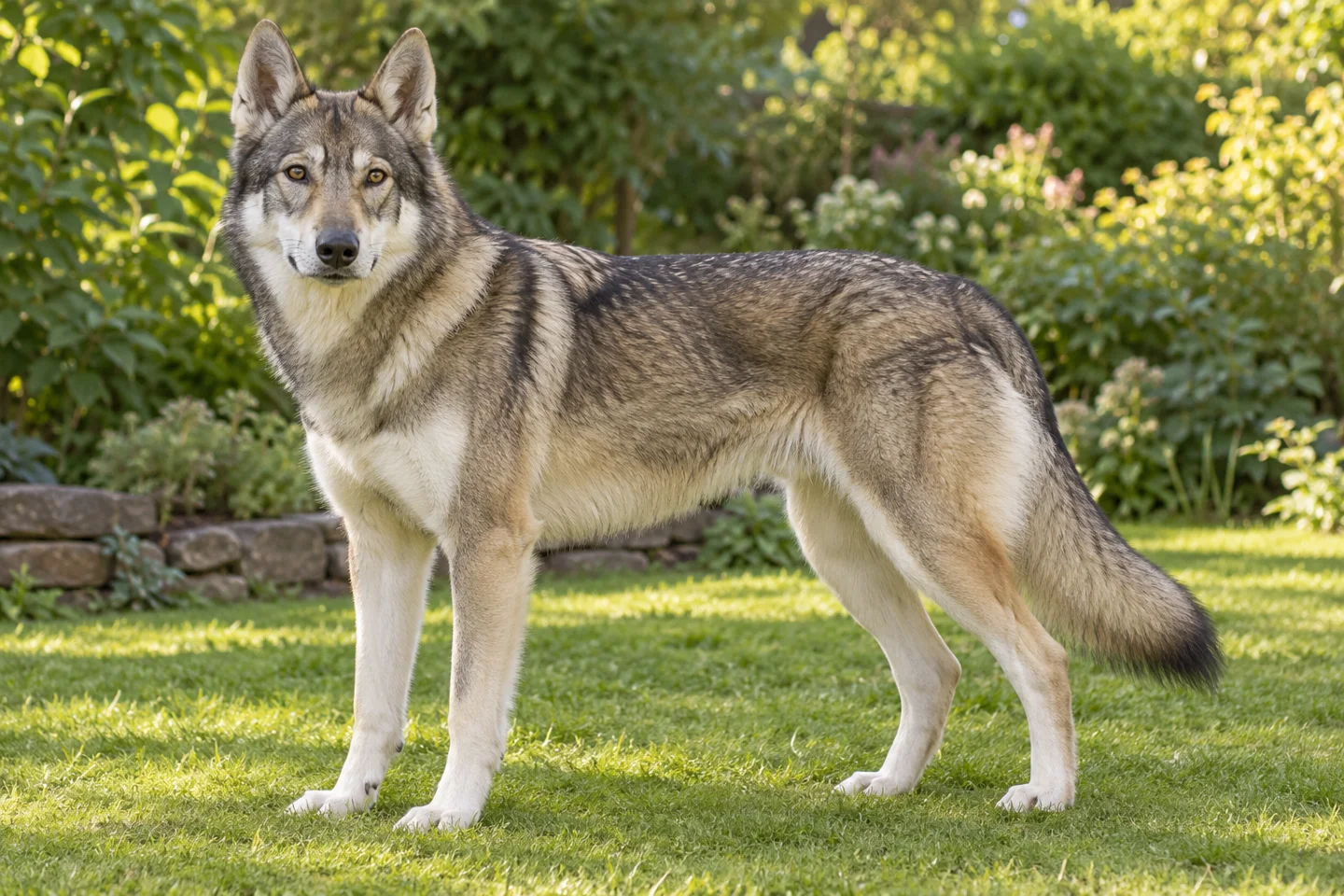
The TDR standard gives ideal male shoulder heights of 63.5 to 73.66 centimeters and female heights of 61 to 71 centimeters. It describes a slightly longer-than-tall, athletic northern type with moderate bone. Our illustrations select wolf-grey agouti coloring, a defined facial mask, amber-brown eyes, natural upright ears, and a full bottlebrush tail. The coat is medium length and lies to the body; the tail should not be turned into a tight spitz coil.
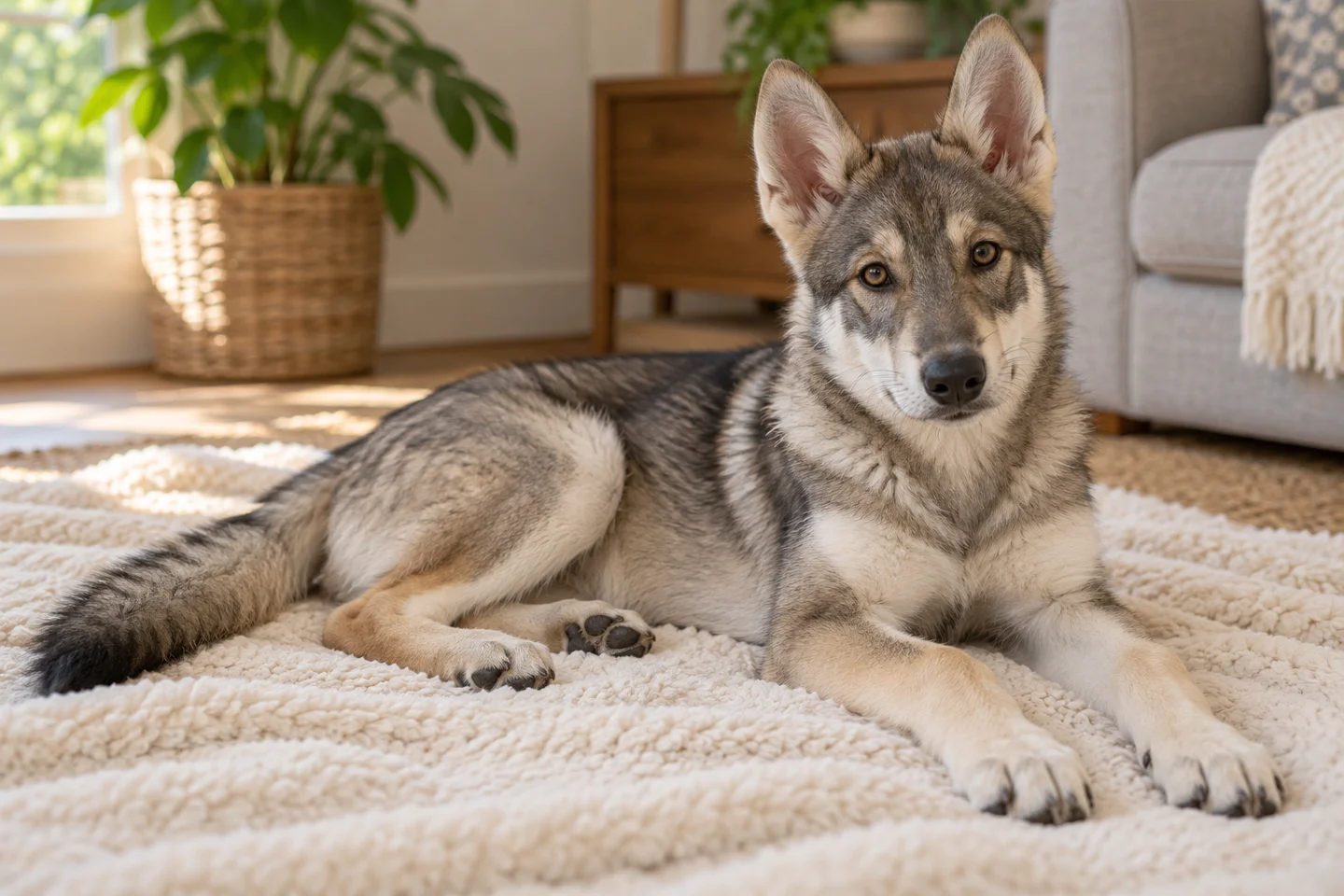
Those selected features do not turn the illustrations into pedigree evidence. They are AI-generated artwork, and a young puppy should have developing proportions and coat. Ask to see real records for the actual dog. A blue-eyed, piebald, or otherwise different-looking animal may need a specific explanation of its registry position; a visual difference is not permission to invent its ancestry or medical status.
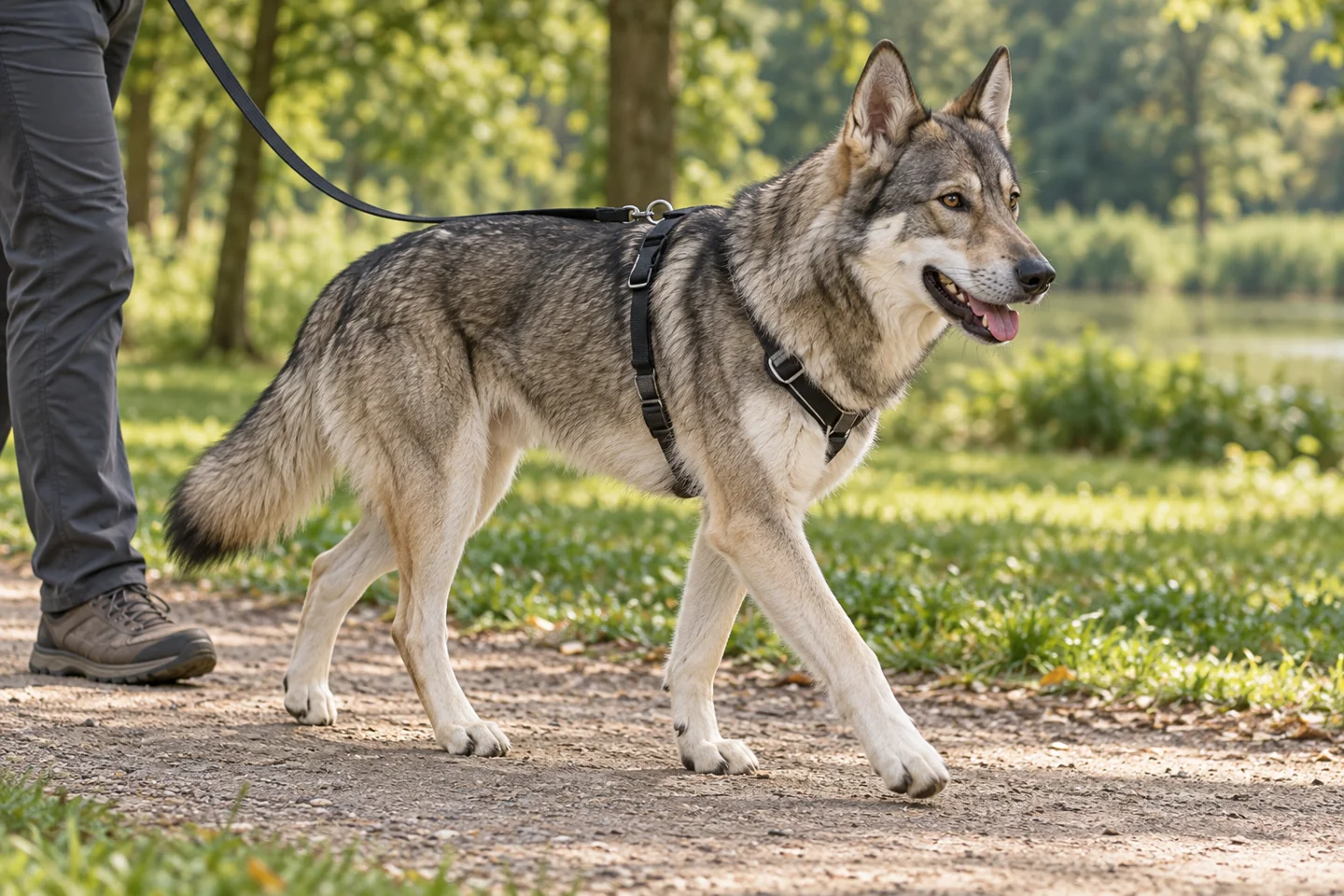
Large size affects arrangements even when the dog is lean. Check vehicle space, suitable resting areas, and whether the regular handler can manage an excited adolescent. Measure equipment directly and inspect fit beneath the double coat. A harness that appears comfortable over the hair may rub at the skin or loosen when the coat compresses. Recheck as the puppy grows instead of expecting one early purchase to fit throughout development.
Ancestry claims and practical ownership decisions
Ask for the dog's documented lineage and the source of any ancestry claim. An informal percentage quoted in conversation is different from a laboratory result, and a laboratory result has its own scope and limitations. A seller should explain what is known without promising that appearance establishes content. If local ownership or housing rules depend on ancestry, check the actual applicable requirements before commitment rather than assuming a breed name settles the question.
Make the same distinction when speaking to insurers, landlords, boarding services, and veterinary staff. Provide accurate documents and ask how they classify the individual. Do not conceal information to obtain access, and do not label a dog a wolf to make an advertisement more exciting. Either approach can complicate care and placement. The practical goal is an animal whose history and needs can be described clearly to the people responsible for it.
For rescue dogs, records may remain incomplete. Acknowledge that limitation and assess the animal through observed behavior, clinical care, and safe management. A photograph cannot fill in a missing pedigree. The household should be willing to care for the individual even if the eventual documentation is less tidy than the name suggested. If that uncertainty would make the placement impossible, resolve it before taking responsibility.
Building a household routine before adolescence
Provide clear places for sleeping, eating, and waiting while doors open. A large puppy can learn that a comfortable mat predicts a reward long before adult strength makes repeated pushing impractical. Practice during quiet moments, then add ordinary household movement. A person carrying dinner and a visitor entering at the same time create a more demanding situation than an empty-room lesson.
Store food and unsafe objects securely. A capable dog may learn to investigate counters, bins, or a gate latch if those actions repeatedly produce something interesting. Prevention is part of teaching, not an admission that training has failed. Arrange suitable searches and safe objects to investigate so the owner can reward useful behavior instead of spending the day interrupting rehearsed mistakes.
Observe time alone from the beginning. Short comfortable absences can provide information about the dog's current limits. Repeated vocalization, pacing, or attempts to escape need a changed schedule and appropriate help. Do not assume that another dog will resolve distress, or that exhausting exercise is the only missing ingredient. The household needs a sustainable care plan for workdays as well as weekends when everyone is available.
Training cooperation in a busy world
Teach attention, a comfortable turn, waiting at thresholds, and a recall in secure settings. Reward each response at a level the dog can manage. If the surroundings become too absorbing, simplify before repeating cues. A dog that can respond in the living room has not automatically learned the same behavior beside moving wildlife. Good progression makes the next step achievable instead of using failure to justify more pressure.
Use suitable physical control where an escape would be dangerous. Inspect gate procedures and handovers as carefully as the walking equipment. Two people discussing a lead can each assume the other has control. Practice loading and unloading the vehicle before a demanding journey. The aim is a routine that a prepared backup carer can repeat, rather than one that only works when the most experienced owner anticipates every movement.
A reward-based trainer should explain how fear and frustration change the plan. Ask what behavior is being reinforced and how success is measured. Teach handling in short parts: a foot check, a brief stand, accepting the harness, and a comfortable examination near the head. Sudden resistance also warrants consideration of pain. A physical contest can make cooperation harder while leaving the original cause unexamined.
Exercise, conditioning, and the idea of work
A northern working appearance is not a fitness certificate. Build activity according to the dog's age, health, and present condition. A puppy should not be pushed through adult distances or repetitive impact to satisfy a breed image. Ask the veterinarian about the proposed routine and watch recovery. A willing dog may keep moving while uncomfortable, so the owner must notice changes later at home as well.
Walks, scent tasks, and suitable organized activities can offer different forms of engagement. If considering harness work or another sport, choose an instructor who explains equipment, conditioning, surfaces, and progression. A short enjoyable introduction is different from asking an unprepared dog to pull a load. The activity should suit the individual rather than provide a photograph proving that it resembles its advertised ancestry.
Allow quiet periods and a comfortable place to rest. Constant stimulation can make an ordinary household evening difficult. In warm weather, choose cooler times and monitor the dog's response directly. Provide water and check exposed surfaces. A double coat does not prevent overheating, and an enthusiastic response to a harness cannot establish that conditions are safe. Shorten or change the plan when the dog or weather requires it.
Aggression and a large dog's safety plan
Neither a wolf-like appearance nor a reassuring registry description can establish an individual's bite risk. If the dog stiffens over food, snaps during restraint, or lunges at a visitor, prevent repetition while veterinary and qualified behavioral advice is arranged. Consider pain when the response is new. The household should have dependable barriers and a way to manage arrivals before the next unexpected knock at the door.
Do not create confrontations to prove that the dog respects people. Give valuable chews in a quiet area and prevent children or other animals from approaching. Teach exchanges with safe low-value objects during calm practice, obtaining help if guarding already occurs. The owner needs a plan that changes what predicts conflict, not a sequence of repeated removals that may make approaching hands more concerning.
Disclose previous incidents accurately to carers and professionals. Describe contact, injury, and the setting. A dog that was comfortable during one public walk may react differently at home or during handling. If a basket muzzle is recommended as part of an individual plan, introduce it gradually with rewards and retain the other precautions. It cannot remove distress or justify crowding simply because biting has become harder.
Children and animals with different needs
Children need adult-managed contact and a clear understanding that the dog can withdraw. No riding, leaning on the back, or following into a bed should occur. A large body can knock over a child unintentionally, especially when play becomes excited. Choose predictable activities and separate when the adult cannot keep watching. The dog's apparent affection is not a replacement for that supervision.
Visiting children may create a different challenge from familiar household routines. Fast movement, group noise, and unfamiliar handling can change the experience. Use the existing visitor plan and stop when the dog avoids contact or becomes tense. Children should call an adult about a stolen object rather than retrieve it themselves. Responsibility remains with the people who control the surroundings, not with the dog's supposed role as a family protector.
Assess relationships with other dogs individually and protect separate meals and sleeping spaces. Cats need appropriate escape routes, and small pets require secure protection. A calm meeting with one familiar animal cannot establish safety with a fleeing unfamiliar one. Avoid tests that allow pursuit to find out what happens. The household can gather information through controlled encounters without exposing another animal to a preventable chase.
Grooming a medium double coat
Brush through the coat with suitable tools, especially when loose undercoat increases. The goal is comfortable removal and skin inspection, not the largest possible pile of hair. Check behind the ears, under equipment, and around the hindquarters. A groomer can demonstrate technique if needed. Pulling or scraping may make future care more difficult while hiding whether skin discomfort was already present.
After bathing or prolonged wet weather, check deeper areas for drying and keep bedding clean. Do not assume dry guard hairs mean every layer is dry. Persistent odor, itch, or a recurring sore spot needs veterinary advice rather than progressively stronger products. Tell the clinic what was used and when the problem began. A clear timeline helps more than a collection of treatments selected from unrelated owners' experiences.
Keep nails, teeth, and ears in the routine. Introduce each task separately with short rewards and an easy end. Look at ears without putting implements into the canal; pain, discharge, or repeated shaking needs assessment. If the dog changes tolerance suddenly, consider injury or illness before increasing restraint. Cooperative skills support professional care, but they cannot replace treatment of the condition making contact uncomfortable.
Health: identify the program and its approvals
The TDR's published breeding regulations include official hip and elbow results, specialist eye assessment, gonioscopy for breeding candidates under the stated rules, and degenerative myelopathy status. They also address epilepsy in breeding decisions. Confirm the current version and any applicable exceptions with the registry. These are TDR program rules, not a universal claim about every organization using the Tamaskan name.
Ask which actual reports apply to the parents and whether the proposed combination has the relevant approval. Keep registration status separate from breeding permission. A genetic profile or DM result does not replace joint radiographs or an eye examination. Conversely, completion of a particular program cannot certify that the puppy will avoid every later illness. Review the findings rather than relying on a summary that everything has been tested.
A family-history conversation should include confirmed diagnoses and how owners receive later updates. If unusual episodes occur in the pet, record timing and behavior safely and contact the veterinarian rather than diagnosing epilepsy from resemblance to an online video. Clinical investigation remains necessary even where breeding rules discuss that condition. The registry's role in tracking a population and the clinician's role in assessing an individual answer different questions.
Avoid using an assertion of hybrid vigor as a substitute for evidence. Outcrossing can form part of a managed program, but the actual pairing, screening, and subsequent outcomes still matter. Ask for clear explanations and original documents. An incomplete history should be described as incomplete. A large advertised number of genetic tests is not automatically more informative than a smaller set with known relevance and careful interpretation.
Food, mixes, and the long-term arrangement
Feed a complete life-stage diet and assess condition with the veterinary team. Measure intake, including training food, and review it when activity changes. A lean northern outline does not establish that every weight loss is normal, and a thick coat can hide excess fat. Persistent appetite, thirst, or gastrointestinal changes need attention. Supplements should have an individual reason rather than be added to support a vague working-dog image.
A dog described as a Tamaskan mix requires the same careful ancestry questions as a registered animal. Ask which parentage is documented and which organization, if any, records it. The name cannot guarantee a wolf-free or wolf-content percentage, temperament, or freedom from inherited disease. Use accurate evidence and applicable local requirements for decisions. Where uncertainty remains, acknowledge it before making promises about placement or access.
Budget locally for secure containment, transport, training support, veterinary care, boarding, and emergencies. Ask whether providers can accommodate the dog's size and accurately described history. Read insurance terms and arrange a capable backup person before urgent travel. The household needs reliable time and practical support, not only enthusiasm for appearance. Continuing advice from a source should be specific enough to help when the dog reaches adolescence or circumstances change.
A dogsDating walk based on behavior
On dogsDating, describe this dog's actual pace, response to unfamiliar dogs, and any restrictions. An attractive northern appearance may prompt assumptions that it enjoys rough play with every similar-looking companion. Ask about the other dog's ability to pause, leave, and respond to its handler. A compatible outing may be a quiet shared walk without physical play, and that should be agreed before arrival.
Choose a public route with room to turn and begin with separate movement. Keep enough distance to observe whether both dogs can investigate the surroundings after noticing each other. Avoid a crowded enclosure as the first meeting. If repeated fixation, pressure, or attempts to escape continue after the setup becomes easier, leave calmly. A digital match does not require either dog to accept closer contact.
Keep exact user coordinates private. Approximate discovery and a chosen public landmark can arrange the walk without publishing a residence or private exercise area. Afterward, compare concrete observations about distance and recovery. Those details can guide another meeting or a decision to choose a different partner. The purpose is a manageable experience for the dogs, rather than a photograph confirming the owners' expectations about a breed name.
Sources and editorial notes
Sources checked October 22, 2026. Breed measurements describe reference ranges, not a diagnosis or an individual dog's ideal weight. Images are AI-generated breed illustrations and do not document a particular dog or health condition.
- AVSAB: Humane Dog Training Position Statement
- VCA Animal Hospitals: Food aggression in puppies
- Orthopedic Foundation for Animals: CHIC health screening programs
- VCA Animal Hospitals: Aggression toward unfamiliar dogs, diagnosis
- VCA Animal Hospitals: Grooming and coat care for your dog
- VCA Animal Hospitals: Ear infections in dogs (otitis externa)
- AAHA: Feeding plans for healthy, appropriate weight cats and dogs
- VCA Animal Hospitals: Heat stroke in dogs
- AVSAB: Puppy Socialization Position Statement
- VCA Animal Hospitals: Dog behavior problems, aggression toward children
- Tamaskan Dog Register: Dog and litter registration
- Tamaskan Dog Register: Current published breeding regulations
- Tamaskan Dog: official breed standard
Keep getting to know dogs.
Read another guide or return to your dogsDating community.
Explore breed guidesBack to dogsDating