Tibetan Mastiff
A large Tibetan guardian with a dense coat and independent outlook, whose home needs secure access routines, cooperative handling, and informed health care.
How these guides are researched and reviewed
- Origin
- Tibet (China)
- Adult standard size
- Minimum males 66 cm; females 61 cm
- Illustrated coat
- Black and tan double coat
General information for owners. These articles have not been reviewed by a veterinarian. Medical decisions need your dog's history and an examination.
Do-Khyi and the guardian role
The Tibetan Mastiff, also called Do-Khyi, is a large guardian breed originating in Tibet. The FCI's current standard describes companion, watch, and guard roles. Its historical account includes nomadic herders and monasteries, but a modern household needs to translate those associations into practical access management. A dog cannot infer which unfamiliar person has permission to enter simply because people describe it as loyal to its family.
The name mastiff should not encourage an owner to seek the heaviest possible dog. The standard describes strength and substance alongside functional movement. An exaggerated lion-like image can obscure the animal's actual body and needs. Meet adults and ask about ordinary life: gate routines, night-time activity, travel, grooming, and the people who can provide care. The answer should be specific enough to help with an ordinary week, not only a breed photograph.
Some historical claims about Tibetan Mastiffs extend far beyond what a prospective owner can verify. Exact descent stories and superlatives about every mastiff's ancestry are unnecessary to a sound decision. Read the actual pedigree and discuss the individual family. A guardian's value as a companion depends on appropriate care and a workable home, rather than a story of antiquity that promises health, judgment, or easy training without evidence.
Adult size, mane, and natural features
The FCI standard gives minimum shoulder heights of 66 centimeters for males and 61 centimeters for females. It does not turn those minima into a target for maximizing every puppy. Ask the veterinary team to assess growth and condition. Feeding a young dog toward an impressive internet weight can obscure whether the frame is developing comfortably. The coat also makes visual estimates of condition unreliable without a hands-on check.
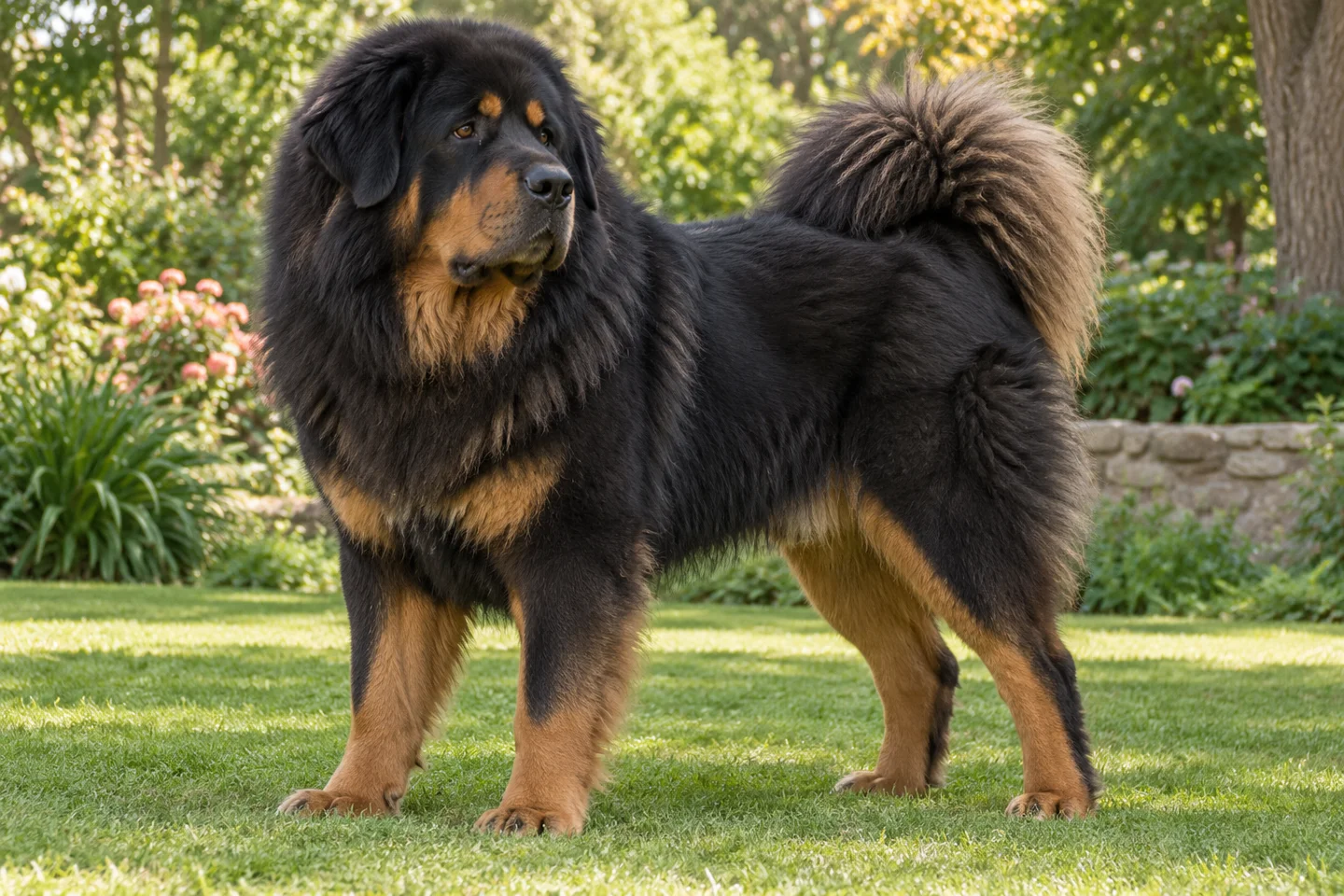
The head is broad and strong, with a deep muzzle, brown eyes, and natural triangular hanging ears. The coat has coarse guard hair over a dense undercoat, with a mane around the neck that is more pronounced in males. Our illustrations select black with tan markings. The complete feathered tail is carried loosely over the back when alert or moving. It should not be drawn as a rigid circular coil or altered into a docked stump.
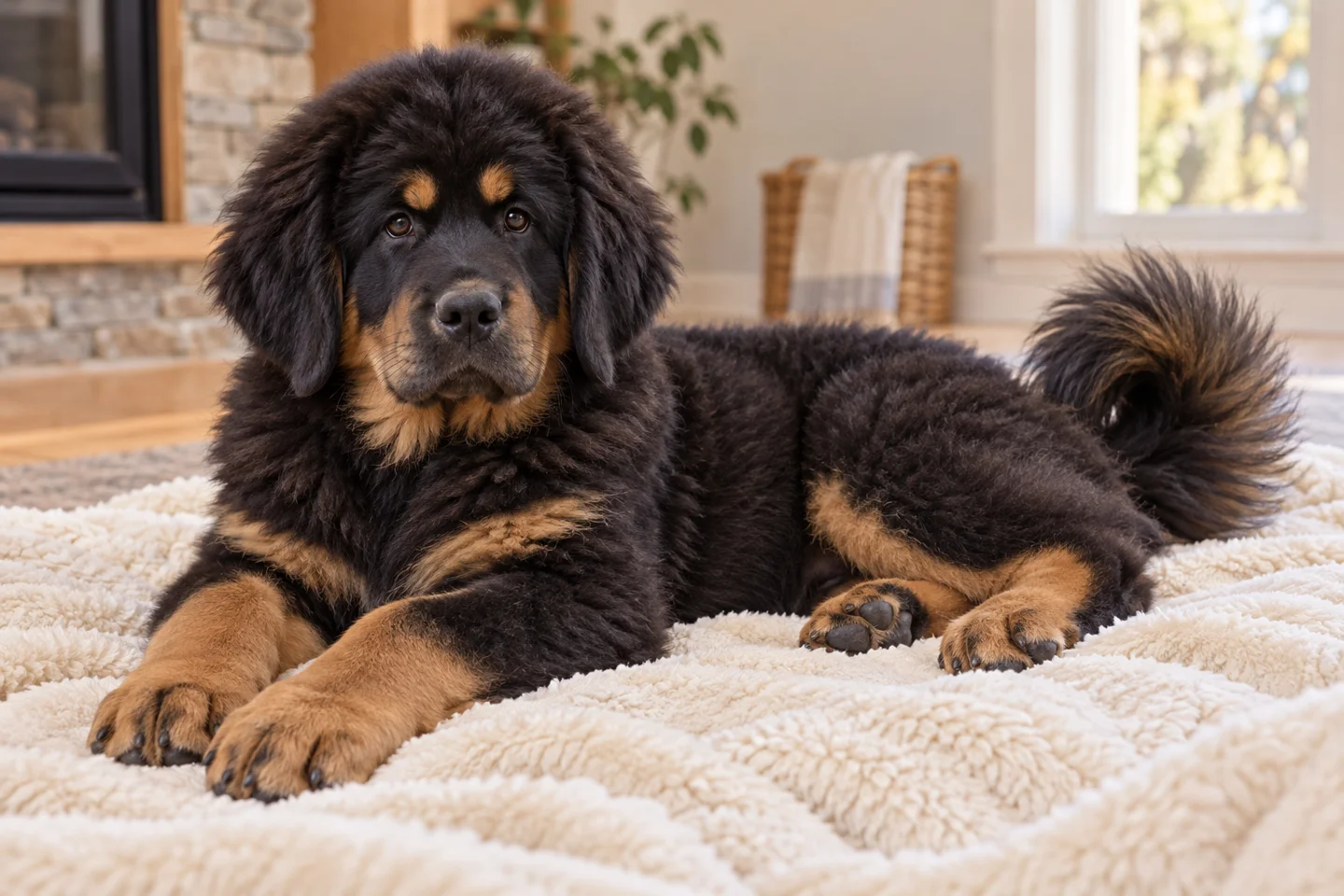
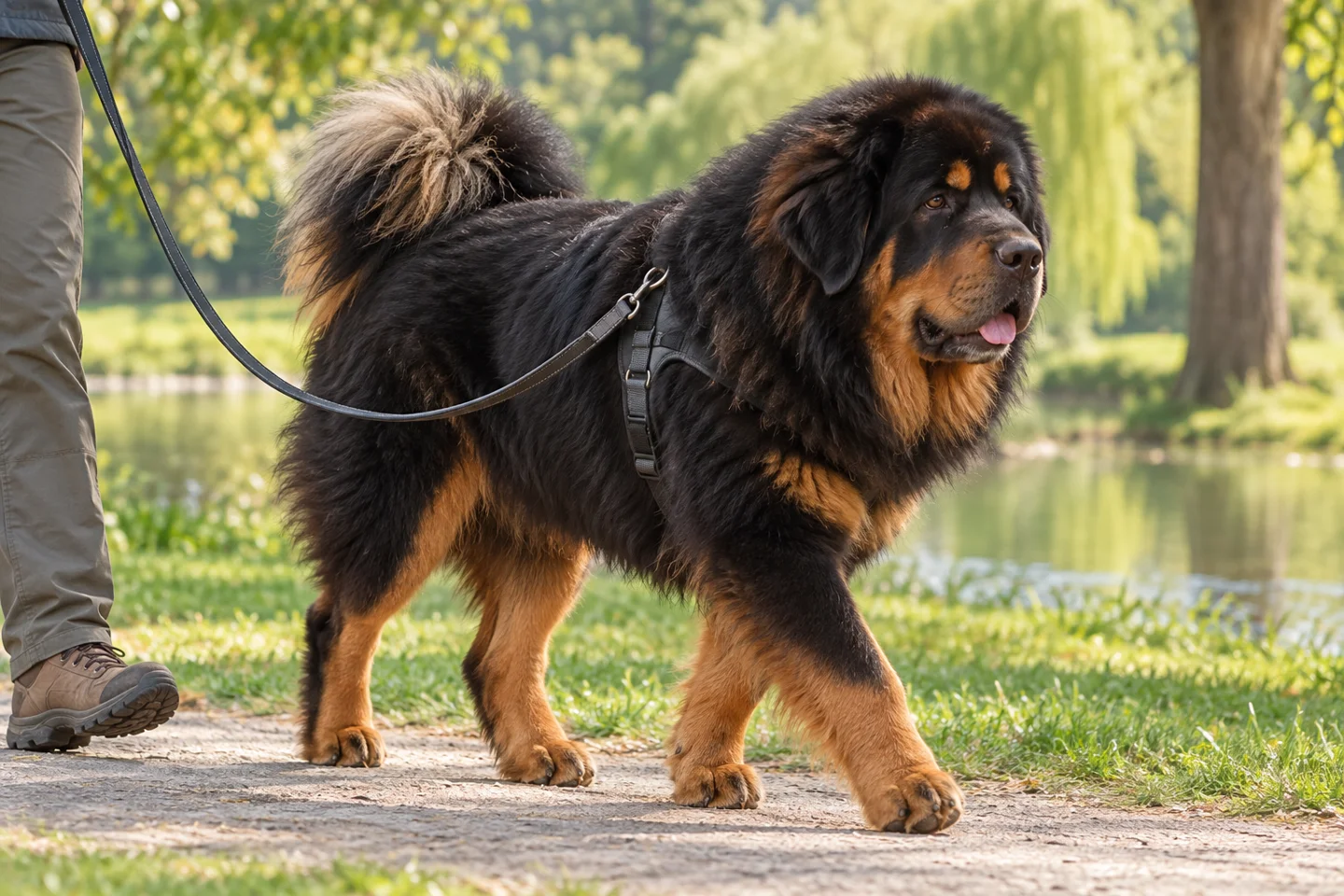
The three images are labeled AI-generated illustrations. A puppy naturally has a softer developing coat and less adult head and mane. Artwork cannot prove the health or ancestry of an actual dog. Fit equipment directly and check under the hair for rubbing or slack. A comfortable-looking strap above the coat can press differently against skin or loosen when the hair compresses during movement.
An address designed for a watchful dog
Inspect where the dog will see and hear activity. A side path, shared drive, or pavement beside the fence may produce repeated alerts. Decide whether visual screening, a different resting area, or supervised access would reduce that pattern. A large property alone does not create an appropriate routine. What matters is what the dog rehearses there and whether the owner can interrupt safely before arousal builds.
Plan a secure waiting area before someone reaches the gate. The owner should not have to hold a collar while opening access and answering questions. Rehearse the route with no visitor present and reward the dog for moving there. The area needs water, comfortable rest, and a dependable barrier. A plan that works only while the strongest household member is available needs revision.
Discuss noise and access with everyone affected. A guardian's alert voice can matter to neighbors even in a detached home. Find out what triggers this individual and how it recovers. If the dog repeatedly becomes distressed by passing activity, change the setup and seek help rather than treating every bark as evidence that the breed is doing its job. The household remains responsible for its impact and welfare.
Visitors who do not have to prove themselves
An unfamiliar person can wait while the owner arranges the dog. They do not need to approach the boundary, offer a hand, or stand close to show confidence. Begin with room and let the animal observe. A quiet view of the visitor can be a useful stage without touching. If the dog prefers distance, preserve that option rather than following it into a corner.
The dog's response should guide the next step. Repeated blocking, sustained staring, stiffness, or retreat calls for a simpler situation or an ending. A description such as protective cannot certify that a particular encounter is safe. Avoid inviting a person closer to discover whether the dog will accept it. The owner can collect information while maintaining barriers and distance rather than allowing uncertainty to become a confrontation.
Prepare for people who must provide essential care. A backup sitter, veterinary team, or groomer may need gradual introductions and a carefully explained plan. Tell them about handling and previous incidents in advance. A dog that is affectionate with its owner has not automatically learned to accept another person's restraint. Necessary care deserves deliberate teaching and clinical support where appropriate, not an assumption that the animal will understand good intentions.
Training for cooperation rather than a strength contest
Teach movement to a mat, following a hand target, waiting at an opening, and turning with the handler. Reward easy responses in quiet conditions before increasing difficulty. A visitor arrival is a separate challenge from an empty-room exercise. Use management while those skills develop so the puppy does not repeatedly learn that rushing a gate produces the most interesting experience of the day.
Leash skills should begin while the dog is physically manageable. Reward a few steps together and practice a turn away from distraction. A reward-based professional can assess equipment and the regular handler's ability. The plan should explain what happens before the dog reaches a trigger, not rely only on holding harder afterward. Mature size makes hurried physical improvisation an unreliable long-term strategy.
Build handling in small parts: a brief stand, one paw touched, an ear observed, and comfortable examination near the mouth. Introduce vehicle access before treatment makes it urgent. If the dog resists a formerly manageable task, consider discomfort and tell the clinician. A physical contest can worsen anticipation while leaving pain or confusion unresolved. The useful goal is a routine that more than one informed person can carry out.
Exercise and recovery for a growing guardian
Provide regular movement and exploration while adapting to age, health, and conditioning. A growing dog should not be driven through repetitive hard activity simply to make it easier to manage at home. Ask the veterinarian about surfaces, stairs, and the proposed workload. Enthusiasm alone cannot establish that the developing body is ready, and a calm demeanor cannot prove that inactivity is comfortable.
An adult can benefit from varied walks and manageable tasks rather than constant boundary patrol. Simple searches may provide an alternative focus in a quiet location. Build fitness gradually and observe the response after rest. New stiffness, reduced stamina, or reluctance to rise deserves assessment. Do not dismiss a change as inevitable laziness or a normal trait of a large breed without examining the wider pattern.
Warm weather requires shade, water, and sensible timing. The heavy coat does not prevent overheating. Check conditions inside sheltered areas as the sun moves, and watch breathing and recovery directly. Shorten or change activity when appropriate. A dog willing to follow its owner may still need protection from a demanding route. Quiet rest belongs in the plan alongside movement and investigation.
Aggression and serious household precautions
Take lunging, snapping, resource guarding, and threatening restraint responses seriously. Prevent another close encounter while veterinary and qualified behavioral advice is arranged. Pain may alter tolerance, especially when a new reaction occurs during touch or rising from rest. The owner should not recreate the event to test whether the dog meant it. A large dog's brief mistake can have substantial consequences.
Offer meals and valuable chews where children and pets cannot approach. Prevent access to likely stolen items and teach exchanges with safe objects during calm practice. If conflict already occurs, obtain help with a controlled plan. Taking items repeatedly to establish authority can make approaching people predict loss. The whole household needs clear instructions about barriers, access, and what to do when the usual handler is absent.
Disclose incidents accurately to carers, including contact and injury. A calm public greeting cannot erase a different response at home. Some individual plans may use a positively introduced basket muzzle, but it does not remove distress or authorize unlimited exposure. Distance and informed handling remain essential. The practical plan should protect people while improving the dog's experience rather than simply adding stronger equipment to the same risky setup.
Children and a large dog's space
A Tibetan Mastiff can knock over a small child through ordinary movement. Arrange contact with room and active adult supervision. Children should not ride, lean on the back, hug the head, or pull the mane. A dog lying still has not agreed to unlimited handling. Protect withdrawal and provide a resting area the child cannot enter.
Meals and sleep need privacy. Place the bed outside a route children must use and teach access to that location. Visiting children add unfamiliar movement and noise, so use the visitor routine and separate when necessary. Comfort with one family child cannot certify every group activity. When adults become occupied, use a dependable safe area instead of relying on the dog's attachment to manage the situation.
Older children can help prepare a search or organize supplies without needing to restrain the dog. Walking and access decisions require realistic judgment and adult responsibility. A child should call an adult about a stolen object or animal conflict. Historical guardian work does not assign a childcare function. The household must create safe interactions rather than expect a dog to interpret all children's intentions correctly.
Other dogs and animals around the home
Judge relationships with other dogs individually. Begin with controlled space and observe whether both can disengage. At home, separate meals and provide different resting areas while the pattern becomes clear. Doorways and access to people can create pressure even where outdoor play appeared comfortable. Repeated blocking or following needs a changed arrangement before the animals reach a conflict.
Cats require escape routes and gradual assessment. Familiarity with one cat does not establish safety with a running unfamiliar animal outdoors. Securely protect rabbits, rodents, and poultry. A quiet look through a barrier provides limited information and should not be turned into permission for an uncontrolled encounter. No small animal should be used to test the dog's restraint.
Retain appropriate control around livestock and wildlife and follow local rules. Working background cannot establish that a puppy arrives trained for every animal. A genuine livestock placement needs experienced guidance and suitable management. A pet owner can provide exploration and purposeful tasks without allowing uncontrolled pursuit. These decisions should be part of the placement discussion rather than postponed until an escape reveals the gap.
Grooming a mane without missing the skin
Work through the double coat in sections, especially around the neck, behind ears, beneath equipment, and through the tail and breeches. Loose undercoat can accumulate, and a tidy outer surface may hide tangles. Ask a groomer to demonstrate tools and comfortable technique. The goal is skin access and maintenance rather than creating the largest possible mane for a photograph.
After washing or prolonged wet weather, check that deeper areas dry and bedding stays clean. Plan towels, footing, and space for a large wet dog. Persistent odor, itch, or inflamed skin needs veterinary advice rather than repeated stronger products. Record the timing and what was used. Those details can help the clinician interpret a change without guessing from the current appearance alone.
Nails, teeth, and ear observation deserve separate practice. Do not insert implements into the ear canal; repeated shaking, discharge, or pain requires assessment. Check feet after rough ground and seek help for injury or embedded material. A new objection to one area may indicate discomfort. Increasing restraint can make later care harder while leaving the original cause untreated.
Health: joints, eyelids, and thyroid assessment
Current AKC recommendations identify hip and elbow evaluations, ophthalmologist examination, and thyroid evaluation for the Tibetan Mastiff. The American Tibetan Mastiff Association's published statement supports those areas. Request identifiable reports and confirm the current timing and protocol rather than relying on an old advertisement. A dog's willingness to walk at a visit cannot replace scored joint information.
The AKC breed discussion identifies eye anomalies including entropion and ectropion. A broad head and attractive expression cannot establish comfortable eyelids. Persistent squinting, discharge, rubbing, or redness deserves veterinary assessment. Do not delay because the appearance seems typical in photographs. The individual's eye surface and comfort matter more than preserving a particular facial look.
Thyroid evaluation is also a specific clinical question, not a reason to diagnose from a heavy coat or a quiet afternoon. Give the veterinarian the symptoms, medication history, and actual results when a concern arises. Screening of breeding parents and diagnosis in a pet answer related but distinct questions. Treatment should follow professional interpretation rather than another owner's description of what helped a similar-looking dog.
Keep records of movement, appetite, condition, and recovery. A large coated guardian can lose or gain weight without the change being obvious at first glance. Favorable parental findings cannot explain every later symptom. Ask how confirmed diagnoses in relatives are shared and bring original documents when changing clinics. Accurate continuity provides more useful care information than a general assurance that the breed is naturally robust.
Food, mixes, costs, and a plan that can last
Use a complete life-stage food and follow growth and condition with the veterinary team. Do not add minerals to make a puppy bigger without guidance. Measure portions and account for training food from several people. Review intake when activity or treatment changes. Persistent appetite, thirst, or weight changes need investigation rather than assumptions based on a thick coat or an independent temperament.
A Tibetan Mastiff mix may differ in adult size, coat, and responses to people and animals. Ask which parentage is documented. A heavy mane cannot identify both parents or guarantee a predictable guardian. For an adopted adult, observed care and clinical history may guide placement more effectively than a guessed family tree. A puppy still carries uncertainty that a fashionable cross name cannot remove.
Obtain local costs for boundaries, transport, grooming, training, preventive care, boarding, and emergency treatment. Read insurance terms and arrange a backup person who can follow the visitor routine. Ask the source how continuing support works and what happens if the placement becomes difficult. The sustainable commitment depends on informed people and repeated daily arrangements, not only the acquisition fee or enthusiasm for an imposing breed.
A dogsDating walk away from a guarded address
Describe the dog's comfort with unfamiliar handlers separately from its interest in dogs on dogsDating. Explain distance requirements before meeting and agree that a shared walk can be the whole activity. Ask about the partner's pace and ability to disengage. Similar size or a guardian background does not establish that both will enjoy physical play.
Choose a broad public route away from the home boundary and begin with separate movement. Let each dog investigate after noticing the other. Avoid a narrow gate greeting or a crowded enclosure. If fixation, blocking, or repeated avoidance continues after space increases, end calmly and review the arrangement. A digital match does not create an obligation to progress to touching or free running.
Keep exact user coordinates private. Approximate discovery and an agreed public landmark can organize the outing without exposing a residence or regular private route. Compare concrete observations afterward, including distance and recovery. Those details should guide another meeting or the decision to choose a different companion, while preserving the owner's ability to manage the actual dog rather than an idealized breed reputation.
Sources and editorial notes
Sources checked October 22, 2026. Breed measurements describe reference ranges, not a diagnosis or an individual dog's ideal weight. Images are AI-generated breed illustrations and do not document a particular dog or health condition.
- AVSAB: Humane Dog Training Position Statement
- VCA Animal Hospitals: Food aggression in puppies
- Orthopedic Foundation for Animals: CHIC health screening programs
- VCA Animal Hospitals: Aggression toward unfamiliar dogs, diagnosis
- VCA Animal Hospitals: Grooming and coat care for your dog
- VCA Animal Hospitals: Ear infections in dogs (otitis externa)
- AAHA: Feeding plans for healthy, appropriate weight cats and dogs
- VCA Animal Hospitals: Heat stroke in dogs
- AVSAB: Puppy Socialization Position Statement
- VCA Animal Hospitals: Dog behavior problems, aggression toward children
- American Kennel Club: working health testing requirements
- American Tibetan Mastiff Association: Health statement
- American Kennel Club: Tibetan Mastiff health and care
- Tibetan Mastiff: official breed standard
Keep getting to know dogs.
Read another guide or return to your dogsDating community.
Explore breed guidesBack to dogsDating