Tosa
A practical guide to Tosa ownership, secure handling, health records, local restrictions and carefully managed contact.
How these guides are researched and reviewed

- Origin
- Japan
- FCI minimum height
- Males 60 cm; females 55 cm
- Selected coat
- Short red-fawn with dark muzzle shading
- Daily planning
- Capable handling, containment and backup care
General information for owners. These articles have not been reviewed by a veterinarian. Medical decisions need your dog's history and an examination.
Tosa identity and the work of responsible ownership
The Tosa is a large Japanese mastiff-type dog whose strength makes preparation essential. A person choosing one needs to think about secure boundaries, capable handling and access to care before admiring its appearance. The useful question is whether the home can provide a dependable daily arrangement, including when the usual handler is absent. Good intentions cannot compensate for a gate that will not hold or a carer unable to manage the dog safely.
The FCI history describes development using Japanese dogs and several imported breeds in a fighting-dog context. That history should be stated plainly without celebrating combat or predicting every individual's behaviour. Modern care must prevent confrontations with animals and people. Ask a source for observed responses during routine handling, unfamiliar arrivals and walks. A calm appearance during a brief visit can be reassuring information, but it is only one observation rather than a guarantee about life in a different household.
Minimum heights and an unexaggerated body
The FCI specifies a minimum shoulder height of 60 centimetres for males and 55 centimetres for females. These are minimums rather than a narrow adult range or an instruction to maximise size. The standard does not provide a single compulsory weight figure in that text. Assess the animal's frame and body condition with a veterinarian. A dog should be able to rise, turn and walk comfortably rather than being made heavier for an imposing photograph.
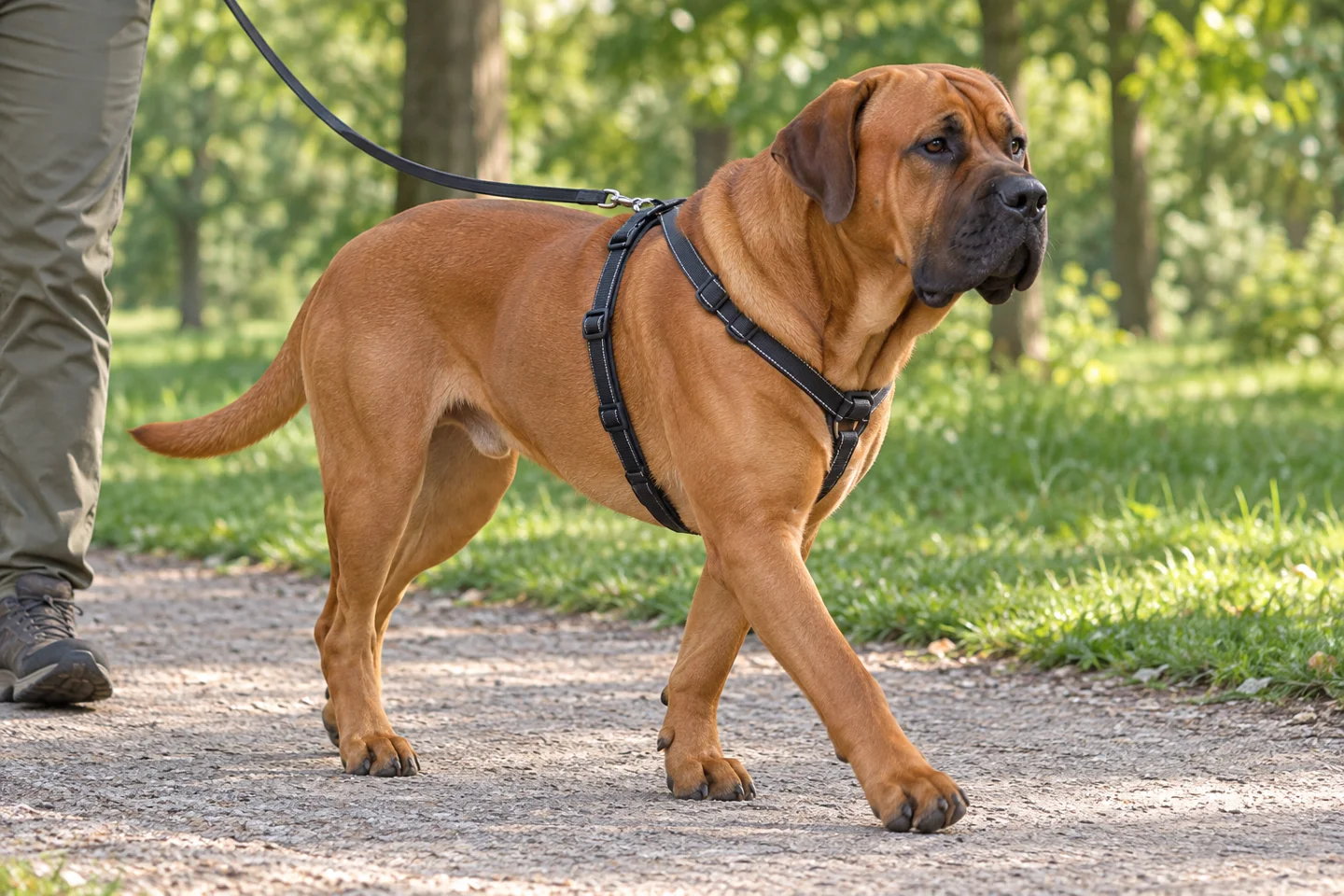
The selected illustrations show a red-fawn dog with modest dark muzzle shading, natural hanging ears and a full low-carried tail. A short dense coat and broad head are part of the intended appearance. The pictures are labelled AI-generated illustrations and do not document a particular animal or establish clinical soundness. When visiting a real dog, ask about ordinary movement, rest and necessary care. No posed image can reveal every concern that may affect its comfort or suitability.
Check ownership rules before choosing or travelling
Ownership and travel decisions need the rules for the actual location. UK Government guidance lists the Japanese Tosa among banned dog types. That is a concrete reason to check official requirements before considering purchase, rehoming or a journey involving that jurisdiction. A breed article cannot establish an individual animal's legal status, and a seller's chosen name cannot substitute for advice from the relevant authority.
Check destinations as well as the place where the dog lives. Ask about accommodation, transport and any property restrictions before money or travel plans become difficult to change. Where legal interpretation is needed, obtain qualified local advice using current official information. Do not assume a rule found for another country applies unchanged or that a friendly temperament overrides a restriction. Keep the care arrangement practical within the requirements that actually apply, including any conditions imposed on where or how the animal may be handled.
Temperament and specific household observations
The breed is often described as composed and watchful. Ask what that means in everyday circumstances for the dog being offered. How does it respond when a repair worker enters, another dog appears beside a vehicle or someone unfamiliar attaches a lead? A source should explain any separation, equipment or handling routine already used. Information about difficult moments helps you prepare instead of discovering a restriction after arrival.
A quiet dog may still need space. Do not interpret the absence of barking as permission to approach its face, disturb its bed or reach for an object. Give it a retreat and let visitors follow an owner-managed plan. If the home normally has frequent unpredictable arrivals, evaluate whether that plan can be maintained consistently. Adult confidence, familiarity and tolerance may vary between settings. Observations should remain tied to their circumstances rather than being expanded into a universal promise about the breed.
Containment, doorways and vehicle access
Inspect barriers for the force and size of the actual dog. Check gate latches, weak panels and the route people take from outside to the house. Use a second barrier while an entrance is open so a single mistake does not lead directly to the street. Explain the routine to family, visitors and service providers. Nobody should have to squeeze past a loose dog in order to complete a delivery.
Teach entry into a secure travel area in manageable rewarded stages. A comfortable ramp or another suitable arrangement may be needed depending on size and mobility. Practise while the dog is well, rather than waiting until lifting is impossible during illness. Equipment needs correct fit and regular inspection. The handler should have enough room and skill to turn away from a distraction without relying on a confrontation. If that is not currently possible, improve the arrangement with professional help before repeating the outing.
Training that can be used during ordinary tasks
Build a reliable response to moving behind a barrier, standing on a mat and following a hand target. These skills can help with cleaning, visitors and veterinary preparation. Begin with easy versions and reward cooperation before increasing distance or distraction. A clear release also matters, so waiting does not become an indefinite confusing task. Practise the response in several suitable places before depending on it when something unexpected happens.
Use cooperative handling to prepare the dog for touch, scales and examination equipment. Work briefly around feet and the body, with a reward and a break. A basket muzzle introduced gradually may support safe care when appropriate, and a professional can demonstrate fit. Avoid methods that depend on intimidation or physically overpowering the animal. When a response changes, consider pain, fear and the environment. A qualified trainer should help make a task achievable rather than simply demanding that the dog tolerate more pressure.

Exercise, growth and avoiding forced effort
Provide regular comfortable movement rather than assuming a quiet-looking large dog needs little activity. Walks with room to investigate can offer engagement while allowing the handler to avoid crowded encounters. Select routes with stable footing and an easy return. A secure garden can contribute to the routine, but it should not be the only place the dog experiences life when suitable controlled outings are possible.
Ask about developmentally appropriate activity for a puppy and introduce demanding work gradually. Repeated impact or forced running should not be justified by an animal's eagerness. Watch recovery after rest, including stiffness and willingness to rise. Weather changes what is suitable, so provide water and choose cooler times when necessary. Persistent reluctance, unusual fatigue or changed breathing needs attention. Exercise should maintain comfort and useful function rather than become a challenge to prove stamina or physical power.
Aggression and the consequences of lost control
Assess the individual's behaviour and the situation in which it occurs. Breed alone cannot establish a bite outcome, but the physical consequences of losing control of a large powerful dog can be serious. Take a warning or incident seriously without staging another encounter to test it. Record who approached, what was happening, access to resources and any injury. Dependable separation protects everyone while a veterinarian and qualified behaviour professional assess the cause.
A suddenly painful dog may tolerate less handling, while an established pattern around food or another animal needs its own management. Do not punish a warning while continuing the same interaction. Give carers an accurate account of previous contact rather than vague reassurance. A muzzle can form part of a plan after suitable introduction, but it cannot make every encounter appropriate. Keep the barriers, distance and supervision the dog currently needs. Some situations may remain unsuitable even when other skills improve.
Children and reliable adult supervision
Children must not be responsible for handling this dog on a lead, retrieving its chews or managing a visitor's arrival. Adults need to arrange interactions and remain attentive. A dog moving through a room or turning during play can cause a fall without any aggressive intent. Keep energetic games and crowded gatherings separate when necessary. Provide a quiet space where the dog can rest without a child entering to hug or touch it.
Explain rules to visiting adults as well as children, and use physical separation when supervision is interrupted. A familiar child's confidence does not prove that a sleeping or uncomfortable dog wants contact. Ask a source about the actual ages and situations the animal has experienced. If the household cannot maintain the necessary management, that limitation belongs in the placement decision. A description of a dog as patient cannot take the place of an adult who controls access and notices when an interaction should end.
Other dogs, cats and introductions with room to leave
Learn the individual's previous animal history before planning access. Introduce dogs with separate capable handlers, a wide area and no shared resources. Parallel movement can be a starting point if both animals remain able to look away. A successful walk does not establish safe sharing of a home, bowl or resting place. Some pairings require a professional plan, and some will remain unsuitable for close contact.
Protect cats and smaller animals through secure separation while compatibility remains uncertain. Do not use a vulnerable pet to discover the dog's response. In a multi-dog household, arrange feeding, chews and rest so one animal cannot repeatedly block another. Consider how the routine works when only one adult is present. If conflict has occurred, seek advice before allowing another encounter. Owners can enjoy walking together while their dogs remain apart; physical play is only one possible form of social activity and may be the wrong choice.
Health screening and the current programme
The Dutch registry's Tosa page identifies hip screening and links its current breeding norms, with checking of the new norms beginning in October 2026. Ask which national and registry programme applies to the proposed litter and read the relevant requirements with the source. A general description of health on one country's page should not be converted into a worldwide compulsory test list. Confirm any applicable conditions and exceptions rather than relying on a short advert.
Obtain the actual parental reports and ask how the findings informed the pairing. A dog that moves confidently in a video has not thereby demonstrated every joint result. DNA identification also answers a different question from clinical screening. Ask about relatives with persistent mobility problems, previous operations or conditions requiring long-term treatment. For an adult with limited ancestry information, its own examination and treatment history are the practical priority. A veterinarian can explain what additional assessment is relevant without inventing a complete universal panel where one has not been established.
Clinical care for a dog that is difficult to lift
Prepare access to care before an urgent event. Ask the practice about a suitable arrival arrangement, a quiet waiting place and handling instructions for this individual. Be honest about growling, resistance or previous incidents. That information lets staff plan rather than discover a problem while trying to help an injured dog. Teach approach to a scale and vehicle access in comfortable stages so routine appointments have a familiar starting point.
Keep emergency contacts, medication details and transport arrangements available to another adult. Collapse, severe breathing distress, major injury or repeated unsuccessful retching needs urgent veterinary contact. Do not delay care while trying to assign a breed-related diagnosis or administer human pain medicine. If the dog cannot walk, follow the clinic's advice about safe assistance. After a procedure, obtain clear recovery directions and a follow-up plan. Changes in mobility may require practical adaptations to the home rather than a carer attempting an unsafe lift.
Grooming, equipment contact and early discomfort
Use a gentle brush and inspect the skin where equipment rests. Check feet after outdoor activity and maintain nails before overgrowth changes movement. The short coat does not remove the need for routine observation. Pay attention to an area the dog suddenly avoids having touched. Care should be introduced through brief familiar steps while the animal is well, instead of beginning with prolonged restraint after something becomes painful.
Ask a veterinary professional how to maintain ears and teeth safely. Redness, odour, discharge or recurrent irritation needs assessment rather than deep cleaning or leftover medicine. Dry damp areas appropriately and check that collars and harnesses have not begun rubbing as the body changes. Tell a groomer about clinical findings and handling limits. A calm coat-care session can produce useful observations, but an owner should not continue an uncomfortable examination merely to finish a checklist at home.
Nutrition and steady, appropriate condition
Feed a complete diet for the dog's life stage and discuss growth with the veterinarian. The goal is comfortable development, not the fastest possible gain or largest adult outline. Measure food and include training rewards in the daily account. Ask the clinic to demonstrate body-condition assessment so changes are recognised before they affect movement. A breed minimum height does not tell you how much an individual should weigh or eat.
Provide quiet meals and prevent interference by children or pets. Teach an exchange separately from feeding rather than repeatedly testing the dog by removing its bowl. Ask before using mineral supplements, restrictive homemade diets or products promoted for extreme muscle. Persistent appetite, drinking or digestive changes require a clinical discussion. Where treatment changes the feeding plan, give carers written directions and explain when to contact the clinic. Consistency helps reveal a problem instead of hiding it beneath repeated unrecorded food changes.
Tosa mixes and evidence about parentage
A Tosa cross cannot be expected to inherit only the preferred traits of each parent. Adult strength, handling needs and compatibility may vary, and health questions relevant to both sides remain worth discussing. Ask what is documented rather than accepting a photograph as proof of parentage. For a rescue of uncertain ancestry, retain that uncertainty while building a practical care plan around observed behaviour and examination.
Legal decisions also need the actual jurisdiction and qualified interpretation. UK Government guidance explains that prohibited-type assessment involves appearance rather than a name alone. A seller calling an animal a mix therefore cannot settle its legal status. Check official advice before acquiring or moving a dog when restrictions may apply. For daily care, obtain factual information about previous incidents, animal relationships and current management. An attractive label cannot replace the evidence needed by a future carer, veterinarian or prospective owner.
Costs and backup arrangements that must work
Allow for suitable food, strong well-fitted equipment, secure containment, transport and ongoing veterinary care. Ask local providers whether they can accommodate the dog and what preparation is needed. Training and behavioural support may require a specific budget. Backup care should be arranged with someone who has met the dog safely and can follow the routine, rather than assumed available from any willing friend.
When discussing placement, ask what happens if the household circumstances change. A source should describe support and relevant information honestly, including restrictions that make another home unsuitable. Meet adults where possible without provoking demonstrations. Choose according to the care you can maintain now and the rules that apply where the dog will live. If a critical arrangement depends on physical strength, skills or access that nobody currently has, solve that problem before arrival rather than expecting a quiet temperament to remove it.
dogsDating contact within the dog’s actual limits
Before arranging an outing through dogsDating, establish that the proposed setting and handling comply with applicable requirements. Describe the individual dog's preferred distance and restrictions clearly. Share an approximate area while keeping exact home coordinates private. A quiet public route with width and separate arrival space may be suitable for some dogs. For others, online conversation between owners may be the appropriate starting point while professional advice or practical arrangements are still needed.
Where a walk is suitable, each dog needs a capable adult handler and an agreed way to leave. Begin with generous distance and parallel movement. Avoid shared food, toys and confined greetings. The animals do not have to play for the people to enjoy meeting. End if either dog becomes tense, repeatedly avoids the other or cannot disengage. Use the observations to decide whether another controlled walk is appropriate, rather than treating a completed first meeting as permission for unrestricted contact.
Sources and editorial notes
Sources checked October 22, 2026. Breed measurements describe reference ranges, not a diagnosis or an individual dog's ideal weight. Images are AI-generated breed illustrations and do not document a particular dog or health condition.
- AVSAB: Humane Dog Training Position Statement
- VCA Animal Hospitals: Food aggression in puppies
- VCA Animal Hospitals: Aggression toward unfamiliar dogs, diagnosis
- VCA Animal Hospitals: Grooming and coat care for your dog
- VCA Animal Hospitals: Ear infections in dogs (otitis externa)
- AAHA: Feeding plans for healthy, appropriate weight cats and dogs
- VCA Animal Hospitals: Heat stroke in dogs
- VCA Animal Hospitals: Common emergencies in dogs
- Orthopedic Foundation for Animals: CHIC health screening programs
- AVSAB: Puppy Socialization Position Statement
- VCA Animal Hospitals: Dog behavior problems, aggression toward children
- FCI Standard 260: Tosa origin, history, minimum height and natural structure
- American Kennel Club: Tosa background and everyday ownership
- Raad van Beheer: Tosa hip screening and breeding norms taking effect October 2026
- UK Government: banned dog types, including the Japanese Tosa
Keep getting to know dogs.
Read another guide or return to your dogsDating community.
Explore breed guidesBack to dogsDating