Toy Fox Terrier
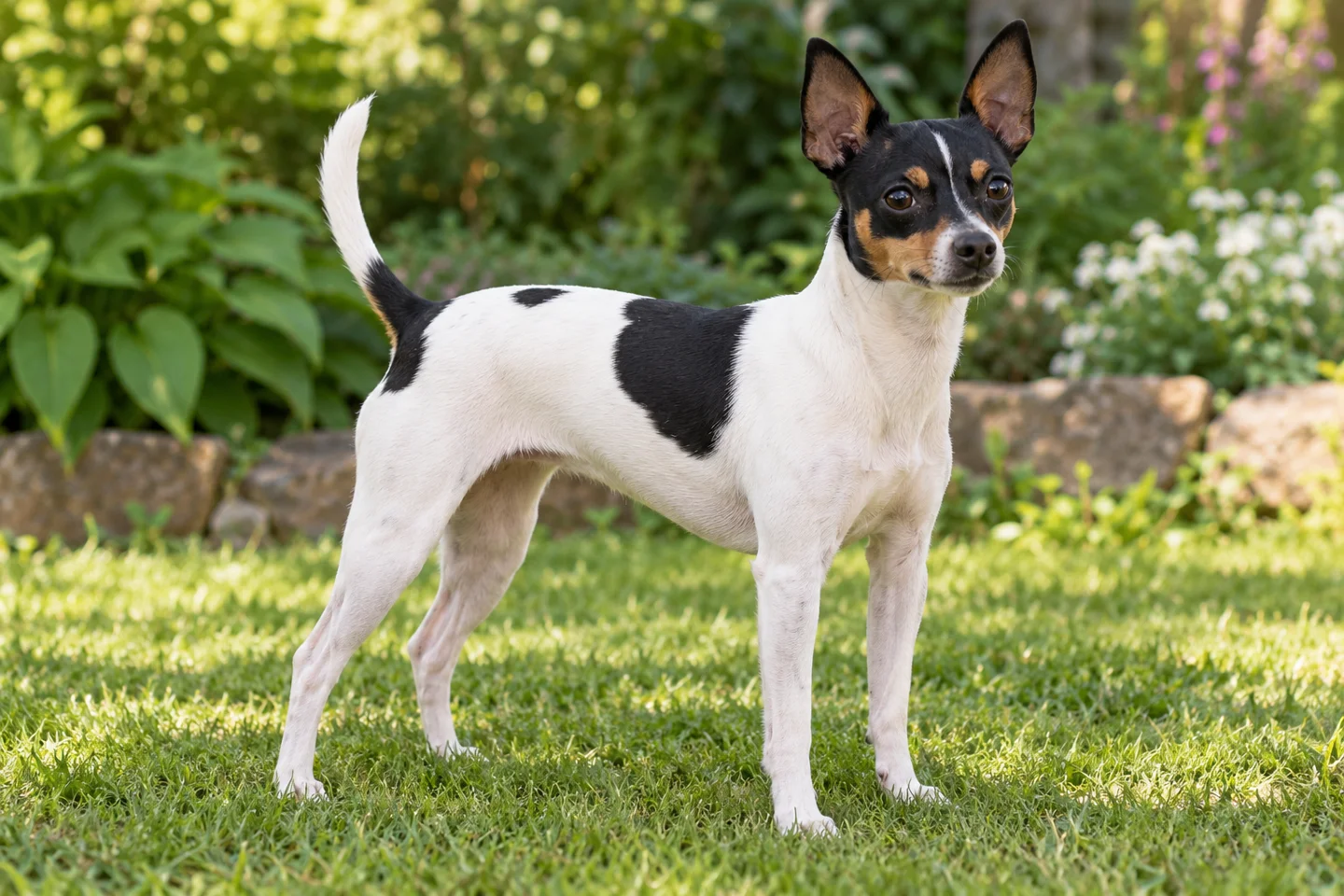
A tiny, square American terrier with upright ears and a short white-patterned coat, whose activity and handling needs should be treated seriously.
How these guides are researched and reviewed
- Origin
- United States
- Adult standard size
- AKC 8.5–11.5 inches; preferred 9–11
- Illustrated coat
- White, black, and tan short coat
General information for owners. These articles have not been reviewed by a veterinarian. Medical decisions need your dog's history and an examination.
Toy and terrier both have practical meaning
The Toy Fox Terrier is a small American breed with a square, athletic body and a smooth coat. It should not be treated simply as an undersized Smooth Fox Terrier or confused with every small white-and-tan crossbreed. Read the actual registry documents when ancestry is claimed. A rescue with uncertain parentage still deserves a clear account of its observed behavior and care rather than a confident visual guess.
The name combines a companion role with a terrier background. For the owner, that means a small dog may still investigate movement, follow scent, and persist with an interesting problem. The household needs safe exploration and useful teaching, not only a place on a lap. Small scale can make transport convenient while leaving a complete dog's need for activity, rest, social experience, and veterinary care intact.
Meet adults and ask about daily life. Discuss toileting, visitors, time alone, handling, and relationships with larger dogs. A source who can describe the situations that need management offers useful information beyond a cheerful breed summary. Do not choose on the assumption that a tiny animal will automatically fit every home or require less training. The proposed routine should be assessed against what this individual has actually experienced.
Adult height and a natural full-tail illustration
The AKC standard accepts heights from 8.5 to 11.5 inches at the withers, with 9 to 11 inches preferred. The intended outline is approximately square, with athletic balance and suitable bone. These are adult standard figures. They are not a reason to underfeed a puppy or pay extra for an informal label promising the smallest possible animal. Ask the veterinary team to assess growth and condition directly.
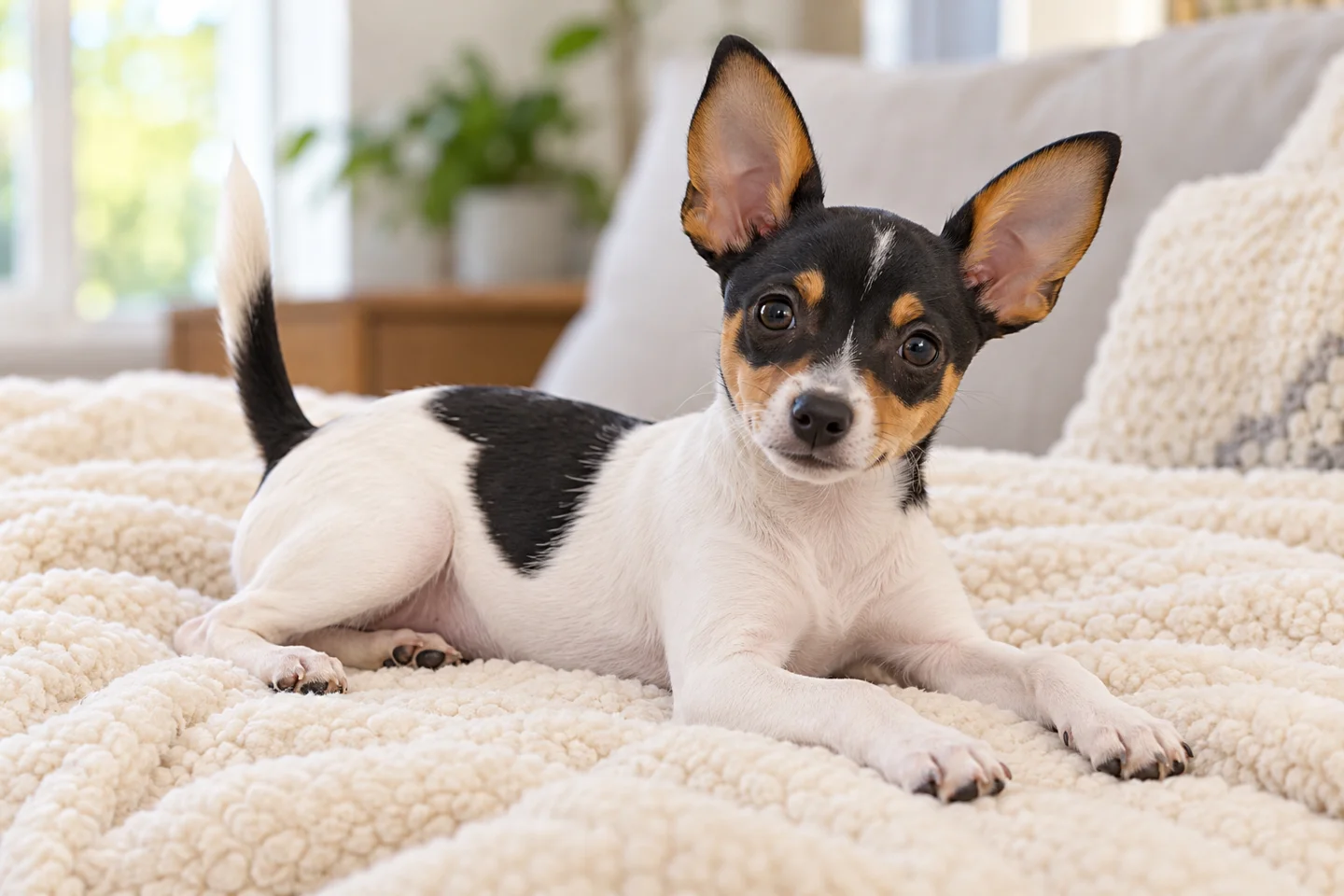
The coat is short and glossy, with white predominating on the body and a more solid-colored head. The illustrated dogs use black, white, and tan. Natural ears stand erect in an inverted V shape, and the eyes are dark and rounded without an exaggerated bulging appearance. Our illustrations deliberately retain a full natural tail rather than depicting the shortened tail customary in some conformation descriptions.
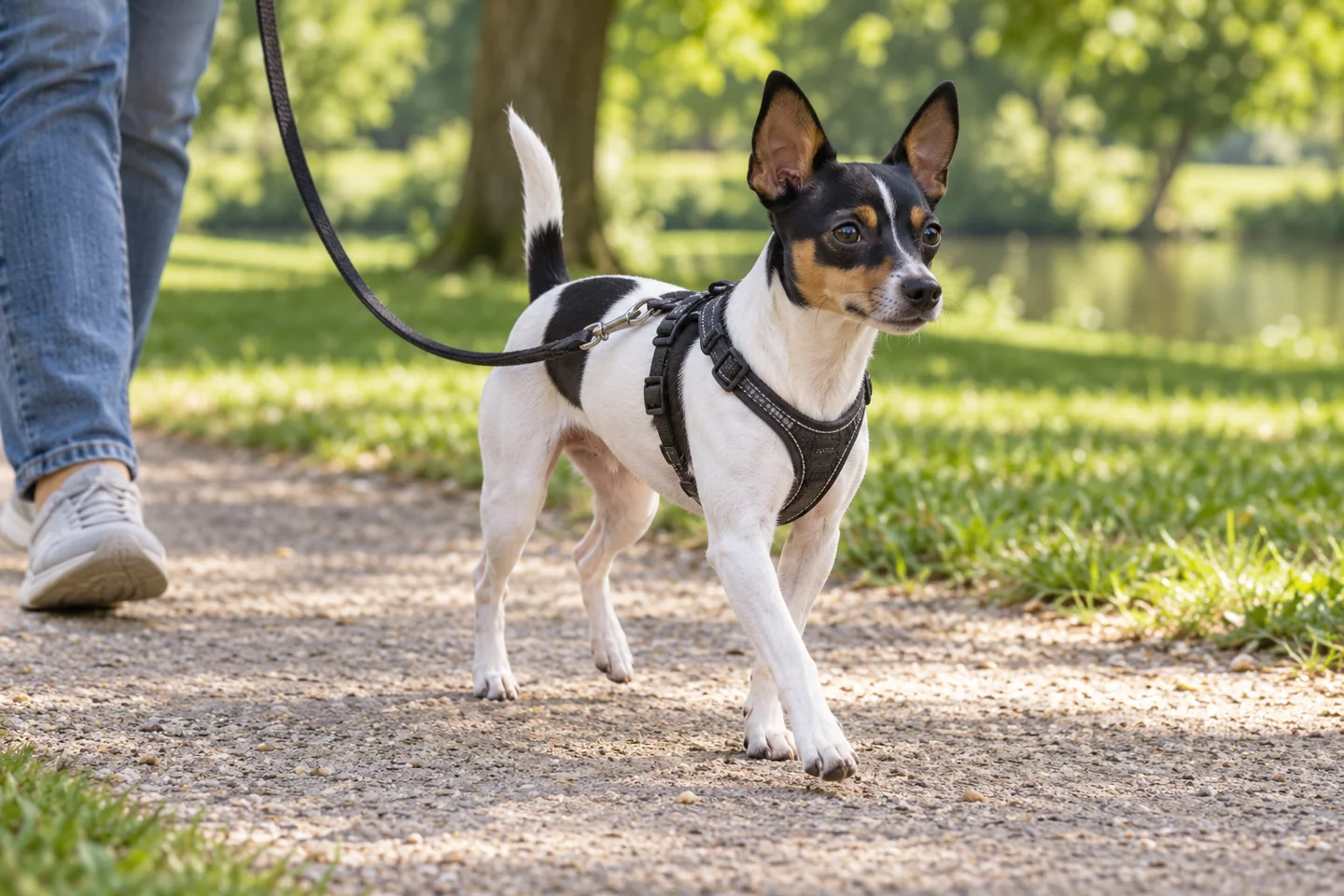
That visual choice should be explained honestly. AI-generated illustrations are labeled artwork and cannot certify eligibility under a particular show standard, pedigree, or health finding. A puppy's ear carriage and proportions are still developing. Fit equipment to the actual chest and neck, checking that it does not rub or permit escape when the dog reverses. A small gap can be consequential in a tiny dog's harness.
The household viewed from a tiny dog's height
Inspect gaps behind appliances, openings in barriers, folding furniture, and doors that close quickly. A person carrying shopping may not notice the dog beside a foot. Establish a safe station outside the busiest kitchen route and teach it before relying on the arrangement during meals. A tiny dog should not have to navigate constant human traffic to reach water or a comfortable bed.
Decide how furniture access works. If it is allowed, discuss a stable appropriate route with the veterinary team rather than assuming every repeated leap is harmless. Watch the individual as it grows and ages. A dog that begins avoiding a favorite place may have discomfort rather than a changed preference. Helping it reach the same high position does not remove the need to investigate why access became difficult.
Visitors should check before lifting. Support the body properly and explain the method to anyone who genuinely needs to handle the dog. Passing it between people for entertainment creates risk without a useful purpose. Often a calm floor-level interaction gives the dog more choice. Carrying remains valuable when conditions are unsafe, but it should not replace every opportunity to investigate and practice walking.
Training with appropriately small rewards
Teach coming to the owner, following a turn, waiting at an opening, and resting on a mat. Use short sessions and rewards small enough for repeated practice. Coordinate food between household members so training does not quietly add another meal. A tiny dog can learn clear practical skills, and the handler should adapt the task to its size instead of expecting forceful corrections designed for a heavier animal.
Toileting requires frequent opportunities, a consistent location, and reinforcement at the right moment. Help a puppy succeed after sleep, play, and meals. Clean mistakes calmly and adjust supervision if the same pattern repeats. An adult that changes an established habit needs medical causes considered. The assumption that small dogs are inherently unreliable can delay both useful teaching and necessary treatment.
Practice accepting equipment and handling in separate steps. The harness appearing, a brief touch, and a strap being fastened need not happen together at first. Reward voluntary participation and stop before the dog becomes overwhelmed. A reward-based professional should explain how difficulty is reduced when the dog struggles. Holding a small dog still can complete one action while making the next attempt more frightening.
Exercise and the right to explore
Provide walks and investigation at a level suited to age, health, and condition. Indoor games offer something different and should not be the dog's entire world. Let the Toy Fox Terrier sniff safe areas rather than carrying it through every outing. Several manageable sessions may suit a puppy better than one long excursion arranged around an owner's schedule. Watch the response and adjust accordingly.
Choose surfaces carefully. Hot paving, sharp grit, deep mud, and gaps in structures can affect a tiny dog disproportionately. Suitable clothing may help in particular conditions, but it needs gradual introduction and fit checks. A coat should not restrict movement or rub behind the elbows. The presence of clothing cannot prove that the dog is comfortable, warm enough, or ready to continue.
At home, use simple searches and controlled play with safe toys. Avoid relying on repeated jumping or frantic pursuit as the only way to provide activity. Teach a recognizable end and offer a resting place. Sudden fatigue, altered movement, or reluctance to walk deserves veterinary advice. A lively response to a toy cannot certify that the dog is free of pain or appropriately conditioned for every game.
Socialization when everything is larger
Arrange manageable exposure to people, traffic, travel, sounds, and surfaces. For a puppy, coordinate infection precautions with the veterinary team. A calm view from a suitable distance can be a useful lesson. If the dog freezes, repeatedly hides, or tries to leave, simplify. A busy outing ending in exhaustion is not automatically evidence that confidence has improved.
People should allow space instead of leaning into the dog's face. A small animal held in arms can still be frightened by an approaching stranger, and it may have no route to withdraw. Let visitors sit quietly and reward voluntary investigation. The dog does not need to accept touch from everyone it sees to become a workable companion. Passing without contact is a useful social skill too.
Select canine partners for controlled movement and the ability to stop. A friendly large puppy can overwhelm a Toy Fox Terrier through sheer size. Begin with separate walking and intervene when the smaller dog tries to leave. Do not expect it to defend space because terriers are described as confident. The owner can preserve safety while providing useful experience, rather than treating rough handling as a test of resilience.
Aggression and the danger of dismissing warnings
Growling during lifting, snapping over a chew, or stiffening when a bed is approached needs investigation. Small teeth can injure, and provoking a reaction for amusement is unfair and unsafe. Stop repeating the setup while advice is arranged. A new objection to handling may have a medical cause. The veterinary team should know what changed and whether a particular area appears uncomfortable.
Manage resources so meals and valuable objects are not approached by children or other pets. Teach exchanges with safe low-value items in calm practice. If guarding already creates risk, obtain qualified support before escalating the exercise. Taking away every object to prove ownership can make approaching hands predict loss. Prevention of access to rubbish and likely stolen items reduces the number of urgent confrontations.
Give carers accurate information about incidents, including contact, injury, and circumstances. A groomer or sitter should learn the present plan before taking responsibility. Some individual arrangements may use additional equipment introduced positively, but no tool makes unlimited unwanted contact comfortable. The plan should change the experience and protect people while the underlying veterinary and behavioral questions are addressed.
Children and physical safety at small scale
Children need adult-led contact at a stable low level. Sitting on the floor reduces the distance of a fall but does not make grabbing, hugging, or restraint acceptable. A child can place a treat onto a mat or help prepare a search without lifting the dog. Adults should explain concrete risks, including moving chairs, closing doors, and toys dropped near a tiny body.
Leave rest and meals undisturbed and provide a retreat children cannot enter. A dog moving away should not be followed. Visiting groups add unfamiliar noise and movement, so separation may be necessary even where normal family contact is comfortable. When the supervising adult becomes occupied, use the safe arrangement already taught. Simply remaining in the room is not equivalent to observing the interaction closely.
Older children may help with familiar cues or care records according to their abilities, but adults remain responsible for lead handling and safety decisions. A child should call an adult about a stolen object or conflict between animals. Affection cannot guarantee that a tired or painful dog accepts every touch. The relationship should develop through manageable experience and a reliable ability for the dog to opt out.
Larger dogs, cats, and small prey animals
Judge other dogs by behavior and physical match rather than friendliness alone. A cheerful paw or body bump can hurt a tiny companion. Begin with space and keep control of speed. Watch whether the larger dog stops following when the Toy Fox Terrier withdraws. If it does not, change the arrangement. The smaller animal should not have to escalate to obtain a break.
Cats need individual assessment and escape routes for both participants. A tiny puppy may be vulnerable as well as curious. Provide separate resting and feeding places and prevent repeated cornering. One calm greeting gives limited information about daily life. Observe access to people, narrow passages, and resting areas over time rather than assuming that an initial photograph establishes compatibility.
Rabbits, rodents, and poultry require secure protection from a terrier. Small body size does not remove pursuit interest. A quiet look through cage bars cannot establish what happens if the animal escapes and runs. Outdoors, retain appropriate control around wildlife and stock. The owner can offer safe searches and exploration without using another animal to test whether the dog can resist a chase.
Grooming a naturally short coat
Gentle brushing removes loose hair and allows skin inspection. Check under equipment and along the belly after outdoor activity. A short glossy surface cannot establish that the skin is comfortable. Persistent itching, odor, or a recurring inflamed spot belongs with the clinic. Note when it began and what products were used, rather than adding a series of stronger treatments without a diagnosis.
Ears need comfortable external observation. Do not push implements into the canal or choose leftover medication because another episode looked similar. Pain, discharge, repeated shaking, or a marked odor needs advice. Natural upright ears do not guarantee freedom from disease. A useful routine helps the owner notice a change early while keeping the dog willing to participate.
Nail care and toothbrushing should be introduced in small rewarded steps with appropriate products. A tiny mouth still needs professional dental assessment. Bad breath, difficulty chewing, or a change in tolerance should not be dismissed as normal for a toy breed. Tell professionals about handling concerns before the visit. Small size should not make forceful completion the default answer to every uncomfortable care task.
Health: a short AKC list and a fuller club discussion
The AKC toy-group summary lists patella evaluation, thyroid evaluation, and PLL for the Toy Fox Terrier. The American Toy Fox Terrier Club's health page adds important specificity by discussing primary lens luxation, patellar luxation, congenital hypothyroidism with goiter, and spinocerebellar ataxia. Ask which current tests and examinations apply to the parents and request the actual results. A short summary and a fuller club page should be read together rather than treated as interchangeable wording.
The club explicitly distinguishes the knee examination from DNA tests and notes that DM testing, although used by some members, is not an ATFTC required test in that discussion. A buyer should not turn an optional addition into a universal mandatory claim. Likewise, a broad word such as thyroid does not explain whether the document concerns a clinical evaluation or the specific congenital condition. Ask for the exact assessment rather than assuming one report answers every question.
If the pet develops an abnormal-looking or painful eye, unusual gait, or reduced comfort, seek veterinary advice regardless of parental findings. A genetic result addresses its named variant and cannot replace assessment of a new symptom. Record intermittent changes safely, including timing and circumstances. Avoid diagnosing a neurological condition from a resemblance to an online clip or treating a favorable panel as proof that clinical investigation is unnecessary.
Keep original reports with clinical notes and ask how later diagnoses in relatives are communicated. For an adopted adult, obtain the available history and resolve any outstanding follow-up. A CHIC number records completion and disclosure under a program; it does not promise that all findings were normal. The useful evidence is the result itself and its interpretation for this family and current patient.
Feeding, mixes, and the practical expense
Use a measured complete diet appropriate to life stage and coordinate rewards across the household. A tiny dog can receive a large share of its daily energy from small extras. Ask the clinic to demonstrate condition assessment and review intake when activity or treatment changes. Persistent appetite loss, unusual thirst, or weight change needs attention rather than repeated offerings of richer food without understanding the reason.
A Toy Fox Terrier cross may differ in size, ear carriage, coat, and behavior. Ask which parentage is documented. A white body and large upright ears cannot prove both parents, and a crossbreed name cannot guarantee better health or a particular temperament. An adult's observed behavior can guide a suitable placement even when lineage remains uncertain. A puppy still needs expectations that can adapt as it develops.
Obtain local prices for preventive care, dentistry, training, secure transport, boarding, and unexpected treatment. Read insurance conditions and arrange a backup person who understands safe handling and doors. A small food bill says little about the whole cost. Ask the source what support follows placement and how a serious difficulty would be handled. Reliable people and a workable daily routine remain essential throughout the dog's life.
A dogsDating meeting with compatible movement
On dogsDating, describe the Toy Fox Terrier's size, pace, and preferred style. Ask whether the proposed partner stops following when another dog leaves. Similar enthusiasm is only part of compatibility; differences in speed and weight can matter even with friendly intent. A first meeting can aim for calm shared walking rather than physical play.
Choose a quiet public area with safe footing and space to move independently. Begin with a gap and watch whether both dogs can investigate after noticing each other. Avoid lowering a tiny dog directly into another's face or starting inside a crowded enclosure. If pursuit continues or one repeatedly seeks escape, end the interaction calmly. An early departure can still provide useful information for the next decision.
Keep exact user coordinates private. Approximate discovery and an agreed public landmark can arrange the walk without revealing a residence. Compare the distance and pace that helped afterward. Another meeting should build on those observations rather than the owners' hopes for a particular photograph. The digital match supports discussion while the actual dogs determine whether the encounter remains comfortable.
Sources and editorial notes
Sources checked October 22, 2026. Breed measurements describe reference ranges, not a diagnosis or an individual dog's ideal weight. Images are AI-generated breed illustrations and do not document a particular dog or health condition.
- AVSAB: Humane Dog Training Position Statement
- VCA Animal Hospitals: Food aggression in puppies
- Orthopedic Foundation for Animals: CHIC health screening programs
- VCA Animal Hospitals: Aggression toward unfamiliar dogs, diagnosis
- VCA Animal Hospitals: Grooming and coat care for your dog
- VCA Animal Hospitals: Ear infections in dogs (otitis externa)
- AAHA: Feeding plans for healthy, appropriate weight cats and dogs
- VCA Animal Hospitals: Heat stroke in dogs
- AVSAB: Puppy Socialization Position Statement
- VCA Animal Hospitals: Dog behavior problems, aggression toward children
- American Kennel Club: toy health testing requirements
- American Toy Fox Terrier Club: Health information
- Toy Fox Terrier: official breed standard
Keep getting to know dogs.
Read another guide or return to your dogsDating community.
Explore breed guidesBack to dogsDating