Treeing Tennessee Brindle
An American brindle treeing dog with a clear working identity, strong scent interest, and registry status that should be described precisely.
How these guides are researched and reviewed
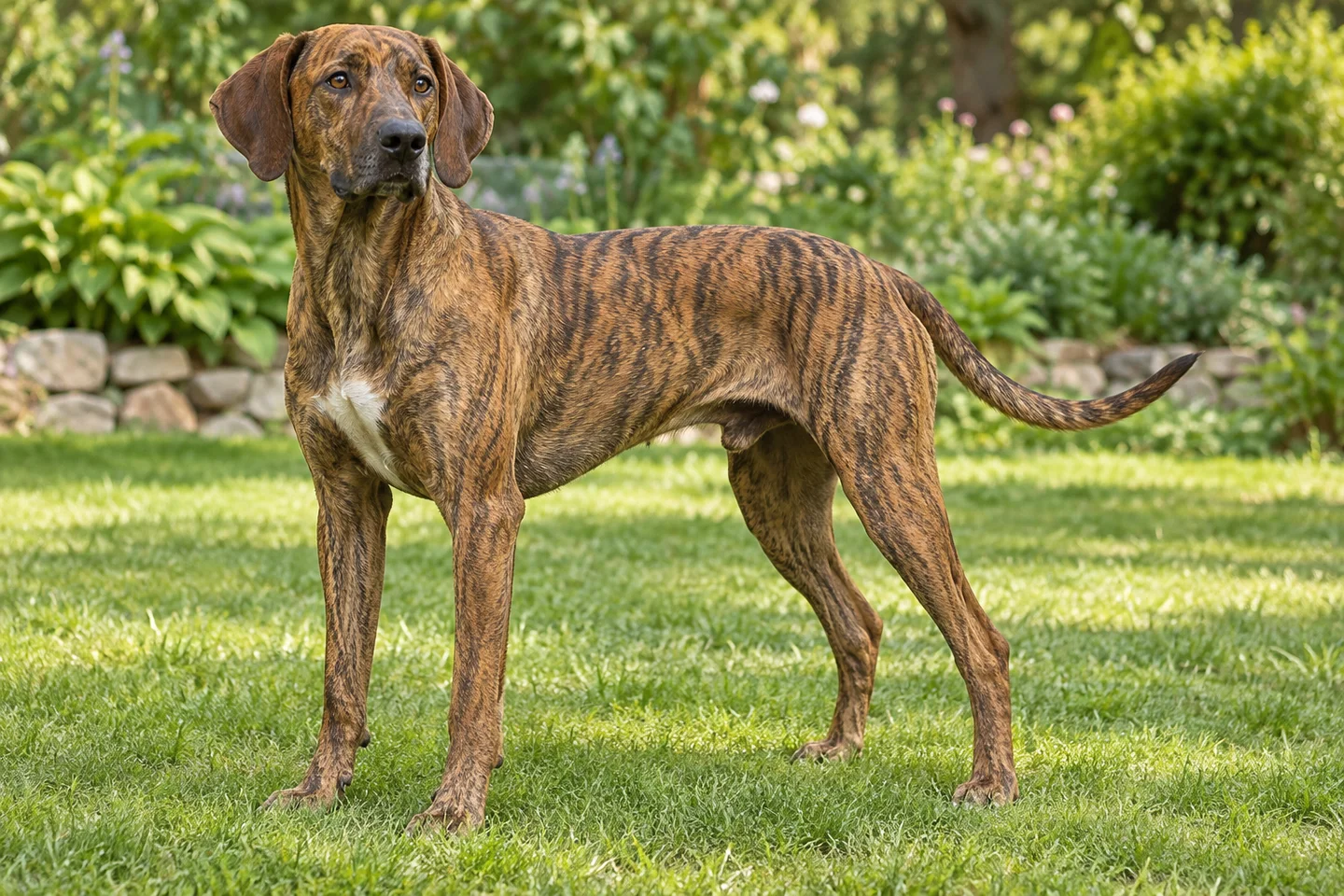
- Origin
- United States
- Adult standard size
- UKC males 18–24 inches; females 16–22 inches; weight proportional
- Illustrated coat
- Brown brindle short coat
General information for owners. These articles have not been reviewed by a veterinarian. Medical decisions need your dog's history and an examination.
A working breed with registry-specific status
The Treeing Tennessee Brindle is an American treeing dog developed from cur-type hunting stock. The United Kennel Club recognized it in July 2017 and publishes its standard. The American Kennel Club records it through the Foundation Stock Service. Those are different registry arrangements. A guide should not describe FSS recording as full AKC recognition or assume every organization uses the same eligibility rules.
The brindle name identifies a characteristic coat pattern, but brindling alone cannot establish ancestry. A striped rescue dog may have many possible backgrounds. Ask which parentage and registration are documented and describe uncertainty honestly. Direct information about the adult's behavior, care, and health can still support a good placement without converting a photograph into a pedigree.
Treeing refers to the dog's work locating game and remaining involved when it goes into a tree. The standard describes scenting ability and a voice used during work. A pet household does not need to provide live quarry, but it should understand why scent, movement, and vocal activity may remain relevant. Choosing the dog requires more than liking tiger-like stripes. The owner needs safe alternatives and a routine compatible with the dog's actual interests.
Adult measurements and the brindle outline
The UKC standard gives male heights of 18 to 24 inches and female heights of 16 to 22 inches at the withers, with weight proportional to height. It describes a medium, powerful, agile dog. An owner should assess the individual frame and body condition rather than chase a fixed weight from an informal chart. Puppy development needs a suitable complete diet and veterinary guidance, not extra feeding intended to create an imposing adult sooner.
The coat is short, smooth, and dense. Brindle and black with brindle trim are accepted in the UKC description, with small white markings on chest or feet permitted. Our illustrations choose brown brindle with a modest white chest marking. The ears are naturally short to medium and set relatively high, giving a different outline from a very long-eared coonhound. The complete medium-length tail remains visible rather than being shortened.
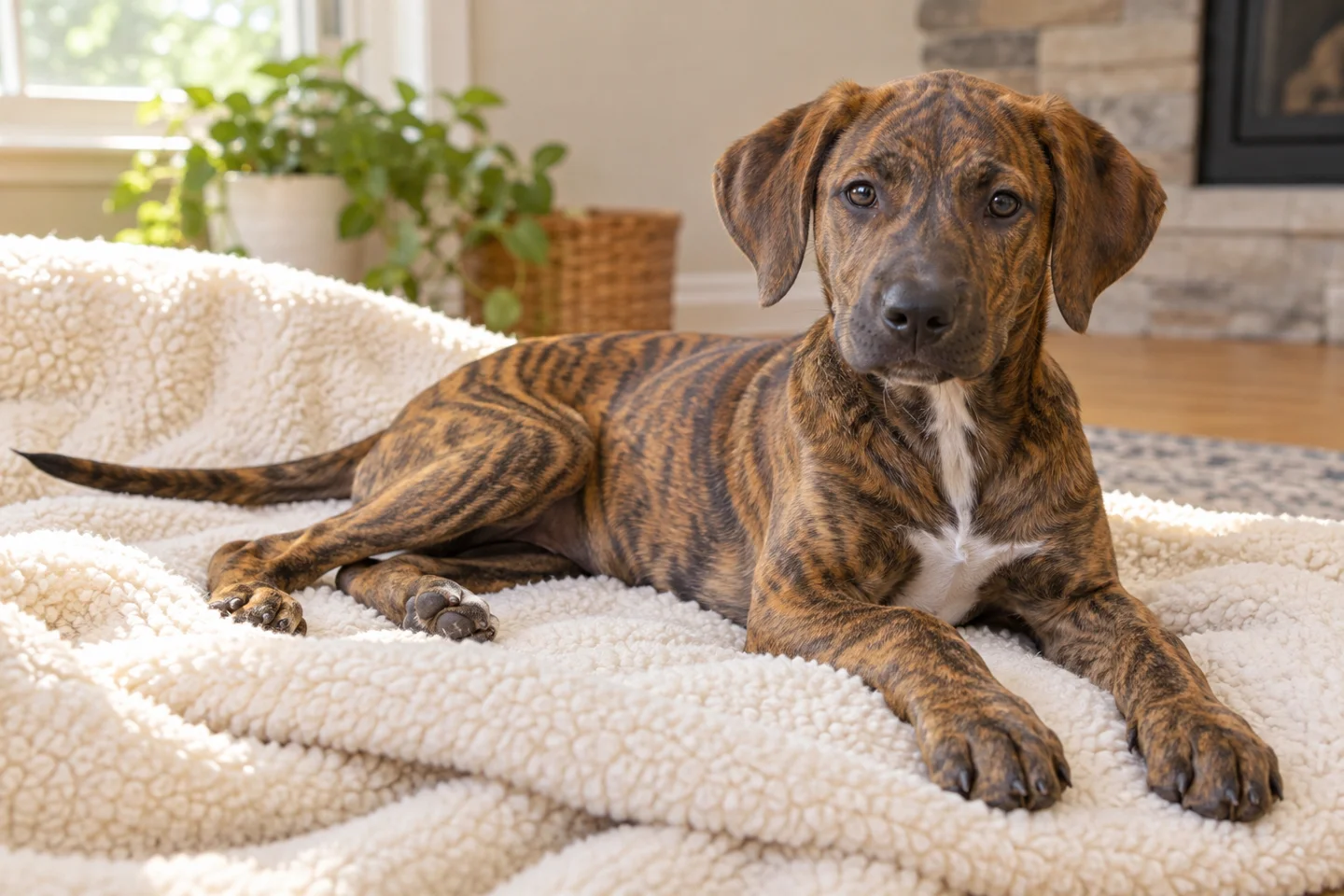
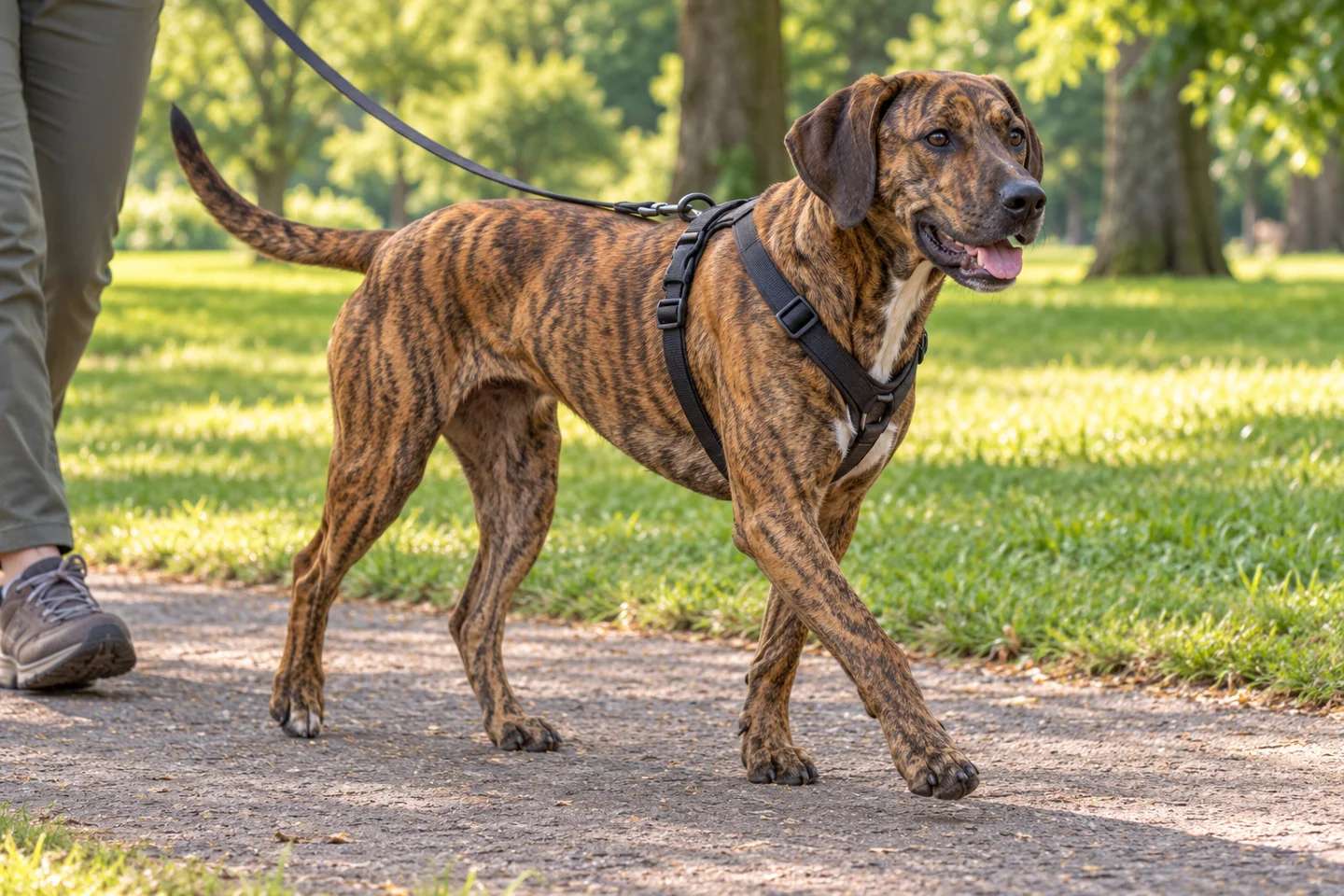
The puppy has developing proportions and a young coat, not an adult's muscle and head. All three images are labeled AI-generated illustrations. They cannot establish registry identity, health, or working ability in an actual dog. Measure equipment directly and inspect fit after movement. A short coat makes rubbing easier to see, but visibility is useful only if someone actually checks beneath the straps.
Voice before the household commits
Discuss vocal behavior before placement. A voice useful to a hunter may travel farther than neighbors expect from a family pet. Ask when this particular dog vocalizes, how long it continues, and what helps it recover. A working description is not a noise exemption. Housing rules, shared walls, and the people affected by garden activity all belong in the decision.
Separate the contexts. Calling on a scent trail, alerting at a window, and distress during an absence can look similar to a neighbor but require different care. Record triggers and what follows. Repeatedly shouting may add arousal without changing the setup. A visual barrier can alter one pattern, while a gradual absence plan addresses another. The explanation should follow the observations rather than the assumption that every sound is stubbornness.
Give the dog a comfortable place to rest away from repeated stimulation. A new adult may need time to reveal its usual sleep and activity pattern, so avoid deciding personality from one exhausting day after travel. Quiet behavior should not be demanded through constant restraint. Arrange a predictable transition after outings and allow genuine rest between tasks, with help if the dog remains unable to settle.
Training for objects, doors, and care
Teach a mat during cooking, a comfortable stand, waiting at a door, and release of safe objects. Begin with short successful sessions and prompt rewards. Store rubbish and tempting unsafe items out of reach so the household is not repeatedly improvising. A capable dog learns from every successful theft as well as from planned lessons. Management protects the opportunity to teach the behavior wanted.
Practice exchanges during calm easy conditions and sometimes return the safe item. Do not start with a dangerous object or the most valuable chew the dog has found. If guarding already occurs, obtain qualified support with a controlled plan. The purpose is to make cooperation predictable, rather than prove that a person can win a physical contest. Repeated forced removal may make approaching hands more concerning.
Handling should also be taught in parts. Briefly touch a foot, reward, and stop before the dog needs to resist. Later add tools or duration as separate steps. A reward-based trainer should explain how the task changes when the dog becomes worried. Sudden changes in tolerance may need veterinary assessment. Stronger restraint can complete one procedure while worsening anticipation and leaving discomfort unresolved.
Exercise, search tasks, and safe recovery
Provide regular movement and investigation, adapting effort to the dog's age, health, and condition. A hunting background does not certify fitness for an abrupt demanding run. Build workload gradually and observe recovery after rest. A puppy, an adult returning after a quiet period, and a conditioned dog need different plans. Willingness to follow scent is useful information about motivation, not a guarantee of comfortable joints or feet.
Simple searches can give the nose a task without uncontrolled pursuit. Use safe objects or an appropriate portion of the measured ration in an inspected area. Make the exercise understandable before increasing difficulty. Organized scent activities may suit the individual with suitable instruction. They supplement basic physical care, social contact, and rest rather than replace them.
Check weather and footing. In heat, choose cooler periods and provide water; a short coat cannot prevent overheating. Inspect feet and the underside after rough ground. If gait, recovery, or alertness changes, shorten the plan and seek advice. Completing a route because it was planned is less important than maintaining a schedule the body can recover from. Rest is a necessary part of activity, not a failure to provide enough work.
Aggression and resources in the home
A working standard's companionable description cannot certify that an individual dog will never bite. Stiffening over a bowl, snapping during grooming, or lunging at a visitor deserves an examination of the context. Prevent another close encounter while veterinary and qualified behavioral advice is arranged. Pain should be considered where the response is new or tied to a particular area being touched.
Offer meals and valuable chews where children and pets cannot interrupt. Avoid taking every item to establish authority. Teach safer exchanges and use dependable management when guarding already creates risk. The household needs a procedure that an occasional carer can follow, including which barriers are used and what happens if the dog obtains an unsafe object. Vague reassurance is insufficient when a conflict has already occurred.
Describe bite events accurately to relevant professionals and carers, including contact and injury. A friendly public walk cannot erase a different response at home. A basket muzzle may support some individual plans after gradual positive introduction, but it cannot remove distress or justify forcing contact. Distance and careful handling remain necessary while the underlying problem is assessed and a workable response is taught.
Children and a hunting dog's movement
Children should leave sleep, meals, and retreat areas undisturbed. No pulling ears, hugging the head, or reaching into the mouth should occur. Arrange contact while an adult can watch both participants. A medium dog can knock over a small child through an excited turn, so leave room and choose activities with a predictable structure rather than hoping friendly intent prevents accidents.
Fast group games may increase excitement or pursuit. Adults should change the activity early if the dog follows clothing or feet intensely. A visiting group can need separation even where quiet contact with a familiar child is comfortable. When supervision ends, use the planned safe area. Simply remaining nearby while cooking or answering a call does not mean the interaction is being observed.
Older children can help prepare searches or practice established cues according to ability, but adults remain responsible for lead handling and safety decisions. A child should call an adult about a stolen object or conflict between animals. A reputation for friendliness cannot replace that arrangement, especially when the dog is tired, painful, or carrying something valuable.
Grooming a short brindle coat
Gentle brushing removes loose hair and helps inspect skin. Check where the harness rubs and along the belly after vegetation or rough ground. A glossy coat cannot establish comfortable skin. Persistent odor, itch, or a recurring sore patch needs veterinary attention rather than a series of progressively stronger washing products. Keep a note of timing and what was applied.
Ears need external observation without tools pushed into the canal. Repeated head shaking, pain, discharge, or odor should be assessed. Ask whether the individual needs cleaning and have the method demonstrated. Shorter ears than a long-eared coonhound do not create immunity from ear problems. Reusing leftover drops can delay appropriate care because similar-looking symptoms may have different causes.
Maintain nails and teeth through short rewarded practice. Frequent activity does not guarantee appropriate nail wear, and a tidy coat says little about dental comfort. After outdoor work, inspect feet for injury or debris and seek help for embedded material. A sudden handling objection may indicate pain. Tell professionals about tolerance concerns in advance rather than waiting until a necessary procedure has already become a struggle.
Health planning without a disease-free promise
The AKC page describes the breed in reassuring health terms, but an owner should not turn that into a guarantee about every individual. Ask which diagnoses are known in this family and which examinations actually support advertised claims. If screening is mentioned, request the named result. A hunting reputation or a broad assertion of toughness cannot replace evidence or ordinary veterinary follow-up.
For a working or formerly working adult, previous injuries can matter as much as a proposed inherited-disease panel. Request clinical notes about recurrent lameness, wounds, surgery, and ongoing medication. Ask whether recommended follow-up was completed. The transfer to a new household should not erase an unresolved issue behind a simple statement that the dog was checked before travel.
Record what changes after activity: surface, duration, timing, and recovery. A safe video can help the veterinarian evaluate an intermittent gait difference. Avoid repeatedly recreating strenuous work to prove it exists. The dog may remain keen to investigate while uncomfortable. Clinical assessment should address this patient rather than an owner selecting a diagnosis because another hunting dog had similar signs.
No universal breed-specific screening panel is established by the sources used here. That limitation should remain explicit instead of being filled with borrowed test lists or invented disease frequencies. A DNA package concerns included variants and cannot replace every physical assessment. Ask what additional information would change care or a breeding decision, and keep confirmed findings available when clinicians or homes change.
Feeding, mixes, and the continuing commitment
Use a measured complete diet appropriate to life stage and include training rewards. Workload may vary by season or injury, so review intake when routine changes. Ask the clinic to demonstrate condition assessment for the individual frame. Persistent appetite, thirst, or weight changes deserve investigation. Supplements should serve a specific need rather than a general claim that a hunting dog requires more of everything.
A Treeing Tennessee Brindle mix may differ in size, coat, voice, and response to animals. Ask what parentage is documented. Brindle stripes cannot prove the other parent or establish that a cross belongs within a registry. Crossbreeding cannot promise predictable temperament or improved health. For an adopted adult, observed household behavior and clinical history can guide placement even where ancestry remains uncertain.
Obtain local costs for preventive care, dental work, secure transport, training, boarding, and emergency treatment. A provider should explain fencing and handover procedures, and a backup walker needs wildlife precautions. Read insurance conditions and clarify continuing support with the source. A sustainable home depends on informed people and repeated daily time as well as the acquisition fee.
A dogsDating walk chosen for the actual dog
On dogsDating, describe the treeing dog's pace, vocal response, and interest in movement or scent. Ask whether the prospective partner enjoys pauses and can disengage when play ends. Similar energy levels do not establish the same social preference. Agree that a shared walk can be the entire goal without requiring toys, physical play, or free running.
Select a public route with visibility and room to change direction. Begin with independent investigation at a comfortable separation rather than a tight gate greeting. Watch whether both dogs recover after noticing each other. If fixation, pursuit, or avoidance persists, make the arrangement easier or end calmly. An early finish can still provide useful information and avoids waiting until either handler loses control of distance.
Keep exact user coordinates private. Approximate discovery and a selected public landmark can arrange the outing without revealing a residence or a regular private hunting site. Compare observations afterward, including pace and recovery. Use them to decide another meeting or a different companion. The digital match supports conversation while the dogs' actual behavior determines how the experience should progress.
Sources and editorial notes
Sources checked October 22, 2026. Breed measurements describe reference ranges, not a diagnosis or an individual dog's ideal weight. Images are AI-generated breed illustrations and do not document a particular dog or health condition.
- AVSAB: Humane Dog Training Position Statement
- VCA Animal Hospitals: Food aggression in puppies
- Orthopedic Foundation for Animals: CHIC health screening programs
- VCA Animal Hospitals: Aggression toward unfamiliar dogs, diagnosis
- VCA Animal Hospitals: Grooming and coat care for your dog
- VCA Animal Hospitals: Ear infections in dogs (otitis externa)
- AAHA: Feeding plans for healthy, appropriate weight cats and dogs
- VCA Animal Hospitals: Heat stroke in dogs
- AVSAB: Puppy Socialization Position Statement
- VCA Animal Hospitals: Dog behavior problems, aggression toward children
- American Kennel Club: Treeing Tennessee Brindle
- American Kennel Club: Foundation Stock Service breeds
- Treeing Tennessee Brindle: official breed standard
Keep getting to know dogs.
Read another guide or return to your dogsDating community.
Explore breed guidesBack to dogsDating