Whippet
A practical guide to Whippet care, secure exercise, current heart and hearing screening, and comfortable introductions.
How these guides are researched and reviewed
- Origin
- Great Britain
- FCI desirable male height
- 47–51 cm
- FCI desirable female height
- 44–47 cm
- Coat
- Fine, short and smooth
General information for owners. These articles have not been reviewed by a veterinarian. Medical decisions need your dog's history and an examination.
Whippet identity and life with a sighthound
The Whippet is a British sighthound with a short coat, a deep chest and an athletic outline. Its speed is only part of the ownership question. Daily life also involves safe access to exercise, comfortable rest and a practical response when a moving animal attracts attention. Before choosing one, consider whether your routes and home boundaries can support that plan. A calm dog on a sofa can still need careful management when the environment changes.
The breed is distinct from the smaller Italian Greyhound and the larger Greyhound. An unfamiliar lean dog should not be assigned exact parentage from appearance alone. For a registered puppy, ask for identified lineage and health records. For an adult rescue, begin with its observed routines and clinical history. How it handles travel, animal movement and time apart will help you organise its care more directly than a general description of sighthounds.
Adult outline and the October 2026 measurements
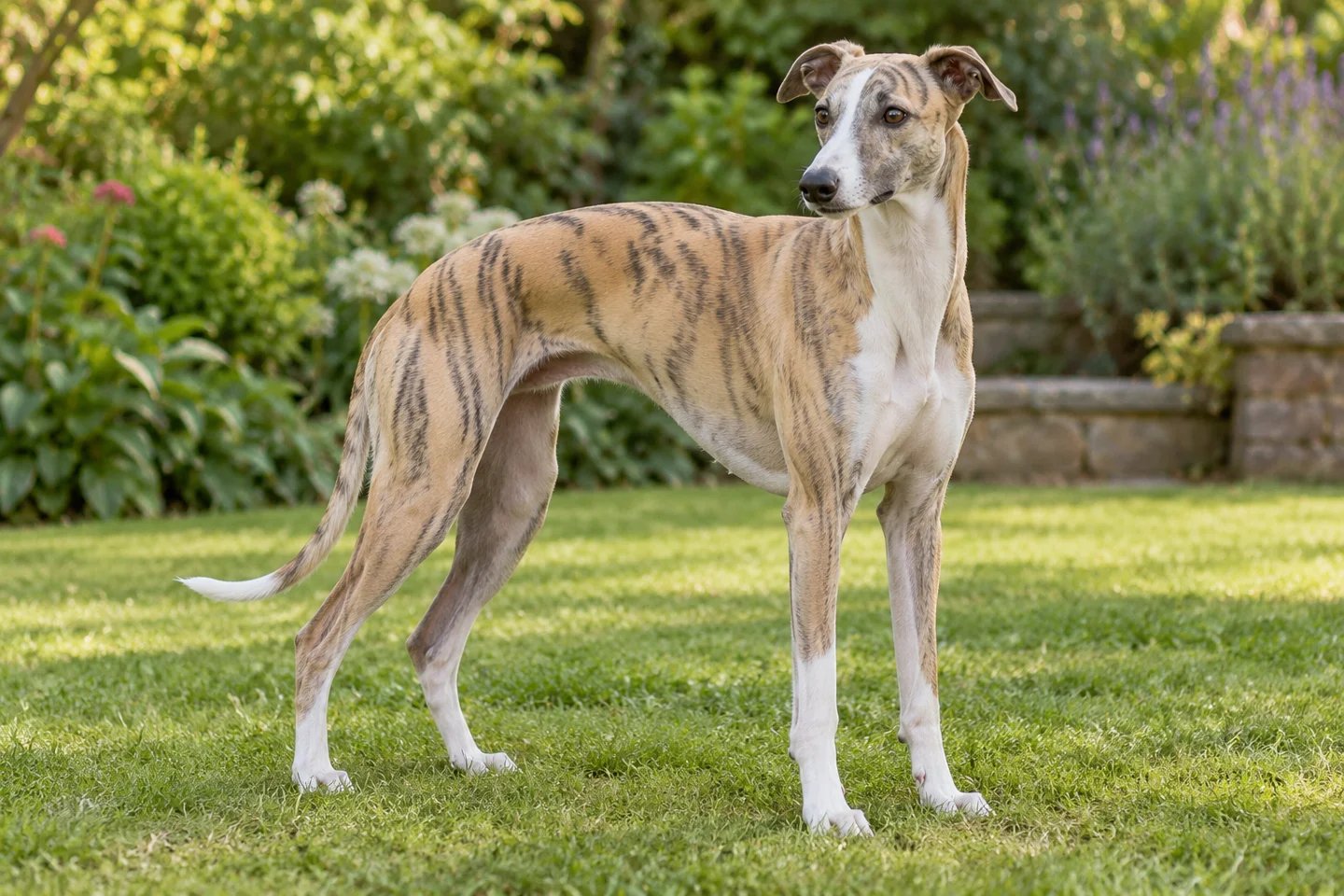
The FCI standard dated October 2026 gives desirable male height as 47 to 51 centimetres and female height as 44 to 47 centimetres. It describes a balanced athletic body with a deep chest, a curved loin and a definite tuck-up. It also warns against exaggeration. These references do not make an underweight appearance desirable or tell you an individual's ideal ration. Ask a veterinarian to assess condition using the actual frame and muscle.
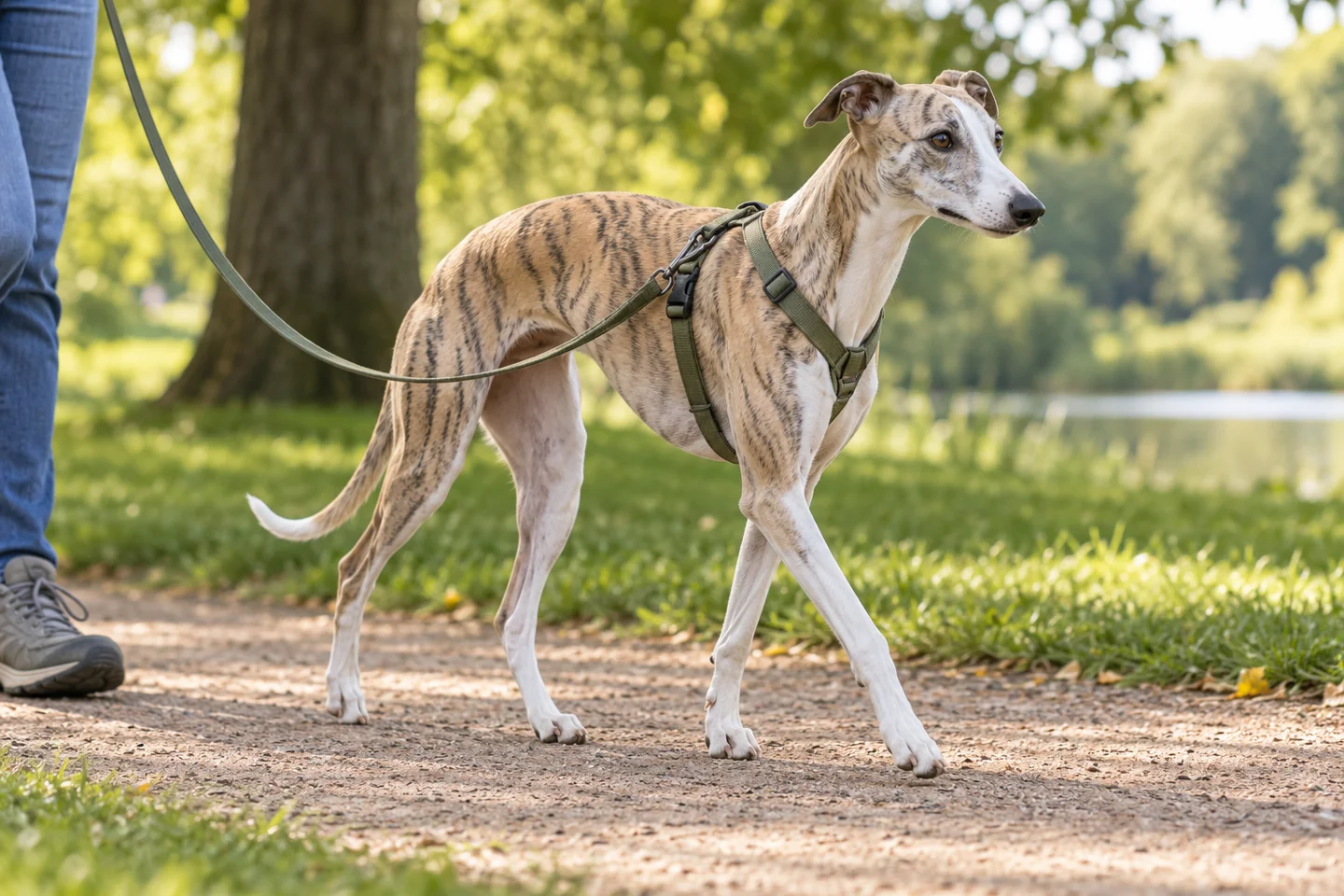
The selected illustrations show fawn brindle and white, a fine smooth coat, natural rose ears and a full low-carried tail. The puppy has developing rather than adult proportions. All are labelled AI-generated illustrations, so they are visual examples rather than photographs of a particular animal. A pose cannot establish heart health or fitness for strenuous activity. When meeting a real Whippet, look at comfortable everyday movement and ask about recovery as well as admiring its outline.
Temperament between activity and quiet rest
Ask how the particular dog settles after a walk and what happens when its usual person goes out. A breed description of gentleness does not establish comfort in every household. Some dogs need time to accept noisy visitors or unfamiliar handling. Give the newcomer somewhere comfortable to rest and protect that space from repeated interruptions. A dog choosing its bed should not be called back continually to entertain guests.
Introduce departures gradually, observing whether the dog relaxes rather than only whether it stays quiet. If distress appears, arrange a suitable plan and practical support for absences that exceed its present ability. A rescue dog's previous routine provides helpful context, but a new home may still require adjustment. Discuss how the dog manages everyday changes, including a different walking person, before expecting it to cope with a sudden long stay elsewhere.
A comfortable home and secure exits
Prepare a resting area with stable footing and enough room to stretch. Keep medicines, discarded food and small tempting objects inaccessible. Practise a calm route through the doorway using a barrier while equipment is attached. A dog that sees movement outside should not be able to leave through a door someone opens casually. Explain the routine to family and visitors instead of relying on a last-second recall.
Check fencing and gates before offering off-leash access. An area that looks enclosed may have a gap, loose latch or low section that changes its suitability. Remove hazards from a running space and consider how you will stop access if another animal appears. The property should support safe exploration without leaving the dog dependent on constant correction. Identification and current microchip details help after an escape, while physical boundaries and predictable entry routines reduce the chance of one occurring.
Training recall before relying on it
Begin recall in an easy room or enclosed area. Reward returning promptly, then sometimes release the dog back to a suitable activity so coming does not always end the enjoyable part. Build distraction gradually. Practise a hand target and an easy turn away too, giving the handler more than one familiar way to guide movement. A strong response without distractions should not be treated as proof that the dog will ignore a running animal.
Use appropriate control while those skills develop. A long line needs enough room and competent handling to avoid entanglement or an abrupt stop at speed. Ask an instructor to demonstrate a safe arrangement. Teach exchanges for found items with worthwhile rewards rather than chasing the dog to take them. Avoid forceful methods that create anxiety around the handler. When progress stalls, review the environment and the value of the reward before assuming the dog needs a harsher consequence.
Exercise with an inspected place to run
Combine comfortable walks, scent exploration and suitable opportunities for freer movement. Check the proposed area before allowing speed: footing, fences, obstacles and other users all matter. A route beside traffic or wildlife is unsuitable for testing an uncertain recall. Consider the return to the vehicle as well as the running itself. A plan should remain manageable when another owner arrives or the dog notices movement beyond the boundary.
Puppies need activity appropriate to development, while adults should build unfamiliar work gradually. Do not force repeated sprints or jumps simply because the dog is capable of a burst of speed. Watch how it moves after a pause and later at home. Heat, illness and previous injury can change the activity plan. If recovery becomes unusual or a gait changes, seek advice rather than asking for another run to see whether the problem disappears.

Weather, equipment and observing comfort
A fine short coat makes equipment contact and environmental comfort worth checking directly. Feel where a harness rests, check for rubbing and choose a fit that allows normal movement. Wet or cold conditions may call for a shorter outing or suitable protective clothing, depending on the individual. Introduce any garment gradually and make sure it does not restrict movement or interfere with toileting. The dog's response matters more than whether an accessory looks attractive.
Warm weather needs its own plan. Offer water, shade and an easy way to finish before the dog becomes distressed. Do not leave it in a parked vehicle while completing another task. Notice breathing effort, alertness and willingness to move. Serious breathing trouble, collapse or marked weakness requires urgent veterinary contact. A dog that still wants to chase may need the owner to stop the activity, so enthusiasm should be considered alongside condition and the actual environment.
Socialization without using greetings as a test
Plan puppy experiences with veterinary guidance about infection protection. Allow observation of ordinary movement at a distance where the puppy can remain comfortable. A quiet person walking past, a calm dog on another path and a different safe surface can each provide useful learning. You do not need to combine them into one crowded outing. Give the puppy an exit and reduce difficulty if it stops engaging or repeatedly tries to leave.
Practise care-related experiences separately, including a brief paw examination, standing on a stable surface and comfortable travel. An adult dog with an uncertain past may need the same small steps. Tell unfamiliar people to let the animal approach rather than reaching over it. If fear repeatedly prevents ordinary care, seek qualified help early. More intense exposure is not necessarily more effective, and a dog standing still under restraint has not automatically become comfortable with the situation.
Aggression, guarding and changes in tolerance
A Whippet can warn, snap or bite when frightened, painful or pressured around a resource. A gentle reputation cannot establish an individual's safety. Ask what happened immediately before an incident and arrange the environment to prevent repetition. A sudden reaction during a familiar touch needs medical consideration. If the dog is guarding a chew or found object, protect access while obtaining a suitable management and training plan.
Punishing a growl while continuing the interaction may remove a warning without addressing its cause. Give the dog space and describe events factually to the veterinarian or behaviour professional. Carers need to know triggers and existing precautions before taking responsibility. If a muzzle is advised, learn fit and introduce it through rewards. It may support safe treatment or controlled activity, but it should never become permission for repeated stressful handling or an unsuitable meeting with another animal.
Children and fast-moving play
Adults should oversee contact and separate dog and children when their attention is elsewhere. Running games can quickly change the dog's interest and arousal. Keep a clear space for children's energetic activity rather than allowing the dog to join by chasing. Teach children to invite contact and leave sleeping places alone. Pulling a fine tail, hugging tightly or holding the face for a picture can create discomfort even in a familiar animal.
Ask a source about the individual's actual child experience and the conditions in which it was comfortable. A calm meeting is one useful observation rather than a guarantee for every visit. Arrange a comfortable separate room before a busy gathering begins. Children should not remove food from the dog's mouth or control a lead near traffic. A practical family match includes adults who can maintain these boundaries without expecting the dog or child to manage the interaction alone.
Other dogs, cats and the response to movement
Judge canine play by mutual participation. Both dogs should be able to pause and leave, rather than one repeatedly pursuing the other. Begin with space and parallel walking before considering a closer introduction. A fast chase is not automatically enjoyable for the dog being chased. Stop if one hides, retreats or cannot disengage. Size, confidence and play style can make two otherwise sociable dogs unsuitable partners for vigorous activity.
Protect cats and smaller pets with secure separation while compatibility is assessed. An individual may live comfortably with a familiar cat and still react to an unfamiliar moving animal outdoors. Do not release the dog to test whether an owner's voice will interrupt pursuit. Arrange feeding and valued objects separately in a multi-pet household. A peaceful walk together does not establish that bowls or resting places can be shared. Give every animal a dependable place to rest without another repeatedly approaching.
Health screening: the June 2026 foundation guidance
The Whippet Health Foundation's June 2026 page lists yearly CAER eye examination, cardiologist-performed echocardiography every two years and a once-only BAER hearing assessment as required within its described CHIC framework. It separately recommends thyroid assessment, myostatin testing and hip evaluation. That distinction matters when a source presents a CHIC number as evidence that every available test was performed. Ask which current programme and reports apply to the planned litter.
Read the actual results with matching identification and dates. An echocardiogram, an eye examination and an electrical hearing test answer different questions. Publication of results supports transparency, while completion of the programme does not promise that every finding is normal or that future illness is impossible. For an adult without parental records, its own clinical history and examination guide care. A large ancestry or DNA report cannot replace the specifically relevant clinical assessments.
Cardiac murmurs and the examination needed to explain them
The UK Whippet Breed Council's cardiology discussion explains that hearing a murmur does not by itself determine whether its cause is innocent or disease-related. Further assessment such as echocardiography with Doppler may be needed. Do not assume that every sound in an athletic dog is harmless, and do not diagnose disease from the sound alone. Ask the clinician what was found and which follow-up is appropriate for this individual.
Keep previous heart reports available, especially when changing clinics or planning a procedure. Mention fainting, unusual exercise tolerance or an altered recovery pattern rather than waiting for a routine screening appointment. Severe collapse or breathing difficulty needs urgent contact. A favourable parental assessment is useful background, but it cannot explain a new clinical change in your dog. Treatment and activity decisions should follow the patient's findings rather than a general rule copied from a different Whippet's experience.
Myostatin testing and preparation for procedures
Research by Mosher and colleagues identified a Whippet myostatin variant associated with increased muscle mass. The current foundation guidance includes myostatin testing among its separate recommendations. Ask what a specific result means instead of judging genotype by a muscular photograph or treating extra bulk as an automatic sign of health. A result for that variant cannot answer every question about joints, cardiac function or suitability for a particular activity.
For anesthesia or sedation, provide current medicines, previous procedure records and any recovery concerns to the veterinary team. Washington State University describes care tailored to the patient with appropriate monitoring. Owners should not choose a fixed dose reduction or refuse needed treatment solely because the dog is a sighthound. Ask how the individual will be assessed and supported. Follow the clinic's preparation and recovery directions, and contact it if recovery differs from the explanation given at discharge.
Grooming, nails and noticing small injuries
Gentle brushing and routine inspection can be brief, but they still deserve a regular place in care. Check areas rubbed by equipment and inspect feet after appropriate outdoor activity. Introduce nail care in small rewarded steps before overgrowth creates another problem. If a wound, swelling or painful area appears, ask for clinical advice rather than continuing to manipulate it at home. A short coat can make a change easier to see without explaining its cause.
Maintain teeth and ears using a method demonstrated by a suitable professional. Do not use deep ear tools or leftover treatments for an unexplained new problem. A dog that suddenly avoids a familiar handling task may need an examination. Tell the groomer or veterinary team about that change and any known sensitivity. Cooperation is built through predictable comfortable experiences, not by expecting a naturally fine-coated animal to accept every form of touch without preparation.
Nutrition for a lean frame
Use a complete food appropriate to age and health, then review measured intake against condition and workload. Ask the veterinarian how ribs, waist and muscle should be assessed on this body type. A deep chest and tuck-up are structural features, but they do not justify ignoring weight loss. Include training food and treats in the daily account, especially if several people offer them.
Feed where the dog can eat without pressure from another pet. Keep drinking water accessible and report persistent changes in appetite, thirst or digestion. A new reluctance to eat should not automatically be dismissed as a breed habit. Discuss supplements or homemade diets before relying on them, and avoid copying a competition dog's ration for an animal with a different routine. Where treatment changes the feeding plan, give carers clear directions and a contact to use if intake becomes poor.
Whippet mixes, lurcher labels and choosing responsibly
A Whippet cross can differ in coat, size, activity and animal preferences from either parent. A lurcher description usually concerns a sighthound cross rather than one uniform recognised breed with a single standard. Ask what is documented about the parents and what remains uncertain. A label cannot guarantee reliable recall, an easy household temperament or absence of inherited problems. Health information relevant to both sides still deserves attention.
For rescue dogs, observations from foster care can help describe grooming, time alone and safe animal introductions. Keep those examples tied to their circumstances. Budget for veterinary care, equipment, transport and backup support alongside the initial fee. Meet adults and discuss practical limitations candidly. Choose according to the home and time you can provide now, rather than assuming a sleek quiet dog needs little planning. A suitable placement should include support and a factual handover when the animal moves.
dogsDating meetings with space before speed
Explain this Whippet's walking pace, interest in chase and preferred play style on dogsDating. Keep exact home coordinates private and use a general area to find a suitable public starting point. Select somewhere with room for the handlers to move apart and finish easily. Agree that the first meeting is for observation and comfortable walking, rather than arriving with a plan to release both dogs into immediate high-speed play.
Begin with parallel movement and allow separate investigation. Keep shared toys and food out of the introduction. If closer contact becomes appropriate, look for voluntary participation and genuine pauses. End if either animal repeatedly avoids the other or becomes too aroused to recover. Owners can enjoy conversation while their dogs remain at a comfortable distance. Use the experience to choose the next setting and pace, instead of treating one uneventful meeting as proof that every future activity together will be suitable.
Sources and editorial notes
Sources checked October 22, 2026. Breed measurements describe reference ranges, not a diagnosis or an individual dog's ideal weight. Images are AI-generated breed illustrations and do not document a particular dog or health condition.
- AVSAB: Humane Dog Training Position Statement
- VCA Animal Hospitals: Food aggression in puppies
- VCA Animal Hospitals: Aggression toward unfamiliar dogs, diagnosis
- VCA Animal Hospitals: Grooming and coat care for your dog
- VCA Animal Hospitals: Ear infections in dogs (otitis externa)
- AAHA: Feeding plans for healthy, appropriate weight cats and dogs
- VCA Animal Hospitals: Heat stroke in dogs
- VCA Animal Hospitals: Common emergencies in dogs
- Orthopedic Foundation for Animals: CHIC health screening programs
- AVSAB: Puppy Socialization Position Statement
- VCA Animal Hospitals: Dog behavior problems, aggression toward children
- FCI Standard 162, October 2026: Whippet structure, natural tail and desirable heights
- American Kennel Club: Whippet identity and companion background
- Whippet Health Foundation June 2026: required and recommended pre-breeding screening
- UK Whippet Breed Council May 2024: cardiac assessment and interpreting murmurs
- Mosher and colleagues, PLOS Genetics 2007: Whippet myostatin variation and muscle mass
- Washington State University Veterinary Teaching Hospital: individual anesthesia and monitoring
Keep getting to know dogs.
Read another guide or return to your dogsDating community.
Explore breed guidesBack to dogsDating