Yorkshire Terrier
A practical guide to Yorkshire Terrier care, coat development, dental routines, liver and airway concerns, and safe social outings.
How these guides are researched and reviewed
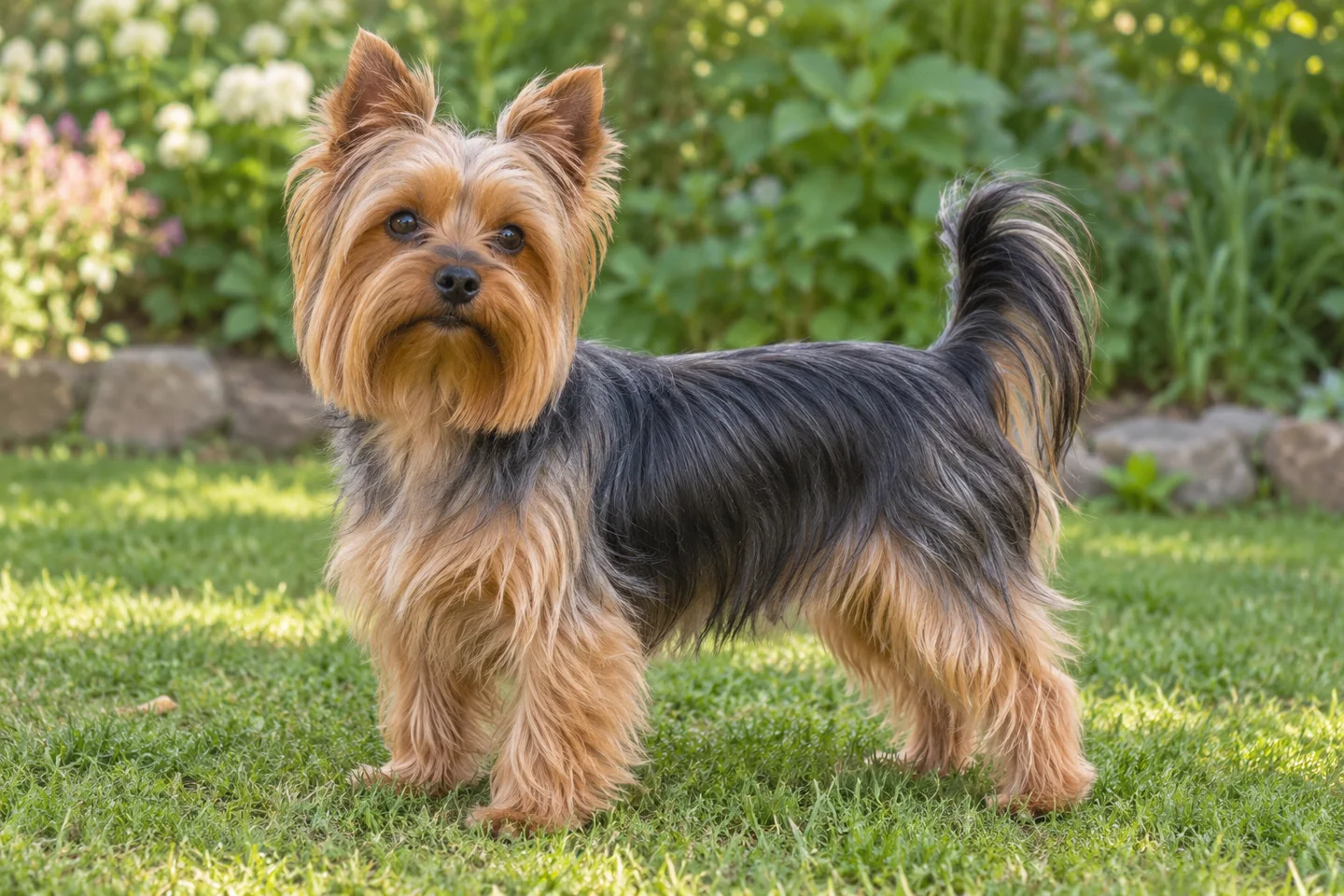
- Origin
- Great Britain
- FCI weight reference
- Up to 3.2 kg; individual condition needs assessment
- Adult coat
- Steel-blue and rich tan, silky and straight
- Puppy coat
- Usually darker black and tan while developing
General information for owners. These articles have not been reviewed by a veterinarian. Medical decisions need your dog's history and an examination.
Yorkshire Terrier identity beyond the small size
The Yorkshire Terrier is a small British terrier with a silky coat and an active interest in its surroundings. Its size can make it easy to carry, but it still needs chances to walk, investigate and learn. Planning should include protection from accidental injury without removing every opportunity for normal dog behaviour. A suitable owner notices what the dog wants and teaches practical skills instead of treating it as an accessory that can be moved whenever convenient.
Ask about the individual's background when choosing a puppy or adult. Registered parentage, veterinary records and observations from daily life answer different questions. An attractive face cannot tell you how an animal copes with grooming, unfamiliar dogs or time apart. A rescue with uncertain ancestry can still have a useful factual description. Choose according to the care you can provide, including coat maintenance, supervision around larger animals and a plan when the usual person is absent.
Adult coat, puppy colour and the weight reference
The October 2026 FCI standard gives a weight reference of up to 3.2 kilograms. That figure is not a reason to underfeed a larger-framed pet or encourage the smallest possible puppy. A veterinarian should assess condition using the actual animal. Treat descriptions such as teacup as marketing that needs questions, rather than evidence of a separate medical category or a guarantee of adult size.
The adult standard describes a dark steel-blue body with rich tan in the appropriate areas. A younger puppy often has a darker black-and-tan developing coat, which should not be mistaken for the finished adult texture and colour. The selected pictures reflect that difference, with a practical adult coat length and a complete natural tail. All three are labelled AI-generated illustrations. They are visual examples rather than photographs establishing the parentage, size or health of a particular dog.
Temperament and respecting a small dog’s choices
A Yorkie may be lively and confident in familiar circumstances while needing help with a particular sound, person or handling task. Ask for examples instead of relying on a single adjective. What happens when someone reaches for the harness? Can the dog rest while visitors move around? Does it recover comfortably after a surprise? Those details help you choose a manageable routine and identify support that should be arranged early.
Let the dog approach contact and leave when it chooses. Picking up a retreating animal can make ordinary avoidance impossible. Necessary lifting should be predictable and secure, with the body supported. Teach a cue or familiar sequence so it can anticipate the movement. A dog that becomes suddenly intolerant of being lifted needs an assessment for discomfort, rather than a conclusion that a small terrier is simply demanding. Respect for its signals makes care easier to organise.
Preparing rooms, furniture and toilet routines
Check spaces beneath furniture, gaps beside gates and places where a small puppy could fall or become trapped. Keep medications, dropped food and small objects inaccessible. Arrange a bed and a practical route to an appropriate toilet area before arrival. A limited supervised space can make the first days easier than immediate access to every room. Introduce more of the house as the dog learns the routine.
Offer toilet opportunities after waking, eating and activity, and reward the result you want. Prevent unsupervised wandering between opportunities while the puppy learns. Clean an accident and adjust the plan instead of frightening the animal. If an adult suddenly loses reliability, discuss possible medical causes. Furniture access also needs a considered arrangement. An owner should not repeatedly lift the dog onto a high surface and then leave it to work out how to descend safely.
Training on the ground and for necessary handling
Teach the dog to follow a hand target, come a short distance and wait on a mat. Use small appropriate rewards and make sessions manageable. These skills can help with daily movement without requiring someone to grab the dog whenever its position needs to change. Practise recall indoors before relying on it near traffic or other animals. Small size does not make an untrained outdoor response dependable.
Build cooperation with a brush, nail tool and brief body check through separate steps. Reward a moment of comfortable stillness and release before it becomes a struggle. A stable non-slip surface is more useful than balancing the animal insecurely during care. Teach an exchange for a safe object so retrieving something later does not begin with a chase. If guarding or handling problems already exist, obtain appropriate guidance and prevent repetition while the plan is developed. Stronger restraint alone cannot explain or resolve the cause.
Socialization without being crowded by larger dogs
Arrange safe puppy experiences using veterinary advice about infection precautions. Choose people who can wait calmly and dogs whose behaviour can be managed. A much larger animal rushing forward may frighten or injure a small puppy regardless of friendly intention. Start with observation at a distance and reward comfortable attention. There is no requirement to complete a greeting before leaving. A quiet short lesson can be enough.
Include routine environments and care experiences, such as walking on an unfamiliar safe surface or resting during a brief vehicle journey. Watch whether the puppy can investigate and turn away. Hiding, freezing or repeated attempts to escape suggest an easier next step. Adults from uncertain backgrounds may need the same patient teaching. Avoid carrying the dog directly into a crowd to complete socialization. Give it opportunities to learn in conditions where it can participate rather than merely endure.

Exercise with room for sniffing and exploration
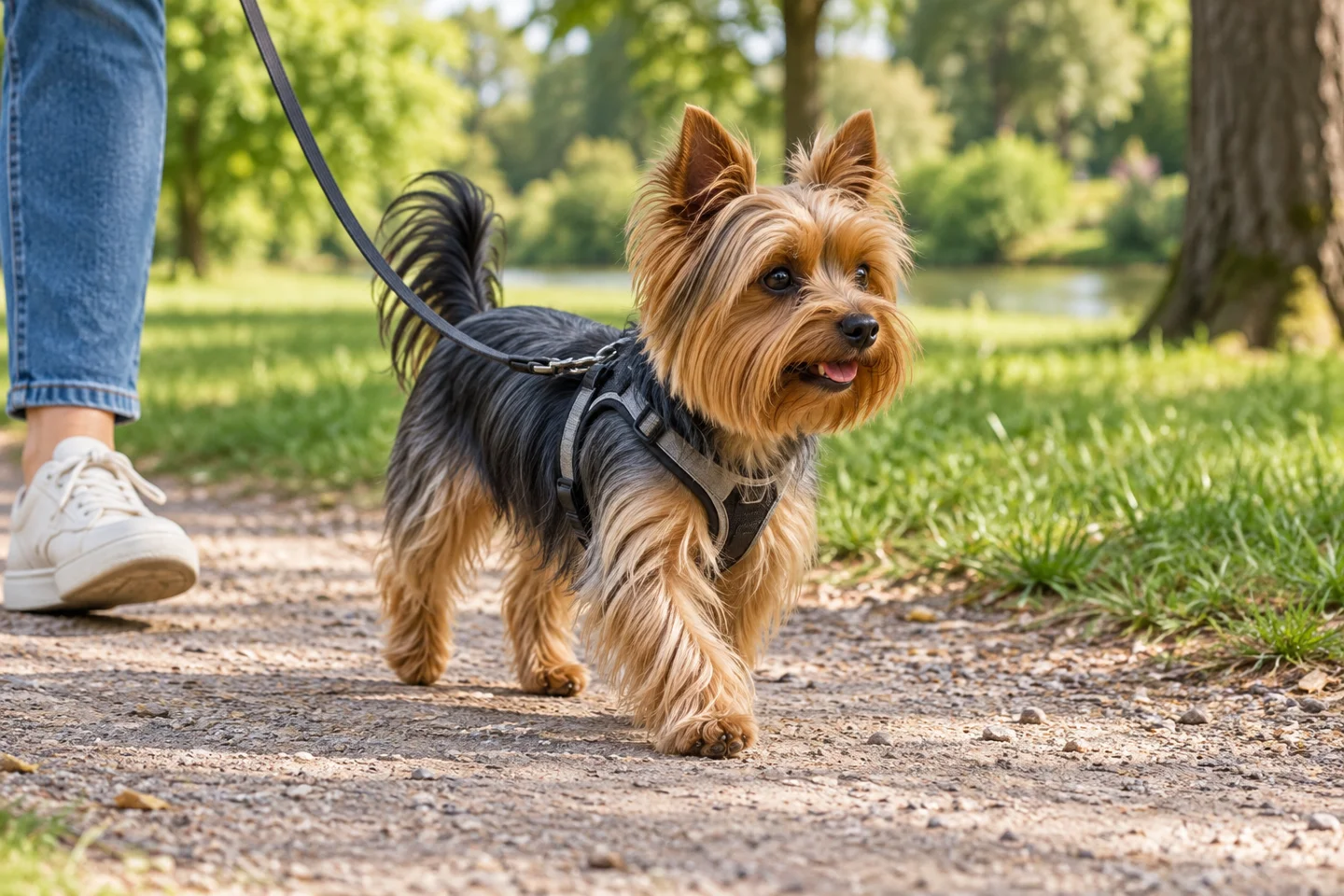
Offer walks and suitable play matched to the individual's age, condition and interest. A Yorkie can enjoy using its feet and nose rather than being carried throughout every outing. Choose a well-fitted harness and a lead the handler can manage without unnecessary pressure. Inspect routes for hazards that matter to a small dog, including gaps, unstable edges and access by uncontrolled larger animals.
Build unfamiliar activity gradually and keep a shorter return option. Puppies need appropriate movement and rest, while older dogs may need changes based on clinical findings. Notice repeated stopping, unusual fatigue or changed movement instead of pulling the dog onward. Weather matters too: consider heat, cold and wet conditions according to the animal's response. A small coat or carrier should not obscure breathing or movement. The useful measure is whether the dog remains comfortable during activity and can settle normally afterward.
Aggression and taking small warnings seriously
A small dog can bite and can be harmed when someone ignores its attempts to avoid contact. Do not provoke growling for entertainment or assume that lifting the dog solves every difficult situation. Identify what occurred before a reaction, such as brushing a painful area, disturbing sleep or reaching toward food. Prevent another incident and discuss a sudden change with the veterinarian. The dog's size cannot explain the cause on its own.
Use barriers and suitable distance while getting help for persistent fear, guarding or conflict. Punishing a warning may make future contact less predictable without improving comfort. Teach household members how to recognise the need for space and give carers factual information about incidents. A muzzle, when advised and properly introduced, can support an individual plan, but it does not justify unwanted attention. Management should protect the animal as well as the people around it, rather than only making a task quicker to complete.
Children, lifting and safe family contact
Adults should supervise children with the dog and take responsibility for lifting. A child carrying a small animal can lose grip or hold it in an uncomfortable position. Encourage calm floor-level contact where the dog can leave, and teach children to keep away from meals, chews and sleeping areas. A familiar dog's tolerance on one day cannot provide supervision during the next visit.
Prepare a comfortable separate area before energetic games or a gathering begins. Tell visiting adults how the routine works so access does not depend on a child remembering every instruction. A dog that withdraws should be allowed to finish that choice. Children should not reach into a hiding place or take objects from its mouth. If the home cannot maintain protection from rough handling and accidental injury, that practical limit belongs in the placement decision rather than being dismissed because the dog is a toy breed.
Other dogs, cats and suitable play partners
Choose canine partners by behaviour and physical compatibility. A large playful dog may be too forceful even without aggression. Begin with separate sniffing and parallel movement, using enough distance for both animals to disengage. Closer activity should remain voluntary, with pauses and an exit available. Stop if one repeatedly hides, avoids pursuit or cannot move away. Energetic motion alone is not evidence that both dogs are enjoying the meeting.
Introduce cats and other household animals gradually. Give the cat protected escape routes, and keep smaller pets secure while compatibility remains uncertain. A terrier label does not establish safety, while living with one familiar animal does not predict every outdoor response. Separate food and valued objects during the assessment. If one pet cannot rest or move without another following it, change access arrangements. The owners' wish for friendship should adapt to what the animals actually show.
Grooming a practical coat without painful tangles
Choose a coat length you can maintain comfortably and discuss it with a groomer. A pet trim still needs inspection and regular gentle care. Work through small areas, including behind the ears and where a harness rubs, rather than brushing only the outer surface. Tight tangles near the skin may need professional help. Cutting blindly with scissors or pulling through a mat can cause an avoidable injury or make later handling harder.
Keep hair clear of vision and maintain hygiene around the mouth, feet and rear. Dry damp areas appropriately and notice redness or odour rather than covering it with a cosmetic product. Introduce the grooming surface and equipment through rewards, with breaks. Tell the groomer about breathing problems, sore areas or a change in handling tolerance. Retaining a particular hairstyle is less important than comfortable skin, normal movement and a routine the dog can manage.
Dental care deserves its own routine
The Yorkshire Terrier Club of America's health statement emphasises dental maintenance. Begin with gentle familiar contact around the mouth and suitable tooth-brushing instruction from the veterinary team. A tiny mouth should not be ignored because brushing looks awkward. Ask for a demonstration and build the task gradually. Avoid forcing the jaw open or treating struggling as something to overcome without considering discomfort.
Report persistent bad breath, difficulty chewing, dropped food or a sudden reluctance to have the face touched. The veterinarian can examine the mouth and discuss whether further treatment is needed. A dental chew or tidy face does not replace assessment. Before a procedure, give the clinic current medication and previous anesthesia information, then follow its individual preparation directions. Keep any treatment record and home-care plan available to carers. Comfortable eating matters whether the dog is still interested in its favourite soft snack or not.
Health screening: the club’s July 2024 statement
The American club's statement approved in July 2024 recommends patella assessment and clinical eye screening for breeding dogs, with timing specified in the document. It also encourages optional genetic testing for prcd-PRA and primary lens luxation. Keep the required protocol and optional additions distinct when reviewing a seller's description.
Obtain identified results for the actual parents and ask how they informed the mating. A CHIC number records completion and disclosure of the applicable programme rather than a promise that every result is normal. A particular DNA result also does not replace examination of the eyes or knees. For an adopted adult without family reports, its current examination and own treatment history guide care. A clinician can explain what further information is useful without treating missing paperwork as either proof of illness or assurance of perfect health.
Liver shunts and microvascular dysplasia are different findings
University of Florida veterinary guidance describes portosystemic shunting as abnormal blood flow bypassing the liver, and identifies Yorkshire Terriers among predisposed breeds. Poor growth or unusual behaviour can be part of the clinical picture, but those signs have other possible causes. Ask about actual family diagnoses and obtain the report if a dog has had investigation or surgery. Do not infer a shunt from small stature alone.
ACVS discusses hepatic microvascular dysplasia separately. A blood or bile-acid result can raise questions without showing the complete anatomy or establishing the final diagnosis. The veterinary team chooses the appropriate investigation using the patient's history and findings. Avoid promising that a broad genetic panel clears every liver condition. If a problem is diagnosed, follow the individual nutritional and treatment plan. A healthy puppy should not be placed on an improvised restrictive liver diet merely because a breed article names these disorders.
Coughing needs an explanation rather than a breed assumption
Cornell describes tracheal collapse in toy and small breeds, including Yorkshire Terriers. Persistent coughing is a reason for examination, but the sound alone cannot diagnose the condition. Note when it occurs, any pressure from equipment and whether breathing effort or recovery changes. The clinician must consider the individual and other possible causes. Repeatedly replaying a similar online cough cannot replace that assessment.
Severe breathing difficulty, collapse or blue-tinged gums requires urgent veterinary contact. Do not use human cough products or another dog's prescription while waiting for advice. Cornell discusses management that can include appropriate body condition, harness use and reducing environmental irritants, with further treatment according to severity. Changing equipment may reduce an aggravating factor but does not prove that the underlying problem has resolved. Give temporary carers the established instructions and the contact to use if signs worsen.
Nutrition, growth and recognising poor intake
Choose a complete diet appropriate to life stage and measure what is offered. Include training food and treats when discussing intake with the veterinarian. Small quantities can be difficult to estimate by eye, so use a consistent method and record changes over time. A growth plan should support the individual rather than a marketing promise that the dog will remain exceptionally tiny.
Feed without competition and keep water accessible. If a puppy misses food and becomes weak or unusually quiet, seek prompt clinical advice rather than guessing the cause or forcing food into an animal that cannot swallow normally. Persistent appetite, thirst or weight changes in an adult also deserve investigation. Ask before relying on supplements or homemade recipes. When illness requires a different ration, written instructions help every carer follow the same plan and recognise when to call for help.
Yorkshire Terrier mixes and familiar cross names
Names such as Yorkipoo and Morkie describe claimed crosses involving a Yorkshire Terrier, commonly with a Poodle or Maltese. They do not guarantee adult size, coat or temperament. Ask what is documented about both parents and which health assessments apply. A cross can require substantial coat care even if an advert promises little shedding or an easy trim. No combination can be promised suitable for every allergic household.
Where allergies matter, seek appropriate medical advice and consider the individual animal before committing when possible. For a rescue mix, retain honest uncertainty about parentage while assessing handling, grooming and observed animal relationships. Budget for preventive and dental care, grooming, suitable equipment and unexpected treatment alongside the initial fee. A small dog can still need substantial veterinary care. Choose a source that explains known problems and support after placement, rather than applying pressure around an unusually tiny size or fashionable name.
dogsDating meetings that protect a small dog’s space
Describe your Yorkie's preferred pace, partner size and greeting style on dogsDating. Keep exact home coordinates private and share a general area. Choose a quiet public place with safe footing, shade where needed and room to move apart. Ask about the other dog's actual play style before arriving. A calm small partner or a distant walking companion may suit the dog better than an enthusiastic larger animal.
Start with separate investigation and parallel walking before deciding on closer contact. Keep food and toys separate, and end if either dog becomes tense or repeatedly avoids the other. Lifting the Yorkie should not be the only plan for every difficult interaction; choose enough space and appropriate partners from the beginning. Owners can meet and enjoy conversation while the animals remain comfortably apart. Use what the outing reveals to decide whether another walk or a different pairing would better fit the dog.
Sources and editorial notes
Sources checked October 22, 2026. Breed measurements describe reference ranges, not a diagnosis or an individual dog's ideal weight. Images are AI-generated breed illustrations and do not document a particular dog or health condition.
- AVSAB: Humane Dog Training Position Statement
- VCA Animal Hospitals: Food aggression in puppies
- VCA Animal Hospitals: Aggression toward unfamiliar dogs, diagnosis
- VCA Animal Hospitals: Grooming and coat care for your dog
- AAHA: Feeding plans for healthy, appropriate weight cats and dogs
- VCA Animal Hospitals: Heat stroke in dogs
- VCA Animal Hospitals: Common emergencies in dogs
- Orthopedic Foundation for Animals: CHIC health screening programs
- AVSAB: Puppy Socialization Position Statement
- VCA Animal Hospitals: Dog behavior problems, aggression toward children
- FCI Standard 86, October 2026: Yorkshire Terrier adult coat, natural ears and weight reference
- American Kennel Club: Yorkshire Terrier identity, care and screening priorities
- Yorkshire Terrier Club of America health statement approved July 16, 2024
- Cornell University canine health information: tracheal collapse and respiratory emergencies
- University of Florida Small Animal Hospital: portosystemic shunts, signs and diagnostic imaging
- American College of Veterinary Surgeons: hepatic microvascular dysplasia and clinical investigation
Keep getting to know dogs.
Read another guide or return to your dogsDating community.
Explore breed guidesBack to dogsDating