Border Collie
An attentive herding dog that needs clear teaching, controlled movement outlets, rest, and informed eye and orthopedic screening.
How these guides are researched and reviewed
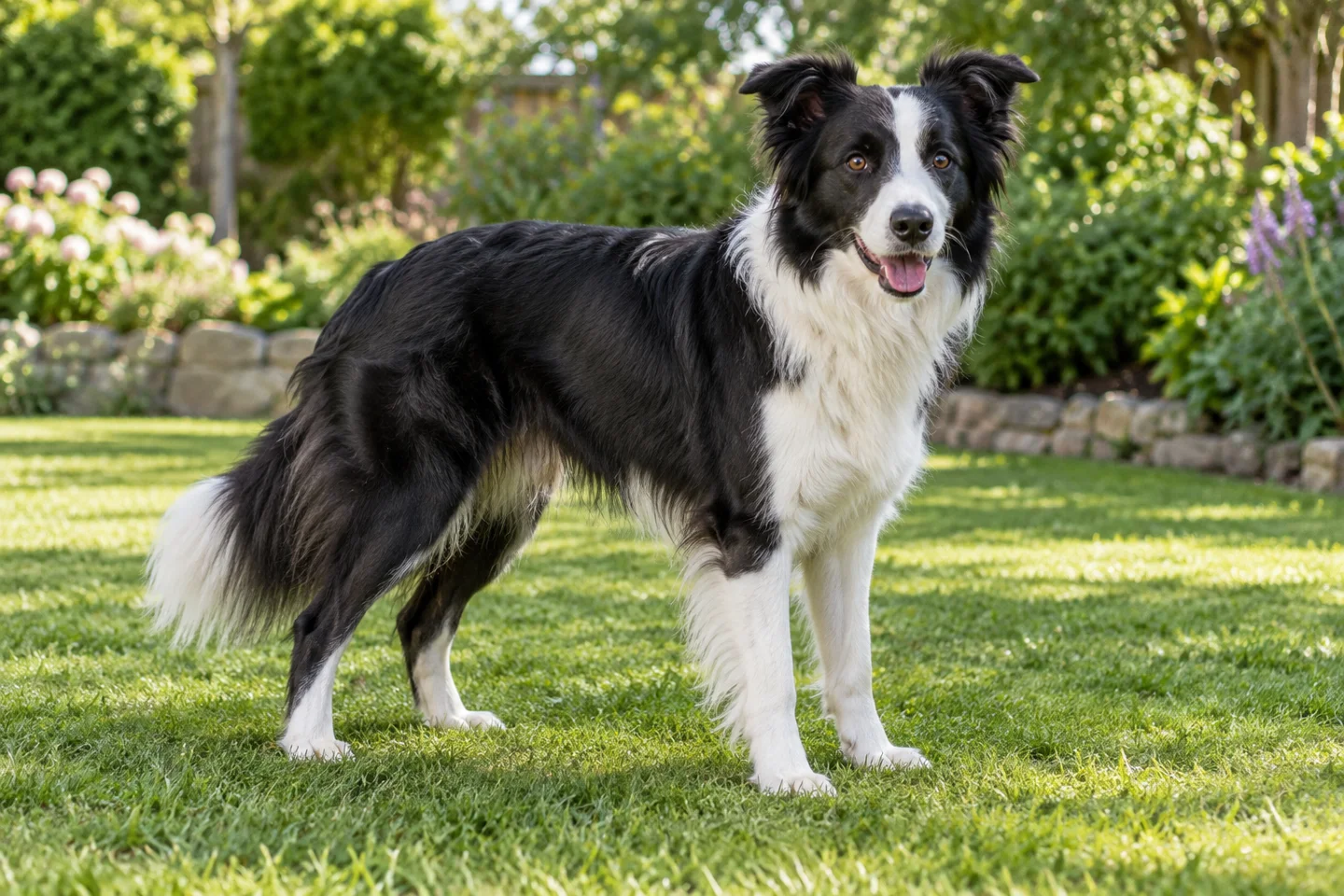
- Origin
- Britain; Scottish and English border region
- Coat
- Rough or smooth; several colors
- Care priorities
- Movement management, rest, eye and hip screening
General information for owners. These articles have not been reviewed by a veterinarian. Medical decisions need your dog's history and an examination.
Choosing a Border Collie for the life you have
A Border Collie needs an owner who enjoys teaching and can protect the dog's ability to rest. Enthusiasm for activity is useful, but a schedule filled with excitement can create difficulties of its own. Before choosing one, consider how you will handle attention to moving traffic, visitors arriving, or a ball being put away. Those ordinary situations can require more thought than providing a long walk. Look for a dog whose individual temperament fits your household and available experience.
Spend time with adults outside a competition or a highly edited video. Ask how they behave between activities, during illness, and when their owners are busy. Some thrive in working or sporting homes; others live comfortably as active companions with suitable outlets. Neither category describes every puppy from a particular litter. Rescue assessments and thoughtful breeder discussions should address the life you actually lead, including work, children, other pets, and periods when exercise must be reduced for practical or medical reasons.
Herding identity and the border history
The Border Collie developed as a sheep-working dog associated with the border country of Scotland and England. Herding work values attention to livestock and responsiveness over a changing distance. Modern dogs can retain strong interest in movement even when no sheep are present. A child running across a room or a bicycle passing a gate is not livestock, so the household needs a plan that prevents chasing and teaches a workable alternative. Instinctive interest does not supply judgment about modern hazards.
Working, conformation, sport, and companion backgrounds can differ in priorities, but labels do not predict an individual reliably enough to skip assessment. Ask what the parents and adult relatives are actually like at home and during unfamiliar situations. A puppy advertised as exceptionally driven may require specialist outlets that an inexperienced household cannot provide. A quiet-looking puppy may simply be tired during a visit. Discuss the breeder's observations over time and the support available if the match proves more demanding than expected.
Coat, color, and function
Border Collies have both rough and smooth coats and occur in more colors than the familiar black and white. A smoother coat does not establish lower activity needs, and an unusual color does not demonstrate special ability or better health. Select for comfortable structure, documented health information, and suitable temperament. Watch how the dog uses its body in ordinary movement. A photograph of a dramatic crouch or airborne jump provides little evidence about soundness or how comfortably the animal moves afterward.
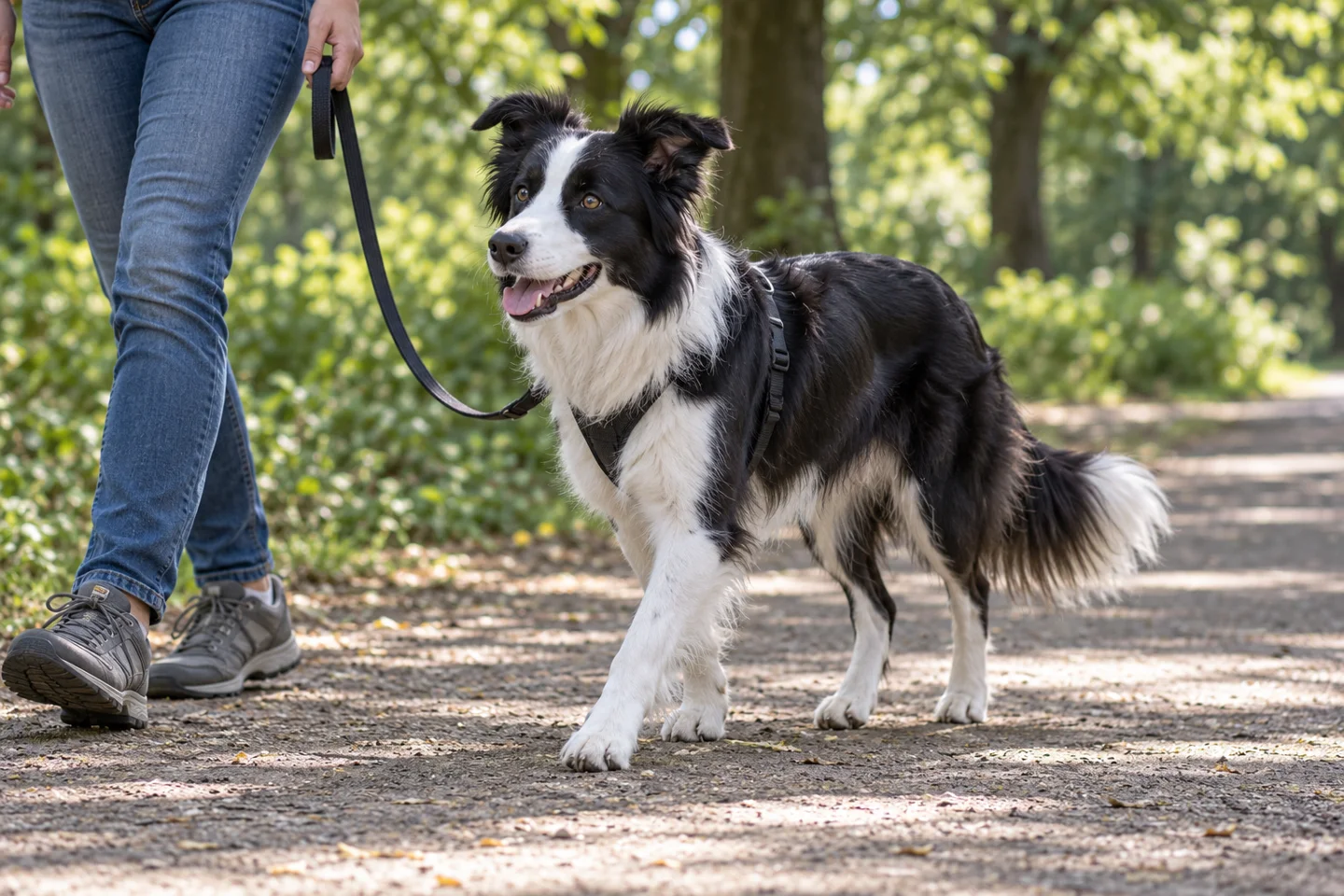
Choose equipment for the individual body and activity. A harness should allow comfortable movement without rubbing beneath the front legs, and a long line needs safe handling in an appropriate open area. Check nails and pads after unfamiliar terrain. Give the dog a secure travel arrangement and a bed where it can stretch fully. Athletically capable dogs still need traction in the house and protection from repeated awkward landings. Fitness should develop through suitable progressive activity rather than being inferred from youthful enthusiasm.
Movement interest around roads and fences
Prevent rehearsal of chasing where the consequences could be severe. Use secure fencing and a lead near roads; do not test recall against a vehicle. If the dog begins staring at passing traffic, increase distance and redirect before it becomes difficult to disengage. A quieter route may be necessary while seeking instruction. Avoid standing beside a busy road and waiting for the dog to stop reacting. Repeated overwhelming exposure can leave the owner with less control and the dog with more distress.
At home, reduce access to windows or fence lines that prompt repeated rushing. Teach an alternative station away from the trigger, with rewards that make returning worthwhile. Ask a qualified reward-based professional for help when staring, stalking, or chasing interferes with daily life. Record the particular triggers and how far away they are, rather than describing the dog simply as hyperactive. A useful plan addresses the actual sequence: noticing movement, becoming fixed on it, and losing the ability to respond comfortably.
Children and games that stay manageable
A family needs clear arrangements when a Border Collie begins circling children or grabbing moving clothing. Stop the running game and separate calmly; do not ask children to correct the dog or outrun it. Set up different spaces for children's fast play and the dog's rest. Teach the dog to follow an adult away from movement and reward that choice in easier situations first. Herding ancestry may help explain the interest, but it does not make nipping an acceptable household game.
Children can participate in simple training under adult guidance, such as rewarding the dog for coming to a mat. Keep instructions and rewards predictable, and avoid teasing with a ball the dog cannot obtain. Protect food, beds, and sleeping time. Some dogs find repeated reaching or exuberant affection uncomfortable even when they enjoy a familiar child. Watch the dog's whole response, including attempts to withdraw. The adult's job is to end pressure early and arrange activities that remain comfortable for both participants.
Other dogs, cats, and livestock boundaries
Border Collies differ in how they enjoy other dogs. Some prefer a walk with occasional contact, while others like reciprocal chase or gentle play. Constantly watching or controlling another dog's movement can create conflict, so interrupt fixation and offer distance. Do not assume a dog park will supply the right outlet. Small groups selected for compatible styles are easier to observe than crowded free-for-all sessions. At home, provide separate food and rest so one dog cannot repeatedly monitor or displace another.
Give cats protected routes and rooms, particularly when a new dog shows sustained interest in their movement. Reward looking away before a chase begins. Small pets require secure separation, and access to livestock should be controlled by a competent adult. Having herding ancestry does not qualify an untrained dog to work animals safely. If you want to explore herding, find appropriate instruction and assess the individual with welfare and safety in mind. Neighbors' animals should never become practice subjects for an owner's curiosity.
Aggression and the circumstances behind it
A Border Collie that growls during grooming or snaps after a long busy day needs assessment of the circumstances. Discomfort, fatigue, fear, guarding, and other factors can contribute. Keep a record of what happened immediately before the response and how the dog recovered. Arrange a veterinary examination when behavior changes, handling becomes difficult, or physical signs suggest pain. Restrict access to the triggering situation while investigating. Repeating it for a dramatic demonstration risks injury and gives the dog another unpleasant experience.
Choose help that uses reward-based methods and realistic management. Harsh corrections can add fear to an already difficult encounter. A professional may teach exchanges, cooperative handling, or a gradual response to a particular trigger while owners protect space and rest. Respond to warnings before a bite occurs. A dog that can perform complicated tricks may still find a particular person approaching its bed frightening. Training achievement does not remove the need to respect context, recognize discomfort, and keep vulnerable people and animals safe.
Training clarity and the ability to stop
The breed's reputation for learning can create unrealistic expectations. Teach one understandable step, reward it, and let the dog succeed before adding distractions or duration. Useful skills include recalling from manageable distractions, waiting while equipment is fitted, following a target, and relaxing on a mat. Avoid turning every household interaction into another performance. A clear release and a calm transition out of a session help the dog understand when the activity has finished and ordinary resting time begins.
Teach flexibility alongside precision. Walk a different route, leave a toy put away, or reward calm observation while another person moves around. Increase difficulty gently rather than springing an impossible challenge on the dog. If frustration appears, make the next task simpler and consider whether the session has lasted too long. Reward-based instruction can support both enthusiasm and self-control. The owner should also learn when to stop asking, particularly after travel, competition, poor sleep, or an unfamiliar event that has already demanded substantial concentration.
Exercise, sport, and recovery
Walking with opportunities to sniff supplies something different from repetitive throwing. Mix exploration, appropriate strength and coordination work, and chosen sports according to the dog's age and physical condition. Ask instructors how they modify tasks for developing puppies and dogs returning after injury. Progress should account for the surface, weather, and recovery as well as the difficulty of the movement itself. A dog that remains eager to repeat a task may still need the owner to limit it.
Do not build the whole exercise plan around exhausting the dog. Repeated acceleration, turning, and jumping can be a substantial workload, even when a session feels short to the person throwing a toy. Watch for stiffness later that day and changes the following morning. Seek veterinary assessment for lameness, weakness, collapse, or an unexplained change in endurance. Stop and obtain urgent help when serious distress occurs. The breed's athletic image should never delay care or encourage an owner to work through concerning symptoms.
Grooming rough and smooth coats
Care should reflect the coat actually present. A rough-coated dog may collect tangles behind the ears, under a collar, and in feathering, while a smooth-coated dog still sheds and needs inspection. Work through coat gently enough to check the skin instead of brushing only the outer surface. Remove outdoor debris and examine between toes after walks through vegetation. Gradual cooperative handling makes these checks easier, especially when the dog has been active and needs a brief examination before settling.
Use nail care, tooth brushing, and ear checks as separate teachable tasks rather than trying to complete everything in one long session. Ask a groomer or veterinary team to demonstrate when you are uncertain. Pain, discharge, persistent odor, or repeated scratching needs investigation. Avoid attributing reluctance to the dog's cleverness or stubbornness before considering discomfort. A practical home routine can include small amounts of care on different days, with professional assistance for tasks the household cannot currently perform without causing fear or pain.
Health screening and Collie Eye Anomaly
The AKC's current national breed-club list includes hip evaluation and an ophthalmologist evaluation for Border Collies. Request identifiable reports and discuss additional family-specific testing with the breeder. Eye screening matters even when a dog navigates a familiar room confidently. Hip assessment also provides different information from watching a young dog run. Ask a veterinarian to help interpret results if their format is unfamiliar, and avoid treating a registration certificate as evidence that these examinations were completed or normal.
Collie Eye Anomaly is an inherited condition addressed in Border Collie health resources, and a relevant DNA test can help inform breeding decisions. An examination of the eyes and a genetic result serve different purposes. Ask which variant was tested and how the result relates to the proposed parents, rather than accepting the phrase clear panel without detail. The Border Collie Health and Education Foundation also describes other inherited concerns. Its discussion should prompt informed questions, not a conclusion that every dog will develop every condition listed.
Genetics, illness, and meaningful follow-up
Discuss any family history of neurological illness, unexplained deaths, seizures, or serious immune problems with the breeder and your veterinarian. Available tests address named conditions; some clinical problems need a broader investigation. Keep laboratory reports rather than a screenshot containing only the word clear. A result belongs to an identified dog and a particular assay. Your veterinarian can advise which findings affect day-to-day care and which are primarily relevant to breeding, without letting a long list of test abbreviations replace an examination.
After adoption, record changes that affect ordinary function. Difficulty recovering from exercise, altered vision, unusual coordination, or repeated digestive trouble deserves attention even in a young energetic dog. Bring videos of naturally occurring symptoms when safely possible, but never reproduce dangerous exertion just to capture an event. Plan veterinary follow-up around the actual concern. A dog with reassuring parent results can still become ill, and a person should not wait for the next scheduled screening appointment when the animal is showing a current problem.
Feeding and the household budget
Use a complete food appropriate to life stage and adjust amounts with body condition and workload. An active competitor and a companion recovering from injury may need different portions at different times. Training food and snacks during outings contribute to the total. Avoid chasing a fashionable diet because another sporting dog eats it. Discuss nutritional questions with a veterinarian, particularly during growth, illness, or rehabilitation. Supplements should have a clear purpose rather than being added merely because the dog is athletic.
Budget for instruction, suitable equipment, veterinary care, and help during absences as well as food. Sports introduce travel and scheduling commitments that can exceed the cost of entry fees. An older Border Collie may need accessible beds, improved traction, and gentler activities while retaining opportunities to sniff and learn. Anticipate changes in your own circumstances too. A sustainable plan includes periods when an owner cannot run or attend classes, with enough support to protect the dog's routine and welfare during those interruptions.
Mixes and individual suitability
A Border Collie cross may combine different responses to movement, activity needs, and coat care from its parents. Names such as Bordoodle or Border Heeler do not guarantee a predictable compromise. A Poodle cross is not automatically suitable for someone with allergies, and a herding cross does not arrive trained for livestock. Ask about both parent histories and health results. When ancestry is uncertain, describe that uncertainty and assess the dog in front of you rather than promising a particular blend of traits.
For an adult adoption, ask what happens during walks beside traffic, when toys are removed, and while the household rests. Those observations may matter more than whether the dog looks like a familiar breed photograph. Discuss support and management honestly if fixation or chasing has occurred. An experienced active home can still be the wrong environment for a particular individual. Choosing carefully protects both the adopter and the dog from expectations built around intelligence, appearance, or a vague hope that enough running will solve every difficulty.
An appropriate dogsDating meeting
A useful dogsDating profile describes preferred play and the situations that need management. Mention if your dog tends to watch moving dogs intensely, prefers parallel walks, or becomes uncomfortable around shared balls. Choose a quiet public route where separate handlers can maintain space. Begin walking in the same direction at a comfortable distance and observe whether each animal can disengage. Avoid adding a thrown toy to test compatibility. Movement can change the encounter quickly and make a previously calm dog focus intensely on the other.
Use approximate location information and keep exact home coordinates private. Agree on the meeting point, duration, and a way to separate before the outing starts. End early if either dog becomes fixed, tense, or unable to respond comfortably, rather than waiting for a chase or confrontation. Owners can compare observations afterward and adjust future plans. A successful match may mean peaceful walks with room between the dogs. Close play should follow the individuals' demonstrated comfort, not an expectation that every social meeting must become an energetic game.
Sources and editorial notes
Sources checked October 21, 2026. Breed measurements describe reference ranges, not a diagnosis or an individual dog's ideal weight. Images are AI-generated breed illustrations and do not document a particular dog or health condition.
- AVSAB: Humane Dog Training Position Statement
- VCA Animal Hospitals: Food aggression in puppies
- VCA Animal Hospitals: Aggression toward unfamiliar dogs, diagnosis
- VCA Animal Hospitals: Ear infections in dogs
- VCA Animal Hospitals: Common emergencies in dogs
- VCA Animal Hospitals: Heat stroke in dogs
- Orthopedic Foundation for Animals: CHIC program and interpretation of numbers
- VCA Animal Hospitals: Hypoallergenic dog breeds
- American Kennel Club: Border Collie breed identity and care
- American Kennel Club: Breed-club health testing recommendations
- VCA Animal Hospitals: Grooming and coat care for your dog
- VCA Animal Hospitals: Feeding guidelines for dogs
- Washington State University: Gastric dilation and volvulus and bloat in dogs
- Border Collie Health and Education Foundation: Genetic diseases and testing context
Keep getting to know dogs.
Read another guide or return to your dogsDating community.
Explore breed guidesBack to dogsDating