Croatian Sheepdog
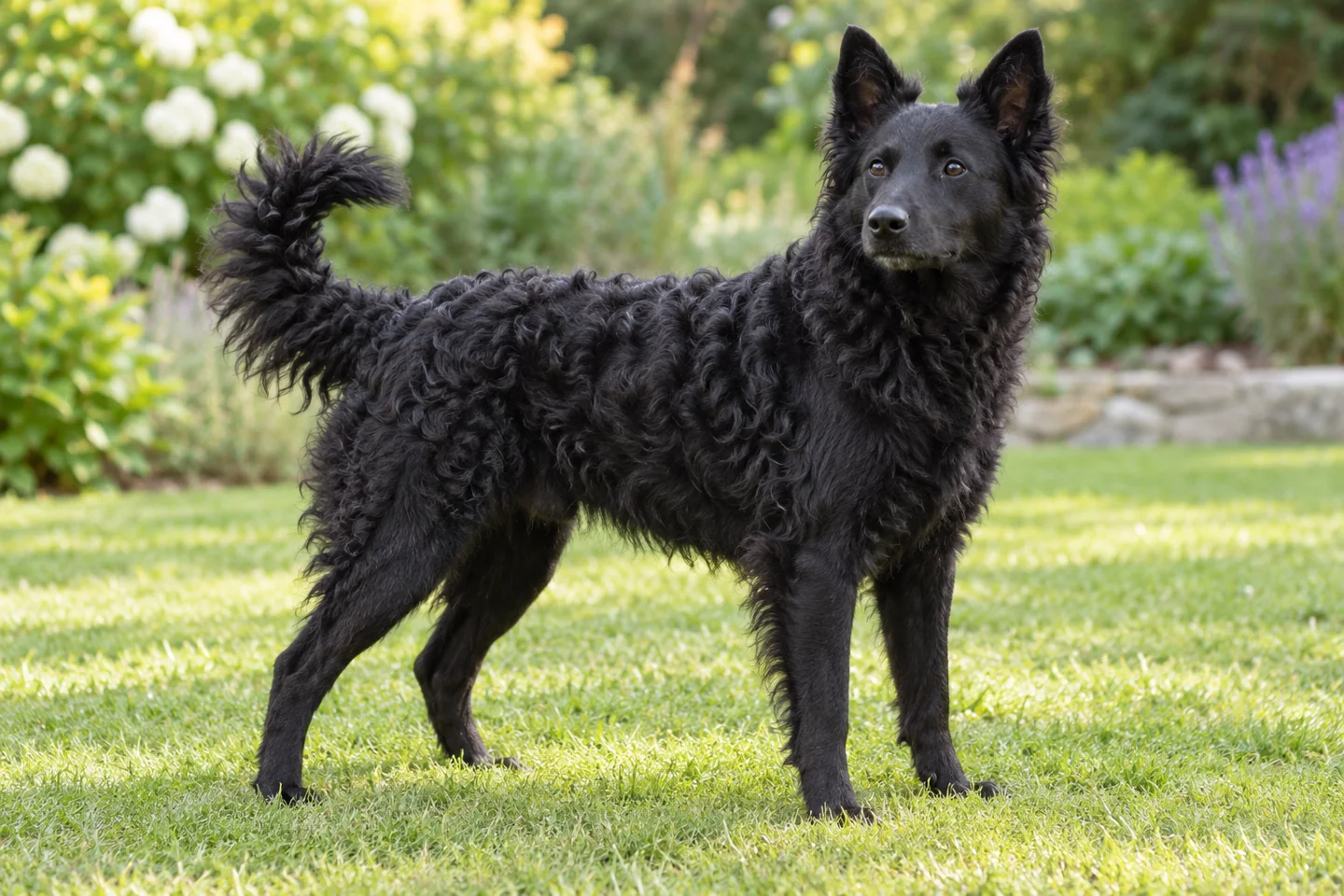
An agile Croatian farm herder with a black wavy-to-curly coat, requiring thoughtful movement control, useful work, recovery, and clear discussion of family health.
How these guides are researched and reviewed
- Origin
- Croatia
- FCI height
- Males 45–50 cm; females 43–48 cm, with tolerance
- Coat
- Black; wavy to curly on the body
- Care focus
- Movement, boundaries, cooperative training, and sustainable activity
General information for owners. These articles have not been reviewed by a veterinarian. Medical decisions need your dog's history and an examination.
A movement plan belongs before a puppy purchase
A Croatian Sheepdog needs more than an owner impressed by a fast black dog. Think about how it will respond when children run across the garden, a cyclist passes a narrow path, or livestock moves beside a fence. Ask for actual examples from the dog's family and plan the safeguards those situations require. A working background can inform expectations without making every individual identical. Household life needs its own trained responses rather than relying on the dog to interpret modern movement correctly by instinct.
Meet adults and watch what happens when activity ends. Can the dog rest while people continue talking, or does every small movement restart the interaction? Ask about alone time, visitors, care tolerance, and difficult developmental periods. An adult foster assessment can provide information that a puppy cannot yet offer. Choose a placement source with clear records and ongoing support. A rural address or access to a large field does not by itself demonstrate that the household can maintain suitable company, boundaries, and training throughout ordinary weeks.
Croatian identity and a farm-herding background
The FCI standard identifies Croatia as the origin and describes herding, guarding, and companionship in the breed's established role. It connects development with the eastern Slavonian farming environment. That history explains useful questions about alertness and responsiveness without requiring a precise ancient pedigree for every modern line. Recent family health and behavior are more direct evidence when selecting a puppy. Avoid treating a dramatic origin narrative as a substitute for seeing how the breeding dogs actually live and receive care.
The Croatian Sheepdog is distinct from the Hungarian Mudi and other black curly or wavy-coated herding dogs. Similar outlines do not prove a shared registered variety. Ask which registry issued any pedigree and what supports identification in a rescue with missing records. If the label is a visual estimate, retain that qualification. The dog's medical needs and safe routine can still be assessed directly. A breed name helps frame questions, while the actual animal determines what activity, handling, and social arrangements the home must provide.
Wavy black coat and an athletic working frame
The breed has a medium-sized, slightly rectangular athletic body, with black wavy-to-curly hair on the body and shorter hair on the head and lower legs. Ears are naturally erect or semi-erect as described by the standard, and the overall impression should remain functional rather than heavily sculpted. Tail length can vary; these illustrations choose a complete natural tail. A short tail in a real dog should not automatically be assigned a cause without its individual history.
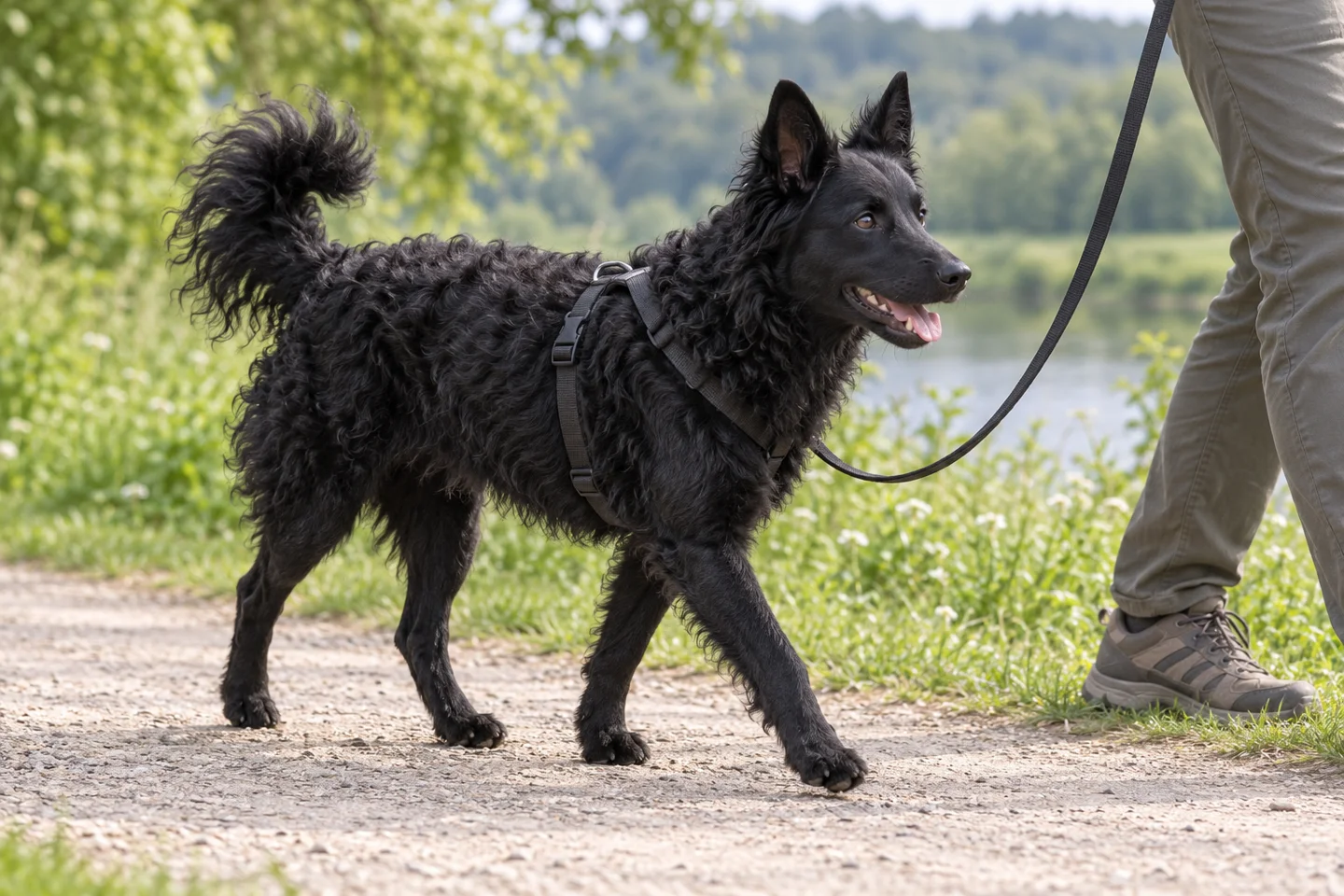
Assess condition beneath the hair and watch ordinary movement. A coat that looks thick in a photograph can hide changes in muscle or weight. Ask your veterinarian to demonstrate rib and waist checks and monitor meaningful trends. Fit equipment to the individual rather than buying solely by a breed category. Check that straps do not rub or pull hair into skin, especially during growth. A sudden refusal of a familiar harness routine needs investigation before being treated as an increase in stubbornness or excitement.
The FCI height ranges are 45–50 cm for males and 43–48 cm for females at the withers, with a stated tolerance for excellent type and conformation. This is a medium-sized athletic worker rather than an oversized heavy shepherd. Individual measurements still govern harness fit and transport, and standard height cannot predict a puppy’s exact adult size or future health.
Bicycles, children, and an alternative to pursuit
Teach looking back to the handler and turning away from movement where the dog can still respond. Begin with generous distance, predictable events, and rewards the individual values. If attention is already fixed and the dog is lunging, change the setup instead of repeating cues at the same impossible level. A quiet roadside view from far away may teach more than a narrow path where every passing bicycle creates a close conflict. Physical control remains necessary while learning develops.
Prevent chasing, body-blocking, and clothing-grabbing around children. Calling those actions herding does not make them appropriate household behavior. Separate before fast games when the dog's response is uncertain and provide another activity in a safe area. Everyone should know who holds the lead, opens the gate, and supervises the encounter. The objective is predictable access for people and a clear task for the dog. It should not depend on a child interpreting a warning or physically stopping an excited adult animal.
Livestock work needs competent teaching
A herding pedigree does not make a young Croatian Sheepdog ready to work animals safely. Use an instructor able to assess the dog, livestock, handler, and terrain together. Prevent uncontrolled pressure, grabbing, or chasing, which can frighten and injure stock as well as the dog. Begin with the foundations and handling skills appropriate to that setting rather than arranging a demonstration for visitors. The owner's learning matters as much as the animal's responsiveness.
If your home has no livestock work, suitable alternatives can include scent searches, cooperative retrieving, and well-taught movement activities. Choose outlets that meet the individual dog's needs without manufacturing a risky livestock encounter. Sporting ambition should not override comfort, age, or health. A puppy needs developmentally appropriate exploration and sleep, while an adult entering training after inactivity needs gradual conditioning. Check how the dog moves and recovers later, and seek veterinary advice for persistent soreness rather than assuming a working breed should simply tolerate more.
Boundaries around home and visitors
Plan gates, doors, and delivery access before the dog arrives. A secure resting area behind a barrier lets people enter without holding an excited dog by the collar. Practice moving there during quiet periods and reward calm participation. Visitors should know whether a greeting is offered and how to respect the dog's space. Some visits can take place with the animal resting separately, especially while a new owner learns its responses. A successful household routine does not require every guest to touch the dog.
At the fence, prevent repeated rushing and prolonged watching of passersby. Manage the view and access while teaching an alternative rather than leaving the dog on a long patrol. If reactions are intense or recovery is poor, obtain qualified behavioral guidance. Calling the animal watchful does not supply a safety plan for invited people. Explain actual events, distance, and any contact honestly so professionals and carers can understand the risk and follow a routine that remains workable during ordinary distractions.
Children and a private resting place
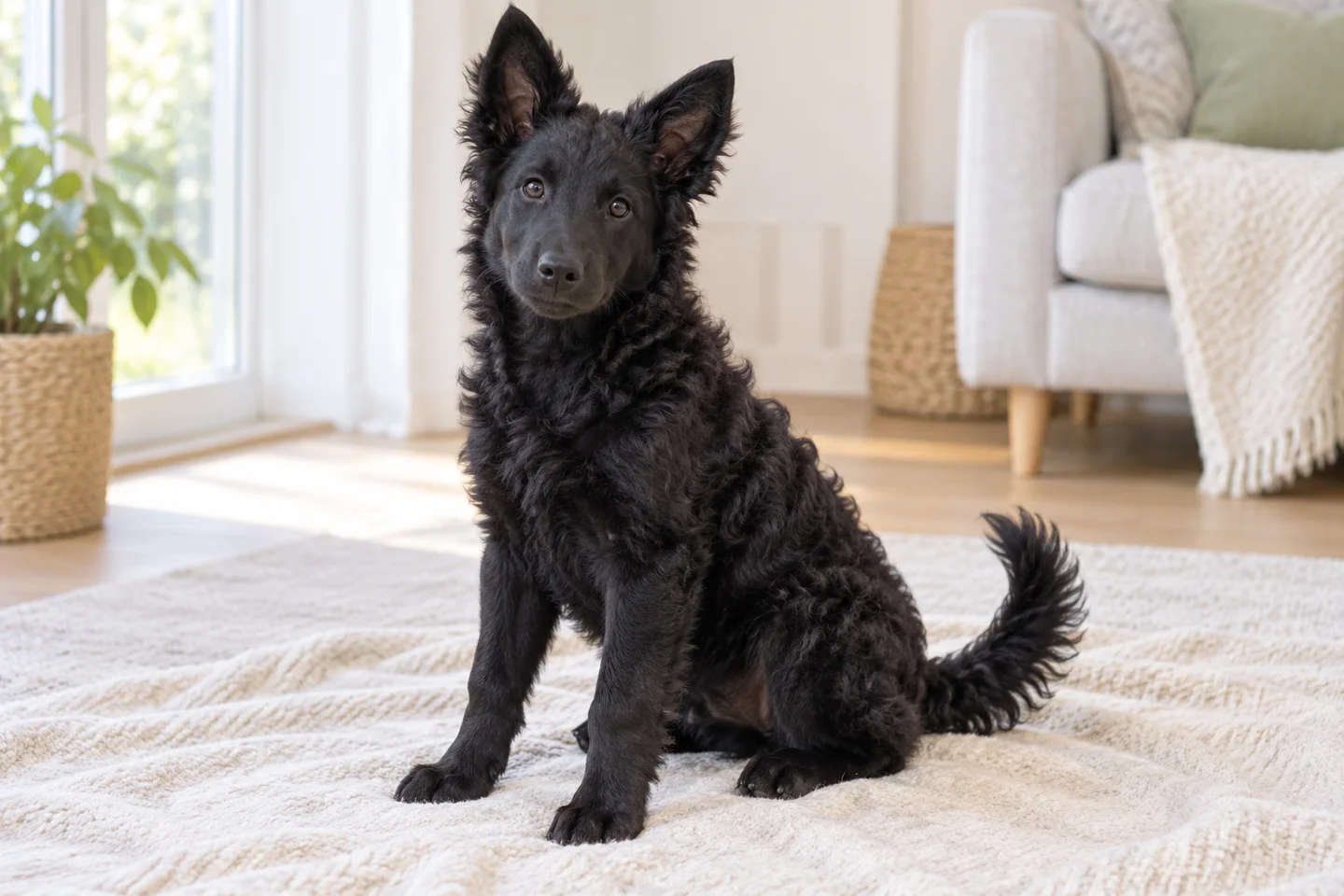
Give the dog somewhere comfortable that children do not enter, outside the busiest household routes. Prevent neck-hugging, hair pulling, climbing, and face-to-face posing. Adults should supervise closely enough to notice withdrawal or stiffening before the child follows the dog into a corner. A child should not need to step over a sleeping animal to reach the bathroom. Layout and clear rules prevent unnecessary pressure before anyone needs to correct a response.
Keep food, chews, and found objects under adult management. A child should call an adult if the dog takes a toy instead of reaching into its mouth. Calm shared activities can involve hiding a suitable item for a search while the dog waits elsewhere. Separate before loud visiting games when supervision will be divided. Past comfort with a familiar child does not establish tolerance of every unfamiliar group, particularly when the dog is fatigued, painful, or already excited by movement in the environment.
Aggression and information in a warning
A Croatian Sheepdog may guard a valued object, resist a painful touch, or react defensively when cornered. Reduce pressure and create distance when freezing, growling, or threats appear. Do not deliberately repeat the approach to prove that the animal should submit. A sudden change in tolerance calls for veterinary assessment, while recurring concerns need a qualified behavior professional and immediate management. Children and visitors should remain outside unresolved conflicts as the cause and a practical response are considered.
AVSAB recommends reward-based teaching. Confrontation can increase fear and may suppress a warning without addressing what produced it. Keep a factual record of incidents, including the approach, setting, response, recovery, and any injury. Labels such as sharp, stubborn, or protective do not tell another carer what to avoid. A useful plan combines prevention, teaching, and medical care where appropriate. It should reduce unsafe encounters without requiring someone else to recreate the same pressure as a test of character or obedience.
Training a clear task instead of constant arousal
Teach moving to a mat, walking with a slack lead, returning from a manageable distraction, and releasing a suitable object through an exchange. Keep lessons short and make the next step achievable. A quick learner can still be confused by inconsistent cues or an environment that is too exciting. Reward attention before it disappears, and simplify when necessary. Repeatedly adding speed or difficulty can produce a highly aroused session without improving the dog's understanding of the everyday behavior the owner actually needs.
Care cooperation deserves deliberate practice too. Reward a brief stand, a paw touch, or entering a vehicle voluntarily. Build duration on stable nonslip surfaces and coordinate with veterinary staff when treatment is needed before training is complete. Household adults should agree on access rules and cues. A dog cannot infer why pulling earns access with one person and physical correction with another. A humane instructor can help the people improve timing and setup while keeping safeguards in place around traffic, livestock, and unfamiliar animals.
Exercise through a sustainable week
Provide regular comfortable movement and meaningful occupation rather than alternating inactivity with exhausting weekends. Walks with investigation, searching, and appropriate training can create variety. Match effort to age, health, conditioning, weather, and surface. Watch recovery after rest, not only enthusiasm during a game. Persistent stiffness, limping, or a drop in tolerance needs examination. An athletic outline and willingness to continue do not establish that every joint or muscle is comfortable with the workload the owner has chosen.
During heat, select cooler periods, water, shade, and an easy return route. Marked distress, collapse, or abnormal breathing requires urgent veterinary advice. Quiet days can use gentler tasks without frantic indoor chasing intended to compensate for every missed outing. Teach a predictable finish to games and protect undisturbed sleep. A routine should remain workable during changing owner commitments and temporary illness. If suitable activity or company regularly disappears on ordinary weekdays, reconsider the plan rather than expecting the dog to manage through willpower.
Company and practicing time apart
Observe what happens during brief separations from familiar people. Following an owner between rooms is not enough by itself to diagnose distress, but pacing, repeated calling, or escape attempts after departure deserve attention. Begin alone-time practice at a manageable level and use recordings if helpful. Arrange reliable cover for work or travel while skills develop. Repeatedly extending a difficult absence may rehearse panic rather than teach calm independence. A qualified professional can help distinguish the circumstances and develop a practical plan.
Another dog adds its own needs and may not resolve concern about humans leaving. Assess a second placement for its own suitability. For a new adult, predictable care and gradual demands help you collect useful observations as confidence changes. Ask the source about known separation history and support after adoption. A garden cannot substitute for company or a care arrangement. The household needs dependable backup during illness and unexpected commitments, including someone able to follow the same boundary and equipment precautions as the usual owner.
Grooming waves, curls, feet, and ears
Brush appropriately for the actual coat and check close to skin rather than judging only the black outer outline. Friction areas beneath equipment, the underside, and feathering can hold debris or tangles. After countryside activity, inspect feet and any area repeatedly licked. Remove superficial material gently and seek help with painful wounds or tightly matted hair. Scissors used blindly near skin can injure. Ask a groomer to demonstrate tools and a routine that keeps care manageable rather than turning the coat into an elaborate sculpted presentation.
Introduce dental care, nail maintenance, and ear observation through brief rewarded sessions. Ear pain, discharge, odor, or persistent scratching warrants veterinary assessment, not deep probing or reuse of a guessed medication. A new objection to a familiar procedure may indicate discomfort. Tell professionals about sensitive areas before the appointment so handling can be planned. Necessary treatment and future training can proceed together, without waiting for an owner to perform every examination alone or forcing a frightened animal through repeated prolonged sessions.
Health evidence and family questions
A breed standard defines identity and appearance rather than disease prevalence or a complete medical program. For Croatian Sheepdogs, ask the relevant breed organization and your veterinarian about current screening appropriate to the family and breeding population. Request evidence for the named assessments claimed by the source. Rarity and a working background do not establish freedom from inherited illness. It would be misleading to invent a universal list of diseases or a guaranteed lifespan where reliable information for the population is limited.
Discuss significant diagnoses, mobility or vision problems, unexplained early deaths, and whether owners' later reports are collected. A cheerful puppy can still have family risks that deserve an honest conversation. For a rescue lacking records, document what is unknown and establish care from a current examination. New weakness, lameness, appetite change, or loss of condition needs assessment on its own merits. A general DNA panel cannot rule out every possible illness, and a reassuring appearance cannot substitute for a particular test that was never documented.
Feeding, mixes, costs, and dogsDating
Use a complete diet suited to life stage, condition, and actual workload. Measure portions, include training food, and avoid building excess weight in the name of working strength. Seek advice for persistent digestive or appetite changes. Croatian Sheepdog mixes vary in coat, size, movement interests, and social behavior; a combined name does not standardize outcomes or remove medical concerns. Budget for preventive care, suitable training, secure transport, dependable holiday cover, and unexpected treatment, with a carer who understands the dog's actual needs.
On dogsDating, describe walking pace, responses to movement, preferred contact, and lead requirements. Keep exact home coordinates private. Choose a quiet public route with room to separate and begin with a short parallel walk. Avoid an exciting chase game if either dog struggles to pause or disengage. Leave valued objects out initially and respect requests for space. A calm walking companion can be a suitable match, while future indoor access or resource sharing should follow separate assessment rather than an assumption based on one pleasant outing.
Keeping the plan usable when handlers change
Write the door and gate routine down and demonstrate it to a trusted backup handler before an urgent absence. Include the situations where the lead stays attached, the cues used, and the distance that helps around movement. A temporary carer should not discover those details while a bicycle passes or livestock changes field. Keep current medical instructions and veterinary contacts accessible. A short trial can show whether the arrangement works in practice and whether the dog can rest comfortably with someone other than its usual owner.
Sources and editorial notes
Sources checked October 21, 2026. Breed measurements describe reference ranges, not a diagnosis or an individual dog's ideal weight. Images are AI-generated breed illustrations and do not document a particular dog or health condition.
Keep getting to know dogs.
Read another guide or return to your dogsDating community.
Explore breed guidesBack to dogsDating