Boston Terrier
A compact American companion needing breathing-aware activity, eye protection, gentle training, and documented health screening.
How these guides are researched and reviewed

- Origin
- United States
- Coat
- Short smooth coat
- Care priorities
- Breathing, eyes, and weather
General information for owners. These articles have not been reviewed by a veterinarian. Medical decisions need your dog's history and an examination.
Living with a Boston Terrier
A Boston Terrier needs an owner who notices breathing, eye comfort, and changes in activity before admiring its compact outline. This American companion can fit a relatively small home, but floor space alone does not describe its needs. Plan regular outings, patient lessons, suitable company, and a comfortable indoor temperature. Arrange walks around actual weather and the individual dog's capacity. A short muzzle makes the ability to breathe comfortably a practical selection question, even when a puppy appears lively for a brief visit.
Ask a breeder or foster carer how the dog sleeps, recovers after ordinary activity, travels, and handles time alone. Request a candid description of veterinary treatment rather than accepting noisy breathing as an amusing personality trait. Consider whether your work schedule permits midday care and whether your household can pay for unexpected eye or respiratory treatment. An adult with documented home behavior may provide more useful information about everyday fit than a puppy selected mainly for its markings.
American identity and a recognizable appearance
The Boston Terrier developed in the United States and takes its name from Boston. It is an established breed with its own standard, rather than a general term for any small black-and-white bull-type dog. The American Kennel Club places it in the Non-Sporting Group. Older bull-and-terrier ancestry does not mean a modern Boston should be treated as a fighting dog or judged safe solely because the breed now has a companion role. Current behavior and family health matter directly to placement.
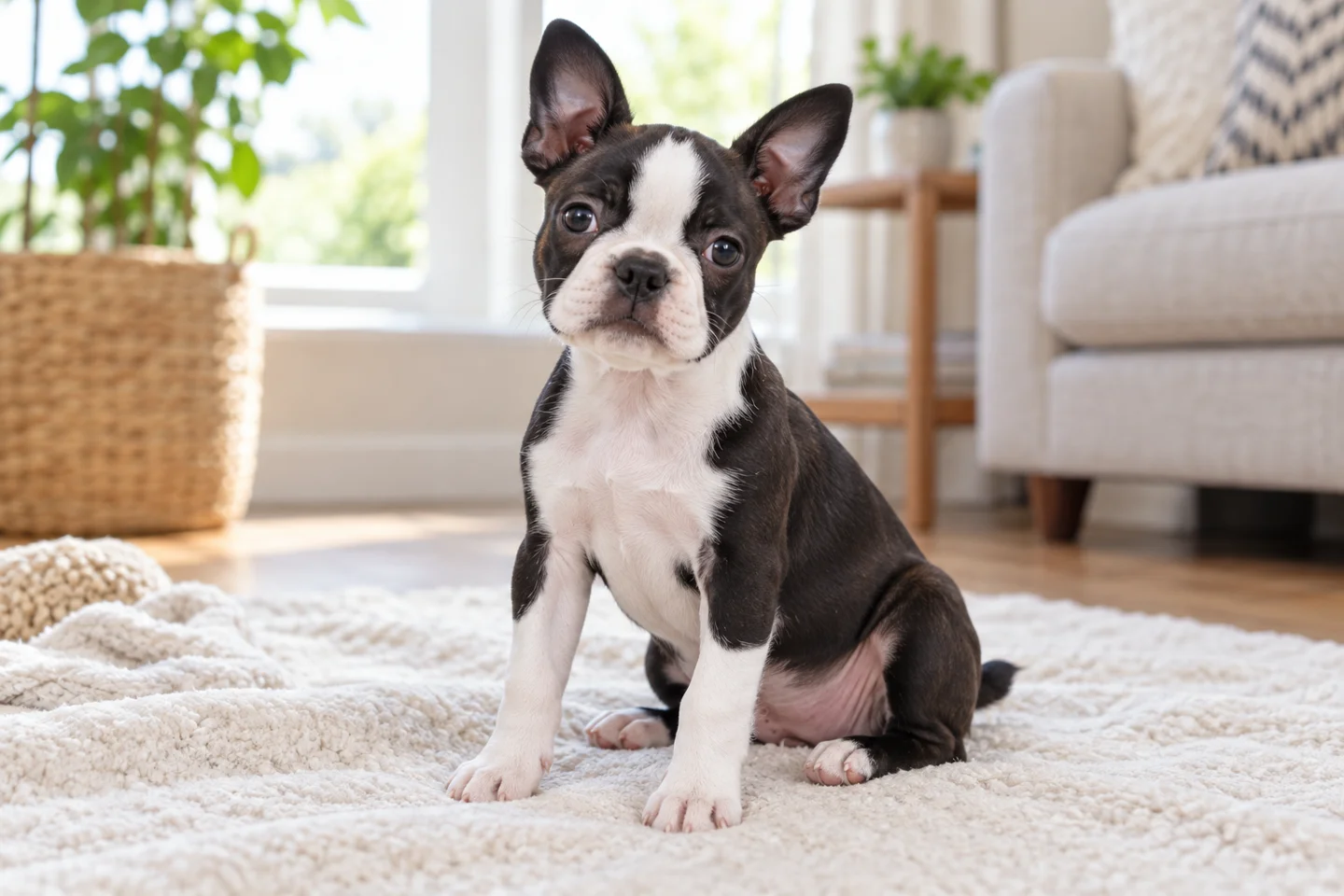
A square-looking head, short muzzle, erect ears, compact frame, and distinctive white markings contribute to its appearance. Standard colors include brindle, seal, and black with white. Color marketing should not distract from sound movement, comfortable breathing, healthy eyes, and reliable records. Boston Terriers and French Bulldogs are separate breeds, even when a casual observer confuses their silhouettes. A rescue label may remain an informed estimate when there is no pedigree, and that uncertainty should stay visible in the dog's profile.
A small body still needs careful handling
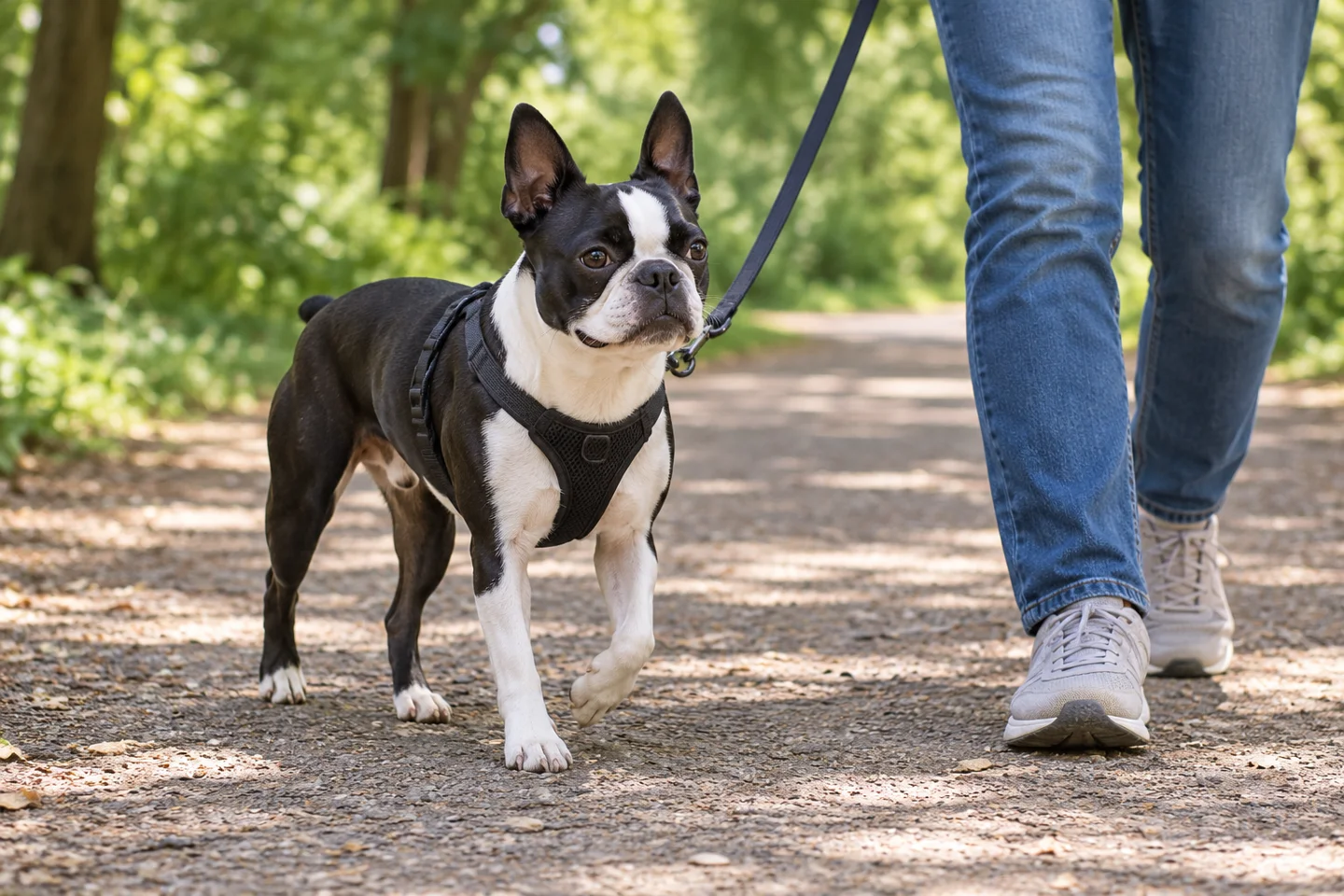
Choose equipment that fits the chest without rubbing behind the elbows or restricting shoulder movement. A harness can provide useful control while keeping routine lead pressure away from the throat, but fit and training still matter. Check straps as a puppy grows and after weight changes. Practice stepping onto a low platform or entering a carrier voluntarily. These small lessons help with transport and examination without making every necessary lift an unexpected grab around the middle.
Protect the dog from drops off furniture and from people who assume a compact dog can be carried carelessly. Support the body when lifting is necessary and let a veterinary professional demonstrate an appropriate technique. Keep floors reasonably grippy, especially if the dog hesitates on polished surfaces. A sudden reluctance to jump, climb, or be picked up needs assessment. It should not be dismissed as stubbornness because the dog ran enthusiastically the previous afternoon.
Breathing and exercise in real weather
Boston Terriers are brachycephalic, meaning their skull has a shortened muzzle. Cornell describes this breed among those affected by brachycephalic obstructive airway syndrome. The severity varies between individuals. Snoring, noisy breathing, poor exercise tolerance, and disrupted sleep deserve veterinary discussion rather than automatic acceptance as normal for every Boston. A dog may need assessment even if it has never collapsed, and normal-looking enthusiasm does not tell an owner whether its airway is functioning comfortably.
Use shorter, comfortable outings in cool conditions and watch recovery closely. Avoid pushing through panting, resistance, or escalating respiratory noise to meet a distance target. Keep access to water and a cool resting area, and plan transport that does not leave the dog in a parked vehicle. Breathing distress, collapse, or abnormal gum color needs urgent veterinary care. Weight management and sensible routines matter, while a veterinarian must decide whether the individual needs further investigation or treatment for airway obstruction.
Children and close contact
Children need instruction about a Boston's resting space, food, toys, and face. A small dog can be injured by a fall, a tight hug, or a child's full weight. An adult should supervise actual interaction and intervene before the dog has to struggle away. Arrange a bed behind a gate where nobody follows it. Teach children to invite the dog closer and accept that turning away ends the invitation, even when the dog was playful a few minutes earlier.
Choose low-pressure shared activities such as placing a treat for a simple trained cue or helping prepare a food puzzle under adult guidance. Keep excited chase games out of narrow hallways where collisions are likely. A puppy's mouthing needs calm management and appropriate chewing outlets, while persistent or escalating biting deserves professional assessment. Breed descriptions about friendliness do not replace attention to the particular dog's fatigue, pain, fear, or history with children. Adults remain responsible for decisions about access.
Dogs, cats, and compatible play
A Boston may enjoy canine company, but face-to-face excitement is not a requirement for a successful meeting. Start with space and movement, and watch whether both dogs can disengage. A compact, enthusiastic player may overwhelm a quieter dog, while a much larger playmate can cause injury through speed or impact. Interrupt repeated pinning, crowding, or attempts to escape. Play should offer choices and pauses, and a calm parallel walk can be a better result than vigorous wrestling.
Introduce household cats with barriers, protected routes, and separate resources. Prevent chasing from becoming a daily game. A history of living with one cat does not prove safety with every unfamiliar cat, and a cheerful greeting toward a person says little about responses to small animals. Ask for specific observations from foster carers rather than a broad claim that the dog loves everyone. Use separate rooms while you learn the animals' habits and keep vulnerable pets securely protected.
Aggression and useful warning signals
A Boston Terrier can growl, guard an object, or bite when frightened, uncomfortable, frustrated, or pressured. Size does not remove the need for bite prevention. If the dog freezes over food, avoids handling, or stiffens during close contact, create distance and review the situation. Do not reach repeatedly into its bowl to prove control. Give valued items in a quiet area and use planned exchanges rather than taking objects through a contest that increases concern about approaching hands.
AVSAB recommends reward-based training. Punishing a growl can make the warning less available while leaving the underlying problem unresolved. A new behavior change warrants veterinary attention, particularly when the dog resists touch or seems less able to rest. Seek a qualified behavior professional for repeated guarding, snapping, or difficult dog encounters. Management should begin immediately with barriers and sensible separation. Do not arrange a crowded outing to test whether the problem will disappear when the dog meets enough strangers.
Training everyday cooperation
Teach useful choices in brief sessions that leave the dog comfortable and interested. Reward coming when called indoors, settling on a mat, waiting while a door opens, and letting go of an object through an exchange. Make the cue easy at first and add distractions gradually. The dog needs to understand the task before it can perform it beside moving people or another dog. End before fatigue or respiratory effort turns a lesson into an uncomfortable physical demand.
Work on loose-lead walking where there is enough space to change direction. Reward checking in rather than repeatedly correcting the lead after the dog reaches its end. A safe pause on a mat can help when visitors arrive or food is being prepared. Teach adults in the home to use the same cues and reward the same behavior. An adolescent's inconsistency is a reason to simplify practice and review the environment, rather than concluding that the dog is trying to challenge the household.
Grooming a short coat
The short coat usually needs relatively straightforward brushing, but maintenance includes much more than visible hair. Use a soft brush or suitable grooming tool and check the skin as you work. Look at the feet, nails, ears, and areas where a harness rests. Introduce brief touches with rewards and let the dog take a break. Keep nails at a length that supports comfortable walking, asking a professional for help if the dog struggles or the correct trimming point is unclear.
Watch the face and eyes without poking into them or applying an old medication. A red, painful, squinting, or suddenly cloudy eye needs prompt veterinary attention. Keep shampoo and loose debris away from the eyes during bathing. Ask your veterinarian how to clean any facial creases the individual has and dry those areas gently afterward. The existence of a short coat does not make the dog allergy-proof. Household allergy decisions should involve actual exposure and appropriate medical advice for the affected person.
Health screening and honest records
The American Kennel Club's current national-club recommendations for Boston Terriers include patella evaluation, an ophthalmologist evaluation, and BAER hearing testing. Request the actual reports for the parents and check their identities and dates. An ordinary puppy examination and a broad DNA panel do not supply the same information as these assessments. Ask what significant health problems have occurred in close relatives and how the breeder responds when an owner reports an unexpected diagnosis later in life.
Screening reduces uncertainty about particular conditions; it does not guarantee that every offspring will remain healthy. Eye assessment, hearing results, and patella findings also do not replace an individual airway evaluation. Ask a veterinarian to interpret any history of noisy breathing, sleep difficulty, regurgitation, exercise intolerance, or fainting. Keep a written record of symptoms and, where safe, a brief video to help describe intermittent signs. Avoid deliberately provoking an episode to obtain a more dramatic recording for an appointment.
Feeding, water, and safer recreation
Feed a complete diet appropriate to the dog's life stage and use body condition to guide adjustments with your veterinarian. Count training rewards as part of the daily intake. Excess weight adds practical strain when breathing or comfortable movement is already difficult. A small dog can receive a substantial fraction of its food allowance through casual snacks, so measure portions rather than relying on the apparent size of each treat. Changes in appetite, swallowing, or regurgitation need investigation.
Treat water access as a managed activity. Do not assume that enthusiasm near a pool proves competent swimming. Use controlled entry, a suitable flotation aid when appropriate, and close supervision. Keep the dog away from unsafe currents and provide a way to leave the water without a high jump. Never force swimming as a solution to exercise limits. Indoor scent games, gentle retrieval on a nonslip surface, and short enjoyable walks can provide activity without requiring a physically unsuitable challenge.
Boston Terrier mixes and appearance-based promises
A Boston crossed with a Pug, French Bulldog, or another breed is a crossbreed, even if a seller uses a catchy combined name. The label does not predict adult airway function, eye comfort, size, or temperament. Combining two short-muzzled parents does not guarantee improved breathing. Ask which health evaluations each parent received and have the puppy assessed on its own structure and clinical signs. Claims about a mix being automatically healthier need evidence that applies to the particular dogs.
For a rescue dog with uncertain ancestry, describe observed behavior and care needs clearly. A DNA ancestry estimate can add context but cannot certify safe play, predict every inherited illness, or replace a veterinary examination. Avoid selecting unusual colors or markings at the expense of health records and responsible placement. A suitable source allows questions, discusses limitations, and offers support if the home does not work out. Pressure to decide immediately is a poor substitute for enough information to make a considered choice.
Household suitability and lifetime costs
A Boston can suit someone who wants a compact companion and can provide regular company, patient care, and activity adjusted to weather and breathing. It is a difficult choice for a household expecting prolonged summer exercise, frequent unsupervised outdoor time, or minimal veterinary spending. Check housing rules and travel plans before bringing the dog home. Arrange who can care for it during illness or an unexpected work commitment, including how medication or breathing-related restrictions would be communicated.
Budget for examinations, vaccinations, parasite prevention, dental care, food, insurance or an emergency fund, and reliable holiday care. Read insurance exclusions and waiting periods, particularly when symptoms or diagnoses already exist. Over time, changes in vision, hearing, mobility, or respiratory comfort may require shorter outings and different handling. Make that adjustment according to the individual rather than a fixed birthday. Keep the veterinary team informed when the dog's routine changes because ordinary activities suddenly seem harder than before.
Planning a dogsDating meeting
Build a dogsDating profile around concrete observations: comfortable walking pace, preferred play style, lead needs, relevant health limitations, and responses to unfamiliar dogs. Keep exact home coordinates private. Choose a quiet public meeting place with space to separate, rather than inviting an unfamiliar owner directly to your home. Ask whether the other dog uses rough body contact and whether both handlers can pause the meeting before excitement becomes difficult to manage. A suitable partner respects a slower introduction.
Begin with a short parallel walk in comfortable weather. Give each dog room to sniff and move without forcing a nose-to-nose greeting. Stop if breathing becomes strained, either dog repeatedly avoids contact, or the play depends on one dog tolerating persistent pressure. Sharing a pleasant walk is a successful outcome. Future meetings can remain brief and predictable. The app can help owners find a possible companion, while the people present must judge the dogs' current comfort and protect their ability to leave.
Preparing for appointments and emergencies
Keep a current medication list, veterinary contacts, and health reports together so another responsible adult can find them. Ask the clinic how it would like you to respond if breathing becomes suddenly difficult and identify an emergency service before one is needed. Rehearse getting into the car without chasing or lifting a struggling dog in a panic. During routine visits, discuss any change in sleep, appetite, eye appearance, or willingness to walk, even if the dog appears cheerful in the consultation room.
Travel planning deserves the same attention. Confirm accommodation rules, indoor cooling, and the nearest veterinary service before a longer trip. Bring familiar food and bedding, secure the dog during transport, and attach the lead before opening a door at an unfamiliar stop. Avoid building the itinerary around long queues outdoors or crowded events where finding a cool, quiet space would be difficult. A practical holiday allows the Boston to rest comfortably while people change their plans around its actual needs.
Sources and editorial notes
Sources checked October 21, 2026. Breed measurements describe reference ranges, not a diagnosis or an individual dog's ideal weight. Images are AI-generated breed illustrations and do not document a particular dog or health condition.
- VCA: Ear Infections in Dogs
- VCA Animal Hospitals: Common emergencies in dogs
- VCA: Food Aggression in Puppies
- AVSAB: Humane Dog Training Position Statement
- Orthopedic Foundation for Animals: Diseases
- VCA: Feeding Guidelines for Dogs
- American Kennel Club: Boston Terrier
- American Kennel Club: Boston Terrier Recommended Health Tests
- Cornell University: Brachycephalic Obstructive Airway Syndrome
- VCA: Grooming and Coat Care for Your Dog
Keep getting to know dogs.
Read another guide or return to your dogsDating community.
Explore breed guidesBack to dogsDating