Bouvier des Flandres
A substantial cattle dog needing manageable adult-size handling, coat care, sensible exercise, and documented orthopedic, cardiac, and eye screening.
How these guides are researched and reviewed
- Origin
- Belgium and France
- Coat
- Rough double coat with beard
- Care priorities
- Handling, coat care, and visitor routines
General information for owners. These articles have not been reviewed by a veterinarian. Medical decisions need your dog's history and an examination.
Making room for a Bouvier des Flandres
Before choosing a Bouvier des Flandres, picture a wet, fully grown dog entering your hallway after a muddy walk. Decide where it can dry, where its coat will be maintained, and how people will move past it comfortably. This substantial cattle dog needs practical space even when it spends much of the evening resting. A large garden does little to solve a narrow entrance, a slippery stairway, or an owner who cannot safely guide the dog when it becomes excited.
Ask to see ordinary routines rather than only a polished presentation. Watch how an adult enters a vehicle, waits at a door, accepts grooming, and settles when conversation continues around it. Discuss the family's history of health and behavior, including problems that required management. A puppy's appeal should leave room for those questions. An adult rescue assessment can offer useful information, especially when the foster home resembles yours and the carers can explain what they have actually observed.
Flanders history and breed identity
The FCI standard gives Belgium and France as the countries of origin and describes the breed's cattle-driving and farm background. Flanders is the region reflected in the name. Those working roots help explain why owners should think about physical capability, responsiveness, and household boundaries. They do not establish that every modern Bouvier is suited to livestock work, protection training, or a busy family home. Current family information and the individual dog's behavior are more useful than a romantic account of farm life.
The Bouvier des Flandres and Bouvier des Ardennes are separate breeds. A short haircut does not turn one into the other. Ask for clear identity records and the registry that issued them. Where a rescue dog's ancestry is uncertain, a resemblance can remain a working description rather than a fact. Beard, dark coat, and size also occur in mixed dogs, so avoid making medical or behavioral guarantees from appearance alone. A trustworthy description leaves space for what is genuinely unknown.
Appearance and the body beneath the coat
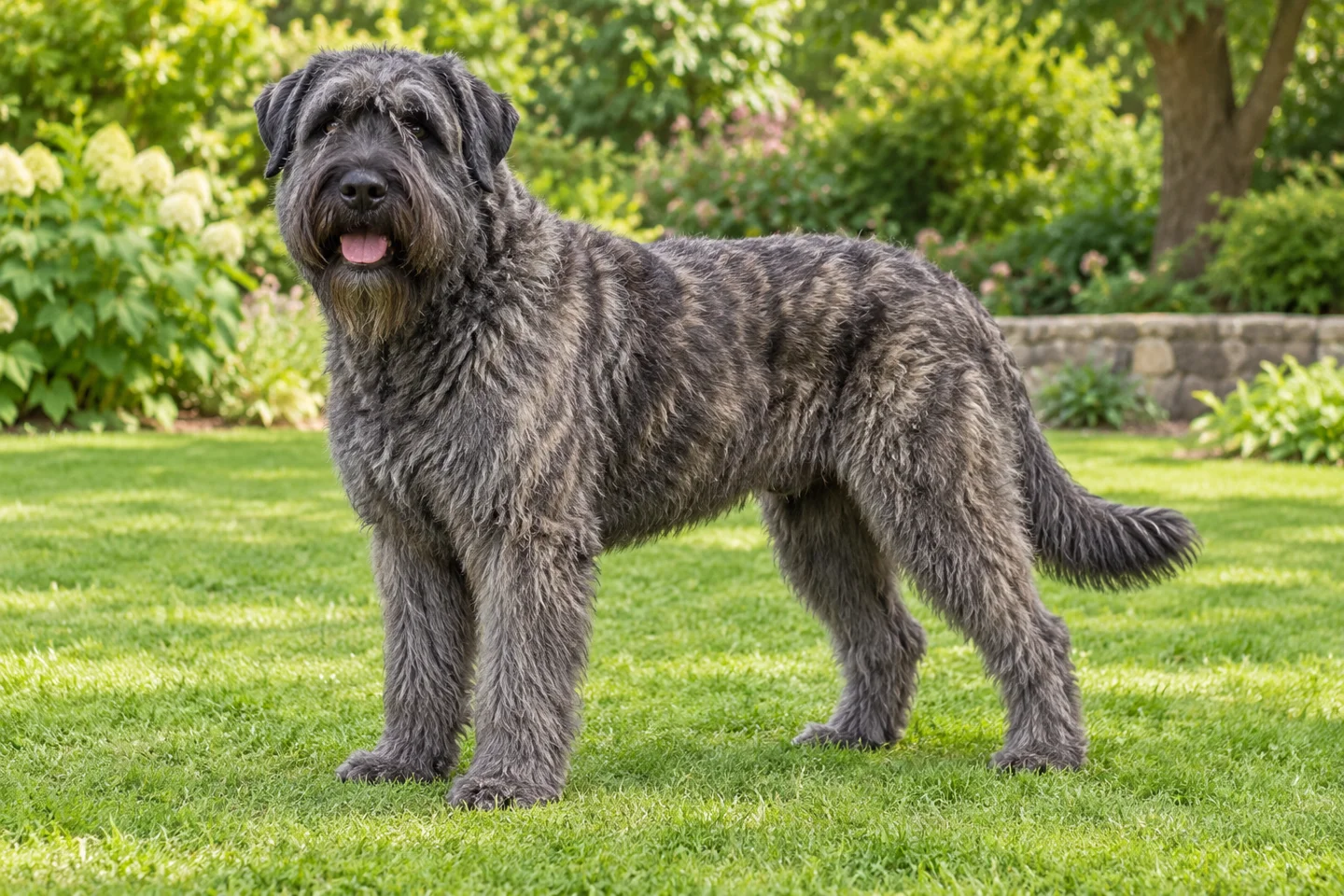
A rough outer coat, undercoat, beard, and eyebrows contribute to the familiar outline. The coat can make the dog look heavier or more solid than its body actually is. Learn to assess ribs and waist by touch, with help from your veterinarian. Photographing the same pose is less useful than noticing changing body condition, strength, and comfort. A grooming appointment may reveal a lump or sore area that had been hidden, so ask the groomer to report new findings promptly.
Images may show cropped ears or shortened tails in some countries and natural ears or a long tail in others. These differences should be described accurately, without suggesting that cosmetic procedures are needed for a household dog to perform ordinary activities. Select for comfort and reliable placement information. Watch the dog move on an ordinary surface rather than judging solely from a posed photograph. Hesitation, uneven steps, or difficulty rising deserve discussion even when the coat and presentation appear impressive.
Adult strength and home access
Train comfortable movement through doors before the dog is powerful enough to pull a person off balance. Reward waiting while the door opens and walking through on a cue, with secure management behind you. Keep delivery interactions simple by resting the dog behind a gate. A collar grab in a crowded doorway is a fragile routine for a large dog and an injured or distracted owner. Rehearse a practical alternative on quiet days so it is available when the household is busy.
Think about transport while the dog can learn without urgency. A stable ramp may help some individuals enter a vehicle, but it needs suitable traction and gradual introduction. Secure the dog during travel and confirm that it can lie down comfortably. Ask how you would move it after surgery or an injury. A plan that depends on one person lifting the full adult weight may fail precisely when it is most needed. Veterinary staff can help discuss appropriate equipment and assistance.
Visitors and alert behavior
A Bouvier may pay close attention to new arrivals, but owners should avoid rewarding suspicion as proof of quality. Teach a clear visitor routine that gives the dog distance and gives people room to enter. A quiet mat behind a barrier can be useful before any greeting occurs. Tell guests to avoid staring, crowding, or reaching into the dog's resting space. Some dogs can remain separate for an entire visit and still have a comfortable, well-managed evening.
If the dog repeatedly blocks guests, lunges at movement, or cannot recover after a person leaves, describe those events to a qualified behavior professional. Do not rely on the broad label protective. The details determine a useful plan: where the person was, what the dog did, how close they came, and whether physical contact occurred. Prevent repetitions through barriers and appropriate handling while you seek help. A social gathering should not become an improvised test of whether the dog will tolerate pressure.
Children around a large bearded dog
A child's face can be close to a standing Bouvier's head, which makes respectful distance particularly important. Keep climbing games, hugs around the neck, and attempts to ride the dog out of the household routine. Arrange resting places away from narrow routes to the kitchen or bathroom. A child should not need to step over the dog to reach an adult. Supervision means someone is watching and ready to intervene, rather than simply being somewhere in the same house.
Fast running and squealing may excite an individual with a cattle-dog background. If the dog starts pursuing, body-blocking, or grabbing clothing, separate calmly and change the arrangement. Do not praise the behavior as the dog doing its historical job. Children can help with gentle activities under adult direction, such as hiding a treat for an easy search while the dog waits elsewhere. Adults must handle leads, valued objects, and difficult care. Familiarity does not remove the possibility of pain, fatigue, or fear.
Other dogs and household animals
Consider the effect of size and play style before arranging close contact. A Bouvier's enthusiastic body contact can overwhelm a smaller or older dog even when both initially approach willingly. Start with enough distance for calm movement, and watch whether each animal can turn away without being followed. Interrupt repeated pinning or crowding. Choose compatible partners rather than expecting every dog at a park to accommodate a powerful newcomer. Separate food and chews until the household routines are clear.
Cats need routes and resting areas the dog cannot reach. Keep initial access controlled and prevent chasing instead of waiting to see whether the cat can enforce a boundary. Work with livestock only under suitable supervision and training. A pedigree describing farm work does not certify reliable behavior around sheep, cattle, or poultry. When asking a breeder or rescue about animal compatibility, request examples of actual encounters and management. The statement that a dog grew up on a farm leaves many practical questions unanswered.
Aggression and safer responses
A dog may guard a chew, resist a painful brush stroke, or react defensively when a stranger leans over it. Those situations need attention to context rather than an immediate contest over obedience. If the Bouvier freezes or growls, stop the pressure and arrange more space. Place valued items where the dog can enjoy them without interruption. Teach exchanges using suitable rewards and seek professional help when guarding involves repeated threats or a risk of injury. Do not ask children to practice exchanges with a worried dog.
AVSAB recommends reward-based training. Physical confrontation can increase fear and makes an encounter with a powerful dog more dangerous. Sudden irritability or refusal of familiar handling needs veterinary assessment, especially when grooming, movement, or sleep has changed. A behavior plan can include barriers, positively introduced safety equipment, and controlled routines alongside training. Explain bite incidents honestly to professionals and potential carers. A reputation for devotion does not tell another person what happened or which situations they should avoid.
Training cooperation before force is needed
Prioritize behaviors that let the dog take part in its own care. A comfortable stand, a chin rest, moving onto a mat, and stepping away from a doorway can solve recurring practical problems. Reward small approximations and keep sessions brief enough that the dog remains willing. When the response is easy at home, practice in new places at a lower level of difficulty. A familiar cue may need rebuilding when the environment contains moving animals, unfamiliar people, or exciting smells.
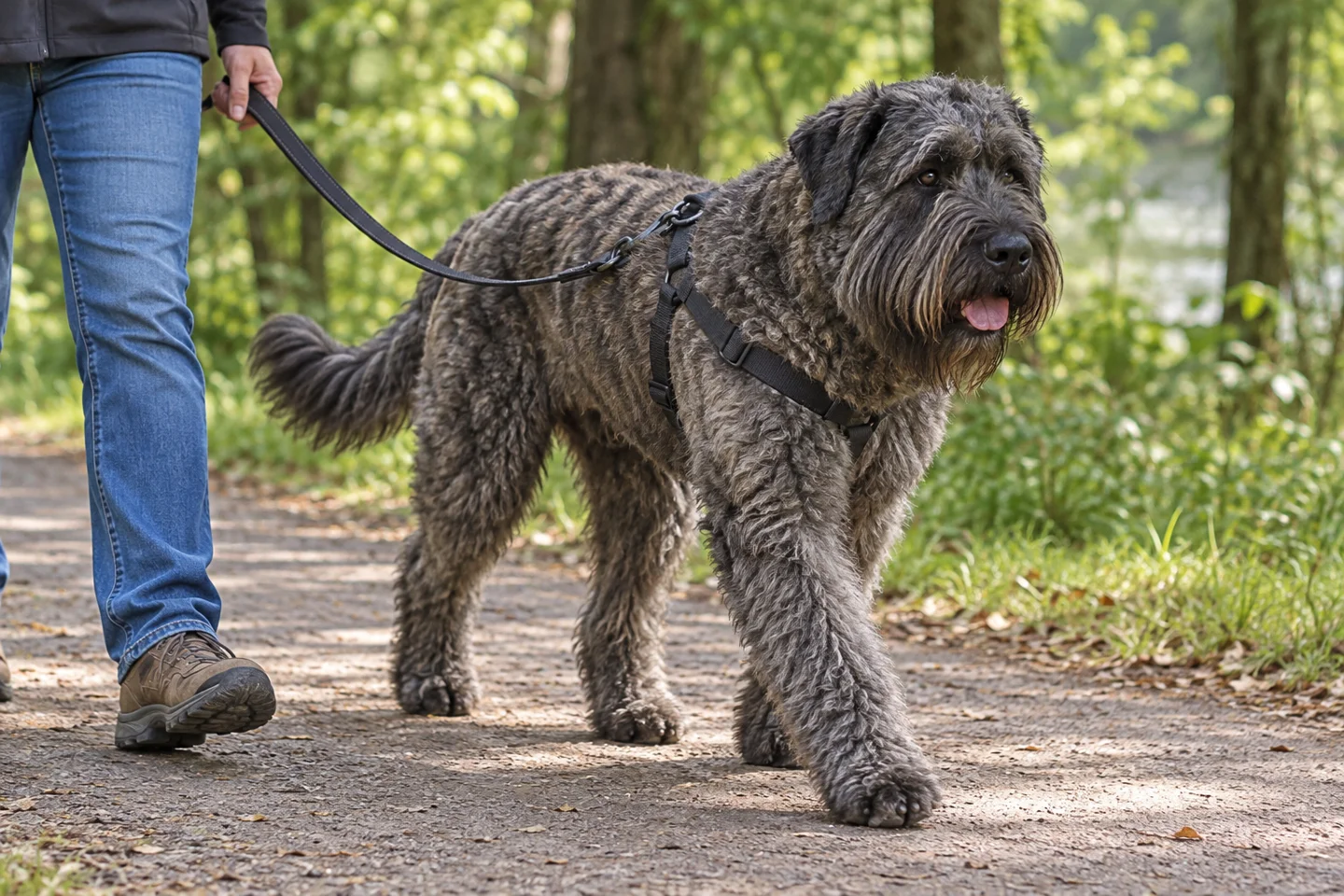
Lead skills deserve regular practice while the puppy is still manageable. Reinforce walking beside you and turning away from distractions before a tight lead becomes normal. Equipment can provide control, but it cannot teach the dog what to do. If you pursue a sport, choose instruction appropriate to the dog's age, structure, health, and temperament. Avoid demanding repeated jumps or sharp turns simply because the breed is capable of athletic work. A well-planned lesson includes rest and an achievable task.
Exercise and settling afterward
Build a routine that combines comfortable walking, sniffing, training, and opportunities for suitable free movement. Adjust effort to the individual and the weather. A thick coat and substantial body make it sensible to plan shade, water, and recovery, while puppies and older dogs need their own limits. Avoid using exhaustion as the only route to a quiet evening. A dog also needs the chance to learn that household activity can continue while it rests without following every person from room to room.
Choose games with a clear beginning and end. A search for a hidden toy may provide useful engagement without repeated collision or frantic turning. On countryside outings, inspect the route for livestock, slippery banks, and narrow gates before committing to a close encounter. If the dog becomes stiff or reluctant after activity, stop and seek veterinary guidance. Working heritage does not make pain an acceptable training tool or justify pushing through a change in gait to finish a planned distance.
Grooming through the whole coat
A Bouvier coat needs planned maintenance down to the skin. Surface brushing can leave mats in the undercoat, especially around friction areas, behind ears, and beneath equipment. Ask an experienced groomer to demonstrate the tools and technique for your dog's coat and chosen trim. Work in manageable sessions, checking comfort as you go. A practical companion haircut can simplify care, but it does not eliminate the need to inspect skin, paws, ears, and the hair around sensitive areas.
The beard collects water and food, so clean and dry it as needed and look beneath it for irritation. Do not use fragrance to conceal a persistent smell. Examine feet after muddy walks and remove debris gently. Arrange nail care before overgrowth affects comfortable movement. If brushing has become painful or the coat is tightly matted, obtain professional help rather than cutting blindly with scissors near the skin. Rebuilding a calm grooming routine takes patience and may need a shorter, comfortable coat first.
Health screening and family records
The AKC's current herding-group page lists hip, elbow, cardiac, and ophthalmologist evaluations for the Bouvier des Flandres. Ask for the identifiable reports and discuss any abnormal or incomplete findings before placement. Those priorities are more useful than a claim that the parents were vet checked. Find out whether relatives have needed orthopedic treatment, developed significant eye disease, or had diagnosed heart problems. A breeder who collects follow-up information can discuss the family with more detail than someone who stops tracking puppies at sale.
Ask a veterinarian to relate those records to the dog in front of you. A normal hip report in a parent does not explain a puppy's current limp, and an old eye examination does not make a painful red eye harmless today. Keep copies of imaging and specialist reports when treatment is needed. If the dog develops weakness or exercise intolerance, record the circumstances without deliberately repeating the trigger. An individual examination is necessary because multiple medical problems can produce superficially similar changes in activity.
Feeding and Bouvier mixes
A growing Bouvier needs a complete diet suitable for its life stage and expected adult size. Discuss portions and growth with your veterinarian instead of trying to accelerate development. Extra body weight can be hidden under the coat, so measure food and monitor condition by touch. Include training rewards in the total intake. Ask about dental care and investigate persistent changes in appetite, stool, or swallowing. General claims that every working dog needs a particular supplement are insufficient reasons to add one.
A Bouvier-Poodle cross or another Bouvier mix can inherit a demanding coat without predictable size or behavior. A combined name does not guarantee low shedding, allergy compatibility, easier grooming, or freedom from parental health concerns. Request appropriate information about both parents and assess the individual puppy. For an adult rescue, observations about care tolerance, visitor behavior, and daily activity may be especially valuable. An ancestry estimate can provide context, while practical decisions still need the actual dog and its medical history.
Costs and a dogsDating plan
Budget for professional grooming or substantial home maintenance, food, veterinary care, secure transport, training, and dependable holiday care. Check whether insurance excludes existing symptoms and whether a carer can handle the adult comfortably. Later in life, access ramps, floor traction, and help with transport may become necessary. Planning these costs before placement protects the dog when circumstances change. Housing permission and space for a large resting area should be resolved before a puppy arrives, rather than negotiated after it has grown.
On dogsDating, describe walking pace, play style, lead requirements, and any limits on close contact. Keep exact home coordinates private and choose a spacious public place for a first meeting. Begin with parallel movement and let both dogs disengage. Avoid toys or treats between unfamiliar dogs if resources could cause tension. End before fatigue or repeated crowding makes handling difficult. A calm short walk gives useful information, and future contact should depend on both dogs continuing to show comfortable, voluntary interest.
Boarding arrangements before a long absence
Visit a potential boarding or day-care provider while there is time to consider alternatives. Explain the dog's grooming needs, size, visitor responses, and ability to rest around other dogs. Ask how staff move dogs between areas and whether quiet individual care is available. A busy group session may be unsuitable even when the dog enjoys one familiar companion. Arrange a short trial if appropriate and review how the dog eats, sleeps, and settles afterward before committing to a lengthy stay.
Sources and editorial notes
Sources checked October 21, 2026. Breed measurements describe reference ranges, not a diagnosis or an individual dog's ideal weight. Images are AI-generated breed illustrations and do not document a particular dog or health condition.
- VCA: Ear Infections in Dogs
- VCA: Food Aggression in Puppies
- AVSAB: Humane Dog Training Position Statement
- Orthopedic Foundation for Animals: Diseases
- VCA: Feeding Guidelines for Dogs
- FCI: Bouvier des Flandres Breed Standard
- American Kennel Club: Bouvier des Flandres Recommended Health Tests
- VCA: Grooming and Coat Care for Your Dog
Keep getting to know dogs.
Read another guide or return to your dogsDating community.
Explore breed guidesBack to dogsDating