Curly-Coated Retriever
A tall retriever with tight curls and a smooth face, needing measured sporting work, safe water habits, suitable company, and specific orthopedic, cardiac, eye, and genetic records.
How these guides are researched and reviewed
- Origin
- Great Britain
- FCI ideal height
- Males 69 cm; females 64 cm
- Coat
- Black or liver; tight curls with a smooth face
- Care priorities
- Conditioning, retrieval, water safety, and named health tests
General information for owners. These articles have not been reviewed by a veterinarian. Medical decisions need your dog's history and an examination.
A tall retriever with a household to learn
A Curly-Coated Retriever needs an owner who enjoys regular activity and can also teach an understandable end to it. Begin with an ordinary week: walking, searching, care, rest, and the periods when people are away. A weekend sporting plan does not answer how the dog will settle during a working afternoon. Ask about the individual and its relatives, including the practical routines they find difficult. A dog can be affectionate with familiar people without wanting close attention from everyone it meets.
Meet adults and observe transitions. Can the owner fit equipment, speak to a visitor, and move the dog into a vehicle without a prolonged physical struggle? Find out how alone time was taught and what medical information is available. A careful adult foster assessment may offer more useful certainty than a puppy selected from an attractive photograph. Look for candid support after placement, not promises that a rare breed automatically brings fewer problems or that a sporting pedigree guarantees a fully trained companion.
British retrieval identity and a distinct breed
The FCI standard gives Great Britain as the origin and retrieval as the established function. The coat is a defining feature, but a Curly is not simply a Labrador with different hair or an untrimmed Poodle. Avoid treating any curly-coated sporting-looking dog as confirmed pedigree. Ask which registry issued records and whether the parents can be identified. In rescue, a visual estimate can remain provisional while the actual animal's activity, medical needs, and social experience are assessed.
Historical work offers context for questions about retrieving, carrying, water, and conditioning. It does not teach a puppy how to wait beside traffic or release a stolen object safely. A companion household can provide suitable outlets without hunting, while an owner pursuing field work needs proper instruction and an appropriate setting. The dog's current skills and comfort decide the next step. A traditional account should help plan care rather than justify an expectation that every individual will perform naturally on demand.
Curls, a smooth face, and a substantial height
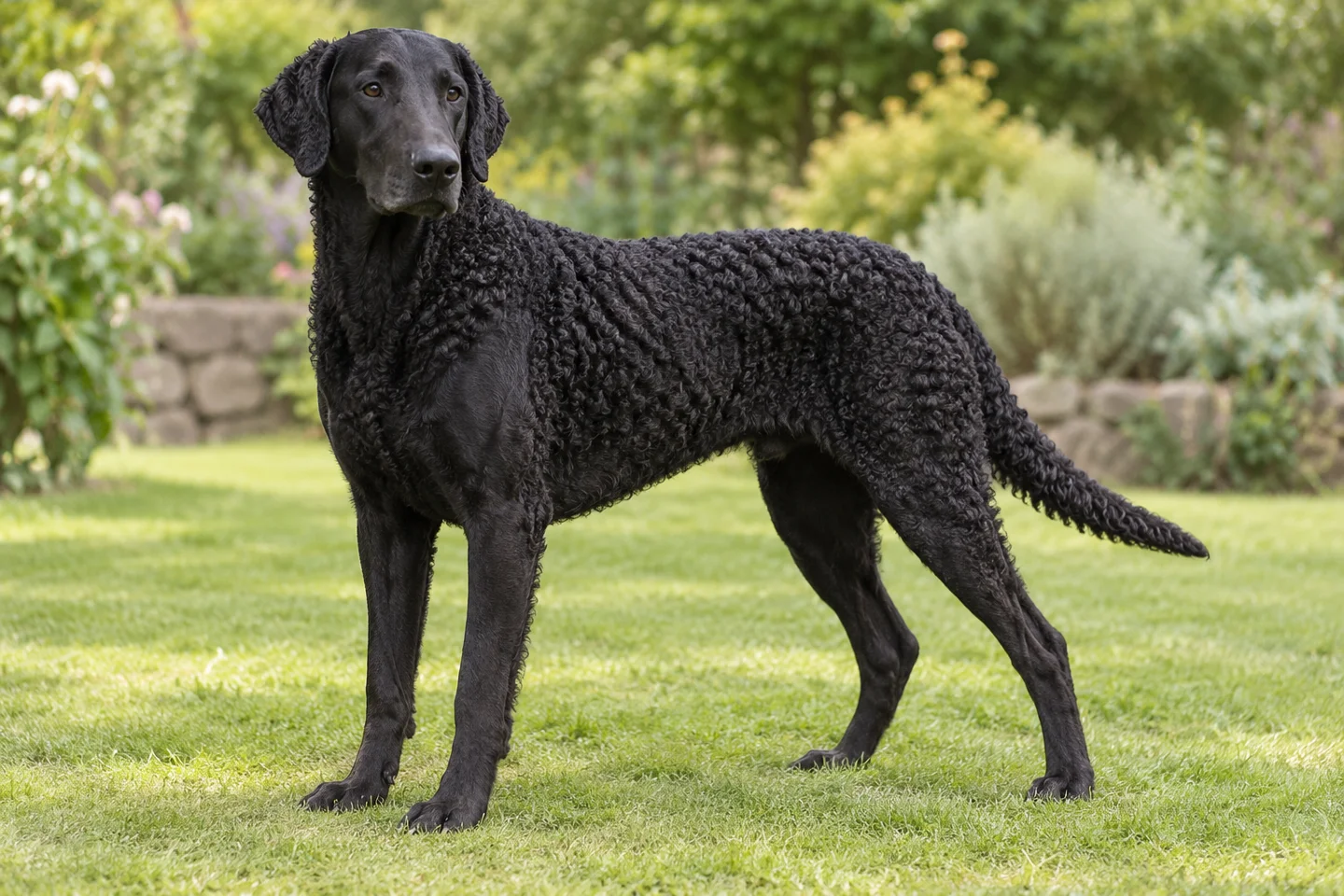
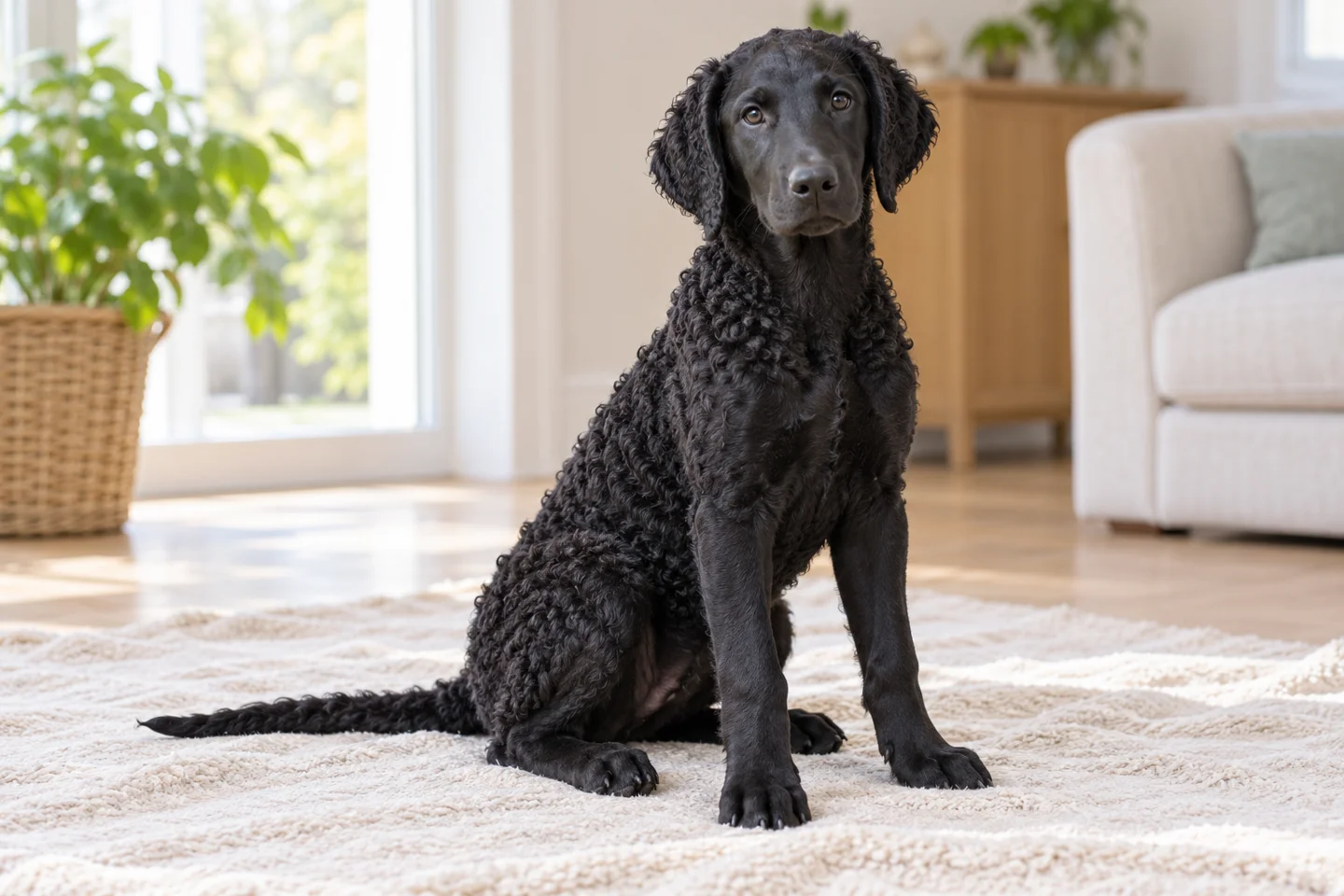
The breed has a tall athletic frame, a wedge-shaped head, naturally dropped ears, and tight small curls over the body and tail. The face and front of the legs have smooth hair. Black and liver are the standard colors; these images choose black. A Poodle trim or rounded topknot would misrepresent the outline. The complete natural tail should remain visible in the illustrations, and a real dog should be assessed through comfortable movement rather than the amount of curl in a posed picture.
The FCI gives ideal withers heights of 69 cm for males and 64 cm for females. These are substantial dogs, although individuals vary and the figures cannot guarantee a puppy's final measurement. Check actual vehicle space for turning and lying down. Fit equipment to the real chest and shoulders, and monitor condition by touch beneath the coat. A large outline is not a reason to encourage excess weight or assume the owner can lift the adult safely after an injury.
Carrying without a contest over every object
Retrieving interests can appear in inconvenient places when laundry, children's toys, and wrappers are available. Store unsafe objects securely and offer appropriate carrying outlets. Teach bringing a suitable toy toward the handler and releasing it through an exchange before an urgent situation occurs. Chasing the dog and forcing its mouth open can make the interaction more exciting or encourage a rapid swallow. The home arrangement should reduce those emergencies rather than depend on catching the animal each time it discovers something.
Break retrieval into clear parts and keep repetitions appropriate. Picking up, returning, pausing, and releasing do not need to happen at full speed from the first lesson. Slow searches and short carries can teach useful cooperation. If a suspected toxin or dangerous object is swallowed, contact a veterinarian promptly instead of waiting for a cue to work. Training supports prevention, while clinical advice handles a possible poisoning or obstruction. Keep current emergency contacts accessible to every responsible adult in the household.
Water needs a controlled entrance and exit
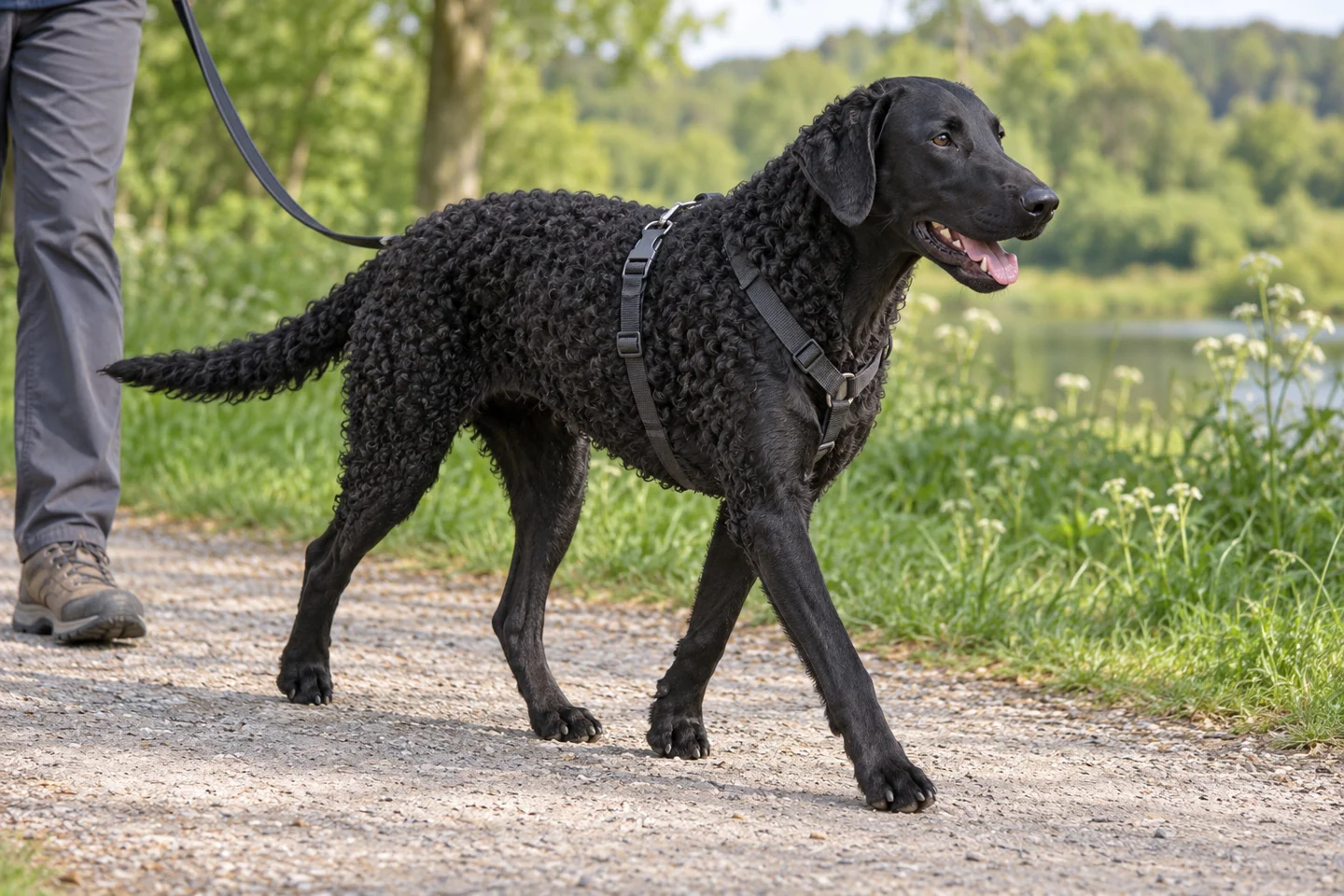
Introduce swimming through safe gradual access, with easy entry and a dependable way out. A retriever's history does not certify an individual dog's endurance or judgment about current, cold, distance, or boats. Supervise closely and consider an appropriately fitted flotation aid where useful. Equipment does not replace observation. Choose a line arrangement carefully if one is used, avoiding entanglement around submerged obstacles or a connection that could draw the dog into a dangerous position.
Teach waiting before entering and before being sent for an object. Excitement should not make every thrown item or moving bird an automatic launch cue. End well before fatigue and give the dog time to recover and dry. If safe water is unavailable, suitable land-based searching and retrieving can still provide meaningful occupation. Swimming is one outlet, not a required proof of breed identity. The owner should be willing to cancel a session when conditions or the dog's health make the planned activity unsuitable.
Exercise built through condition and recovery
Establish regular activity through the week and increase demanding work gradually. A tall athletic dog still needs preparation after inactivity, and a puppy should not be asked for an adult workload because it appears eager. Consider age, health, surface, weather, and previous conditioning. A veterinarian can help where there is a medical concern. Watch movement after sleep and the following day as well as during the game, since motivation may conceal a reluctance that becomes clearer once excitement falls.
Choose cooler periods in warm weather, supply water and shade, and leave an easy route home. Marked distress, abnormal breathing, or collapse needs urgent advice. Quiet alternatives can include a gentle search and brief training without endless high-speed turns indoors. Teach a clear finish to games and protect undisturbed sleep. A sustainable routine should fit ordinary commitments and temporary owner limitations, rather than require an exceptional effort every day or expect the dog to manage a long inactive stretch without appropriate company and movement.
Children around an enthusiastic large dog
A tall retriever can reach a child's face and knock someone down through an excited turn without intending harm. Prevent neck-hugging, climbing, ear pulling, and face-to-face posing. Give the dog a private resting area outside busy routes so a child does not need to squeeze past or step over it. Adults must observe closely enough to interrupt crowding and let the dog withdraw. A child cannot be responsible for recognizing every indication of discomfort or safely holding a powerful lead.
Keep meals, valued chews, and stolen objects under adult management. Children can help prepare a calm search while the dog waits elsewhere, rather than compete physically for a retrieve. Separate before noisy running games if pursuit or collision is uncertain. Prior friendly contact is useful history but does not establish safety during pain, fatigue, or a crowd of unfamiliar children. Review arrangements when the dog's condition or the household changes and seek help for new warnings rather than punishing an objection to uncomfortable contact.
Aggression and a specific account of the situation
A Curly can guard an object, resist painful handling, or react defensively to pressure. If freezing, growling, or threats occur, end the approach and create safe distance. Do not repeat the encounter to prove authority. Separate resources and prevent children or visitors entering unresolved conflicts while assessment proceeds. A veterinarian should investigate a sudden change, and a qualified behavior professional can help with recurring concerns. Management should be workable before training has had time to change the underlying response.
AVSAB recommends reward-based methods. Physical confrontation can increase fear and may remove a visible warning while leaving the concern unresolved. Record context, approach, response, recovery, and any injury accurately. That information helps a professional or carer more than calling the dog stubborn or normally friendly. A plan can combine medical treatment, environmental changes, and gradual teaching. It should reduce unsafe encounters without requiring another person or animal to recreate the same pressure as a test of character or a demonstration that the owner has control.
Training an understandable task
Start with approaching equipment, moving to a mat, walking without dragging, and returning from manageable distractions. Choose rewards the individual values and make each step achievable. A dog that stops responding beside birds or an unfamiliar group may need more distance and an easier setup. Repeating the cue at higher volume does not fill a learning gap. An instructor should be able to explain how the environment, timing, and reward support the behavior rather than assuming all sporting dogs need harsher tools.
Include cooperative body care early. Reward a brief stand, a chin rest, a paw touch, and voluntary vehicle entry, gradually adding duration. Use stable nonslip surfaces and coordinate with clinicians when treatment cannot wait for training to be finished. Household adults should share cues and access rules. Conflicting responses to the same behavior can make daily routines harder than necessary. Useful learning continues across locations, with easy versions rebuilt when the surroundings change, so a familiar kitchen response can eventually help in more demanding real situations.
Other dogs, cats, and retrieval resources
Two retrievers may enjoy walking together while competing over an object, so keep toys out of initial meetings. Start with space to move and pause, watching whether both dogs can disengage. Interrupt persistent crowding when one tries to rest. At home, separate meals and chews while routines become clear. A smaller or older dog may prefer quieter company than a young Curly offers. Compatibility should follow observed contact style, size, and recovery rather than a broad claim that sporting breeds always enjoy the same play.
Cats need protected routes and controlled introductions, with prevention of chasing. A dog familiar with one cat has not demonstrated safety with every running animal. Birds, rodents, and similar pets need dependable protection rather than an informal test based on affection toward humans. Ask a foster carer for specific examples of encounters and management. The statement that a dog grew up on a farm leaves open whether it was actually loose around poultry or kept separately. Those details matter when deciding whether the home can remain safe.
Grooming curls without a sculpted substitute
Learn a maintenance routine appropriate to the Curly coat instead of treating it like a Poodle's presentation. Check skin and contact areas beneath equipment, and remove debris after fields or water. Ask a knowledgeable groomer to demonstrate suitable handling and products for the individual. A tidy curly outline cannot establish that the skin beneath it is healthy. Persistent odor, redness, sores, or repeated licking needs assessment rather than perfume or repeated unplanned treatment changes.
Prepare for nails, teeth, feet, and ears through brief rewarded lessons. Ear pain, discharge, head shaking, or scratching warrants veterinary advice; avoid deep probing or leftover prescriptions. Dry comfortably after wet activity and check areas that retain moisture. A new objection to a familiar touch may indicate discomfort, so investigate before adding restraint. Tell professionals about sensitive areas or previous difficult handling before the appointment. Necessary treatment should not wait for an owner to become capable of every examination at home, and a practical care plan can include both clinical support and future training.
Health screening and named genetic findings
The AKC currently lists hip, cardiac, and ophthalmologist evaluations, plus DNA tests for PRA associated with crd4/cord1, exercise-induced collapse, and glycogen storage disease IIIa for Curly-Coated Retrievers. Request the actual parent reports and have unfamiliar findings interpreted. A general claim about a large panel does not demonstrate every named evaluation. Ask about significant family disease and follow-up with owners. Research has documented glycogen storage disease IIIa in this breed, which makes the specific test meaningful without implying that every Curly will develop the disorder.
Screening does not explain every later symptom or guarantee lifelong health. A current limp, painful eye, weakness, or altered exercise tolerance needs individual investigation even after reassuring records. For an adult with missing family information, document the gap and build preventive care from current findings. Keep specialist reports accessible across clinics. An athletic appearance and willingness to retrieve are not evidence that formal evaluations occurred, and they should not delay advice when the dog's ordinary movement, appetite, or comfort has changed.
Exercise-induced collapse and stopping immediately
Dynamin-1-associated exercise-induced collapse is relevant to Curly-Coated Retrievers, and university genetics laboratories offer testing. A report needs professional interpretation, including implications for breeding and activity. If weakness, loss of coordination, or collapse develops during exercise, stop and seek veterinary advice. Protect the dog from drowning, traffic, and further exertion while following instructions. Do not repeat an intense session to see whether the event happens again or use the animal's desire to continue as permission to proceed.
Collapse can have other causes, so a video or breed label cannot establish the diagnosis. Give the veterinarian the circumstances, duration, previous history, and actual genetic results. Earlier tolerance of exercise does not prove that future activity is safe under every condition. A written plan can help owners, sporting instructors, and carers respond consistently if a medical concern has been identified. Clinical assessment remains necessary rather than treating a known test as an explanation for all possible episodes of weakness.
Feeding, mixes, costs, and dogsDating
Use a complete diet suited to age, condition, and actual workload, including rewards in measured portions. Curly mixes vary in coat, size, behavior, and medical risks; a combined name cannot promise allergy compatibility, predictable curls, or easier care. Budget for preventive medicine, training, secure transport, suitable activity, and unexpected treatment. On dogsDating, describe actual walking and play preferences plus relevant restrictions, keeping exact home coordinates private. Meet on a quiet public route with room to separate and two attentive handlers.
Begin with a short parallel walk and leave retrieving objects out of the introduction. Watch whether both dogs can pause and move away voluntarily. Stop when contact becomes one-sided or fatigue changes the interaction. A calm shared walk can be enough for the first meeting, while resource access and close indoor company remain separate questions. Future contact should follow the individuals' continuing comfort. Owners remain responsible for equipment, medical limits, weather, and a clear agreement that either handler can end an unsuitable encounter promptly.
Sources and editorial notes
Sources checked October 21, 2026. Breed measurements describe reference ranges, not a diagnosis or an individual dog's ideal weight. Images are AI-generated breed illustrations and do not document a particular dog or health condition.
- AVSAB: Humane Dog Training Position Statement
- VCA: Food Aggression in Puppies
- VCA: Grooming and Coat Care for Your Dog
- VCA: Ear Infections in Dogs
- VCA: Feeding Guidelines for Dogs
- Orthopedic Foundation for Animals: Canine Health Assessments
- VCA: Common Emergencies in Dogs
- VCA: Water Sports for Dogs
- VCA: Heat Stroke in Dogs
- American Kennel Club: Sporting Group Health Testing Requirements
- University of Minnesota Canine Genetics Lab: Dynamin-1 Associated Exercise-Induced Collapse
- Gregory and colleagues: Glycogen Storage Disease Type IIIa in Curly-Coated Retrievers
- FCI: Curly-Coated Retriever Breed Standard
Keep getting to know dogs.
Read another guide or return to your dogsDating community.
Explore breed guidesBack to dogsDating