Hamiltonstovare
The Hamiltonstövare is a tricolor Swedish scent hound whose companion needs include controlled exploration, clear training, realistic voice planning, and individual health records.
How these guides are researched and reviewed
- Origin
- Sweden; Hamiltonstövare
- Male height
- 53–61 cm; ideal 57 cm
- Female height
- 49–57 cm; ideal 53 cm
- Traditional work
- Hare and fox; the FCI description specifies it is not a pack hound
General information for owners. These articles have not been reviewed by a veterinarian. Medical decisions need your dog's history and an examination.
A Swedish hound with a specific working identity
Hamiltonstovare is commonly written Hamiltonstövare, with the Swedish spelling. It is a distinct breed rather than a generic name for any tricolor hunting dog. Ask the source what records establish identity and what experience the individual has. A familiar black saddle and tan head can make several hounds look similar in a photograph. Those visual cues cannot explain how a dog settles, accepts care, or responds to animals in your household. A placement needs observations of daily life alongside the recorded name.
Consider secure exploration, teaching, rest, and help during absences before bringing one home. The practical plan should work when rain changes the route or the usual walker is unavailable. Inspect gates and access to roads and decide who will manage arrivals. A medium-sized dog can still be difficult to control when it accelerates toward an interest. Meet adults if possible and ask about a normal day rather than a carefully selected success. The household needs enough information to provide care beyond the enjoyable parts of an outdoor outing.
Hamilton history and the difference from a pack reputation
The FCI records the breed's name being adopted in 1921 for Count Adolf Patrik Hamilton, founder of the Swedish Kennel Club. Its working description concerns hare and fox and explicitly says it is not a pack hound. That distinction matters when an owner hears generic advice that every scent hound is automatically used to large groups. Historical purpose gives context, while the actual dog's social experience still needs assessment. Do not assume a working label settles household compatibility.
Ask how the dog has lived and which situations it already understands. A rural animal may need preparation for close traffic, indoor appliances, and being apart from familiar people. A home-raised puppy also needs gradual exposure outside its first environment. Keep the first routine clear and retain useful cues and rewards from the source. Discuss whether your plans involve a structured activity or ordinary companion walking. An honest account lets the source explain fit and limitations before an animal is placed in conditions nobody has considered carefully.
Adult height and a balanced tricolor body
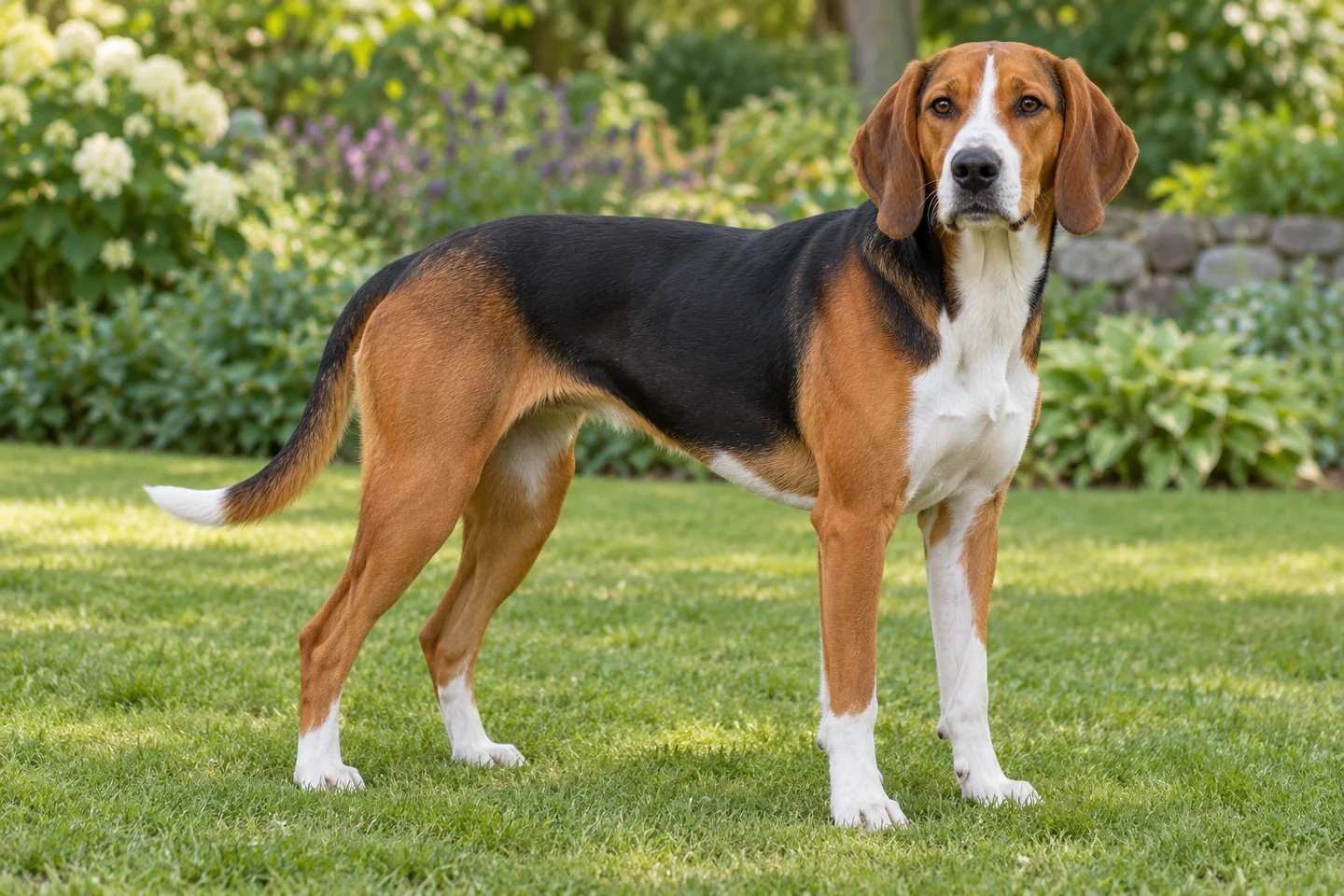
The FCI height ranges are 53 to 61 centimeters for males, with an ideal of 57, and 49 to 57 for females, with 53 ideal. The outline is rectangular and the coat tricolor. The illustrations show black, tan, and white, natural hanging ears, and a full tail. They provide general visual context, not evidence of a particular pedigree or clinical condition. A standard size reference should help planning rather than become a target for feeding or a promise of every puppy's exact mature dimensions.
Measure the adult for its vehicle area and resting place, and check harness contact around the chest and behind the elbows. Review fit while a puppy grows. Watch a dog move, turn, and rise in a comfortable setting and ask about persistent stiffness or hesitation. A tidy coat or energetic greeting cannot rule out pain. Your veterinarian can interpret physical findings that a photograph or brief meeting leaves uncertain. Make household movement easy enough that the dog can rest without blocking a busy doorway or being repeatedly disturbed by passing people.
Temperament needs descriptions from real routines
Ask what happens after outdoor activity, during meal preparation, and when a familiar person leaves. A dog that follows scent independently may still need help learning a comfortable domestic separation routine. Keep observation separate from expectation. A source should be able to explain what has been seen and where experience is limited. Describe working hours, visitors, and household noise so the discussion concerns the conditions that matter to you, rather than a broad personality label that could apply to many different settings.
Give the dog a quiet resting place and predictable access to necessary activities while it learns the home. Reward calm behavior before attention is demanded and teach the end of play clearly. If settling is difficult, review the environment and seek help with possible behavioral or medical contributors. Continually escalating activity is not a universal answer. Keep dated notes about triggers and recovery. They can help an instructor or veterinarian assess the pattern and allow a sitter to continue the same useful routine without guessing what the owner normally does.
Training around a world full of competing smells
Teach turning with the handler, pausing at an exit, and coming toward you in an easy setting. Reward the response clearly and add distractions in small steps. AVSAB recommends reward-based methods and advises against aversive techniques. A hound's outdoor interest does not make rough handling necessary. Ask an instructor how to reduce a task when the dog cannot respond, rather than repeat the cue while it continues another behavior. A lesson should give both the owner and animal a clear way to succeed.
Use suitable control during recall practice. A secure enclosure or appropriate long lead can allow investigation while limiting access to hazards. Learn safe handling so lines do not wrap around people or cross a busy path. Returning can sometimes lead to another permitted sniff, keeping the handler part of the enjoyable activity. Make sure regular helpers can follow the same process. A response learned beside the house is not yet established around every animal or trail elsewhere, so retain reliable boundaries and a practical route plan as training develops.
Exercise based on condition and recovery
Offer regular movement and scent exploration in places where the dog remains under appropriate control. Choose routes with options to leave and inspect fences before relying on an enclosed area. Build workload from the individual's age, health, and conditioning. Puppies, older animals, and dogs recovering from illness need plans discussed with the clinic. A working history cannot certify present fitness. Watch how the dog moves later and the next morning, and report persistent changes rather than assume enthusiasm at the start proves the outing was comfortable.
Keep a revised option for unsuitable weather or restricted access. Shorter exploratory walking and manageable learning tasks may be useful when a preferred long route is unavailable. In heat, change timing and intensity, provide water and shade, and stop when signs are concerning. Contact a veterinarian about unusual breathing, weakness, or collapse. Do not continue simply to complete a planned distance. Consider transport and waiting time too. The entire day, including the journey home, needs to remain suitable for the animal whose care you are managing.

Voice and an honest conversation with neighbors in mind
The breed's FCI use includes giving voice while following game. Ask about this individual's vocal behavior at home and hear adults if possible. Noise during excitement, an alert at a boundary, and distress when left alone have different circumstances. Explain shared walls and the times the household will be empty before placement. Avoid relying on a claim that a single command or longer walk removes every cause. A realistic decision needs the animal's pattern and the support the home can actually provide.
If difficulty appears, record what happens before the noise and whether the dog recovers. Change repeated triggers where practical and teach an alternative under easier conditions. Persistent distress, agitation, or a sudden behavioral change calls for appropriate professional advice. Punishing only the sound may leave the underlying problem unresolved. Give carers the same instructions, including when to contact you or the clinic. Consistency helps the dog understand the routine, while several people reacting differently to the same event can make learning less clear and the household more frustrated.
Socialization and the choice to leave an encounter
Talk to your veterinarian about suitable early experiences while vaccinations progress. A puppy can encounter ordinary people, vehicles, surfaces, and noises in small amounts at a comfortable distance. Let it investigate and move away. For a newly adopted adult, begin with what the animal can manage rather than assume age establishes broad experience. A quiet observation can be useful without a greeting. Avoid organizing a crowded first weekend or using the number of introductions as the only measure of whether an outing helped.
Practice clinic tasks at home while the hound can choose to pause. For example, reward one foot placed on a low stable surface before expecting a relaxed visit to the weighing scale. Separately teach a brief look at an ear, then release the dog and put the equipment away. The purpose is to make each small step predictable. If a helper leans over the dog and it retreats, have the helper stop and create space. Write down which part caused difficulty for the veterinary team. Several easy sessions provide more useful preparation than one long struggle that leaves the dog avoiding the next attempt.
Aggression and the information in a warning
Describe a threatening event through the actual sequence. Note who approached, what was involved, available space, and any possible pain. A snap during a foot check differs from a conflict over a chew, and neither is explained fully by calling a dog determined. Prevent further exposure while advice is arranged. A sudden change in tolerance of touch or movement deserves veterinary attention. Do not punish the warning or ask a person to repeat an unsafe approach to show that the dog usually behaves differently.
VCA's discussion of aggression toward unfamiliar dogs describes different possible motivations. Keep the Hamilton at a distance where the handler can leave safely while professional help is arranged. When transferring care, give the recipient a written incident history: the approach that preceded a snap, whether contact occurred, what injury resulted, and the restrictions currently used. A sitter needs those details before accepting responsibility. If a professional includes a muzzle in the plan, have them demonstrate how to teach comfortable wear and inspect its fit. Continue the management that prevents the triggering situation. Protective equipment cannot provide permission to corner the dog or resume an interaction that already caused distress.
Children, canine companions, and smaller animals
Children need a clear route through the house that does not cross the hound's protected resting and eating spaces. Put comfortable barriers in place before a busy visit, and have an adult take responsibility for the dog while another attends to the children. Teach a child to call that adult if a toy lands beside the sleeping hound. Reaching past its head to retrieve the toy adds an avoidable conflict. Ask a prospective source to describe actual experience with children, including ages and supervision. If you cannot maintain attentive supervision at a gathering, arrange quiet separation with the dog's usual necessities instead of relying on a friendly introduction earlier that day.
Assess other animals separately. The standard's statement that this is not a pack hound is not a diagnosis of an individual's social behavior, but it is a reason to avoid blanket assumptions. Arrange canine meetings with space for both handlers to withdraw and keep food and rest separate at home. Protect cats and small animals where safety is uncertain. Do not release one to test pursuit. If the household cannot maintain necessary barriers or supervision, discuss a more suitable placement before taking on a risk that ordinary daily routines cannot manage reliably.
Grooming and body care beneath a short coat
Short hair still needs gentle inspection and maintenance. Check equipment contact points and feet after rough ground, noticing irritation, trapped debris, or a new sensitivity. A professional can demonstrate suitable tools and nail care. Work on a stable surface with manageable sessions and rewards, rather than assume a working dog can be held through any procedure. A painful mat, embedded object, wound, or persistent sore needs skilled assessment. Comfortable routine care also gives you opportunities to observe condition and movement between formal veterinary visits.
Look for ear redness, discharge, odor, or repeated head shaking and seek veterinary advice when those signs appear. A previous episode does not establish the current cause, so old medication should not be applied automatically. Have prescribed cleaning demonstrated and avoid probing deeply with cotton buds. Introduce ear and foot touch while comfortable, then release before distress escalates. A new reluctance may indicate pain and deserves investigation. Give a sitter clear instructions about routine checks, existing restrictions, and the findings that mean they should stop and call the clinic.
Health evidence from an identifiable family
The Hamiltonstövare strategy adopted by SKK in 2025 gives a more useful starting point than a generic hound screening list. It discusses epilepsy or seizure-like episodes and the difficulty of collecting complete reports. It also describes limited hip imaging and retains known hip status in breeding recommendations. Ask the breeder how relatives' later diagnoses reach the breeding adviser. A family account should include dogs that stopped working or changed homes, rather than only successful adults still appearing at events. Ask for the parents' individual hip results and the current recommendation governing their combination. A working award answers a different question from a radiographic assessment.
If a dog has had an unexplained episode, obtain the original veterinary notes, the date, any video recorded safely, and the treatment history. An owner cannot determine the cause from a description such as 'a funny turn.' Give the receiving veterinarian those records before planning demanding exercise or leaving the dog with a new carer. Ask what changes require an urgent call and what to do during another event. Even a dog with good parental screening needs investigation of its own new signs. Avoid giving a confident breed diagnosis to a collapse witnessed online; the immediate task is veterinary assessment and safe handling. Keep practical instructions accessible to everyone responsible for this particular dog.
Nutrition, costs, and support that continues after arrival
Discuss complete nutrition and measured portions with your veterinary team according to life stage and activity. Include training rewards and review condition rather than copying a food amount from a similarly sized hound. Keep water available and provide precise instructions to helpers. In a multi-animal home, separate feeding helps reduce pressure and shows what each dog consumes. Sustained appetite, digestive, or weight changes should prompt assessment rather than a succession of product changes without a clinical reason. Adjust ordinary care as the individual ages or its activity changes.
Build the household budget around the services the Hamilton will actually use. Find a walking or boarding provider who can explain how they handle a hound that follows scent and needs reliable containment. Ask to discuss the dog's incident history and daily routine before assuming a vacant boarding place is suitable. Price the veterinary care and transport you can obtain locally, and decide how unexpected treatment would be funded. Include the cost of replacing a damaged lead or gate promptly. Clarify the source's support and return arrangements in writing. A sustainable plan has people and services already identified when work schedules change, rather than expecting a new owner to locate specialist help during a crisis.
Mixes and a familiar tricolor appearance
A tricolor hound labeled a Hamiltonstovare mix may have documented parentage or an uncertain visual identification. Ask what supports the name and keep records separate from guesses based on markings or location. A black saddle cannot establish exact ancestry. An adult can still be evaluated through actual dimensions, coat, handling, and daily behavior. For a puppy, allow flexibility because one photograph and a confident name cannot guarantee mature size, activity, or compatibility with your household.
If both parents are identified, ask about relevant health and family evidence for each. Crossing breeds does not guarantee removal of inherited conditions, a quieter voice, or effortless recall. Be cautious of promises that combine only convenient qualities without observations from the animals involved. Meet adults where possible and discuss support after placement. For a rescue, a foster carer's detailed account of ordinary routines and responses may guide the decision more usefully than an overly certain pedigree story. Preserve the gaps so the household can plan for what remains untested or unknown.
dogsDating walks that remain manageable for both dogs
Use the dogsDating profile to describe how this Hamilton behaves on an ordinary walk. State whether a companion should remain across the path, whether greetings are currently unsuitable, and what pace leaves the dog comfortable. Publish a general area while keeping the home address and exact coordinates private. Agree on a public starting point with room to turn away. Before arriving, check that the route does not funnel both dogs onto a narrow footbridge immediately after the meeting. Each person should be able to manage their own dog throughout the outing. A clear plan for an early departure helps both handlers respond without debating the profile's promise of a match.
Start with parallel movement and let both animals investigate without forcing contact. Keep shared toys and food games out of the first meeting. Increase distance or finish if stiffness, repeated withdrawal, or excitement prevents comfortable disengagement. Afterward, record which conditions worked and what would need adjustment. A familiar quiet walking partner can be a useful match even when the dogs do not choose close greetings or play. The meeting should support manageable company for the animals, with a practical way to end it whenever their needs require a change.
Sources and editorial notes
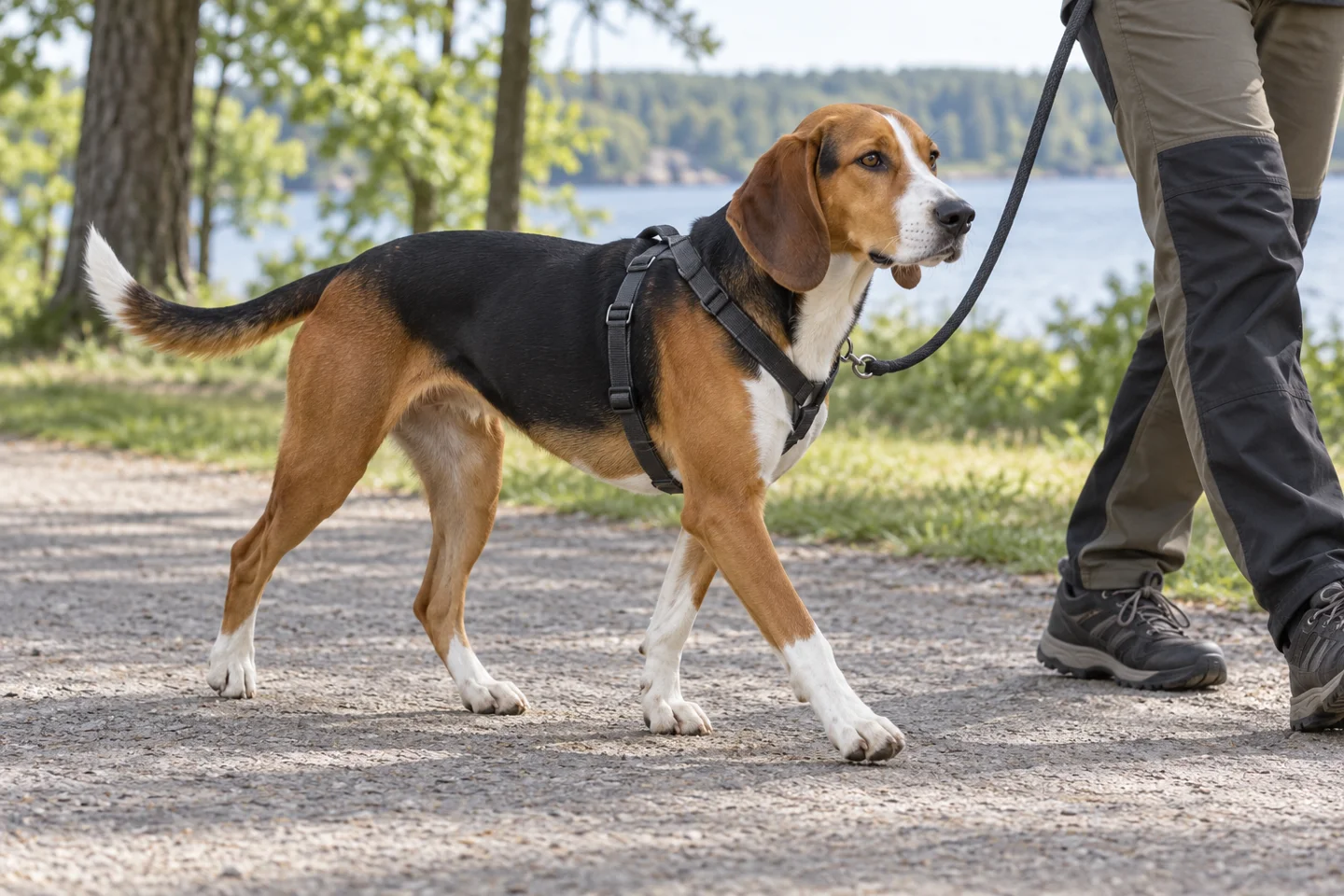
Sources checked October 21, 2026. Breed measurements describe reference ranges, not a diagnosis or an individual dog's ideal weight. Images are AI-generated breed illustrations and do not document a particular dog or health condition.
- AVSAB: Humane Dog Training Position Statement
- VCA Animal Hospitals: Food aggression in puppies
- VCA Animal Hospitals: Common emergencies in dogs
- Orthopedic Foundation for Animals: CHIC health screening programs
- VCA Animal Hospitals: Aggression toward unfamiliar dogs, diagnosis
- VCA Animal Hospitals: Grooming and coat care for your dog
- VCA Animal Hospitals: Ear infections in dogs (otitis externa)
- AAHA: Feeding plans for healthy, appropriate weight cats and dogs
- VCA Animal Hospitals: Heat stroke in dogs
- AVSAB: Puppy Socialization Position Statement
- VCA Animal Hospitals: Dog behavior problems, aggression toward children
- Official breed standard: Hamiltonstovare
- Svenska Kennelklubben: Hamiltonstövare breed strategy adopted 2025
Keep getting to know dogs.
Read another guide or return to your dogsDating community.
Explore breed guidesBack to dogsDating