Norrbottenspets
The Norrbottenspets is a small Swedish hunting Spitz with a predominantly white coat and a strong interest in the outdoors. A companion routine should account for hunting drive, vocal behavior, secure walking, and documented hip and eye assessment.
How these guides are researched and reviewed
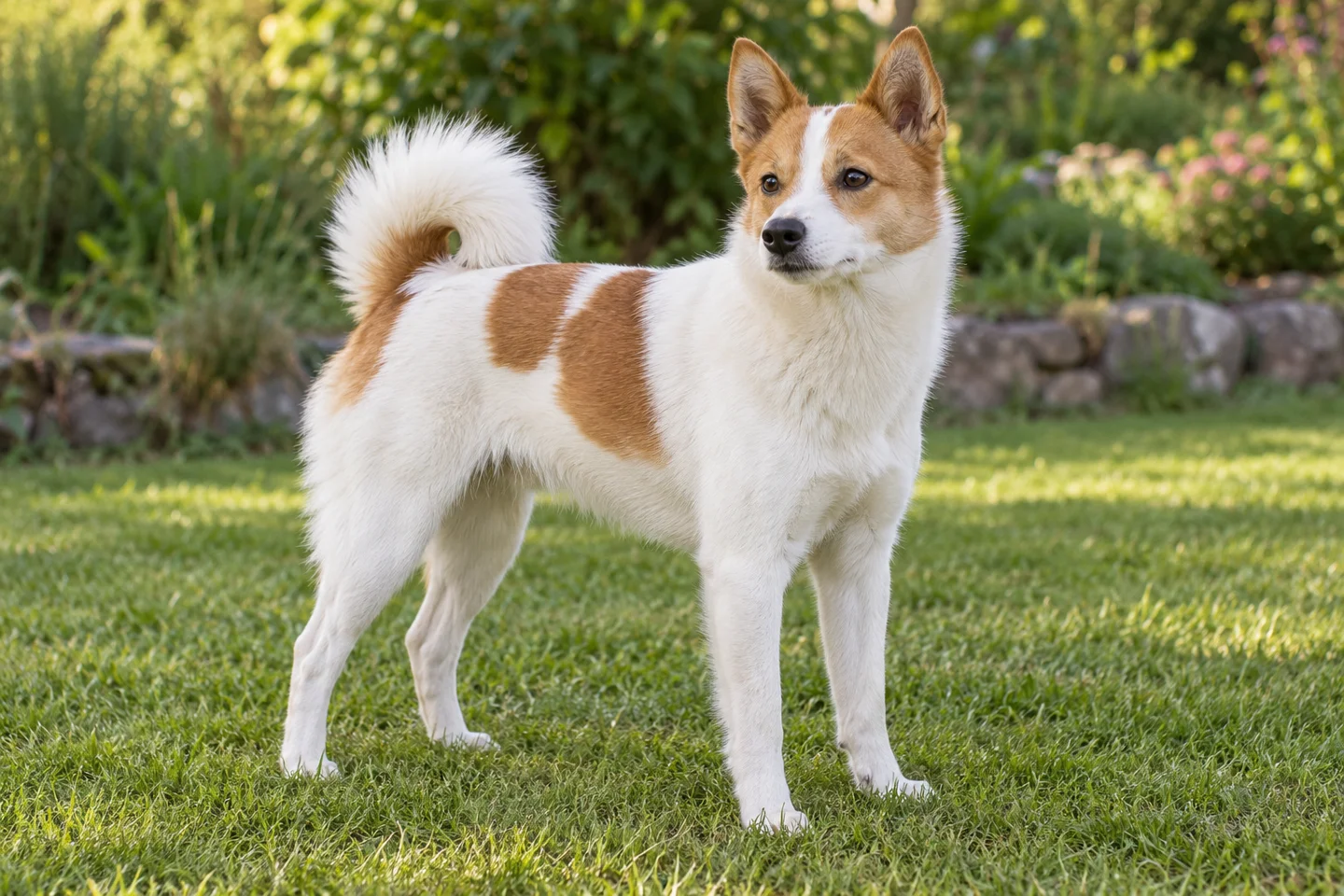
- Origin
- Sweden
- Adult standard size
- Ideal males 45 cm; females 42 cm; tolerance ±2 cm
- Illustrated coat
- White with red-yellow patches
General information for owners. These articles have not been reviewed by a veterinarian. Medical decisions need your dog's history and an examination.
A Nordic hunting dog in a small body
The Norrbottenspets, also called Norrbottenspitz in some English sources, is a Swedish hunting Spitz. Its upright ears, curved tail, and white coat with colored patches can resemble several other dogs. Ask for documented identity when buying a registered puppy and distinguish that evidence from a photograph-based guess in a rescue listing. The needs of an individual dog remain important even when its ancestry is uncertain.
The breed's hunting role should be part of the ownership decision from the beginning. A convenient size does not erase interest in woodland scents or moving animals. Consider access to secure exercise, the sounds your home can accommodate, and who will handle the dog during absences. Meet adults and ask about their behavior in ordinary life, including what happens when a walk ends. A suitable companion placement depends on the animal's actual habits and the routine available, rather than a belief that every small white Spitz will behave like a quiet lap dog.
History and a reason to ask about sound
Breed accounts describe the Norrbottenspets among northern hunting dogs and record renewed recognition after a period of decline. Its traditional work includes locating forest birds and using its voice in the hunting context. The practical implication for a companion home is to investigate vocal behavior carefully. Ask what the parents announce, how often it happens in their normal setting, and whether they can settle after an event.
Do not assume a country address automatically solves noise concerns. Neighboring animals, passing people, and activity beyond a fence may create repeated triggers even on a large property. Conversely, an individual may cope well in a carefully managed home with suitable activity and quiet resting arrangements. Ask about the dog's life rather than depending on a broad rule about address type. If you are considering a puppy, learn how the source introduces ordinary sounds and calm handling. For an adult, request specific examples of behavior when indoors, alone, or separated from a familiar handler.
Height, color, and a functional Spitz outline
The FCI ideal heights are 45 cm for males and 42 cm for females, with a tolerance of 2 cm either way. The build is slightly rectangular and sinewy. These dimensions describe adult conformation; body condition and physical readiness still require individual assessment. Ask the veterinarian to show you how to evaluate the body beneath the double coat, particularly when activity changes between seasons.
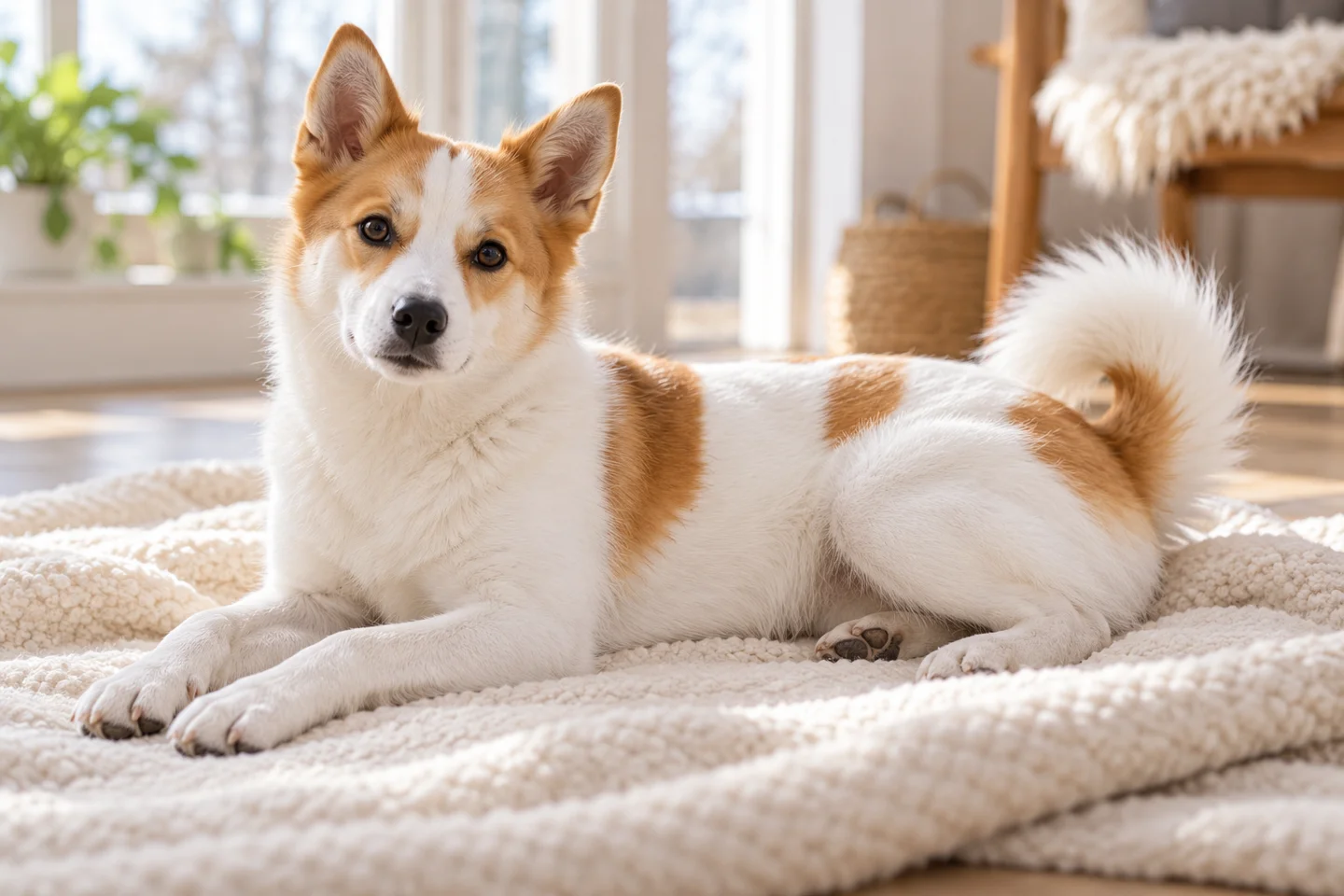
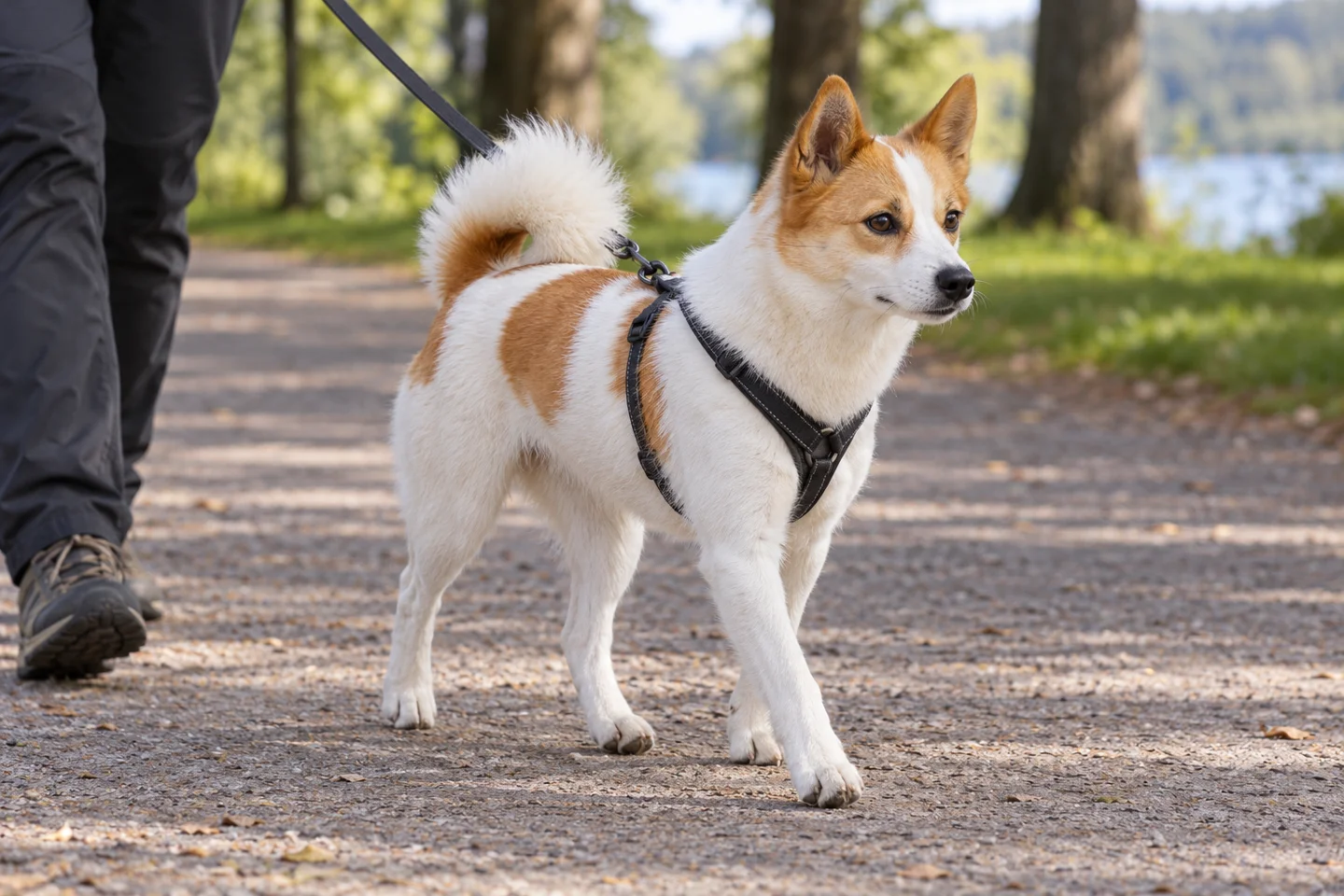
The coat is short and harsh over a dense undercoat, with white predominating and distinct colored patches. This guide's AI-generated illustrations select red-yellow patches, a black nose, dark eyes, natural upright ears, and a loosely curved full tail. They cannot establish the pedigree or health of a real dog. When meeting a candidate, observe movement and recovery instead of judging only a posed outline. Ask about injuries and routine care. A photograph suggesting wilderness fitness is insufficient evidence that a dog is conditioned for the demands you intend to place on it.
Attention, hunting interest, and home routines
An outdoor-minded dog may collect information through smell, sight, and sound that a person scarcely notices. Teach useful responses in easy conditions before expecting attention when something compelling appears. Reward looking back toward you and changing direction while walking. Provide safe opportunities to investigate, so the outing is not only a sequence of interruptions whenever the dog finds something interesting.
Inside, teach a separate pattern for rest. A bed away from the busiest window can reduce repeated monitoring, while rewards for relaxed pauses help establish an alternative to constant activity. Watch whether the dog can recover after excitement. If it remains tense or distressed, investigate the circumstances rather than simply increasing stimulation. Prepare short manageable absences and evaluate what actually happens when you leave. A dog that enjoys family presence has not necessarily learned coping skills for an abrupt long separation. Persistent difficulty calls for veterinary and qualified behavioral help tailored to the individual.
Training that survives the forest edge
Practice recall in secure places and make returning valuable. Begin when distractions are small, then increase them gradually. Sometimes allow safe exploration to resume after the reward, so coming back does not always predict the end of the walk. Use secure equipment in places where pursuit could reach traffic, livestock, or unfamiliar terrain. A successful response in a garden does not establish reliability beside fresh wildlife activity.
Teach waiting at an opening, turning with the handler, releasing an object, and entering a travel enclosure calmly. These practical skills can prevent the start of a difficult situation. A long line may be useful in suitable open space, but it needs careful management around people, trees, and other dogs. Choose reward-based professional help if the environment repeatedly overwhelms training. Ask what the plan changes before the dog fails. Frightening corrections may create additional concerns about the handler or surroundings, while offering little information about whether the dog understood the task at that level of distraction.
Exercise and adjusting outdoor demands
Provide daily movement and exploration matched to age, health, and fitness. Build longer routes progressively and observe recovery afterward. A recently adopted dog may have been inactive despite belonging to a hunting breed. Ask about its recent routine and begin from that baseline. Mix physical activity with calmer search or learning tasks, and allow ordinary sleep between them.
Choose terrain with the individual in mind. Deep snow, rough ground, steep slopes, and warm weather can alter the effort required. Carry water and plan a safe return if the dog becomes unable to continue. Inspect paws after unfamiliar surfaces and check where equipment contacts the coat. A dog absorbed in an interesting route may keep moving despite discomfort, so the handler must notice a changed gait or unusual fatigue. Seek assessment when familiar activity becomes difficult. During medical restriction, ask which low-impact tasks fit the treatment plan rather than assuming indoor chasing is an acceptable replacement for outdoor running.
Prepare the home for the transition back from an outing. Have towels, water, and a resting area ready so muddy paws do not lead immediately to hurried restraint. Check the lead before opening the vehicle, then move into a secure area before removing equipment. This sequence is particularly helpful when several dogs travel together. An occasional carer should rehearse it while you are present. Written instructions cannot show whether a gate latch sticks or whether the dog is likely to turn toward woodland as soon as a door opens.
Managing barking without punishing awareness
Start by identifying the actual trigger. A dog barking at a sound outside may need a quieter resting place, a visual barrier, or greater distance while it learns another response. Practice with a manageable version of the event and reward coming toward you or settling on a mat. Avoid waiting for a full reaction before attempting the hardest lesson. Household members should use the same arrival and visitor routines so the dog can predict what follows.
Keep notes if the pattern is unclear. Time of day, location, what happened immediately before the noise, and recovery can help distinguish an environmental habit from distress. Do not assume every vocal episode expresses the same need. If barking accompanies panic during absences or a sudden behavioral change, seek assessment. A breed's historical use of voice explains a question worth asking, but it does not remove responsibility toward neighbors or the dog's welfare. The plan should reduce repeated difficult situations while teaching a response the individual can actually perform.
Aggression and respect for warning signals
Hunting interest and aggression toward people are different questions. Evaluate the individual's responses around handling, food, visitors, and other animals rather than making a conclusion from breed identity. If the dog becomes still, withdraws, or warns when approached, stop and consider the context. A painful paw, trapped position, or valued item can change an otherwise familiar encounter. Give space instead of forcing a demonstration of tolerance.
Teach exchanges with safe objects and prevent access to recurring hazards. If snapping or biting occurs, disclose it honestly to carers and seek professional assessment. Describe the sequence and whether the dog could leave. New reactions during touch should prompt a veterinary check as well as review of handling. Avoid confrontations framed as establishing control. Reliable barriers and an easier routine can prevent another incident while the cause is investigated. A small dog's bite can still injure, and a general description of the breed as kind cannot certify the safety of every individual in every situation.
Children and manageable contact
An adult should supervise children and the dog closely enough to change the interaction before either becomes overwhelmed. Choose activities with a clear structure, such as hiding a reward or asking for a familiar cue. Avoid games that encourage the dog to chase a child. Give the animal a protected place to sleep and make sure children understand that retreat ends contact.
Ask what the individual has experienced with different ages. A quiet meeting with an older child offers limited evidence about life with a toddler or a noisy group. Visiting children need instructions before access, particularly around food and resting areas. Use separation when direct supervision is impractical. Children should call an adult about stolen items and never corner the dog beneath furniture. If repeated avoidance or warnings occur, seek help instead of expecting familiarity to solve the issue. A comfortable relationship grows through experiences both can manage, not through a requirement for hugging, carrying, or uninterrupted touch.
Other animals and realistic compatibility
A Nordic hunting background makes care around wildlife and small pets especially important. Familiarity with one cat indoors cannot guarantee the same response to a running cat outside. Use dependable separation while assessing the dog, protect the smaller animal's routes, and reward disengagement. Do not hold an animal in place so the dog can inspect it. For livestock, keep control and respect the owner's arrangements rather than treating investigation as harmless curiosity.
With dogs, select companions through observed behavior. Begin with space and movement, and watch whether both can pause and respond to handlers. At home, provide separate meals and resting areas during adjustment. A calm walk is different from sharing a chew or access to a person. Interrupt repeated pursuit or blocking before conflict escalates. If the dog has a history of serious incidents, obtain advice before another shared-space trial. Similar size or another hunting pedigree cannot establish compatibility. The useful evidence is how these particular animals behave in the contexts they will actually share.
Grooming and checks beneath a short double coat
Brush gently with suitable tools and inspect the skin rather than assuming a short coat needs no attention. Check areas beneath the harness, around the tail, and between the toes after outdoor activity. Seasonal loose coat can require more thorough attention, but scraping or repeatedly pulling at resistant material is uncomfortable. Ask a groomer to demonstrate technique if the coat becomes difficult to maintain.
Include nails, mouth, and ear observation in the routine. Introduce toothbrushing and nail care in small rewarded steps on a stable surface. An outdoor dog may still need nail trimming, and a worn appearance does not establish that every nail is comfortable. Persistent ear odor, discharge, or head shaking calls for veterinary advice. Avoid inserting tools into the canal. If the dog suddenly avoids a previously manageable procedure, investigate pain or skin trouble. Comfortable routine checks help identify a change early and make it easier to provide accurate information when the clinic needs to examine the animal.
Health evidence from registry and clinical sources
AKC's published Norrbottenspets recommendations identify hip and specialist eye evaluations. The Swedish Kennel Club also discusses eye disease and other reported health concerns in its breed information. Ask for actual results and relevant family history, with the dog identified on each record. Do not turn a short summary of generally favorable health into a guarantee that an individual cannot become ill.
Ask specifically about visual changes and any seizure diagnoses in relatives when discussing the source's records. These are clinical questions, not an invitation to estimate a prevalence from anecdotes or prescribe random testing. A symptom in your own dog needs veterinary assessment of its possible causes. Keep dated reports and explain significant changes in activity, coordination, or vision clearly. For an adult with incomplete history, establish a baseline and a follow-up plan appropriate to that animal. A broad DNA panel cannot replace those steps or claim to clear every inherited risk. A useful source is willing to discuss the limits of its information alongside the favorable results it can document.
Feeding, mixes, and the practical budget
Use a complete diet appropriate to life stage and monitor condition beneath the coat. Activity can change between seasons or after a move, so food amounts should be reviewed rather than copied indefinitely. Measure rewards and coordinate feeding among family members. If appetite, thirst, or weight changes persistently, record the timing and discuss it with the clinic. Supplements marketed for hunting dogs should still have an individual purpose and appropriate advice.
A Norrbottenspets mix may have different size, coat, and behavioral needs from a registered parent. A crossbreed name cannot guarantee a predictable outcome or improved health. Evaluate the animal and the evidence available. Obtain local costs for preventive care, training, secure walking equipment, boarding, and emergency treatment. Consider whether a carer can maintain containment and the dog's preferred routine. Read insurance terms around earlier symptoms and ongoing conditions. A sustainable home provides practical backup as well as enthusiasm for a relatively uncommon breed, and it asks difficult questions before the placement rather than after problems become established.
A useful dogsDating introduction
State the actual dog's preferences on dogsDating, including whether wildlife is distracting, whether it needs a moving introduction, and how it responds to close play. Choose a public route with room to step aside and begin with distance. Keep leads and equipment arranged to avoid tangling if the dogs turn suddenly. A steady shared walk may suit them better than an immediate greeting at a narrow entrance.
Keep exact user coordinates private. Use an approximate discovery area and agree on a public landmark without publishing the household address or a private exercise site. Review photographs for identifying information. If either dog repeatedly avoids the meeting, becomes rigid, or cannot disengage, increase space or finish calmly. Record what worked so future plans are specific. A matching breed type or shared outdoor interest does not guarantee the same social style. The dogs' behavior and each handler's ability to maintain safe conditions should guide the encounter from arrival to departure.
Sources and editorial notes
Sources checked October 22, 2026. Breed measurements describe reference ranges, not a diagnosis or an individual dog's ideal weight. Images are AI-generated breed illustrations and do not document a particular dog or health condition.
- AVSAB: Humane Dog Training Position Statement
- VCA Animal Hospitals: Food aggression in puppies
- Orthopedic Foundation for Animals: CHIC health screening programs
- VCA Animal Hospitals: Aggression toward unfamiliar dogs, diagnosis
- VCA Animal Hospitals: Grooming and coat care for your dog
- VCA Animal Hospitals: Ear infections in dogs (otitis externa)
- AAHA: Feeding plans for healthy, appropriate weight cats and dogs
- VCA Animal Hospitals: Heat stroke in dogs
- AVSAB: Puppy Socialization Position Statement
- VCA Animal Hospitals: Dog behavior problems, aggression toward children
- American Kennel Club: Fss group health testing requirements
- Swedish Kennel Club: Norrbottenspets identity, care, and health
- Fédération Cynologique Internationale: Norrbottenspets official breed standard
Keep getting to know dogs.
Read another guide or return to your dogsDating community.
Explore breed guidesBack to dogsDating