Norwegian Elkhound
This guide covers the grey Norwegian Elkhound, a compact hunting Spitz with a black mask and tightly curled tail. Daily care should address pursuit, vocal behavior, coat condition, and current breed-specific health records.
How these guides are researched and reviewed
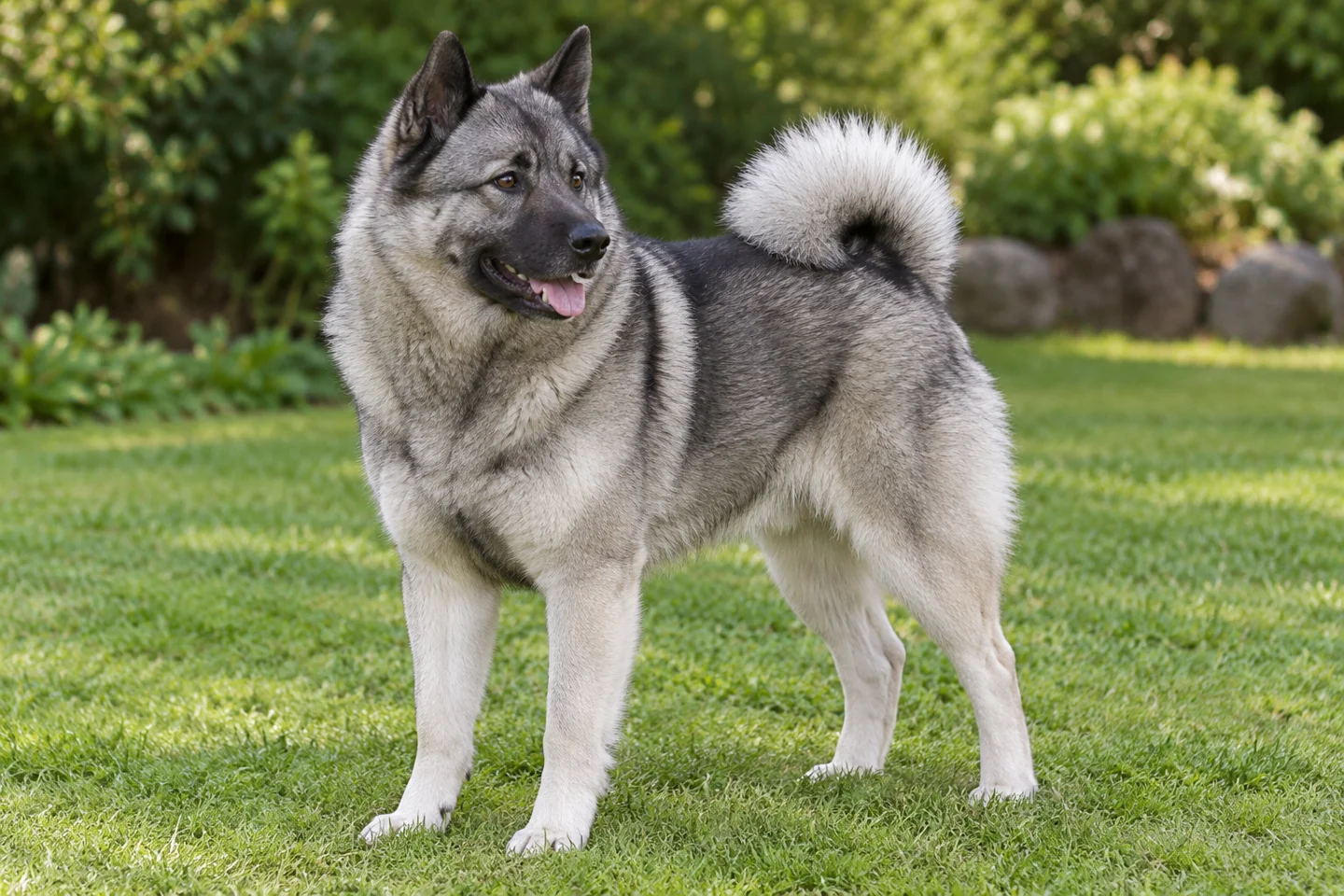
- Origin
- Norway
- Adult standard size
- Ideal males 52 cm; females 49 cm
- Illustrated coat
- Grey with black mask
General information for owners. These articles have not been reviewed by a veterinarian. Medical decisions need your dog's history and an examination.
The grey Norwegian Elkhound
The Norwegian Elkhound in this guide is the grey breed, Norsk Elghund Grå. The Black Norwegian Elkhound is a separate breed under the FCI system, with its own standard and health context. Do not treat grey and black as interchangeable color choices within this article. Check the registered identity when discussing a puppy, particularly if an advertisement shortens several names to Elkhound.
This is a hunting Spitz whose companion needs include secure movement, suitable activity, and teaching around everyday distractions. Ask about the individual dog's experience rather than relying on a general reputation for independence or friendliness. A breeder should explain the parents' ordinary behavior and clinical records. A rescue can provide useful observations even when ancestry remains uncertain. Meet adults if possible and watch them after the first excited greeting. A dog that looks compact and manageable in a photograph can still require considerable planning around wildlife, shared entrances, and time away from its familiar people.
Hunting work and realistic companionship
The FCI identifies elk hunting as the breed's traditional purpose. That working context helps explain the need to investigate the dog's response to scent, movement, and distance from a handler. It does not establish that every individual will behave identically, nor does it provide trained recall. Ask what the dog has actually done and which situations the source currently manages with equipment or boundaries.
In a companion routine, provide safe opportunities to investigate and learn without allowing pursuit to become the dog's own project. Searches, appropriate organized activities, and walks with time to smell can offer worthwhile engagement. Also teach a predictable end to activity and provide uninterrupted rest. A household that continually adds stimulation may leave the dog waiting for the next task. Consider days when the owner is ill or busy, and arrange backup care before it is needed. Working identity deserves practical support, while daily suitability still depends on the specific animal and the resources a household can maintain.
Size, mask, and the illustrated coat
The FCI ideal heights are 52 cm for males and 49 cm for females. The build is compact and approximately square, with strong proportions. These adult conformation ideals do not determine an individual's food portion or fitness. Ask the veterinarian to assess muscle and body condition beneath the dense coat. A thick outline can disguise excess fat or a gradual loss of condition, especially when the dog is viewed only in photographs.
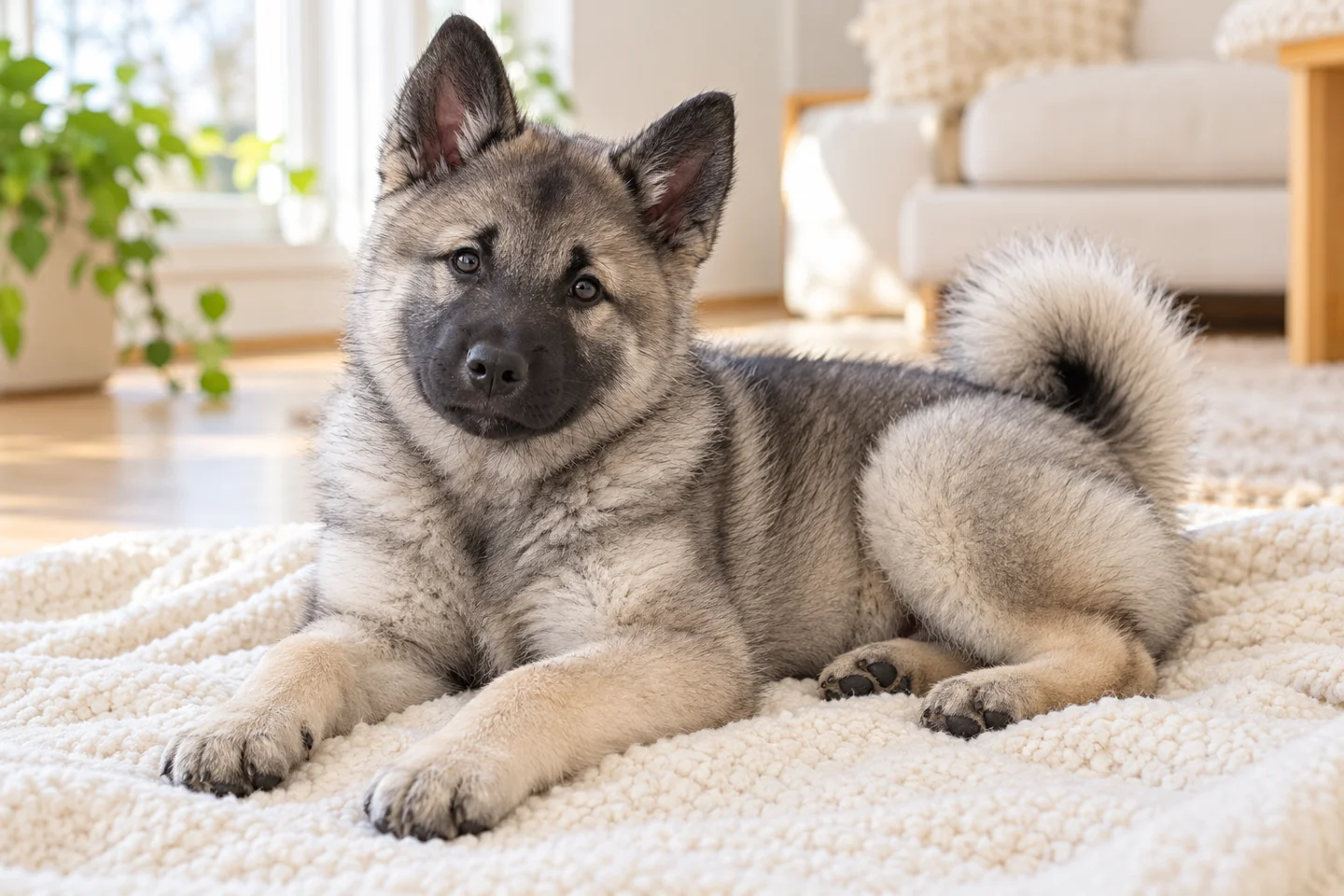
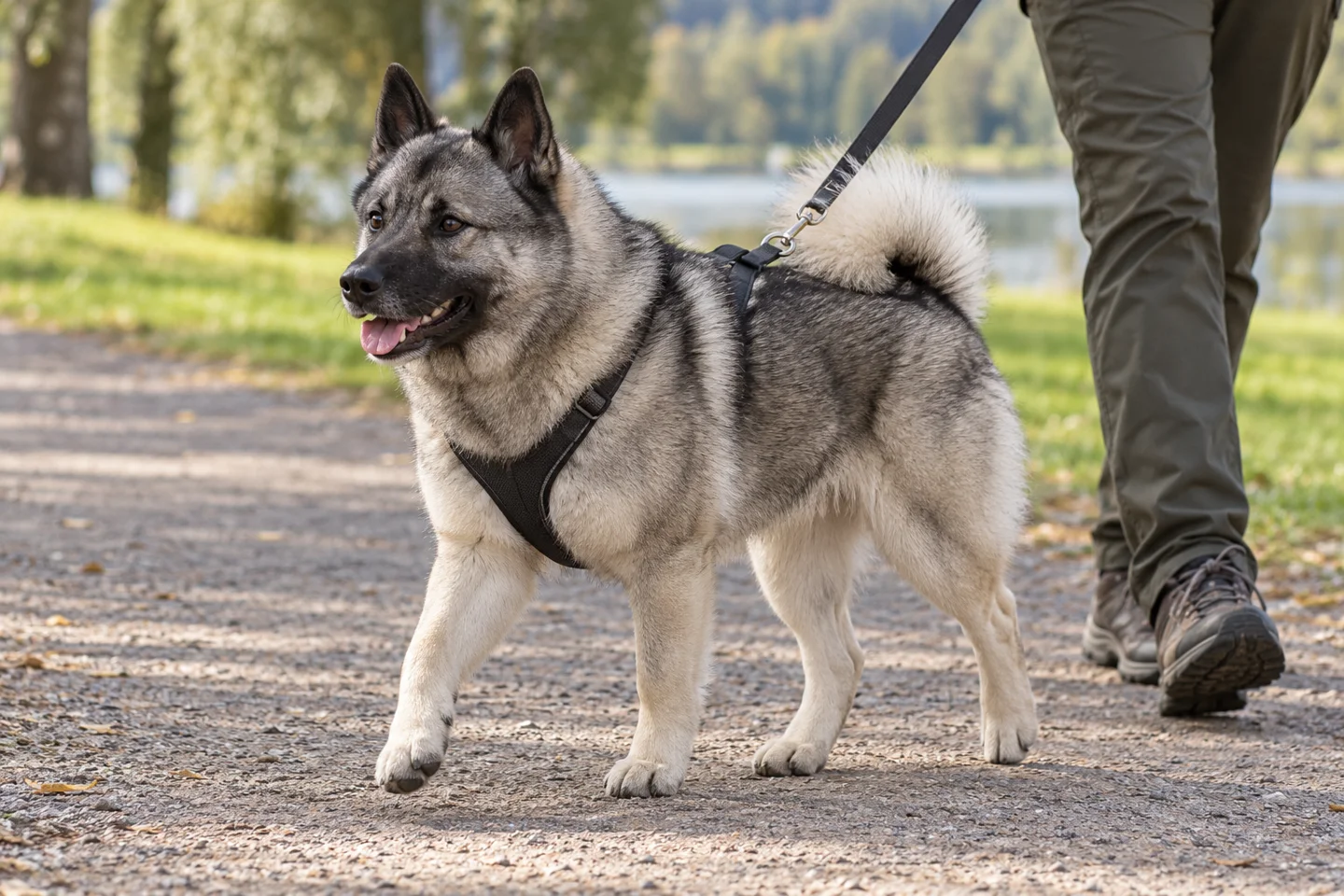
The grey coat comes from dark-tipped outer hair over lighter undercoat. The mask and ears are dark, with lighter areas beneath the body. Natural erect ears and a tightly curled full tail complete the outline shown in this guide's AI-generated illustrations. Those images cannot document pedigree, clinical health, or correct movement in a real dog. Watch an actual candidate walk and turn and ask about previous injuries or treatment. Equipment should fit the body comfortably, including beneath the ruff, rather than being selected solely by a breed-size category printed on a package.
An interested dog and a quiet home routine
An Elkhound may stay alert to sounds and movement beyond the home. Teach a useful response before those events become a daily rehearsal of rushing and barking. Reward a turn toward you or moving to a resting place when a mild version of the trigger occurs. Keep the dog's bed away from an entrance where it must monitor every arrival. A predictable visitor routine helps both the animal and the people managing it.
Observe how the dog recovers after activity. Inability to settle may reflect a particular worry, insufficient rest, discomfort, or an unsuitable level of stimulation. More exercise is an incomplete automatic answer. Prepare manageable separations and find out what actually happens during absences. Persistent pacing, distress, or noise warrants veterinary and behavioral assessment. For an adult changing homes, allow an adjustment period and record sleep and appetite as well as visible energy. A confident moment outdoors and a quiet first evening indoors are only pieces of the information needed for an individual care plan.
Training recall and a safe change of direction
Begin recall practice in secure easy settings, with rewards the dog values. Increase distraction progressively and sometimes allow exploration to resume after the return. A cue that always ends enjoyment may become less attractive when an interesting scent appears. Use appropriate walking equipment where the consequences of pursuit could be serious. A response learned in the garden cannot be assumed reliable near wildlife, livestock, or traffic.
Teach waiting at a gate, moving with the handler, releasing an object, and loading into a travel space calmly. Practice before the busy outing rather than attempting the hardest lesson at the moment of departure. A long line can offer room in suitable conditions but must be managed around trees, people, and other dogs. Seek reward-based help when progress stalls. Ask how a professional changes the setup so the dog can succeed. Punishment that adds fear or pain may complicate the relationship with the environment while failing to teach what a safe alternative actually looks like.
Practice the routine with an occasional walker before handing over responsibility for a full outing. Show how equipment fits beneath the neck coat and which gate opens onto a secure area. Let the walker rehearse a turn and a calm departure while you observe. That practical preparation is more useful than assuming written instructions alone establish safe handling.
Exercise, conditioning, and safe routes
Daily movement should reflect the dog's age, health, and current fitness. Build demanding walks gradually and allow recovery. A hunting breed does not emerge from a quiet period ready for a sudden long expedition. Ask about the recent routine of an adult you adopt and discuss intended activities with the vet. Mix physical work with less intense investigation and learning so the schedule supports both engagement and rest.
Assess terrain and weather before choosing a route. Rough ground, steep descents, deep snow, and heat can change the effort required. Carry water and plan a way to leave if the dog cannot continue. Inspect paws and equipment-contact areas afterward. Watch for altered movement or unusual recovery rather than measuring success only by distance. If familiar activity becomes difficult, seek examination. Enthusiasm cannot rule out pain. During medical restriction, ask which quieter tasks are appropriate, and make sure carers understand the limits. A smaller space does not make energetic indoor chasing compatible with every rehabilitation plan.
Containing pursuit and managing sound
Check boundaries from the dog's perspective. A loose panel, open gate, or stored object beside a fence can change the security of a garden. Recheck after repairs, visitors, and deliveries. Do not rely on remoteness: an apparently empty route can lead toward animals or a road beyond view. Keep identification current, while treating it as backup rather than a substitute for preventing repeated escape.
Investigate vocal behavior by context. Barking during play differs from persistent distress when alone or repeated reactions at a window. Change the arrangement where practical and teach an alternative at a manageable intensity. Keep notes about triggers and recovery if the pattern is unclear. A historical use of voice is a reason to ask realistic questions about the home, not an excuse to leave the dog repeatedly overwhelmed. Explain containment and arrival routines to occasional carers. A plan that works only when the most experienced owner is present may need adjustment before a holiday or unexpected absence exposes the gap.
Aggression and individual assessment
Courage in a breed description cannot establish safety around every person or dog. Look at the individual's response to approach, handling, food, and confinement. If it becomes still, withdraws, or warns someone away, stop and consider the circumstances. A trapped position, painful area, or valued item can change an encounter that usually appears easy. Avoid continuing pressure merely to prove that the dog will tolerate it.
Teach exchanges with safe objects and manage access to hazards. New reactions during touch require medical attention as well as a review of technique. If snapping or biting has occurred, disclose the history accurately and seek qualified support. Explain the sequence and whether the dog could leave. Reliable barriers can prevent another incident while the household investigates the cause. Avoid physical contests intended to establish authority. The practical objective is safe behavior and sustainable management based on evidence about this animal, rather than confidence derived from its breed name, size, or an affectionate response to familiar people.
Children and protected space
An adult should arrange contact that remains manageable for the child and dog. Invite the dog over, allow it to leave, and use simple supervised activities such as a short search or practiced cue. Protect sleeping areas and meals. Children should not hug around the neck, climb on the dog, or follow it into a corner. A resting dog should not have to defend access to uninterrupted sleep.
Ask about the specific ages and situations the animal has experienced. A calm meeting with an older child offers limited information about life with a toddler or a visiting group. Use separation when direct supervision is impractical. Children should call an adult about stolen objects and avoid intervening in animal conflict. If repeated avoidance or warnings develop, stop the interaction and seek help. A comfortable relationship can grow through suitable experience over time. It should never depend on forcing either participant to accept close contact because the dog has been described generally as a good family breed.
Cats, wildlife, and canine companions
Treat the dog's response to smaller animals as a serious individual question. Familiarity with one cat indoors does not establish safety around an unfamiliar cat running outdoors. Use secure separation while assessing the response, protect the cat's routes, and reward disengagement. Small pets need housing beyond the dog's reach. Do not force a meeting by holding the other animal still, and do not allow pursuit of wildlife or livestock as an informal test of the dog's instincts.
For dogs, begin with room and movement. Watch whether both can pause, turn away, and respond to their handlers. A dog seeking shelter should not be followed repeatedly by an enthusiastic partner. In a shared home, provide separate meals and resting areas during adjustment. A relaxed outdoor walk does not answer every question about a chew or access to human attention. Change the setup early when tension appears. Serious conflict requires advice before another unrestricted trial, rather than a hope that familiarization alone will make the arrangement safe.
Grooming a dense grey double coat
Brush through the coat gently enough to inspect the layers near the skin, especially during shedding. Work around the ruff, hindquarters, and tail base, and check where collars or harnesses create friction. A tidy outer layer can conceal compacted material beneath it. Ask a groomer to demonstrate appropriate tools if maintenance becomes difficult, and avoid scraping skin or pulling at resistant tangles while the dog struggles.
After wet or muddy activity, dry the coat appropriately and inspect feet. Include nail care, dental brushing, and ear observation as separate learned tasks. A dog that walks frequently may still need nail trimming. Persistent ear odor, discharge, or head shaking needs veterinary advice; do not insert implements into the canal. If a previously easy care task suddenly becomes difficult, investigate pain or skin trouble. Comfortable routine checks allow changes to be recognized earlier. They also give a carer a practical way to explain a concern beyond a general impression that the dog seems less willing to be handled.
Health testing for the grey breed
NKK's grey Elkhound program effective April 2026 identifies hip assessment and DNA testing for ADAMTS10-related primary open-angle glaucoma and ITGA10-related chondrodysplasia, with defined mating rules. These are specific to the program and should not be confused with the Black Elkhound's requirements. Obtain the actual results and confirm the relevant registry's current guidance. A broad statement that a dog had a genetic panel is insufficient detail.
NKK also discusses inherited kidney disease and family information. Ask what diagnoses are known among close relatives and whether original clinical reports are available. Do not assume a DNA panel can certify freedom from every kidney problem. Your veterinarian should assess changes in thirst, urination, weight, or activity on their merits. Screening helps breeding decisions while clinical care follows the animal in front of the clinician. Keep reports together and ask how later diagnoses in relatives will be communicated. For a dog with incomplete history, establish a practical baseline instead of replacing missing information with an unsupported claim of universal health.
Nutrition, mixes, and an ownership budget
Use a complete diet appropriate to life stage and monitor condition beneath the coat. Measure portions and include training food in the daily amount. Workload, age, and medical treatment can change needs, so review rather than copying an old feeding amount indefinitely. Record persistent changes in appetite, drinking, or weight and discuss them with the clinic. Supplements marketed for active dogs should still have an individual purpose and appropriate professional advice.
An Elkhound mix may have different dimensions, coat, and behavior from the parent shown in a listing. A crossbreed name cannot guarantee a predictable outcome or improved health. Evaluate the dog and ask what is documented. Obtain local costs for preventive care, training, secure equipment, transport, boarding, and emergencies. Read insurance terms concerning earlier symptoms and continuing conditions. Consider who can maintain containment and activity during your absence. A sustainable placement depends on time and practical support as well as the initial fee, and a source should be willing to discuss difficulties and future support openly.
A dogsDating walk that respects preferences
Describe this dog's actual preferences on dogsDating. Explain whether it likes a steady walk, becomes distracted near wildlife, or needs space around unfamiliar animals. Choose a public route wide enough to turn aside, and begin with parallel movement rather than a stationary greeting at a narrow opening. Ask both handlers to interrupt persistent pursuit or crowding. A short comfortable walk is a useful first result without any requirement for loose play.
Keep exact user coordinates private. An approximate discovery area and an agreed public landmark can support planning without publishing a house address or private exercise location. Check photographs for identifying paperwork or address details. If either dog remains tense, tries to avoid the encounter, or cannot recover after distance increases, finish calmly. Record what helped so the next arrangement begins under easier conditions. Matching two Nordic dogs does not establish the same social style. Their observed behavior and the handlers' ability to maintain space should guide the encounter throughout.
Sources and editorial notes
Sources checked October 22, 2026. Breed measurements describe reference ranges, not a diagnosis or an individual dog's ideal weight. Images are AI-generated breed illustrations and do not document a particular dog or health condition.
- AVSAB: Humane Dog Training Position Statement
- VCA Animal Hospitals: Food aggression in puppies
- Orthopedic Foundation for Animals: CHIC health screening programs
- VCA Animal Hospitals: Aggression toward unfamiliar dogs, diagnosis
- VCA Animal Hospitals: Grooming and coat care for your dog
- VCA Animal Hospitals: Ear infections in dogs (otitis externa)
- AAHA: Feeding plans for healthy, appropriate weight cats and dogs
- VCA Animal Hospitals: Heat stroke in dogs
- AVSAB: Puppy Socialization Position Statement
- VCA Animal Hospitals: Dog behavior problems, aggression toward children
- American Kennel Club: Hound group health testing requirements
- Norwegian Kennel Club: Grey Norwegian Elkhound breeding program effective April 2026
- Fédération Cynologique Internationale: Norwegian Elkhound official breed standard
Keep getting to know dogs.
Read another guide or return to your dogsDating community.
Explore breed guidesBack to dogsDating