Pekingese
A small Chinese companion whose care needs comfortable breathing and movement, manageable coat care, respectful handling, and thoughtful everyday company.
How these guides are researched and reviewed
- Origin
- China; FCI patronage Great Britain
- FCI ideal weight limit
- Males 5 kg; females 5.4 kg
- Coat
- Long straight outer coat with softer undercoat
- Illustrated appearance
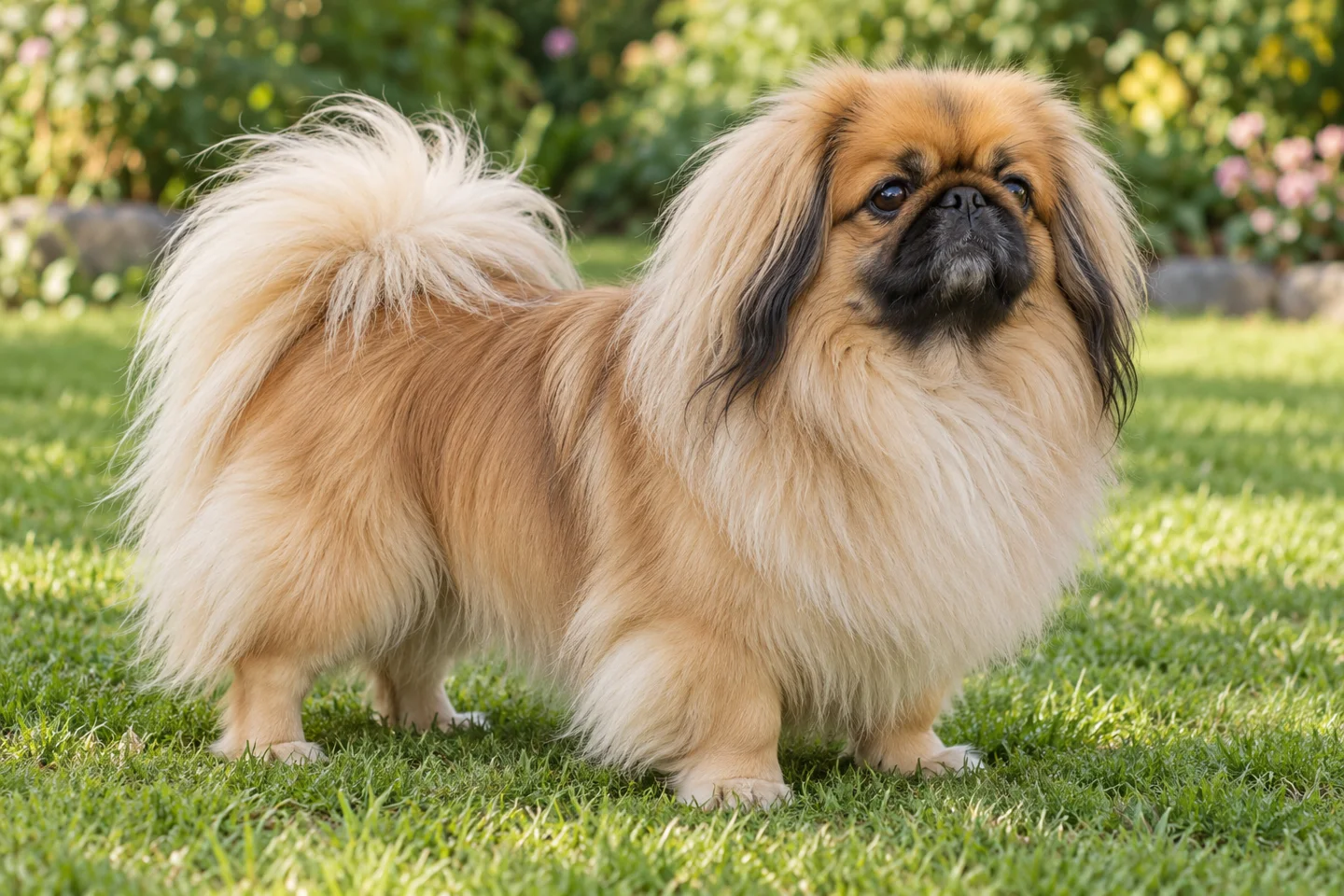
- Fawn with a black mask, natural ears and full feathered tail
General information for owners. These articles have not been reviewed by a veterinarian. Medical decisions need your dog's history and an examination.
Choosing a Pekingese for everyday life
A Pekingese needs an owner who pays close attention to comfortable movement, breathing, and handling. A small body can fit a modest home, but daily care still requires time, observation, and the means to obtain veterinary help. Look beyond a photograph of a full coat. Meet the individual dog at rest and during ordinary activity, and discuss any noisy breathing, eye discomfort, or difficulty moving before making a commitment.
The breed is a Chinese companion with an established place in modern household life. You do not need to invent a royal personality to understand the dog beside you. Some seek frequent contact; others prefer to rest nearby and choose when to approach. Ask the breeder or rescue how this individual handles touch, visitors, other animals, and brief separation. Those answers help you prepare the home and set a realistic routine instead of expecting every Pekingese to match a familiar anecdote.
Appearance with function in view
The October 2026 FCI standard describes a small, sturdy companion with a mane, natural pendant ears, and a feathered tail over the back. Its ideal weight limits are 5 kg for males and 5.4 kg for females. These are standard references, not a prescription to alter a particular dog's weight without veterinary assessment. The illustrated fawn dog with a black mask represents one accepted appearance among several colors.
The same standard rejects respiratory distress, impaired sound movement, pinched nostrils, and excessive coat. That makes function relevant when discussing appearance. Ask to see the dog move freely on a nonslip surface, rather than judging it only while posed on a table. If hair obscures the eyes or tangles around the feet, the owner needs a care plan. A show description cannot substitute for a clinical assessment of an individual, especially when it appears uncomfortable during normal activity.
Health and a screening list with clear limits
The AKC page currently lists no parent-club recommended health tests for the Pekingese. Its linked club statement was approved in July 2017. This does not establish that an individual is free from disease or that a modern owner should ignore breathing, eyes, skin, or mobility. Ask for actual examinations and treatment records, including any surgery. A blank screening checklist cannot answer those clinical questions.
The Royal Kennel Club's Breed Watch points of concern include respiratory difficulty, protruding or irritated eyes, heavy nose wrinkles, excessive coat, and poor movement. Use those concerns to make a focused conversation with the veterinarian. What can be assessed now, what needs monitoring, and which findings would change daily care? Avoid buying a broad DNA panel as a substitute for that discussion. A test for selected variants does not measure the dog's ability to breathe comfortably, close its eyelids, or walk without pain.
Breathing research and the individual dog
A 2026 study by Tomlinson and colleagues assessed breathing across fourteen breeds using an adapted respiratory functional grading approach. Only 10.9% of the Pekingese examined were Grade 0. That is a finding within the recruited study sample, not a probability assigned to every dog worldwide. Grades also differ in severity. The practical conclusion is to seek an individual breathing assessment rather than assume that a familiar snore is harmless.
Cambridge's veterinary guidance identifies respiratory noise, disturbed sleep, exercise and heat intolerance, and severe signs such as collapse as reasons for concern. Tell the clinic what you observe at home, including interrupted sleep or an unusual position used to breathe. Record a short video when safe, but do not delay urgent help to obtain one. The owner cannot determine the location or severity of an airway obstruction from sound alone. Treatment and activity decisions need the veterinary team's findings and discussion of the individual dog's welfare.
Exercise with time to recover
Offer gentle opportunities to walk, sniff, and engage with the surroundings at the dog's comfortable pace. The right outing depends on health, weather, terrain, and recovery. A fixed distance target can make an owner overlook increasing effort. Stop and reassess if breathing becomes labored, the dog repeatedly refuses to continue, or recovery takes longer than usual. Contact the veterinary team about those changes rather than deciding that reluctance is merely a personality trait.
Choose cooler periods and shaded routes during warm weather. Keep water available, plan an easy return, and avoid leaving the dog in a warming vehicle. A carrier or stroller may help with access when used appropriately, but ventilation, secure restraint, and temperature still need attention. It should not conceal worsening exercise intolerance from assessment. Indoors, short searches with suitable food and simple learning games provide engagement when conditions make a walk unsuitable. Keep these activities calm and responsive to the dog's comfort.
Training in small clear steps
A Pekingese can learn useful skills that make care easier. Begin with responding to its name, walking toward a mat, waiting at an open doorway, and following a handler for a few steps. Reinforce the desired action promptly. If the dog cannot manage it, make the task easier or check whether the surface, equipment, or handling is uncomfortable. Repeatedly labelling it stubborn explains little about what needs to change.
Use short sessions with rewards chosen for the individual and included within its feeding plan. Place the reward where the dog can reach without awkward stretching or jumping. For a grooming task, reward a moment of comfortable contact before asking for longer duration. Stop before the lesson becomes a wrestling match. Keep the household's cues consistent so the dog does not face a different rule with each person. Avoid harsh corrections or intimidation, particularly when a small dog is being restrained and cannot move away.

Lifting, equipment, and household access
Teach a predictable lifting routine when carrying is necessary. Let the dog know what is about to happen, support its body securely, and ask a veterinary professional to demonstrate if you are unsure. Do not pull it upward by the front legs or grab a handful of coat. For a dog that reacts to being lifted, investigate discomfort and build a cooperative approach instead of assuming that frequent carrying will make it accept anything.
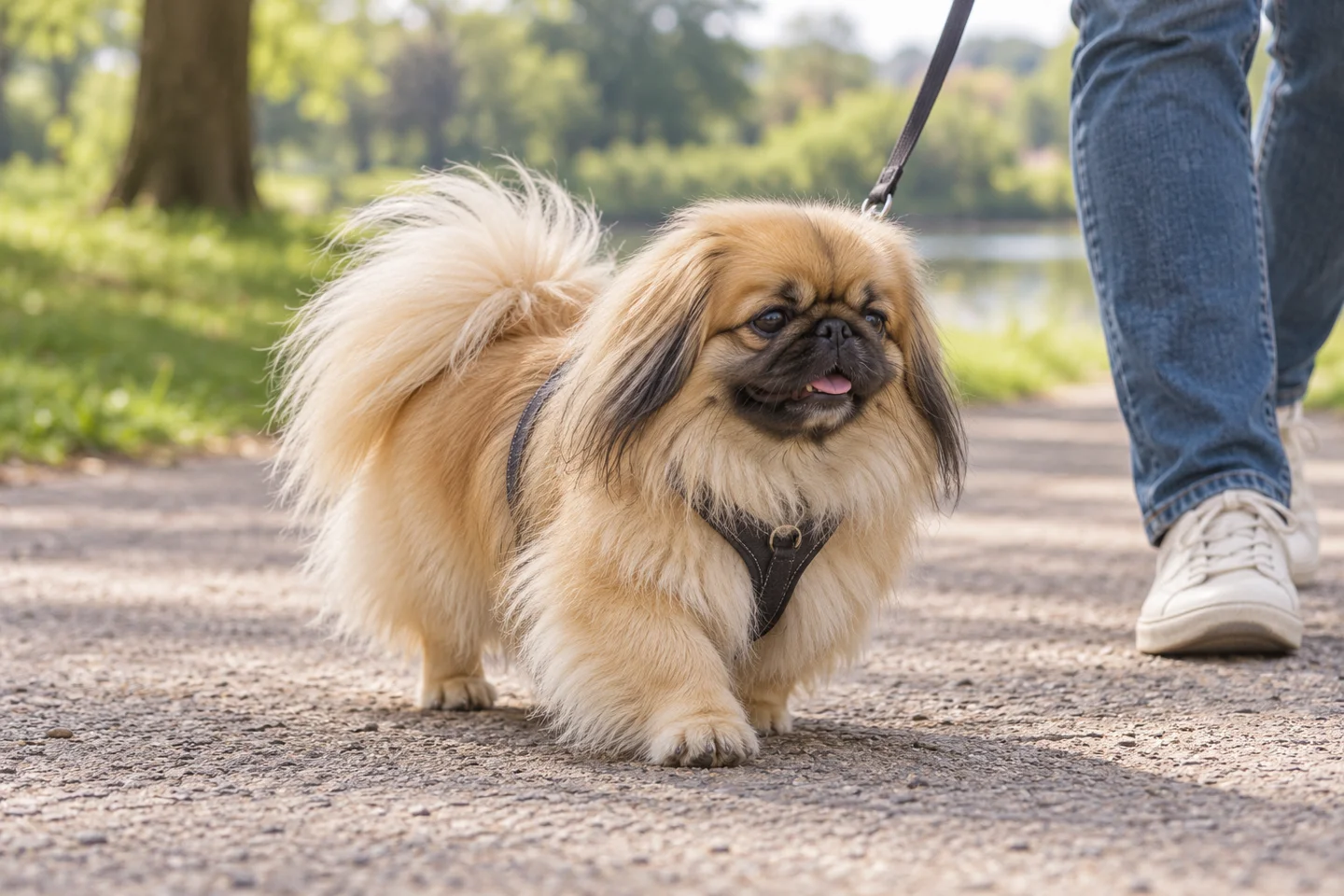
Provide stable footing where the dog eats, turns, and approaches its bed. Consider low comfortable resting places instead of repeated leaps from furniture. A ramp needs a secure surface and gradual teaching; a slippery steep board can create a new difficulty. Measure a harness on the dog, keeping the fit clear of sensitive areas and allowing movement. Check it as coat length and body condition change. Equipment that appears adequate in a photograph can still rub, restrict, or allow escape during an actual walk.
Socialization with choice
Give a puppy manageable experiences with everyday people and sounds. Watching a quiet visitor from a comfortable distance can be enough for one session. Do not hold the puppy still while several strangers touch its face. Let it retreat behind a barrier or into a protected resting place. A small dog needs an opportunity to decline contact just as a larger dog does.
For an adult, learn which circumstances already feel easy before adding new challenges. A familiar person sitting beside the owner differs from a stranger reaching down at a busy pavement corner. Arrange the easier version first and explain the plan to anyone helping. If the dog repeatedly freezes, tries to leave, or remains tense afterward, reduce the difficulty. Seek qualified support for persistent distress. A useful socialization plan builds comfort and recovery, rather than count the number of people who have managed to hold the dog.
Children and safe affection
Children need guidance about a Pekingese's space and vulnerability. They should sit calmly and allow the dog to choose contact, rather than pick it up or chase it beneath furniture. Keep faces away from its face, and avoid neck hugs or leaning over a resting dog. A small size does not reduce the importance of preventing bites or protecting the dog from an awkward fall.
Plan separation before active games begin. An adult who is supervising several children may not be able to observe the dog's signals continuously. Use a comfortable secure area with water and a resting place, and prevent children from reaching through the barrier. Food, chews, and grooming are adult responsibilities. If the dog turns away, stiffens, or hides, end the interaction without asking it to tolerate more. Teaching children to respect that choice gives them a practical way to be kind rather than a vague instruction to be gentle.
Aggression and respecting warning signals
A Pekingese can guard a bed, react to painful handling, or be defensive around an approaching dog. Record what happened and adjust the situation promptly. Moving a person away from the dog is often more useful than trying to demonstrate obedience while it is already distressed. Avoid provoking the same response repeatedly to see whether it was serious. Small dogs can cause injury, and repeated conflict also affects their welfare.
A sudden change in tolerance needs veterinary consideration, particularly when lifting, grooming, or movement is involved. For ongoing problems, ask a qualified reward-based professional for a plan that fits the home. Be accurate about snaps and bites, including the circumstances and any injury. Carers need that information before taking responsibility. Do not suppress a growl and assume the concern has resolved. Management must preserve space and prevent repetition while the underlying problem is assessed and appropriate teaching begins.
Other dogs and play that both enjoy
Choose first dog meetings around size, pace, and greeting style. Another small dog can still be intrusive, while a larger dog can be calm but physically overwhelming if play accelerates. Start walking apart with separate handlers and avoid tight-lead face-to-face contact. Watch whether each dog can pause, investigate something else, and return voluntarily. The Pekingese does not need to wrestle to benefit from company.
In a shared home, keep feeding and valued resting areas separate while you learn the animals' responses. A cat should retain access to food, water, litter, and elevated routes without passing the dog's bowl. Use barriers to prevent pursuit and avoid leaving an unfamiliar pairing alone after a brief apparently friendly encounter. If repeated close management is necessary, review the arrangement before it becomes an everyday confrontation. A breed description cannot establish the compatibility of two individual animals, and an owner should be able to maintain safe separation if needed.
Grooming that reaches the skin
Divide coat care into small areas and work gently through to the skin. Check behind the ears, beneath the body, around the legs, and where the harness sits. A smooth-looking surface can hide tight tangles underneath. Keep the working surface stable and low enough to avoid a fall. If the dog finds standing difficult, ask a groomer to demonstrate a supported position rather than prolonging discomfort.
Use a practical coat arrangement that keeps eyes, feet, and toileting areas clear. Discuss trimming with someone who understands the individual coat. The objective is comfortable daily function, not maximum volume. Dry thoroughly after bathing and examine irritated areas rather than covering them with perfume or repeatedly changing shampoos. Introduce a comb and brush slowly with rewards, checking that the tool is not scraping the skin. A new reaction to an area that was previously comfortable warrants examination for soreness before continuing.
Eyes, face, mouth, and nails
Inspect the face in good light without pulling the skin or forcing the eyelids apart. Redness, repeated squinting, pawing at an eye, unusual discharge, or difficulty keeping an eye comfortably open needs prompt veterinary advice. Do not use leftover eye medicine or assume tear staining is merely a cosmetic inconvenience. Hair or folds that appear to contact the eye should be discussed with the clinician.
Ask the veterinary team how to care for any facial folds and dry cleaned areas gently. Include tooth brushing and nail maintenance in the handling routine. A small mouth can be difficult to inspect, so request a demonstration that keeps both you and the dog comfortable. Changes in chewing or resistance to facial touch deserve attention even if appetite remains. Document concerns before a grooming appointment, and tell the groomer about current medical advice so cosmetic work does not obscure a problem or aggravate a sore area.
Feeding and body condition
Choose a complete diet appropriate to life stage and individual medical needs. Measure portions and account for chews and training food. Ask the veterinary team to demonstrate how to assess body condition beneath the coat. A dense coat and sturdy frame can make gradual weight gain difficult to recognize visually, while a standard's weight limit cannot determine the best target for every individual.
Use a quiet feeding location away from children and competing animals. If the dog eats poorly, record the change rather than cycling through rich additions indefinitely. Dental discomfort, illness, stress, and other causes may need assessment. For a prescribed weight-management plan, agree on realistic monitoring and keep all carers involved. A homemade diet needs professional formulation; choosing ingredients that look wholesome does not establish nutritional completeness. Contact the clinic for persistent vomiting, diarrhoea, unexplained weight change, or a marked change in drinking instead of treating each sign as fussiness.
Mixes and uncertain promises
A Pekingese mix may have a different coat, build, muzzle, and activity level from either parent. Names sometimes used for crosses, such as a Pekingese–Poodle or Pekingese–Shih Tzu mix, describe proposed ancestry rather than a standardized outcome. They cannot promise easy breathing, minimal grooming, or a particular temperament. If parents are known, ask for assessments relevant to both and discuss the actual dog's structure and function with a veterinarian.
For a rescue of uncertain ancestry, prioritize examination and observations over a guessed label. Learn how it moves, rests, breathes, and responds to handling. Arrange training and equipment around those needs. A longer-looking muzzle in one photograph cannot settle every airway question, just as a shorter coat does not establish an absence of skin concerns. Keep records of care and share significant findings with the organization that placed the dog when appropriate. Useful support depends on accurate information rather than reassuring predictions attached to a mix name.
Costs and care away from home
Ask local providers about routine care, grooming, dental assessment, emergency availability, and any recommended specialist consultation. Read insurance exclusions, including how known or pre-existing problems are treated. Keep a reserve or other realistic plan for unexpected costs. A small dog can require substantial clinical care, so body size should not be used as a shortcut for affordability.
Before boarding or travel, discuss breathing history, temperature needs, medications, and handling preferences with the carer. Demonstrate the harness and explain what changes require an immediate call. Confirm that transport arrangements provide suitable ventilation and secure restraint. Avoid a rushed handover in which important records remain on the usual owner's phone. A brief practice visit can help reveal whether the dog settles and whether the carer can follow its routine. If it is medically fragile, ask the veterinary team whether the proposed arrangement is appropriate before booking.
dogsDating at a comfortable pace
Tell a potential dogsDating companion what your Pekingese enjoys and which pace or conditions it needs. Share an approximate area, keeping exact home coordinates and your address private. Choose a quiet public location with shade and an uncomplicated exit. Agree on a short outing first, particularly if either dog has medical limitations or is uncertain around unfamiliar dogs.
Walk alongside one another with separate handlers and enough space to avoid forced contact. Keep attention on breathing, movement, and both dogs' choices while you talk. Stop before either becomes tired or overwhelmed. Shared toys, treats, and close photographs can wait. A calm ten-minute introduction may give more useful information than an extended meeting whose final minutes are uncomfortable. Decide on another visit only after comparing what you observed. The point is comfortable company for the dogs and owners, with no obligation to turn a first hello into play.
Sources and editorial notes
Sources checked October 22, 2026. Breed measurements describe reference ranges, not a diagnosis or an individual dog's ideal weight. Images are AI-generated breed illustrations and do not document a particular dog or health condition.
- AVSAB: Humane Dog Training Position Statement
- VCA Animal Hospitals: Food aggression in puppies
- VCA Animal Hospitals: Aggression toward unfamiliar dogs, diagnosis
- VCA Animal Hospitals: Grooming and coat care for your dog
- AAHA: Feeding plans for healthy, appropriate weight cats and dogs
- VCA Animal Hospitals: Heat stroke in dogs
- Orthopedic Foundation for Animals: CHIC health screening programs
- AVSAB: Puppy Socialization Position Statement
- VCA Animal Hospitals: Dog behavior problems, aggression toward children
- FCI standard 207, October 2026: Pekingese proportions, functional movement and coat
- American Kennel Club: Pekingese history, everyday care and screening listing
- Pekingese Club of America: health statement approved July 2017
- Royal Kennel Club Breed Watch: Pekingese respiratory, eye, coat and movement concerns
- University of Cambridge Veterinary Medicine: recognizing obstructive breathing and clinical assessment
- Tomlinson and colleagues, PLOS One 2026: BOAS assessment across fourteen brachycephalic breeds
Keep getting to know dogs.
Read another guide or return to your dogsDating community.
Explore breed guidesBack to dogsDating