Pug
A compact companion whose everyday care includes comfortable breathing, sensible activity, eye and skin attention, and correctly interpreted health screening.
How these guides are researched and reviewed
- Origin
- China; FCI patronage Great Britain
- FCI ideal weight
- 6.3–8.1 kg
- Coat
- Short smooth coat
- Illustrated appearance
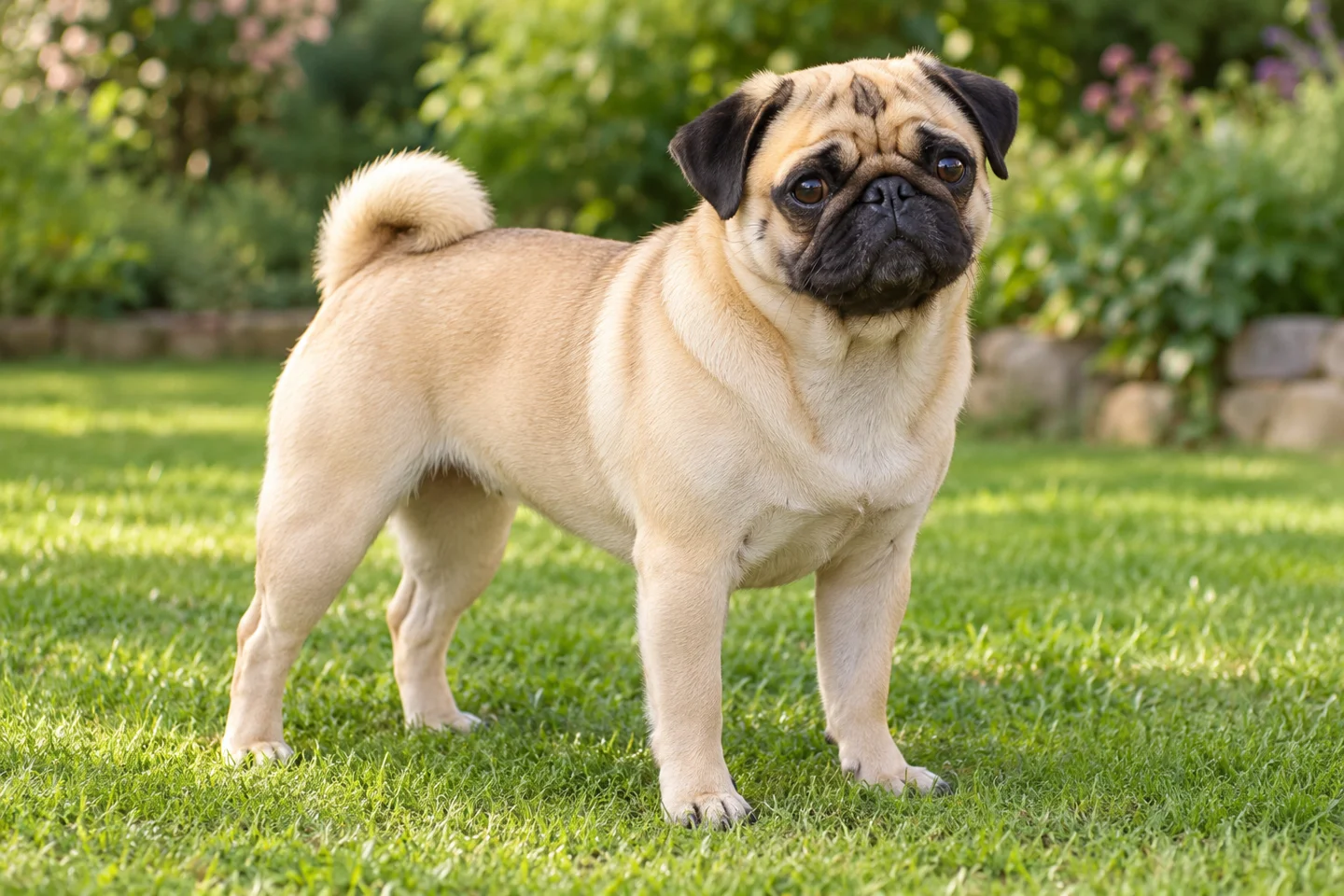
- Fawn with black mask, natural button ears and curled full tail
General information for owners. These articles have not been reviewed by a veterinarian. Medical decisions need your dog's history and an examination.
Living with a Pug
A Pug needs an owner who takes comfortable breathing and movement seriously while making time for ordinary companionship. Its small body may fit a modest home, but size does not make medical care, training, or temperature control optional. Meet the individual during a quiet visit and discuss how it sleeps, walks, and recovers from excitement. A photograph of a cheerful face cannot answer those questions.
Plan for the uneventful parts of the week as well as the outings you imagine sharing. Who will provide company, take the dog outside, and notice a change while you are away? Can you arrange veterinary care and appropriate help if its needs change? Ask a breeder or rescue for a clear account of the dog's current routine and limitations. Choosing on that information makes it easier to provide a workable home than assuming that every Pug will behave or cope in the same way.
Identity, appearance, and healthy condition
The Pug is a Chinese companion breed under British patronage in the FCI standard. The October 2026 version describes a compact square dog, natural small folded ears, a curled full tail, and a short smooth coat. Fawn with a black mask is the illustrated example here. Other standard colors exist. Its ideal weight reference is 6.3–8.1 kg, which is not an instruction to change an individual's weight without assessing its frame and condition.
The standard distinguishes muscle and substance from obesity, and rejects pinched nostrils and exaggerated folds obscuring the nose or eyes. Keep function in the discussion when someone describes a desirable appearance. Watch whether the dog can see, move, and rest comfortably, and seek clinical assessment of concerns. An owner should not need to explain away visible discomfort to defend a breed label. Equipment should fit the actual body, with enough adjustment for changes in growth, coat, and condition.
Health screening and the specific records
The Pug Dog Club of America's published CHIC requirements identify PDE testing, a specialist eye examination, and patellar evaluation. Its page lists additional optional assessments separately. Ask which programme applies to the parents and request the identified results rather than treating every item on a website as universally compulsory. A CHIC number records completion and public availability of the relevant testing; the findings still need to be read.
Keep the puppy's own clinical history alongside the parental paperwork. Ask about significant diagnoses in relatives, earlier procedures, and what information will be shared after placement. A routine puppy examination, an eye specialist's report, and a DNA result answer different questions. For a rescue without ancestry records, begin with the available history and an individual veterinary plan. Missing information should remain visible rather than be replaced with a promise. If the dog later develops symptoms, its current examination matters even when previous screening summaries were reassuring.
Breathing assessment and daily observation
Brachycephalic obstructive airway syndrome, or BOAS, can affect a Pug's ability to breathe, exercise, rest, and cope with heat. Cambridge's respiratory function grading approach uses a clinical assessment before and after controlled activity. A quiet dog at rest may still have difficulty during movement. Ask a qualified assessor what the actual grade means and which follow-up is appropriate; do not conduct a demanding home exercise challenge to find out.
Grades 0 and I are classified as clinically unaffected in that scheme, while II and III indicate clinically relevant disease. A grade describes findings at assessment, not a guarantee for every future situation. Report changes in noise, effort, recovery, sleep, or tolerance promptly. Severe breathing difficulty, collapse, or blue-tinged gums requires urgent veterinary contact. A video may help describe an intermittent problem if obtained safely, but care must not wait for a recording. Treatment decisions need the clinician's assessment rather than an owner's interpretation of a familiar sound.
PDE susceptibility is not a diagnosis
The UC Davis PDE test evaluates susceptibility markers for necrotizing meningoencephalitis in Pugs. It does not diagnose an affected dog. The laboratory describes N/N and N/S results as low risk, and S/S as increased risk. Increased susceptibility does not mean that illness is certain, while a low-risk result cannot exclude every neurological disease. Ask the laboratory or veterinarian to explain the named result instead of translating it into a general healthy or unhealthy label.
The laboratory also cautions against eliminating every dog carrying the susceptibility haplotype, because doing so would reduce genetic diversity. A considered breeding discussion is different from an advertisement promising to remove all disease through one test. For an individual with seizures, altered coordination, or sudden visual changes, clinical care takes priority. Keep the original report available, describe the timing of signs, and follow the clinic's directions. Do not wait for a presumed inherited diagnosis or try another owner's medication while the dog is deteriorating.
Hind-limb changes and practical mobility
The breed club discusses Pug myelopathy as a spinal neurological problem that can cause changes in hind-limb coordination. It distinguishes this from degenerative myelopathy. The similar names should not lead an owner to assume that a DNA result for one condition diagnoses or excludes the other. Dragging feet, stumbling, altered toileting control, or difficulty moving needs veterinary investigation, including consideration of causes beyond a breed-specific description.
Make the history useful without repeatedly provoking the problem. Note when the change began, whether it is worsening, and how the dog manages rising or turning. Film ordinary movement only when safe. Provide nonslip routes and ask about suitable assistance rather than force more exercise to strengthen an unexplained weakness. If a clinician recommends rehabilitation, equipment, or restrictions, clarify how progress will be reviewed. Give other carers the same instructions and an accessible contact number so a deterioration is communicated promptly instead of being mistaken for a training lapse.

Exercise at a comfortable pace
Provide opportunities to investigate, learn, and move at a level the individual can manage. Short exploratory walks and calm games can be useful, with demands adjusted to age, fitness, and medical findings. Watch the quality of movement and recovery instead of making a fixed distance the objective. A dog that continues following you may still need the session shortened. Discuss unexpected exercise intolerance with the veterinary team rather than dismiss it as laziness.
In warm weather choose cooler times, shade, and routes that allow an easy return. Carry water, check the ground, and avoid leaving the dog in a vehicle that can warm up. A carrier or stroller also needs ventilation and temperature awareness. Indoor searches and brief training offer variety when an outing is unsuitable. They should not become an excuse to ignore a persistent loss of exercise tolerance. Keep an individual plan that other carers understand, including when to stop and when to call the clinic.
Training for easy everyday care
Teach a few useful actions clearly: approaching when called, moving onto a mat, waiting at an entrance, and standing while equipment is fitted. Reinforce success in an easy setting before adding distractions. Keep rewards small enough to account for within the daily feeding plan. If a dog struggles to follow a cue, check whether the setting, surface, or requested movement is too difficult or uncomfortable.
Avoid using physical confrontation to complete a task. A small Pug can be restrained easily enough for people to overlook its distress, but repeated force can make future care harder. For grooming or examination, begin with a brief comfortable touch and gradually increase what the dog can accept. If it has already become painful or frightened, tell the professional rather than insist that training be finished before care. Share the same cues and handling routine with the household so the dog receives understandable information from each person.
Children and respectful play
Children should sit quietly and invite a Pug to approach rather than pursue or lift it. Keep faces away from its face, and prevent neck hugs or games involving folds, ears, and tail. Give the dog a resting place that children cannot enter. Small size makes intrusive handling easy; it does not make the animal less deserving of space or remove the need to prevent bites.
Use active adult supervision during contact and comfortable separation when attention is divided. Food, chews, medical treatment, and grooming belong with informed adults. Teach children to stop when the dog leaves, stiffens, or seeks shelter. An adult should respond before the child tries again to prove that the dog is friendly. Visiting children need the same clear rules as those who live in the home. If the Pug is tired or recovering from an outing, a quiet break may be a better arrangement than another greeting.
Aggression and understanding the situation
A Pug can guard an object, react to painful touch, or feel defensive around another dog. Assess what happened immediately before the response, including distance, handling, and the ability to leave. A familiar breed reputation cannot explain an individual incident. Stop arranging repeated approaches to test tolerance and secure enough space for everyone to move away calmly.
Ask for veterinary consideration when behavior changes suddenly or reactions occur during lifting, grooming, or movement. Persistent difficulties may need a qualified reward-based professional who can assess the household and create practical steps. Give an accurate history of snaps, bites, and near misses to anyone providing care. Do not punish a warning and conclude the problem disappeared because the dog became quiet. Management should reduce the cause of conflict while teaching develops. A physical barrier can be more dependable than expecting a worried dog to remain still while a stranger continues approaching.
Other dogs and safe company
Arrange introductions around pace, greeting style, and physical size. A playful large dog may unintentionally overwhelm a Pug, while another small dog can still be persistent and intrusive. Start moving in parallel with separate handlers and room between the dogs. Avoid crowded gateways and tight-lead face-to-face greetings. Look for easy pauses and voluntary re-engagement instead of assuming that every chase or wrestling session is reciprocal.
In the home, separate bowls, beds, and valued chews while learning how animals share space. A cat needs protected routes and access to resources without crossing the dog's feeding area. Prevent pursuit during introductions and do not leave an unfamiliar pairing alone after one apparently calm meeting. If either animal needs permanent separation, decide whether the household can maintain it reliably. A dog does not need to share food or sleep touching another animal to have a comfortable life with appropriate company.
Grooming: eyes, folds, and mouth
Brush the short coat and use the routine to check the skin and equipment contact points. Ask the veterinary team how to clean and dry any folds without irritating them. Persistent odor, redness, discharge, or soreness deserves assessment rather than a stronger cosmetic product. Avoid applying leftover treatment from an earlier condition without instructions. Products suitable for one patch of skin may be unsuitable near an eye or mouth.
Take eye discomfort seriously. Repeated squinting, rubbing, discharge, or a visible change needs prompt advice. Do not assume a large-looking eye makes irritation normal. Include gentle tooth brushing and nail care in the routine, using a stable surface and a cooperative approach. If one area suddenly becomes difficult to handle, check for pain. A groomer should receive relevant clinical instructions before working around a sensitive area. Finishing a bath or trim is less important than preventing further discomfort and arranging appropriate care.
Feeding and body condition
Use a complete diet appropriate to life stage and medical needs, with measured portions and regular review. Account for chews, training rewards, and food offered by different family members. Ask the veterinary team to demonstrate body-condition assessment on the actual dog. A compact frame and folds can complicate a casual visual judgment, and a standard's weight range cannot determine every individual's ideal target.
If weight reduction is advised, agree on the amount, monitoring, and alternatives for giving attention without extra food. Keep all carers involved. For appetite loss, persistent vomiting, altered stools, or unexplained weight change, record the timing and seek clinical advice rather than repeatedly add richer foods. A homemade ration needs professional formulation. Supplements marketed for skin, joints, or breathing should be discussed in relation to an actual need; their label does not establish that the diet is complete or that a medical problem has been treated.
Clinical procedures and recovery planning
Before a procedure, give the veterinary team the breathing history, earlier anesthesia records, medications, and any previous recovery problems. Follow its instructions about preparation rather than use another owner's fasting schedule. Ask how airway needs, monitoring, pain relief, and recovery will be managed for this individual. The decision about appropriate treatment belongs with the treating team and the owner's informed discussion of benefits and risks.
Prepare a quiet recovery space with suitable temperature, stable footing, and separation from children and other animals. Keep written instructions and the emergency contact number accessible. Make sure another adult knows which changes require a call instead of assuming sleepiness explains every sign. When collecting the dog, clarify how long restrictions apply and when ordinary activity can resume. Maintain the original procedure report in the medical file so later clinicians can see what was done, rather than depend on a recollection that the dog once had an operation.
Mixes and promises about breathing
A Pug mix can vary in muzzle, body, coat, and temperament. Names such as Puggle or a Pug–terrier cross describe proposed ancestry rather than a standardized medical outcome. A longer-looking muzzle in one photograph cannot guarantee comfortable airways, and a cross cannot be assumed free from inherited conditions. Ask about both known parents and arrange assessment of the individual dog's function and needs.
For a rescue with uncertain ancestry, prioritize examination and observed behavior. Learn how it moves, rests, breathes, and responds to handling, then choose equipment and activities around those findings. Avoid predicting a precise halfway temperament from two breed summaries. If still growing, plan for uncertainty in size and coat care. A useful placement discussion includes what support is available if a medical concern or compatibility difficulty appears later. Reassuring labels are less useful than a realistic care arrangement and accurate records that can follow the dog.
Costs and a reliable care plan
Ask local providers about routine veterinary work, emergency access, dental assessment, and any advised specialist care. Read insurance exclusions and clarify how known conditions are treated before assuming cover. Set aside resources or another realistic arrangement for unexpected costs. A small dog may still require substantial clinical help, so affordability should not be inferred from food quantity or bed size alone.
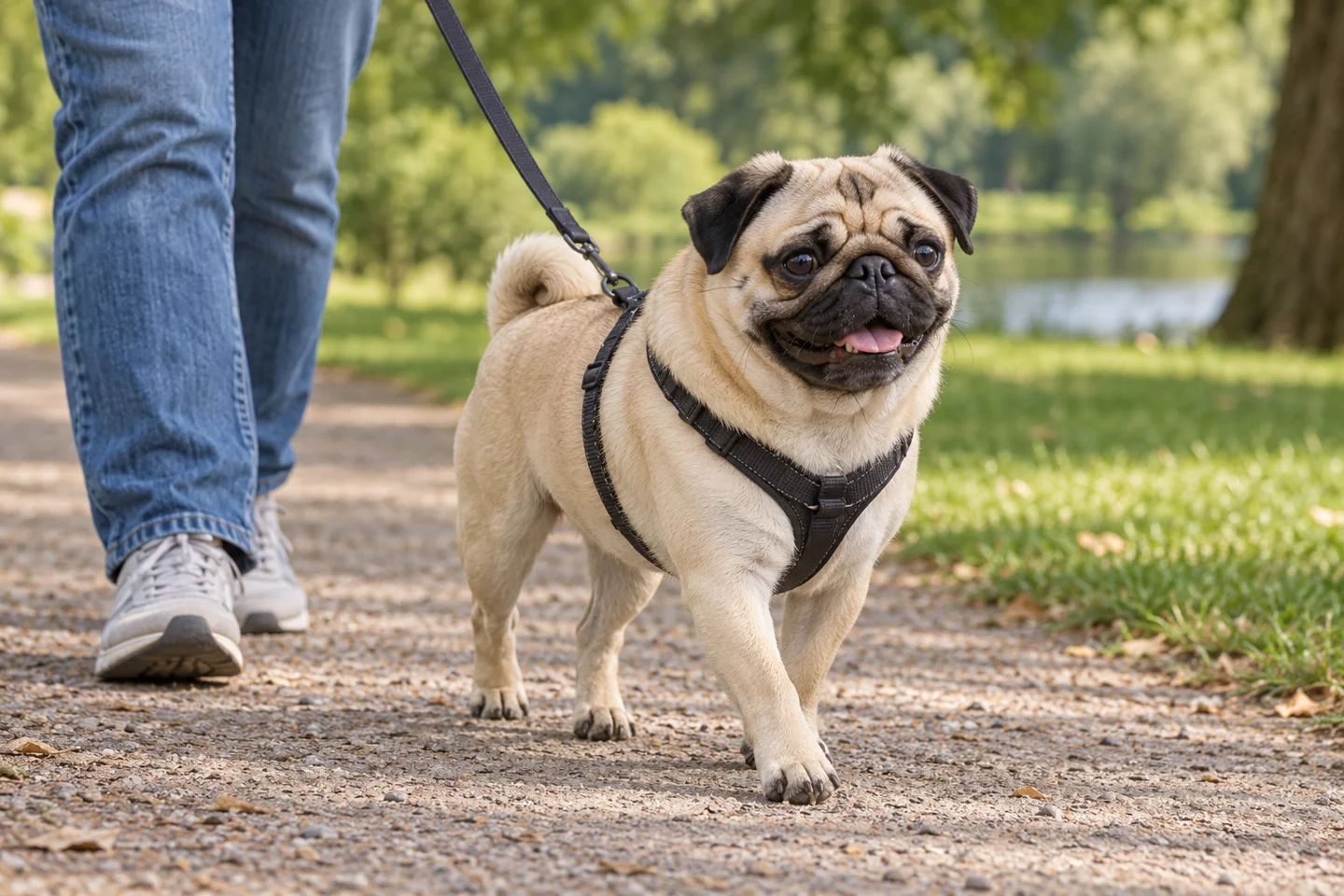
Introduce a backup carer while the dog is comfortable. Demonstrate the harness, feeding routine, temperature arrangements, and signs that require a call. If there is a diagnosed condition, provide the clinician's instructions rather than a verbal shorthand account. Confirm that a boarding provider can follow the routine and communicate promptly. A short practice visit may reveal difficulties before a longer absence. Reliable help matters when the usual owner is suddenly ill as well as during a holiday, and should be arranged before that need becomes urgent.
dogsDating for a comfortable first meeting
Describe your Pug's preferred pace and comfort with unfamiliar dogs before agreeing to meet through dogsDating. Keep exact home coordinates and your address private, using an approximate area to choose a quiet public route. Agree on a short outing with shade, room to walk apart, and an uncomplicated way to leave. A medically limited dog should have an appropriate plan discussed with its veterinary team.
Begin with separate handlers and parallel movement. Watch the dogs while talking, including breathing effort, movement, and attempts to create distance. Do not require play or close photographs to make the meeting successful. Leave shared food and toys for another occasion. Stop while both animals remain comfortable, and compare observations afterward before arranging a longer walk. A calm short meeting can give the owners a chance to get acquainted while the dogs simply spend time near one another. That is a useful result in its own right.
Sources and editorial notes
Sources checked October 22, 2026. Breed measurements describe reference ranges, not a diagnosis or an individual dog's ideal weight. Images are AI-generated breed illustrations and do not document a particular dog or health condition.
- AVSAB: Humane Dog Training Position Statement
- VCA Animal Hospitals: Food aggression in puppies
- VCA Animal Hospitals: Aggression toward unfamiliar dogs, diagnosis
- VCA Animal Hospitals: Grooming and coat care for your dog
- AAHA: Feeding plans for healthy, appropriate weight cats and dogs
- VCA Animal Hospitals: Heat stroke in dogs
- VCA Animal Hospitals: Common emergencies in dogs
- Orthopedic Foundation for Animals: CHIC health screening programs
- AVSAB: Puppy Socialization Position Statement
- VCA Animal Hospitals: Dog behavior problems, aggression toward children
- FCI standard 253, October 2026: Pug proportions, natural features and ideal weight
- Pug Dog Club of America: CHIC requirements, optional tests and Pug myelopathy
- UC Davis Veterinary Genetics Laboratory: susceptibility to Pug dog encephalitis and test limits
- University of Cambridge: respiratory function grading and recognition of BOAS
- University of Cambridge: breathing assessment scheme for Pugs, French Bulldogs and Bulldogs
- American Veterinary Medical Association: preparing for anesthesia and recovery
Keep getting to know dogs.
Read another guide or return to your dogsDating community.
Explore breed guidesBack to dogsDating