Anatolian Shepherd Dog
A large, independent livestock guardian whose household needs include reliable boundaries, deliberate visitor management, and carefully assessed animal introductions.
How these guides are researched and reviewed
- Background
- Livestock guarding in Anatolia
- Build
- Large, substantial, and athletic
- Care priorities
- Boundaries, visitors, and cooperative handling
General information for owners. These articles have not been reviewed by a veterinarian. Medical decisions need your dog's history and an examination.
Living with an Anatolian Shepherd Dog
An Anatolian Shepherd Dog needs a household that can manage a large, independent guardian without encouraging suspicion or confrontation. Secure boundaries, calm handling, and a realistic visitor plan matter from the first day. An owner who wants constant obedience, frequent greetings with unfamiliar dogs, or an easy companion for crowded social venues may find those expectations difficult to meet. Consider the actual adult dog, its previous work, and its response to ordinary visitors before deciding whether your home fits.
The practical question is how the dog will spend an ordinary weekday. Who checks the fence, receives deliveries, supervises children, and takes the dog to the veterinarian? A guardian that makes independent decisions still needs daily human care. Leaving it outside with an assumption that its instincts will solve every problem creates risks for the dog, livestock, visitors, and neighbors. Suitable ownership starts with a workable routine rather than an impressive description of protective ability.
Anatolian origins and the guardian role
The breed's history lies in the livestock-keeping traditions of Anatolia, the Asian part of Turkey. Its established role involves staying with animals and responding to perceived threats. That differs from moving a flock under detailed human direction. Calling every large sheep-associated dog a herding dog obscures this distinction. A dog developed to watch its surroundings and assess approaching animals may respond very differently from a dog selected to follow rapid instructions about where sheep should go.
Registry names and regional livestock guardian populations do not always correspond neatly across countries. This guide uses Anatolian Shepherd Dog in the American Kennel Club sense. Ask which registry issued a pedigree and what the breeder means when using related regional names. A fawn coat and dark mask cannot establish ancestry. For working prospects, ask about the parents' actual livestock experience, the type of stock involved, and how their offspring were raised. A family history of guarding does not make an untrained puppy safe with every animal.
Size, structure, and everyday equipment
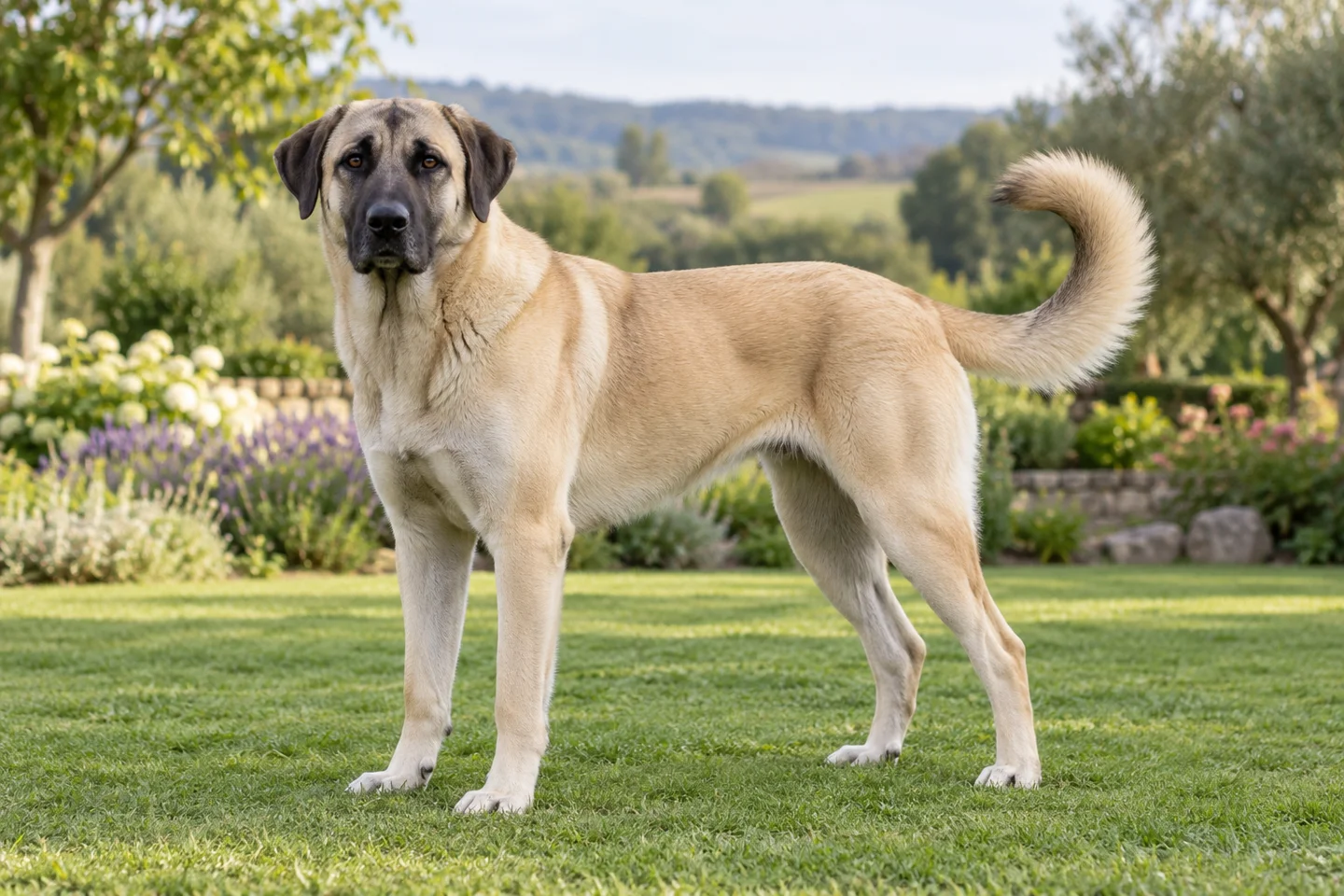
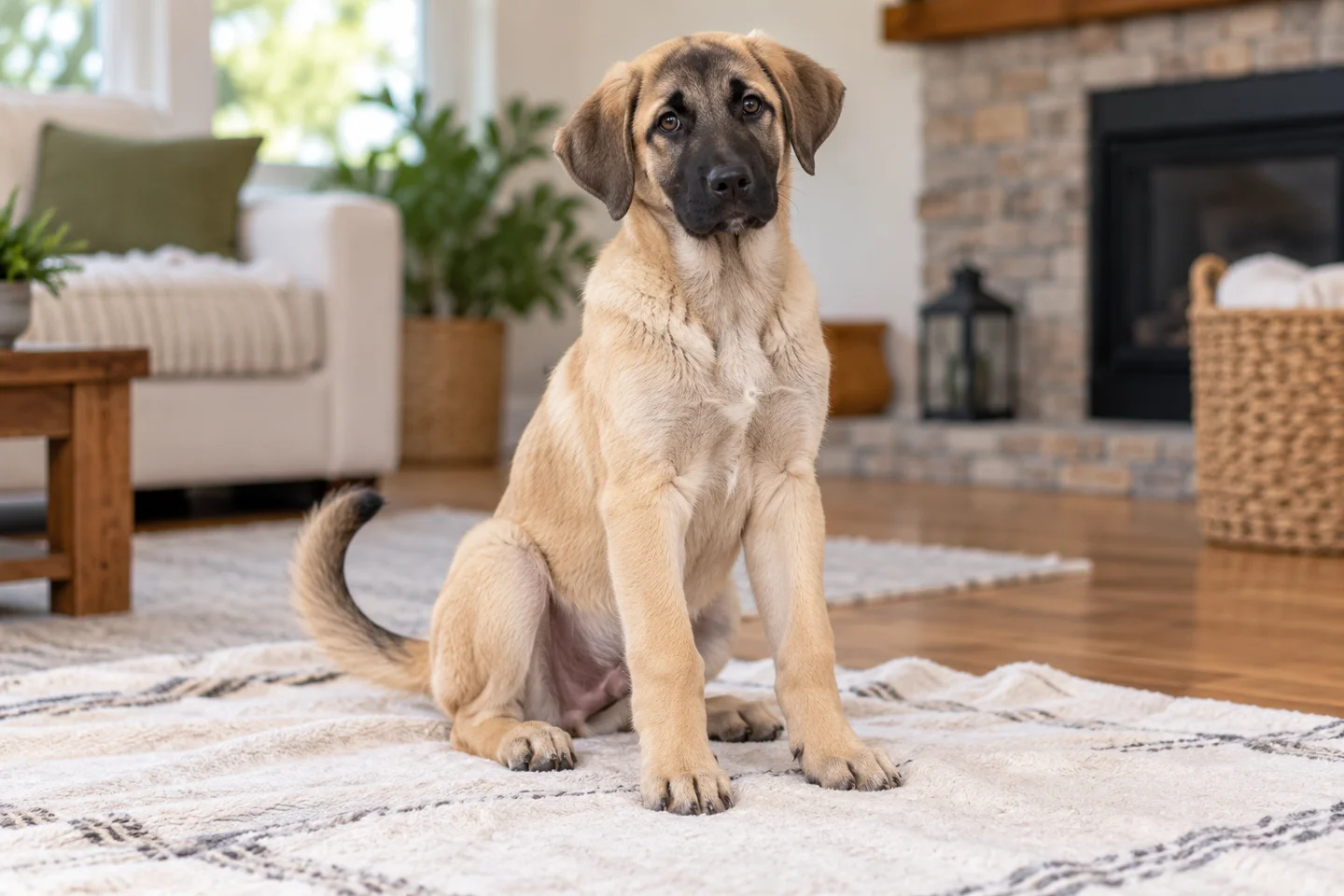
The Anatolian is a substantial dog with a functional, athletic outline. Many familiar examples have a fawn coat and black mask, although appearance should be checked against the relevant registry standard rather than reduced to one color pattern. Natural dropped ears and a long tail contribute to its outline. A puppy's broad feet and serious expression provide little guidance about adult manners. Buyers need to plan for an adult that can move a gate, knock someone over, or pull a handler off balance.
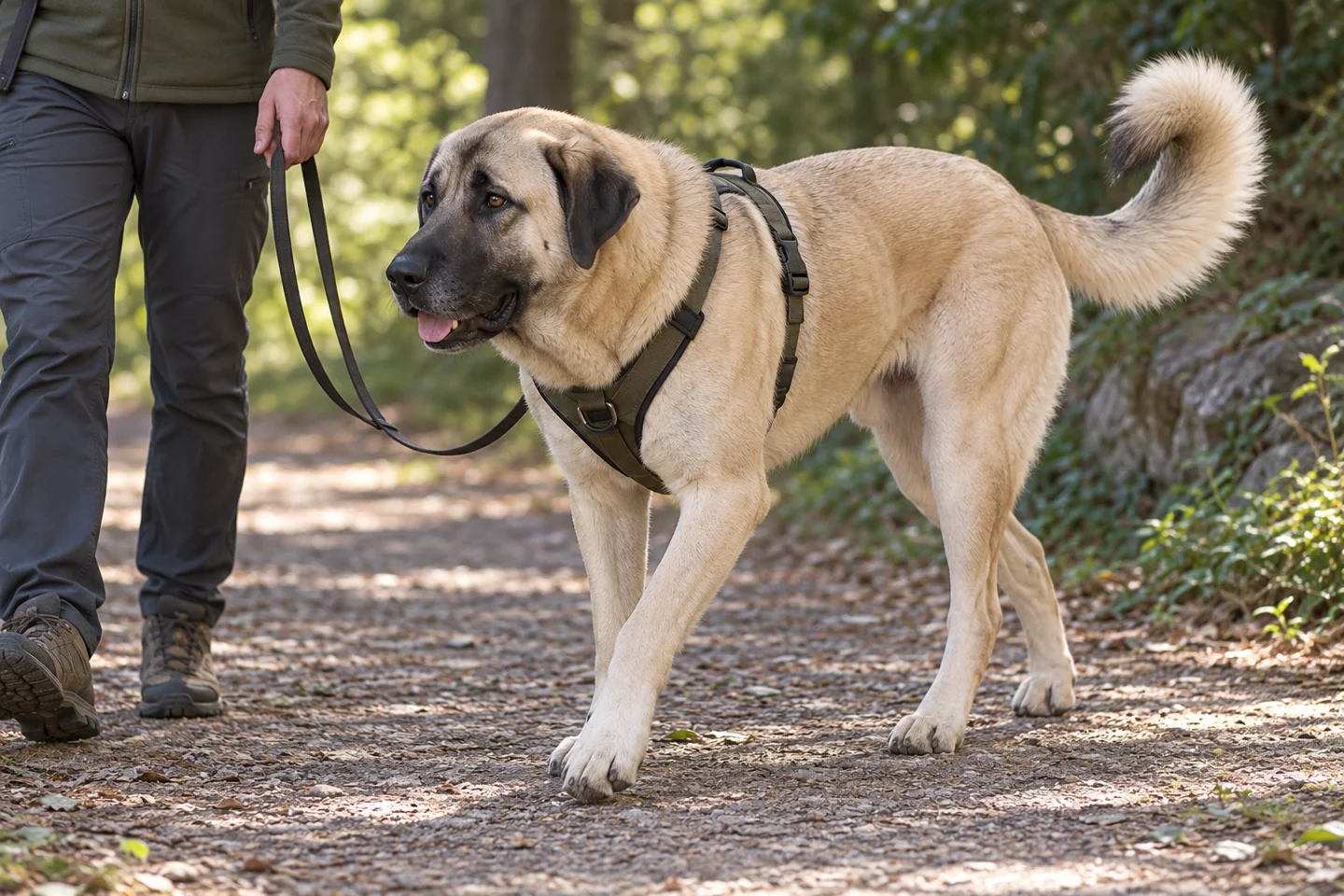
Buy equipment for the individual dog's measurements and strength. A well-fitted harness, reliable lead, sturdy doors, and properly secured vehicle space are ordinary necessities. Check fit repeatedly while a young dog grows. A collar should carry identification without being loose enough to slip over the head. Teach the dog to stand quietly for fitting, because wrestling a reluctant adult into equipment is avoidable. Practice entering a vehicle and standing on a scale while those tasks are still easy to arrange.
Boundaries, gates, and the meaning of territory
A garden fence needs regular inspection from the dog's side. Look for gaps under gates, loose panels, climbable objects, and places where delivery drivers might open an entrance. A guardian may react more strongly at its own boundary than on a quiet walk elsewhere. Covering a section of fence can reduce repeated visual encounters, but it does not replace secure construction. Discuss fencing with someone who understands this individual dog and the animals or people approaching the property.
Use a second barrier when opening an outer gate. Put the dog in a familiar separate area before admitting contractors, visitors, or unfamiliar animals. Avoid making guests prove that they are friendly by walking toward a barking dog. The owner should manage access and remove the need for a confrontation. If a boundary incident has already occurred, document the circumstances and get qualified help before repeating the situation. Waiting for the dog to decide that a stranger belongs is an unreliable visitor policy.
Temperament, company, and household routine
Anatolians are often described as independent and watchful. Those words describe broad tendencies, not a promise that a particular dog will be quiet, easy alone, or comfortable with strangers. Ask how the dog behaves when a familiar person leaves, when someone approaches a sleeping place, and when a visitor stands up. An adult foster assessment can give useful information about these situations. Observe the context of each response rather than assigning a character label after one meeting.
Build predictable periods of activity, company, and rest. A dog that spends the night reacting to every passing sound may struggle to settle during the day. Review where it sleeps and what it can hear or see. Indoor access can make supervision and recovery easier for a companion household. Practice short absences gradually, with a safe resting area and someone available if distress appears. Independence in livestock work does not establish that a dog will tolerate long isolation in an unfamiliar home.
Children and visiting families
Children need adult supervision around an Anatolian, including children who live with it. The dog's size makes accidental collisions consequential. Set up a resting area that children cannot enter, keep meals and chews separate, and prevent climbing, hugging, or attempts to move a sleeping dog. Teach children to call an adult when they need access to something near the dog. A child should never be responsible for holding the lead at a gate or restraining an excited guardian.
Visiting children create an additional problem because running, shouting, and rough play can look different from the dog's usual household routine. Arrange physical separation before games begin. Familiarity with one child does not predict acceptance of a group of friends. If adults cannot supervise both the children and the dog closely, use a comfortable separate room or secure enclosure. A calm arrangement made in advance is easier to maintain than repeatedly interrupting a dog that is already alarmed.
Other dogs, cats, and livestock
Compatibility with other animals requires individual assessment. Introduce dogs on suitable neutral ground with space to move away, then manage food, resting areas, and entrances separately at home. Sharing a field or household with one familiar dog does not establish comfort with visitors. Watch for sustained staring, blocking access, or repeated attempts to control another animal's movement. If either dog cannot relax, stop the introduction and discuss the situation with a qualified behavior professional.
Livestock work requires careful selection, supervised learning, and stock-appropriate facilities. Poultry, lambs, adult sheep, and household cats present different situations. A young guardian may chase or play too roughly, and an unfamiliar animal may trigger a response that the owner did not expect. Never place a puppy among vulnerable stock and assume breed identity provides training. Ask an experienced livestock guardian mentor to assess the setup, and retain the ability to separate animals promptly without entering a dangerous confrontation.
Aggression, warnings, and bite prevention
Guarding behavior can create serious safety concerns when an Anatolian decides that an approaching person or animal is a threat. A stiff posture, fixed attention, growling, or movement to block access needs a management response. Increase distance and secure the dog. Do not ask a stranger to continue approaching to test whether the warning is genuine. Breed descriptions about loyalty cannot establish that an individual encounter is safe, and an owner should never deliberately provoke a protective display.
Sudden behavioral change also needs a veterinary examination because pain or illness can lower tolerance. Keep a factual record of what happened, including location, distance, resources, and the dog's recovery afterward. Seek help from a veterinary behaviorist or appropriately qualified reward-based professional when threats, guarding, or bites occur. Avoid punishment that suppresses warnings while leaving the underlying concern unresolved. A basket muzzle can provide an additional layer of safety when introduced gradually with rewards, alongside barriers and a suitable handling plan.
Training cooperation in ordinary tasks
Reward-based training gives the owner useful ways to ask for cooperation. Teach a hand target, a comfortable recall over short distances, a station behind a gate, and a turn away from an approaching distraction. Begin where the dog can succeed and pay well for the response. An independent dog benefits from clear, consistent consequences for its choices, such as reaching an interesting sniffing area after walking with a loose lead. Repeating louder commands usually contributes little information.
Practice the tasks that will matter at adult size. The dog should learn to wait while a door opens, accept gentle handling, release an object in exchange for a reward, and settle during a brief conversation. Keep sessions short enough that both dog and handler remain patient. Ask household members to use the same cues and access rules. Progress in a quiet garden does not establish reliability beside livestock, at a busy gate, or in an unfamiliar public space.
Exercise, exploration, and secure space
Anatolians need suitable daily movement, but an exercise plan should account for age, condition, weather, and the dog's actual work. Calm walks with time to investigate can be more practical than repeated high-arousal games. A fenced property offers space, yet it does not show whether the dog is moving comfortably or receiving enough human attention. Observe its gait, willingness to rise, and recovery after activity. Discuss persistent stiffness or reduced stamina with a veterinarian.
Use a lead or safely managed long line where boundaries are uncertain. Recall practice in a secure area does not justify allowing a guardian to patrol public land or approach unfamiliar dogs. Choose routes with room to turn away from narrow encounters. In hot weather, shorten outings and provide shade and water. The presence of a substantial coat does not make the dog immune to temperature extremes. Heat distress, collapse, or difficulty breathing requires prompt veterinary attention.
Grooming, shedding, and body checks
The coat needs regular brushing, with more attention when loose undercoat accumulates. Work through manageable areas and check the skin rather than brushing only the surface. Look behind the ears, around the collar, and where a harness rests. Avoid clipping the coat simply because the dog appears warm without discussing a specific need with a veterinarian or experienced groomer. Shade, airflow, water, and changes to activity remain essential parts of warm-weather care.
Teach foot handling and nail care in small steps. Check for broken nails, damaged pads, ticks, and plant material after countryside walks. Brush teeth with dog-appropriate products and arrange veterinary dental assessments as advised. A cooperative care routine also gives the owner a chance to notice swelling, wounds, or new sensitivity. If the dog starts resisting a familiar procedure, consider discomfort before assuming disobedience. Use professional support instead of restraining a frightened adult by force.
Feeding and growth
Choose a complete diet suited to the dog's life stage, including appropriate large-breed growth nutrition for a puppy. Ask the veterinarian to assess body condition and growth rather than feeding toward a desired impressive weight. Measure meals, include training food in the daily allowance, and adjust for changes in activity. A dog working outdoors may need a different amount from a companion resting indoors, even when both have similar body size.
Feed in a separate area where people and other animals will not disturb the dog. Keep children away from bowls and chews, and teach exchanges using rewards before there is a dispute. Sudden appetite loss, repeated vomiting, or an abrupt increase in thirst needs medical advice. Do not add calcium or other supplements to a complete puppy diet without a veterinary reason. Ask for a nutritional assessment when preparing home-cooked food rather than relying on an informal recipe intended for a different dog.
Health screening and interpreting records
The AKC working-group health recommendations list hip and elbow evaluations for the Anatolian Shepherd Dog. Ask for identifiable results for both parents and check them through the issuing organization where possible. The relevant questions include the dog's registered identity, its age at assessment, the method used, and the actual result. A statement that a breeder's dogs move well is not equivalent to recorded joint screening. Screening can inform a breeding decision without guaranteeing that an individual puppy will avoid disease.
Bring the puppy's records to the first veterinary appointment and agree a preventive care plan for your location. Discuss parasites, vaccination, weight, joint comfort, and any concerns in close relatives. Tell the clinic about handling difficulties before arrival so staff can prepare an appropriate appointment. Avoid repeating broad claims that every member of the breed reacts the same way to anesthesia or medication. Individual examination and a veterinary treatment plan are necessary when a procedure is being considered.
Illness, emergencies, and ageing
Know which clinic can handle an emergency involving a large dog and how you would transport it if it could not walk. Collapse, severe breathing trouble, repeated unproductive retching, major injury, or a rapidly worsening condition needs urgent veterinary advice. Keep identification and contact details current. Teach comfortable use of a vehicle ramp before it becomes necessary, and make sure an injured dog could be moved without requiring one person to lift its entire weight.
Older dogs may need shorter walks, better footing, and easier access to favorite resting places. A reluctance to rise or a new defensive response during handling can indicate pain. Ask for assessment rather than attributing every change to age or personality. Review body condition and medication with the veterinarian as activity changes. A guardian may continue trying to follow its usual patrol while uncomfortable, so the owner needs to notice movement and recovery rather than waiting for the dog to stop completely.
Anatolian mixes and adoption descriptions
An Anatolian mix can inherit a wide range of size, coat, and behavioral traits. Names such as Anatolian and Great Pyrenees mix describe a proposed ancestry, not a standardized outcome. Appearance alone cannot confirm which breeds are present. Ask a rescue what is known, what was inferred, and what the dog has actually done in foster care. DNA results may add ancestry information while leaving important questions about adult behavior and individual health unanswered.
When adopting, discuss fencing, visitors, livestock, cats, and previous incidents candidly. Ask how the dog behaves when confined, transported, or separated from familiar animals. An adult with a documented daily routine may be easier to assess than a puppy whose eventual size and guardian behavior are uncertain. Mixed ancestry does not remove the need for health care or secure management. Plan around observed needs and obtain professional help for problems that cannot be safely tested during an informal meeting.
Costs, backup care, and household suitability
Budget for substantial food use, equipment that fits a large dog, secure fencing, veterinary care, training support, and emergency transport. Boarding options can be limited by size or handling requirements, so identify a suitable carer before an urgent trip. Arrange a trial visit with a written routine and clear instructions about gates and visitors. A neighbor who likes dogs may still be unprepared to manage a powerful guardian in an unfamiliar situation.
Housing decisions need the same practical attention. Check the lease, insurance terms, local rules, and the physical layout before bringing a dog home. A small property is not assessed by floor area alone, but close boundaries and constant foot traffic can make management much harder. Discuss everyone’s tolerance for barking and controlled visitor access. If the household cannot maintain barriers consistently, choosing a different individual or postponing adoption is a reasonable welfare decision.
A quiet dogsDating meeting
Use the dogsDating profile to describe the individual dog's experience with unfamiliar dogs, lead handling, and preferred distance. Keep exact home coordinates private. Choose a quiet public route with room for parallel walking, away from livestock, narrow gates, and the dog's own boundary. Each dog needs a capable adult handler. Start far enough apart that both can investigate the ground and respond to familiar cues, then adjust the distance according to their behavior.
There is no requirement for physical greeting, shared toys, or off-lead play. End the outing if either dog becomes fixed on the other, repeatedly blocks movement, or cannot recover after a pause. A calm walk with space between the dogs can be a suitable outcome. Afterward, share practical observations about distance and surroundings instead of labeling the dogs as compatible in every setting. A successful public walk does not establish that the Anatolian will welcome the same dog onto its property.
Sources and editorial notes
Sources checked October 21, 2026. Breed measurements describe reference ranges, not a diagnosis or an individual dog's ideal weight. Images are AI-generated breed illustrations and do not document a particular dog or health condition.
- American Kennel Club: Double-coated dog care
- VCA Animal Hospitals: Common emergencies in dogs
- VCA Animal Hospitals: General feeding guidelines for dogs
- VCA Animal Hospitals: Food aggression in puppies
- American Kennel Club: Working group health testing recommendations
- VCA Animal Hospitals: Heat stroke in dogs
- American Kennel Club: Anatolian Shepherd Dog history
- American Kennel Club: Anatolian Shepherd Dog identity and care
- VCA Animal Hospitals: Aggression toward unfamiliar dogs, diagnosis
- American Kennel Club: Official Anatolian Shepherd Dog standard
- AVSAB: Humane Dog Training Position Statement
Keep getting to know dogs.
Read another guide or return to your dogsDating community.
Explore breed guidesBack to dogsDating