Kangal Shepherd Dog
A powerful Turkish livestock guardian needing reliable boundaries, capable handling, appropriate placement, and documented health evidence.
How these guides are researched and reviewed
- Origin
- Turkey; Kangal and Sivas region
- FCI adult height
- Males 72–78 cm; females 65–73 cm, each with ± 2 cm tolerance
- FCI adult weight
- Males 48–60 kg; females 40–50 kg
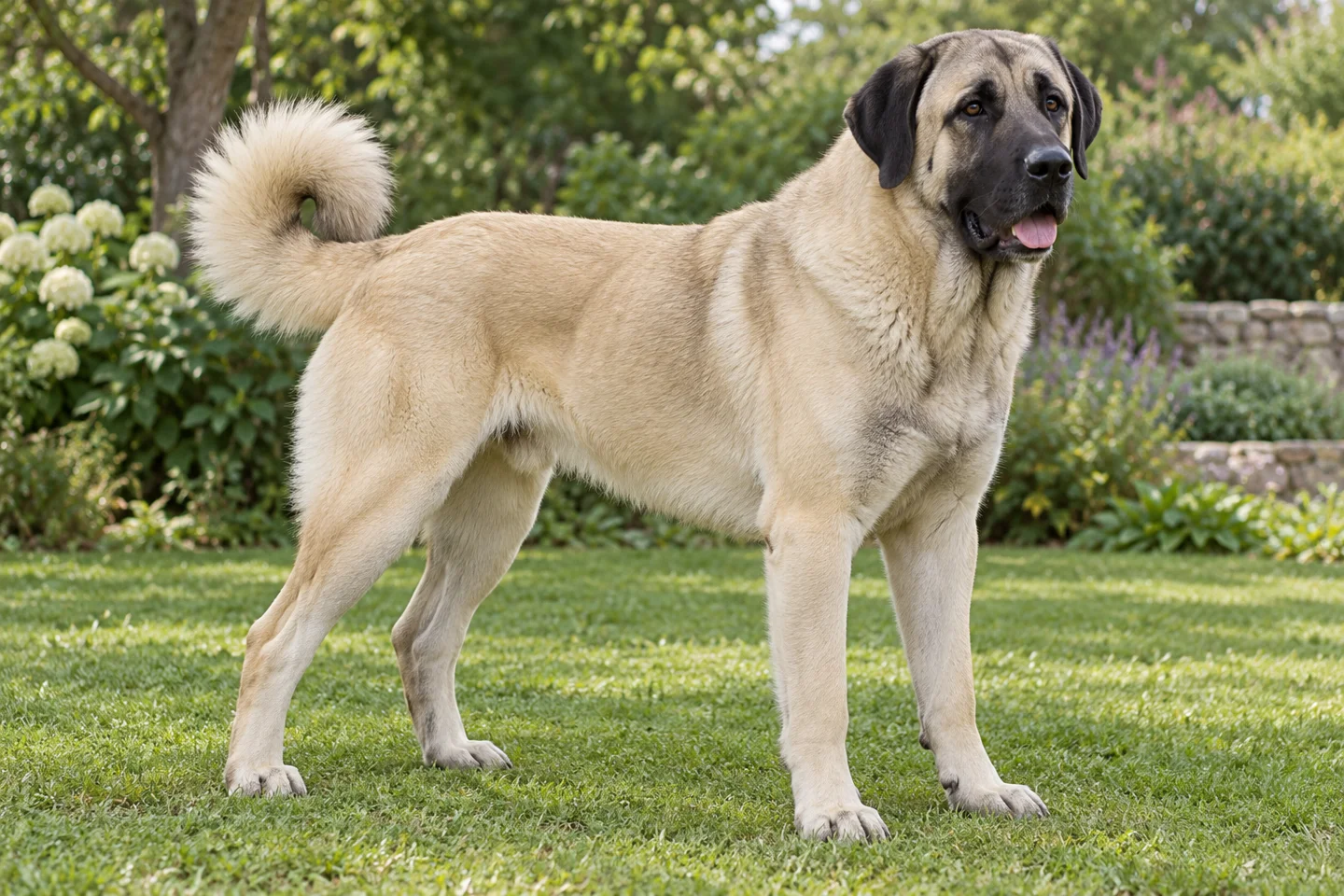
- Illustrated example
- Pale fawn, black mask, natural ears and full tail
General information for owners. These articles have not been reviewed by a veterinarian. Medical decisions need your dog's history and an examination.
A livestock guardian needs a workable setting
The Kangal Shepherd Dog is a very large livestock guardian, and a suitable home needs more than admiration for its strength. Consider boundaries, visiting people, neighboring animals, transport, and someone capable of maintaining the routine when you are absent. Talk to experienced sources before selecting a puppy. Ask how the dog is expected to live and which aspects of its upbringing prepare it for that setting. A rural address alone does not establish appropriate handling, fencing, or welfare.
For a companion placement, explain your actual surroundings. A busy shared entrance, frequent unannounced guests, or a garden beside a heavily used path may require arrangements that the household cannot sustain. That should be resolved before acquisition. Ask to observe adult relatives and discuss incidents as well as successes. The aim is a realistic choice about the individual's needs and the responsibilities of managing a powerful dog, without turning a guardian reputation into either a guarantee of safety or an excuse for uncontrolled behavior.
Kangal identity and the Anatolian name
The FCI standard identifies Turkey as the origin and connects the name with Kangal in the Sivas region. It describes sheep-guarding work and acknowledges uncertainty in distant livestock-guardian history. UKC maintains a Kangal Dog standard as well. Registry naming and classification differ, so read the actual documents attached to a dog rather than assuming every animal called Anatolian or Turkish shepherd is interchangeable with a documented Kangal.
This library has a separate Anatolian Shepherd Dog guide. The names can overlap in conversation, but a buyer should ask which standard and registration the source follows. A dark mask and fawn coat cannot prove ancestry by themselves. For an adult rescue, preserve any uncertainty and focus on reliable behavioral and medical observations. Explain whether your goal is livestock work or companion life, since those roles place different demands on early learning. A heritage description cannot replace a placement assessment in the environment where the dog will actually live.
Adult size color and natural anatomy
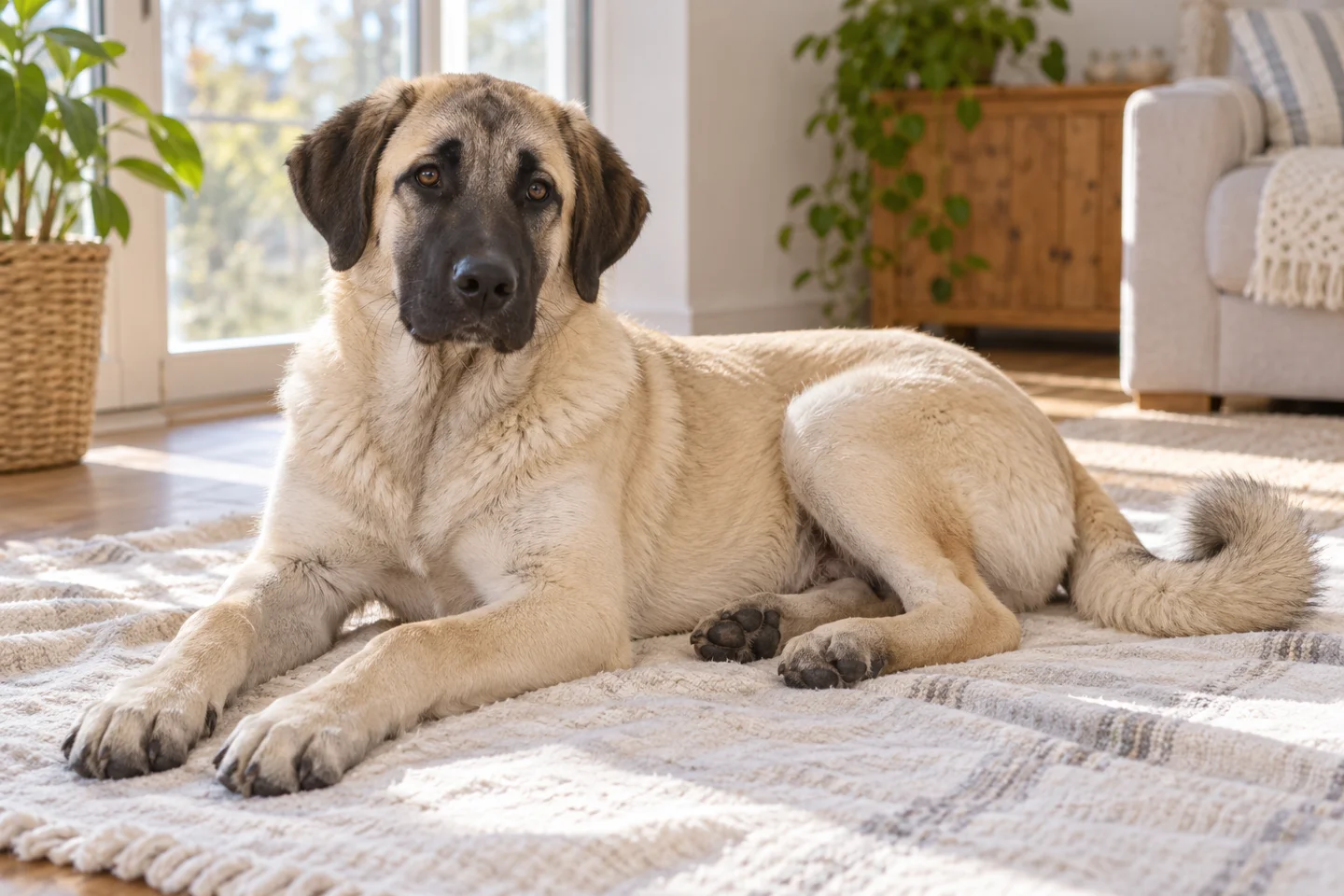
The FCI male height range is 72–78 centimeters and the female range 65–73, with a two-centimeter tolerance in either direction. Its weight references are 48–60 kilograms for males and 40–50 for females. The coat is dense, with a fawn-to-wolf-sable body, a dark muzzle mask, and dark ears. The illustrations use pale fawn and retain the natural hanging ears and full tail. These are examples of appearance, not evidence about pedigree or function.
Plan for the adult's dimensions from the start. Check vehicle space, secure restraint, doorways, and the location of a bed large enough for comfortable rest. Ask how you would assist an injured dog that cannot jump or stand. The veterinary team can advise on a suitable transport plan and handling equipment. Do not select for maximum weight or feed toward a photograph's bulk. A large functional frame still requires appropriate body condition, comfortable movement, and care based on the individual rather than a numerical target.
Boundaries gates and service visits
Walk through the property as a visitor would. Identify where a delivery driver might enter, where a gate could be left open, and whether a stranger must cross the dog's resting or working area. Create a physical arrangement that prevents accidental access. A sign or verbal warning does not stop someone who has not understood it. Decide who secures the dog before a tradesperson arrives and how every household member will know the procedure has been completed.
Check fencing for strength, ground gaps, and opportunities to climb or push through. Reassess after storms, building work, or changes in livestock access. Do not depend on a person holding the collar while a gate remains open. The plan should work when more than one event happens at once. Practice moving the dog into a comfortable separate area during quiet periods, using rewards, so the routine is familiar before an unexpected visitor makes it urgent. Secure management gives people room to make deliberate decisions.
Livestock work requires supervision and preparation
A guardian background does not mean a puppy can be placed unsupervised with vulnerable animals and expected to know every rule. Discuss introductions, safe housing, supervision, and the source's experience with the particular livestock involved. Ask how the dog will be protected from unsuitable situations while learning. A companion-raised adult may also need careful assessment before any proposed work. Do not confuse a breed's traditional purpose with evidence that the individual is prepared for the task.
Seek guidance from people experienced in humane livestock-guardian management and involve the veterinary team in health and welfare planning. Consider public access, neighboring dogs, and the effect of working boundaries on visitors. Have a plan for separation, transport, and treatment when either dog or livestock is ill. Avoid staging encounters with predators or encouraging confrontational behavior for a video. The useful outcome is reliable, well-supported care within an appropriate setting, with clear responsibility for preventing harm rather than testing the limits of the animal's reputation.
Training a powerful dog before strength creates a crisis
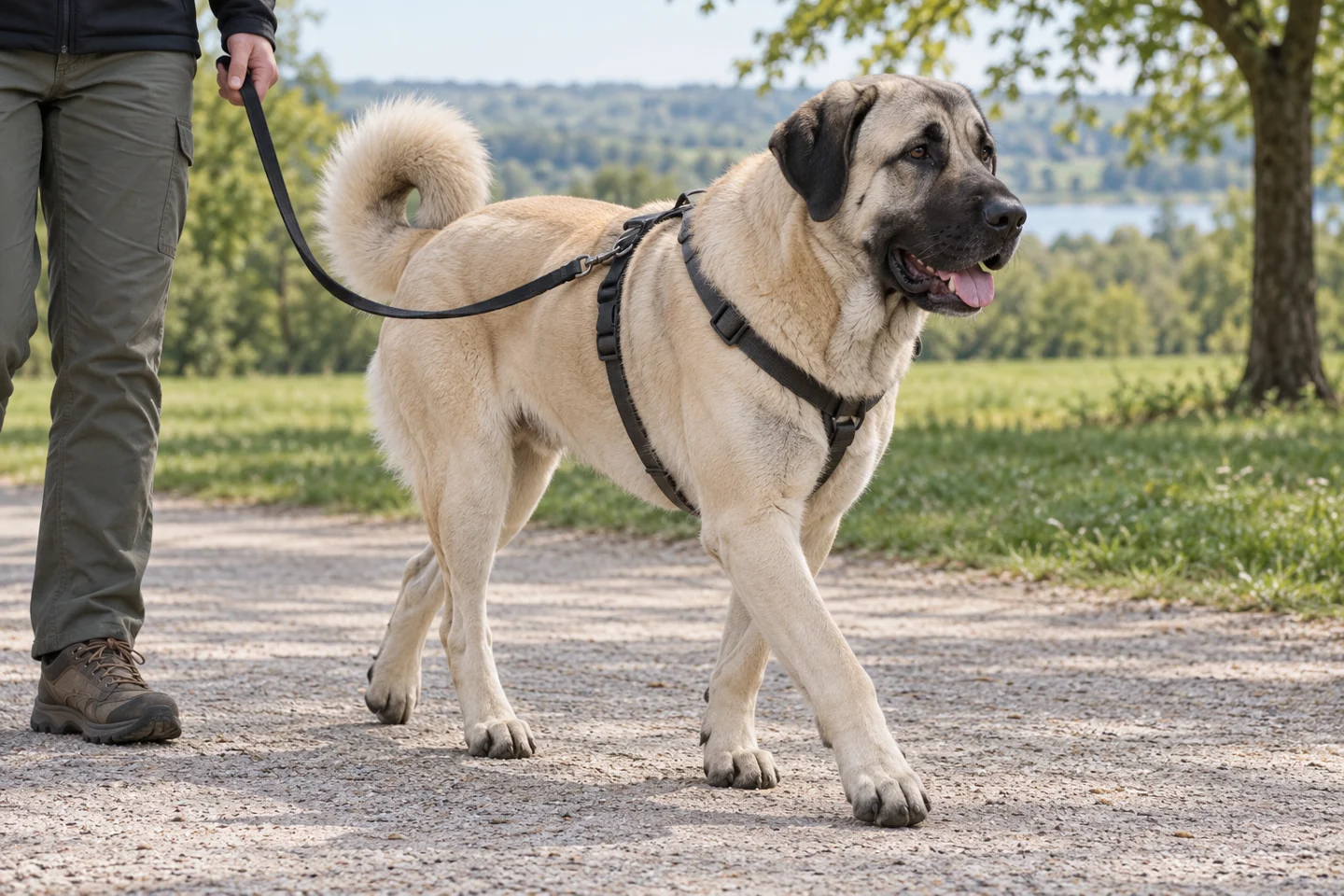
Teach walking with a loose lead, moving through a gate on cue, and entering a secure rest area while the puppy or adult can practice calmly. Break each task into small steps and reward the desired movement. A Kangal's size makes early preparation important, but it does not justify forceful confrontation. AVSAB recommends reward-based methods. Choose an instructor who can explain how to build cooperation and what management will prevent unsafe situations while the skill develops.
Practice away from the setting where the dog is most activated. If it cannot respond near a boundary, create distance and simplify the lesson. Repeating a cue while holding a struggling animal teaches little about a voluntary action. Keep everyone using the same sequence and equipment. Record specific progress, such as walking through a quiet gate without rushing. Review the plan when the dog matures or its environment changes. A skill learned in one room needs rehearsal under the real conditions in which it will protect people and the animal.
Exercise without building constant arousal
Offer movement appropriate to the dog's age, soundness, and daily role. A guardian still needs suitable activity, and a companion should not be left to patrol a fence as its only outlet. Arrange walks where the handler has control and room to turn away. Ask your veterinarian about growth, conditioning, and the suitability of a proposed demanding activity. The ability to move fast does not establish that repetitive high-impact exercise is appropriate for a particular dog.
Preserve rest and watch the effects of the routine. Repeated fence running, scanning, or barking may indicate that the setting keeps the animal activated rather than comfortably occupied. Review visual access and triggers instead of simply adding more stimulation. In heat, adjust timing and exertion and keep water and shelter available. A history of outdoor work in variable climates cannot certify comfort in current conditions. Serious distress, collapse, or breathing difficulty requires veterinary contact. Owners must be prepared to stop even when work or social plans are inconvenient.
Socialization includes calm observation
A guardian's social preparation should help it cope with ordinary events while preserving safe boundaries. For a puppy, ask the veterinarian about suitable exposure and disease precautions. Introduce manageable sights, surfaces, people, and handling in a way that permits retreat. Avoid demanding close contact with every stranger. A calm observation from a distance can be a useful lesson. The goal is appropriate coping, not a collection of photographs showing that many people have touched the dog.
For an adult, ask what is familiar and what is not. A dog accustomed to one property may need gradual learning for public paths or veterinary waiting areas. Plan quiet practice and tell professionals about handling needs before arrival. Do not use reassurance to push the animal closer when its behavior shows discomfort. A qualified behavior professional can help interpret repeated fear or threat. Social experience should be paired with management, since no amount of early exposure removes the need to control access around a powerful animal.
Children visitors and rules everyone can maintain
An adult should supervise children around the Kangal and provide a place the dog can rest without interruption. Keep children's play separate from meals, chews, and working or resting areas. The animal's size makes accidental contact relevant even when it is relaxed with familiar people. Do not let children open gates, manage arrivals, or hold the dog while another person enters. Those responsibilities belong to capable adults using a secure physical arrangement.
Ask the source about specific experience with children of similar ages and behavior. A standard's desired temperament cannot establish safety in your household. Explain to visitors how contact will be decided and be willing to keep the dog comfortably separate. If anyone is unable to follow the rules consistently, revise the arrangement rather than relying on repeated reminders. A suitable household plan should remain workable during celebrations, illness, and unexpected visits. The time to consider those situations is before they occur, when there is room to prepare calmly.
Aggression needs facts and immediate prevention
A threat at a fence, a snap over food, and a bite during lifting are different events. Record the circumstances and prevent a repeat while arranging assessment. Tell the veterinarian about new handling sensitivity or other changes that could involve pain. Avoid explaining every incident as protection, since that label does not identify the cause or the management required. A known event must be disclosed accurately to anyone responsible for the dog's care.
Do not punish warnings or deliberately provoke the behavior to demonstrate control. Qualified help should combine medical assessment where appropriate with a practical safety plan. Secure barriers, suitable distance, and clear handover instructions matter immediately. If a professional recommends muzzle conditioning, teach it positively with appropriate fit and use. It remains an added precaution and cannot make rough handling or an unsuitable meeting acceptable. The plan must account for the dog's strength before the next incident, rather than depend on someone reacting quickly enough afterward.
Dogs cats and other household animals
Ask about the individual's history with unfamiliar dogs and resident animals. UKC describes wariness toward strange dogs within the guardian background, but actual compatibility still requires assessment. Begin introductions in a setting that allows separate handlers to move apart, and avoid contested gates or shared resources. A dog that works near livestock may respond differently to an unfamiliar pet dog. Do not use one type of tolerance as proof of another.
Provide cats and smaller animals with secure separate routes and housing while the situation is assessed. Never hold a small animal in place to test the Kangal's response. With resident dogs, preserve independent feeding and rest and watch whether either animal becomes unable to settle. Some pairings need continuing separation, and some may not suit the home. Discuss that possibility before placement. Maintaining physical boundaries can be a long-term responsibility rather than a temporary inconvenience that must be removed on a fixed timetable.
Grooming and handling under the dense coat
A dense short-to-medium coat needs regular inspection and removal of loose hair, with particular attention beneath equipment and during shedding. Ask an experienced groomer to demonstrate gentle tools and technique. Look at skin and feet after outdoor work and note sore areas, embedded debris, or persistent licking. Do not pull hard at a tight knot or use scissors where skin is hidden. A large dog should have a stable nonslip place for care and an arrangement that does not rely on force.
Teach brief cooperative checks before a problem becomes painful. The dog can learn a standing position, a touch to a leg, and a release, gradually building tolerance for useful examination. Tell the veterinary team about difficulties so it can organize appropriate care. Ear odor, redness, discharge, or repeated head shaking requires assessment rather than leftover medication. Keep any prescribed cleaning method specific to the individual. Comfortable maintenance is easier to sustain when it has been taught calmly and the people involved agree on how to proceed.
Health screening through the relevant Kangal program
The Kangal Dog Club of America's 2023 breeder code addresses identifiable hip assessment and elbow assessment, including requirements tied to a dog's date of birth. It also recommends additional evaluations and genetic screening. Ask a breeder following that program to explain the operative requirements and provide the actual reports. Those are the club's provisions, not an invented universal international panel. A registration certificate or general veterinary visit does not supply the same information.
Discuss the findings with a veterinarian and review significant diagnoses in relatives. A test for a selected variant cannot establish freedom from every inherited or acquired illness. Completion and a normal result are different statements, and neither promises lifelong health. For an adult without parental records, document the gap honestly and establish current care. Ask how the source collects later owner reports and what support follows a significant diagnosis. The ability to work or an impressive muscular appearance should not substitute for investigation when the individual develops pain or reduced stamina.
Feeding a large growing or adult guardian
Choose a complete diet appropriate to growth or adulthood with guidance from your veterinary team. Measure portions and assess condition beneath the coat. Avoid adding supplements or extra food simply to produce a heavier frame. Growth and joint comfort require an individual plan, and standard weights are references rather than instructions to feed every dog toward the upper number. Count treats and training rewards when reviewing the day's calories, especially when several people help with care.
Keep feeding places quiet and separate animals where competition is possible. Arrange routine prevention around residence, travel, and work. Have an urgent-care contact and a transport plan for a dog unable to walk. Repeated unsuccessful retching, severe distress, abdominal enlargement, collapse, or breathing difficulty requires prompt veterinary contact. Do not depend on a feeding trick to guarantee protection from an emergency. Clear records of diet, activity, medication, and recent exposures help the receiving team understand the situation while deciding what the dog needs.
Mixes financial commitments and household fit
A Kangal cross may be large and strong without having predictable behavior or a standard Kangal appearance. Ask what ancestry is documented and what the source inferred from coat and mask. Crossbreeding does not guarantee health or remove the need for competent handling. Review known parents and relevant results where available. With an adult of uncertain background, current medical findings and honest descriptions of behavior can provide a better basis for care than a confident appearance-based breed claim.
Calculate ongoing costs locally, including food, fencing, veterinary care, equipment, training support, and someone able to handle the dog during absences. Check housing and service arrangements directly before committing. Read the source's contract and discuss return support if the setting proves unsuitable. A household that cannot control visitor access or maintain boundaries should reconsider the timing or choice. The decision concerns a long period of ordinary care, with strength and guardian behavior managed consistently rather than admired only when they are convenient.
dogsDating is optional and needs careful selection
A Kangal does not need casual dog meetings to justify a good life. If a veterinary or behavior plan limits unfamiliar contact, follow it. Where the individual is suitable for a dogsDating walk, describe observed preferences and restrictions accurately. Keep exact coordinates and your address private, using an approximate area to agree on a public place with generous space. Choose another adult who can manage their own dog and understands that the meeting may end early.
Begin with parallel walking well apart and avoid gates, narrow bridges, or crowded entrances. Leave shared toys and food games out of the plan. Watch both animals for stiffening, fixation, avoidance, or inability to disengage. Increase space or finish instead of trying to force progress through a greeting. A successful match might be a familiar distant walking partner. Record the useful conditions and preserve them next time. The value of company depends on comfort and safe management, while physical play and close contact remain optional.
Sources and editorial notes
Sources checked October 21, 2026. Breed measurements describe reference ranges, not a diagnosis or an individual dog's ideal weight. Images are AI-generated breed illustrations and do not document a particular dog or health condition.
- AVSAB: Humane Dog Training Position Statement
- VCA Animal Hospitals: Food aggression in puppies
- VCA Animal Hospitals: Common emergencies in dogs
- Orthopedic Foundation for Animals: CHIC health screening programs
- VCA Animal Hospitals: Aggression toward unfamiliar dogs, diagnosis
- VCA Animal Hospitals: Grooming and coat care for your dog
- AAHA: Feeding plans for healthy, appropriate weight cats and dogs
- VCA Animal Hospitals: Heat stroke in dogs
- AVSAB: Puppy Socialization Position Statement
- VCA Animal Hospitals: Dog behavior problems, aggression toward children
- FCI: Kangal Shepherd Dog official breed standard
- United Kennel Club: Kangal Dog breed standard
- Kangal Dog Club of America: Breeders Code of Ethics,2023
Keep getting to know dogs.
Read another guide or return to your dogsDating community.
Explore breed guidesBack to dogsDating