Armenian Gampr
A substantial Armenian landrace guardian whose care needs reliable boundaries, deliberate visitor management, and honest assessment of working and health records.
How these guides are researched and reviewed
- Identity
- Armenian livestock guardian landrace
- Appearance
- Variable coat and outline
- Care priorities
- Boundaries, visitors, stock, and cooperation
General information for owners. These articles have not been reviewed by a veterinarian. Medical decisions need your dog's history and an examination.
A home that can manage a Gampr
An Armenian Gampr needs a home prepared for a substantial, independent livestock guardian. Secure access, reliable human care, and controlled introductions are basic requirements. A dog chosen to assess approaching threats may make decisions that conflict with a visitor's expectations. Before considering one, describe an ordinary week honestly: who opens gates, receives deliveries, supervises animals, and provides veterinary transport? Admiring the dog's confidence or size provides little guidance about whether those daily arrangements will work.
Meet adults with a background similar to the role you have in mind. A working farm, a suburban garden, and a household with frequent visiting children create different demands. Ask about actual behavior in those settings and how it was assessed. Someone describing a Gampr as naturally protective should also explain how they prevent unwanted confrontations. Useful ownership depends on predictable management, a good understanding of the individual, and access to experienced help when something changes.
Armenian heritage and landrace identity
The Armenian Gampr is associated with livestock keeping in the Armenian Highlands. Breed organizations describe it as a landrace, with variation shaped by local use and selection for function. That description helps explain why genuine dogs may differ in coat, size, and outline. It should not become a claim that every large guardian from the region has documented Gampr ancestry. Ask about the dog's source, family records, and the evidence behind any specific historical account.
Recognition and breed descriptions differ among organizations. The Canadian Gampr club emphasizes a descriptive approach, and UKC's current conformation page says that no conformation standard is provided for this breed. Check which organization issued any paperwork instead of assuming all registrations mean the same thing. Ancient ancestry stories cannot establish an individual's identity or behavior. For a prospective working dog, detailed information about recent generations and the animals they lived with is more useful than an unsupported claim about thousands of years of purity.
Appearance and the limits of a photograph
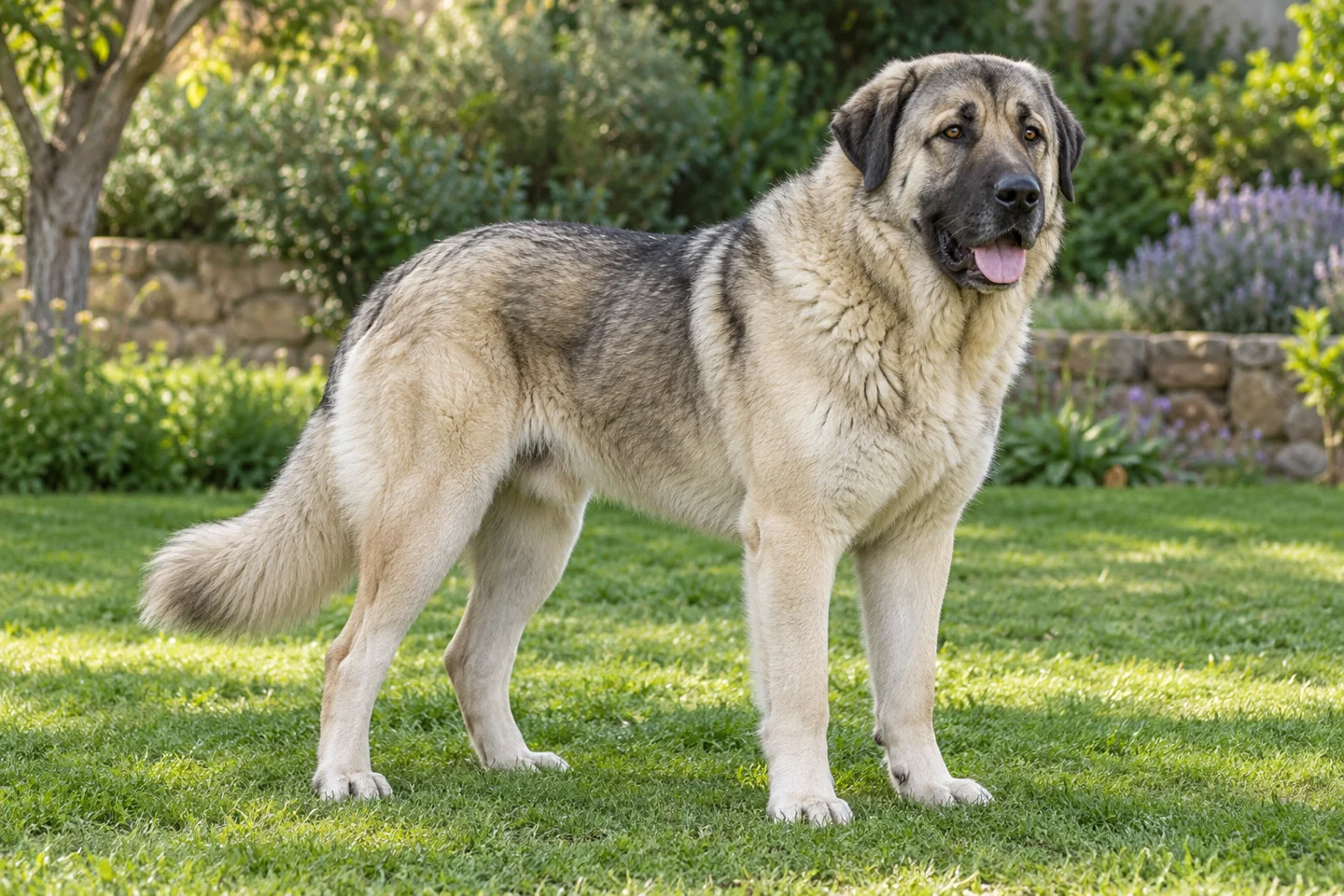
A Gampr should be assessed as a functional dog. Look for comfortable movement, suitable body condition, sound feet, and the ability to rise and turn without difficulty. Coat and markings vary, so one cream or gray illustration cannot represent the entire population. A broad head or heavy coat also cannot establish health, ancestry, or working suitability. Ask the owner to show normal walking and explain any persistent stiffness, uneven gait, or reluctance to be touched.
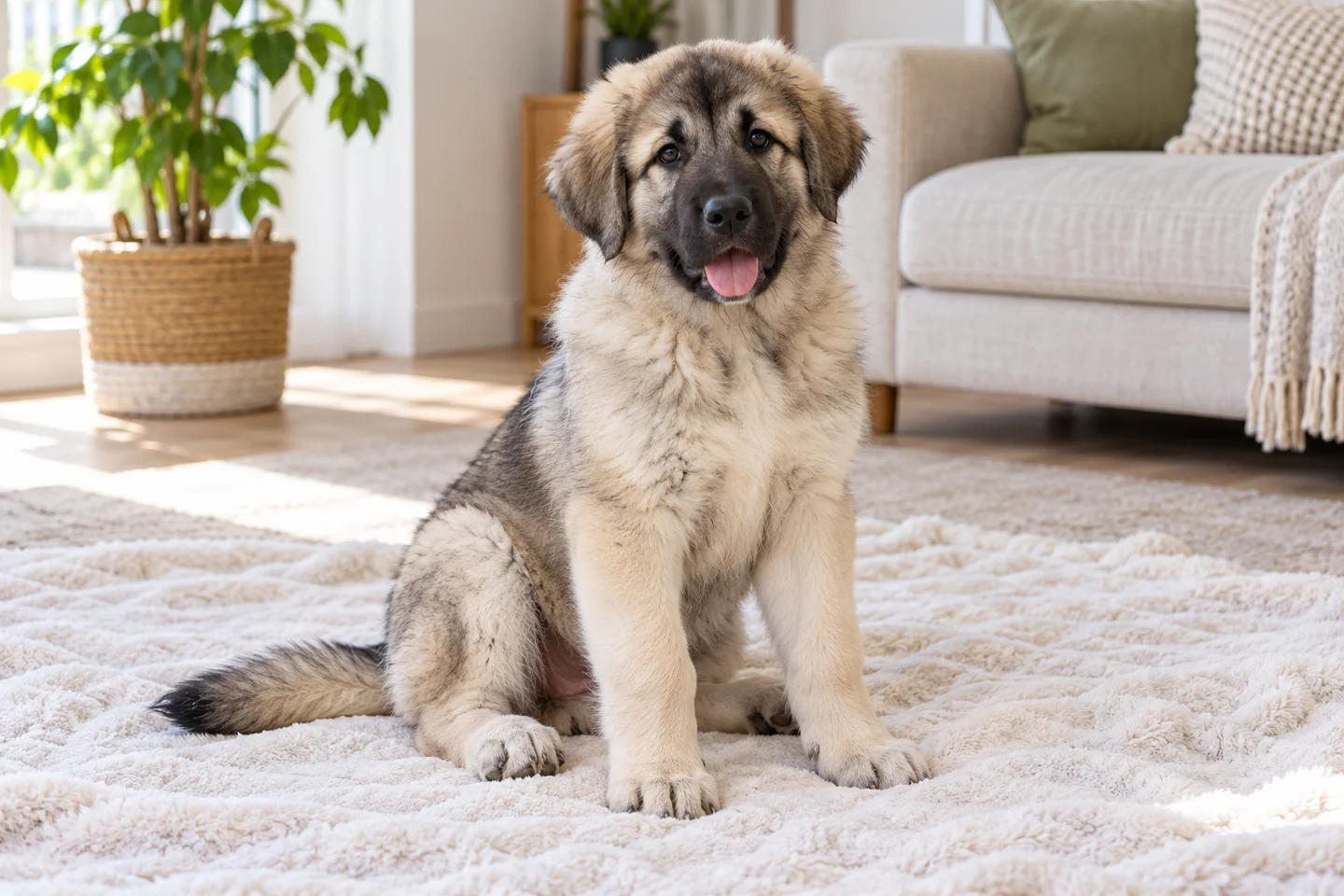
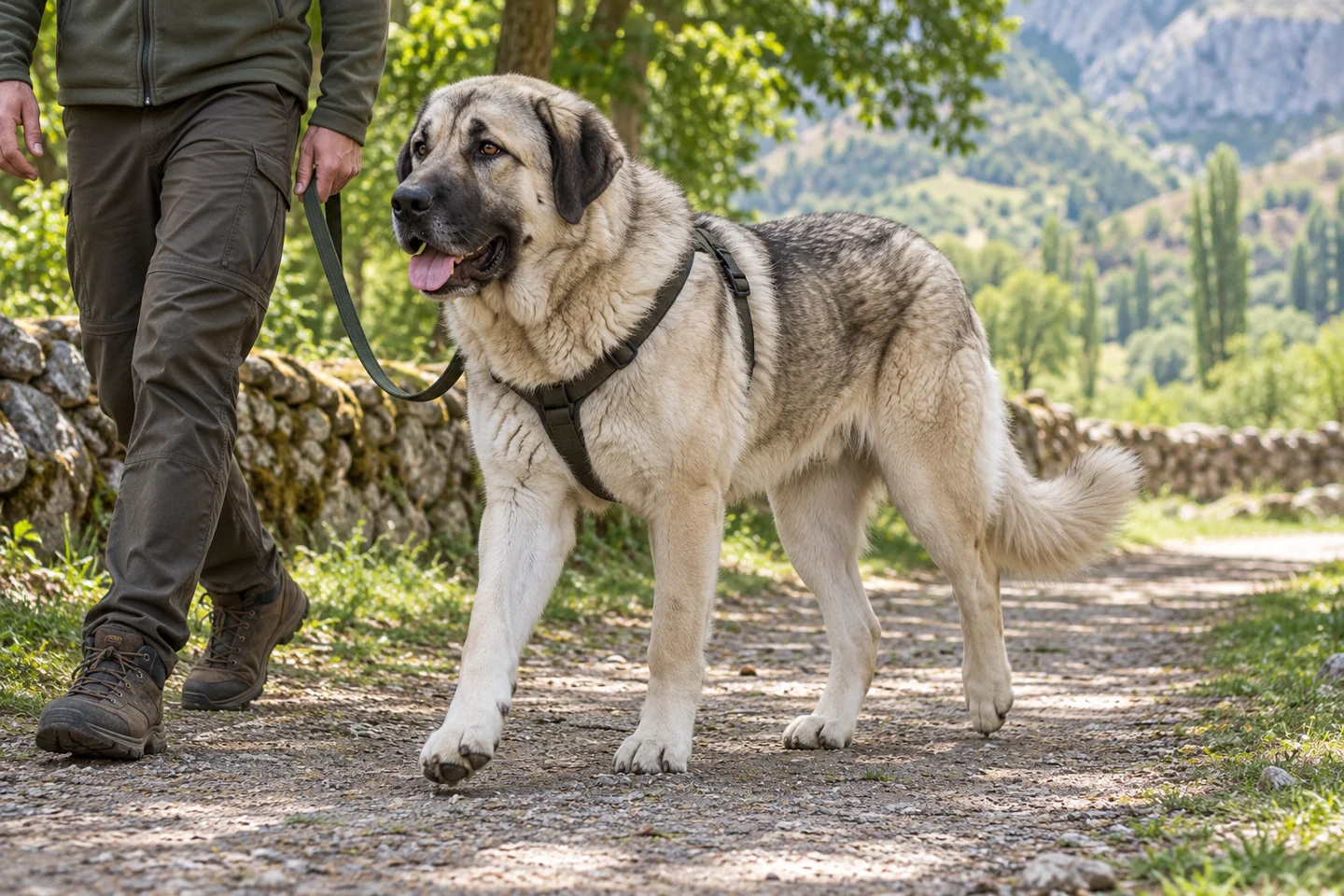
The illustrations in this guide show natural ears and a natural tail. They are generated examples, not records of particular dogs or evidence of a medical condition. Historical or regional cosmetic practices should not be mistaken for a requirement for a dog to function. Fit equipment to the individual's measurements and check it as a puppy grows. Plan vehicle space and access for adult size, including a practical way to move an injured or older dog without relying on one person lifting it.
Guardian work requires supervision and teaching
A livestock guardian's inherited tendencies do not provide a complete education. Young dogs can chase, investigate too roughly, or make poor choices around vulnerable animals. Stock type matters: adult cattle, newborn lambs, poultry, and household cats require different arrangements. Discuss a working placement with an experienced guardian mentor who can evaluate the facilities and supervise gradual exposure. Keep separation possible at every stage, especially when an owner is still learning to read the dog.
Ask a breeder how puppies meet stock and what support is available after placement. A puppy sold as ready to guard should have a clear description of experience, age, and limits. Do not leave it alone with fragile animals to discover whether it is reliable. The owner remains responsible for feeding, veterinary care, shelter, and observing behavior. A dog living outside also needs daily contact and a way for a person to notice injury, illness, or conflict before it becomes severe.
Fences, entrances, and approaching visitors
Walk the perimeter from the dog's side and look for gaps, loose panels, weak latches, and places where an animal might squeeze through. Gates need a routine that every household member follows. A second barrier can prevent an escape while a vehicle enters. Identification and a microchip are useful backup measures, but they cannot protect a stranger or animal if a guardian reaches them. Review the boundary again when nearby building work or changes in livestock alter the surroundings.
Secure the dog before admitting visitors or contractors. Give it a familiar, comfortable place separated from the work area, and tell guests which doors must remain closed. Avoid asking someone to approach a barking dog to demonstrate friendly intentions. That places the visitor inside an unresolved situation. If a dog has threatened someone at a gate, obtain professional help before repeating the encounter. A visitor policy should depend on reliable physical arrangements rather than the owner predicting that the dog will recognize a good person.
Household company and nighttime alerting
Independence can describe a working tendency without telling you how an individual tolerates isolation. A Gampr moving into a new home may miss familiar people or animals and struggle with a changed sleeping routine. Build predictable periods of company and rest. Start absences briefly enough that the dog can remain comfortable, and seek qualified help if pacing, persistent calling, escape attempts, or inability to eat occur. Another dog is not a dependable solution to separation-related distress.
Nighttime alerting can affect neighbors and the dog's own rest. Work out what it can see and hear, and consider whether the sleeping location invites repeated responses to passing animals. Moving a companion indoors or screening a busy boundary may help management. A working guardian's environment needs an individual plan that protects stock while addressing unnecessary repeated arousal. Discuss the arrangement with neighbors before problems accumulate. Shouting over a barking dog rarely identifies what triggered the behavior or provides a useful alternative.
Children and safe family routines
A Gampr's size makes supervision essential around children, even when it is calm with familiar family members. Children should not climb, hug tightly, disturb sleep, or attempt to take a chew. Give the dog a resting area children cannot enter and let it leave social contact. Adults need to control doors and leads. A child should never be asked to restrain the dog while another person enters, or to decide whether an unfamiliar animal can approach.
Visiting children add unfamiliar movement and noise. Separate the dog before running games or rough play begin, because an owner's interpretation of play may not match the dog's. Maintain supervision when children eat or carry toys the dog values. If adults are distracted, physical separation is the workable choice. A history of tolerating one familiar child cannot establish safety during a crowded gathering. Review arrangements as children grow, friendships change, or the dog becomes less comfortable with handling.
Dogs, cats, and introductions across boundaries
Compatibility requires information about particular animals. A guardian that lives peacefully with its own dogs may react differently to an unfamiliar dog outside the fence or entering the property. Arrange initial dog meetings on suitable neutral ground, with capable adult handlers and room to move away. At home, separate food, chews, and resting areas while assessing comfort. Watch for blocking, hovering, stiff attention, or repeated pursuit instead of waiting for an obvious fight to confirm a problem.
Cats need secure dog-free areas and escape routes during gradual introductions. Livestock experience does not automatically transfer to household pets, and comfort with one cat does not establish safety with a running stranger. Never allow access to a small animal as an informal test. Stop when stalking, chasing, or fixation appears and obtain help. If animals cannot be safely separated while an assessment proceeds, the placement may not fit the household. That decision should be made before repeated incidents create injury or entrenched conflict.
Aggression, warnings, and professional support
A protective description does not excuse a threat or establish that the dog can identify appropriate targets. Stiff posture, fixed attention, growling, blocking access, and attempts to drive someone away require management. Create distance and secure the dog without asking another person to challenge it. Do not provoke a display to assess courage or guarding ability. An incident can be serious even when no bite occurred, particularly when the dog's size limits someone's ability to leave safely.
Pain and illness can change responses, so arrange veterinary assessment for new or worsening behavior. Record the circumstances, including location, distance, resources, and recovery, and discuss them with a veterinary behaviorist or qualified reward-based professional. Punishing warnings can make risk harder to observe while leaving fear or discomfort unresolved. Barriers, suitable equipment, and a positively introduced basket muzzle may form part of a plan. They work alongside assessment and treatment, not as proof that close contact has become comfortable.
Training cooperation at adult size
Teach practical responses while a young dog is easy to handle. A station behind a gate, a hand target, a short recall, and standing calmly for equipment can make adult care safer. Begin in quiet conditions, reward the response, and add difficulty gradually. An independent guardian needs clear information about which choice works. Repeated commands issued after the dog is fully occupied by a perceived threat are a weak substitute for preparation and a suitable environment.
Reward-based instruction can include access to something the dog enjoys, such as investigating a safe area after walking with a loose lead. Keep sessions brief and stop before frustration develops. Practice releasing an object in exchange for a reward and settling while household activity continues nearby. Ask a trainer to help with handling if the owner feels physically outmatched. Routine cooperation matters more than an elaborate display of obedience performed only in a quiet space with one familiar person.
Exercise, weather, and recovery
Daily movement needs to suit age, health, condition, and actual work. A guardian on a property may move often, yet still need observation of gait and recovery. A companion can benefit from calm walks with time to investigate, provided routes allow safe distance from unfamiliar animals and narrow entrances. Increase demanding activity gradually. Persistent stiffness, reduced willingness to rise, or unusually slow recovery needs veterinary attention even when the dog remains interested in patrolling or accompanying its owner.
A dense coat does not remove the need for shade, water, shelter, and changes to activity in extreme weather. Avoid making broad claims that the breed tolerates every temperature. Check the individual dog's comfort and provide a suitable retreat. Severe breathing difficulty, collapse, or signs of heat distress require urgent veterinary advice. During winter, look at footing, wet bedding, and access to unfrozen water. Working background should guide practical care rather than become a reason to overlook environmental discomfort.
Grooming and comfortable body care
Brush the coat regularly and work through loose undercoat in manageable sessions. Check beneath the hair for wounds, parasites, redness, or equipment irritation. A heavy coat can hide a problem until it becomes painful. Introduce touch around feet, ears, and the mouth with rewards, then build toward necessary care. If a familiar grooming task suddenly becomes difficult, consider discomfort and arrange assessment instead of assuming the dog has decided to resist the owner.
Keep nails comfortable, inspect pads after rough ground, and discuss tooth brushing and dental assessment with the veterinarian. Ask for help if matting or fear makes home care difficult. Do not attempt a prolonged restraint session simply to finish a task. A clinic or groomer needs advance information about handling concerns so the appointment can be planned. Cooperative care is especially valuable when the dog is too large for a household member to reposition safely by force.
Feeding and growth without a size contest
Use a complete diet appropriate to life stage, including suitable large-breed puppy nutrition when relevant. Assess growth with a veterinarian rather than feeding toward a target intended to make the dog unusually imposing. Measure meals and account for training rewards. A working outdoor adult may need a different allowance from a companion resting indoors. Weight and body condition over time provide more useful information than appetite alone or a comparison with the largest dog in a family line.
Feed in a quiet separate area and prevent children or other animals from approaching bowls and chews. Avoid repeatedly removing food to test tolerance; teach comfortable exchanges instead. Do not add calcium or other supplements to a complete growth diet without a veterinary reason. If preparing meals at home, seek qualified veterinary nutrition advice for a balanced recipe. Persistent digestive changes, unexplained weight loss, or altered thirst deserve clinical assessment rather than an assumption that a guardian naturally regulates every nutritional need.
Health evidence and screening questions
Landrace status does not establish freedom from inherited or acquired disease. Some club descriptions make broad health claims, but a buyer still needs records and a veterinary assessment. Ask about joint evaluations, family illness, and the actual findings from any tests performed. Identify the dogs, dates, methods, and issuing organizations. Avoid presenting a universal Gampr screening checklist when a source has not defined one. A breeder should be able to explain the program they follow and the limits of its results.
A broad DNA panel tests selected variants. It cannot exclude every inherited condition, assess joint structure, or guarantee future health. A normal puppy examination also answers different questions from adult screening. Discuss the individual dog's needs with a veterinarian and report persistent movement, vision, skin, or behavioral changes. For an adult with incomplete history, record what is unknown and make a preventive care plan from current findings. Honest gaps in evidence are more useful than reassurance based only on a traditional working reputation.
Mixes, costs, and later-life decisions
A Gampr mix can vary in size, coat, guardian behavior, and animal compatibility. A name such as Gampr and Anatolian mix describes proposed ancestry rather than a standardized outcome. Ask which information is documented and how the dog behaves in everyday care. DNA ancestry information may add context while leaving important health and behavior questions unresolved. Mixed ancestry does not remove the need for secure boundaries, health records, or a realistic plan for visitors and resident animals.
Budget for substantial equipment, food, fencing, veterinary care, and experienced backup care. A trusted person needs to practice the gate and handling routine before an emergency absence. As the dog ages, review footing, transport, bedding, and movement around the property. Arrange treatment for pain and adjust duties rather than expecting continued work to demonstrate soundness. Keep emergency contacts available and agree how an injured large dog would reach care. These practical decisions are part of choosing the breed from the beginning.
A Gampr meeting through dogsDating
Describe this dog's experience with unfamiliar animals and the distance it needs in its dogsDating profile. Keep exact home coordinates private. Choose a quiet public route outside the dog's territory, away from stock and narrow gates, with one capable adult handler per dog. Begin with parallel movement far enough apart that both dogs can sniff and respond to their people. A meeting is optional when the dog's history or current behavior makes even that arrangement difficult.
Avoid shared toys, food, and pressure for a physical greeting. End when either dog stiffens, fixes on the other, repeatedly blocks movement, or cannot recover after distance increases. A calm walk with space between dogs can be a suitable result. Describe what happened in that setting without declaring the animals compatible everywhere. A guardian may behave differently when a visitor approaches its property, so a comfortable public outing does not authorize a later home visit without a separate management plan.
Sources and editorial notes
Sources checked October 21, 2026. Breed measurements describe reference ranges, not a diagnosis or an individual dog's ideal weight. Images are AI-generated breed illustrations and do not document a particular dog or health condition.
- VCA Animal Hospitals: Ear infections in dogs
- VCA Animal Hospitals: General feeding guidelines for dogs
- VCA Animal Hospitals: Food aggression in puppies
- Orthopedic Foundation for Animals: Disease screening information
- VCA Animal Hospitals: Heat stroke in dogs
- Armenian Gampr Club of Canada: Landrace identity and descriptive breed approach
- VCA Animal Hospitals: Aggression toward unfamiliar dogs, diagnosis
- United Kennel Club: Armenian Gampr conformation status
- AVSAB: Humane Dog Training Position Statement
Keep getting to know dogs.
Read another guide or return to your dogsDating community.
Explore breed guidesBack to dogsDating