Bloodhound
A large scent hound whose strong tracking interest calls for secure walks, ear and skin attention, and practical household access.
How these guides are researched and reviewed
- Origin
- Belgium; later development in England
- Coat
- Short coat; long ears and loose skin
- Care priorities
- Scent containment, ears and skin folds, emergency planning
General information for owners. These articles have not been reviewed by a veterinarian. Medical decisions need your dog's history and an examination.
Bringing a Bloodhound into a household
A Bloodhound brings a large body, a persistent nose, and ears and skin that need regular attention. Before adopting one, walk through the actual daily arrangements: the gate between the garden and road, the space in the vehicle, the person covering an unexpected absence, and the route to veterinary care if the dog cannot walk. These questions are easy to postpone when looking at a solemn puppy. They become harder to improvise once that puppy is a strong adult absorbed in a trail.
Ask owners how their dogs behave after an ordinary wet walk or when someone comes to repair the kitchen. A well-loved hound may still require a closed barrier while doors are open and towels beside its water. An adult rescue's foster history can clarify household habits, whereas a puppy leaves more to be learned. Consider whether the care fits the home you have now. Anticipated future space, imagined off-lead reliability, and promises that the dog will naturally become quiet are weak foundations for a lasting commitment.
Scent-hound history and identity
The FCI standard identifies Belgium as the Bloodhound's country of origin and gives Chien de Saint-Hubert as its other name. It describes breeding associated with the Saint-Hubert abbey in the Ardennes and later development in England. These are more useful reference points than a claim that today's dogs represent an unchanged ancient population. Accounts of much earlier ancestry include uncertainty and should be presented that way. For a companion owner, recent family health, upbringing, and observed household behavior remain more relevant than a famous historical tracking account.
The breed is distinct from Black and Tan Coonhounds, Bavarian Mountain Scent Hounds, and other dogs with long dropped ears. A wrinkled face and familiar coat cannot confirm ancestry in a rescue animal. Ask which organization issued a pedigree and how an uncertain identification was made. A working certification records an achievement in a particular context; it does not establish household settling, tolerance of children, or readiness for operational search work. A dog and handler need appropriate instruction, authorization, and facilities before work involving missing people or other consequential searches.
Size, loose skin, and comfortable function
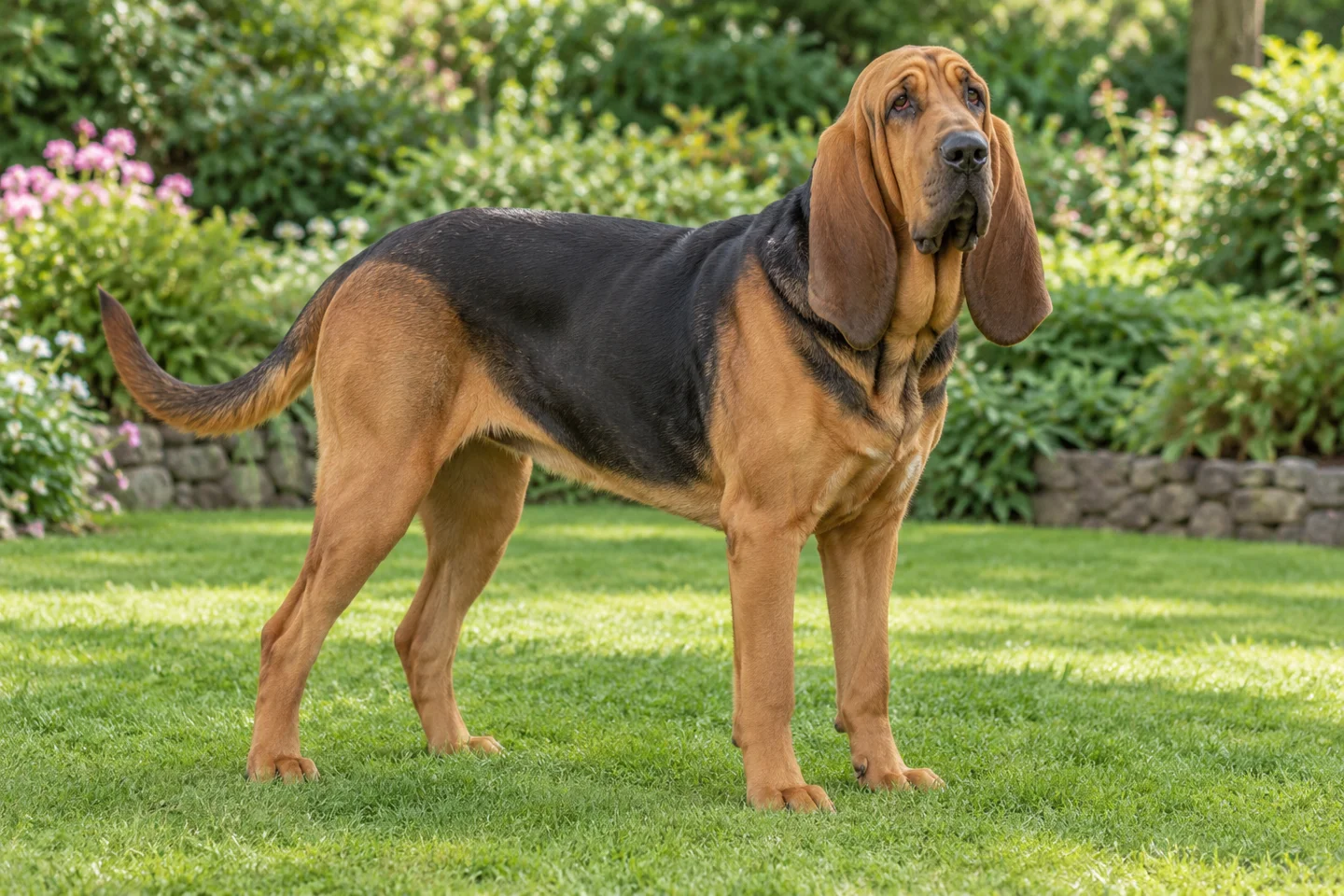
The familiar Bloodhound has a substantial frame, short coat, dropped ears, and loose skin around the head. Black and tan, liver and tan, and red are established colors. Assess the living dog by comfort and function, not by how many folds fit into a photograph. It should move without obvious distress and settle in a comfortable position. An owner needs to notice changes in gait or posture even when the nose remains busy and the dog is still eager to go outside.
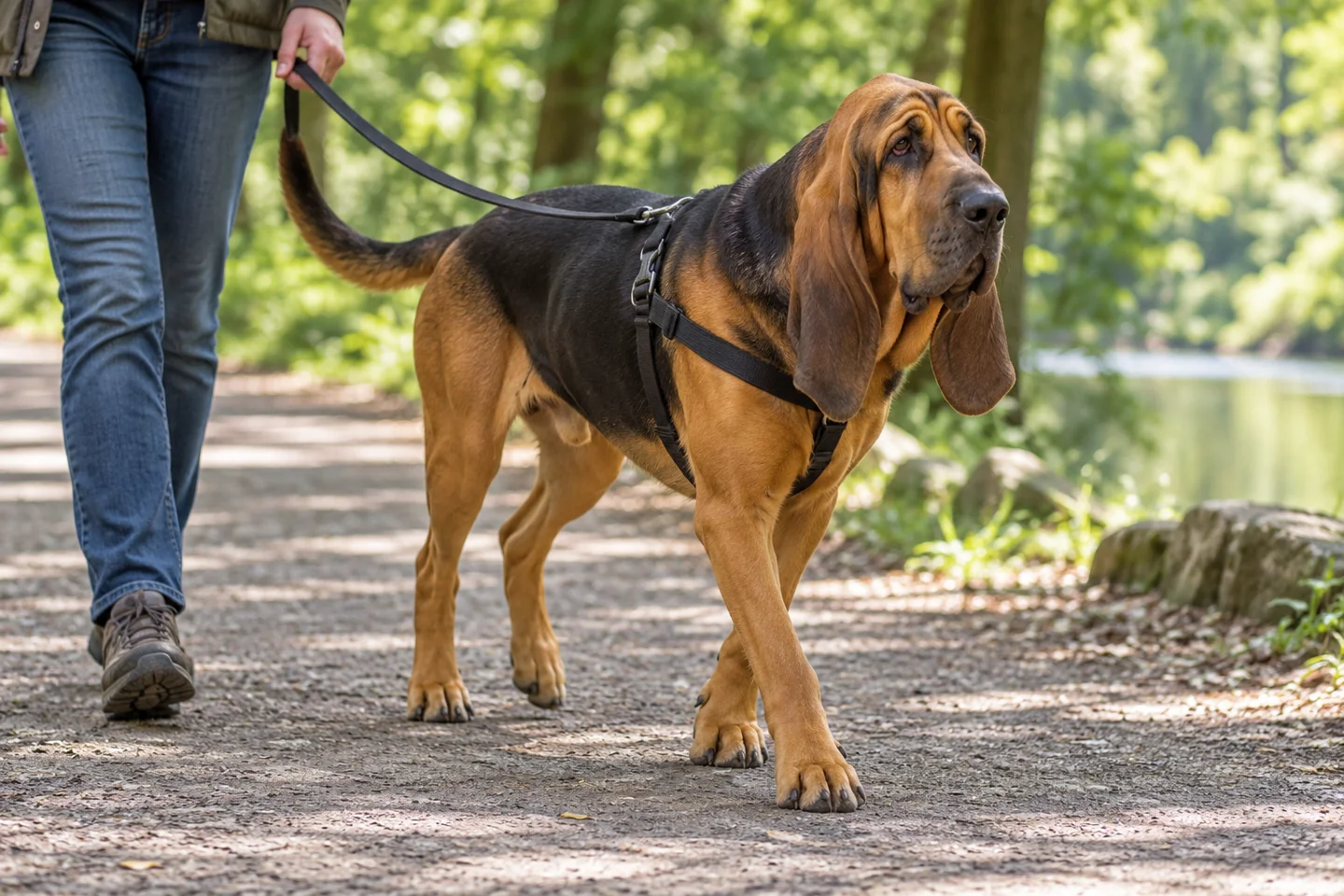
Loose hair and skin can make equipment fit less obvious. Ask someone experienced to help fit a harness, then check that it does not rub or permit escape when the dog backs away. Revisit the fit during growth and weight changes. The lead should be strong enough for the animal without relying on painful pressure to provide control. A secure fitting routine, learned before exciting walks, protects both the handler and a hound that might otherwise leave the doorway while the person is still adjusting buckles.
Walking when the nose takes over
Picture a broad pavement ending beside a busy crossing while the dog follows an interesting scent toward the curb. The solution needs to exist before that moment. Teach a pause and a change of direction on quiet routes, reward returning toward the handler, and keep a lead attached near hazards. Do not interpret an excellent response in the garden as proof that the same cue will overcome every trail. Distance, distraction, and the history of reinforcement all affect what the dog can do.
Arrange walks that permit useful sniffing without crossing boundaries the owner cannot control. A long line can be appropriate in a suitable area, but manage its length before the hound builds speed. Avoid situations where it wraps around a person's legs or brings a running dog to an abrupt stop. Choose footwear and routes that allow the handler to move safely. Tracking classes can provide structured opportunities for the nose, while the dog's and handler's competence should determine which tasks are attempted and under what supervision.
Gates, vehicles, and a missing-dog plan
Give each exterior door a simple rule: someone secures the dog before the door opens fully. Visitors, gardeners, and children need the same explanation. A dog following scent may find an opening before the people in the house notice it. Inspect the bottom of fencing and areas around stored objects as well as the latch. An enclosed exercise area also deserves a check on arrival; a previous visit cannot establish that today's gate is intact or the neighboring field free of distractions.
Keep identification and contact details current and discuss what the household would do after an escape. These measures help recovery without replacing containment. For travel, the adult needs enough space to lie comfortably while restrained safely. Practice loading without a crowd or time pressure. If a ramp may become useful, teach it while the dog can still learn comfortably. Arrange help for emergencies in which an injured animal cannot support its own weight. A vehicle that fits a puppy may not provide workable access throughout adulthood.
Grooming, ears, and daily skin attention
The American Kennel Club's care information emphasizes checking long ears and skin wrinkles for problems. Look for odor, moisture, redness, discharge, head shaking, or pain. Ask the veterinarian how to clean and dry the particular areas that need attention, without treating every episode as identical. Avoid inserting objects deeply into ear canals or using medication left from a previous problem. A familiar tendency to irritation is a reason for assessment, not evidence that the owner already knows the cause of every new sign.
A short coat still needs regular brushing and inspection beneath equipment. Bathe when necessary with suitable products and dry comfortably, especially around areas where moisture remains. Introduce body handling in brief rewarded steps and stop to investigate new sensitivity. Skin care should not become a prolonged struggle merely to finish a checklist. Tell professionals about handling concerns before appointments. Cooperative care helps maintenance and medical assessment, while necessary treatment should not wait until the owner can examine a painful ear or fold fully at home.
Children and a hound's long ears
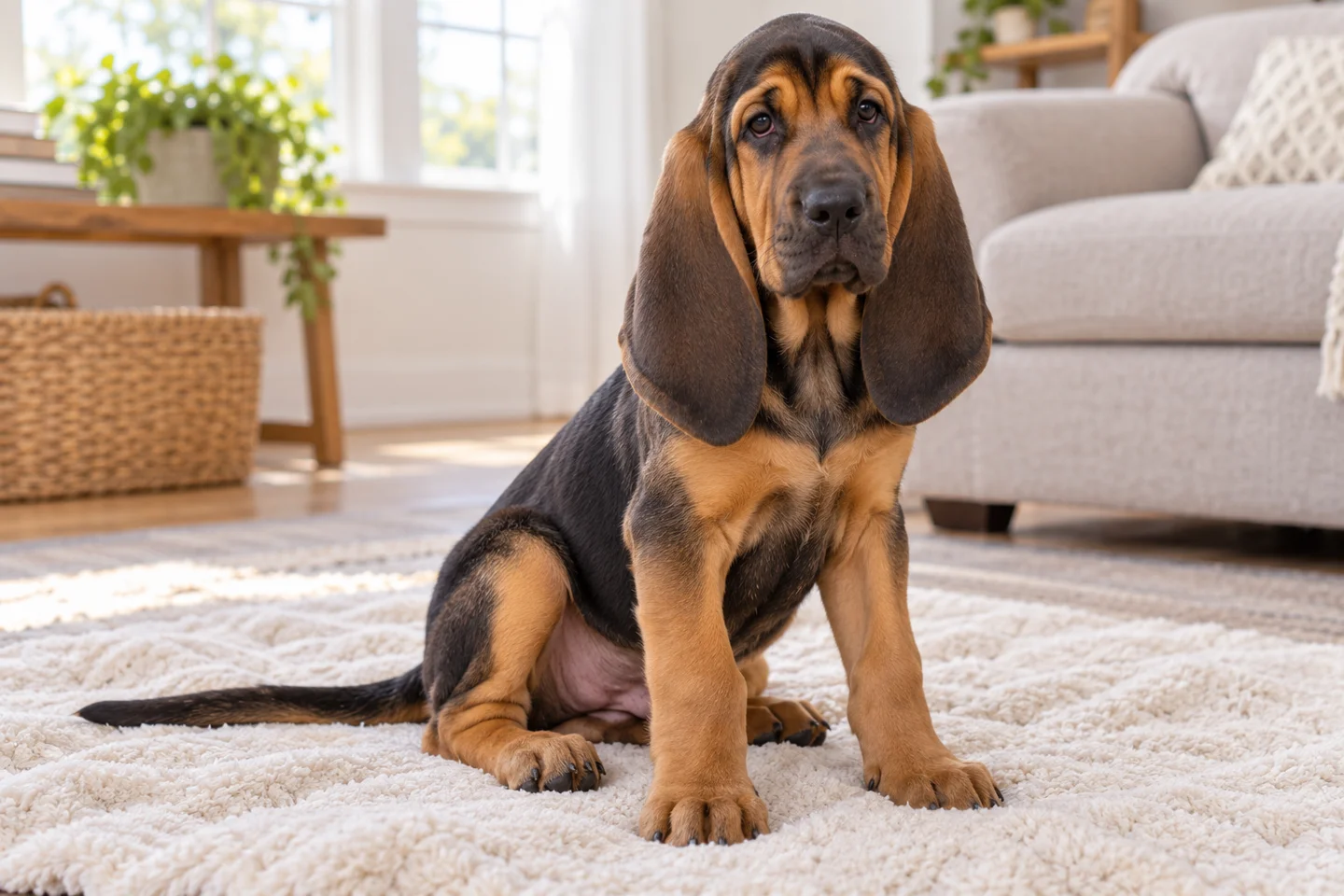
Long ears can invite touching from a curious child, and a Bloodhound's tolerant-looking expression can make adults miss discomfort. Teach children to keep hands away from ears, eyes, and the mouth and to invite contact from a settled position. An adult should remain close enough to guide the interaction. Do not permit a child to climb over the dog or lie on it for a photograph. Quiet withdrawal, head turning, or getting up to leave are sufficient reasons to stop contact.
Plan space for children to play without a heavy dog joining the rush. At a family gathering, the safest arrangement may be a comfortable separate room with appropriate checks rather than constant greetings. Keep bowls and chews out of children's access, and protect sleep after an outing. A child cannot be expected to hold the lead when a large hound commits to following scent. Walking together can still be enjoyable when a capable adult handles the equipment and the child participates within clear limits.
Companions, cats, and shared resources
Some Bloodhounds enjoy canine company, but companionship needs evaluating at the level of the actual pair. Observe whether another dog's close approach interrupts rest or creates tension beside a person. Separate feeding stations and enough beds make ordinary life less competitive. Introduce a newcomer in a setting with room to turn and retreat, then arrange gradual household access. Do not begin by putting both dogs into a confined vehicle or kitchen simply because a breed description refers to pack history.
A cat needs ways to move through the home without being cornered by a curious hound. Start with barriers, watch the dog's response, and maintain separation when you cannot observe. Outside, running wildlife or an unfamiliar cat can create a different situation from a resident animal lying quietly indoors. Protect small pets physically and avoid experimental introductions that rely on a quick verbal correction. Detailed foster observations help, but no secondhand account should replace careful management while learning how a new dog responds in its new surroundings.
Aggression and pain during care
A Bloodhound that resists an ear check may be anticipating pain rather than refusing an ordinary request. Stop unnecessary handling and contact the veterinary team about examination and treatment. A sore fold, injured foot, or uncomfortable joint can also alter tolerance. Record when a reaction occurred and what contact preceded it. Clinical care should not depend on an owner forcing a complete inspection at home. Tell the clinic what happened so it can arrange suitable support for the dog and the people handling it.
Other incidents may concern food, approach during sleep, fear, or conflict with another animal. Describe them accurately instead of relying on a generally gentle reputation. Prevent access to the situation while qualified help develops a plan. A reward-based professional can teach exchanges or gradual handling responses without deliberate confrontation. Warnings are useful information; suppressing them does not establish comfort. Where appropriate, introduce a well-fitting basket muzzle gradually, accounting for the dog's face and ears. It adds protection during specified tasks without removing the need for distance, supervision, and treatment.
Training with scent as part of the reward
A hound interested in the ground may find permission to continue sniffing valuable. Use that interest thoughtfully: reward a brief check-in, then release the dog toward an appropriate patch rather than insisting on constant eye contact. Start in a setting where both the check-in and release can succeed safely. Food can support many other tasks, including moving onto a mat or following a hand target. Observe what the individual values and keep learning understandable rather than treating distraction as a personal challenge.
Practice the practical jobs scent work does not automatically teach. Waiting while a person cleans the water area, standing for a harness check, and moving aside in a hallway all improve daily life. Different carers should use the same cues for these tasks. Teach a calm finish so a session can end before the dog is exhausted. If progress stalls, a skilled instructor can watch the actual interaction and adjust timing, rewards, or difficulty. More force is a poor substitute for identifying what the dog has not yet learned.
Voice, visitors, and being apart
A carrying hound voice matters in a home with nearby neighbors. Ask when calling occurs: while anticipating an outing, when seeing dogs outside, or after the owner leaves. Those situations need different responses. Reduce visual access to a repeatedly provocative window and reward settling in a quieter place. During departures, observe the dog rather than guessing from the silence that greets your return. A recording may reveal distress that was invisible while everyone was at home preparing to leave.
Develop short comfortable separations before longer absences are necessary, with support when work exceeds what the individual manages. Repeated escape attempts, persistent calling, or inability to settle warrants professional advice. A second dog should not be acquired as a promised cure. For puppies, combine manageable exposure to everyday life with recovery and sleep. Follow veterinary guidance on appropriate outings. Learning about a lift, a busy hallway, or a grooming table is easier when the experience is brief and the young dog has room to remain comfortable.
Exercise and the ground beneath the dog
Fit activity to the individual rather than to famous accounts of long-distance tracking. Start with a workload the dog recovers from well and increase gradually where appropriate. A wooded route may require more effort than its distance suggests because of slopes, uneven footing, and vegetation. Check pads and skin afterward. A puppy needs opportunities to explore and rest, while an adult returning from illness may need a different plan from its previous routine. Veterinary guidance is useful when the appropriate level is uncertain.
Monitor the period after exercise, including how easily the dog rises later. New limping or a shortened stride deserves assessment even when the dog wants another walk. In warm conditions, choose shade and cooler hours and bring water. Stop for concerning weakness or distress and seek prompt help for serious symptoms. A scent search can supply a quieter activity on a restricted day when medically appropriate, but it should not turn into prolonged exertion simply because the dog looks engaged. Owners set the limits an enthusiastic animal may not set itself.
Health screening and a bloat emergency plan
The national breed-club recommendations listed by the AKC include hip, elbow, and cardiac evaluations. Ask how each parent was assessed and obtain results that identify the dog clearly. Discuss family mobility and heart history alongside the certificates. For a Bloodhound buyer, this provides useful information beyond whether a puppy appears lively during a visit. If reports are in an unfamiliar format, ask a veterinarian or the issuing organization to explain them. Completion of testing and a normal result are different claims.
The American Bloodhound Club's owner flyer flags gastric dilatation and volvulus, commonly called bloat, as an important concern. Learn the emergency signs with your veterinarian and know where to seek immediate care. Unproductive retching, abdominal enlargement, collapse, or marked distress must not become a wait-and-see experiment. Discuss whether preventive surgery is appropriate for the individual, without assuming a procedure eliminates every possible abdominal emergency. The transport plan matters for this large dog: know who can help and which clinic can receive it when normal opening hours have ended.
Feeding, mixes, and the changing adult
Measure a complete diet suited to the dog's age and condition, then adjust from meaningful weight and body-condition information. Do not feed for an exaggerated heavy outline. Use hands beneath loose skin when assessing the body and ask the veterinarian to demonstrate if you are unsure. Count training rewards, especially when practicing numerous household skills. Persistent changes in appetite, digestion, or thirst deserve investigation. Frequently replacing food without a clear reason can make it harder to understand the sequence of signs.
A Bloodhound cross may differ considerably in ears, folds, size, voice, and scent interest. Its name cannot establish how much care a particular coat or skin will need. Consider known parents and actual behavior, and acknowledge uncertain ancestry. Budget for veterinary treatment, containment, appropriate equipment, and help with handling as well as food. Older dogs may need accessible resting areas and easier vehicle loading. Reassess the care plan when movement or tolerance changes, instead of expecting an aging hound to manage the same stairs, surfaces, and busy household contact indefinitely.
A scent-friendly dogsDating outing
Choose a dogsDating meeting that gives both dogs room to investigate without forcing close contact. A quiet public walking route with separate capable handlers is usually easier to observe than a narrow entrance or crowded enclosure. Tell the other owner whether your hound pauses frequently over scent or prefers a slower pace. Begin far enough apart for each to remain responsive. A walk can supply a useful first introduction without any play, and nobody needs to shorten the distance simply to obtain a joint photograph.
Share an approximate area for planning while keeping exact home coordinates private. Agree where to meet and how to leave if either dog becomes uncomfortable. Avoid prized objects and competition over food during the initial session. Watch whether the dogs can turn away and resume ordinary exploration. If one repeatedly pursues or blocks the other, create space and reconsider the arrangement. Record what worked in that particular setting afterward. One pleasant outing does not establish that the pair can share a bed, a vehicle, or unsupervised time at either home.
Sources and editorial notes
Sources checked October 21, 2026. Breed measurements describe reference ranges, not a diagnosis or an individual dog's ideal weight. Images are AI-generated breed illustrations and do not document a particular dog or health condition.
- AVSAB: Humane Dog Training Position Statement
- VCA Animal Hospitals: Food aggression in puppies
- VCA Animal Hospitals: Aggression toward unfamiliar dogs, diagnosis
- VCA Animal Hospitals: Ear infections in dogs
- VCA Animal Hospitals: Common emergencies in dogs
- VCA Animal Hospitals: Heat stroke in dogs
- Orthopedic Foundation for Animals: CHIC program and interpretation of numbers
- VCA Animal Hospitals: Hypoallergenic dog breeds
- American Kennel Club: Bloodhound breed identity and care
- American Kennel Club: Breed-club health testing recommendations
- VCA Animal Hospitals: Grooming and coat care for your dog
- VCA Animal Hospitals: Feeding guidelines for dogs
- Washington State University: Gastric dilation and volvulus and bloat in dogs
- Fédération Cynologique Internationale: Bloodhound or Chien de Saint-Hubert breed standard
- American Bloodhound Club: Breed owner information flyer
Keep getting to know dogs.
Read another guide or return to your dogsDating community.
Explore breed guidesBack to dogsDating